
Leave A Message
If you are interested in our products and want to know more details,please leave a message here,we will reply you as soon as we can.
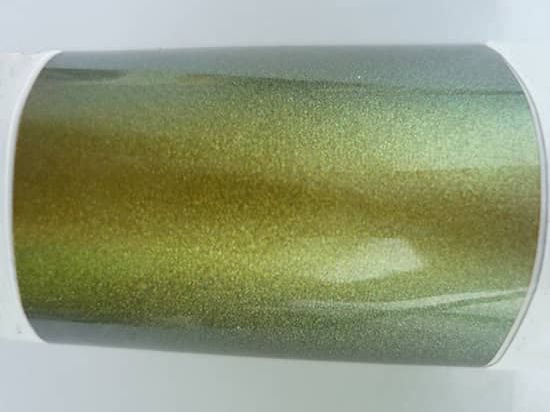
Yellow/Blue Chameleon Chrome Powder KT-90518 for nail art, gel polish
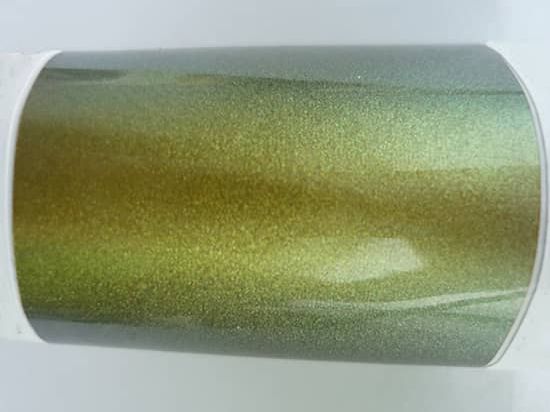
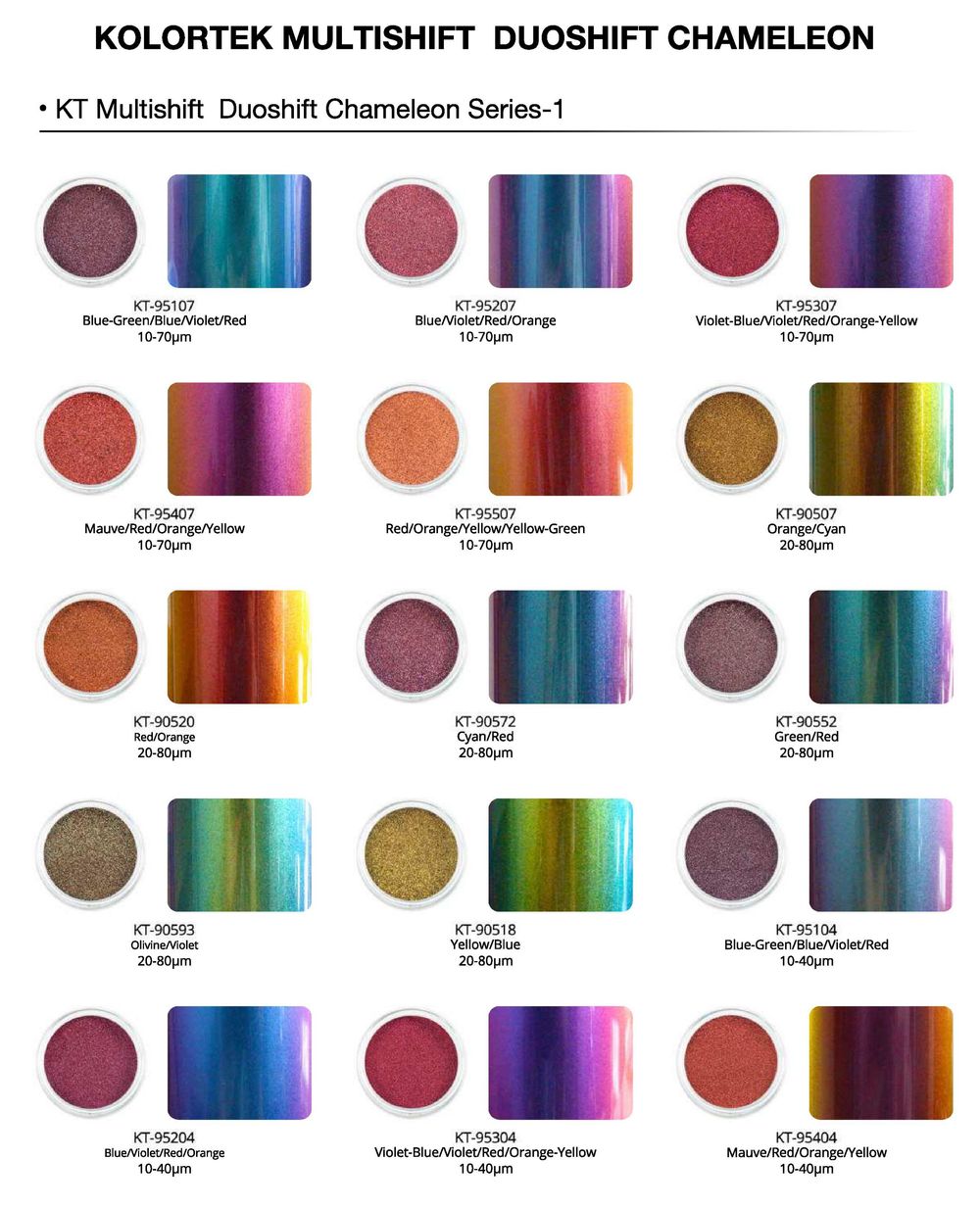
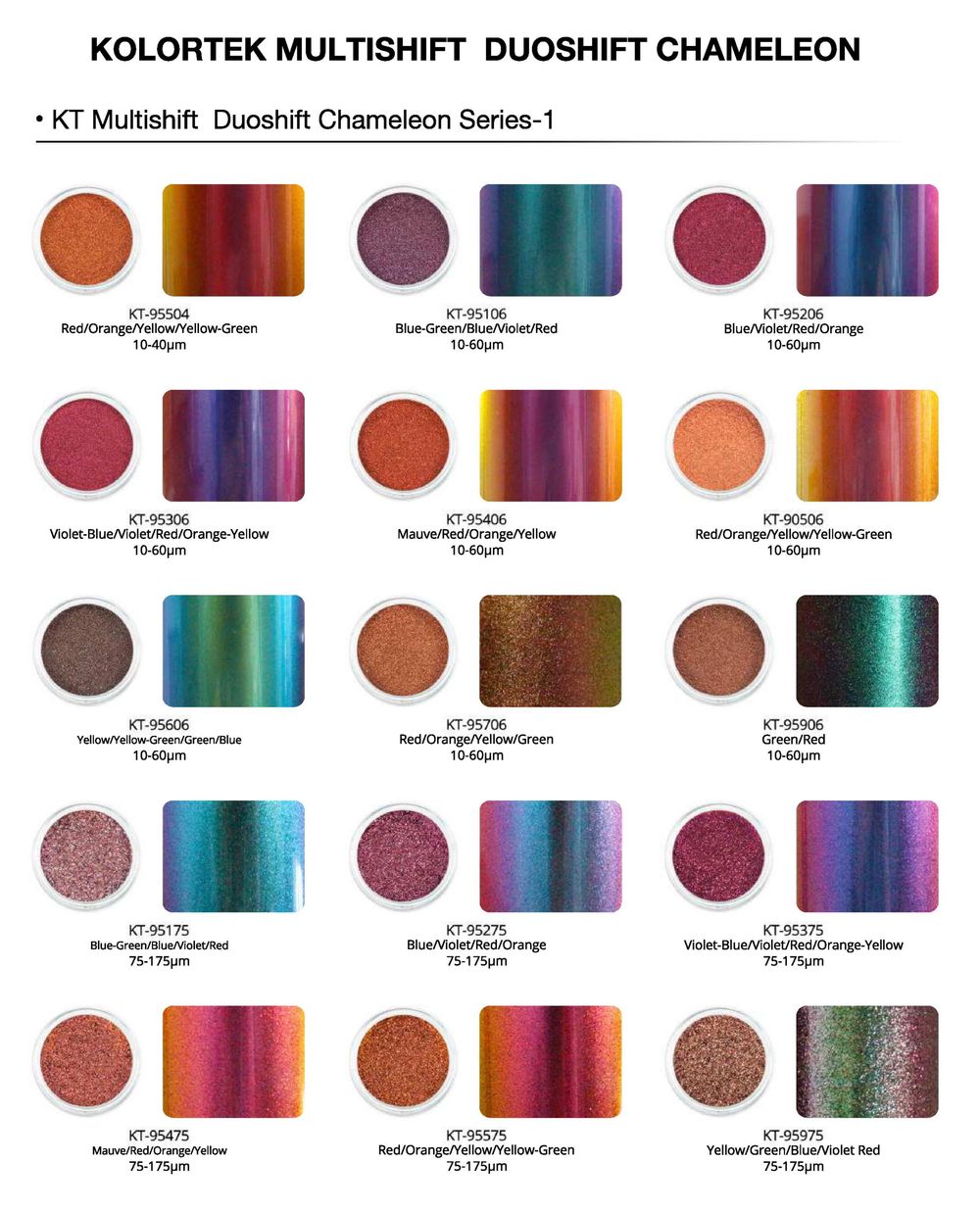
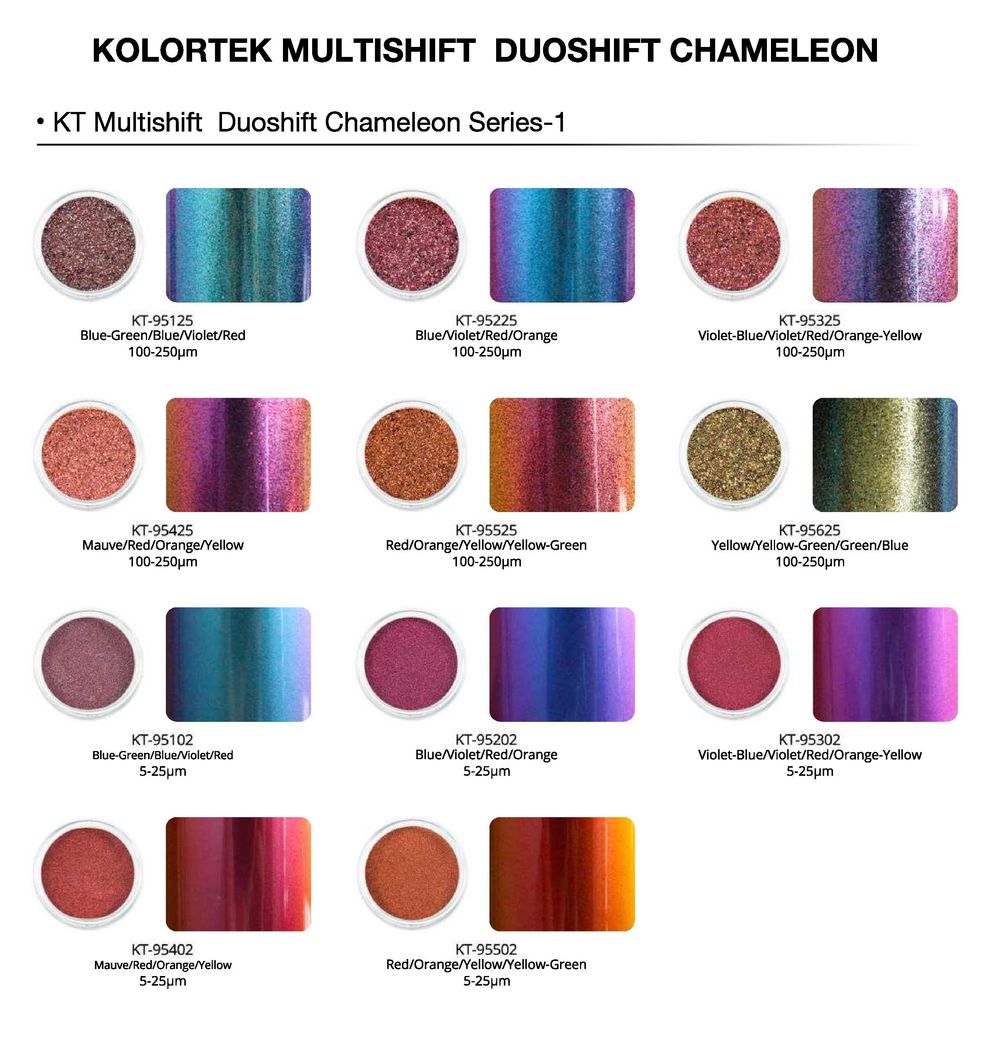
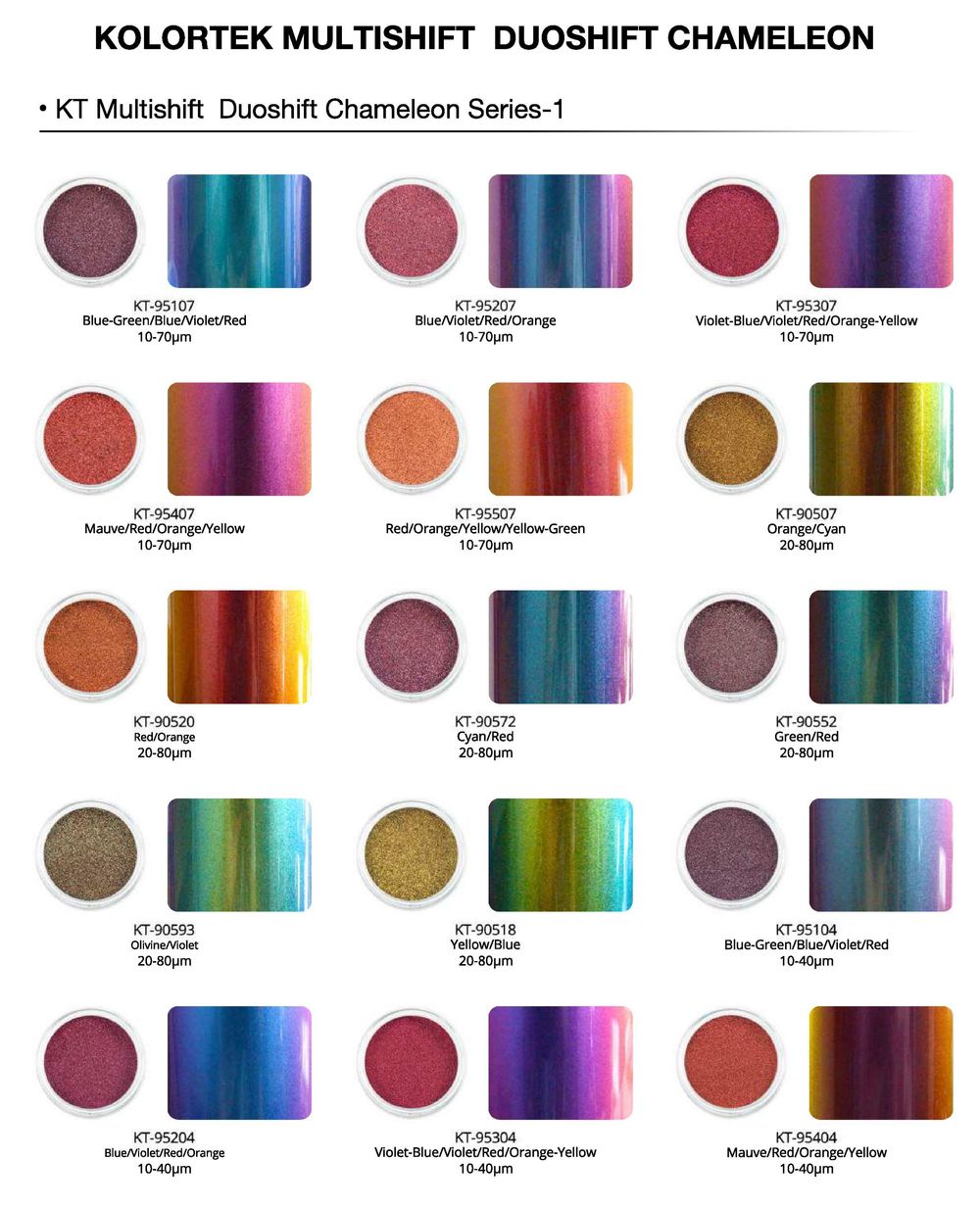
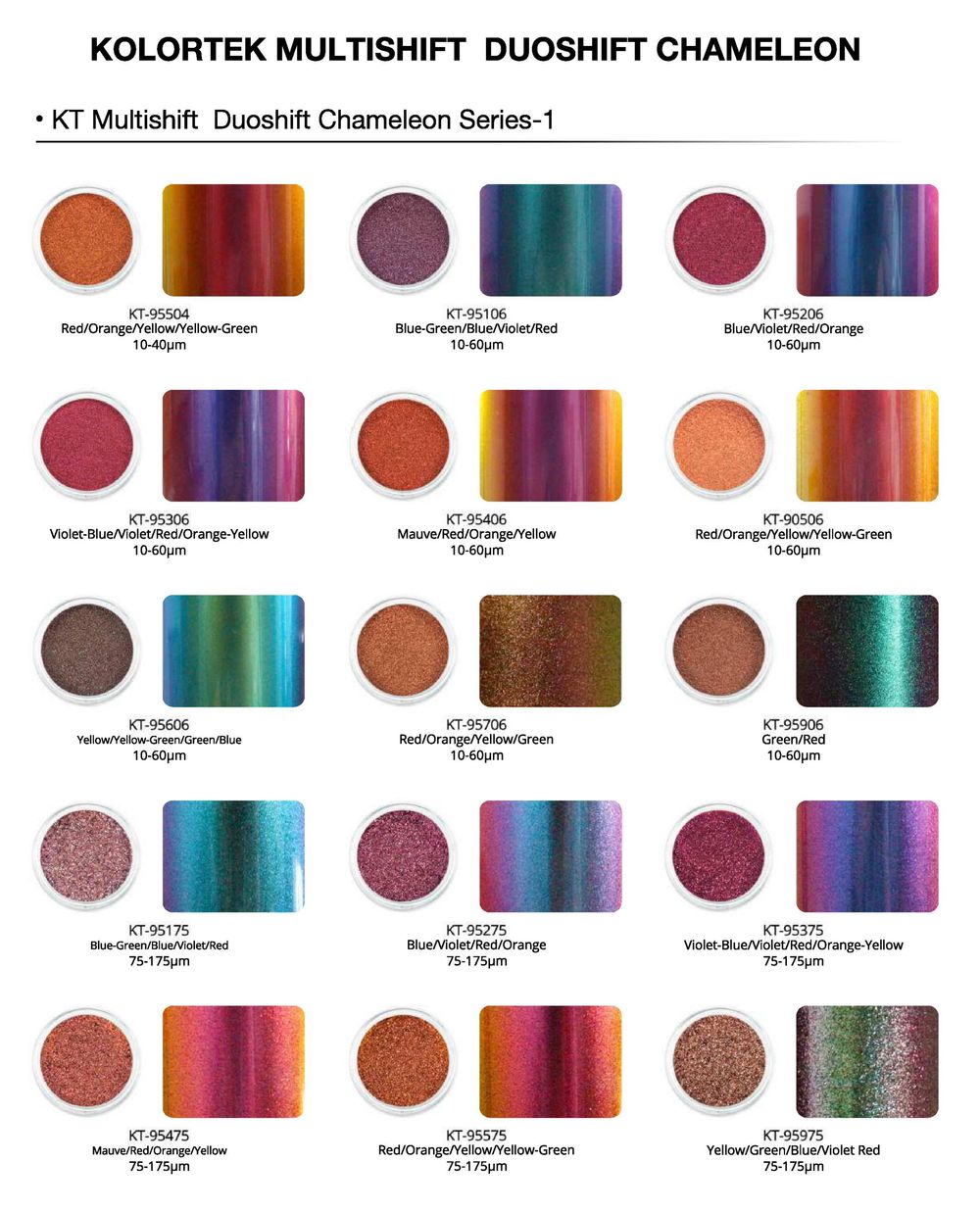
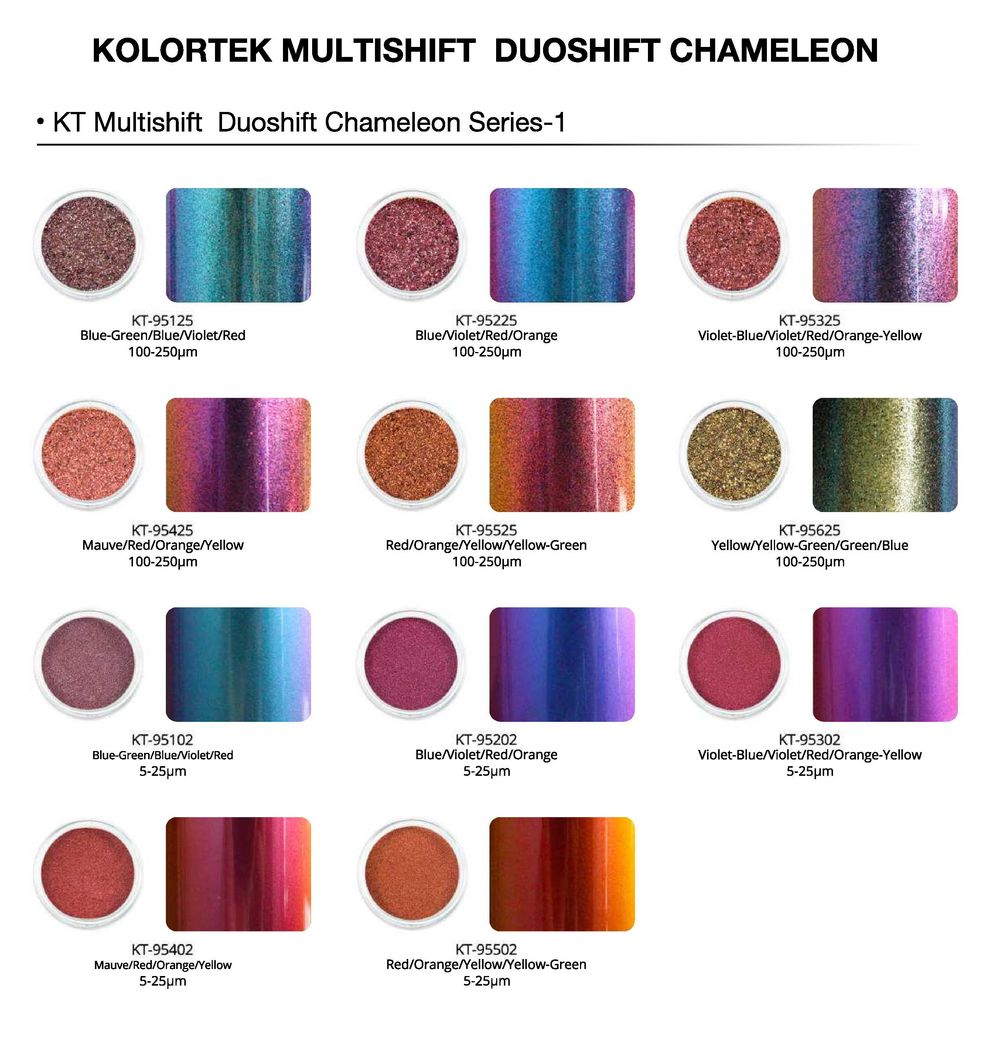
KT-90518 is a yellow-to-blue chameleon chrome powder from Kolortek's KT-9000 Magic Chameleon series — a multi-layer interference pigment built on natural mica and coated with iron oxide and silica to produce a vivid, angle-dependent color shift between yellow and blue. With a particle size range of 20–80 μm and a D50 of 25–35 μm, it is positioned for nail polish, gel systems, and dip powders, delivering the most dramatic color travel over dark or black substrates.
The KT-9000 series is built around multi-layer thin-film interference. On KT-90518, alternating layers of TiO₂, Fe₂O₃, and silica are deposited on a natural mica substrate. At near-normal viewing angles, constructive interference produces a warm yellow; as the viewing angle increases toward grazing, the perceived color shifts toward blue. The result is a continuous, smooth color travel — not a simple two-tone flip — that moves with the nail surface as it curves and catches light.
In our application work, the depth of that shift correlates strongly with the substrate beneath. On a black or deep-colored base coat, the interference colors read cleanly because there is no white scattering layer competing with the thin-film signal. Apply the same pigment over a light or unpigmented base and the perceived color travel flattens noticeably — a common formulation mistake we see in the field.
| Property | Value |
|---|---|
| Product Code | KT-90518 |
| Series | KT-9000 Magic Chameleon |
| INCI Name | Mica – Iron Oxide – Silica |
| Form | Powder |
| Color / Effect | Yellow → Blue (angle-dependent color travel) |
| Particle Size | 20–80 μm |
| D50 | 25–35 μm |
| pH (4% H₂O) | 6.0–9.0 |
| Density | 2.8–3.1 kg/L |
| Bulk Density | 22–29 g/100 mL |
| Solubility | Insoluble in water |
| Odour | Odourless |
| Component | C.I. Number | Content (%) |
|---|---|---|
| Mica | CI 77019 | 43.0–48.0 |
| Iron Oxide | CI 77891 | 8.0–18.0 |
| Silica | — | 39.0–44.0 |
For any pigment entering a nail or cosmetic formulation, the heavy metal profile is non-negotiable. KT-90518 is manufactured to the following limits:
| Element | Limit | Element | Limit |
|---|---|---|---|
| As | <2 ppm | Pb | <10 ppm |
| Hg | <1 ppm | Cr | <100 ppm |
| Cd | <3 ppm | Ni | <10 ppm |
| Ba | <50 ppm | Sb | <1 ppm |
| Cu | <50 ppm | Zn | <50 ppm |
Within our nail and beauty application program, KT-90518 is classified under chameleon chrome nail powder for nail polish, gel polish, and dip powder systems. The 20–80 μm particle range places it in the medium-shimmer band — broad enough to produce a vivid, visible color-shift shimmer, yet fine enough for reasonable brushability in gel and traditional lacquer formulations.
Typical loading guidance for the KT-9000 series in nail applications is as follows. Note that KT-90518-specific loading data has not been published; these figures reflect general KT-9000 series practice in gel and lacquer systems:
| Application Format | Indicative Loading |
|---|---|
| Nail polish (effect pigment) | 2–10% |
| Gel polish | 1–8% |
| Dip / acrylic powder | 30–100% (opacity-dependent) |
| Chrome / rub-on application | Applied as 100% powder over cured top coat |
Beyond nail, the KT-9000 series is used in automotive custom finishes, luxury packaging, decorative coatings, and security printing — applications where strong goniochromatism is the primary design objective.
A black or very dark base coat is the single most impactful formulation decision when working with this color shift pigment for nail. Light or unpigmented substrates scatter the reflected interference light and reduce the perceived shift dramatically. Apply 2–3 thin layers of effect polish over the dark base for maximum color travel depth.
At a density of 2.8–3.1 kg/L, KT-90518 will settle in low-viscosity nail lacquer systems without proper rheology control. We recommend incorporating anti-settling agents such as bentonite or fumed silica into the base formulation. Gentle, low-shear mixing is preferred when dispersing interference pigments — aggressive high-shear mixing risks delaminating the interference layers and degrading the color-shift response.
One practical way to customize KT-90518 is to blend it with transparent absorption pigments. Adding a small amount of a transparent yellow or amber dye, for instance, can intensify the warm end of the shift; a transparent blue or violet can push the cool end. The key word is transparent — opaque pigments will compete with and weaken the interference effect. This is a common blending approach in our application lab when customers want a more saturated or directional shift signature.
Gel nail systems cure under UV at 365–405 nm or under LED. The inorganic composition of KT-90518 (mica, iron oxide, silica) makes it inherently more UV-stable than organic dyes, but product-specific UV curing stability data for KT-90518 is not currently in our published dataset. For gel formulation work, confirm compatibility through a standard gel cure trial before committing to production quantities.
KT-90518 can also be used as a dry rub-on powder for a mirrored chameleon finish on nails. The standard method:
The slight warmth of the freshly cured top coat aids mechanical adhesion of the powder particles. Once sealed, the effect is protected and durable within the gel film system.
KT-90518 is not classified as hazardous under EU Regulation (EC) No. 1272/2008 (CLP) or Directive 67/548/EEC. Its all-inorganic composition (mica substrate, iron oxide and silica coatings) provides inherent lightfastness — a practical advantage over organic chromatic pigments in long-wear nail and gel applications.
At the company level, Kolortek operates under ISO 9001:2015 quality management across pigment production and sales. Our nail line is broadly formulated to meet requirements under EU Cosmetics Regulation (EC) No. 1223/2009 and applicable US FDA color-additive frameworks, with supporting documentation available on a grade-by-grade basis. That said, product-specific certification documentation for KT-90518 is not held in our current published dataset — buyers with formal regulatory submission requirements should request grade-specific compliance support directly.
For handling, standard powder precautions apply: adequate ventilation, dust mask, gloves, and eye protection where dust generation is likely. In the event of eye contact, flush thoroughly with clean water; persistent irritation warrants medical attention.
What is the particle size of KT-90518, and is it suitable for gel polish formulations?
KT-90518 has a particle size range of 20–80 μm with a D50 of 25–35 μm. This places it in the medium-shimmer range — compatible with gel polish systems, though formulators should evaluate brushability at higher loadings, as the upper end of the distribution (toward 80 μm) will influence film texture. Kolortek's nail application guide lists the KT-9000 series as suitable for nail polish, gel, and dip powder formats.
Why does the color shift look weak in my nail formula — what am I doing wrong?
Almost always, the substrate is the issue. Chameleon chrome nail powder from the KT-9000 series — including KT-90518 — requires a dark or black base coat to deliver the full yellow-to-blue color travel. Over a light or bare substrate, the white background scatters the interference-reflected light and suppresses the perceived shift. Switch to a black base coat and apply 2–3 thin effect layers; the shift will be dramatically more visible.
Is KT-90518 a chameleon nail pigment safe for cosmetic use, and does it meet EU or US regulations?
KT-90518 is not classified as hazardous under EU CLP regulations. Its composition — mica, iron oxide, and silica — consists of inorganic materials with established cosmetic use history. Heavy metal limits are controlled to cosmetic-grade thresholds (e.g., Pb <10 ppm, As <2 ppm, Hg <1 ppm). Kolortek's nail range is formulated with EU Cosmetics Regulation (EC) No. 1223/2009 and US FDA frameworks in mind, but product-specific documentation for KT-90518 should be confirmed directly with our technical team before regulatory submission.
Can KT-90518 be used as a dry chrome rub-on powder, or only in suspension formulas?
Both methods work. In suspension, KT-90518 is incorporated into gel or lacquer at 1–10% loading depending on the system. As a dry rub-on, it is applied at 100% over a freshly cured, still-warm no-wipe top coat using a silicone applicator, then sealed with a second top coat. The rub-on method typically delivers a more intense, mirror-like chameleon finish because the pigment platelets align under mechanical pressure against the cured film surface.
Contact our technical team to request a sample of KT-90518 or to discuss formulation requirements for your gel or lacquer system.
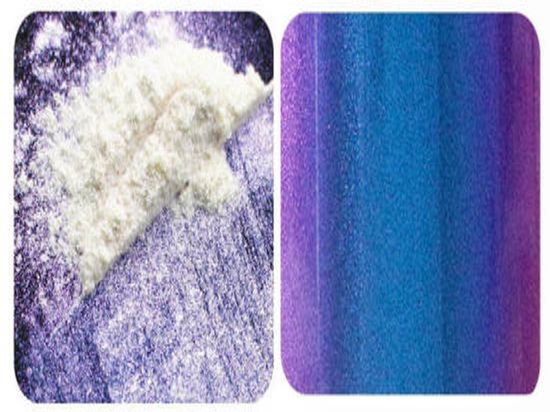
KT-92230 is a multichrome pigment that shifts through a full blue-purple-red-orange sequence as the viewing angle changes — one of the broadest color-travel arcs we produce in the KT-9000 series. Built on a natural mica substrate with a multi-layer TiO₂/Fe₂O₃/silica/tin oxide coating, it comes in a 25–130 μm particle size that delivers strong angular contrast and high visual impact across automotive finishes, decorative coatings, and specialty printing.
Read More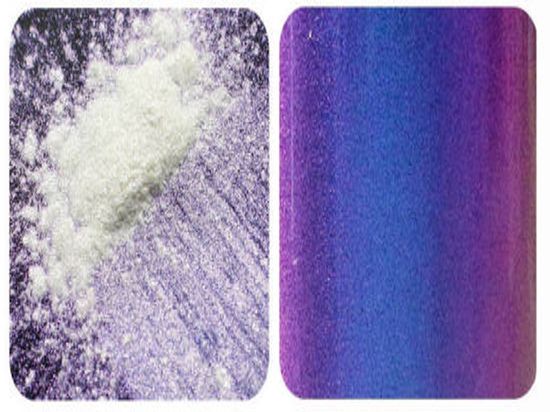
KT-92330 is a multi-layer interference pigment from Kolortek's KT-9000 Magic Chameleon Series, producing a continuous color shift sequence — indigo through purple, red, orange, and yellow — as the viewing angle changes. Built on natural mica coated with TiO₂, silica, and tin oxide, it delivers a high-mirror goniochromatic effect with a 25–130 μm particle size distribution engineered for maximum visual impact. This color shifting pigment powder performs best over dark or black substrates, where the full angular color travel is most legible.
Read More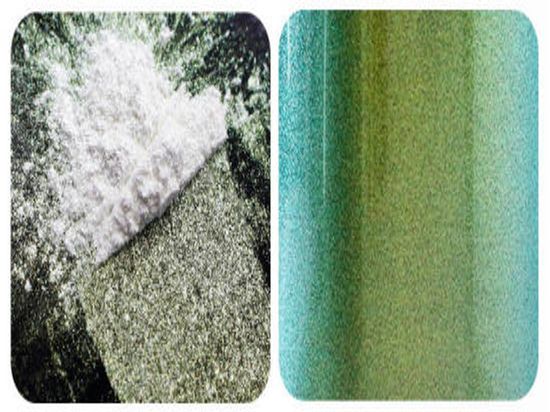
KT-92630 is a large-particle chameleon paint pearl from our KT-9000 Magic Chameleon Series, producing a sequential golden-to-kelly-green-to-blue color travel as the viewing angle shifts. With a 25–130 μm particle range, it delivers high visual impact in automotive custom finishes, decorative coatings, and specialty applications where a pronounced, multi-stop color flip is the goal. The substrate is natural mica with a multi-layer TiO₂/SiO₂/metal-oxide coating that generates the goniochromatic interference effect.
Read More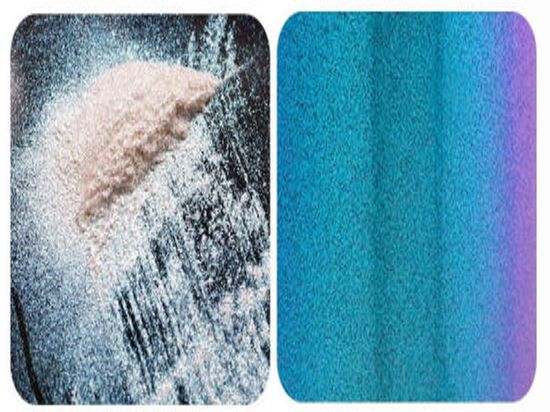
KT-92175 is the large-particle grade of our chameleon pigment for resin, built on a natural mica substrate with a multi-layer TiO₂, silica, and tin oxide coating that produces a continuous cyan-to-blue-to-purple-to-red angle-dependent color shift. At 75–175μm, it is the highest-sparkle option in the KT-9000 Magic Chameleon Series' KT-921** Cyan-Blue-Purple-Red range. Compatible with epoxy and UV resin at loadings of 1–10% by weight, the effect reads strongest on dark or black substrates where the goniochromatic shift has maximum contrast.
Read More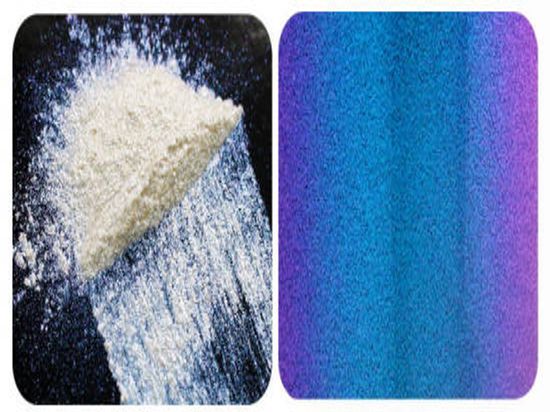
KT-92275 is a large-particle duochrome loose pigment from our KT-9000 Magic Chameleon Series, delivering a full blue-purple-red-orange color travel sequence that shifts continuously across the visible spectrum as the viewing angle changes. With a particle size range of 75–175 μm, this grade is engineered specifically for applications where maximum sparkle is the priority — loose eyeshadow, nail art toppers, and high-impact decorative cosmetics where the angular shift needs to read clearly against the skin or a dark base.
Read More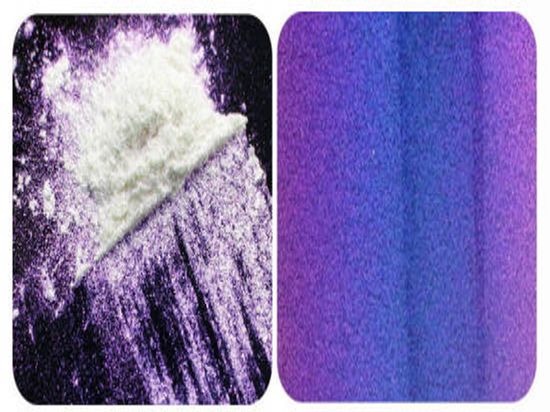
KT-92375 is a large-particle ghost chameleon pigment from Kolortek's KT-9000 Magic Chameleon Series, delivering a continuous five-stage color shift — indigo → purple → red → orange → yellow — as the viewing angle changes. Built on natural mica coated with titanium dioxide, silica, and tin oxide, it carries a particle size of 75–175 μm for maximum sparkle. We developed this grade specifically for high-impact automotive finishes, custom coatings, and luxury decorative applications where a dramatic, angle-dependent color shift is the primary design goal.
Read More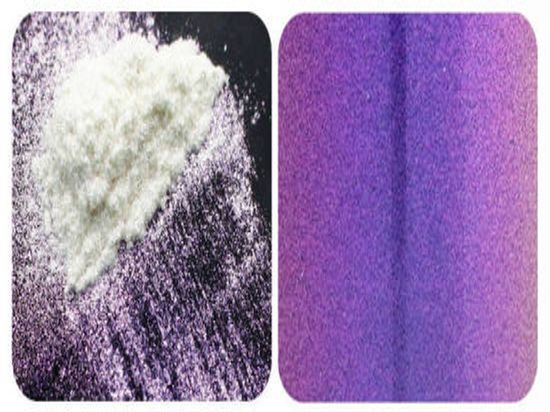
KT-92475 is a large-particle chameleon pigment from the KT-9000 Magic Chameleon Series, producing a continuous mauve → red → orange → yellow color shift that sweeps across the visible spectrum as the viewing angle changes. With a particle size of 75–175 μm and a natural mica substrate coated with titanium dioxide, silica, and tin oxide, it delivers the coarse, high-sparkle texture that nail art formulators need for maximum visual drama — particularly over a dark or black base coat.
Read More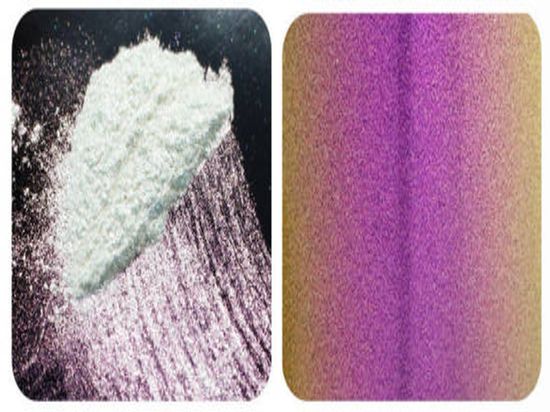
KT-92575 is a large-flake chameleon pearl powder from our KT-9000 Magic Chameleon Series, producing a dramatic angle-dependent color shift spanning red, orange, yellow, and kelly green on dark substrates. Built on a natural mica substrate with a multi-layer coating of titanium dioxide, silica, and tin oxide, it delivers an INCI composition suited to high-end cosmetic and nail art formulations. The 75–175 μm particle range gives it the high-sparkle, deep color-travel behavior that distinguishes it from finer cosmetic pearl grades.
Read More
 English
 Français
 Deutsch
 Русский
 Español
 Português