
Leave A Message
If you are interested in our products and want to know more details,please leave a message here,we will reply you as soon as we can.
KT-92375 indigo-purple-red-orange yellow Ghost Chameleon Pigment
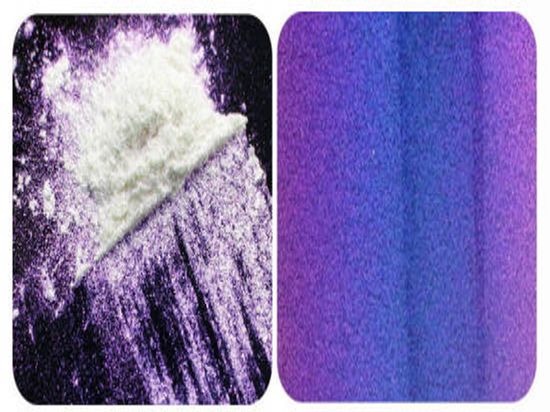
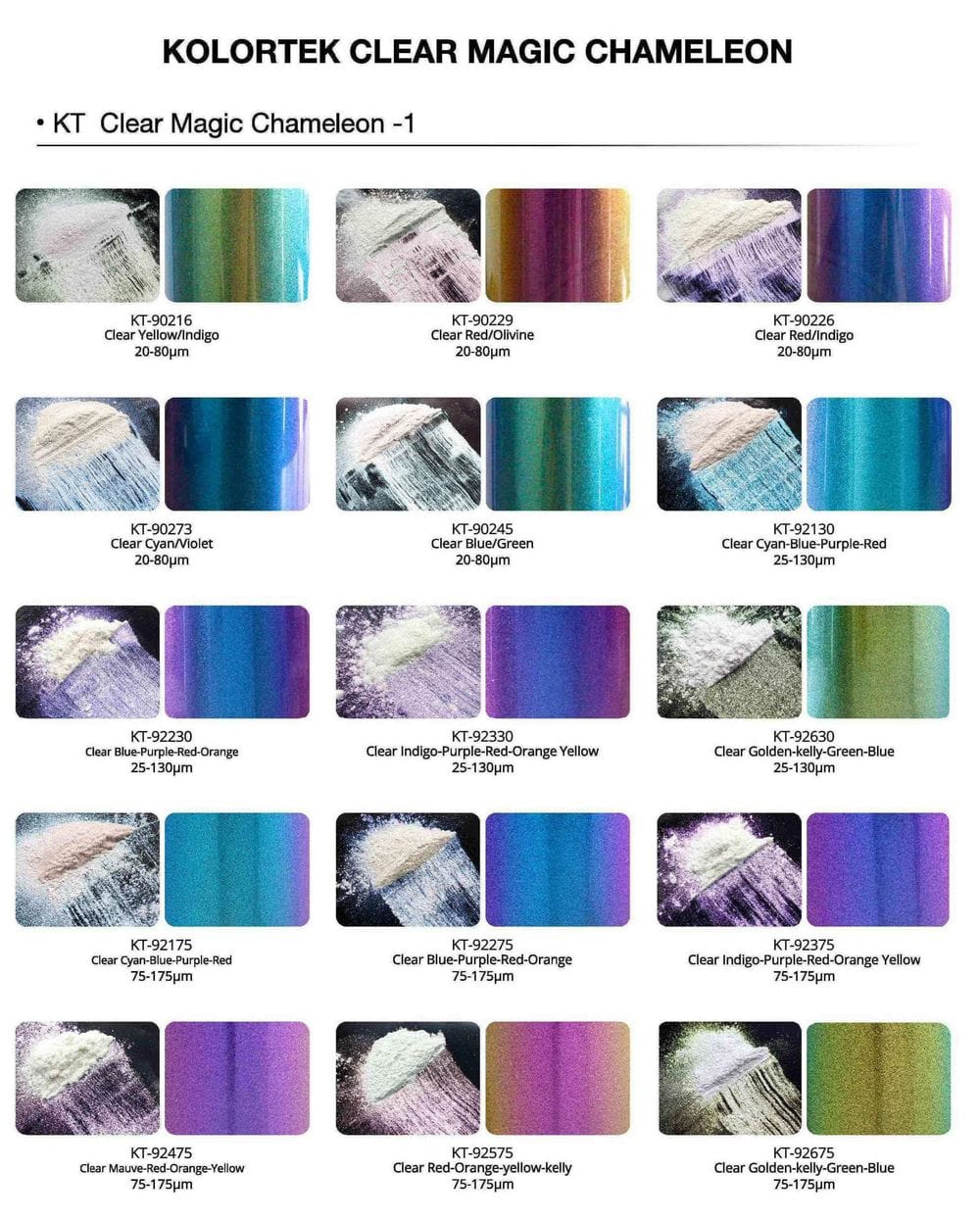
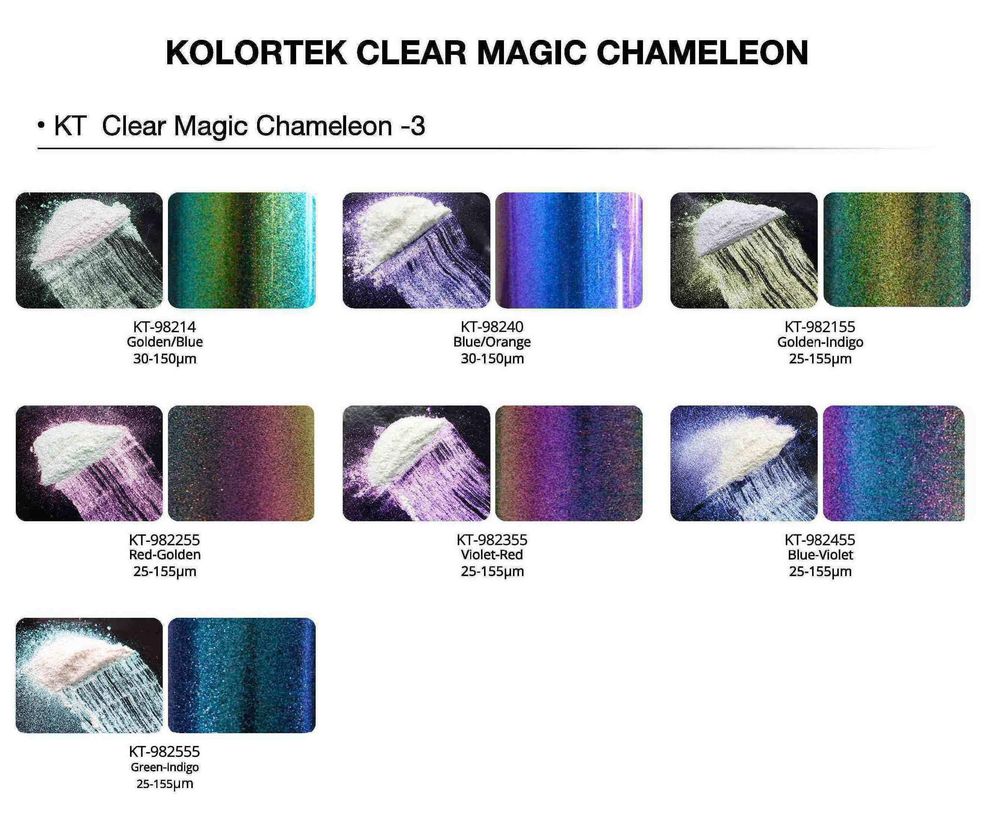
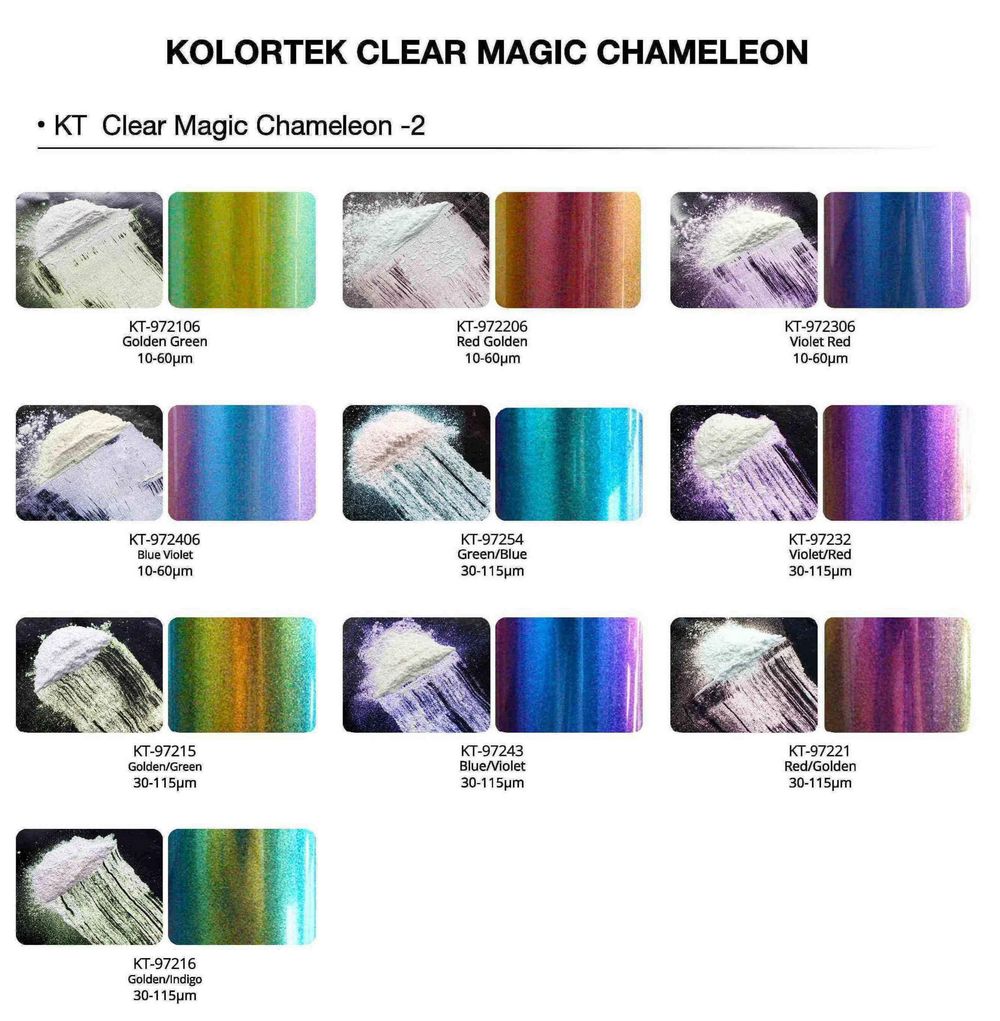
KT-92375 belongs to the KT-9000 Magic Chameleon Series — the line we position specifically for color-shift applications where a single-angle hue is not enough. What sets this grade apart from finer particles in the same series is the 75–175 μm size window. That range produces a coarser, more faceted platelet structure, which scatters and reflects light in a way that generates a visibly stronger sparkle alongside the shift. The trade-off is coverage: large platelets orient well in clear or semi-transparent binders but require more careful dispersion management than smaller grades.
The color sequence — indigo, purple, red, orange, yellow — is driven by multi-layer thin-film interference. Each layer in the TiO₂/SiO₂/SnO₂ coating stack is engineered to constructively and destructively interfere at specific wavelengths depending on the incident and viewing angle. The result is a smooth, continuous hue progression rather than an abrupt two-tone switch. That characteristic is what customers in the automotive custom market refer to when they ask for a "ghost" or "flip" effect.
Because the pigment is inorganic throughout — mica, titanium dioxide, silica, tin oxide — it is odourless and insoluble in water. General weather, light, and heat resistance is good within the context of the KT-9000 series, which is consistent with inorganic pigment behavior.
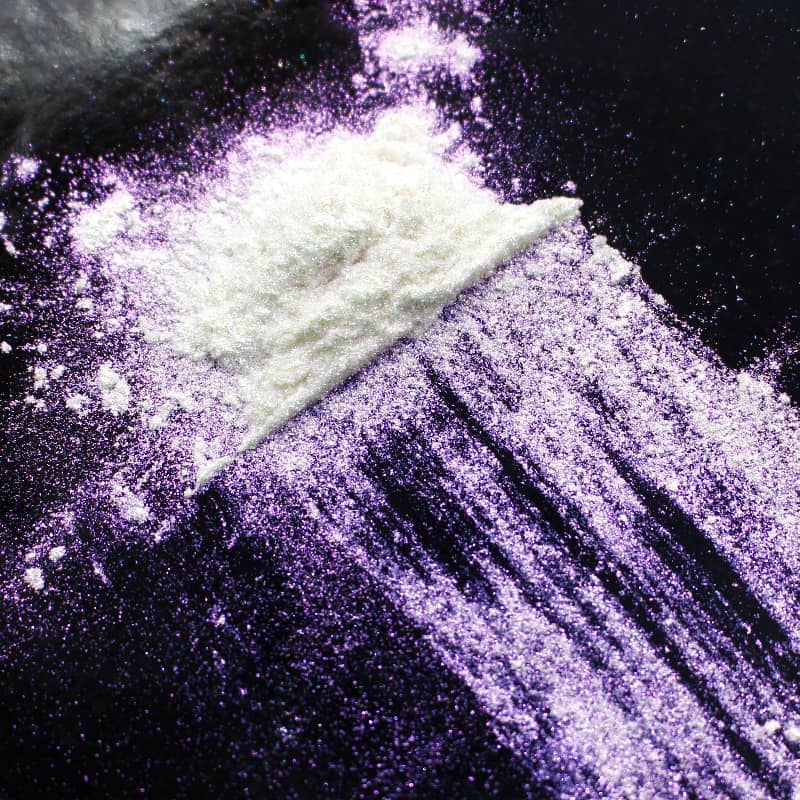
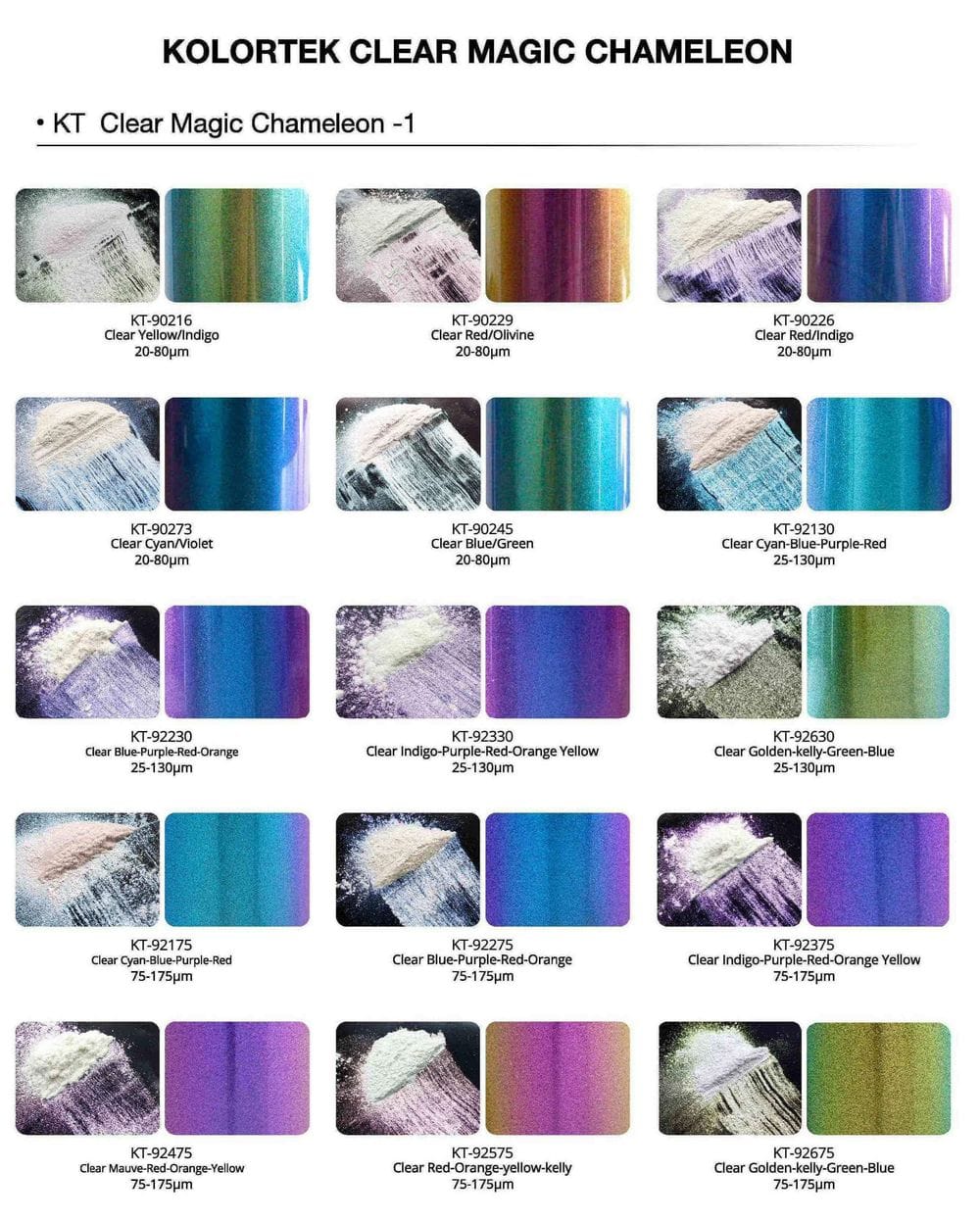
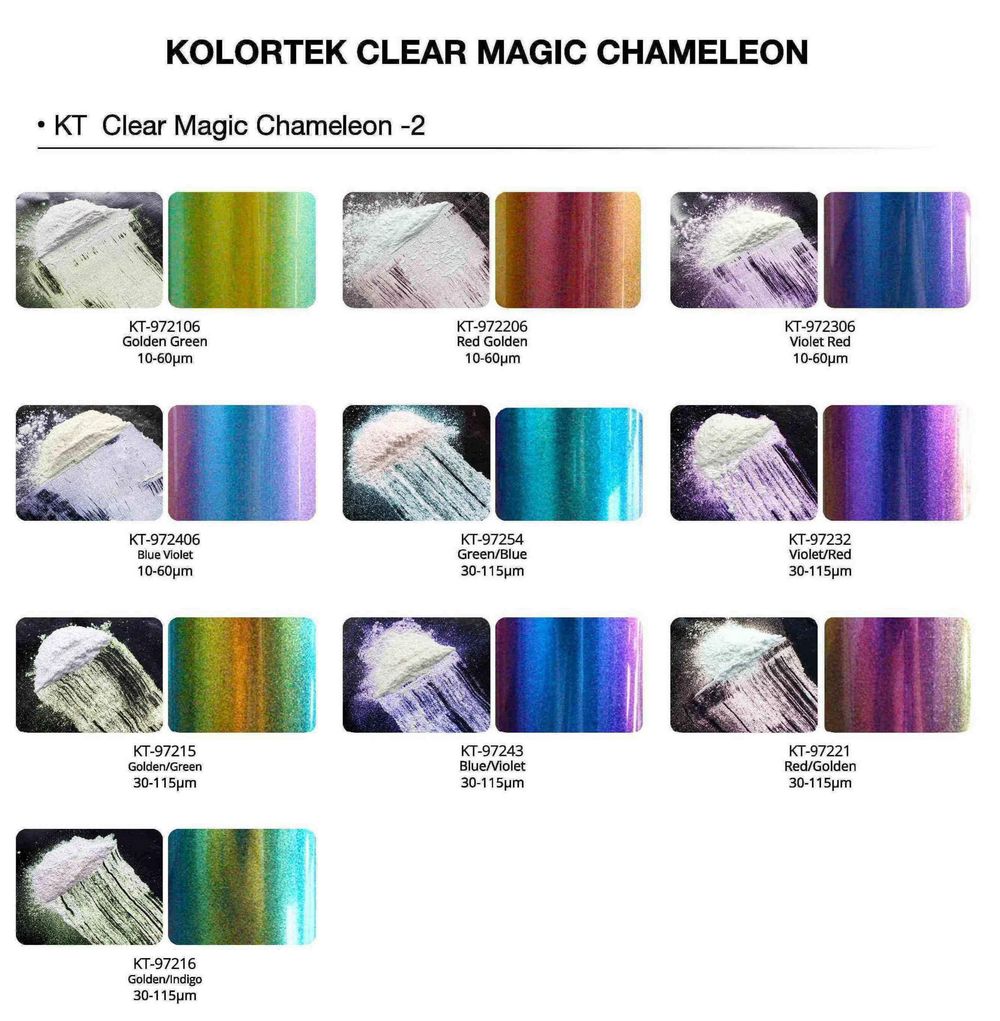
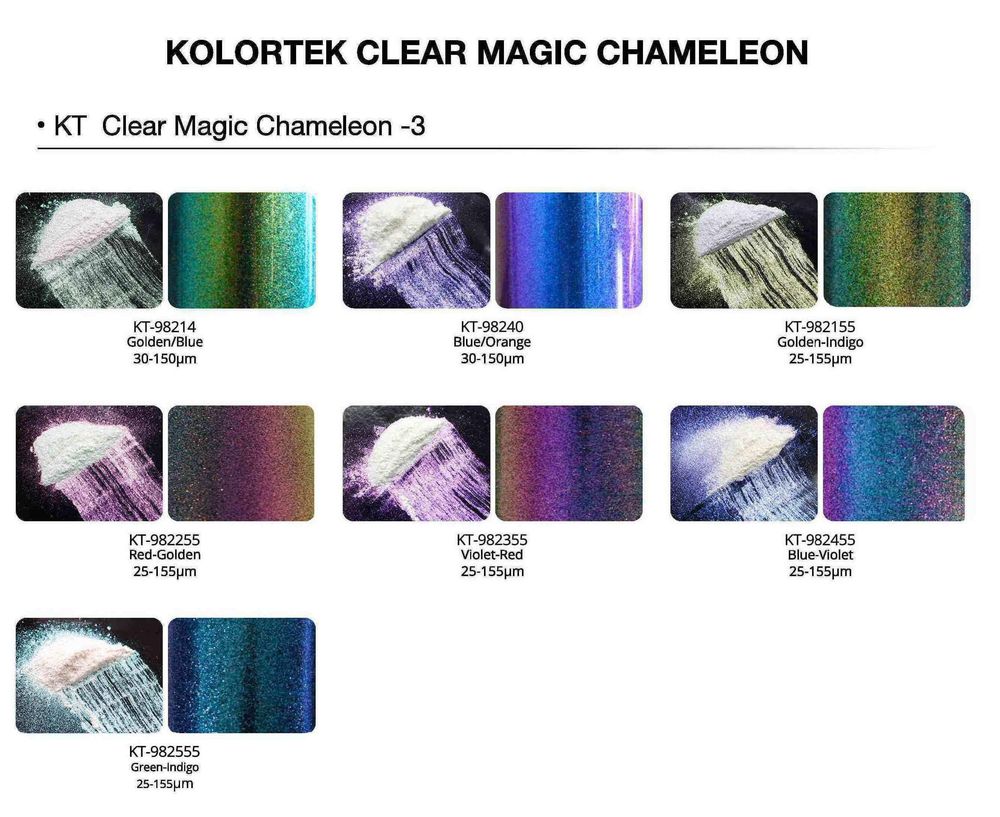
Within the KT-9000 Magic Chameleon Series, the same indigo-purple-red-orange-yellow color shift is available across a full particle size range. The model suffix indicates the size window. KT-92375 is the large-particle end of the range; smaller suffixes are available for applications where coverage, ink compatibility, or cosmetic elegance is more important than sparkle intensity.
| Model Code | Particle Size | Effect Character | Typical Use |
|---|---|---|---|
| KT-92302 | 5–25 μm | Satin / fine, high coverage | Inks, cosmetics |
| KT-92304 | 10–40 μm | Fine pearl | Cosmetics, fine coatings |
| KT-92306 | 10–60 μm | Standard pearl | Most popular for coatings |
| KT-92307 | 10–70 μm | Medium pearl | Coatings, plastics |
| KT-92315 | 20–100 μm | Flash effect | Coatings, decorative finishes |
| KT-92325 | 25–130 μm | High visual impact | Automotive, coatings |
| KT-92375 | 75–175 μm | Maximum sparkle | Automotive, luxury coatings |
| KT-923100 | 100–250 μm | Extra large, decorative | Decorative coatings, art |
| Parameter | Value |
|---|---|
| Form | Powder |
| Color shift | Indigo → purple → red → orange → yellow |
| Particle size | 75–175 μm |
| D50 | 80–135 μm |
| Density | 2.6–3.1 kg/L |
| Bulk density | 15–25 g/100 g |
| pH (4% H₂O) | 6.0–9.0 |
| Solubility in water | Insoluble |
| Odour | Odourless |
| Chemical composition | Mica (57–68%), TiO₂ (14–18%), SiO₂ (16–21%), SnO₂ (0–1%) |
| MSDS classification | Not classified under CLP (EC) No. 1272/2008 |
The composition breakdown is worth noting for formulators evaluating regulatory fit. Mica forms the structural backbone at 57–68%, with silica contributing 16–21% — a relatively high silica fraction compared to standard interference pigments. This silica layer is part of what stabilizes the thin-film coating stack and contributes to the pigment's inorganic robustness. Heavy metal content is controlled to tight limits: lead and nickel both below 10 ppm, cadmium below 3 ppm, arsenic below 2 ppm — full limits are listed in the TDS.
The KT-9000 series is the line we see most consistently specified in the custom and modified car market — color-shift wraps, bespoke basecoats, motorcycle helmet finishes, and sporting goods coatings. KT-92375 specifically, with its 75–175 μm particle range, is the grade that formulators reach for when maximum sparkle intensity is the brief. The color-shift effect is goniochromatic, meaning the perceived hue depends entirely on the incident and observation angle — that is not a defect, it is the intended optical mechanism.
Substrate color has a direct impact on perceived shift. Dark and black substrates allow the interference colors to dominate; light-colored or white substrates scatter background light and compress the perceived shift range. In automotive basecoat/clearcoat systems, applying over a black or dark grey base coat is standard practice for this grade.
Beyond automotive, KT-92375 is used across lacquer coatings, decorative plastics, synthetic leather, and luxury packaging. The KT-9000 series is also referenced for high-security printing of banknotes and negotiable securities, where angle-dependent color shift provides a hard-to-replicate authentication feature. For cosmetics and nail art, grade-specific regulatory confirmation is required before use — we recommend requesting the relevant documentation before committing to a cosmetic formulation.
The single most common processing error we see with large-particle chameleon pigments is high-shear dispersion. The optical effect depends on flat, intact platelets aligning parallel to the substrate surface. High-shear recirculation, aggressive bead milling, or over-thinning during let-down all break platelet edges and reduce both sparkle and color-shift intensity. Hand-stirring or low-shear paddle mixing is the correct approach for incorporating KT-92375 into a basecoat.
In automotive basecoat/clearcoat systems, a loading of 1–10% in the basecoat is the standard working range for pearl-type pigments in this series, targeting a dry film thickness of 15–25 μm. Proper flash-off time between the basecoat and clearcoat is critical: rushing the clearcoat traps solvent and disrupts platelet orientation. A clear topcoat is strongly recommended — it protects the pigment layer and enhances perceived depth and color saturation.
KT-92375 is compatible with most resin systems. For applications where the base shift range needs adjustment, it can be combined with transparent absorption pigments to modify the perceived base color without disrupting the platelet structure.
Standard inorganic pigment handling applies. Avoid generating or breathing airborne dust — use an approved dust mask when handling in open containers. Gloves and eye protection are recommended. Store in a well-ventilated area with the container sealed. If eye contact occurs, flush with gently flowing fresh water; if skin contact, wash thoroughly with water.
Kolortek operates under ISO 9001:2015 quality management, covering production and sales of pigments and fillers, with batch-to-batch consistency as a core delivery requirement. KT-92375 is not classified as hazardous under CLP Regulation (EC) No. 1272/2008, nor under Directives 67/548/EEC and 1999/45/EC. REACH registration in Kolortek's current documentation specifically covers fluorphlogopite (synthetic mica) grades; KT-92375 is natural mica-based, so product-specific REACH confirmation should be requested if required for your jurisdiction.
For cosmetic applications, grade-specific compliance documentation under EU Cosmetics Regulation (EC) No. 1223/2009 is available for eligible grades — confirm suitability for KT-92375 directly with our technical team before specifying it in a cosmetic formulation. Food-contact suitability is not stated in the product data.
What is the particle size of KT-92375 and how does it affect the visual result?
KT-92375 has a particle size range of 75–175 μm with a D50 of 80–135 μm. This places it at the large-particle end of the KT-923 series. Larger platelets generate stronger specular sparkle alongside the color shift, making this grade the right choice when high visual drama is the priority. Finer grades (e.g., 10–60 μm) offer smoother coverage and are better suited to inks and cosmetics.
What colors does KT-92375 shift through, and what substrate works best?
KT-92375 shifts through five stages — indigo, purple, red, orange, and yellow — as the viewing angle changes. The effect is goniochromatic (angle-dependent thin-film interference), not a printed or dyed color. It performs best over dark or black substrates; light-colored substrates reduce the perceived shift range by introducing background light scatter.
Is KT-92375 suitable for color shift pigment for automotive basecoat systems?
Yes. KT-92375 is used in automotive custom finishes and color-shift basecoat/clearcoat systems. The recommended loading range for pearl pigments in this series is 1–10% in the basecoat, targeting 15–25 μm dry film thickness. Avoid high-shear mixing — it damages platelet structure. Apply a clear topcoat to protect the pigment layer and maximize color depth.
Which other particle sizes are available in the same indigo-purple-red-orange-yellow color shift?
The same color shift is available across eight particle size options in the KT-923 series: 5–25 μm (KT-92302), 10–40 μm (KT-92304), 10–60 μm (KT-92306), 10–70 μm (KT-92307), 20–100 μm (KT-92315), 25–130 μm (KT-92325), 75–175 μm (KT-92375), and 100–250 μm (KT-923100). The choice depends on application — finer grades for inks and cosmetics, larger grades for coatings requiring sparkle intensity.
Contact our technical team to discuss formulation requirements and grade selection for your specific application.
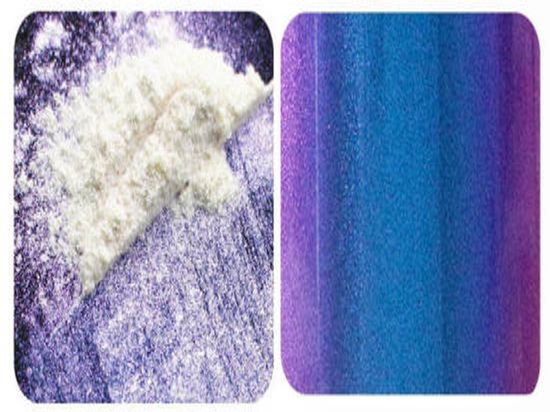
KT-92230 is a multichrome pigment that shifts through a full blue-purple-red-orange sequence as the viewing angle changes — one of the broadest color-travel arcs we produce in the KT-9000 series. Built on a natural mica substrate with a multi-layer TiO₂/Fe₂O₃/silica/tin oxide coating, it comes in a 25–130 μm particle size that delivers strong angular contrast and high visual impact across automotive finishes, decorative coatings, and specialty printing.
Read More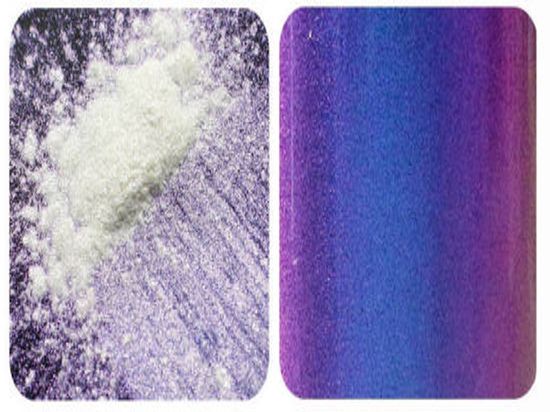
KT-92330 is a multi-layer interference pigment from Kolortek's KT-9000 Magic Chameleon Series, producing a continuous color shift sequence — indigo through purple, red, orange, and yellow — as the viewing angle changes. Built on natural mica coated with TiO₂, silica, and tin oxide, it delivers a high-mirror goniochromatic effect with a 25–130 μm particle size distribution engineered for maximum visual impact. This color shifting pigment powder performs best over dark or black substrates, where the full angular color travel is most legible.
Read More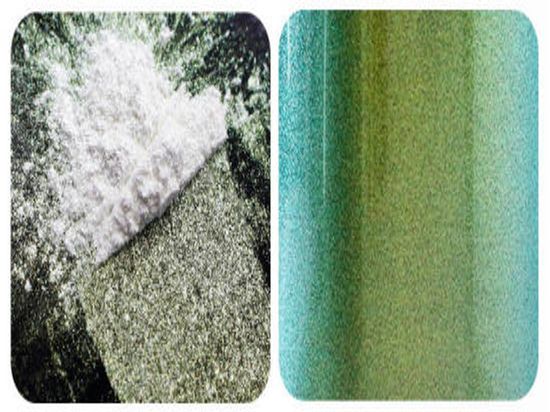
KT-92630 is a large-particle chameleon paint pearl from our KT-9000 Magic Chameleon Series, producing a sequential golden-to-kelly-green-to-blue color travel as the viewing angle shifts. With a 25–130 μm particle range, it delivers high visual impact in automotive custom finishes, decorative coatings, and specialty applications where a pronounced, multi-stop color flip is the goal. The substrate is natural mica with a multi-layer TiO₂/SiO₂/metal-oxide coating that generates the goniochromatic interference effect.
Read More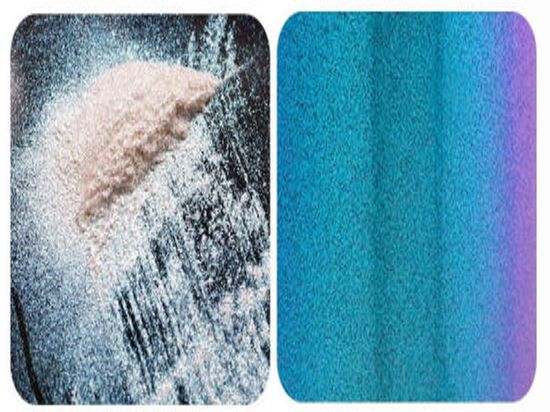
KT-92175 is the large-particle grade of our chameleon pigment for resin, built on a natural mica substrate with a multi-layer TiO₂, silica, and tin oxide coating that produces a continuous cyan-to-blue-to-purple-to-red angle-dependent color shift. At 75–175μm, it is the highest-sparkle option in the KT-9000 Magic Chameleon Series' KT-921** Cyan-Blue-Purple-Red range. Compatible with epoxy and UV resin at loadings of 1–10% by weight, the effect reads strongest on dark or black substrates where the goniochromatic shift has maximum contrast.
Read More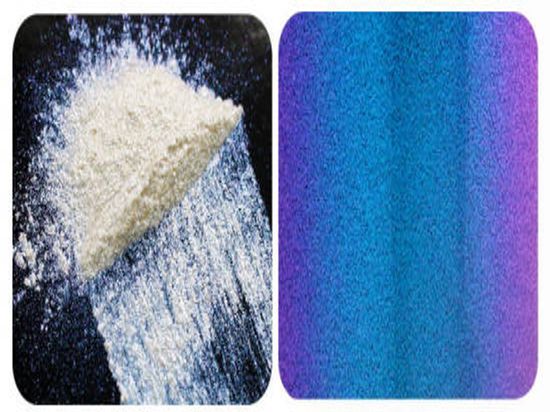
KT-92275 is a large-particle duochrome loose pigment from our KT-9000 Magic Chameleon Series, delivering a full blue-purple-red-orange color travel sequence that shifts continuously across the visible spectrum as the viewing angle changes. With a particle size range of 75–175 μm, this grade is engineered specifically for applications where maximum sparkle is the priority — loose eyeshadow, nail art toppers, and high-impact decorative cosmetics where the angular shift needs to read clearly against the skin or a dark base.
Read More
KT-92375 is a large-particle ghost chameleon pigment from Kolortek's KT-9000 Magic Chameleon Series, delivering a continuous five-stage color shift — indigo → purple → red → orange → yellow — as the viewing angle changes. Built on natural mica coated with titanium dioxide, silica, and tin oxide, it carries a particle size of 75–175 μm for maximum sparkle. We developed this grade specifically for high-impact automotive finishes, custom coatings, and luxury decorative applications where a dramatic, angle-dependent color shift is the primary design goal.
Read More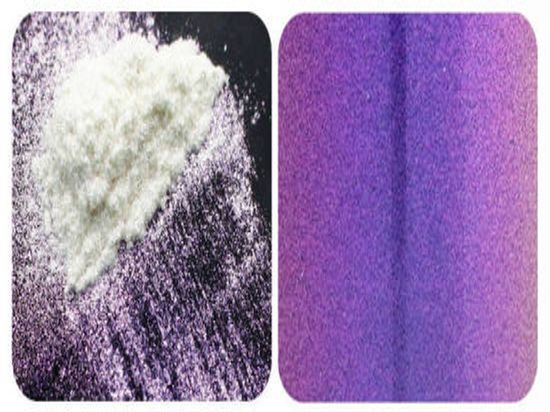
KT-92475 is a large-particle chameleon pigment from the KT-9000 Magic Chameleon Series, producing a continuous mauve → red → orange → yellow color shift that sweeps across the visible spectrum as the viewing angle changes. With a particle size of 75–175 μm and a natural mica substrate coated with titanium dioxide, silica, and tin oxide, it delivers the coarse, high-sparkle texture that nail art formulators need for maximum visual drama — particularly over a dark or black base coat.
Read More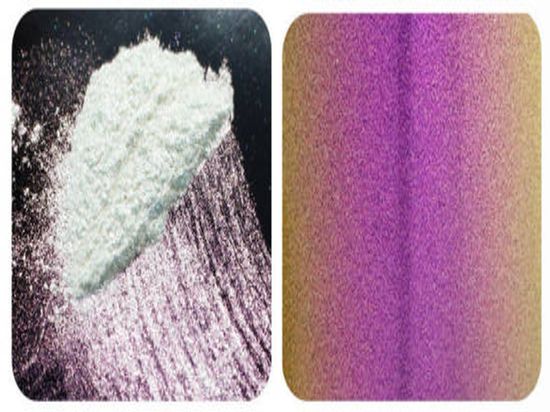
KT-92575 is a large-flake chameleon pearl powder from our KT-9000 Magic Chameleon Series, producing a dramatic angle-dependent color shift spanning red, orange, yellow, and kelly green on dark substrates. Built on a natural mica substrate with a multi-layer coating of titanium dioxide, silica, and tin oxide, it delivers an INCI composition suited to high-end cosmetic and nail art formulations. The 75–175 μm particle range gives it the high-sparkle, deep color-travel behavior that distinguishes it from finer cosmetic pearl grades.
Read More
 English
 Français
 Deutsch
 Русский
 Español
 Português