
Leave A Message
If you are interested in our products and want to know more details,please leave a message here,we will reply you as soon as we can.
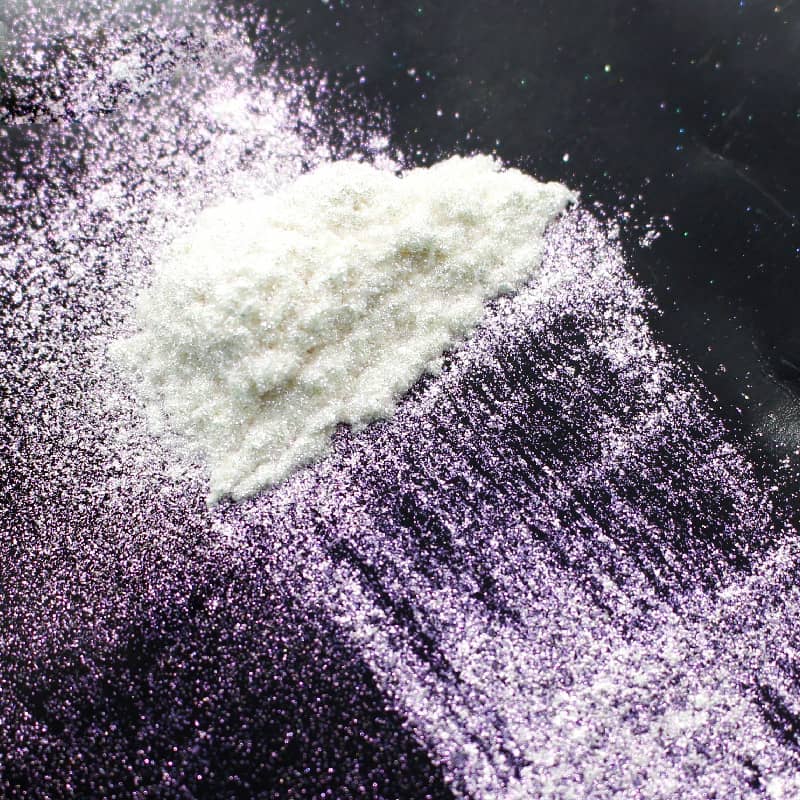
KT-92475 mauve-red-orange-yellow Chameleon Pigment for nail art
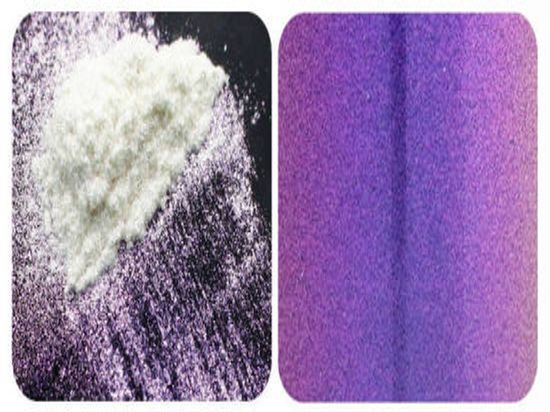
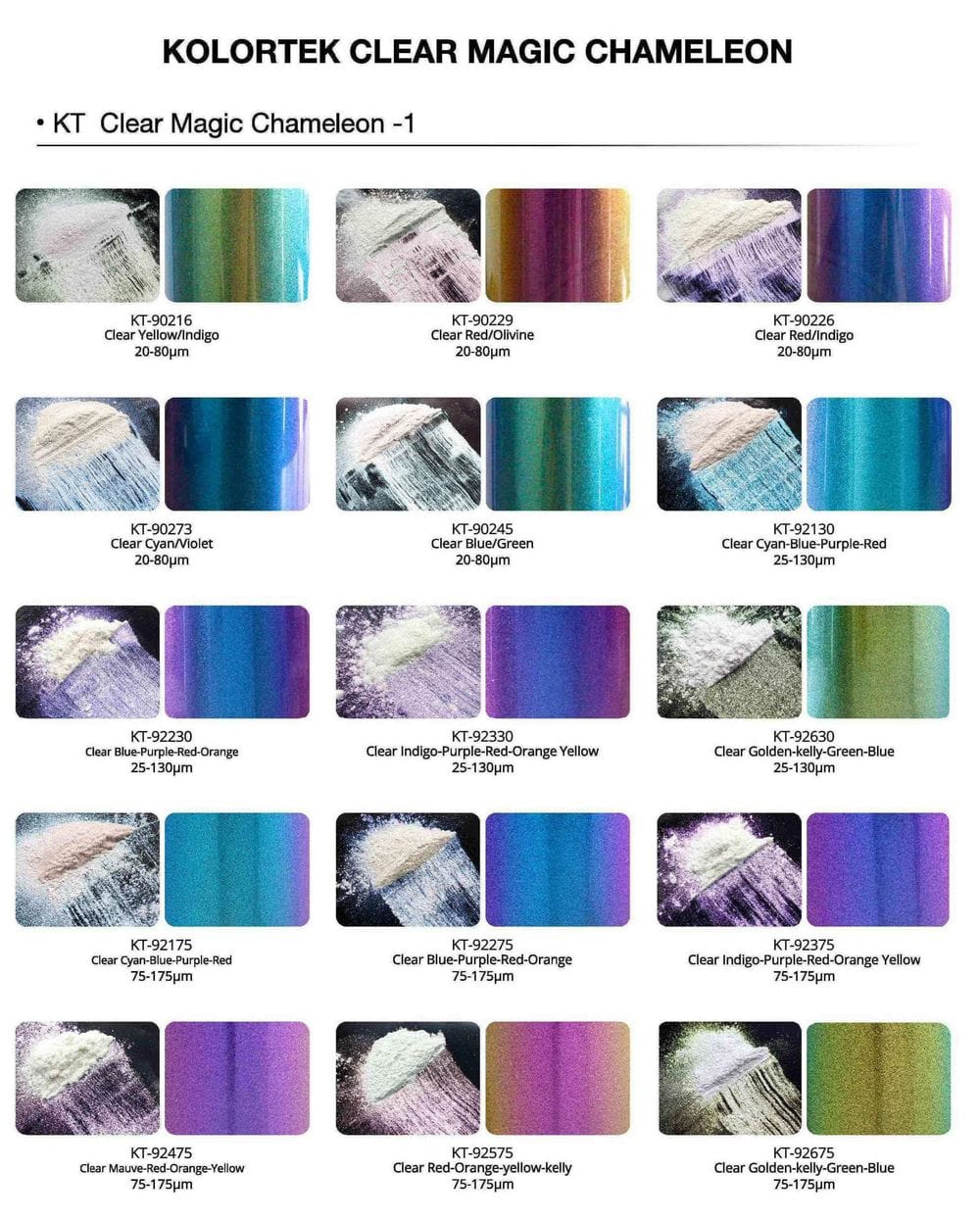
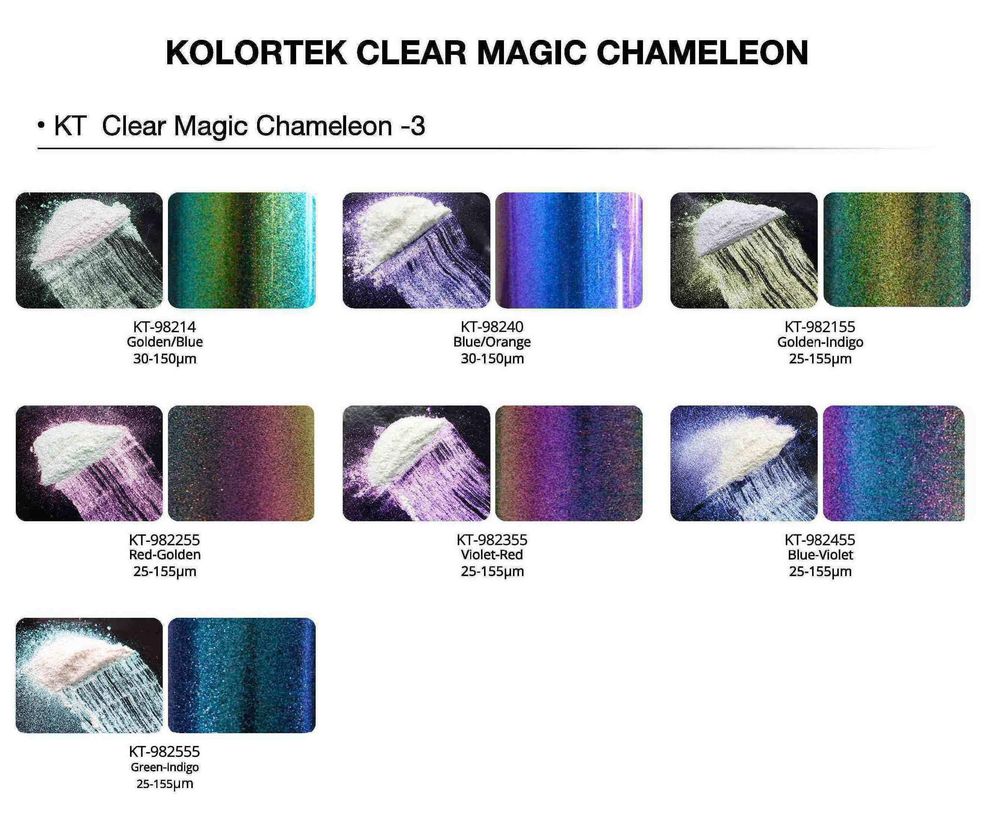
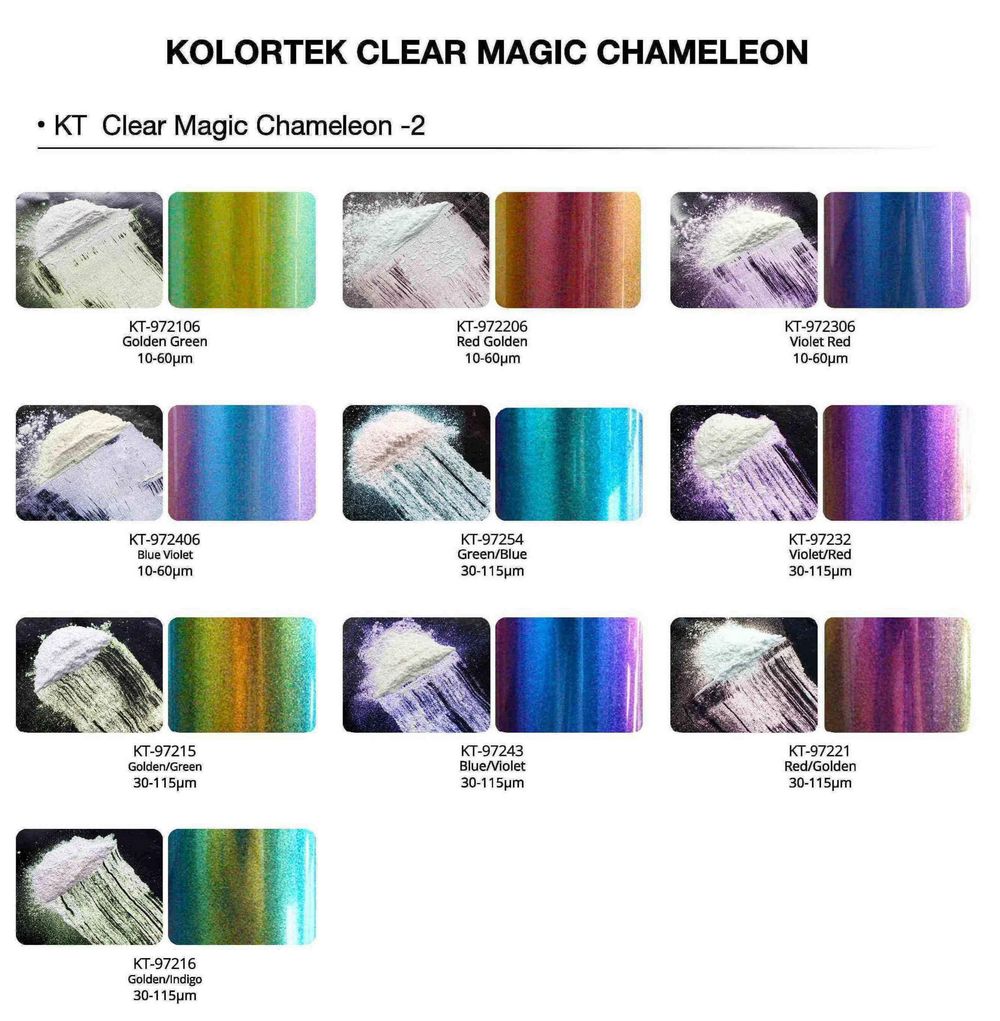
The KT-9000 series achieves its multicolor shift through a precisely controlled multi-layer interference stack on a natural mica platelet. Light interacts with each layer boundary — mica, then titanium dioxide, then silica, then a tin oxide finish — and the constructive or destructive interference wavelength changes as the observation angle shifts. The result for KT-92475 is a four-stop color journey: mauve at a near-normal viewing angle, transitioning through red and orange to a warm yellow at more oblique angles.
What sets this grade apart within the KT-924** family is the particle size. At 75–175 μm with a D50 of 80–135 μm, the platelets are large enough to function as individual reflective facets. Each flake catches light independently, which is what produces the glittering, coarse-sparkle finish that separates a show-stopping nail set from a flat shimmer. Finer grades (the 02 or 04 codes, down to 5–25 μm) give a smoother, more satiny effect — a useful option when the application calls for it, but a different aesthetic entirely.
| Parameter | Value |
|---|---|
| Product code | KT-92475 |
| Series | KT-9000 Magic Chameleon |
| Color shift | Clear mauve → red → orange → yellow |
| Form | Powder |
| Particle size range | 75–175 μm |
| D50 | 80–135 μm |
| pH (4% H₂O) | 6.0–9.0 |
| Density | 2.6–3.1 kg/L |
| Bulk density | 15–25 g/100 g |
| Solubility | Insoluble in water |
| Odour | Odourless |
| INCI name | Mica (and) Titanium Dioxide (and) Silica (and) Tin Oxide |
| CAS numbers | 12001-26-2 / 13463-67-7 / 7631-86-9 / 18282-10-5 |
| Component | C.I. Number | Content (%) |
|---|---|---|
| Mica | CI 77019 | 56.0–68.0 |
| Titanium dioxide | CI 77891 | 14.0–18.0 |
| Silica | — | 16.0–22.0 |
| Tin oxide | CI 77861 | 0–1.0 |
The mauve-red-orange-yellow shift is available across the full KT-924** size range, which lets formulators tune the tactile and visual character of the effect independently from the color story. KT-92475 sits at the coarser end — chosen specifically when sparkle intensity and individual flake visibility are priorities, as they typically are in nail art.
| Size Code | Particle Size (μm) | Typical Use Character |
|---|---|---|
| 02 | 5–25 μm | Fine satin; smooth film; gel polish, cosmetic base |
| 04 | 10–40 μm | Fine-medium; uniform shift; nail polish, gel |
| 06 | 10–60 μm | Medium; balanced shift and sparkle |
| 07 | 10–70 μm | Medium; slightly increased flake visibility |
| 15 | 20–100 μm | Medium-coarse; noticeable sparkle |
| 25 | 25–130 μm | Coarse; high sparkle intensity |
| 30 | 25–130 μm | Coarse; high sparkle intensity |
| 75 (this grade) | 75–175 μm | Very coarse; maximum individual flake sparkle |
| 100 | 100–250 μm | Extra coarse; glitter-level flake size |
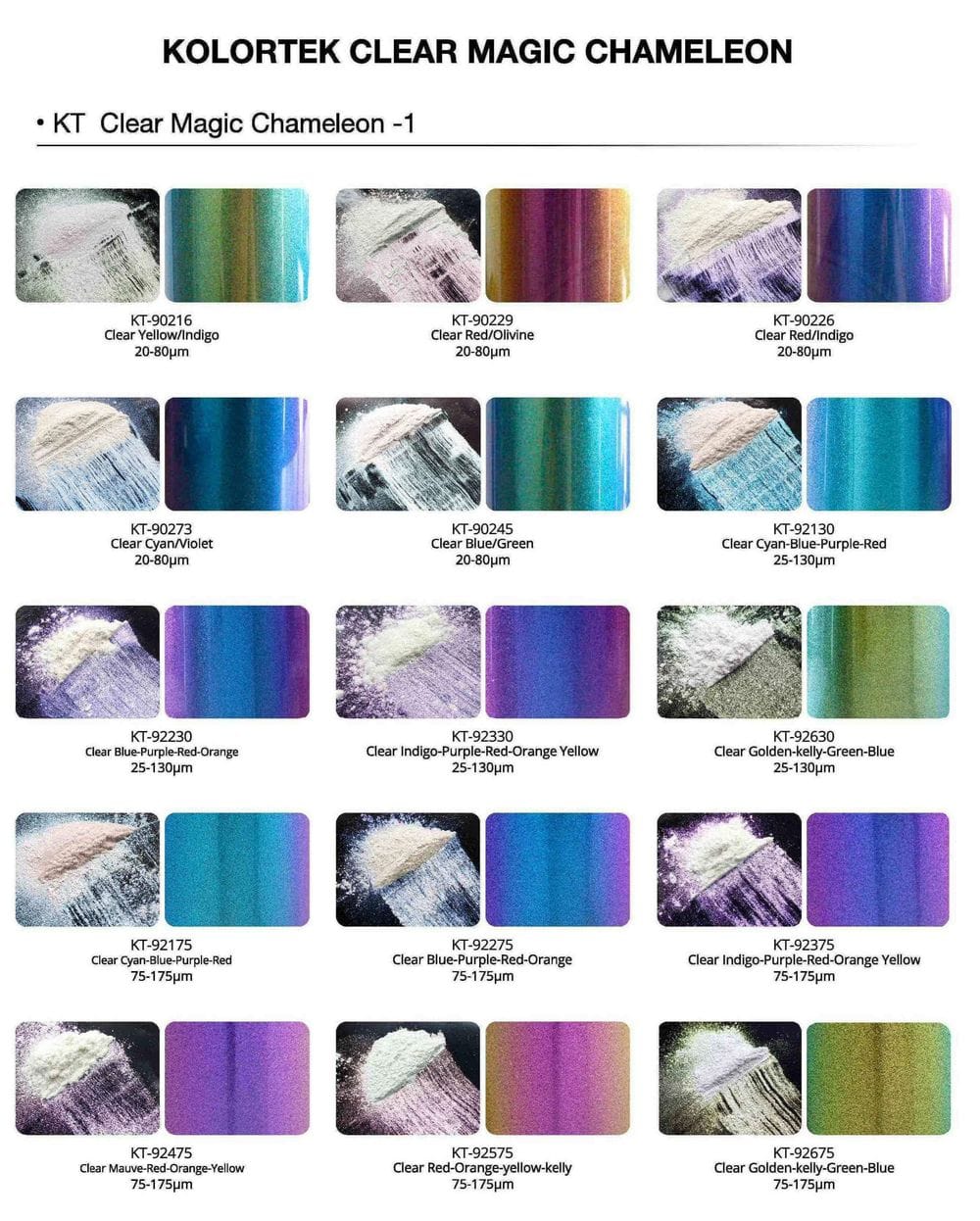
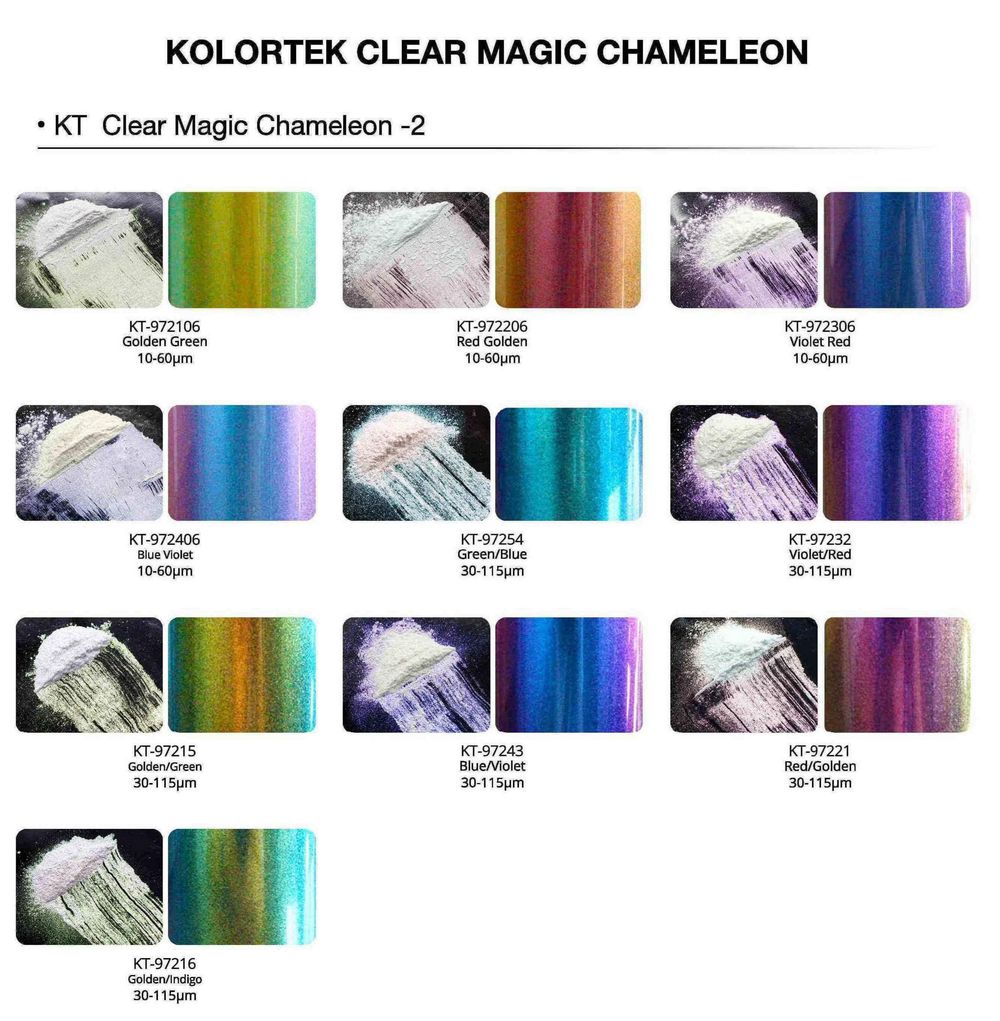
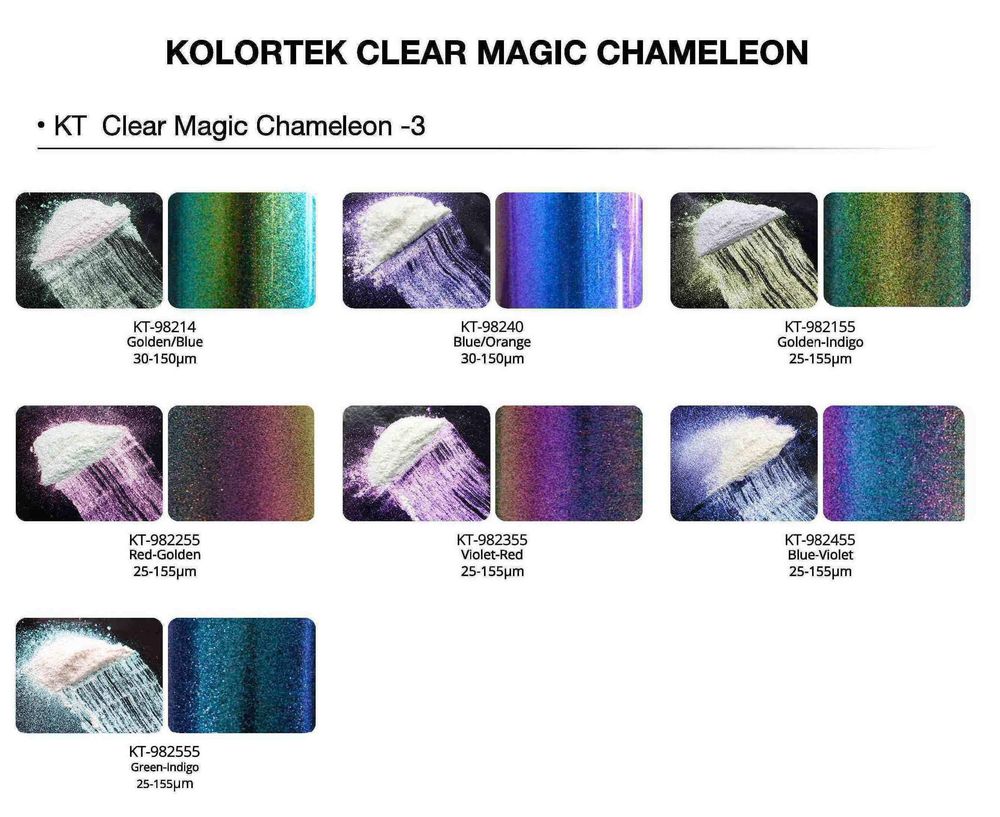
KT-92475 is listed in our nail and beauty application guide for nail polish, gel polish, and dip powders. As a chameleon chrome nail powder, it performs best as a dry rub-on or direct-suspension ingredient over a cured dark base coat — the black or deep-colored substrate amplifies the contrast between each color stop in the shift sequence. On a white or pale base, the same pigment produces a noticeably more muted result.
For suspension in liquid nail polish or gel systems, the particle density (2.6–3.1 kg/L) means settling is a genuine formulation concern at this particle size. Anti-settling agents such as bentonite or fumed silica help maintain uniform distribution. For gel nail systems, note that we do not have published UV/LED cure stability data specific to KT-92475 — pre-production curing trials are advisable to confirm no interference with polymerization.
Solvent compatibility is another checkpoint worth running in-house. Our general nail guide advises confirming solvent resistance for formulations containing ethyl acetate, butyl acetate, or acetone — solvents common in conventional nail lacquers. The KT-9000 series is not specifically designated solvent-resistant in our published data for this series; if your base contains any of those solvents, run a compatibility screen before committing to full-scale production.
| Nail Product Type | Recommended Loading |
|---|---|
| Nail polish (effect pigment) | 2–10% |
| Gel polish | 1–8% |
| Acrylic / dipping powder | 30–100% (depending on opacity desired) |
These are general guide values across the KT-9000 nail range — not loading rates derived from KT-92475-specific trials. Use them as a starting bracket for your initial formulation work.
The KT-9000 series is also used in automotive custom finishes and wraps, luxury packaging and printing, and decorative coatings. For those applications, a protective clear topcoat over the effect layer is standard practice to preserve the pigment and deepen perceived color shift. KT-92475's large particle size makes it particularly well suited to applications where sparkle at distance matters — an automotive custom panel or a show-piece packaging surface, for example — rather than applications requiring a perfectly smooth film build.
KT-92475 is tested against the heavy metal limits listed below, which align with cosmetic-grade ingredient requirements. These values are product-specific from the technical data sheet.
| Element | Limit | Element | Limit |
|---|---|---|---|
| As | < 2 ppm | Pb | < 10 ppm |
| Hg | < 1 ppm | Cr | < 100 ppm |
| Ba | < 50 ppm | Sb | < 1 ppm |
| Ni | < 10 ppm | Cu | < 50 ppm |
| Cd | < 3 ppm | Zn | < 50 ppm |
Kolortek holds ISO 9001:2015 certification covering the production and sales of pigments, glitters, and fillers. The quality management system is what underpins batch-to-batch consistency for KT-92475 — relevant to any buyer who needs to lock down a color standard across production runs.
For regulatory positioning: cosmetic-grade options and supporting composition documentation aligned with EU Cosmetics Regulation (EC) No 1223/2009 are available across our effect pigment range, and grades formulated to meet applicable US color-additive requirements under the FDA framework can be supplied. Final suitability for a specific cosmetic or nail formulation depends on the selected grade and intended use — we recommend confirming the current compliance package for KT-92475 when placing a first order.
The product is not classified as hazardous under CLP Regulation (EC) No 1272/2008, Directive 67/548/EEC, or Directive 1999/45/EC. Standard dust control precautions apply during handling: ventilation, dust mask, gloves, and eye protection when dust is generated.
What is the color shift sequence of KT-92475, and what substrate brings it out most clearly?
KT-92475 shifts from mauve through red and orange to yellow as the viewing angle changes. The effect is angle-dependent and most visible on dark or black substrates. On pale or white substrates the color contrast between shift stages is significantly reduced. For nail art, applying over a black base coat — two to three thin layers of effect product — gives the maximum visual range across the full shift sequence.
What particle size does KT-92475 use, and are finer options available in the same color?
KT-92475 uses the size-75 grade: 75–175 μm (D50 80–135 μm), which is the coarse end of the KT-924** range and produces a high-sparkle, individual-flake effect. The same mauve-red-orange-yellow shift is available in sizes down to 5–25 μm (code 02), which gives a fine, satin-smooth appearance better suited to gel bases or cosmetic formulations that require a smooth film. Contact us with your application requirements and we can recommend the appropriate size code.
Is this chameleon nail pigment compatible with gel nail systems and UV/LED curing?
KT-92475 is listed for use in gel polish across the KT-9000 nail application guide, with typical loading of 1–8%. That said, we do not have published UV/LED cure stability data specific to this grade. Pigment-gel compatibility — including any effect on cure depth or polymerization rate at higher loadings — should be verified through in-house trials before finalizing your formulation. This is standard practice for any coarse-particle effect pigment in gel systems.
How does a color shift pigment for beauty like this differ from a standard duochrome or two-tone shimmer?
A standard duochrome shifts between two colors at different viewing angles through a single interference layer. KT-92475 is a multicolor chameleon — it passes through four distinct color stops (mauve, red, orange, yellow) as the angle changes, enabled by a more complex multi-layer coating of TiO₂, silica, and tin oxide on the mica substrate. The result is a wider visual bandwidth and a more dynamic appearance in motion, which is why the KT-9000 series is often the first choice for high-end nail art and automotive custom finishes.
Reach out to our technical team to discuss sample requests, size selection, or compliance documentation for your specific formulation.
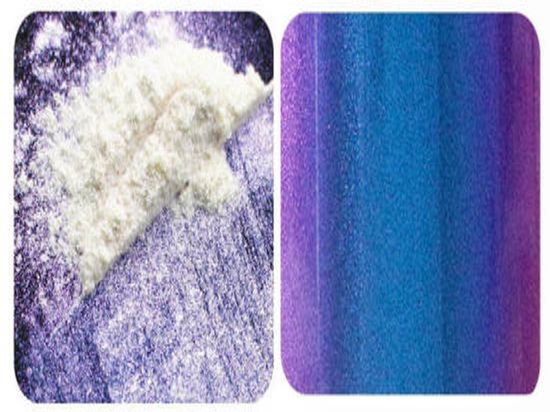
KT-92230 is a multichrome pigment that shifts through a full blue-purple-red-orange sequence as the viewing angle changes — one of the broadest color-travel arcs we produce in the KT-9000 series. Built on a natural mica substrate with a multi-layer TiO₂/Fe₂O₃/silica/tin oxide coating, it comes in a 25–130 μm particle size that delivers strong angular contrast and high visual impact across automotive finishes, decorative coatings, and specialty printing.
Read More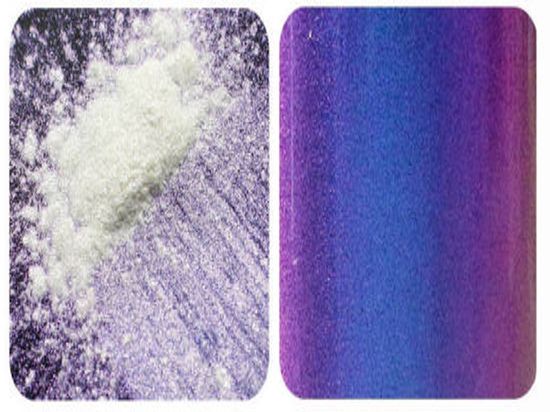
KT-92330 is a multi-layer interference pigment from Kolortek's KT-9000 Magic Chameleon Series, producing a continuous color shift sequence — indigo through purple, red, orange, and yellow — as the viewing angle changes. Built on natural mica coated with TiO₂, silica, and tin oxide, it delivers a high-mirror goniochromatic effect with a 25–130 μm particle size distribution engineered for maximum visual impact. This color shifting pigment powder performs best over dark or black substrates, where the full angular color travel is most legible.
Read More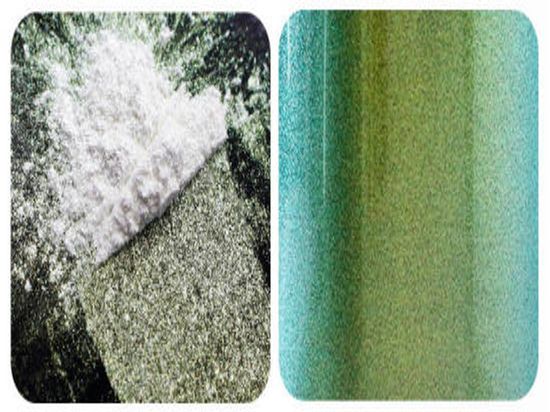
KT-92630 is a large-particle chameleon paint pearl from our KT-9000 Magic Chameleon Series, producing a sequential golden-to-kelly-green-to-blue color travel as the viewing angle shifts. With a 25–130 μm particle range, it delivers high visual impact in automotive custom finishes, decorative coatings, and specialty applications where a pronounced, multi-stop color flip is the goal. The substrate is natural mica with a multi-layer TiO₂/SiO₂/metal-oxide coating that generates the goniochromatic interference effect.
Read More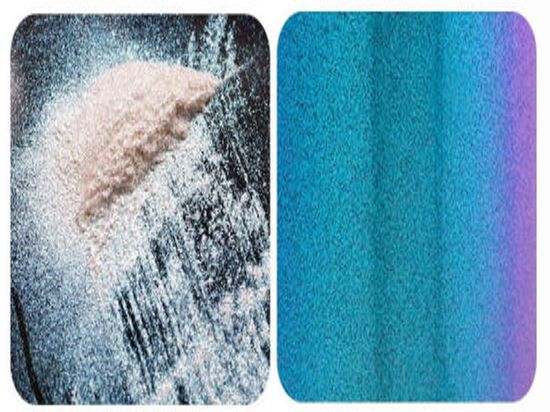
KT-92175 is the large-particle grade of our chameleon pigment for resin, built on a natural mica substrate with a multi-layer TiO₂, silica, and tin oxide coating that produces a continuous cyan-to-blue-to-purple-to-red angle-dependent color shift. At 75–175μm, it is the highest-sparkle option in the KT-9000 Magic Chameleon Series' KT-921** Cyan-Blue-Purple-Red range. Compatible with epoxy and UV resin at loadings of 1–10% by weight, the effect reads strongest on dark or black substrates where the goniochromatic shift has maximum contrast.
Read More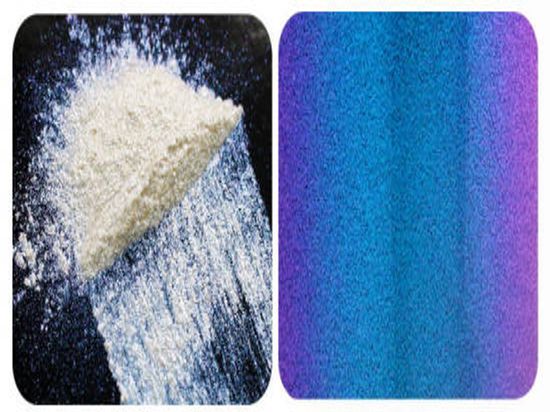
KT-92275 is a large-particle duochrome loose pigment from our KT-9000 Magic Chameleon Series, delivering a full blue-purple-red-orange color travel sequence that shifts continuously across the visible spectrum as the viewing angle changes. With a particle size range of 75–175 μm, this grade is engineered specifically for applications where maximum sparkle is the priority — loose eyeshadow, nail art toppers, and high-impact decorative cosmetics where the angular shift needs to read clearly against the skin or a dark base.
Read More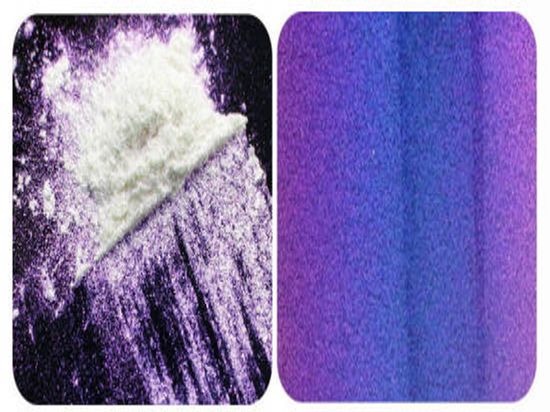
KT-92375 is a large-particle ghost chameleon pigment from Kolortek's KT-9000 Magic Chameleon Series, delivering a continuous five-stage color shift — indigo → purple → red → orange → yellow — as the viewing angle changes. Built on natural mica coated with titanium dioxide, silica, and tin oxide, it carries a particle size of 75–175 μm for maximum sparkle. We developed this grade specifically for high-impact automotive finishes, custom coatings, and luxury decorative applications where a dramatic, angle-dependent color shift is the primary design goal.
Read More
KT-92475 is a large-particle chameleon pigment from the KT-9000 Magic Chameleon Series, producing a continuous mauve → red → orange → yellow color shift that sweeps across the visible spectrum as the viewing angle changes. With a particle size of 75–175 μm and a natural mica substrate coated with titanium dioxide, silica, and tin oxide, it delivers the coarse, high-sparkle texture that nail art formulators need for maximum visual drama — particularly over a dark or black base coat.
Read More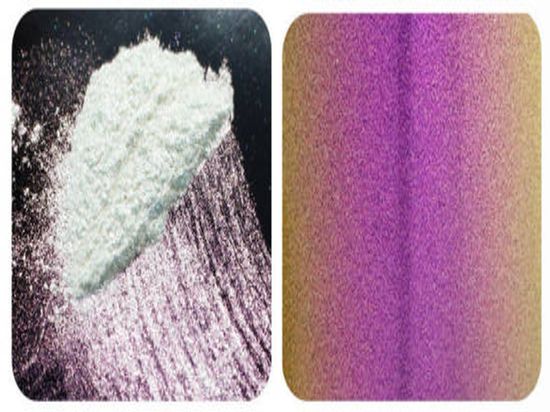
KT-92575 is a large-flake chameleon pearl powder from our KT-9000 Magic Chameleon Series, producing a dramatic angle-dependent color shift spanning red, orange, yellow, and kelly green on dark substrates. Built on a natural mica substrate with a multi-layer coating of titanium dioxide, silica, and tin oxide, it delivers an INCI composition suited to high-end cosmetic and nail art formulations. The 75–175 μm particle range gives it the high-sparkle, deep color-travel behavior that distinguishes it from finer cosmetic pearl grades.
Read More
 English
 Français
 Deutsch
 Русский
 Español
 Português