
Leave A Message
If you are interested in our products and want to know more details,please leave a message here,we will reply you as soon as we can.
KT-92575 red-orange-yellow-kelly Chameleon Pearl Powder for cosmetics
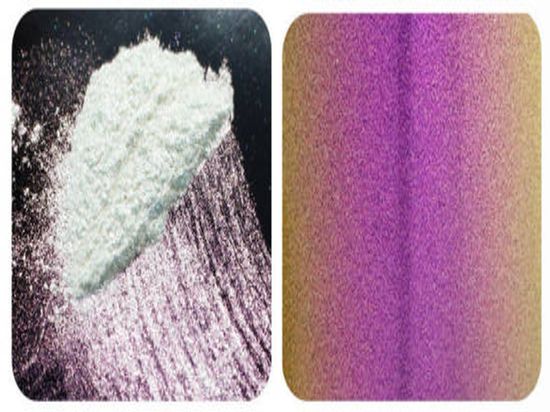
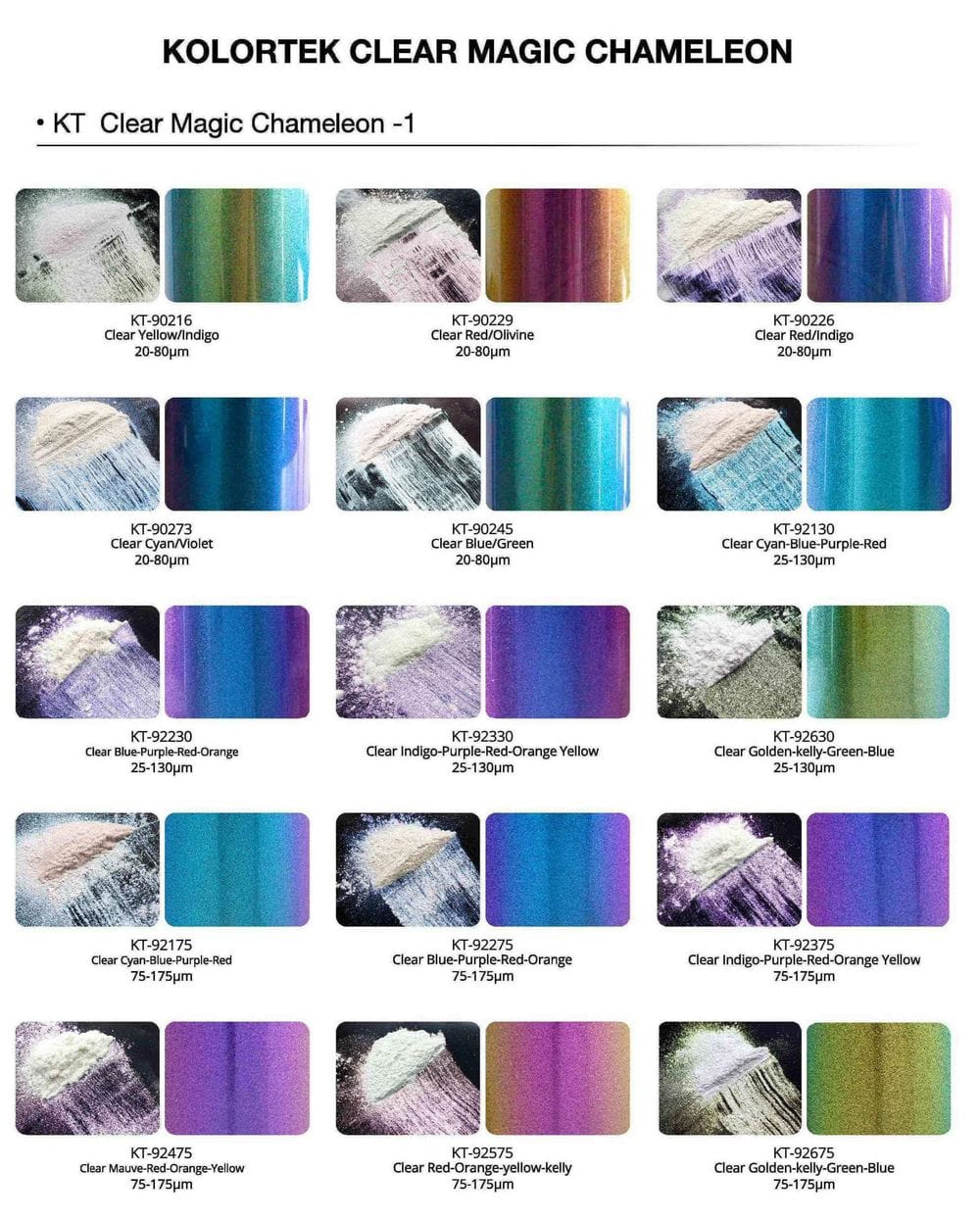
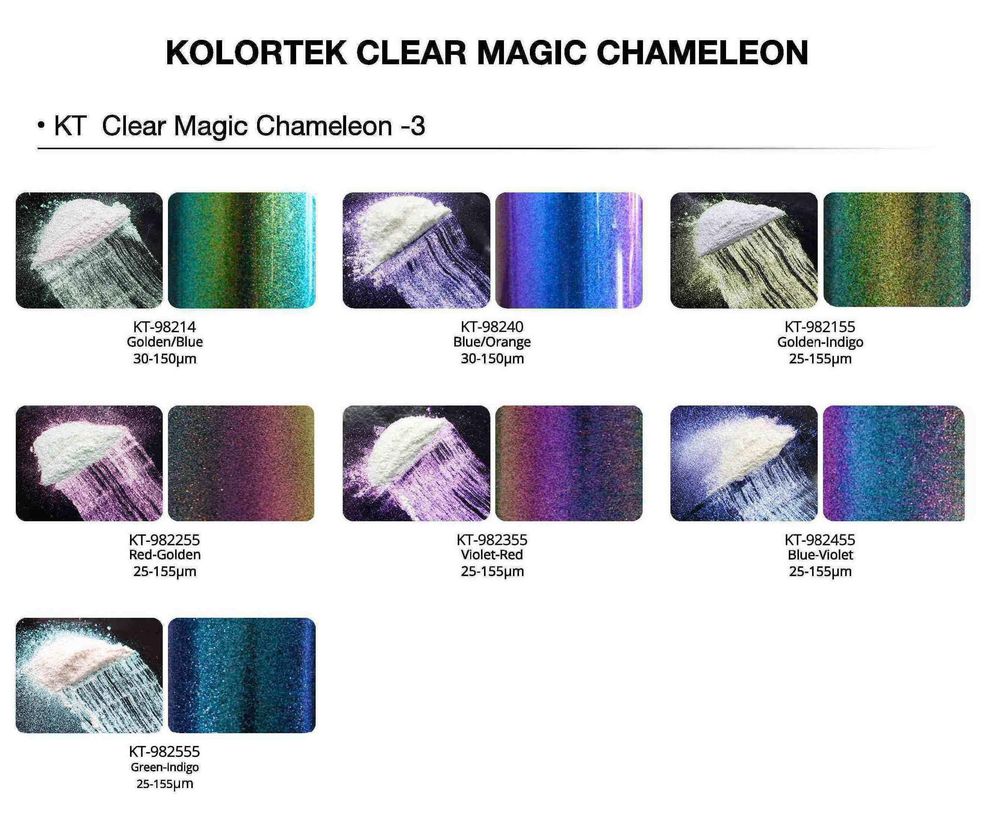
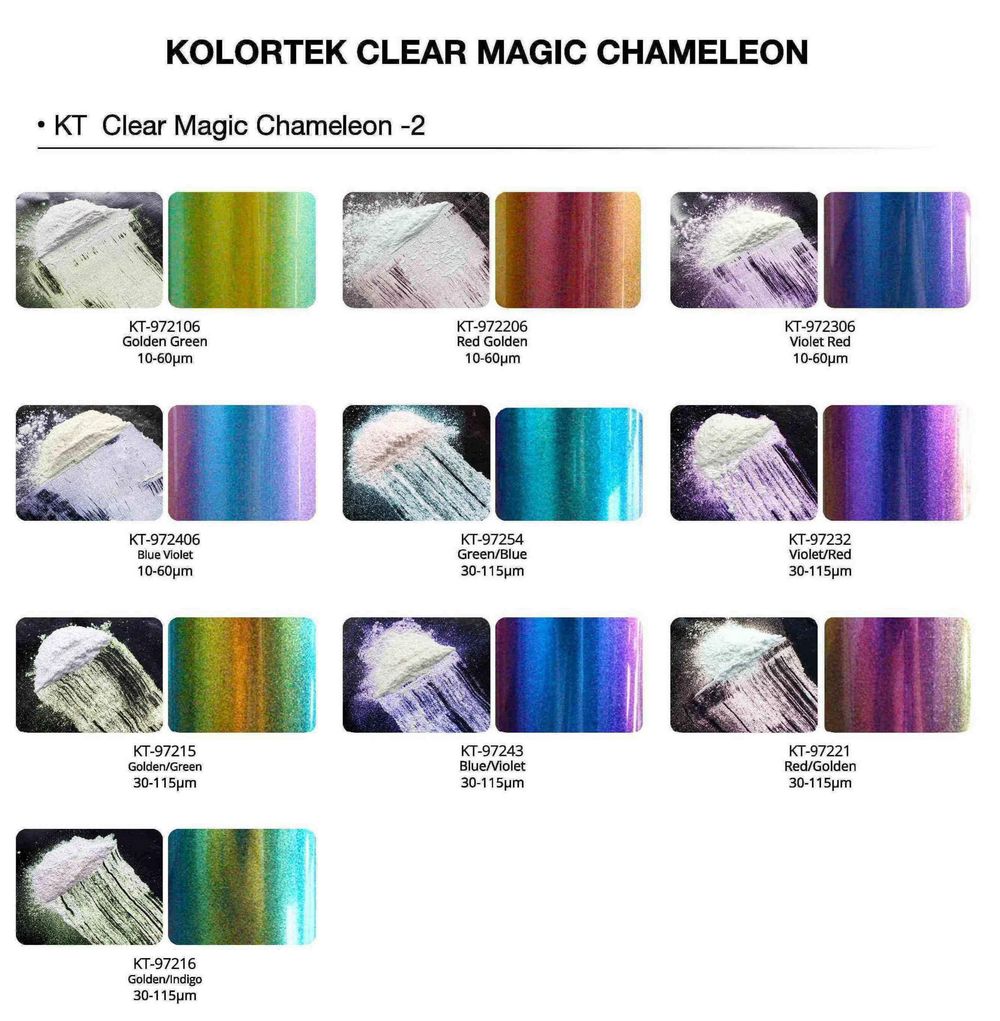
Within the KT-9000 Magic Chameleon Series, KT-92575 occupies the large-particle end of the KT-925** sub-series. The "75" suffix codes directly to the 75–175 μm size range — the coarsest option in this family and the one we specify when a formulation calls for maximum visual impact and strong sparkle over smooth skin-feel. The color sequence — clear shifting through red, orange, yellow, and into kelly green — plays across the full visible spectrum as the viewing or illumination angle changes, a property that makes this grade particularly suited to products where movement and light interaction are central to the design brief.
The effect relies on thin-film optical interference rather than absorptive dye chemistry. All four components in the composition — mica, titanium dioxide, silica, and tin oxide — are inorganic, which keeps the color behavior stable against heat and light in most cosmetic processing conditions. That said, the goniochromatic effect is highly substrate-dependent: on black or near-black bases it is vivid and travels cleanly through the color sequence; on light or white substrates, the perceived shift weakens considerably. This is something we make sure to communicate early to cosmetic formulators who are working the pigment into pressed powders or highlight pans without a tinted base.
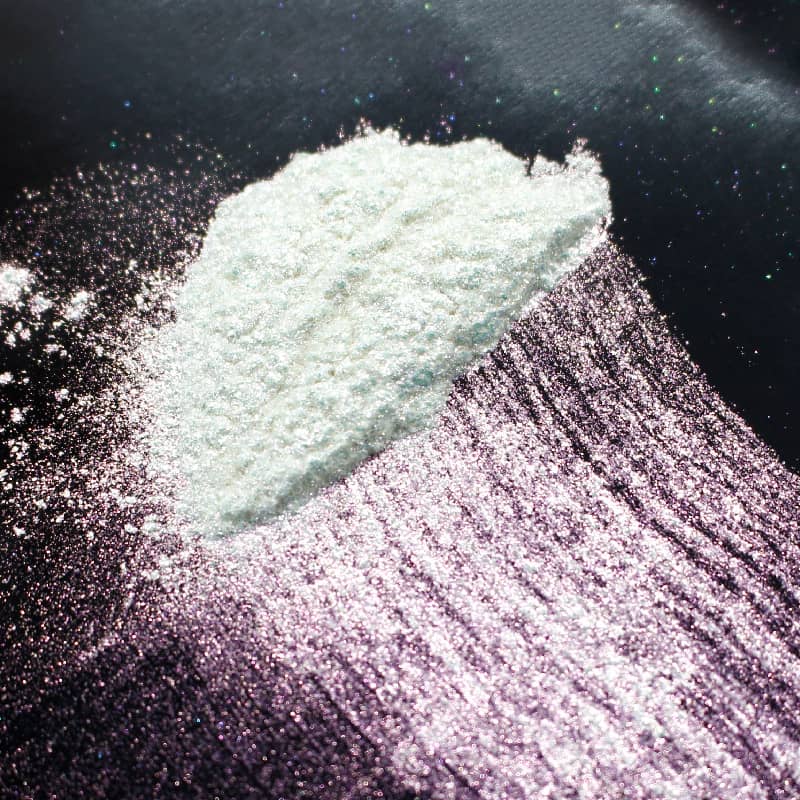
| Property | Value |
|---|---|
| Form | Powder |
| Particle Size | 75–175 μm |
| D50 | 80–135 μm |
| pH (4% H₂O suspension) | 6.0–9.0 |
| Density | 2.6–3.1 kg/L |
| Bulk Density | 15–25 g/100 mL |
| Solubility in Water | Insoluble |
| Odour | Odourless |
| Component | C.I. Number | Content (wt%) |
|---|---|---|
| Mica | C.I. 77019 | 56.0–67.0% |
| Titanium Dioxide | C.I. 77891 | 13.0–18.0% |
| Silica | — | 15.0–21.0% |
| Tin Oxide | C.I. 77861 | 0–1.0% |
The TDS specifies the following maximum heavy metal concentrations, covering the elements typically required by cosmetic regulatory bodies across major markets:
| Element | Limit | Element | Limit |
|---|---|---|---|
| As | < 2 ppm | Pb | < 10 ppm |
| Hg | < 1 ppm | Cr | < 100 ppm |
| Ba | < 50 ppm | Sb | < 1 ppm |
| Ni | < 10 ppm | Cu | < 50 ppm |
| Cd | < 3 ppm | Zn | < 50 ppm |
The KT-925** sub-series covers the same red-orange-yellow-kelly color shift in nine particle size grades. KT-92575 is the second-coarsest. Formulators can select finer grades for smoother application textures while keeping the same color behavior.
| Grade Code | Particle Size (μm) |
|---|---|
| KT-92502 | 5–25 |
| KT-92504 | 10–40 |
| KT-92506 | 10–60 |
| KT-92507 | 10–70 |
| KT-92515 | 20–100 |
| KT-92525 | 25–130 |
| KT-92530 | 25–130 |
| KT-92575 (this grade) | 75–175 (D50: 80–135) |
| KT-925100 | 100–250 |
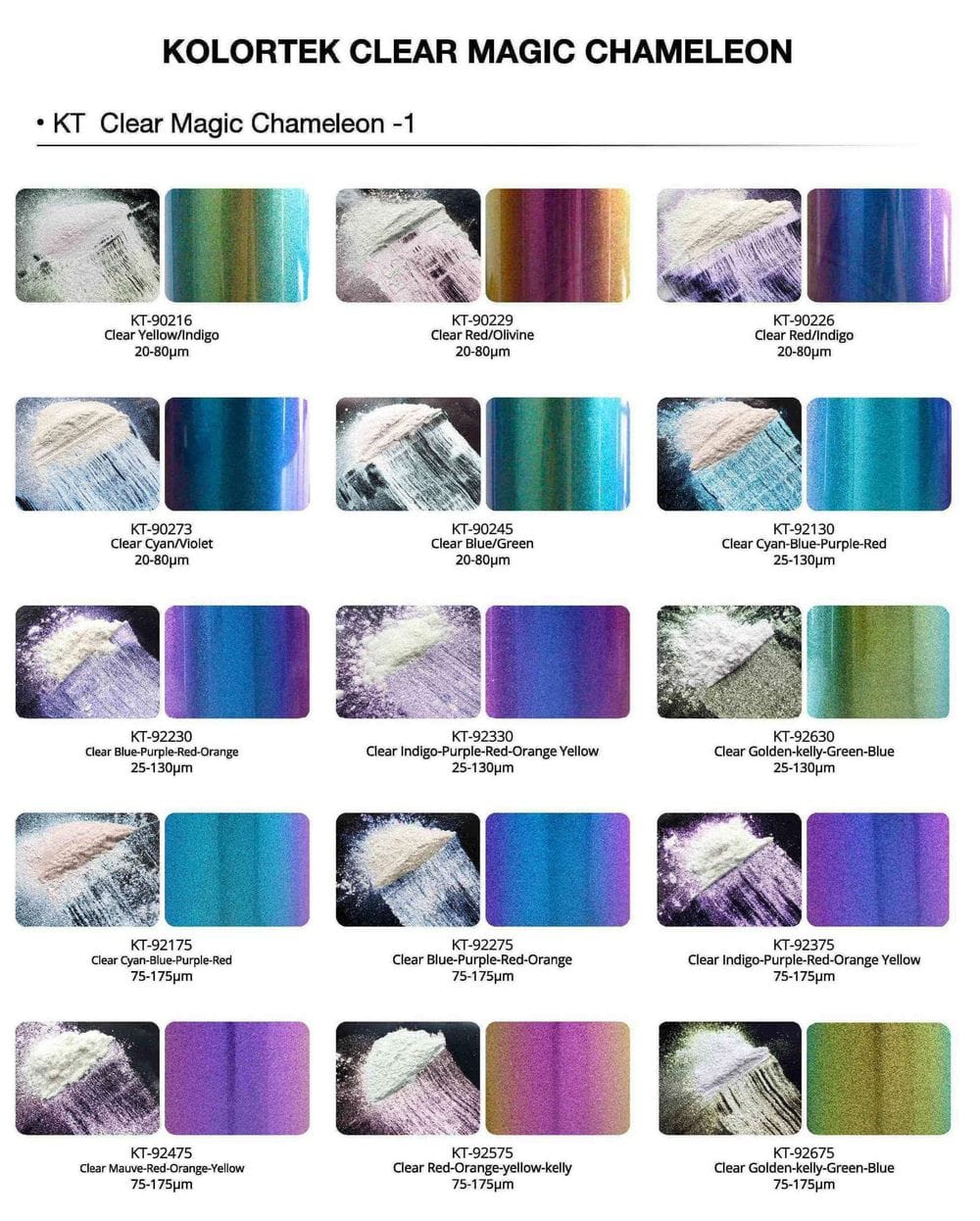
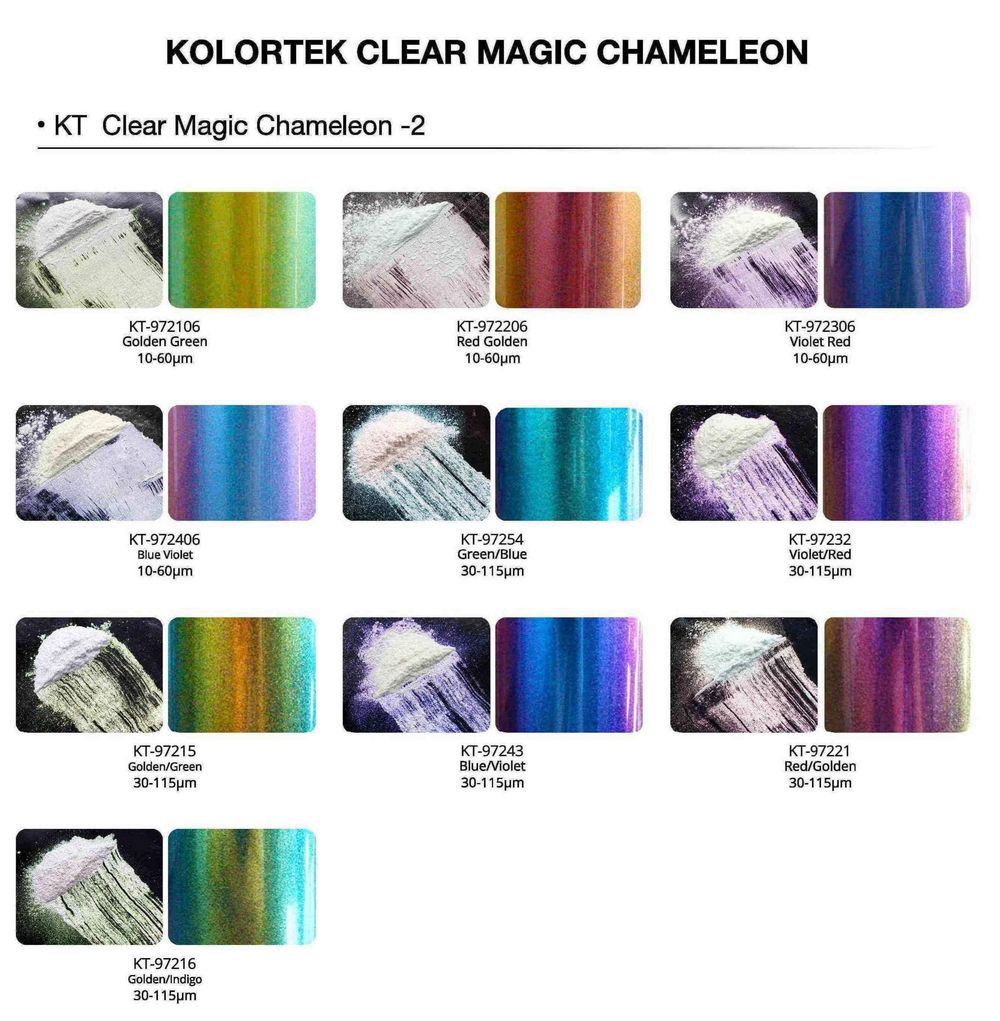
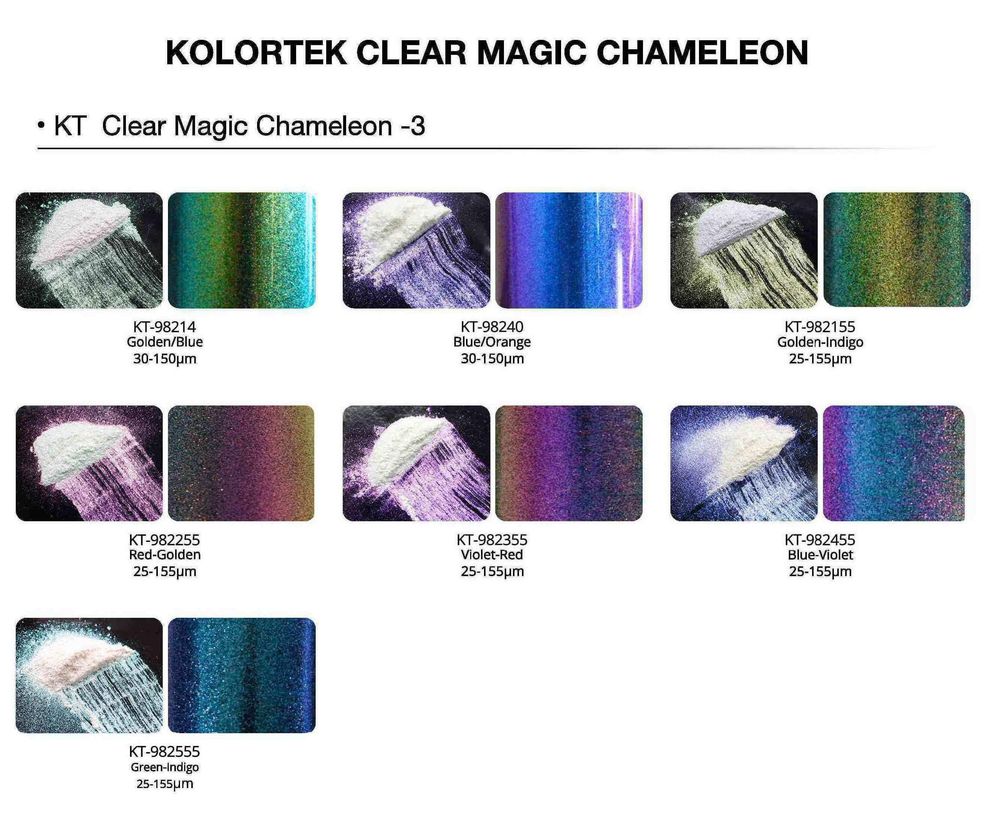
Within the KT-9000 series, the primary cosmetic applications are high-end eyeshadow, nail art, and other color-shifting decorative cosmetic formats. At 75–175 μm, KT-92575 is specifically suited to products where sparkle intensity is the priority: nail polish, pressed glitter-style eyeshadow pans, and body shimmer products all fall naturally within this range. For lip formulations where smooth application and wear are critical, finer KT-925** grades are generally more appropriate.
Substrate color is not a minor consideration here — it defines whether the product works at all. On black or deep-tinted bases, the red-orange-yellow-kelly travel is vivid and reads clearly through each shift. On light bases, the goniochromatic effect is significantly suppressed, and the product will read more as a glitter or sparkle pigment than as a true color-shifting one. We often advise cosmetic brand developers to prototype on a black base coat and then test any tinted variant before finalizing the formula. Dark base pigments or dark substrate liners used beneath an eyeshadow pan can significantly recover lost contrast.
Beyond cosmetics, the KT-9000 Magic Chameleon Series is also used extensively in automotive custom finishes and wraps, luxury packaging and printing, and security or anti-counterfeiting applications where angle-dependent color change serves as a visual authentication feature. These applications typically call for larger particle grades — and the KT-92575 at 75–175 μm straddles both cosmetic and specialty coating use cases.
The following loading ranges are general KB guidance for pearlescent and effect pigments in cosmetic formats. Product-specific dosage data for KT-92575 is not currently published; these figures are a starting point for bench trials.
| Product Type | Indicative Loading Range |
|---|---|
| Eyeshadow (pressed) | 5–50% |
| Eyeshadow (loose) | 5–60% |
| Lipstick / Lip Gloss | 1–20% |
| Pressed Powder / Blush | 10–40% |
| Foundation | 3–15% |
| Cream / Lotion | 1–15% |
| Highlighter | 5–30% |
| Body Shimmer | 2–10% |
Platelet pigments at 75–175 μm are particularly vulnerable to mechanical fracture during mixing. High-shear dispersers and three-roll mills — standard for some pigment systems — can break down the flake structure, reduce the effective particle size distribution, and diminish sparkle intensity. In cosmetic processing, the consistent guidance is to use gentle mixing and to incorporate the pigment as late in the process as feasible.
For emulsion systems, pre-dispersion in the oil phase before combining with the water phase helps achieve an even distribution without excessive agitation. In dry powder formulations — pressed eyeshadow being the typical case — the pigment should be added after dry blending of the base powders, not at the start of the blend cycle. Higher pigment loading does increase the perceived intensity of the color shift, but at very high loadings it can affect substrate smoothness, so there is a practical ceiling that varies by format.
Surface treatments including Dimethicone, Triethoxycaprylylsilane, and Lauroyl Lysine are recognized options for improving dispersibility, skin adhesion, and water resistance in pearlescent pigment formulations. Whether a specific surface treatment is applied to KT-92575 should be confirmed at the order stage, as this is not stated in the current TDS. Combining KT-92575 with transparent absorption pigments — organic colorants or iron oxides — is a useful technique for shifting the base color tone of the shift sequence or deepening the dark base layer without losing the goniochromatic character. KT-92575 is described as compatible with most resin systems at the series level.
Kolortek operates under ISO 9001:2015 certification covering the production and sales of glitters, pigments, and fillers. All four INCI components of KT-92575 — Mica, Titanium Dioxide, Silica, and Tin Oxide — are listed in China's IECIC inventory and approved by Japan's Ministry of Health, Labour and Welfare (MHLW). In the US, Mica is a permitted color additive under 21 CFR 73.2496, and Titanium Dioxide is classified as an exempt color not requiring batch certification. For EU market use, cosmetic-grade supporting composition documents are available; final suitability under Annex IV of EC 1223/2009 should be confirmed for the intended cosmetic application.
KT-92575 is not classified as hazardous under Regulation (EC) No. 1272/2008 (CLP) or under Directives 67/548/EEC and 1999/45/EC. One formulation-relevant regulatory note: Titanium Dioxide in powder form is classified as a Category 2 carcinogen by inhalation under EU rules. This classification is material for loose powder formats where airborne dust exposure during manufacturing or consumer use is foreseeable. Formulators developing loose eyeshadow, loose highlight, or similar products for the EU market should assess the inhalation exposure risk and consider appropriate risk mitigation — this is a known compliance consideration in the category, not specific to Kolortek's grades.
KT-92575 is based on natural mica. REACH compliance documentation covering fluorphlogopite (synthetic mica) is on file, but for this natural mica grade, product-specific REACH confirmation is required and can be requested from our technical team. Halal, Kosher, and SGS test documentation scope should also be verified against the specific grade before making product-level regulatory claims.
What color shift does KT-92575 produce, and which substrate conditions bring it out best?
KT-92575 produces an angle-dependent shift moving from red through orange and yellow to kelly green as the viewing angle changes — a full-spectrum goniochromatic travel. The effect is most vivid on black or near-black substrates, where the dark background provides the necessary optical contrast for the interference layers to read clearly. On light or white bases, the perceived color shift is substantially weaker. For cosmetic prototyping, always evaluate the effect on a dark base before committing to a final formula substrate.
What are the INCI components of KT-92575, and how does it stand with major cosmetic regulatory markets?
The INCI declaration for KT-92575 is: Mica, Titanium Dioxide, Silica, Tin Oxide. All four ingredients are IECIC-listed for China and MHLW-approved for Japan. Mica is permitted in the US under 21 CFR 73.2496; Titanium Dioxide is an exempt color additive. For EU cosmetic applications, supporting composition documentation is available and product suitability should be confirmed against Annex IV of EC Regulation No. 1223/2009 for the specific intended use. Confirmation of REACH status for this natural mica grade should be requested separately.
Is KT-92575 a good color shift pigment for personal care formats like nail polish and eyeshadow?
As a color shift pigment for personal care, KT-92575 is best matched to high-sparkle formats: nail polish, glitter-style pressed eyeshadow, loose eyeshadow, body shimmer, and highlighter applications where a bold, kinetic effect is the design intent. Its 75–175 μm particle size maximizes sparkle but is less suitable for smooth skin-feel products like lip gloss or foundation, where finer grades in the KT-925** series (e.g., KT-92502 at 5–25 μm or KT-92506 at 10–60 μm) are a more practical choice.
What mixing precautions apply to KT-92575 in cosmetic powder formulations?
Avoid high-shear dispersers and three-roll mills, which can fracture the platelet structure and reduce effective particle size — diminishing both sparkle and the perceived intensity of the color shift. In pressed powder formats, add KT-92575 after the base powders have been dry-blended. For emulsions, pre-disperse in the oil phase before combining phases. Standard dust precautions — adequate ventilation, appropriate respiratory protection — apply during handling at manufacturing scale.
Contact our technical team to discuss formulation requirements or to request a sample of KT-92575 for your specific application.
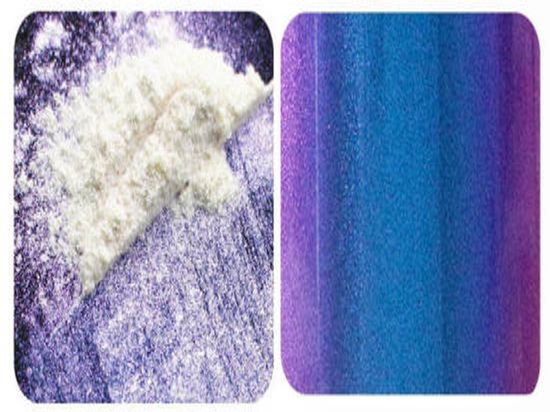
KT-92230 is a multichrome pigment that shifts through a full blue-purple-red-orange sequence as the viewing angle changes — one of the broadest color-travel arcs we produce in the KT-9000 series. Built on a natural mica substrate with a multi-layer TiO₂/Fe₂O₃/silica/tin oxide coating, it comes in a 25–130 μm particle size that delivers strong angular contrast and high visual impact across automotive finishes, decorative coatings, and specialty printing.
Read More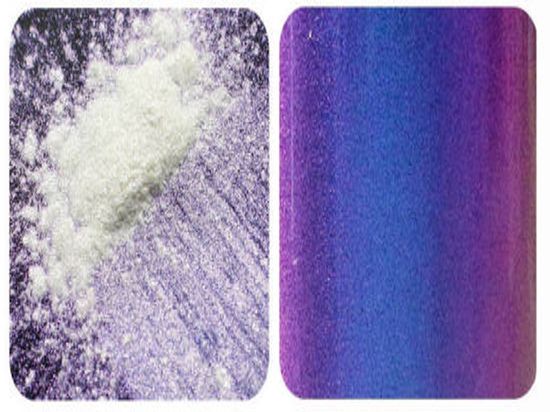
KT-92330 is a multi-layer interference pigment from Kolortek's KT-9000 Magic Chameleon Series, producing a continuous color shift sequence — indigo through purple, red, orange, and yellow — as the viewing angle changes. Built on natural mica coated with TiO₂, silica, and tin oxide, it delivers a high-mirror goniochromatic effect with a 25–130 μm particle size distribution engineered for maximum visual impact. This color shifting pigment powder performs best over dark or black substrates, where the full angular color travel is most legible.
Read More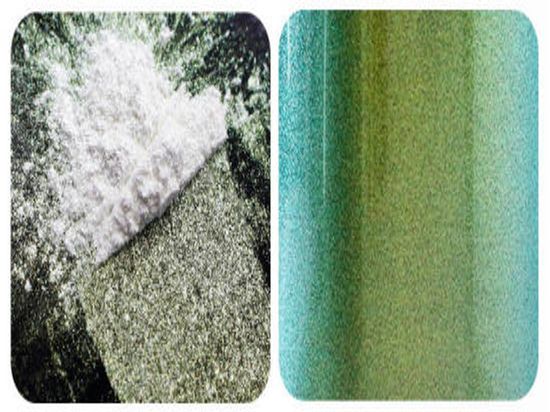
KT-92630 is a large-particle chameleon paint pearl from our KT-9000 Magic Chameleon Series, producing a sequential golden-to-kelly-green-to-blue color travel as the viewing angle shifts. With a 25–130 μm particle range, it delivers high visual impact in automotive custom finishes, decorative coatings, and specialty applications where a pronounced, multi-stop color flip is the goal. The substrate is natural mica with a multi-layer TiO₂/SiO₂/metal-oxide coating that generates the goniochromatic interference effect.
Read More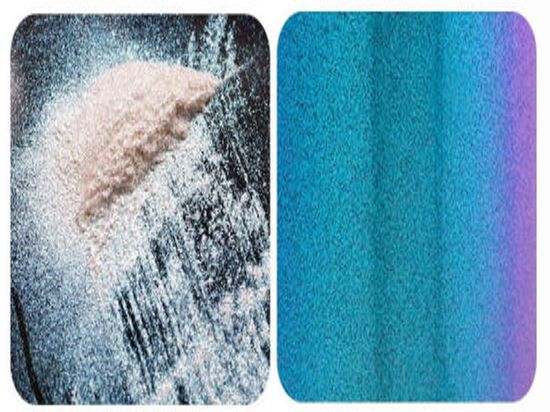
KT-92175 is the large-particle grade of our chameleon pigment for resin, built on a natural mica substrate with a multi-layer TiO₂, silica, and tin oxide coating that produces a continuous cyan-to-blue-to-purple-to-red angle-dependent color shift. At 75–175μm, it is the highest-sparkle option in the KT-9000 Magic Chameleon Series' KT-921** Cyan-Blue-Purple-Red range. Compatible with epoxy and UV resin at loadings of 1–10% by weight, the effect reads strongest on dark or black substrates where the goniochromatic shift has maximum contrast.
Read More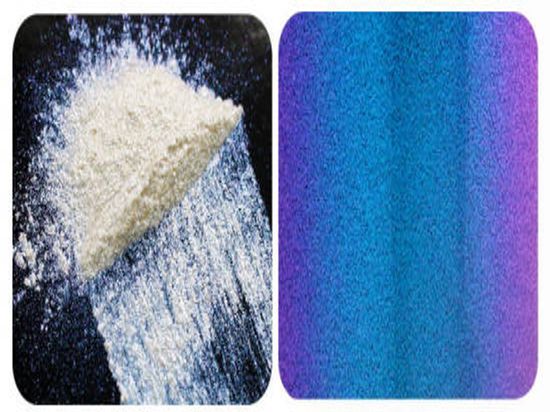
KT-92275 is a large-particle duochrome loose pigment from our KT-9000 Magic Chameleon Series, delivering a full blue-purple-red-orange color travel sequence that shifts continuously across the visible spectrum as the viewing angle changes. With a particle size range of 75–175 μm, this grade is engineered specifically for applications where maximum sparkle is the priority — loose eyeshadow, nail art toppers, and high-impact decorative cosmetics where the angular shift needs to read clearly against the skin or a dark base.
Read More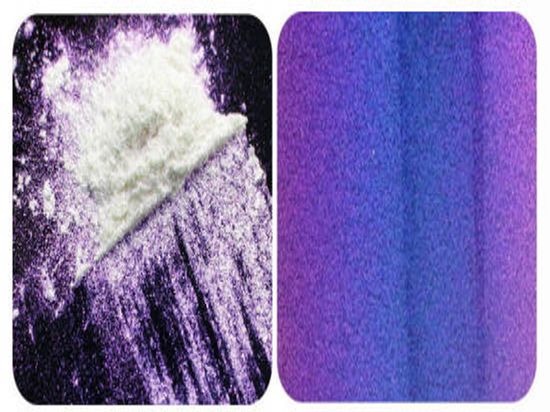
KT-92375 is a large-particle ghost chameleon pigment from Kolortek's KT-9000 Magic Chameleon Series, delivering a continuous five-stage color shift — indigo → purple → red → orange → yellow — as the viewing angle changes. Built on natural mica coated with titanium dioxide, silica, and tin oxide, it carries a particle size of 75–175 μm for maximum sparkle. We developed this grade specifically for high-impact automotive finishes, custom coatings, and luxury decorative applications where a dramatic, angle-dependent color shift is the primary design goal.
Read More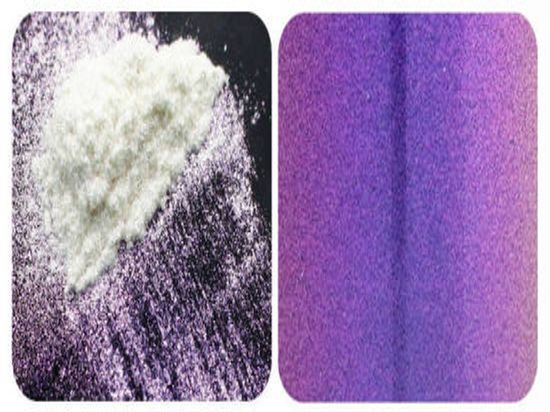
KT-92475 is a large-particle chameleon pigment from the KT-9000 Magic Chameleon Series, producing a continuous mauve → red → orange → yellow color shift that sweeps across the visible spectrum as the viewing angle changes. With a particle size of 75–175 μm and a natural mica substrate coated with titanium dioxide, silica, and tin oxide, it delivers the coarse, high-sparkle texture that nail art formulators need for maximum visual drama — particularly over a dark or black base coat.
Read More
KT-92575 is a large-flake chameleon pearl powder from our KT-9000 Magic Chameleon Series, producing a dramatic angle-dependent color shift spanning red, orange, yellow, and kelly green on dark substrates. Built on a natural mica substrate with a multi-layer coating of titanium dioxide, silica, and tin oxide, it delivers an INCI composition suited to high-end cosmetic and nail art formulations. The 75–175 μm particle range gives it the high-sparkle, deep color-travel behavior that distinguishes it from finer cosmetic pearl grades.
Read More
 English
 Français
 Deutsch
 Русский
 Español
 Português