
Leave A Message
If you are interested in our products and want to know more details,please leave a message here,we will reply you as soon as we can.
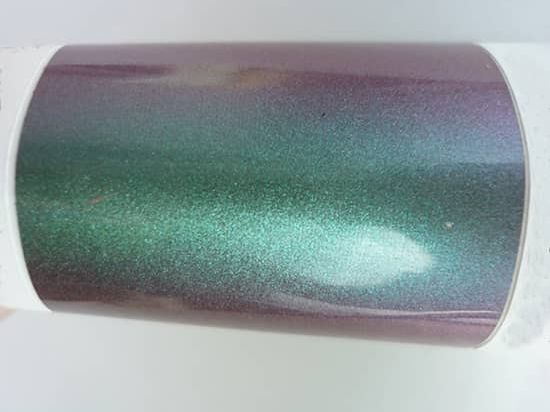
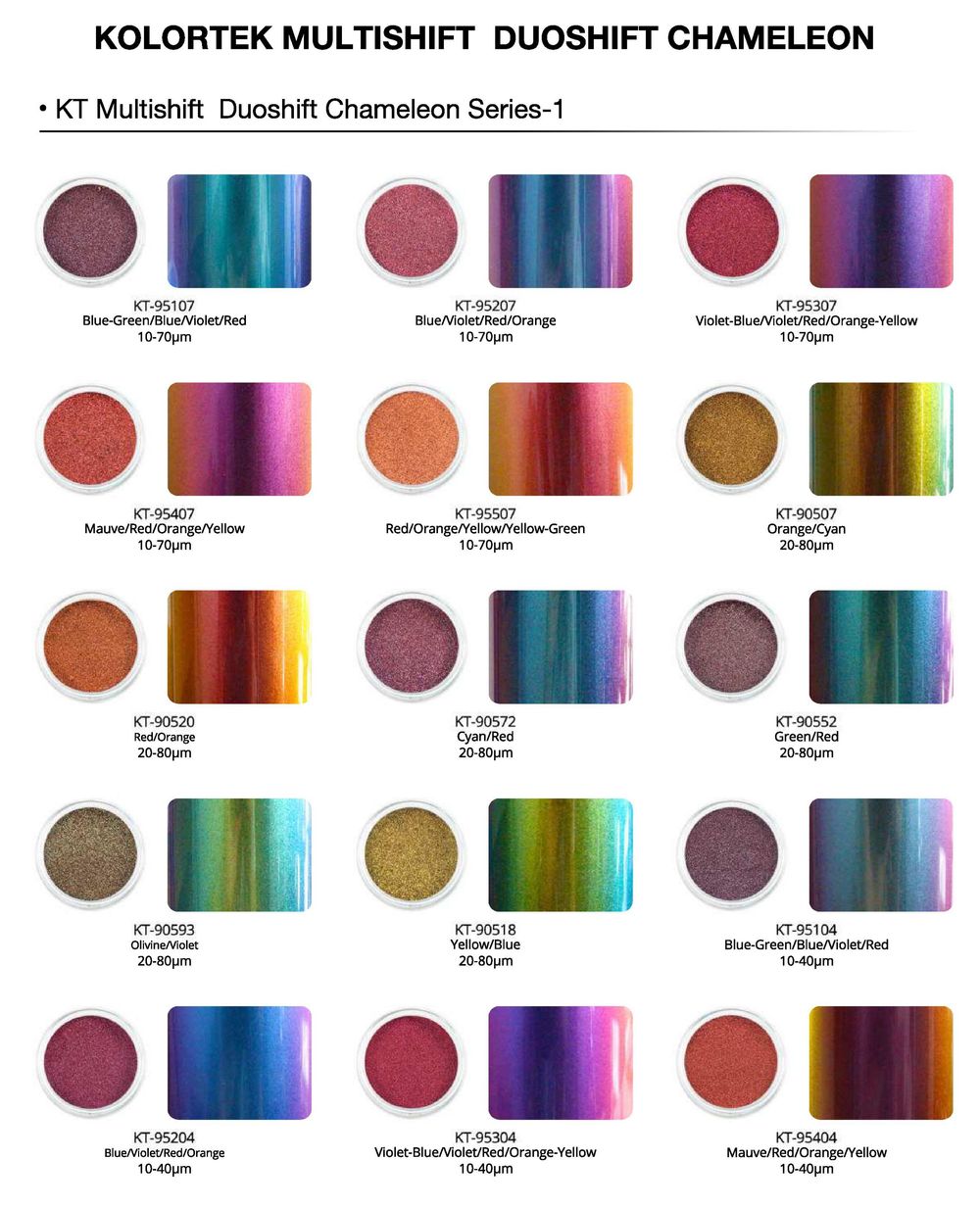
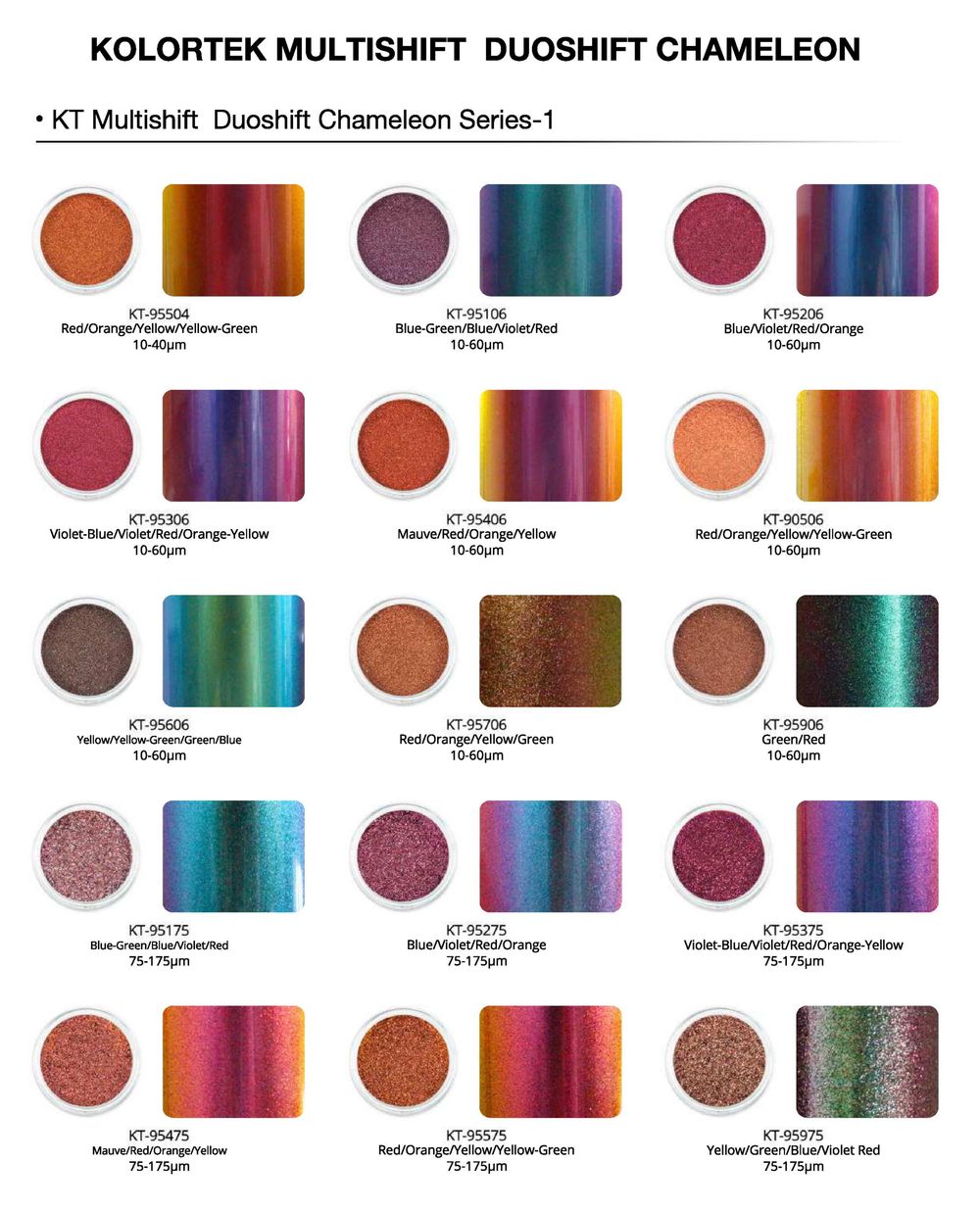
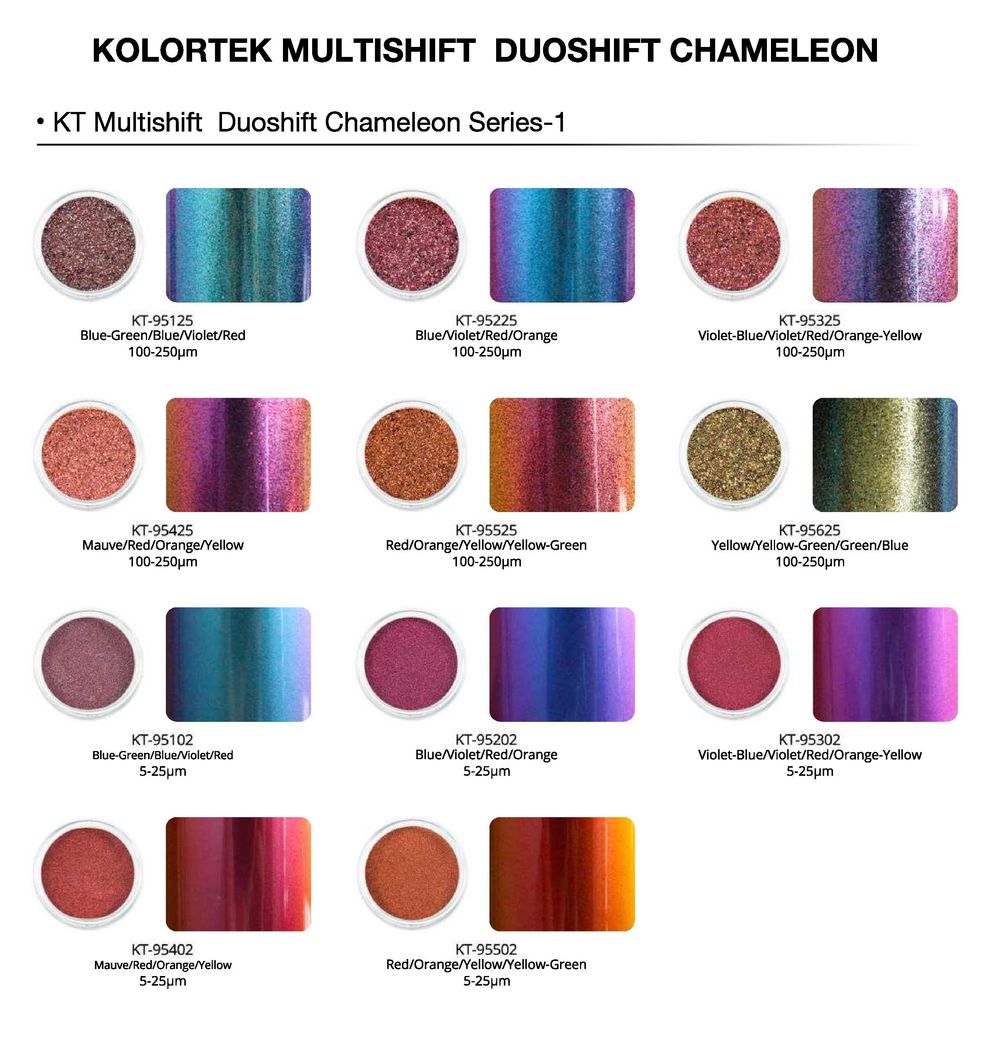
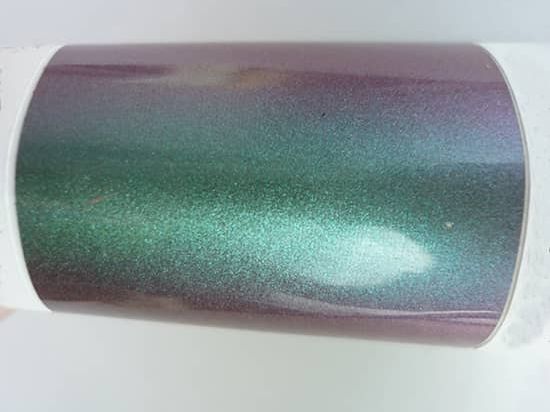
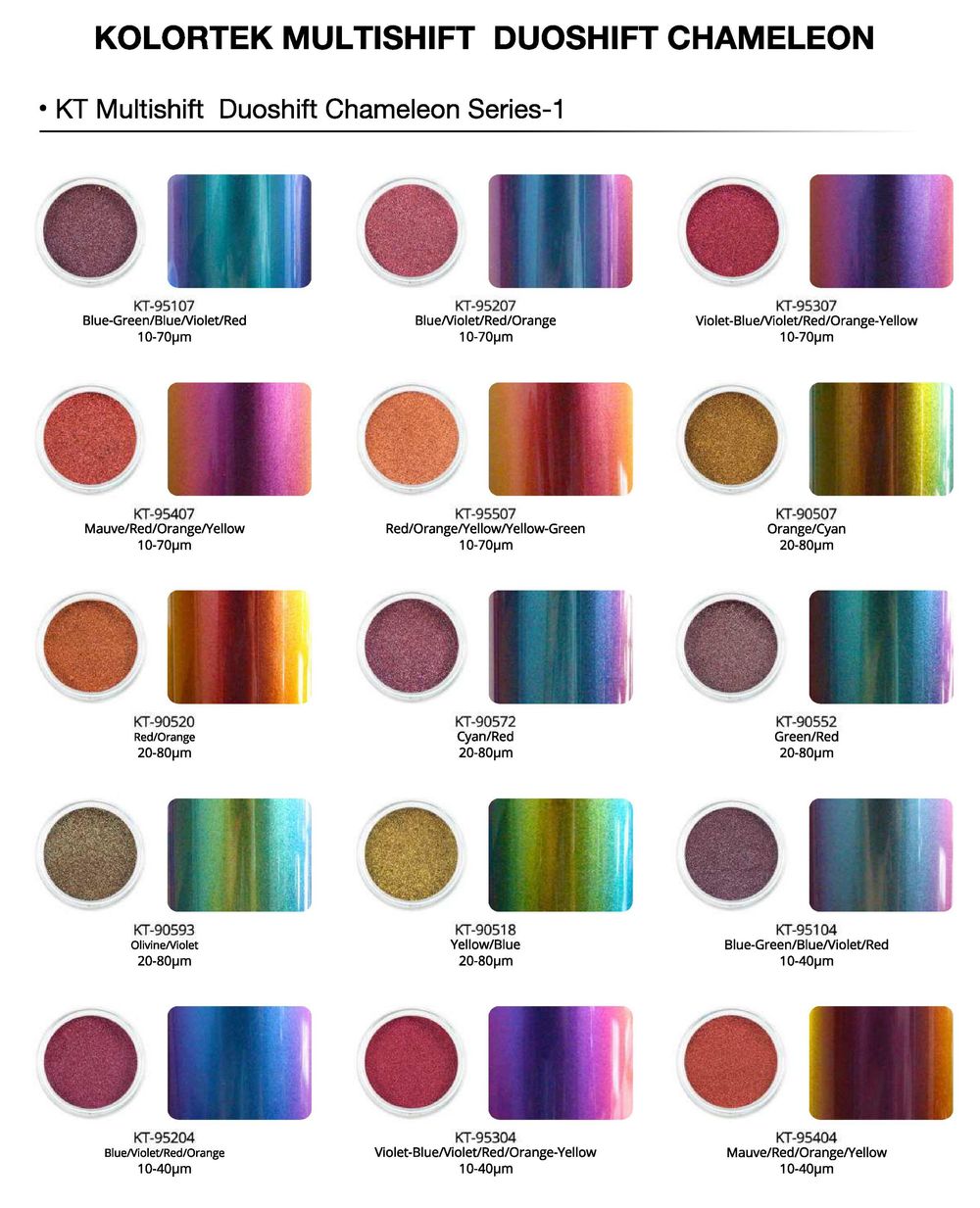
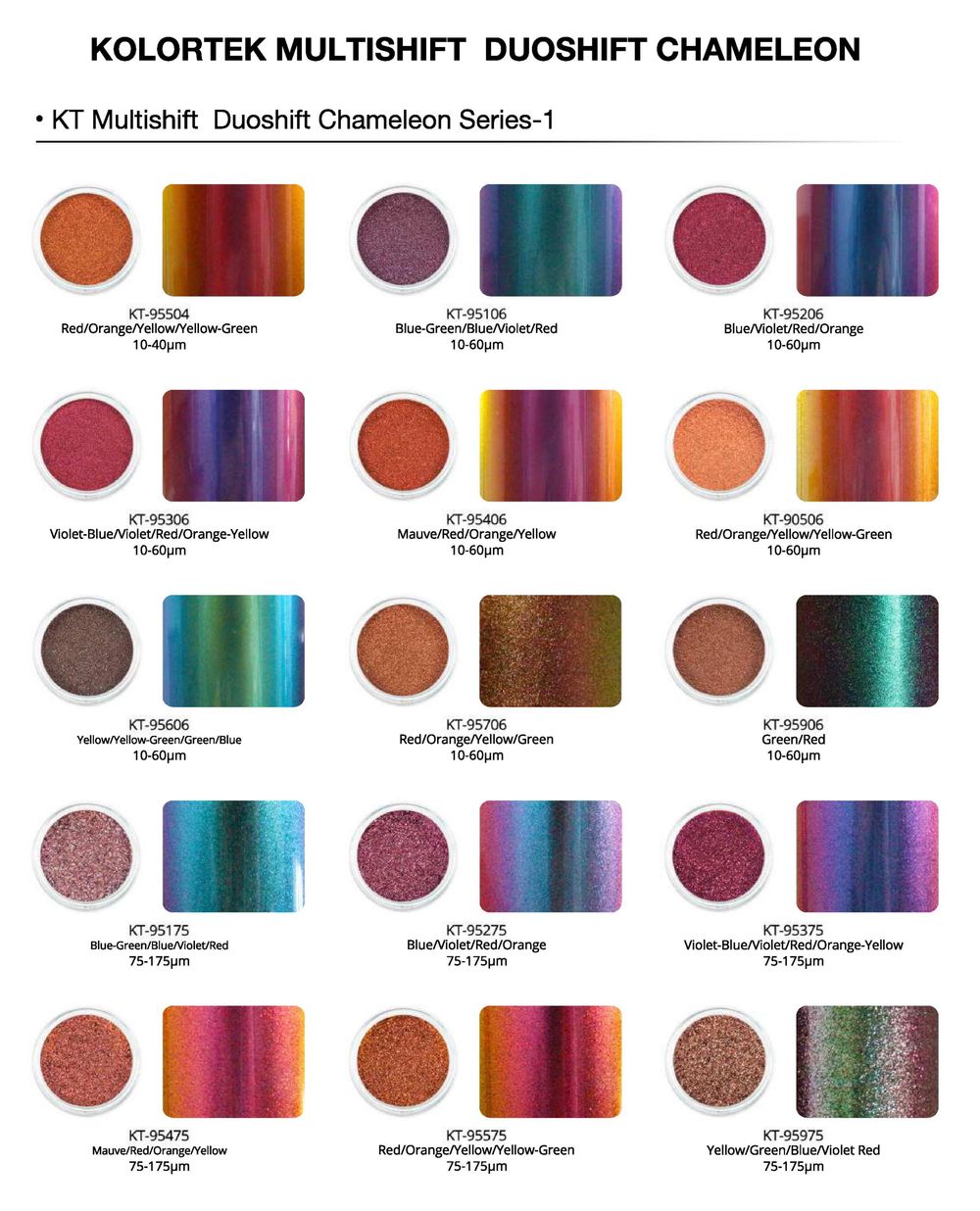
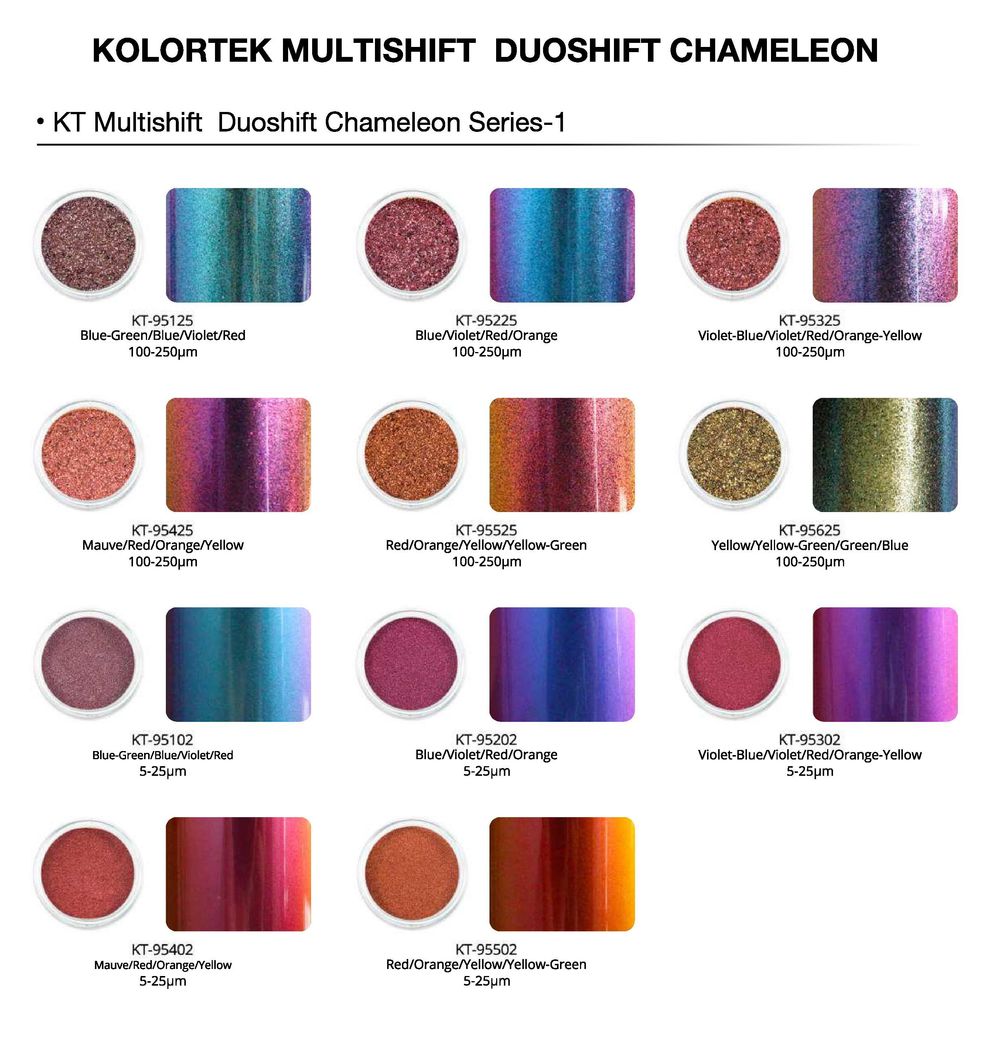
KT-90552 is a green/red color shift pigment from our KT-9000 Magic Chameleon Series — a multi-layer iron oxide and silica-coated natural mica that produces a strong goniochromatic shift between green and red depending on viewing angle. With a particle size of 20–80 μm (D50: 25–35 μm), pH stability across 6.0–9.0, and inorganic composition proven in coating, automotive, and cosmetic applications, this colour shift pigment powder delivers a defined two-color travel effect that holds up well under light and heat exposure.
The color shift in KT-90552 is not a dye or a printed pattern — it is a physical interference effect. The natural mica platelet carries multiple deposited layers of TiO₂, Fe₂O₃, and silica. As viewing angle changes, the optical path length through those layers shifts, constructively reinforcing different wavelengths. The result is a clean green at near-normal incidence that transitions toward red at oblique angles.
In our application lab, we consistently see the green/red travel described as one of the more visually striking two-tone shifts in the KT-9000 range — the spectral distance between green (~530 nm) and red (~630–650 nm) is wide enough to read as a sharp, unmistakable transition rather than a subtle hue drift. That said, the strength of the effect depends heavily on what is underneath it.
On a black or very dark substrate, contrast is maximized and both colors read clearly. On a white or light substrate, the semi-transparent nature of the platelet allows the base to compete with the interference color, washing out the perceived shift. This is not a defect — it is the physics of interference pigments — but it is the single most common source of disappointment when formulators first trial chameleon grades without a dark base coat.
| Parameter | Value |
|---|---|
| Form | Powder |
| Color Effect | Green / Red (angle-dependent color travel) |
| Particle Size | 20–80 μm |
| D50 | 25–35 μm |
| Density | 2.5–3.2 kg/L |
| Bulk Density | 22–30 g/100 mL |
| pH (4% H₂O) | 6.0–9.0 |
| Solubility in Water | Insoluble |
| Odour | Odourless |
| Hazard Classification (CLP) | Not classified (Regulation EC No. 1272/2008) |
| Component | C.I. Number | Content |
|---|---|---|
| Mica | C.I. 77019 | 46.0–51.0% |
| Iron Oxide | C.I. 77891 | 9.0–19.0% |
| Silica | — | 35.0–40.0% |
The all-inorganic composition — mica, iron oxide, silica — is what gives this series its resistance profile. These are thermally and chemically stable materials. The specific temperature resistance ceiling for KT-90552 is not published in our current datasheet, but the inorganic pigment system inherently supports the heat ranges typical of most industrial coating bake cycles. Confirm with your coating system if you are running above 200°C.
From our experience supporting coating customers across several industries, the KT-9000 Chameleon Series — and KT-90552 in particular — sees its heaviest use in automotive custom finishes and wraps. The green/red shift reads exceptionally well on curved automotive body panels, where the changing angle of the surface relative to the viewer puts the full color travel on display continuously as the car moves.
Beyond automotive, verified application areas for this grade include:
One thing to note: KT-90552 is a coating color shift pigment by primary design. It is optimized for liquid coating and paint systems. Use in plastics is supported at the series level, but the shear experienced during extrusion or injection molding can damage platelet geometry — always confirm processing conditions before committing to a formulation run.
Platelet-structured effect pigments like KT-90552 require gentle handling during dispersion. We always recommend pre-dispersing the pigment in a portion of solvent or resin binder before adding to the full batch. Avoid high-speed dispersers, bead mills, and sand mills — the mechanical shear will fracture the platelet, reducing aspect ratio and degrading both the mirror effect and the color shift intensity. A slow paddle mixer or low-shear dissolver is appropriate. Add the pigment at the last stage of the mixing sequence.
General guidance for coatings applications is 1–20% by weight, starting at the low end and increasing to achieve the desired effect intensity. A product-specific loading recommendation for KT-90552 is not published — trial across your target range, as heavier loading increases the perceived color travel depth but may affect surface smoothness depending on film build and application method.
KT-90552 is compatible with most resin systems at the series level. The pH operating range of 6.0–9.0 covers the majority of waterborne and solventborne coating formulations. One area that warrants a bench test first: acid-catalyzed baking enamels. The acid catalyst environment can interact with iron oxide-coated pigments; check compatibility before scaling.
Settlement in the can is a practical issue with any dense platelet pigment. Anti-settling agents — fumed silica, bentone, or similar thixotropes — keep the pigment suspended without disrupting orientation. If you are seeing streaking or uneven color shift in the applied film, the most common causes are thinner type mismatch, inadequate flash time between coats, or insufficient orientation time before cure. Adjusting these before reformulating will typically resolve the issue.
For automotive and other durable coating applications, finish with a clear topcoat over the chameleon layer. This protects the pigment surface, adds depth to the optical effect, and significantly extends service life in exposure conditions.
KT-90552 can be blended with transparent absorption pigments to shift the apparent base color or modify the perceived angle of the color travel. In our experience, this is a useful lever when a customer needs the green/red shift anchored to a specific starting hue. Keep in mind that the transparency of any co-binder pigment directly affects whether the interference colors read cleanly — opaque additions will suppress the shift.
Kolortek operates under ISO 9001:2015 certification covering the production and sales of pigments, glitters, and fillers. The MSDS for KT-90552 references REACH Regulation (EC) No. 1907/2006, and the product is classified as non-hazardous under CLP Regulation (EC) No. 1272/2008. Heavy metal content is controlled to defined limits across all regulated elements (As <2 ppm, Pb <10 ppm, Hg <1 ppm, Cd <3 ppm, among others).
For cosmetic applications under EU Cosmetics Regulation (EC) No. 1223/2009 or US FDA color additive requirements, suitability is grade-dependent. Contact us to confirm whether KT-90552 is the correct grade for your intended cosmetic or personal care use, rather than assuming series-level claims apply.
KT-90552 uses natural mica as its substrate, consistent with the KT-9000 series. Where synthetic mica (fluorphlogopite) is required — for fluorine-free cosmetic compliance or improved whiteness as a base — alternative grades in the broader KT-9000 range are available. We maintain an Iriodin Alternative Cross-Reference program for customers transitioning from Merck Iriodin® grades; a specific equivalent mapping for KT-90552 is not published in the current catalog, but our technical team can assist with direct comparison.
What particle size does KT-90552 have, and does it affect spray application?
KT-90552 has a particle size range of 20–80 μm with a D50 of 25–35 μm. At the coarser end of that range, there is a real risk of nozzle clogging in conventional spray equipment. For spray application, filter or pre-screen the batch and confirm your spray tip orifice size accommodates the full particle distribution. If consistent spray delivery is a priority, contact us to discuss whether a finer-cut grade within the KT-9000 series is more appropriate.
Why does the color shift look weak in my formulation?
The most frequent cause is substrate color. KT-90552 is a semi-transparent interference pigment — it requires a dark, ideally black, base to develop its full green/red color travel. On white or light-colored substrates the shift is significantly reduced. A secondary cause is mechanical damage: if the pigment was processed through a bead mill or high-speed disperser, platelet fracture reduces the mirror effect and color shift intensity. Use slow paddle mixing and add the pigment last.
Is KT-90552 suitable as a paint color shift pigment for automotive refinish use?
Yes — automotive custom finishes and wraps are the primary application for the KT-9000 Chameleon Series. KT-90552 works in both solventborne and waterborne automotive basecoat systems, provided the pH stays within the 6.0–9.0 range and the formulation avoids high-acid environments. Apply over a black basecoat, use a clear protective topcoat, and confirm compatibility with any reactive catalyst in the binder system before production use.
What makes KT-90552 different from other grades in the KT-9000 Chameleon Series?
KT-90552 is specifically formulated for the green-to-red color travel axis — a wide spectral shift that is visually distinct from the shorter-range hue drifts seen in some other chameleon grades. The KT-9000 series also includes clear chameleon duochrome grades (KT-921xx to KT-926xx), TiO₂-free options, and multicolor triple-shift variants (KT-972106, KT-973206, among others). The right grade depends on the color travel range, substrate, and application method your formulation requires.
Contact our technical team to discuss formulation requirements or to request a sample of KT-90552 for your specific application.
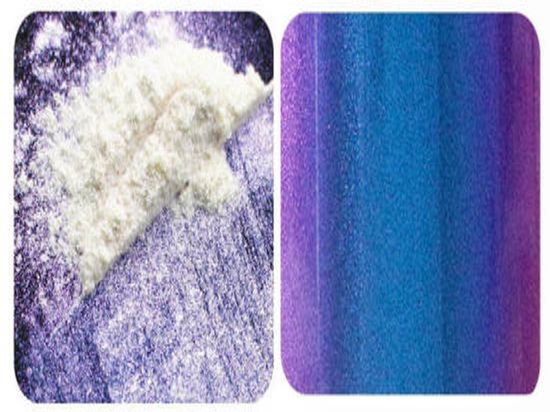
KT-92230 is a multichrome pigment that shifts through a full blue-purple-red-orange sequence as the viewing angle changes — one of the broadest color-travel arcs we produce in the KT-9000 series. Built on a natural mica substrate with a multi-layer TiO₂/Fe₂O₃/silica/tin oxide coating, it comes in a 25–130 μm particle size that delivers strong angular contrast and high visual impact across automotive finishes, decorative coatings, and specialty printing.
Read More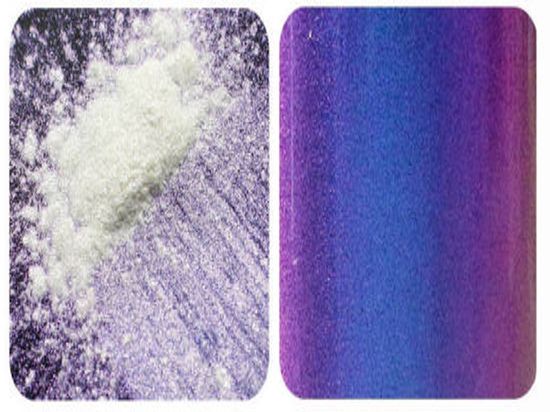
KT-92330 is a multi-layer interference pigment from Kolortek's KT-9000 Magic Chameleon Series, producing a continuous color shift sequence — indigo through purple, red, orange, and yellow — as the viewing angle changes. Built on natural mica coated with TiO₂, silica, and tin oxide, it delivers a high-mirror goniochromatic effect with a 25–130 μm particle size distribution engineered for maximum visual impact. This color shifting pigment powder performs best over dark or black substrates, where the full angular color travel is most legible.
Read More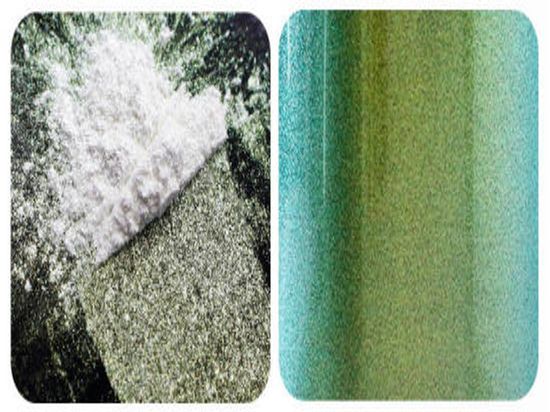
KT-92630 is a large-particle chameleon paint pearl from our KT-9000 Magic Chameleon Series, producing a sequential golden-to-kelly-green-to-blue color travel as the viewing angle shifts. With a 25–130 μm particle range, it delivers high visual impact in automotive custom finishes, decorative coatings, and specialty applications where a pronounced, multi-stop color flip is the goal. The substrate is natural mica with a multi-layer TiO₂/SiO₂/metal-oxide coating that generates the goniochromatic interference effect.
Read More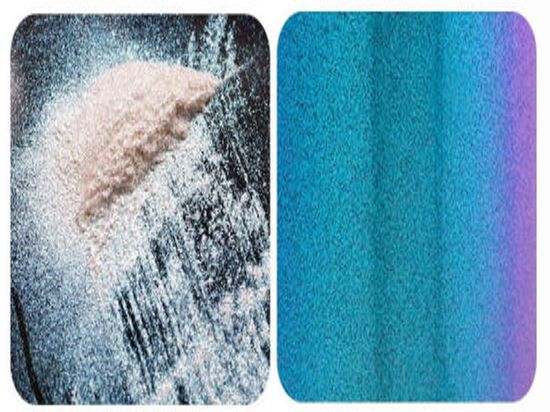
KT-92175 is the large-particle grade of our chameleon pigment for resin, built on a natural mica substrate with a multi-layer TiO₂, silica, and tin oxide coating that produces a continuous cyan-to-blue-to-purple-to-red angle-dependent color shift. At 75–175μm, it is the highest-sparkle option in the KT-9000 Magic Chameleon Series' KT-921** Cyan-Blue-Purple-Red range. Compatible with epoxy and UV resin at loadings of 1–10% by weight, the effect reads strongest on dark or black substrates where the goniochromatic shift has maximum contrast.
Read More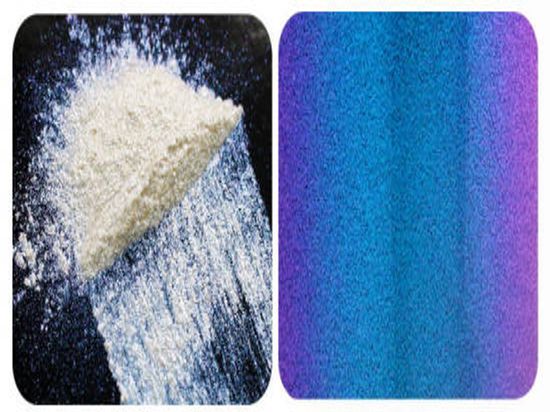
KT-92275 is a large-particle duochrome loose pigment from our KT-9000 Magic Chameleon Series, delivering a full blue-purple-red-orange color travel sequence that shifts continuously across the visible spectrum as the viewing angle changes. With a particle size range of 75–175 μm, this grade is engineered specifically for applications where maximum sparkle is the priority — loose eyeshadow, nail art toppers, and high-impact decorative cosmetics where the angular shift needs to read clearly against the skin or a dark base.
Read More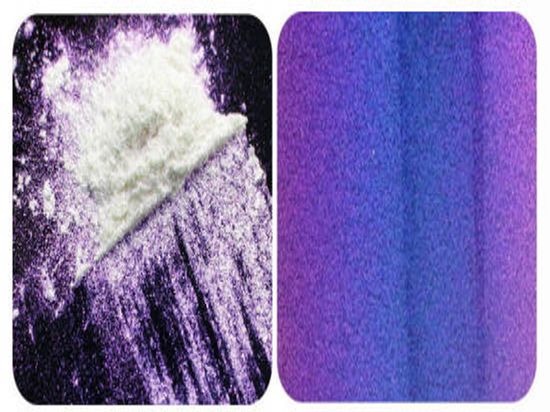
KT-92375 is a large-particle ghost chameleon pigment from Kolortek's KT-9000 Magic Chameleon Series, delivering a continuous five-stage color shift — indigo → purple → red → orange → yellow — as the viewing angle changes. Built on natural mica coated with titanium dioxide, silica, and tin oxide, it carries a particle size of 75–175 μm for maximum sparkle. We developed this grade specifically for high-impact automotive finishes, custom coatings, and luxury decorative applications where a dramatic, angle-dependent color shift is the primary design goal.
Read More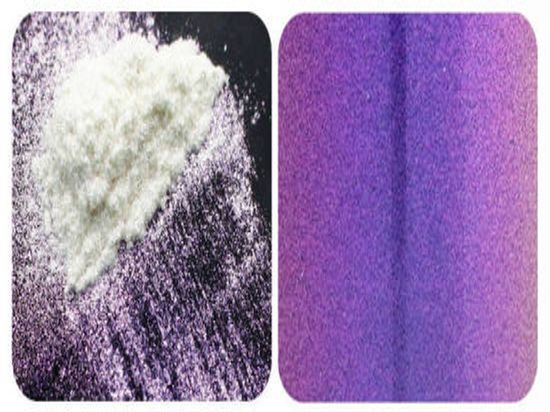
KT-92475 is a large-particle chameleon pigment from the KT-9000 Magic Chameleon Series, producing a continuous mauve → red → orange → yellow color shift that sweeps across the visible spectrum as the viewing angle changes. With a particle size of 75–175 μm and a natural mica substrate coated with titanium dioxide, silica, and tin oxide, it delivers the coarse, high-sparkle texture that nail art formulators need for maximum visual drama — particularly over a dark or black base coat.
Read More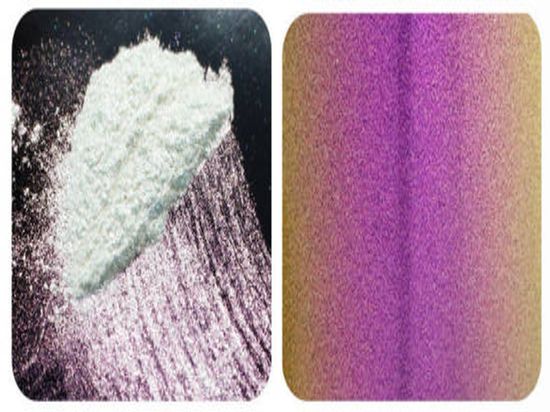
KT-92575 is a large-flake chameleon pearl powder from our KT-9000 Magic Chameleon Series, producing a dramatic angle-dependent color shift spanning red, orange, yellow, and kelly green on dark substrates. Built on a natural mica substrate with a multi-layer coating of titanium dioxide, silica, and tin oxide, it delivers an INCI composition suited to high-end cosmetic and nail art formulations. The 75–175 μm particle range gives it the high-sparkle, deep color-travel behavior that distinguishes it from finer cosmetic pearl grades.
Read More
 English
 Français
 Deutsch
 Русский
 Español
 Português