
Leave A Message
If you are interested in our products and want to know more details,please leave a message here,we will reply you as soon as we can.
KT-98525 Red/Green Hypershift Pigments for automotive coatings
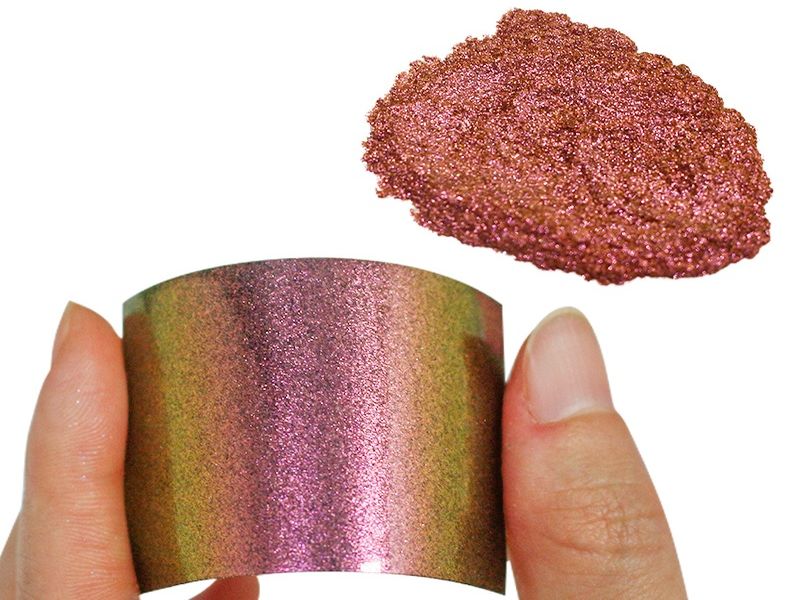
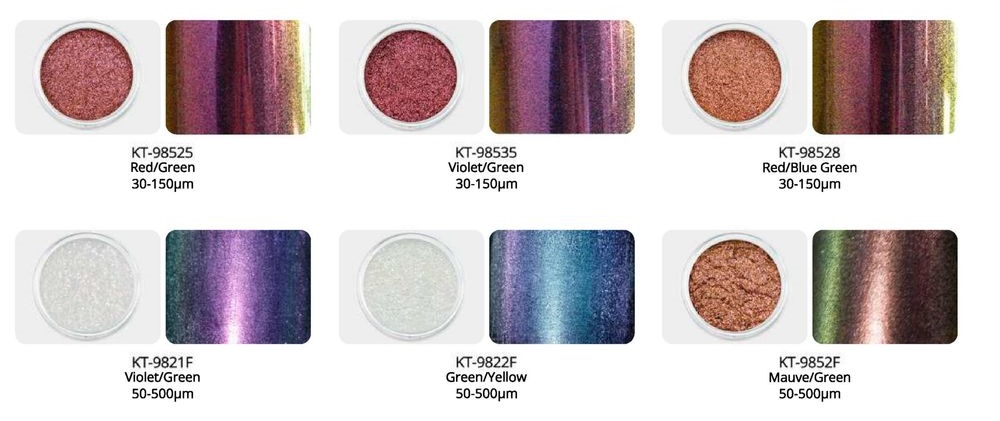
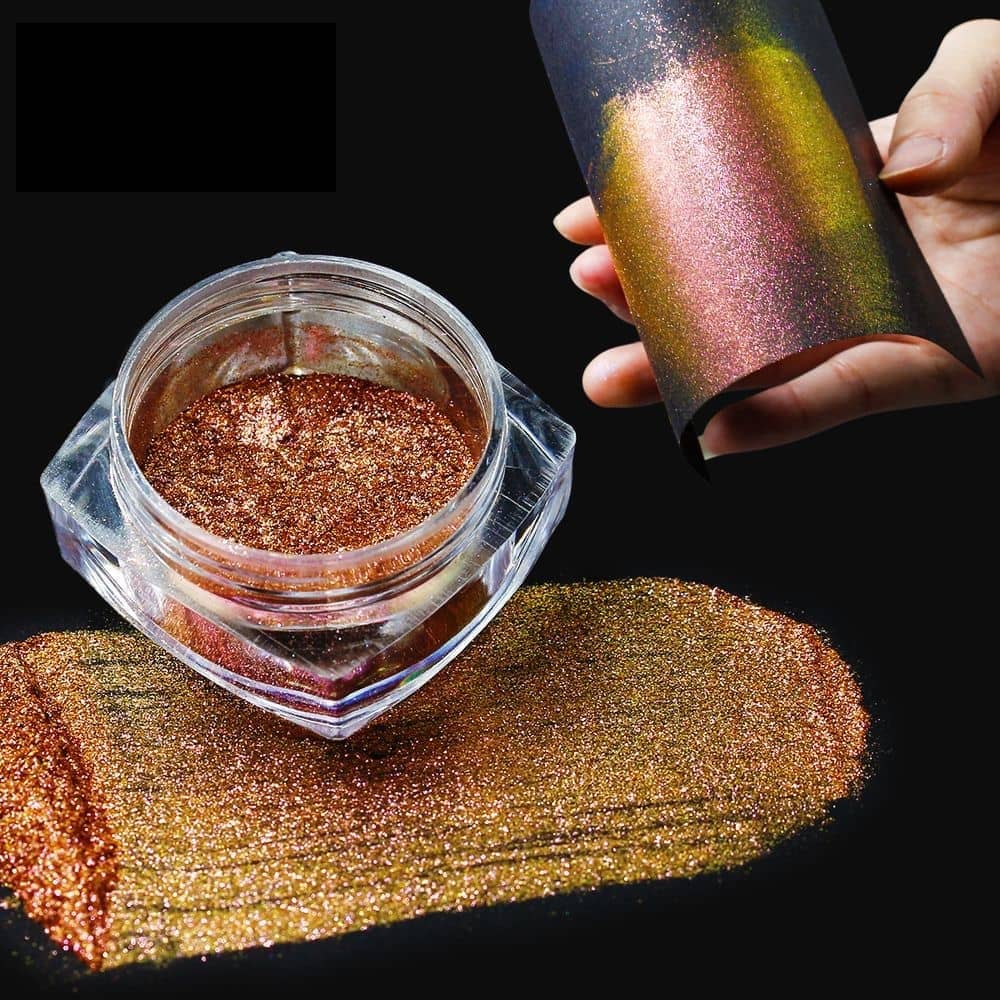
KT-98525 is a TiO₂-free chameleon pigment from our KT-9000 Magic Chameleon series, producing a vivid red-to-green color travel as the viewing angle changes. Built on natural mica coated with Fe₂O₃ and silica, it delivers a strong goniochromatic shift across a broad 30–150 μm particle range — making it a direct candidate for automotive color shift pigment applications in custom basecoat and specialty coating systems. No titanium dioxide is used in the coating stack, which keeps the shift crisp and the color travel fully angle-dependent.
The color shift in KT-98525 is a structural interference effect, not dye chemistry. Thin alternating layers of Fe₂O₃ and silica deposited on natural mica flakes create destructive and constructive interference at different angles. The result is a pronounced red appearance at near-normal incidence that transitions to green at oblique angles — what the industry broadly calls a duochrome or color travel effect.
Because there is no TiO₂ in the coating stack, the opacifying contribution common to standard pearl pigments is eliminated. That matters for automotive and coating formulators: you get a deeper, more saturated shift with less interference from hiding-power contributions. The trade-off is that the substrate color plays a more dominant role. In our experience, KT-98525 performs best over dark or black substrates — white substrates visually dampen the shift range significantly.
The broad particle size distribution (30–150 μm, D50 49–65 μm) contributes to a sparkling, high-travel effect rather than a smooth satin finish. Larger platelets extend the color shift arc; the distribution within KT-98525 means both elements are present in the same batch.
| Property | Value |
|---|---|
| Form | Powder |
| Color | Red/Green (angle-dependent) |
| Odour | Odourless |
| Particle size range | 30–150 μm |
| D50 | 49–65 μm |
| pH (4% H₂O) | 6.0–9.0 |
| Density | 2.6–3.1 kg/L |
| Bulk density | 24–29 g/100g |
| Solubility in water | Insoluble |
| Hazard classification (CLP) | Not classified (EC No. 1272/2008) |
| Component | C.I. Number | Content (%) |
|---|---|---|
| Mica | C.I. 77019 | 62.0–67.0 |
| Iron Oxide (Fe₂O₃) | C.I. 77491 | 6.0–16.0 |
| Silica | — | 22.0–27.0 |
| Element | Limit | Element | Limit |
|---|---|---|---|
| As | < 2 ppm | Cr | < 100 ppm |
| Hg | < 1 ppm | Sb | < 1 ppm |
| Ba | < 50 ppm | Cu | < 50 ppm |
| Ni | < 10 ppm | Zn | < 50 ppm |
| Cd | < 3 ppm | Pb | < 10 ppm |
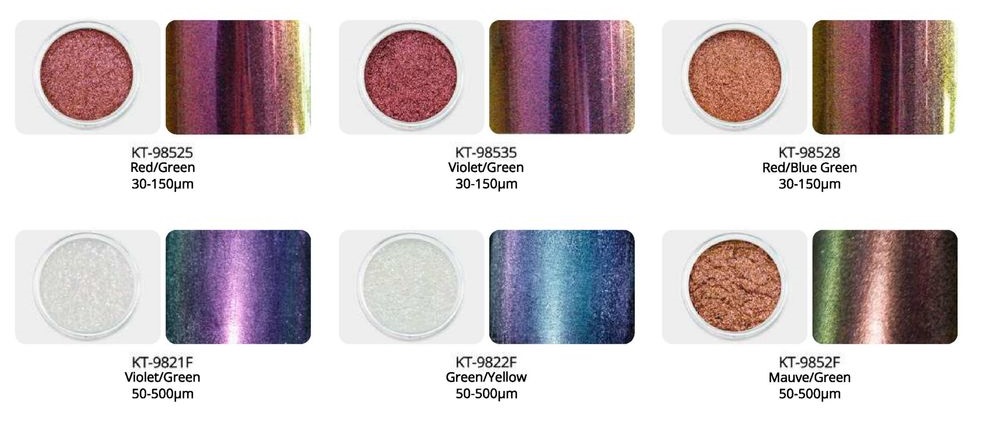
Within the KT-9000 Magic Chameleon family, KT-98525 occupies a specific position: TiO₂-free coating, coarser particle distribution (30–150 μm), two-color duochrome shift. Other sub-series in the same family cover different particle windows and shift combinations — for reference, the KT-95102 to KT-95706 group runs 5–25 μm to 10–70 μm for smoother, finer effects; the KT-95125 to KT-95625 group reaches 100–250 μm for maximum sparkle; and the KT-90507 covers Orange/Cyan at 20–80 μm.
Choosing between these grades comes down to the finish character required. KT-98525's 30–150 μm range sits in the medium-coarse zone — enough sparkle to register clearly at automotive viewing distances, while still being manageable through standard pneumatic spray equipment. We typically recommend it for custom wrap and specialty OEM work where a bold, readable two-color travel matters more than a smooth silk finish.
KT-98525 is intended for use as a hypershift pigment powder in basecoat/clearcoat systems, not as a single-coat solution. The clearcoat is not optional — it protects the platelet layer, prevents mechanical damage, and significantly deepens the apparent color travel through the additional refractive path. Target dry film thickness for the pigment-bearing basecoat layer is 15–25 μm, with pigment loading in the 1–10% range as a starting point. Exact loading depends on the desired effect intensity and the resin system in use.
Platelet orientation is the variable that controls how clean and directional the shift reads. Flash-off time between the basecoat application and clearcoat application is critical: too short, and solvents from the clearcoat disturb platelets before they've settled; too long, and surface tension effects can cause uneven orientation. The right window depends on your specific resin system, booth temperature, and film build — this is something to dial in on panels before committing to a full job.
Application method: pneumatic spray or electrostatic spray. Avoid high-shear recirculation systems — they mechanically fracture the mica platelets, which shortens the effective particle size and degrades color travel. Over-thinning the basecoat has a similar effect on orientation quality. Reduce viscosity only as far as the spray method demands.
As noted above, dark or black substrates are strongly preferred. On a black ground, the full red-to-green angular range reads cleanly. On white or light substrates, the reflected background competes with the interference color and the shift becomes visually subtle — not a defect, but a formulation decision that should be made intentionally.
KT-98525 can be combined with transparent absorption pigments to shift the base tone or adjust the color range visible at face angle. Opaque or hiding pigments are generally incompatible with this approach — they obscure the interference effect rather than modify it. Compatibility with specific solvent-based and water-based systems has not been formally characterized for this grade; compatibility screening with your resin system is recommended before production scale-up.
Beyond automotive, the KT-9000 series is used in luxury packaging, decorative coatings for motorcycle helmets and sporting goods, high-end cosmetics, nail art, and security printing applications where angle-dependent color is part of the anti-counterfeiting strategy.
KT-98525 is not classified as hazardous under CLP Regulation (EC) No. 1272/2008 or under Directives 67/548/EEC and 1999/45/EC. The product is subject to REACH Regulation (EC) No. 1907/2006. Company-level certifications include ISO 9001:2015 covering production and sales of pigments, and REACH registration — though the supplied REACH registration certificate specifically covers fluorphlogopite (synthetic mica); product-specific confirmation is required for natural mica grades including KT-98525.
For handling: avoid generating or breathing airborne dust. Adequate ventilation is required; dust mask, gloves, and eye protection should be worn if dust is generated during weighing or transfer. Store in a well-ventilated location. There are no listed chemical incompatibilities in the TDS, but standard precautions for fine inorganic powder apply.
What is the difference between KT-98525 and standard TiO₂-coated chameleon pigments?
KT-98525 uses an Fe₂O₃ and silica coating on natural mica, with no TiO₂ in the stack. Standard pearl pigments rely on TiO₂ for opacity and base color. Removing TiO₂ eliminates its hiding-power contribution, which allows the interference-based color travel to appear more saturated and angle-dependent. The trade-off is stronger substrate dependence — black or dark grounds are required for the full Red/Green shift to be visually distinct.
What particle size should I specify for automotive color shift pigment applications?
KT-98525 covers 30–150 μm with a D50 of 49–65 μm, which puts it in the medium-coarse range. This range produces visible sparkle and strong angular shift at normal automotive viewing distances. For smoother, satin-like finishes, finer grades in the KT-9000 family (such as the KT-95102 to KT-95706 sub-series at 5–25 μm) are a better fit. For maximum sparkle and travel, coarser sub-series up to 250 μm are available.
Can KT-98525 hypershift pearl paint be used in water-based automotive basecoats?
Solvent-based versus water-based compatibility for KT-98525 has not been formally characterized in our product data for this grade. The pigment is insoluble in water and pH-stable between 6.0 and 9.0, which is consistent with typical water-based basecoat conditions. That said, we recommend a compatibility screening trial before committing to production scale — particularly to assess platelet orientation behavior and inter-coat adhesion in your specific system.
Is KT-98525 suitable for applications beyond automotive coatings?
Yes. While automotive custom finishes and wraps are the primary market for the KT-9000 series, KT-98525 is also used in luxury packaging, decorative coatings for helmets and sporting goods, high-end nail art, cosmetics, and security printing. The INCI name (Mica - Iron oxide - Silica) and inorganic composition make it a candidate for cosmetic formulations, though product-specific regulatory documentation should be confirmed for each application and market.
Contact our technical team to discuss formulation requirements for your specific application.
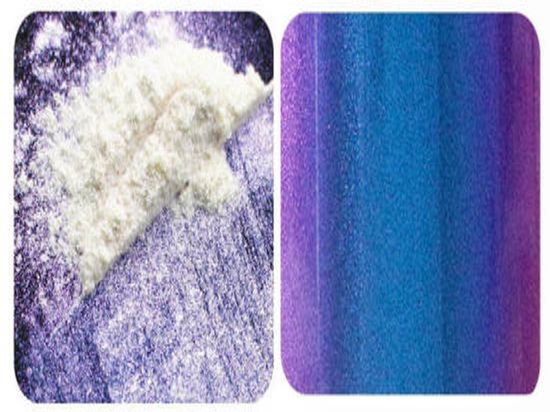
KT-92230 is a multichrome pigment that shifts through a full blue-purple-red-orange sequence as the viewing angle changes — one of the broadest color-travel arcs we produce in the KT-9000 series. Built on a natural mica substrate with a multi-layer TiO₂/Fe₂O₃/silica/tin oxide coating, it comes in a 25–130 μm particle size that delivers strong angular contrast and high visual impact across automotive finishes, decorative coatings, and specialty printing.
Read More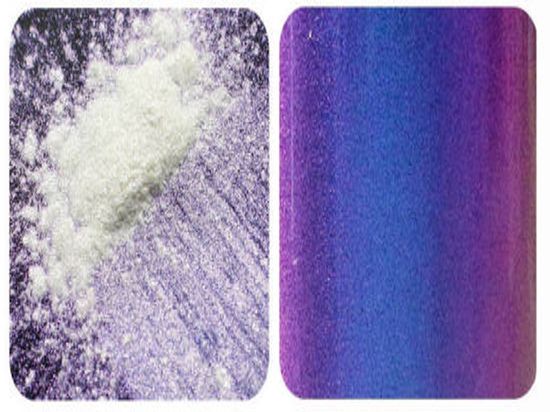
KT-92330 is a multi-layer interference pigment from Kolortek's KT-9000 Magic Chameleon Series, producing a continuous color shift sequence — indigo through purple, red, orange, and yellow — as the viewing angle changes. Built on natural mica coated with TiO₂, silica, and tin oxide, it delivers a high-mirror goniochromatic effect with a 25–130 μm particle size distribution engineered for maximum visual impact. This color shifting pigment powder performs best over dark or black substrates, where the full angular color travel is most legible.
Read More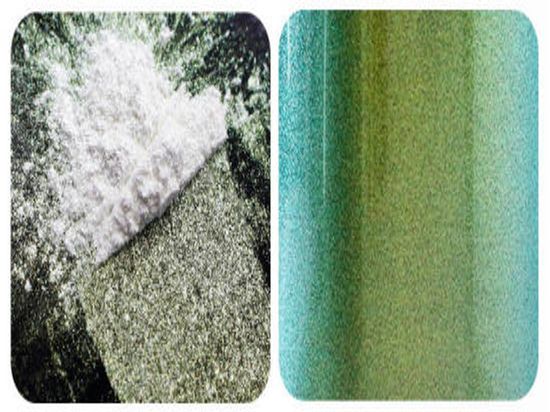
KT-92630 is a large-particle chameleon paint pearl from our KT-9000 Magic Chameleon Series, producing a sequential golden-to-kelly-green-to-blue color travel as the viewing angle shifts. With a 25–130 μm particle range, it delivers high visual impact in automotive custom finishes, decorative coatings, and specialty applications where a pronounced, multi-stop color flip is the goal. The substrate is natural mica with a multi-layer TiO₂/SiO₂/metal-oxide coating that generates the goniochromatic interference effect.
Read More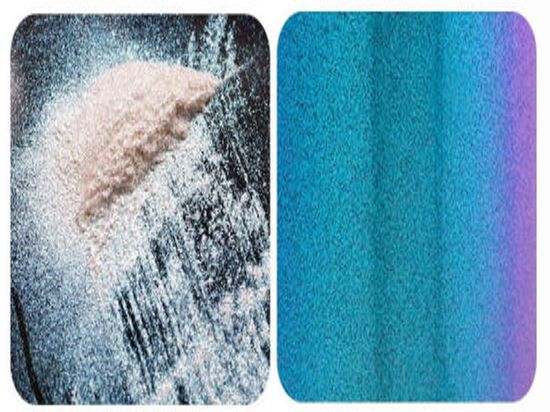
KT-92175 is the large-particle grade of our chameleon pigment for resin, built on a natural mica substrate with a multi-layer TiO₂, silica, and tin oxide coating that produces a continuous cyan-to-blue-to-purple-to-red angle-dependent color shift. At 75–175μm, it is the highest-sparkle option in the KT-9000 Magic Chameleon Series' KT-921** Cyan-Blue-Purple-Red range. Compatible with epoxy and UV resin at loadings of 1–10% by weight, the effect reads strongest on dark or black substrates where the goniochromatic shift has maximum contrast.
Read More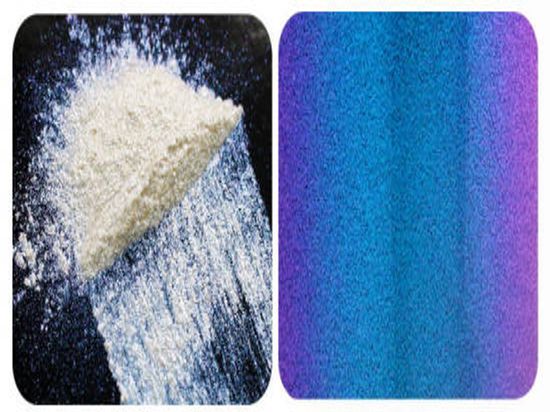
KT-92275 is a large-particle duochrome loose pigment from our KT-9000 Magic Chameleon Series, delivering a full blue-purple-red-orange color travel sequence that shifts continuously across the visible spectrum as the viewing angle changes. With a particle size range of 75–175 μm, this grade is engineered specifically for applications where maximum sparkle is the priority — loose eyeshadow, nail art toppers, and high-impact decorative cosmetics where the angular shift needs to read clearly against the skin or a dark base.
Read More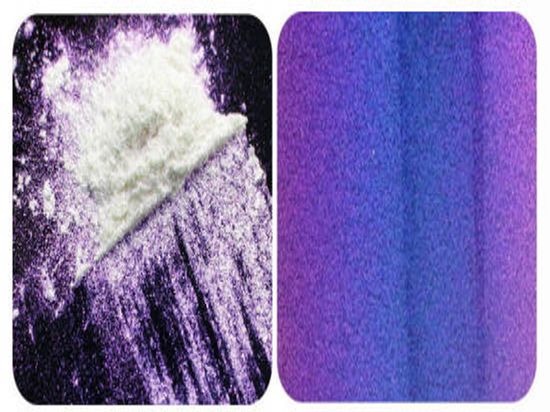
KT-92375 is a large-particle ghost chameleon pigment from Kolortek's KT-9000 Magic Chameleon Series, delivering a continuous five-stage color shift — indigo → purple → red → orange → yellow — as the viewing angle changes. Built on natural mica coated with titanium dioxide, silica, and tin oxide, it carries a particle size of 75–175 μm for maximum sparkle. We developed this grade specifically for high-impact automotive finishes, custom coatings, and luxury decorative applications where a dramatic, angle-dependent color shift is the primary design goal.
Read More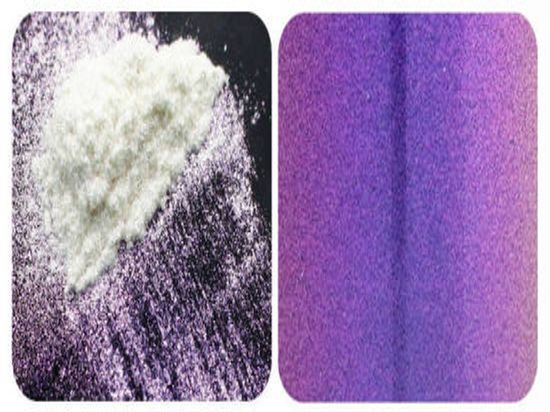
KT-92475 is a large-particle chameleon pigment from the KT-9000 Magic Chameleon Series, producing a continuous mauve → red → orange → yellow color shift that sweeps across the visible spectrum as the viewing angle changes. With a particle size of 75–175 μm and a natural mica substrate coated with titanium dioxide, silica, and tin oxide, it delivers the coarse, high-sparkle texture that nail art formulators need for maximum visual drama — particularly over a dark or black base coat.
Read More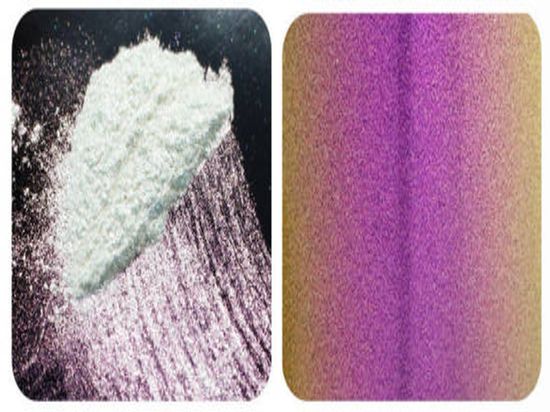
KT-92575 is a large-flake chameleon pearl powder from our KT-9000 Magic Chameleon Series, producing a dramatic angle-dependent color shift spanning red, orange, yellow, and kelly green on dark substrates. Built on a natural mica substrate with a multi-layer coating of titanium dioxide, silica, and tin oxide, it delivers an INCI composition suited to high-end cosmetic and nail art formulations. The 75–175 μm particle range gives it the high-sparkle, deep color-travel behavior that distinguishes it from finer cosmetic pearl grades.
Read More
 English
 Français
 Deutsch
 Русский
 Español
 Português