Leave A Message
If you are interested in our products and want to know more details,please leave a message here,we will reply you as soon as we can.
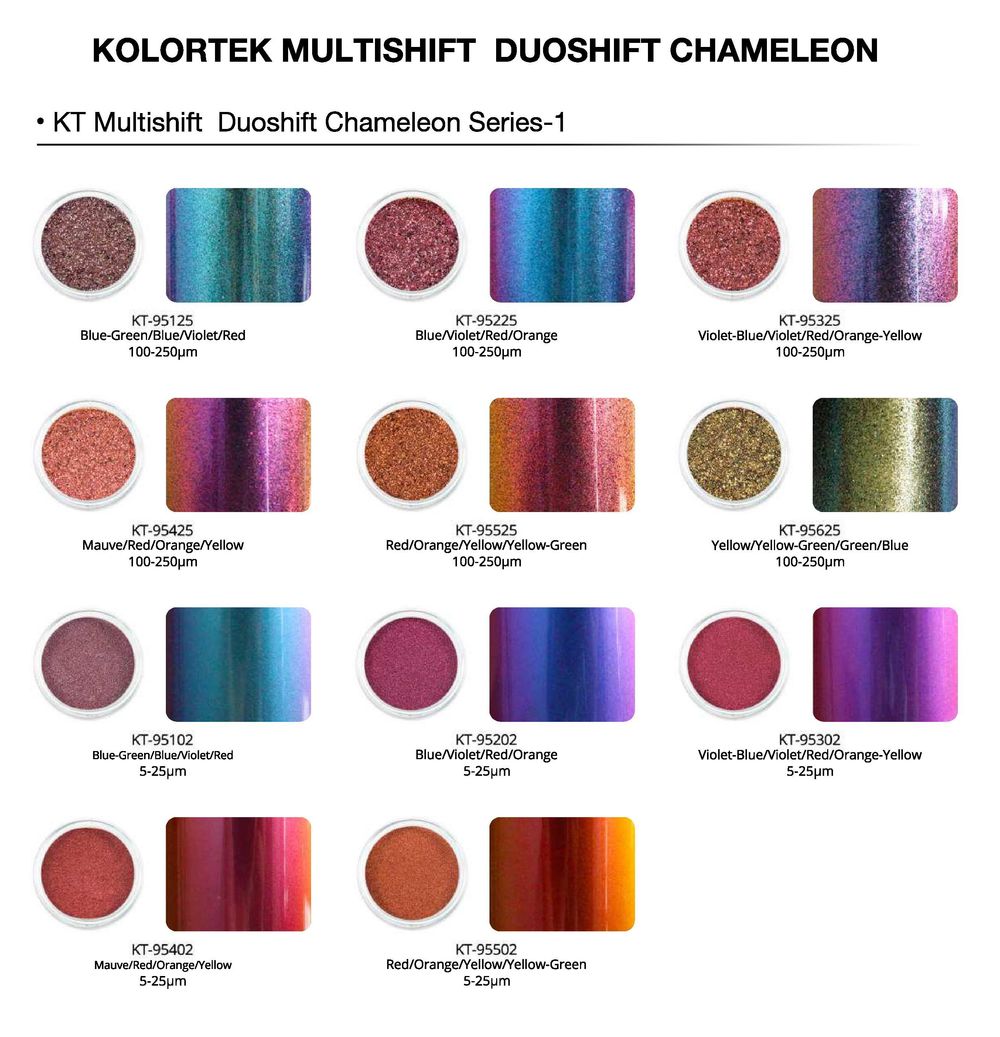
KT-95625 Yellow/yellow-green/green/blue Chameleon Powder for resin
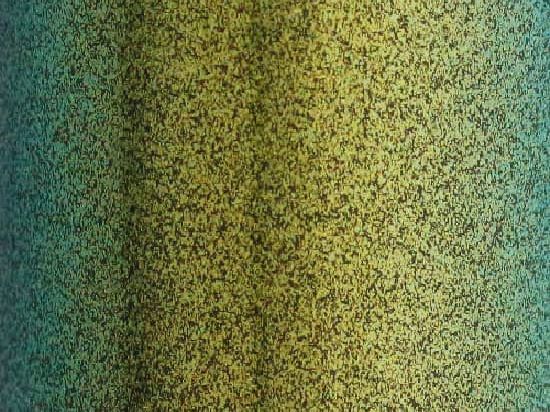
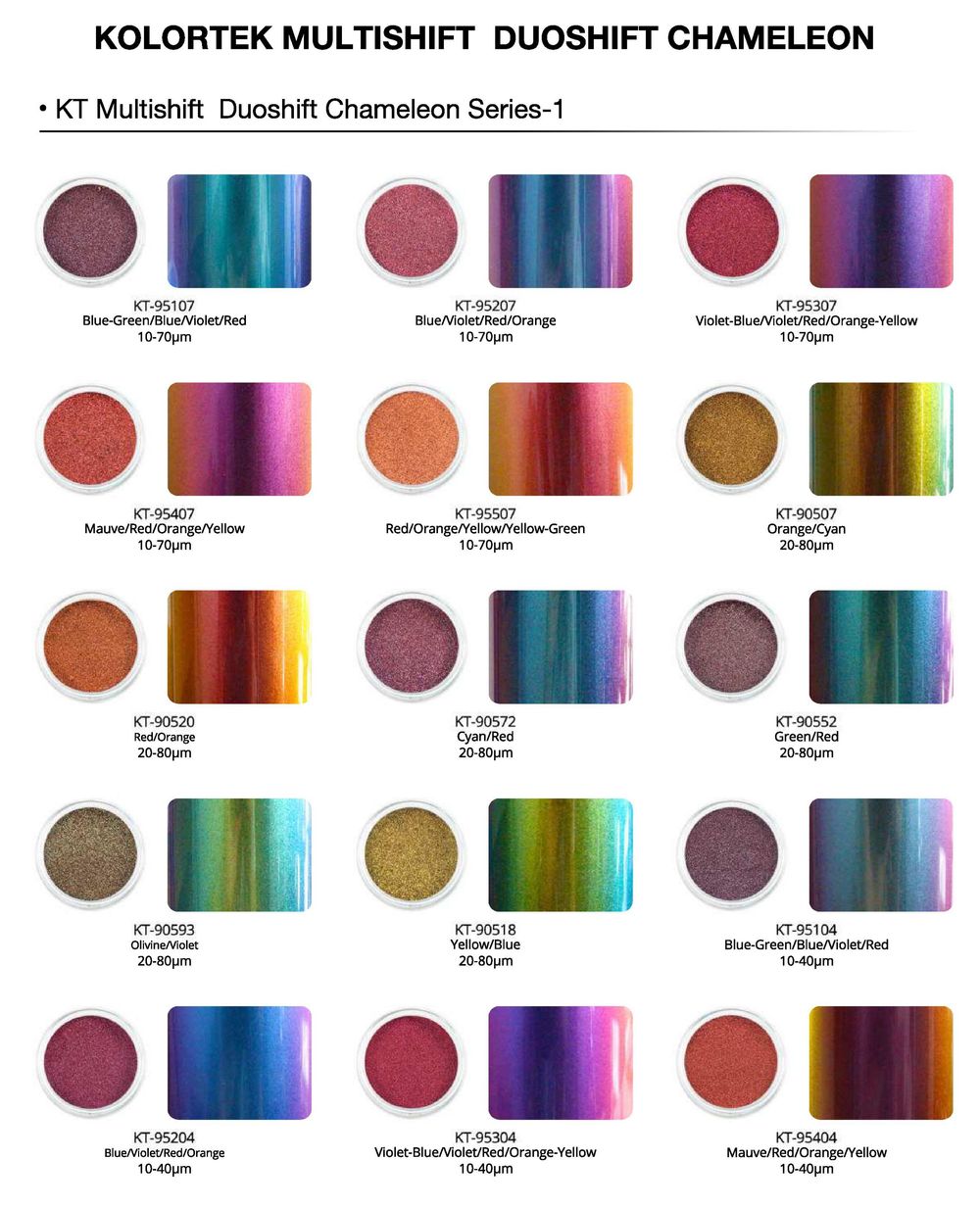
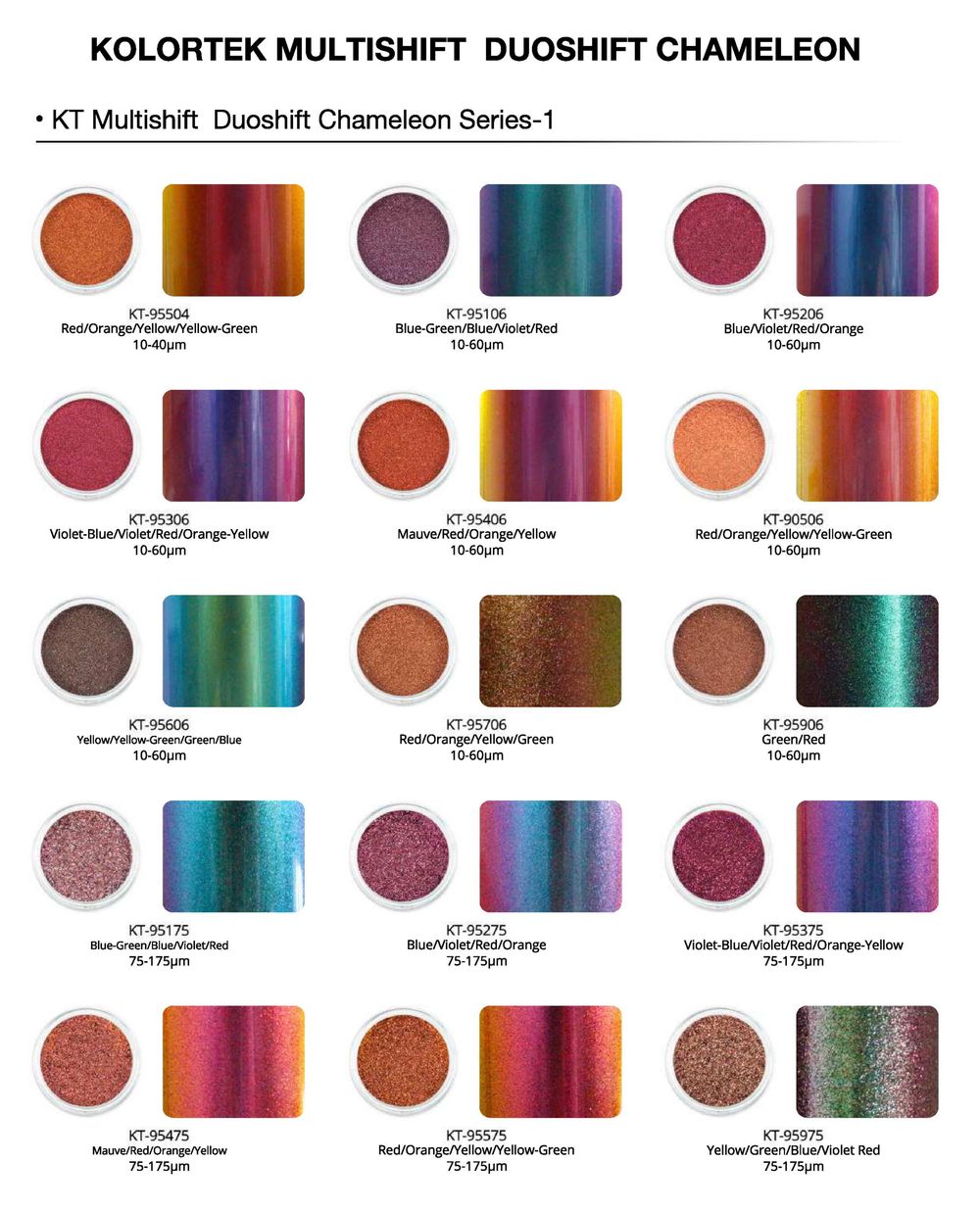
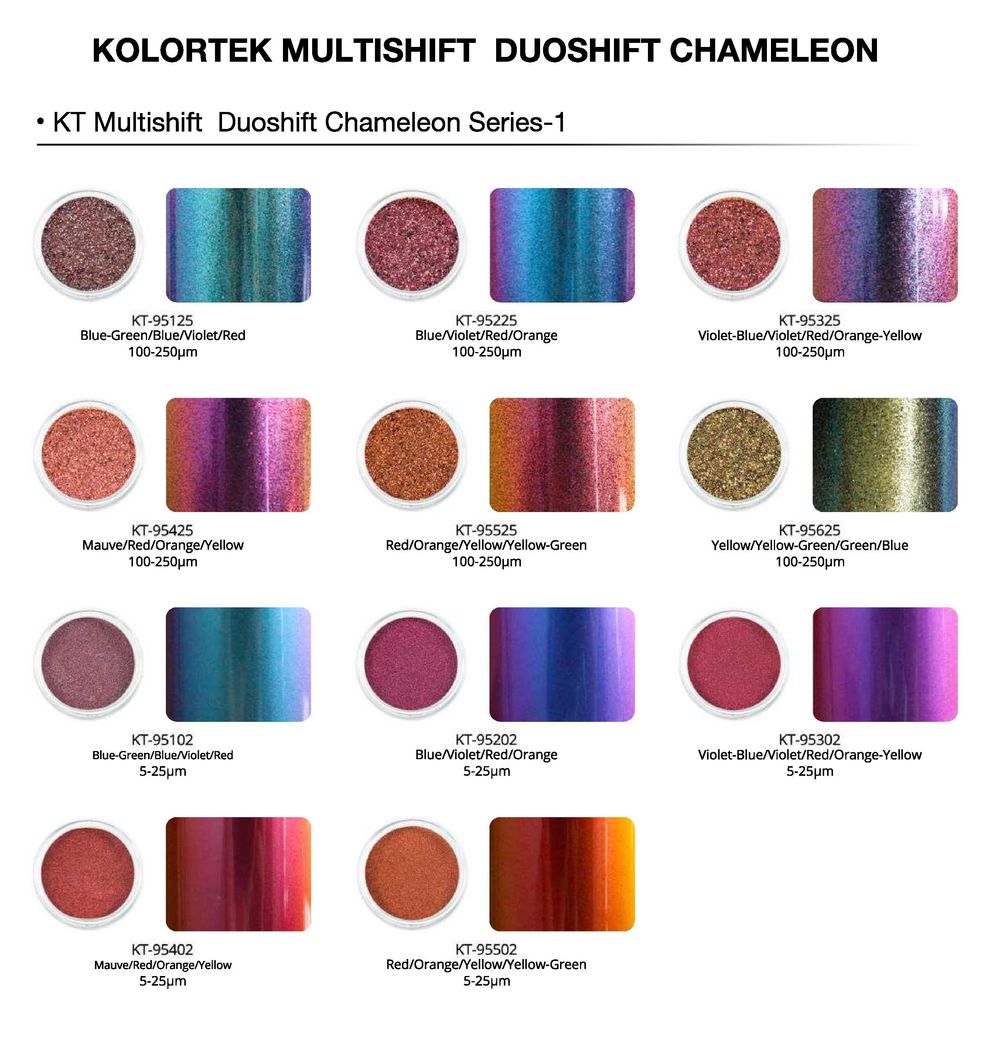
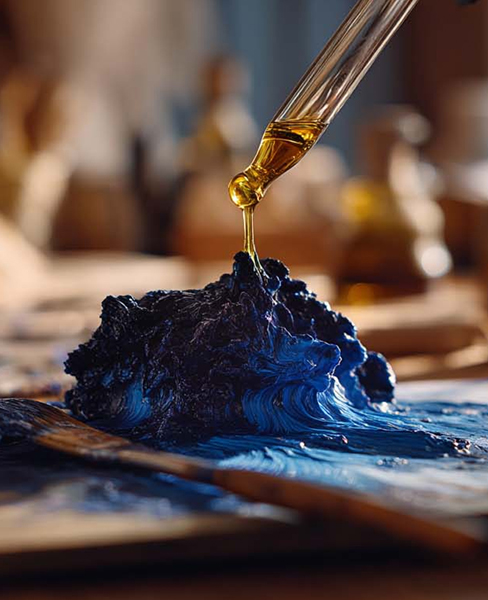
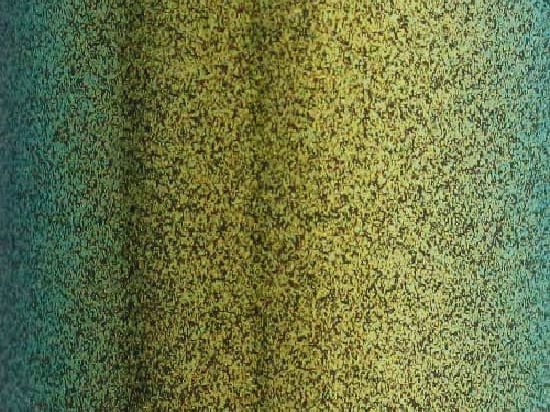
KT-95625 is a large-particle chameleon powder for resin applications that cycles through four distinct colors — yellow, yellow-green, green, and blue — depending on the viewing angle and light source. Built on natural mica with an Fe₂O₃ + Silica coating and no TiO₂, it sits in the 100–250 μm particle size range, which gives it a bold, dramatic color-travel effect that smaller interference pigments simply cannot replicate. We developed this grade specifically for resin art, decorative coatings, and high-visibility custom finishes where a single shift isn't enough.
Most color-shift mica powders on the market produce a two-color flip — typically one warm and one cool tone. KT-95625 delivers four sequential colors within a single particle, which is why we categorize it as a multicolor chameleon rather than a simple duochrome. The yellow-to-blue travel covers a wide spectral range, and the intermediate yellow-green and green stops give the pigment a fluid, organic quality when embedded in clear resin.
The TiO₂-free formulation is a deliberate design choice. By using Fe₂O₃ and Silica as the functional coating layers on natural mica, we achieve the interference effect without the opacity that TiO₂ introduces. The result is a more translucent, depth-rich appearance — critical in epoxy and casting resin where you want light to travel through the matrix and interact with the pigment rather than bounce off a white base.
The 100–250 μm particle range is the other defining specification. Larger particles produce visible flake structures inside the resin, which contributes to the spatial color-shift effect. Formulators who switch from a 10–70 μm grade to this one consistently describe it as looking "deeper" and more three-dimensional. That said, the coarser particle size means surface smoothness requires attention — see the formulation notes below.
| Parameter | Value |
|---|---|
| Form | Powder |
| Color / Appearance | Yellow / Yellow-green / Green / Blue |
| Particle Size | 100–250 μm |
| D50 | 115–175 μm |
| Density | 2.6–3.2 kg/L |
| Bulk Density | 10–18 g/100 g |
| pH (4% H₂O) | 6.0–9.0 |
| Solubility | Insoluble in water |
| Odor | Odourless |
| Substrate | Natural mica |
| Coating | Fe₂O₃ + Silica (TiO₂-free) |
| INCI Name | Mica - Iron Oxide - Silica |
| Light / Weather Resistance | Good (inorganic pigment system) |
| Component | C.I. Number | Content (%) |
|---|---|---|
| Mica | C.I. 77019 | 68.0–78.0 |
| Iron oxide (Fe₂O₃) | C.I. 77491 | 7.0–12.0 |
| Silica | — | 15.0–20.0 |
All values are maximum permitted concentrations per Kolortek's product specification:
| Element | Limit | Element | Limit |
|---|---|---|---|
| As | < 2 ppm | Pb | < 10 ppm |
| Hg | < 1 ppm | Cr | < 100 ppm |
| Ba | < 50 ppm | Sb | < 1 ppm |
| Ni | < 10 ppm | Cu | < 50 ppm |
| Cd | < 3 ppm | Zn | < 50 ppm |
KT-95625 sits within a broader family of TiO₂-free chameleon grades in the KT-9000 series. The key variable across grades is particle size — and that choice directly determines visual character in the finished resin piece. Here's how the available code ranges compare:
| Code Range | Particle Size | Coating | Color Range |
|---|---|---|---|
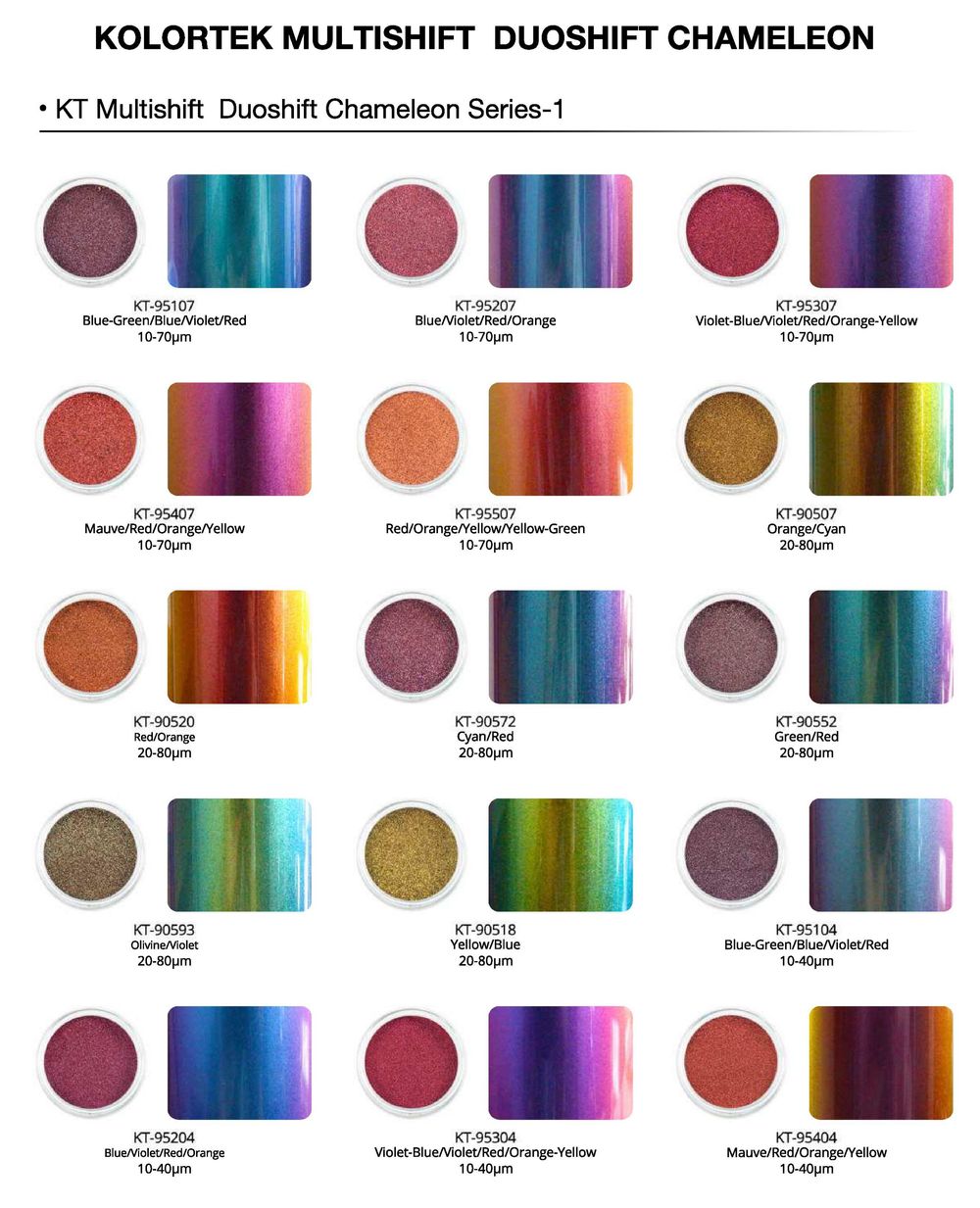
| KT-95102–95706 | 5–25 μm / 10–70 μm | Fe₂O₃ + Silica | Blue-green through Yellow/Green/Blue/Violet Red |
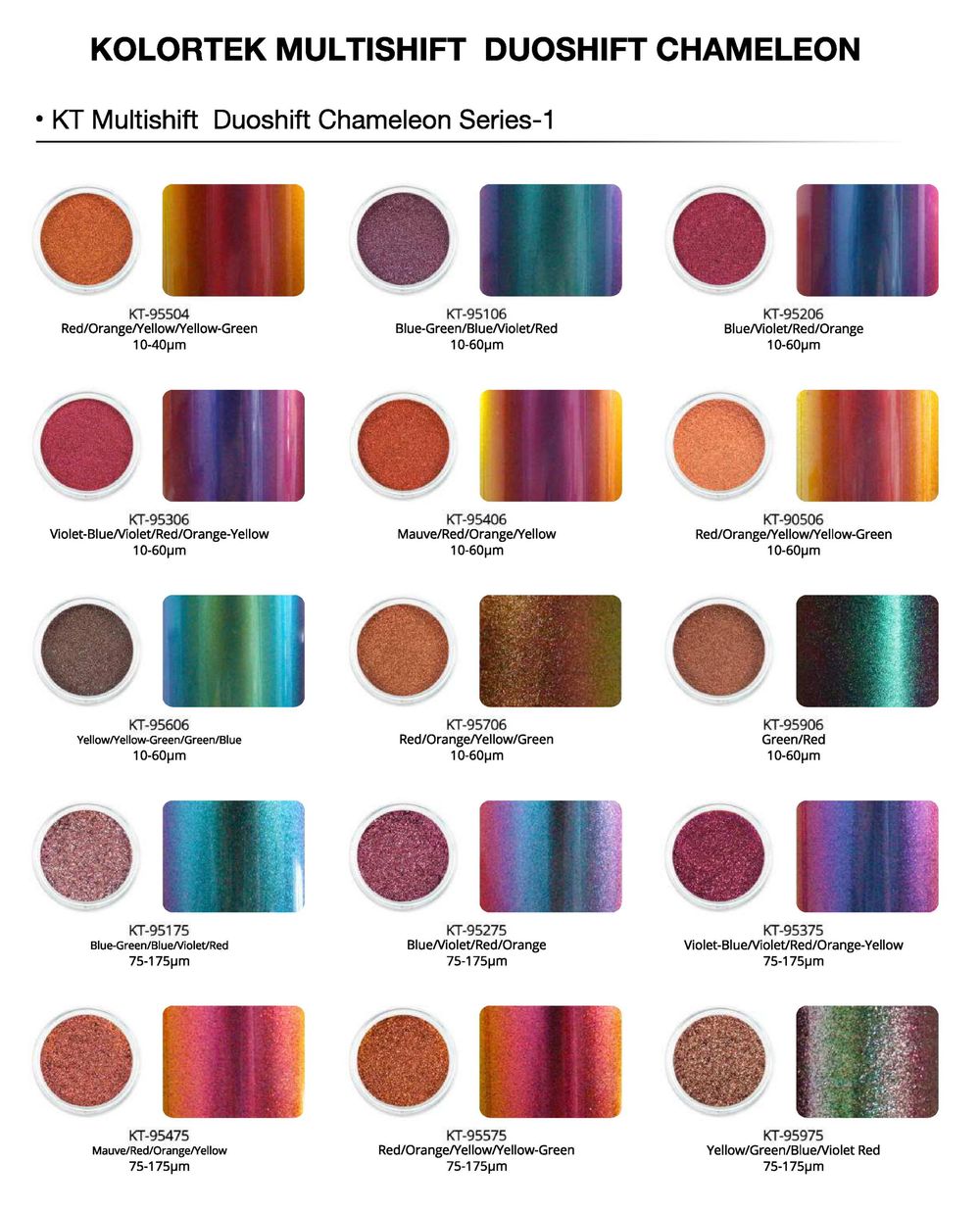
| KT-95175–95975 | 75–175 μm | Fe₂O₃ + Silica | Full color range |
| KT-95125–95625 (incl. KT-95625) | 100–250 μm | Fe₂O₃ + Silica | Full color range |
| KT-90507 | 20–80 μm | Fe₂O₃ + Silica | Orange / Cyan |
| KT-98525 | 30–150 μm | Fe₂O₃ + Silica | Red / Green |
For resin applications where surface finish is critical — thin-pour jewelry, for example — the finer 10–70 μm grades give a smoother, more uniform surface. KT-95625's 100–250 μm range is the better choice when the large-flake visual character is intentional: river tables, deep-pour art resin, casting molds, and custom automotive components where the texture is part of the design language.
The color-shift effect is substrate-dependent. On black or very dark backgrounds, the yellow-to-blue travel is fully visible across the entire angle range. On white or light substrates, the shift compresses significantly — the interference colors become muted and the overall effect reads more as a single tint. This is a physical property of interference pigments, not a formulation variable. In our application work with resin artists, we almost always recommend a black base layer as a starting point.
Recommended dosage runs 1–10% by weight of the total resin system. Lower loadings (1–3%) give a subtle, floaty effect with visible depth; higher loadings (7–10%) create a denser color field with more pronounced shift. Pre-mix the pigment into a small portion of resin Part A before combining with the full batch — this prevents dry clumping and helps achieve even distribution without excessive agitation. Mix slowly. Large-particle chameleon powder sits close to bubble nucleation sites, so aggressive mixing in epoxy creates visible bubbles that are hard to remove after the fact.
KT-95625 is compatible with most epoxy, polyurethane, and UV resin systems. One practical note: because the particles are large, they will settle in low-viscosity systems during cure if the pot life is long. For deep pours, either work in multiple thinner layers or use a resin system with a longer open time and higher viscosity to keep particles in suspension.
Beyond resin art, this grade is used in automotive custom finishes and wraps, decorative coatings for motorcycle helmets and sporting goods, powder coatings, and leather coatings. In automotive and coating contexts, a clear topcoat over the pigmented layer is essential — it protects the flake orientation and significantly enhances perceived color depth. The pigment can also be combined with transparent absorption pigments to modify the base color and extend or shift the angle range of the color travel.
Other documented application areas include luxury packaging, security and anti-counterfeiting printing, high-end cosmetics and nail art, plastics, and dispersion paints. The INCI listing (Mica - Iron Oxide - Silica) supports cosmetic-grade formulation enquiries, though regulatory suitability for specific cosmetic applications should be confirmed against the intended use and regional requirements.
KT-95625 is not classified as hazardous under CLP Regulation (EC) No. 1272/2008 or under Directives 67/548/EEC and 1999/45/EC. Kolortek operates under an ISO 9001:2015 quality management system covering production and sales. TDS and MSDS documents are available for this product; regulatory documentation packages can be requested for specific application requirements.
For cosmetic applications under EU Cosmetics Regulation (EC) No. 1223/2009, cosmetic-grade options and supporting composition documents are available — but final suitability depends on the selected grade and intended use. US FDA-compliant grades exist within the KT-9000 series; confirm the specific grade against current color-additive regulations for your application category. REACH registration documentation should be confirmed at the time of order for your specific grade and use case.
Standard handling precautions apply: avoid generating or inhaling dust, use gloves and eye protection, and provide adequate ventilation. On skin contact, wash with water. On eye contact, flush thoroughly with clean water; seek medical advice if irritation persists.
What is the recommended loading rate for KT-95625 chameleon powder in resin?
The standard dosage range is 1–10% by weight of the total resin system. Lower loadings (around 1–3%) give a translucent, deep-shift effect; higher loadings (7–10%) produce a denser color field. Pre-dispersing the pigment in a small portion of resin before adding to the full batch gives the most consistent distribution. Always mix slowly to minimize bubble formation with large-particle grades.
Why does the color shift look weak on my white resin base?
Interference-based chameleon pigments require a dark background to show their full color travel. On white or light substrates, the reflected white light from the base competes with the interference colors and suppresses the shift. KT-95625 — like all pigments in the KT-9000 series — performs best over black or very dark backgrounds. Adding a black base layer before pouring the pigmented resin is the most reliable fix.
What resin systems is KT-95625 compatible with?
KT-95625 is compatible with most resin systems, including epoxy, polyurethane, and UV resin. It is insoluble in water, odourless, and has a pH of 6.0–9.0, which keeps it chemically neutral in most resin matrices. One practical consideration for low-viscosity systems: the 100–250 μm particle size can cause settling during long pot times. Working in thinner layers or selecting a higher-viscosity resin helps maintain particle suspension during cure.
How does KT-95625 differ from other chameleon resin powder grades in the KT-9000 series?
The primary distinction is particle size: KT-95625 runs 100–250 μm (D50: 115–175 μm), making it one of the coarser grades in the TiO₂-free chameleon range. Larger particles produce more visible flake structure and a stronger spatial color-shift character inside resin. Finer grades (5–25 μm or 10–70 μm from the KT-95102–95706 range) give smoother surfaces and a more diffuse shift — better suited for thin applications or cosmetic-level finish requirements.
Contact our technical team to discuss formulation requirements or to request samples and documentation for your specific application.
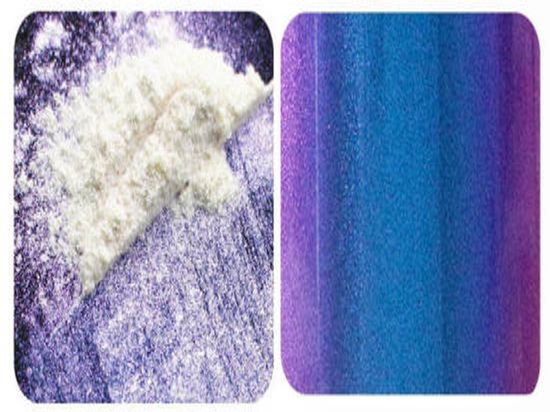
KT-92230 is a multichrome pigment that shifts through a full blue-purple-red-orange sequence as the viewing angle changes — one of the broadest color-travel arcs we produce in the KT-9000 series. Built on a natural mica substrate with a multi-layer TiO₂/Fe₂O₃/silica/tin oxide coating, it comes in a 25–130 μm particle size that delivers strong angular contrast and high visual impact across automotive finishes, decorative coatings, and specialty printing.
Read More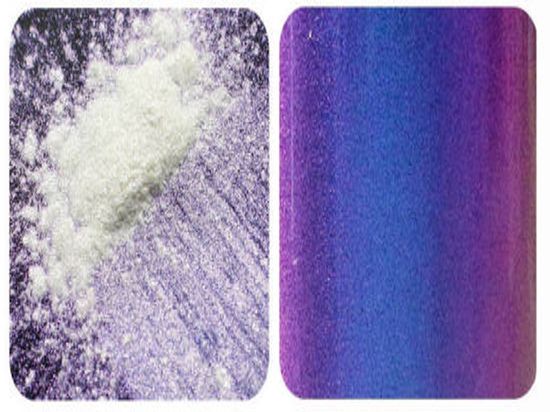
KT-92330 is a multi-layer interference pigment from Kolortek's KT-9000 Magic Chameleon Series, producing a continuous color shift sequence — indigo through purple, red, orange, and yellow — as the viewing angle changes. Built on natural mica coated with TiO₂, silica, and tin oxide, it delivers a high-mirror goniochromatic effect with a 25–130 μm particle size distribution engineered for maximum visual impact. This color shifting pigment powder performs best over dark or black substrates, where the full angular color travel is most legible.
Read More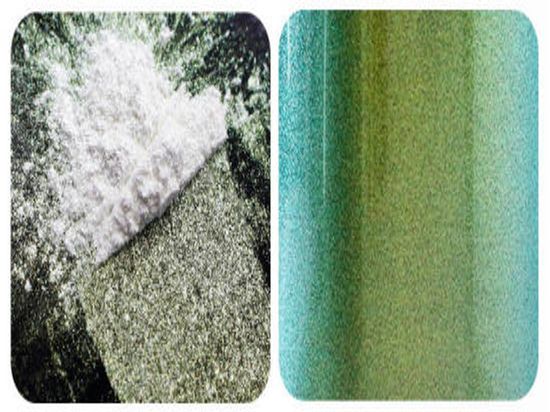
KT-92630 is a large-particle chameleon paint pearl from our KT-9000 Magic Chameleon Series, producing a sequential golden-to-kelly-green-to-blue color travel as the viewing angle shifts. With a 25–130 μm particle range, it delivers high visual impact in automotive custom finishes, decorative coatings, and specialty applications where a pronounced, multi-stop color flip is the goal. The substrate is natural mica with a multi-layer TiO₂/SiO₂/metal-oxide coating that generates the goniochromatic interference effect.
Read More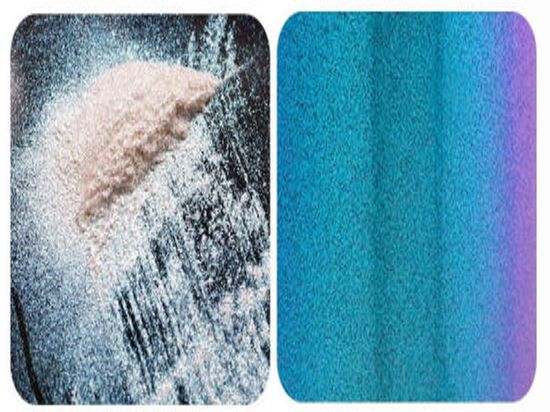
KT-92175 is the large-particle grade of our chameleon pigment for resin, built on a natural mica substrate with a multi-layer TiO₂, silica, and tin oxide coating that produces a continuous cyan-to-blue-to-purple-to-red angle-dependent color shift. At 75–175μm, it is the highest-sparkle option in the KT-9000 Magic Chameleon Series' KT-921** Cyan-Blue-Purple-Red range. Compatible with epoxy and UV resin at loadings of 1–10% by weight, the effect reads strongest on dark or black substrates where the goniochromatic shift has maximum contrast.
Read More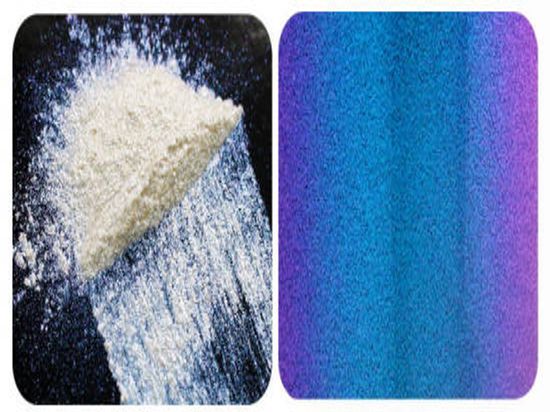
KT-92275 is a large-particle duochrome loose pigment from our KT-9000 Magic Chameleon Series, delivering a full blue-purple-red-orange color travel sequence that shifts continuously across the visible spectrum as the viewing angle changes. With a particle size range of 75–175 μm, this grade is engineered specifically for applications where maximum sparkle is the priority — loose eyeshadow, nail art toppers, and high-impact decorative cosmetics where the angular shift needs to read clearly against the skin or a dark base.
Read More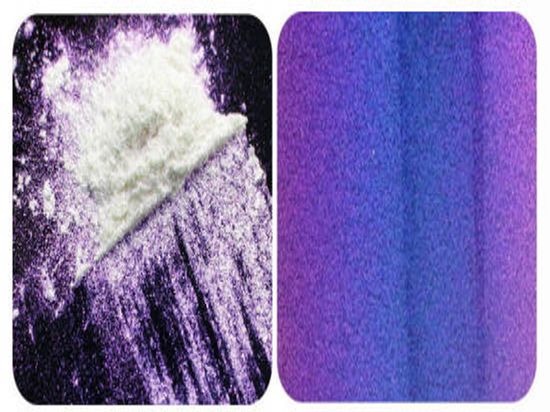
KT-92375 is a large-particle ghost chameleon pigment from Kolortek's KT-9000 Magic Chameleon Series, delivering a continuous five-stage color shift — indigo → purple → red → orange → yellow — as the viewing angle changes. Built on natural mica coated with titanium dioxide, silica, and tin oxide, it carries a particle size of 75–175 μm for maximum sparkle. We developed this grade specifically for high-impact automotive finishes, custom coatings, and luxury decorative applications where a dramatic, angle-dependent color shift is the primary design goal.
Read More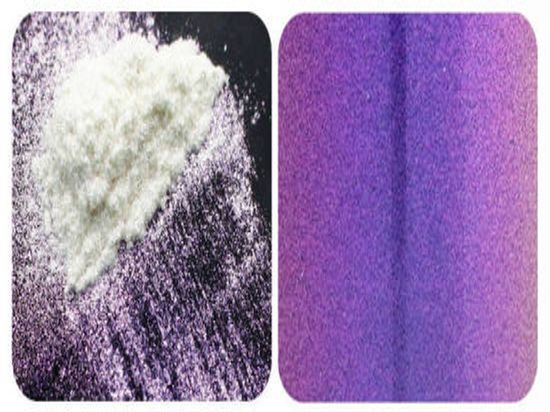
KT-92475 is a large-particle chameleon pigment from the KT-9000 Magic Chameleon Series, producing a continuous mauve → red → orange → yellow color shift that sweeps across the visible spectrum as the viewing angle changes. With a particle size of 75–175 μm and a natural mica substrate coated with titanium dioxide, silica, and tin oxide, it delivers the coarse, high-sparkle texture that nail art formulators need for maximum visual drama — particularly over a dark or black base coat.
Read More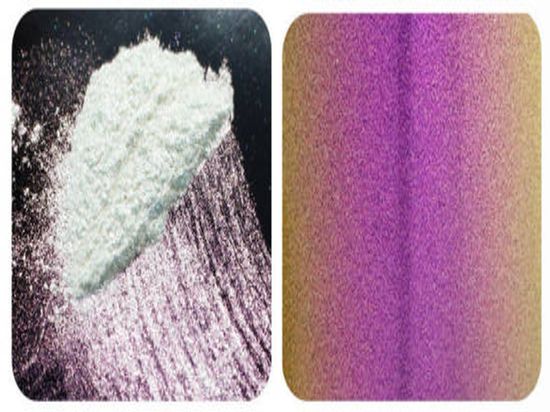
KT-92575 is a large-flake chameleon pearl powder from our KT-9000 Magic Chameleon Series, producing a dramatic angle-dependent color shift spanning red, orange, yellow, and kelly green on dark substrates. Built on a natural mica substrate with a multi-layer coating of titanium dioxide, silica, and tin oxide, it delivers an INCI composition suited to high-end cosmetic and nail art formulations. The 75–175 μm particle range gives it the high-sparkle, deep color-travel behavior that distinguishes it from finer cosmetic pearl grades.
Read More
 English
 Français
 Deutsch
 Русский
 Español
 Português