
Leave A Message
If you are interested in our products and want to know more details,please leave a message here,we will reply you as soon as we can.
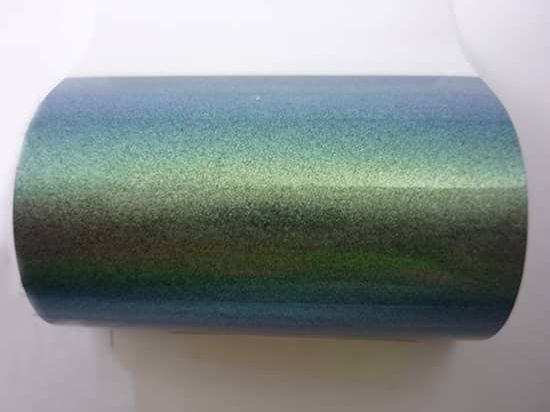
KT-90216 Color Shift Mica Powder Yellow/Indigo for nail art
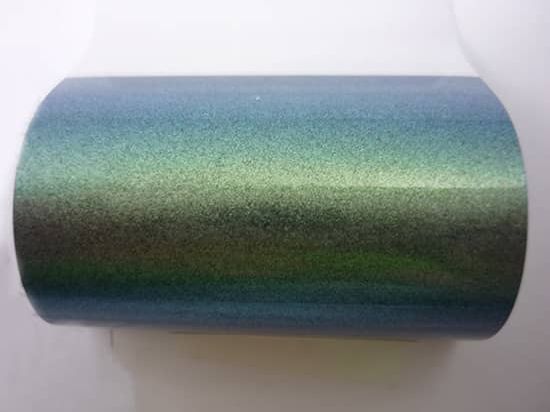
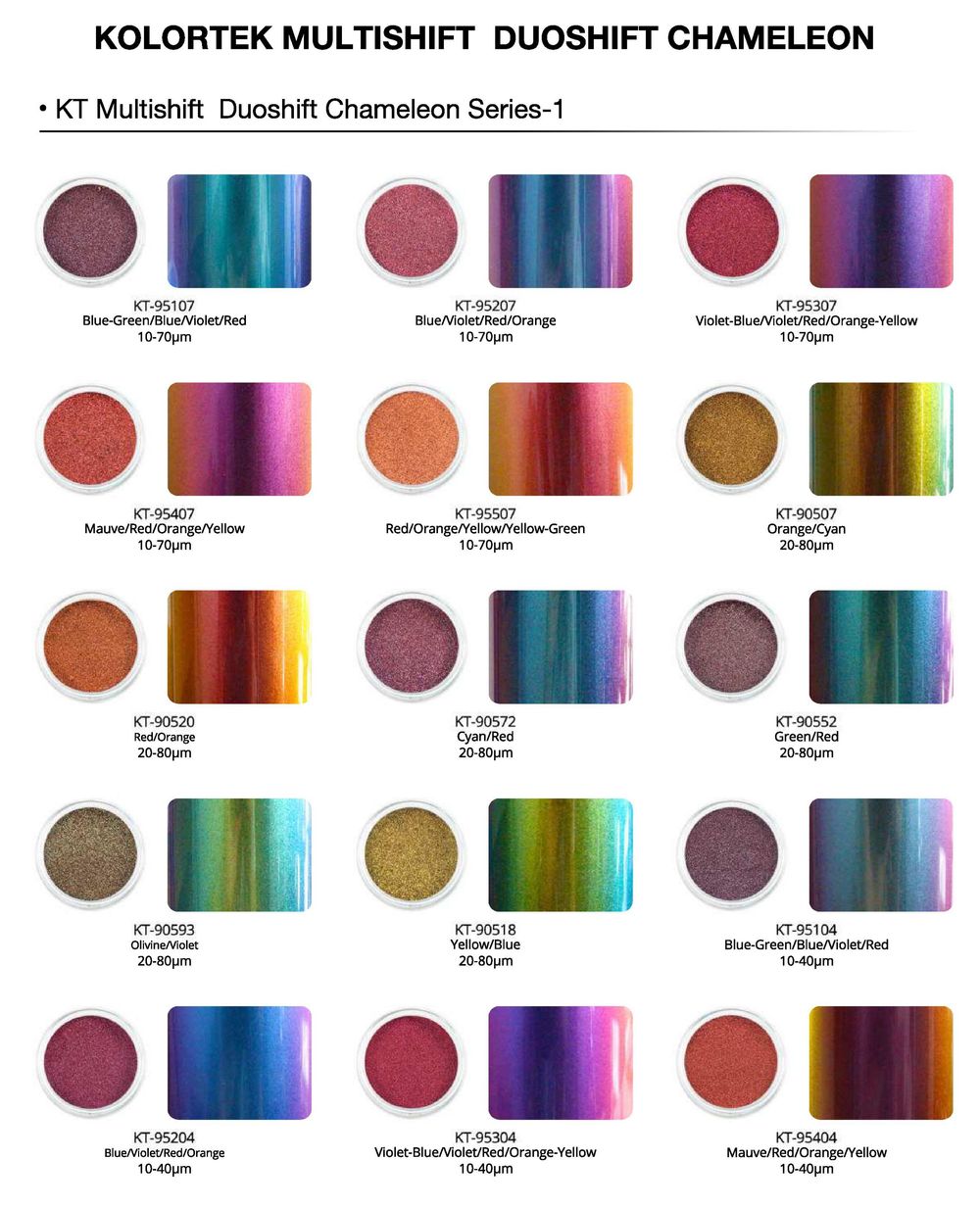
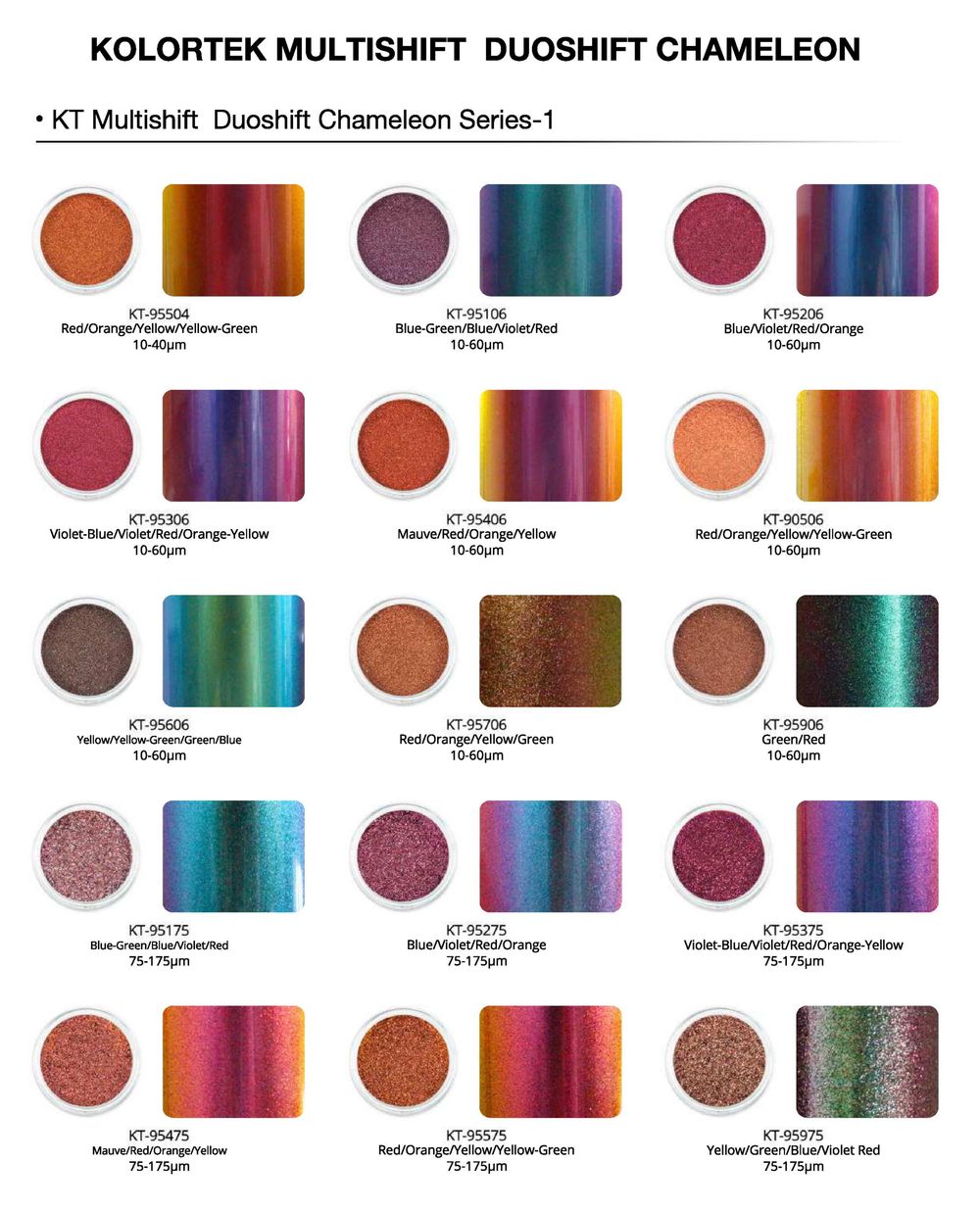
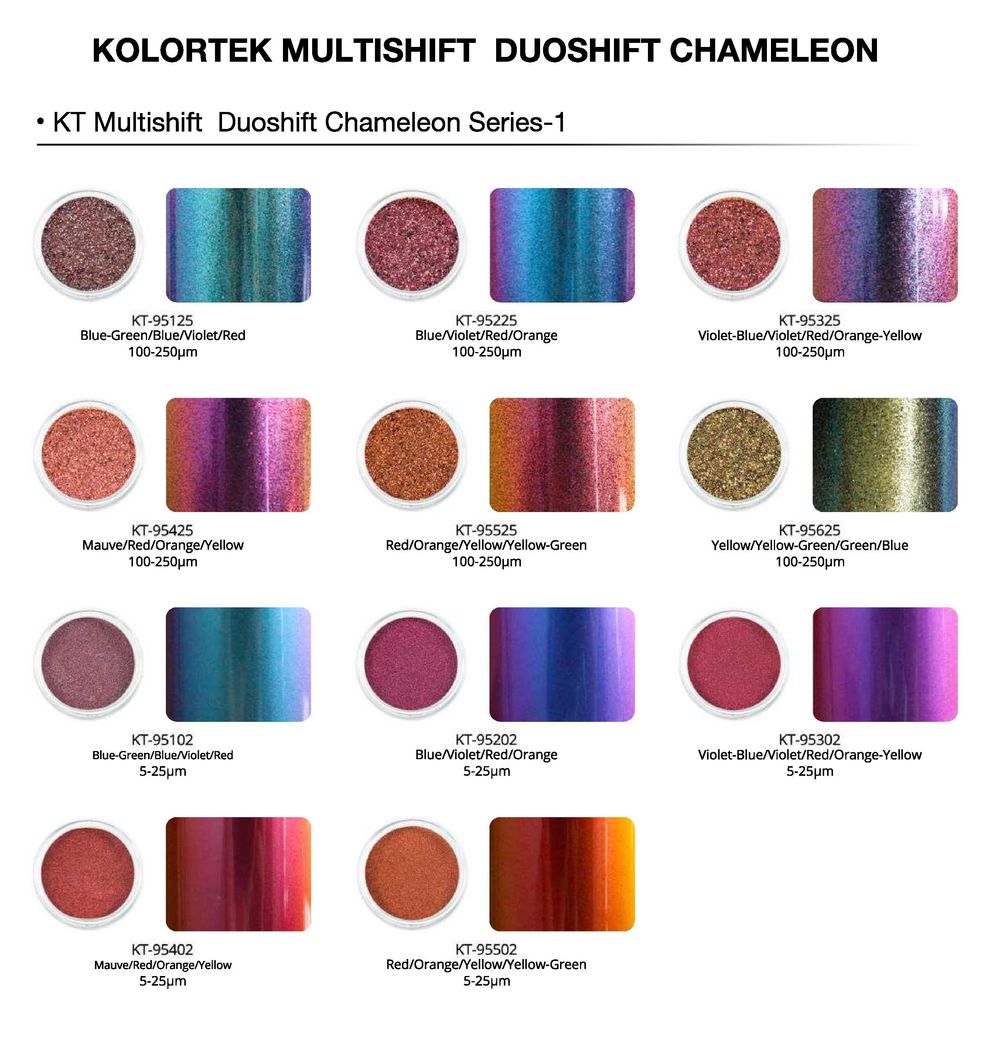
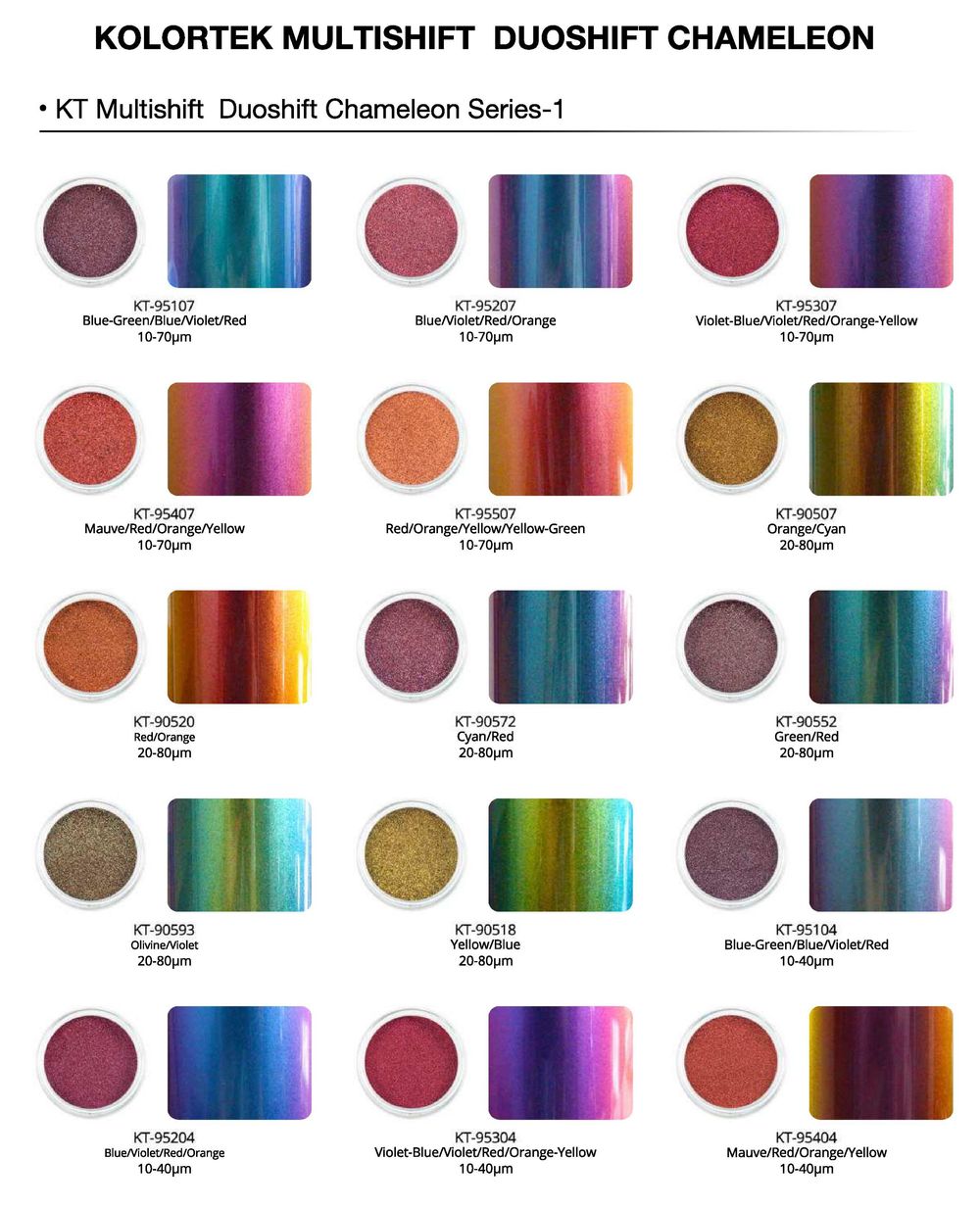
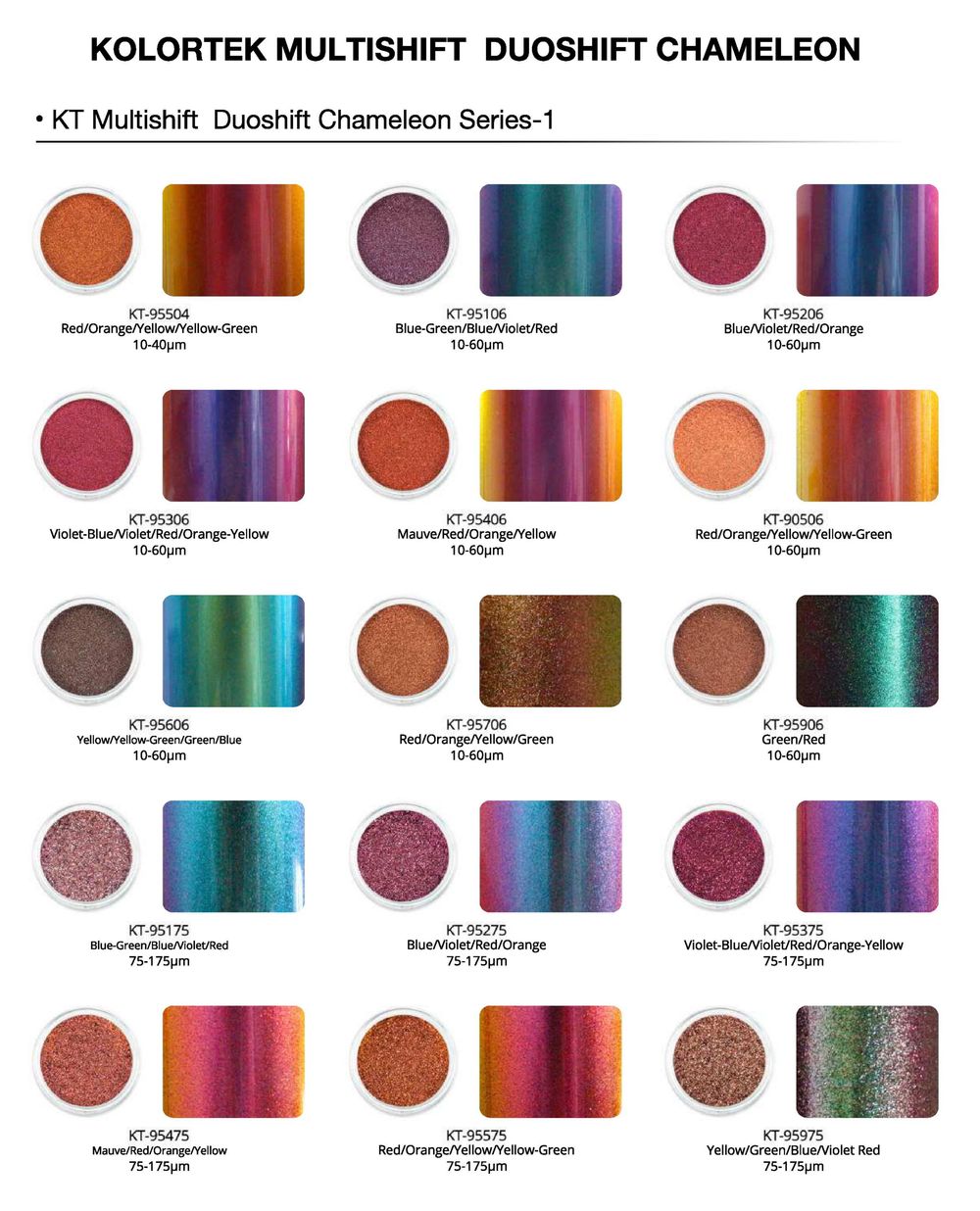
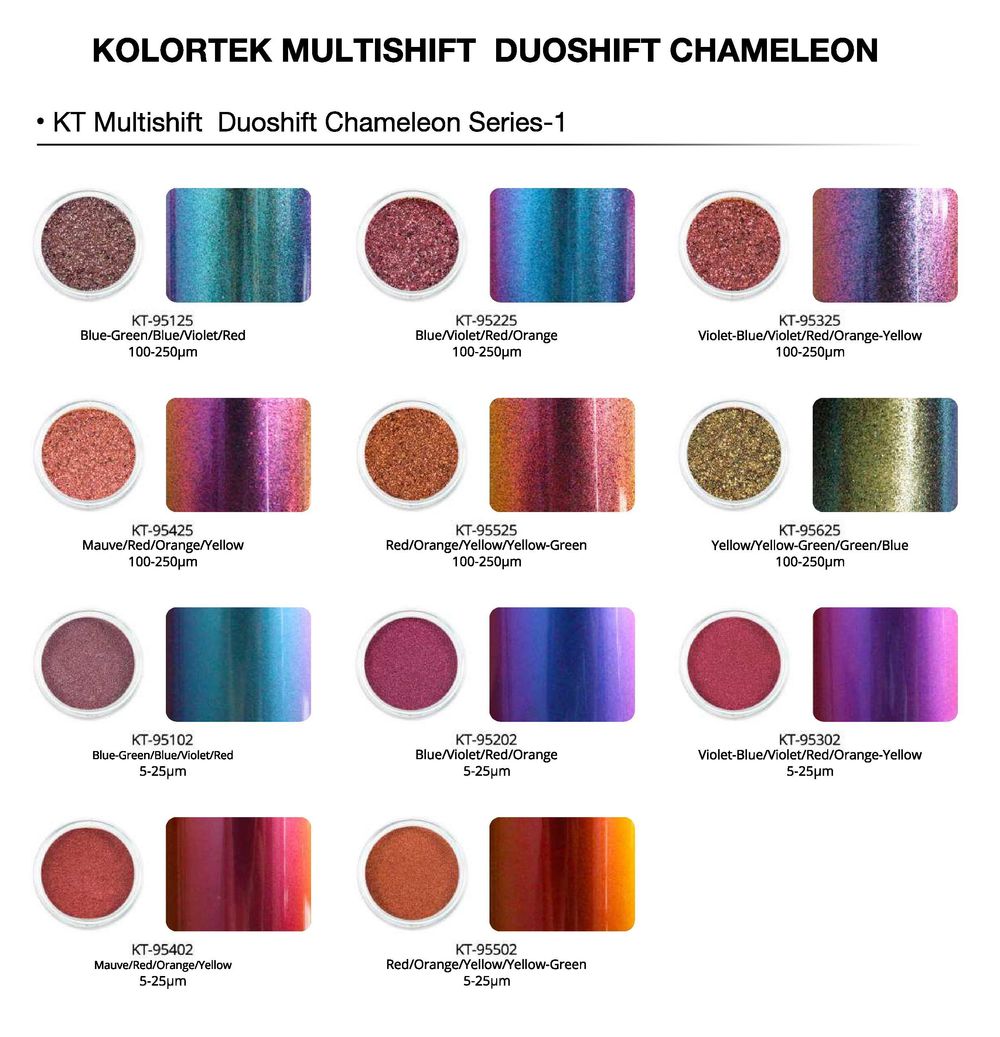
KT-90216 is a colour shift mica powder from Kolortek's KT-9000 Magic Chameleon Series, producing a striking Yellow-to-Indigo angle-dependent colour travel on dark substrates. Built on a natural mica substrate with multi-layer TiO₂ and Silica interference coatings, it delivers a 20–80 μm particle distribution and a D50 of 25–35 μm — a range we find well-suited to both nail polish and gel formulations at loading rates of 2–10% and 1–8% respectively.
The KT-9000 series operates on thin-film interference — light reflecting from stacked TiO₂ and Silica layers on a natural mica core produces a phase shift that changes perceived colour as the viewing angle moves. For KT-90216, that shift runs from a warm yellow at near-normal incidence to a deep indigo at oblique angles. The transition is continuous, not a simple flip, which is what gives the finished nail its characteristic "colour travel" depth.
At Kolortek, we developed this two-colour shift format specifically for cosmetic applications, where a clean, readable shift between two distinct tones tends to outperform the more complex four-colour variants in small-area, high-magnification contexts like nail art. The 20–80 μm particle range puts KT-90216 in the medium-shimmer tier — fine enough to brush out smoothly, coarse enough that individual flakes catch light and register as distinct sparkle points under studio or UV nail lamps.
| Parameter | Value |
|---|---|
| Product Code | KT-90216 |
| Series | KT-9000 Magic Chameleon / Color Travel |
| Colour Shift | Yellow / Indigo |
| Form | Powder |
| Particle Size | 20–80 μm; D50: 25–35 μm |
| Density | 2.7–3.1 kg/L |
| Bulk Density | 23–29 g/100 g |
| pH (4% H₂O) | 6.0–9.0 |
| Solubility | Insoluble in water |
| Odour | Odourless |
| INCI | Mica / Titanium Dioxide / Silica |
| CAS | 12001-26-2 / 13463-67-7 / 7631-86-9 |
| Ingredient | C.I. Number | Content (%) |
|---|---|---|
| Mica | 77019 | 45.0–55.0 |
| Titanium Dioxide | 77891 | 10.0–21.0 |
| Silica | — | 32.0–40.0 |
The unusually high Silica content (32–40%) relative to other chameleon series variants is worth flagging for formulators. Silica in this role functions as a protective outer layer over the TiO₂ interference stack, contributing to chemical stability and helping maintain the pigment's optical geometry across a broad pH window. For nail gel systems — which can be mildly acidic or alkaline depending on the base resin — this construction offers practical robustness.
The KT-9000 series colour travel effect is angle-dependent and substrate-sensitive. On a black or very dark base coat, the Yellow-to-Indigo shift of KT-90216 is fully readable across the colour travel arc. On white or pastel bases, the interference colours wash out and the effect becomes negligible — this is physics, not a formulation failure.
| Formulation Type | Loading Rate |
|---|---|
| Nail Polish (lacquer) | 2–10% |
| Gel Polish | 1–8% |
| Acrylic / Dipping Powder | 30–100% (depending on opacity) |
In gel systems that cure under UV or LED lamps, the pigment needs to remain optically stable through the polymerisation cycle. The inorganic TiO₂/Silica construction of KT-90216 does not absorb UV at typical gel cure wavelengths in a way that interferes with the free-radical or cationic cure mechanisms used in most commercial gel polish bases — though we always recommend testing your specific base resin and cure lamp combination before finalising a formula.
Settling is the most common handling issue with platelet pigments in low-viscosity nail lacquer bases. Anti-settling agents — specifically bentonite clay or fumed silica — added at low levels stabilise the suspension without meaningfully affecting colour or transparency. The 20–80 μm particle range of KT-90216 falls in what we classify as the medium shimmer tier: fine enough to brush out without drag lines, visible enough at the flake level to register individual colour shifts under directional light.
A reliable application sequence for nail art:
KT-90216 is compatible with both water-based and solvent-based nail lacquer. For solvent-based formulations, confirming compatibility with your specific solvent blend is advisable — the inorganic substrate is generally robust, but interactions with aggressive solvent systems can vary by base resin.
One formulation avenue worth exploring: KT-9000 pigments can be combined with transparent absorption pigments to shift the base colour of the formulation and, by doing so, modify the apparent start point and contrast of the colour travel arc. Adding a yellow or green transparent toner, for example, can extend or reinforce the warm phase of the Yellow/Indigo shift.
Kolortek holds ISO 9001:2015 certification covering the production and sales of pigments. The product TDS documents heavy metal content at values below widely applied cosmetic safety thresholds: As <2 ppm, Hg <1 ppm, Pb <10 ppm, Cd <3 ppm, Ni <10 ppm, Cr <100 ppm, Sb <1 ppm, Ba <50 ppm, Cu <50 ppm, Zn <50 ppm.
The extended product description states compliance with EU, US, and Japanese cosmetic regulations, and KT-9000 cosmetic-grade options are available with supporting composition documentation for EU Cosmetics Regulation (EC) No 1223/2009 assessments. That said, final regulatory suitability for a specific finished nail product depends on the selected grade, the full formulation, and the intended market — we recommend confirming grade-specific compliance documentation before production sign-off.
The product is not classified as hazardous under CLP or EU directives 67/548/EEC or 1999/45/EC. Standard dust-exposure precautions apply during handling: approved dust mask, gloves, and eye protection where powder generation is possible. Keep storage containers in a well-ventilated area.
What substrate or base coat does KT-90216 require to show its full colour shift?
A black or very dark base coat is required. KT-90216's Yellow/Indigo shift is produced by thin-film interference, which relies on the base absorbing the non-reflected wavelengths. On white or light substrates, that absorption is absent and the colour travel effect becomes visually negligible. One or two coats of a dark nail base, followed by 2–3 layers of the pigment-loaded formula, delivers the maximum shift contrast.
What is the recommended loading rate for KT-90216 in gel polish versus standard nail lacquer?
In standard nail polish (lacquer), the recommended range is 2–10%. In gel polish, the range is 1–8%. Acrylic and dipping powder systems operate at much higher pigment loadings — 30–100% depending on the desired opacity. Lower gel loadings reflect the higher film clarity typical of UV/LED gel bases, where excessive particulate can affect both aesthetics and cure depth.
Is KT-90216 suitable for use in UV/LED gel nail systems?
Yes. The inorganic TiO₂/Silica interference construction of KT-90216 is thermally and chemically stable under standard UV and LED nail lamp cure conditions. The pigment's pH window of 6.0–9.0 is compatible with most commercial gel polish base resins. We recommend testing cure behaviour with your specific lamp and base combination, as thick pigment loadings in gel can reduce UV transmittance into the lower layers of the film.
Can KT-90216 be mixed with other pigments to modify the colour shift?
Yes. The KT-9000 series is compatible with transparent absorption pigments, which can be used to shift the perceived start colour of the travel arc or increase contrast between the two shift tones. Opaque or high-scattering pigments are not recommended as they suppress the interference effect. Mixing with other KT-9000 grades is also possible to create layered or blended shift effects, though the combination should be tested at target loading rates.
Contact our technical team to discuss formulation requirements or request a sample of KT-90216 for your specific application.
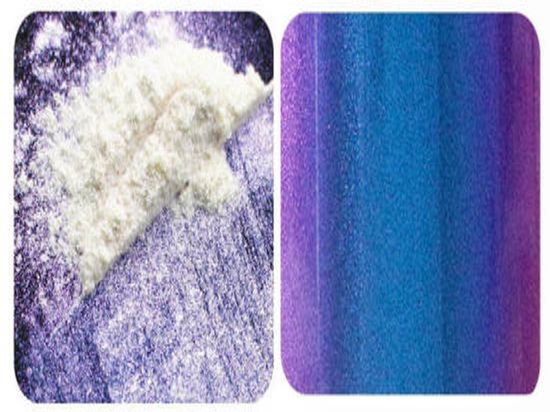
KT-92230 is a multichrome pigment that shifts through a full blue-purple-red-orange sequence as the viewing angle changes — one of the broadest color-travel arcs we produce in the KT-9000 series. Built on a natural mica substrate with a multi-layer TiO₂/Fe₂O₃/silica/tin oxide coating, it comes in a 25–130 μm particle size that delivers strong angular contrast and high visual impact across automotive finishes, decorative coatings, and specialty printing.
Read More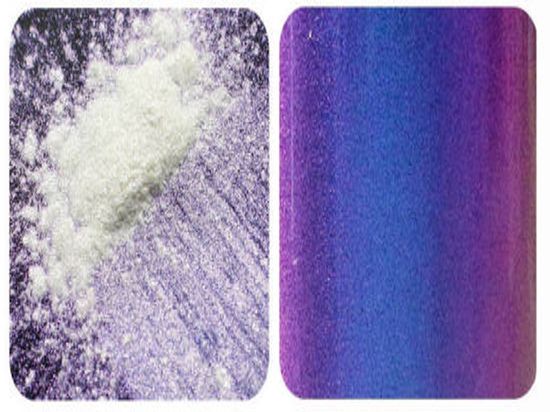
KT-92330 is a multi-layer interference pigment from Kolortek's KT-9000 Magic Chameleon Series, producing a continuous color shift sequence — indigo through purple, red, orange, and yellow — as the viewing angle changes. Built on natural mica coated with TiO₂, silica, and tin oxide, it delivers a high-mirror goniochromatic effect with a 25–130 μm particle size distribution engineered for maximum visual impact. This color shifting pigment powder performs best over dark or black substrates, where the full angular color travel is most legible.
Read More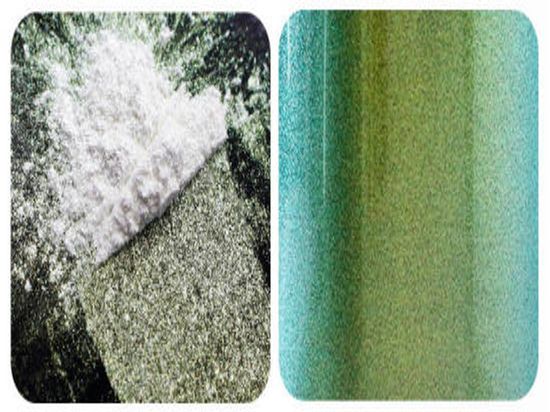
KT-92630 is a large-particle chameleon paint pearl from our KT-9000 Magic Chameleon Series, producing a sequential golden-to-kelly-green-to-blue color travel as the viewing angle shifts. With a 25–130 μm particle range, it delivers high visual impact in automotive custom finishes, decorative coatings, and specialty applications where a pronounced, multi-stop color flip is the goal. The substrate is natural mica with a multi-layer TiO₂/SiO₂/metal-oxide coating that generates the goniochromatic interference effect.
Read More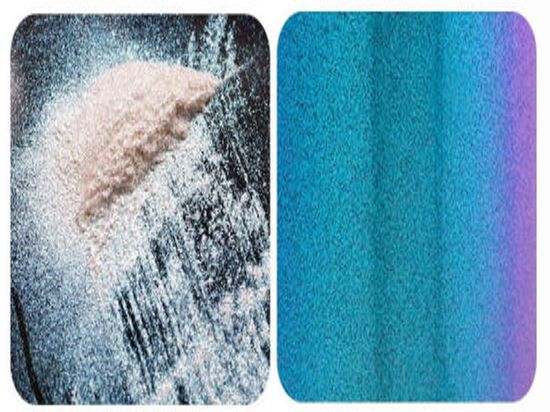
KT-92175 is the large-particle grade of our chameleon pigment for resin, built on a natural mica substrate with a multi-layer TiO₂, silica, and tin oxide coating that produces a continuous cyan-to-blue-to-purple-to-red angle-dependent color shift. At 75–175μm, it is the highest-sparkle option in the KT-9000 Magic Chameleon Series' KT-921** Cyan-Blue-Purple-Red range. Compatible with epoxy and UV resin at loadings of 1–10% by weight, the effect reads strongest on dark or black substrates where the goniochromatic shift has maximum contrast.
Read More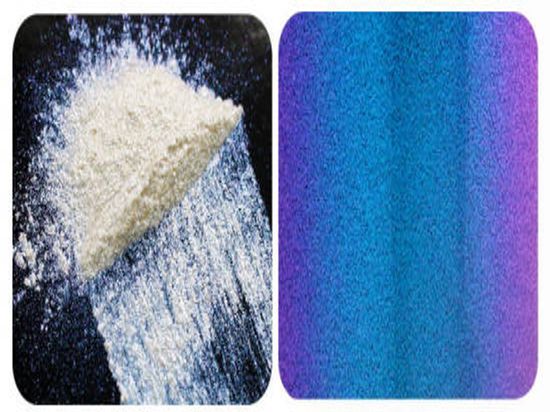
KT-92275 is a large-particle duochrome loose pigment from our KT-9000 Magic Chameleon Series, delivering a full blue-purple-red-orange color travel sequence that shifts continuously across the visible spectrum as the viewing angle changes. With a particle size range of 75–175 μm, this grade is engineered specifically for applications where maximum sparkle is the priority — loose eyeshadow, nail art toppers, and high-impact decorative cosmetics where the angular shift needs to read clearly against the skin or a dark base.
Read More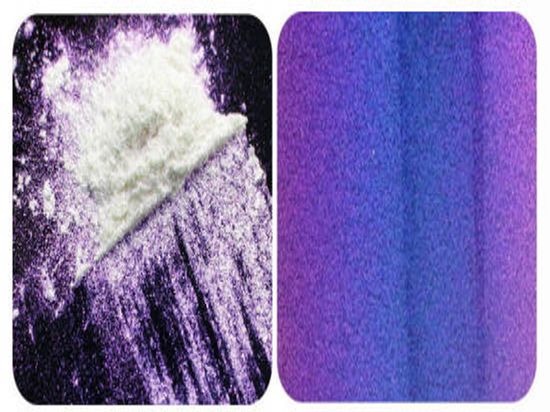
KT-92375 is a large-particle ghost chameleon pigment from Kolortek's KT-9000 Magic Chameleon Series, delivering a continuous five-stage color shift — indigo → purple → red → orange → yellow — as the viewing angle changes. Built on natural mica coated with titanium dioxide, silica, and tin oxide, it carries a particle size of 75–175 μm for maximum sparkle. We developed this grade specifically for high-impact automotive finishes, custom coatings, and luxury decorative applications where a dramatic, angle-dependent color shift is the primary design goal.
Read More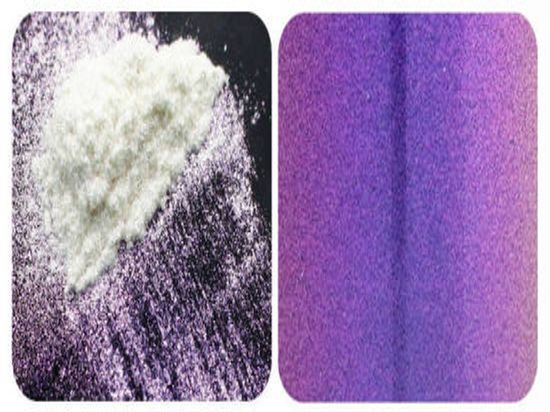
KT-92475 is a large-particle chameleon pigment from the KT-9000 Magic Chameleon Series, producing a continuous mauve → red → orange → yellow color shift that sweeps across the visible spectrum as the viewing angle changes. With a particle size of 75–175 μm and a natural mica substrate coated with titanium dioxide, silica, and tin oxide, it delivers the coarse, high-sparkle texture that nail art formulators need for maximum visual drama — particularly over a dark or black base coat.
Read More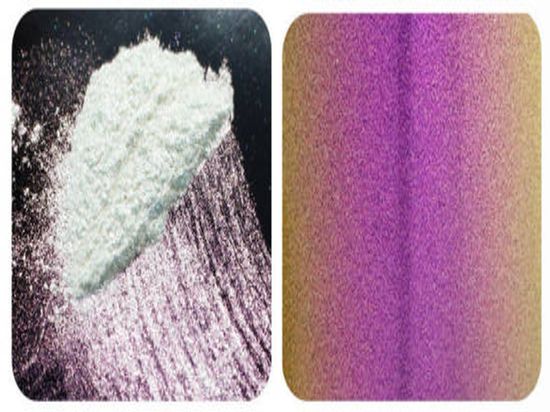
KT-92575 is a large-flake chameleon pearl powder from our KT-9000 Magic Chameleon Series, producing a dramatic angle-dependent color shift spanning red, orange, yellow, and kelly green on dark substrates. Built on a natural mica substrate with a multi-layer coating of titanium dioxide, silica, and tin oxide, it delivers an INCI composition suited to high-end cosmetic and nail art formulations. The 75–175 μm particle range gives it the high-sparkle, deep color-travel behavior that distinguishes it from finer cosmetic pearl grades.
Read More
 English
 Français
 Deutsch
 Русский
 Español
 Português