
Leave A Message
If you are interested in our products and want to know more details,please leave a message here,we will reply you as soon as we can.
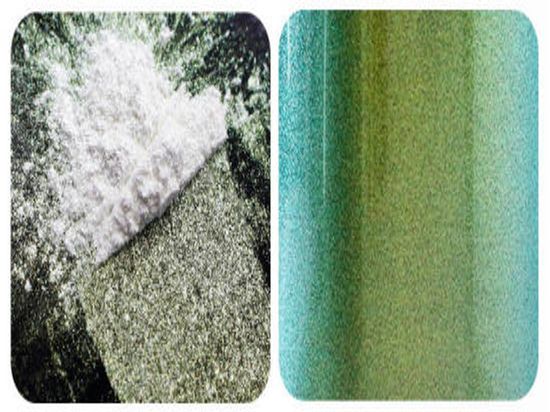
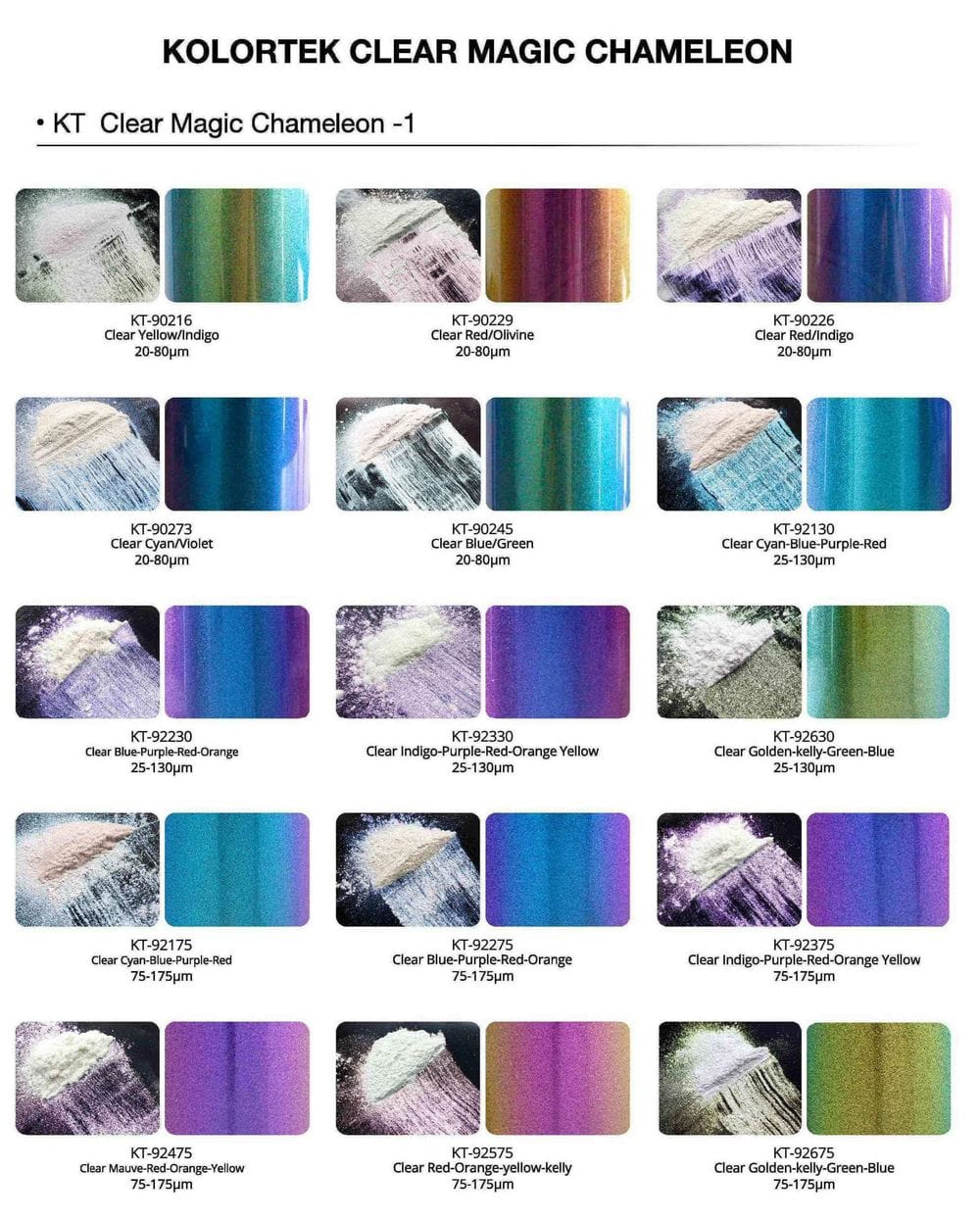
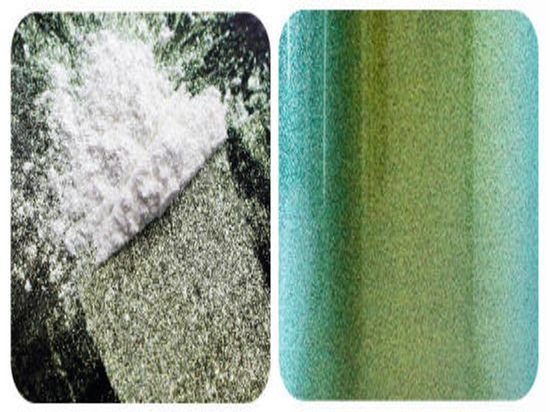
The color travel in KT-92630 is driven by thin-film optical interference across the multi-layer coating stack on the mica substrate. As the angle of incident light changes — or as a viewer moves around a coated surface — the dominant reflected wavelength shifts through the golden, kelly green, and blue portions of the visible spectrum. That sequential, three-stop travel is what separates this grade from a simpler duochrome pigment.
One practical point we always flag to formulators: the effect is substrate-dependent. On a black or very dark basecoat, the color shift reads clearly from across the room. On white or light substrates, the interference effect is present but noticeably subdued. For automotive and high-end decorative work, dark basecoats are the standard starting point.
The 25–130 μm particle range of the -30 suffix also contributes to the visual character. Larger platelets catch and reflect more light, generating the pronounced sparkle and mirror quality that make this grade well-suited to single-stage custom finishes rather than fine satin effects.
| Parameter | Value |
|---|---|
| Product code | KT-92630 |
| Series | KT-9000 Magic Chameleon |
| Color shift | Golden → Kelly Green → Blue |
| Particle size | 25–130 μm |
| Form | Powder |
| pH (4% H₂O) | 6.0–9.0 |
| Density | 2.6–3.1 kg/L |
| Bulk density | 15–25 g/100 mL |
| Solubility | Insoluble in water |
| Odour | Odourless |
| Hazard classification | Not classified under CLP (EC) No. 1272/2008 |
| INCI name | Mica, Titanium Dioxide, Silica, Tin Oxide |
| Component | C.I. Number | Content (%) |
|---|---|---|
| Mica | CI 77019 | 55.0–65.0 |
| Titanium dioxide | CI 77891 | 15.0–20.0 |
| Silica | — | 20.0–25.0 |
| Tin oxide | CI 77861 | 0–1.0 |
KT-92630 is one size option within the KT-926** clear chameleon family. All grades in this family share the same golden-kelly-green-blue color travel; particle size is the variable that controls sparkle level, coverage, and surface texture.
| Code | Particle Size (μm) | Character | Typical Use |
|---|---|---|---|
| KT-92602 | 5–25 | Satin / fine | Inks, cosmetics |
| KT-92604 | 10–40 | Fine pearl | Coatings, nail art |
| KT-92606 | 10–60 | Standard | Most coatings applications |
| KT-92615 | 20–100 | Flash effect | Automotive, decorative |
| KT-92630 | 25–130 | High visual impact | Custom automotive, bespoke finishes |
| KT-92675 | 75–175 | Maximum sparkle | Decorative, large-area coatings |
| KT-926100 | 100–250 | Extra large | Decorative coatings, specialty |
If your process requires a smoother film — lower surface roughness, tighter spray atomization — the 10–60 μm KT-92606 is usually the first alternative we recommend. KT-92630 trades some surface smoothness for a more dramatic point-source sparkle.
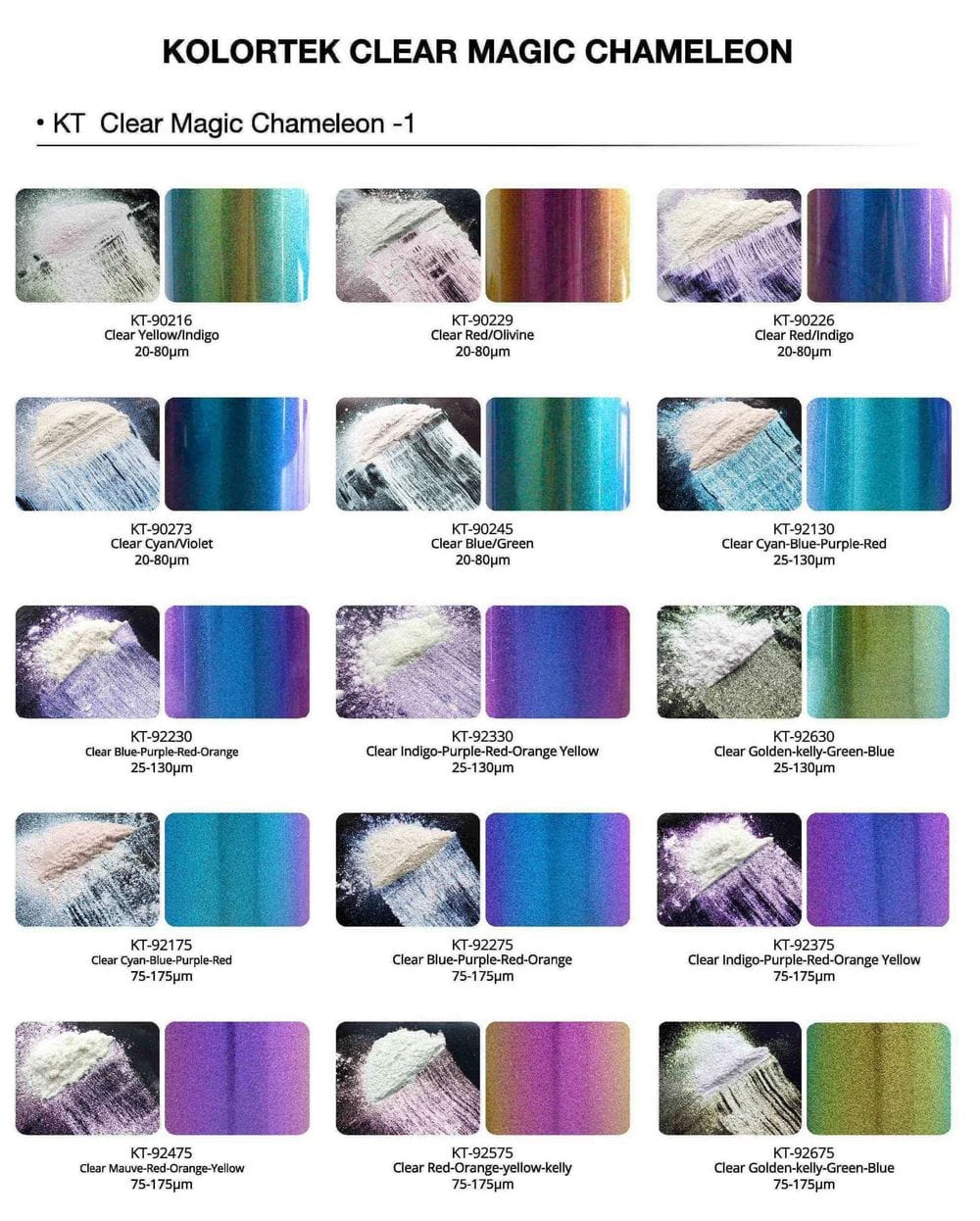
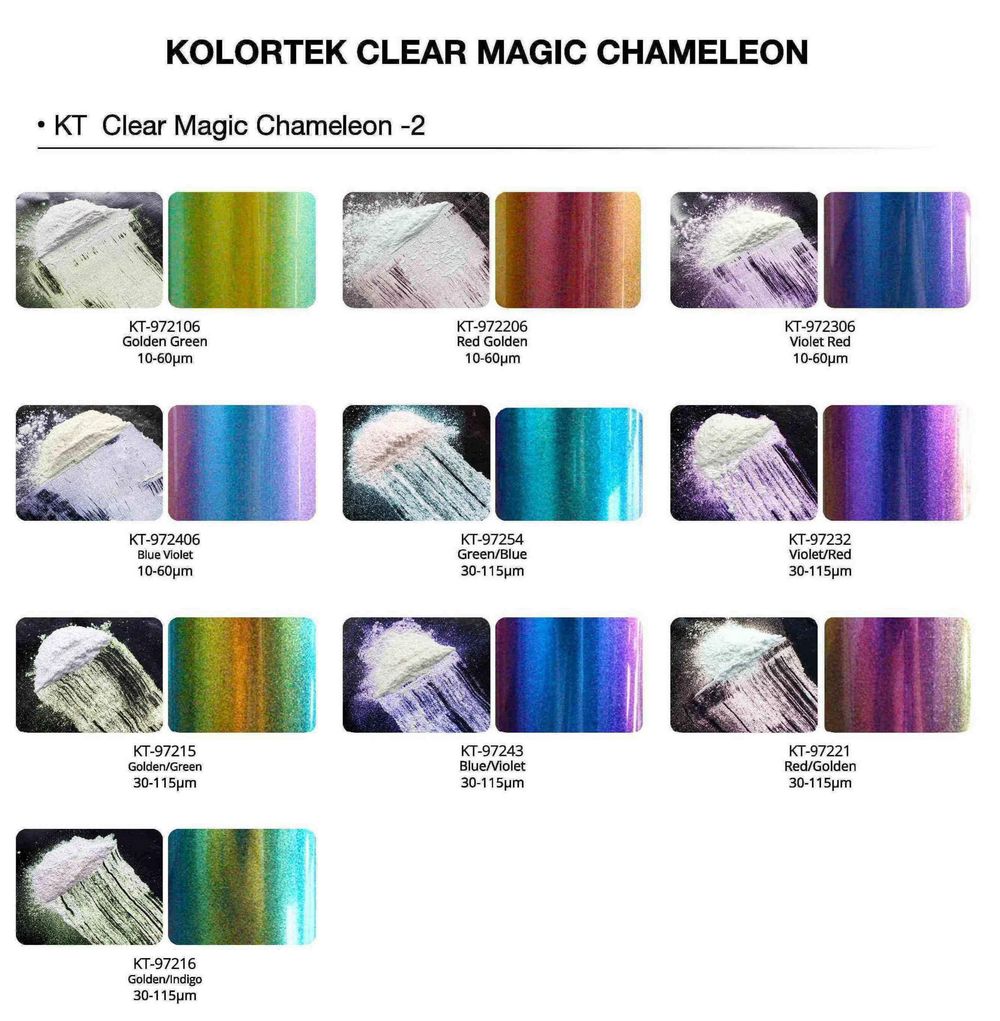
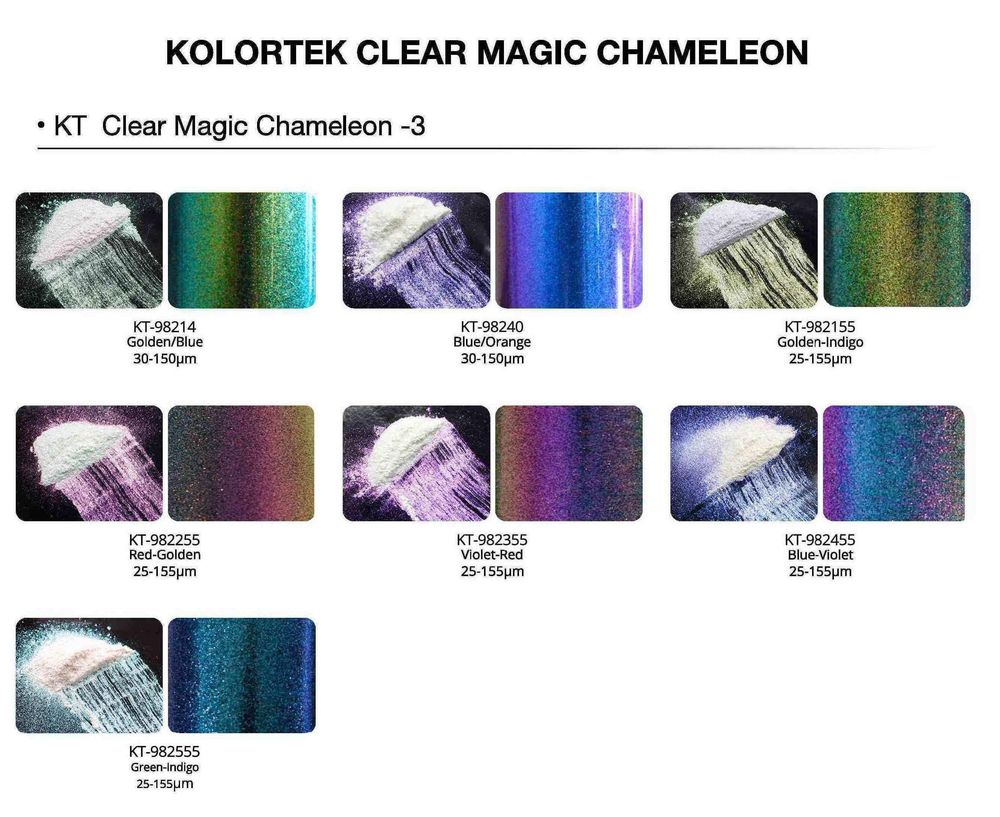
The KT-9000 series — and KT-92630 within it — was built primarily for applications where the color-shift effect is the design intent, not a secondary finish note. Automotive custom finishes are the dominant use case: full-body repaints, custom show cars, motorcycle fairings, and helmet shells where a single-color look reads completely differently depending on the light direction and viewer position.
Outside automotive, the series is used in high-end cosmetics and nail art, luxury packaging and printing, industrial and plastic coatings, synthetic leather, and security/anti-counterfeiting printing. The interference mechanism that drives the automotive visual also creates the optical variability that matters for banknote and securities printing — angle-dependent color is inherently difficult to reproduce on standard print equipment.
KT-92630 is also compatible with most standard resin systems used across these markets. That said, product-specific solvent-vs-water-based compatibility data for this grade isn't something we have published; if your formulation system is constrained, reach out and we can work through it with a lab sample.
One formulation technique worth knowing: KT-92630 can be combined with transparent absorption pigments to shift the apparent base color and adjust the range of the color travel. A transparent yellow, for example, will deepen the golden stop; a transparent blue-green can intensify the perceived shift amplitude. This approach expands the design space without requiring a different base pigment grade — and it's a technique our application team uses regularly when a customer needs a custom target color within the golden-green-blue travel.
The multi-layer platelet structure of KT-9000 pigments is what generates the interference effect — and it's also what makes dispersion method the single most consequential processing variable. High-shear recirculation damages the platelet geometry and directly reduces color-shift intensity. Low-shear mixing, gentle hand-stirring into a pre-wetted resin phase, or controlled agitation in the spray pot are the methods that preserve platelet integrity.
For automotive basecoat application, general practice within the KT-9000 range uses 1–10% pearl pigment loading in the basecoat, pneumatic or electrostatic spray, and a target dry film thickness of 15–25 μm. Proper flash-off time between the basecoat and clearcoat is critical — rushing that step disrupts platelet alignment and produces visible streaking. A clear topcoat is recommended in all automotive applications; it protects the pigment layer and optically deepens the perceived color travel.
One consideration specific to the 25–130 μm particle range: thicker pigment loading increases perceived color saturation, but at higher loadings the coarser particles can create surface texture. Dialing back the concentration and compensating with a second coat is usually more effective than pushing loading past the point where surface smoothness suffers.
| Element | Limit | Element | Limit |
|---|---|---|---|
| As | < 2 ppm | Cr | < 100 ppm |
| Hg | < 1 ppm | Sb | < 1 ppm |
| Ba | < 50 ppm | Cu | < 50 ppm |
| Ni | < 10 ppm | Zn | < 50 ppm |
| Cd | < 3 ppm | Pb | < 10 ppm |
At the company level, Kolortek operates under ISO 9001:2015 certification covering production and sales of pigments, glitters, and fillers. KT-92630 is not classified as hazardous under CLP (EC) No. 1272/2008, nor under the older Directive 67/548/EEC framework.
For applications requiring REACH compliance documentation or EU Cosmetics Regulation (EC) No. 1223/2009 support, product-specific confirmation is needed — the company-level certificates cover defined scopes and grade lists, and KT-92630 should be verified against the current attachment before making application-specific compliance claims. The same applies to any cosmetic or personal care use case. Request the relevant SDS and compliance documentation when ordering.
What colors does KT-92630 shift through, and does the sequence depend on substrate color?
KT-92630 shifts through golden, kelly green, and blue as the viewing angle changes. The full three-stop travel is most visible on black or very dark substrates, where there is no competing reflectance from the background. On white or light substrates, the interference effect is present but noticeably weaker. For most automotive and high-impact decorative uses, a dark basecoat is the baseline recommendation.
What particle size is KT-92630, and how does it differ from other grades in the same color family?
KT-92630 has a particle size range of 25–130 μm, placing it in the high-visual-impact tier of the KT-926** family. Smaller grades like KT-92602 (5–25 μm) give a satin, fine-coverage effect suited to inks and cosmetics, while KT-92606 (10–60 μm) is the standard coatings workhorse. The 25–130 μm range of KT-92630 produces more pronounced sparkle and a stronger mirror quality, with the trade-off that surface texture in the cured film is coarser.
How should chameleon paint pearls like KT-92630 be dispersed to avoid damaging the effect?
The platelet structure that generates the interference color shift is physically fragile under high shear. High-shear recirculation and aggressive bead milling will degrade the platelets and reduce color-shift intensity. Low-shear mixing into a pre-wetted resin phase, gentle hand-stirring, or controlled pneumatic agitation in the spray pot preserves platelet integrity. In automotive basecoat use, proper flash-off between basecoat and clearcoat is also critical for platelet alignment; skipping or shortening that step causes visible streaking.
What loading rate is recommended for KT-92630 in automotive basecoats?
A product-specific recommended dosage for KT-92630 isn't published in our current technical data. General guidance for the KT-9000 series in automotive basecoats is 1–10% pearl pigment, targeting a 15–25 μm dry film thickness. Given the 25–130 μm particle size, staying at the lower end of that range and building with a second coat typically gives better surface smoothness than pushing pigment concentration higher.
Contact our technical team to discuss formulation requirements or to request a sample for your specific application.
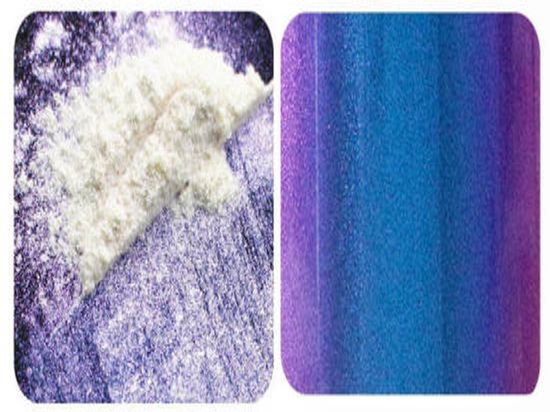
KT-92230 is a multichrome pigment that shifts through a full blue-purple-red-orange sequence as the viewing angle changes — one of the broadest color-travel arcs we produce in the KT-9000 series. Built on a natural mica substrate with a multi-layer TiO₂/Fe₂O₃/silica/tin oxide coating, it comes in a 25–130 μm particle size that delivers strong angular contrast and high visual impact across automotive finishes, decorative coatings, and specialty printing.
Read More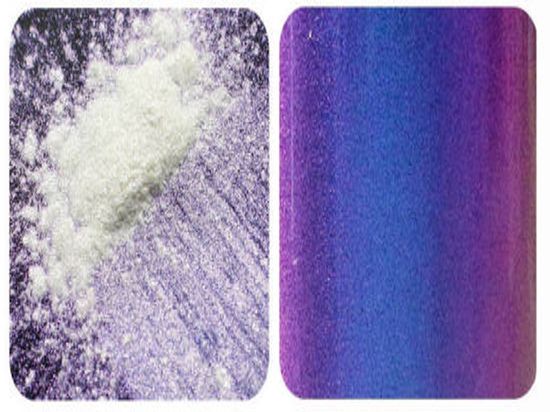
KT-92330 is a multi-layer interference pigment from Kolortek's KT-9000 Magic Chameleon Series, producing a continuous color shift sequence — indigo through purple, red, orange, and yellow — as the viewing angle changes. Built on natural mica coated with TiO₂, silica, and tin oxide, it delivers a high-mirror goniochromatic effect with a 25–130 μm particle size distribution engineered for maximum visual impact. This color shifting pigment powder performs best over dark or black substrates, where the full angular color travel is most legible.
Read More
KT-92630 is a large-particle chameleon paint pearl from our KT-9000 Magic Chameleon Series, producing a sequential golden-to-kelly-green-to-blue color travel as the viewing angle shifts. With a 25–130 μm particle range, it delivers high visual impact in automotive custom finishes, decorative coatings, and specialty applications where a pronounced, multi-stop color flip is the goal. The substrate is natural mica with a multi-layer TiO₂/SiO₂/metal-oxide coating that generates the goniochromatic interference effect.
Read More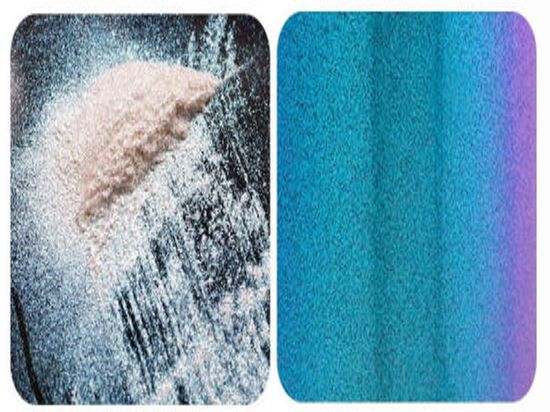
KT-92175 is the large-particle grade of our chameleon pigment for resin, built on a natural mica substrate with a multi-layer TiO₂, silica, and tin oxide coating that produces a continuous cyan-to-blue-to-purple-to-red angle-dependent color shift. At 75–175μm, it is the highest-sparkle option in the KT-9000 Magic Chameleon Series' KT-921** Cyan-Blue-Purple-Red range. Compatible with epoxy and UV resin at loadings of 1–10% by weight, the effect reads strongest on dark or black substrates where the goniochromatic shift has maximum contrast.
Read More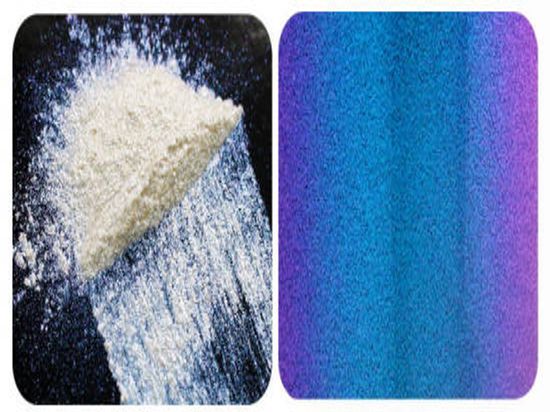
KT-92275 is a large-particle duochrome loose pigment from our KT-9000 Magic Chameleon Series, delivering a full blue-purple-red-orange color travel sequence that shifts continuously across the visible spectrum as the viewing angle changes. With a particle size range of 75–175 μm, this grade is engineered specifically for applications where maximum sparkle is the priority — loose eyeshadow, nail art toppers, and high-impact decorative cosmetics where the angular shift needs to read clearly against the skin or a dark base.
Read More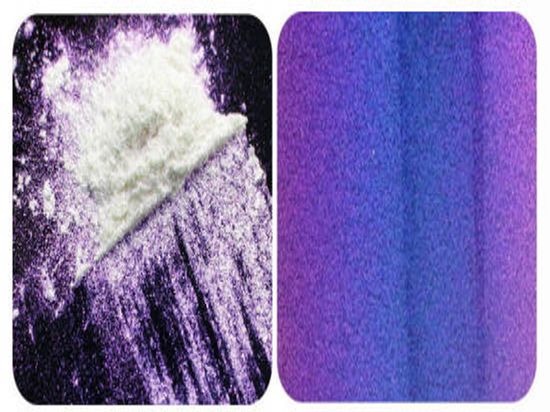
KT-92375 is a large-particle ghost chameleon pigment from Kolortek's KT-9000 Magic Chameleon Series, delivering a continuous five-stage color shift — indigo → purple → red → orange → yellow — as the viewing angle changes. Built on natural mica coated with titanium dioxide, silica, and tin oxide, it carries a particle size of 75–175 μm for maximum sparkle. We developed this grade specifically for high-impact automotive finishes, custom coatings, and luxury decorative applications where a dramatic, angle-dependent color shift is the primary design goal.
Read More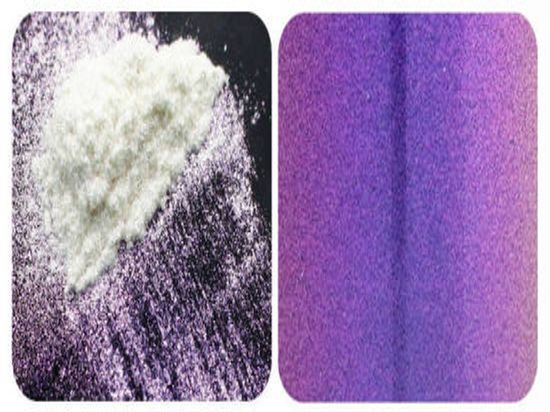
KT-92475 is a large-particle chameleon pigment from the KT-9000 Magic Chameleon Series, producing a continuous mauve → red → orange → yellow color shift that sweeps across the visible spectrum as the viewing angle changes. With a particle size of 75–175 μm and a natural mica substrate coated with titanium dioxide, silica, and tin oxide, it delivers the coarse, high-sparkle texture that nail art formulators need for maximum visual drama — particularly over a dark or black base coat.
Read More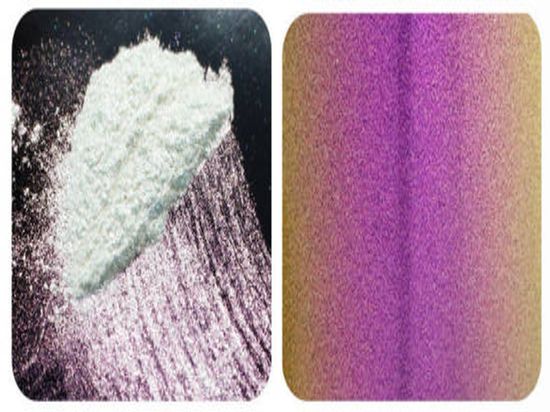
KT-92575 is a large-flake chameleon pearl powder from our KT-9000 Magic Chameleon Series, producing a dramatic angle-dependent color shift spanning red, orange, yellow, and kelly green on dark substrates. Built on a natural mica substrate with a multi-layer coating of titanium dioxide, silica, and tin oxide, it delivers an INCI composition suited to high-end cosmetic and nail art formulations. The 75–175 μm particle range gives it the high-sparkle, deep color-travel behavior that distinguishes it from finer cosmetic pearl grades.
Read More
 English
 Français
 Deutsch
 Русский
 Español
 Português