
Leave A Message
If you are interested in our products and want to know more details,please leave a message here,we will reply you as soon as we can.
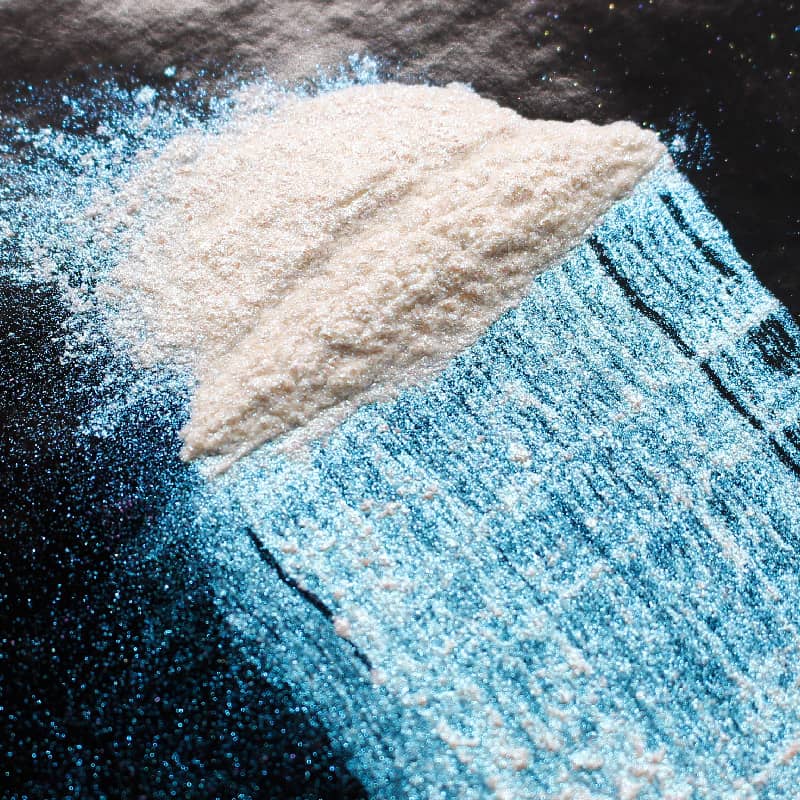
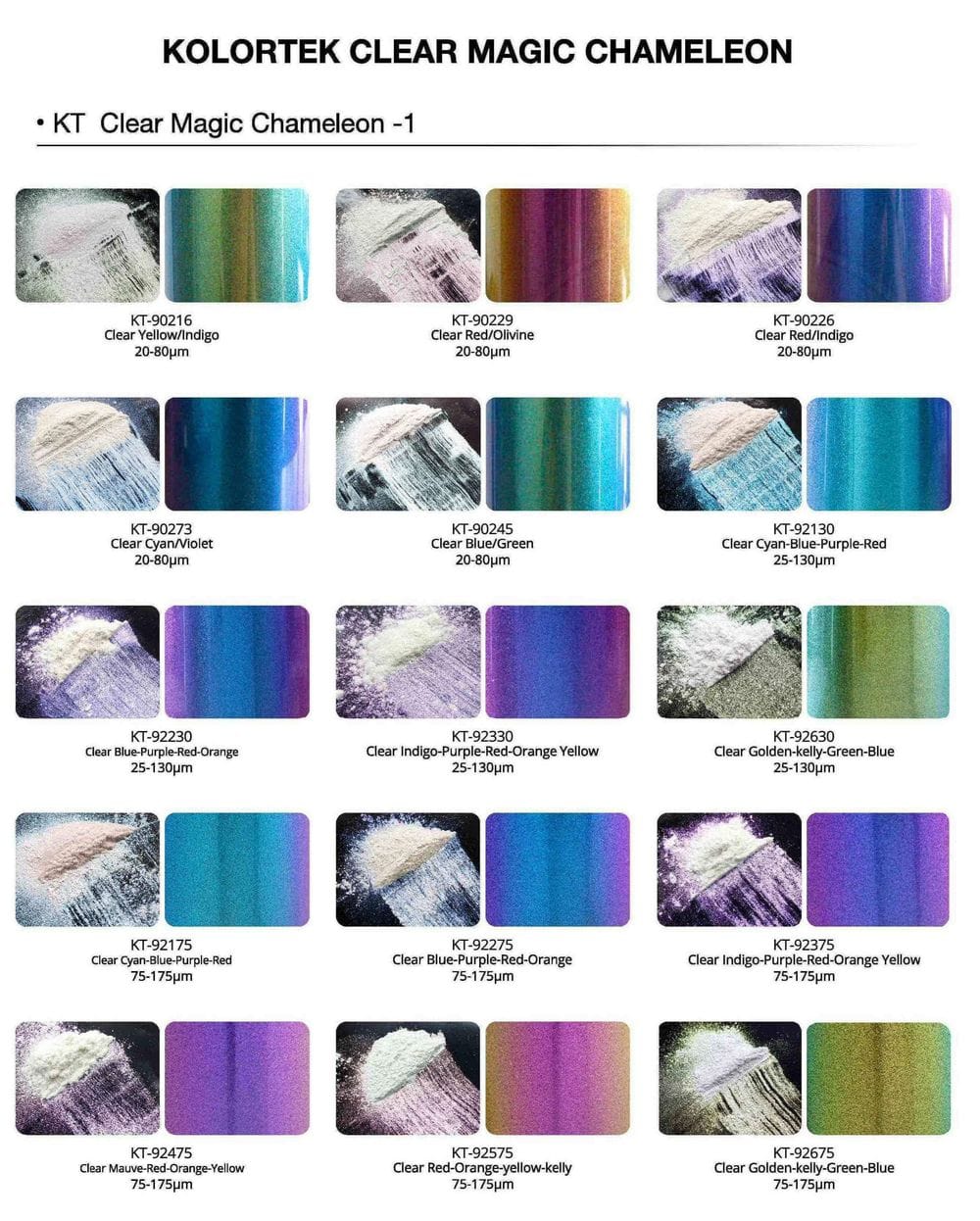
KT-92130 Color Shift Powder cyan-blue-purple-red for cosmetics

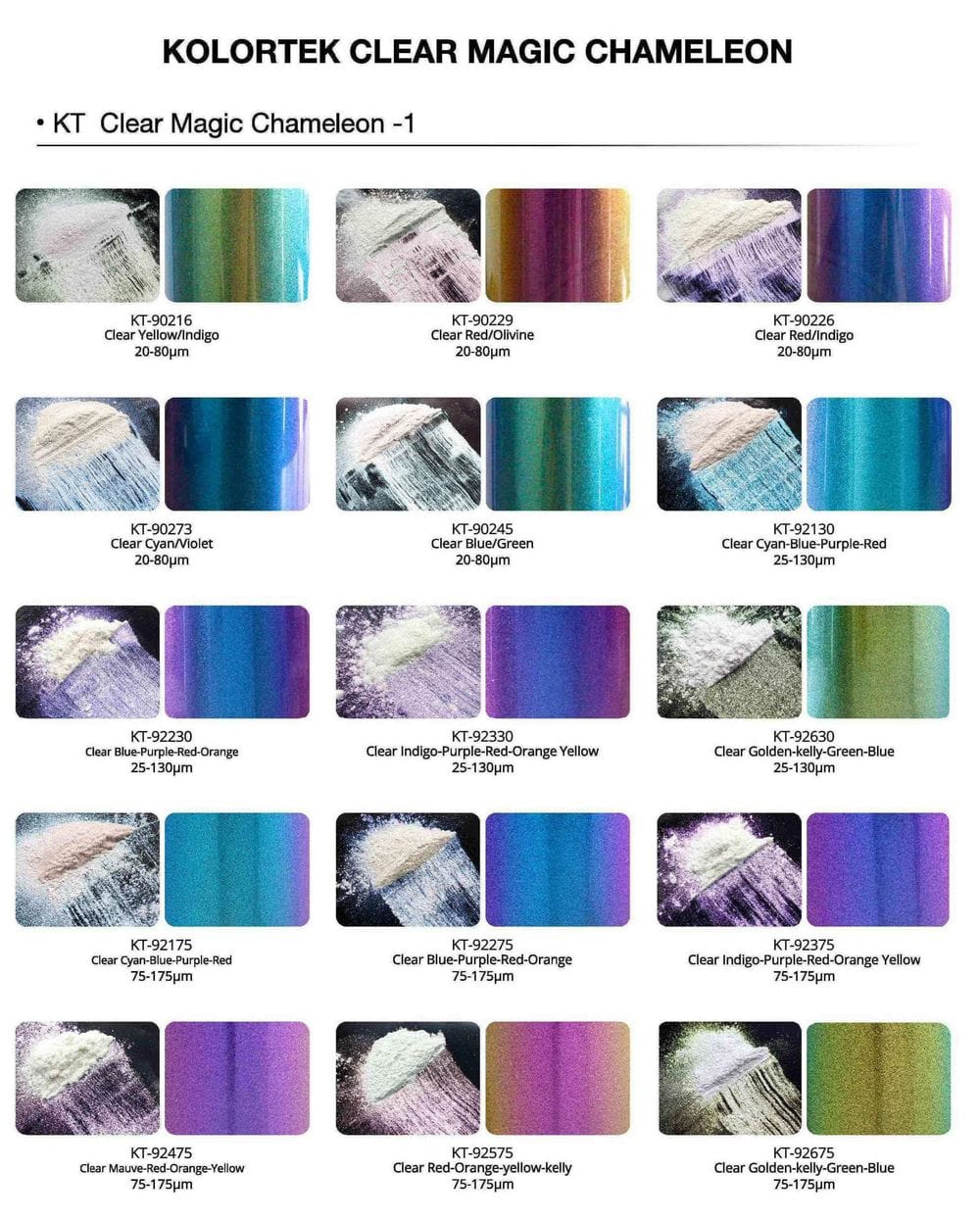
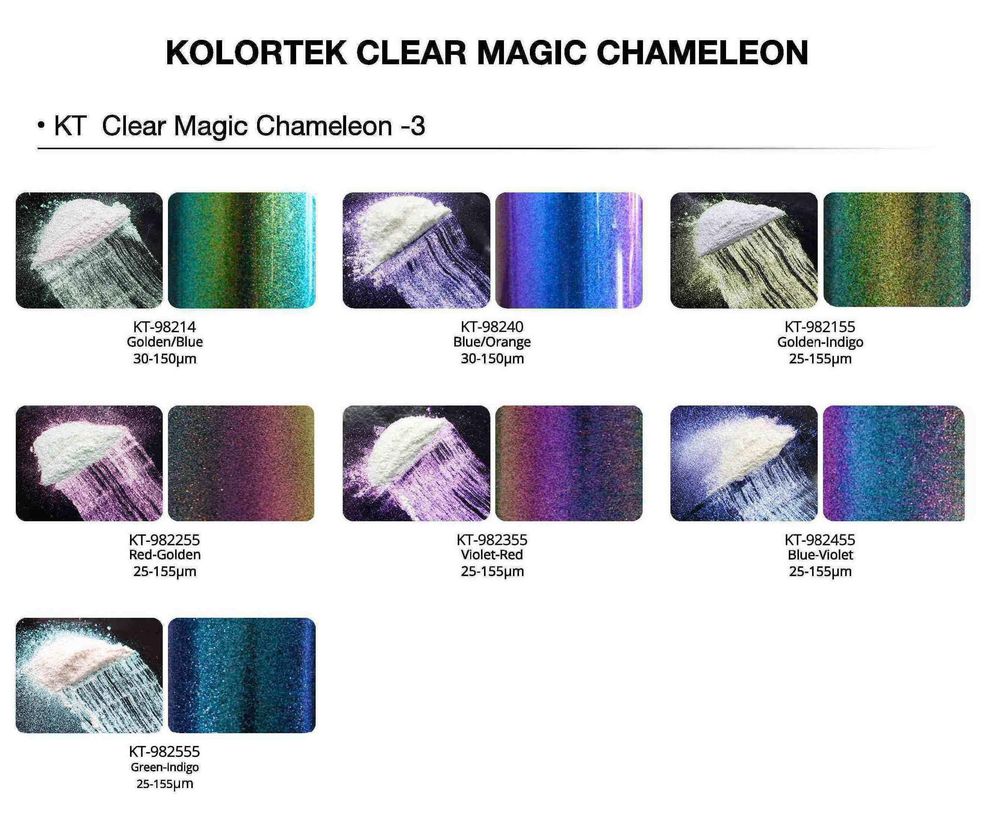
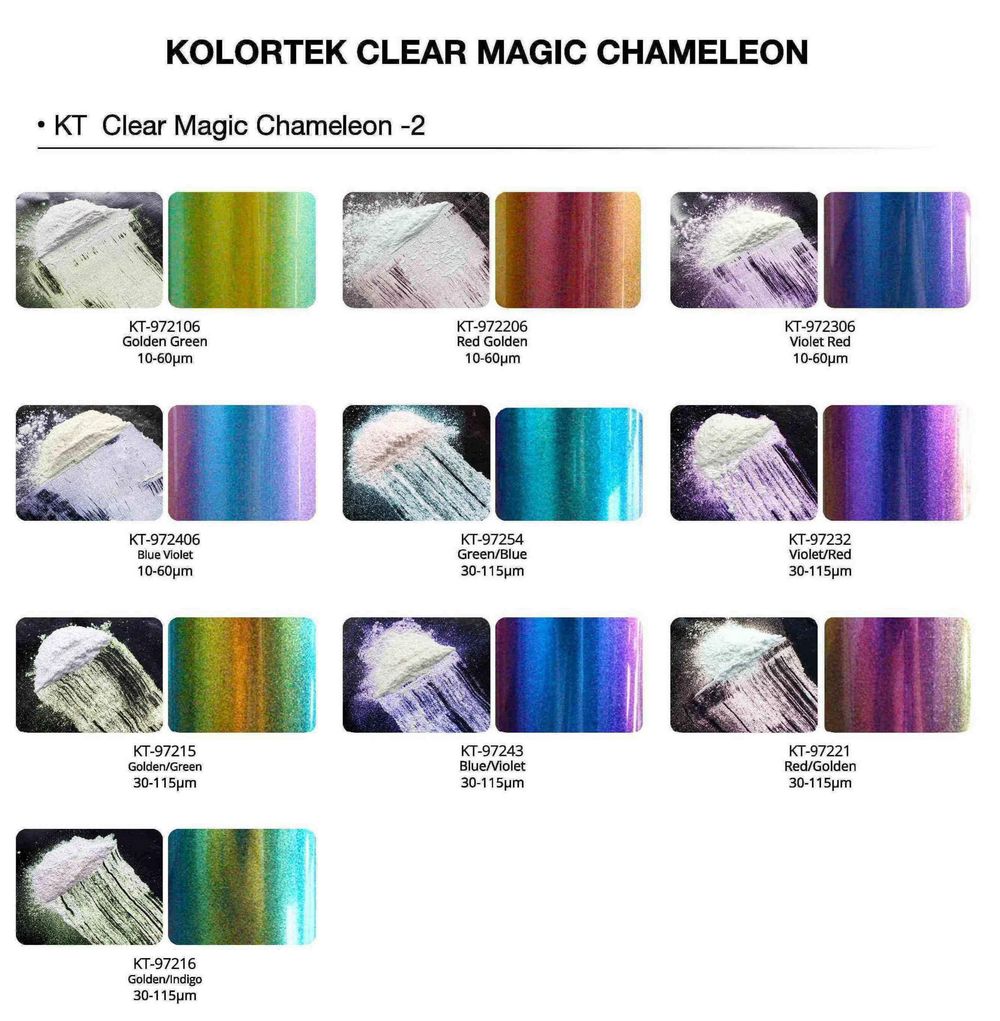
The cyan-blue-purple-red shift in KT-92130 is produced by destructive and constructive interference across multiple inorganic coating layers on the mica platelet. As the angle of incidence shifts — whether the viewer moves or the object rotates — different wavelengths are selectively amplified. The result is a continuous, smooth color travel rather than a binary flip between two tones.
In our application lab, we find the most dramatic readout happens when the pigment is applied over a black or very dark base. On light substrates, the shift is still present, but the contrast against the background reduces the perceived travel range. For cosmetic applications — pressed eyeshadow, nail lacquer, loose highlighter — a dark-tinted base layer or a dark-pigmented formula body brings the full cyan-to-red arc into sharp visibility.
The particle size range of 25–130 μm places KT-92130 in the high-visual-impact bracket of our KT-921** chameleon lineup. Larger platelets generate more pronounced sparkle and stronger mirror flash, which is why this grade performs particularly well in nail art and pressed eyeshadow where the eye travels across the compact or nail surface at different angles.
| Property | Value |
|---|---|
| Form | Powder |
| Colour / Effect | Cyan-blue-purple-red (goniochromatic shift) |
| Particle size | 25–130 μm |
| pH (4% H₂O) | 6.0–9.0 |
| Density | 2.6–3.1 kg/L |
| Bulk density | 15–25 g/100 mL |
| Solubility | Insoluble in water |
| Odour | Odourless |
| INCI Name | Mica / Titanium Dioxide / Silica / Tin Oxide |
| Series | KT-9000 Magic Chameleon Series |
| Component | C.I. Number | Content (%) |
|---|---|---|
| Mica | CI 77019 | 55.0–65.0 |
| Titanium dioxide | CI 77891 | 15.0–20.0 |
| Silica | — | 20.0–25.0 |
| Tin oxide | CI 77861 | 0–1.0 |
KT-92130 carries the "30" size suffix, placing it in the 25–130 μm range alongside the "25" grade. Within our KT-921** lineup covering the same cyan-blue-purple-red shift, each suffix targets a different balance between coverage and flash intensity:
| Grade Suffix | Particle Size (μm) | Typical Use |
|---|---|---|
| 02 | 5–25 μm | Satin finish, inks, fine cosmetics |
| 04 | 10–40 μm | Fine pearl, smooth cosmetic textures |
| 06 | 10–60 μm | Standard coatings grade |
| 07 | 10–70 μm | Medium effect coatings |
| 15 | 20–100 μm | Flash effects |
| 30 (KT-92130) | 25–130 μm | High visual impact — cosmetics, nail art |
| 75 | 75–175 μm | Maximum sparkle, decorative |
| 100 | 100–250 μm | Extra large, decorative/craft |
For formulators comparing grades: the 02 and 04 suffixes give smoother cosmetic textures with more uniform coverage, while the 30 suffix gives the high-flash, high-contrast result that makes color-shifting pigment for cosmetics look most spectacular in photography and at point-of-sale. The tradeoff is a slightly coarser skin feel in pressed applications — a variable worth testing in your specific base formula.
Within the KT-9000 Magic Chameleon Series, we position the cyan-blue-purple-red shift grades primarily for high-end cosmetics and nail art — categories where a dramatic, photogenic color arc commands a strong premium. Pressed eyeshadow and nail lacquer are the most common vehicles we see from cosmetic customers using this color travel.
The KT-9000 series also runs across automotive custom finishes and wraps, luxury packaging and printing, and anti-counterfeiting applications. For the broader 4-color shift family in the series, paints, plastics, leather coatings, and architectural applications are well-established use cases. KT-92130's specific positioning as a cosmetic-titled grade makes it the natural starting point for beauty formulations, but compatibility across resin systems means it has been used in coating and printing contexts as well.
The values below represent general guidance for platelet-effect pigments in cosmetic vehicles — not KT-92130-specific tested formulations. Use them as a starting bracket, then adjust based on your base formula and the visual intensity target:
| Cosmetic Product Type | Indicative Loading Range |
|---|---|
| Eyeshadow (pressed) | 5–50% |
| Eyeshadow (loose) | 5–60% |
| Lipstick / Lip gloss | 1–20% |
| Pressed powder / Blush | 10–40% |
| Highlighter | 5–30% |
| Cream / Lotion | 1–15% |
| Body shimmer | 2–10% |
Platelet pigments in the 25–130 μm range are particularly sensitive to shear. High-speed dispersers and three-roll mills can fracture the platelet structure, reducing particle size and diminishing the mirror-flash that makes the chameleon shift visually striking. In our experience, the safest approach is gentle paddle mixing or low-speed planetary mixing, keeping blade peripheral speed well below levels used for absorbing colorants.
In emulsion-based cosmetics, pre-disperse KT-92130 in the oil phase before combining with the water phase. This prevents agglomeration and helps the platelets orient flat, which is critical — platelets lying parallel to the film surface produce the most intense interference color. In powder formulations, add the pigment late in the blending sequence, after the bulk dry blending of talc, micas, and binders, to minimize attrition.
Substrate color remains a formulation lever that is easy to overlook. If the base formula is light-tinted, consider incorporating a small amount of black iron oxide or carbon black — transparently dispersed — to push the effective substrate darkness up without compromising skin feel. The visible color travel range on a near-black base versus a mid-tone base is significant enough that it can be the difference between a product that reads as "shifts slightly" versus one that shows the full cyan-to-red arc under retail lighting.
Surface treatments such as dimethicone, triethoxycaprylylsilane, and lauroyl lysine are commonly applied to cosmetic platelet pigments to improve dispersibility, skin adhesion, and water resistance. Product-specific surface treatment data for KT-92130 is not published in our current documentation — contact us to discuss whether a treated variant is available for your application.
The KT-92130 TDS specifies the following heavy metal limits, which align with requirements under China GB standards, EU Cosmetics Regulation EC 1223/2009, and US FDA cosmetic guidance:
| Element | Limit (ppm) |
|---|---|
| Arsenic (As) | < 2 |
| Mercury (Hg) | < 1 |
| Barium (Ba) | < 50 |
| Nickel (Ni) | < 10 |
| Cadmium (Cd) | < 3 |
| Lead (Pb) | < 10 |
| Chromium (Cr) | < 100 |
| Antimony (Sb) | < 1 |
| Copper (Cu) | < 50 |
| Zinc (Zn) | < 50 |
Kolortek operates under ISO 9001:2015 quality management certification covering production and sales of pigments and glitters. The MSDS for KT-92130 was issued in compliance with EU Regulation 2015/830.
All four ingredients in KT-92130 are confirmed on the China IECIC list and the Japan MHLW positive list. Under US 21 CFR 73.2496, mica-based pearl pigments coated with TiO₂ and SnO₂ are exempt from batch certification; the additional silica content in KT-92130's composition means US FDA status for this specific formulation should be verified against product-specific documentation rather than assumed from the general mica pearl pigment exemption.
Under EU Cosmetics Regulation EC 1223/2009, colorants must be listed in Annex IV; final suitability for a specific cosmetic application depends on the grade and end use. CLP classification (EC 1272/2008): KT-92130 is not classified as hazardous.
Product-specific certification letters (REACH, Halal/Kosher, SGS test reports) for KT-92130 are available upon request — we do not publish them as blanket range-level certificates because scope boundaries matter and we want to be accurate about what has and has not been tested at the individual product level.
What is the color shift sequence of KT-92130, and how pronounced is it?
KT-92130 travels through cyan → blue → purple → red as the viewing angle changes, driven by multi-layer thin-film interference on natural mica platelets. The shift is most dramatic on black or very dark substrates. On light backgrounds, the contrast reduces and the perceived travel range narrows. At 25–130 μm particle size, the effect carries strong mirror flash alongside the color travel.
Is KT-92130 suitable as a colour shift powder for cosmetic formulations in the EU, US, and China?
All four ingredients — mica (CI 77019), titanium dioxide (CI 77891), silica, and tin oxide (CI 77861) — are IECIC-listed (China), MHLW-approved (Japan), and covered under US 21 CFR provisions for mica-based pearl pigments. For the EU, final suitability under EC 1223/2009 Annex IV depends on the specific grade and intended cosmetic use. We recommend requesting product-specific documentation for your regulatory submission.
What particle size grade should I choose among the KT-921** chameleon pigments for makeup versus coatings?
For smooth cosmetic textures and pressed eyeshadow, the 02 (5–25 μm) or 04 (10–40 μm) suffixes give better skin feel and more uniform coverage. KT-92130 (25–130 μm, suffix 30) prioritizes high visual impact and flash — well suited to loose eyeshadow, nail lacquer, and highlight products where sparkle is the goal. For coatings, the 06 (10–60 μm) grade is the most commonly specified standard.
How should I disperse cosmetic chameleon pigments to preserve the color shift effect?
Avoid high-shear equipment — dispersers and three-roll mills break down the large platelets and reduce the mirror-flash effect that makes the color shift visible. Use low-speed paddle or planetary mixing. In emulsions, pre-disperse in the oil phase before combining with water. In powder blends, add the pigment last. Platelet orientation parallel to the film surface is what generates maximum interference color intensity.
Contact our technical team to discuss formulation requirements or request documentation for your specific application.
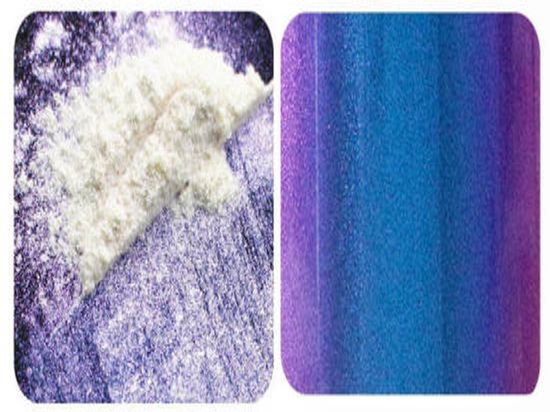
KT-92230 is a multichrome pigment that shifts through a full blue-purple-red-orange sequence as the viewing angle changes — one of the broadest color-travel arcs we produce in the KT-9000 series. Built on a natural mica substrate with a multi-layer TiO₂/Fe₂O₃/silica/tin oxide coating, it comes in a 25–130 μm particle size that delivers strong angular contrast and high visual impact across automotive finishes, decorative coatings, and specialty printing.
Read More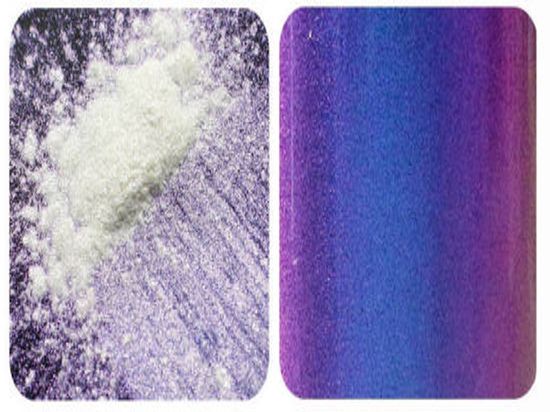
KT-92330 is a multi-layer interference pigment from Kolortek's KT-9000 Magic Chameleon Series, producing a continuous color shift sequence — indigo through purple, red, orange, and yellow — as the viewing angle changes. Built on natural mica coated with TiO₂, silica, and tin oxide, it delivers a high-mirror goniochromatic effect with a 25–130 μm particle size distribution engineered for maximum visual impact. This color shifting pigment powder performs best over dark or black substrates, where the full angular color travel is most legible.
Read More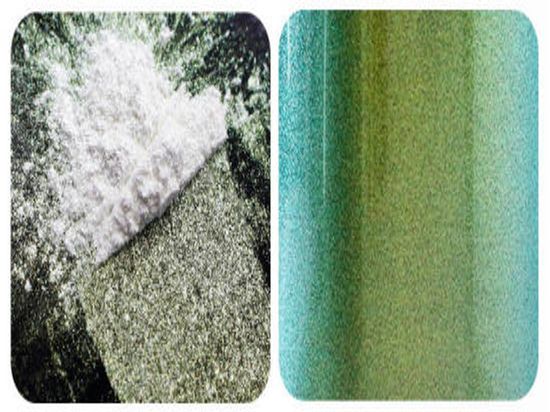
KT-92630 is a large-particle chameleon paint pearl from our KT-9000 Magic Chameleon Series, producing a sequential golden-to-kelly-green-to-blue color travel as the viewing angle shifts. With a 25–130 μm particle range, it delivers high visual impact in automotive custom finishes, decorative coatings, and specialty applications where a pronounced, multi-stop color flip is the goal. The substrate is natural mica with a multi-layer TiO₂/SiO₂/metal-oxide coating that generates the goniochromatic interference effect.
Read More
KT-92175 is the large-particle grade of our chameleon pigment for resin, built on a natural mica substrate with a multi-layer TiO₂, silica, and tin oxide coating that produces a continuous cyan-to-blue-to-purple-to-red angle-dependent color shift. At 75–175μm, it is the highest-sparkle option in the KT-9000 Magic Chameleon Series' KT-921** Cyan-Blue-Purple-Red range. Compatible with epoxy and UV resin at loadings of 1–10% by weight, the effect reads strongest on dark or black substrates where the goniochromatic shift has maximum contrast.
Read More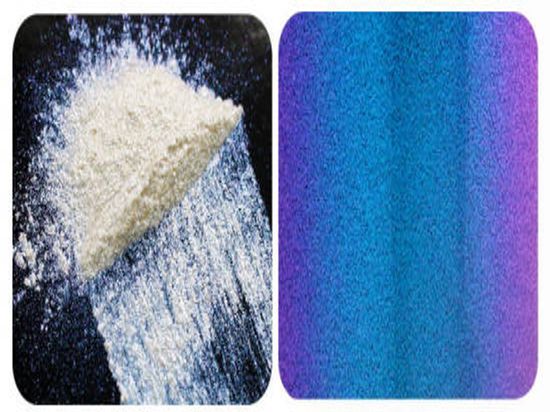
KT-92275 is a large-particle duochrome loose pigment from our KT-9000 Magic Chameleon Series, delivering a full blue-purple-red-orange color travel sequence that shifts continuously across the visible spectrum as the viewing angle changes. With a particle size range of 75–175 μm, this grade is engineered specifically for applications where maximum sparkle is the priority — loose eyeshadow, nail art toppers, and high-impact decorative cosmetics where the angular shift needs to read clearly against the skin or a dark base.
Read More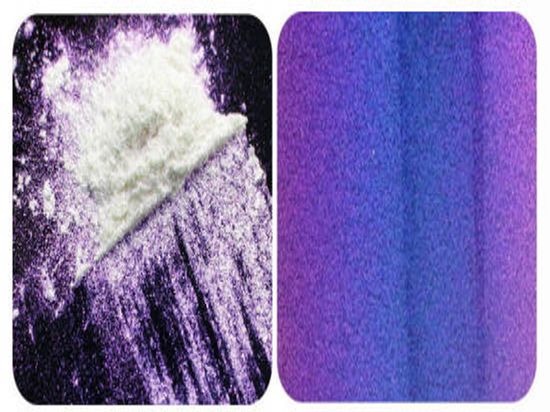
KT-92375 is a large-particle ghost chameleon pigment from Kolortek's KT-9000 Magic Chameleon Series, delivering a continuous five-stage color shift — indigo → purple → red → orange → yellow — as the viewing angle changes. Built on natural mica coated with titanium dioxide, silica, and tin oxide, it carries a particle size of 75–175 μm for maximum sparkle. We developed this grade specifically for high-impact automotive finishes, custom coatings, and luxury decorative applications where a dramatic, angle-dependent color shift is the primary design goal.
Read More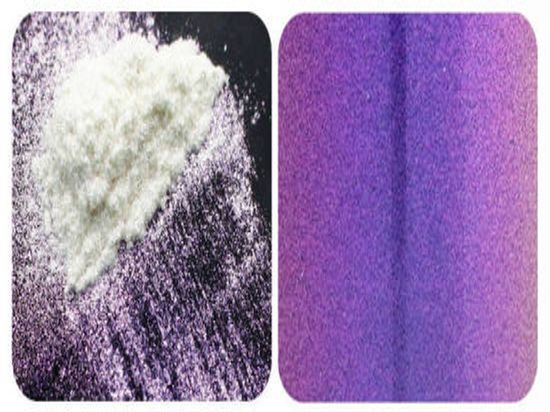
KT-92475 is a large-particle chameleon pigment from the KT-9000 Magic Chameleon Series, producing a continuous mauve → red → orange → yellow color shift that sweeps across the visible spectrum as the viewing angle changes. With a particle size of 75–175 μm and a natural mica substrate coated with titanium dioxide, silica, and tin oxide, it delivers the coarse, high-sparkle texture that nail art formulators need for maximum visual drama — particularly over a dark or black base coat.
Read More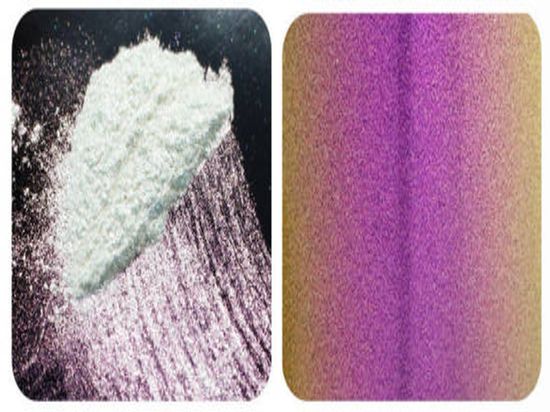
KT-92575 is a large-flake chameleon pearl powder from our KT-9000 Magic Chameleon Series, producing a dramatic angle-dependent color shift spanning red, orange, yellow, and kelly green on dark substrates. Built on a natural mica substrate with a multi-layer coating of titanium dioxide, silica, and tin oxide, it delivers an INCI composition suited to high-end cosmetic and nail art formulations. The 75–175 μm particle range gives it the high-sparkle, deep color-travel behavior that distinguishes it from finer cosmetic pearl grades.
Read More
 English
 Français
 Deutsch
 Русский
 Español
 Português