
Leave A Message
If you are interested in our products and want to know more details,please leave a message here,we will reply you as soon as we can.
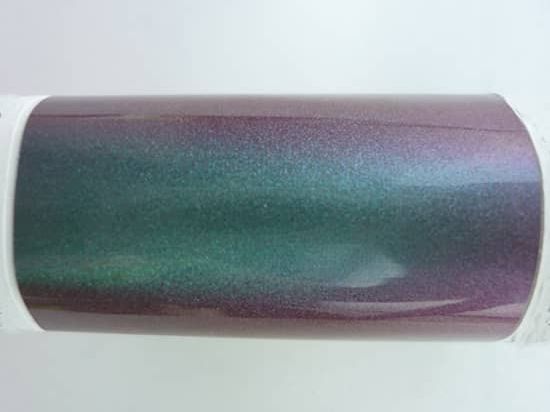
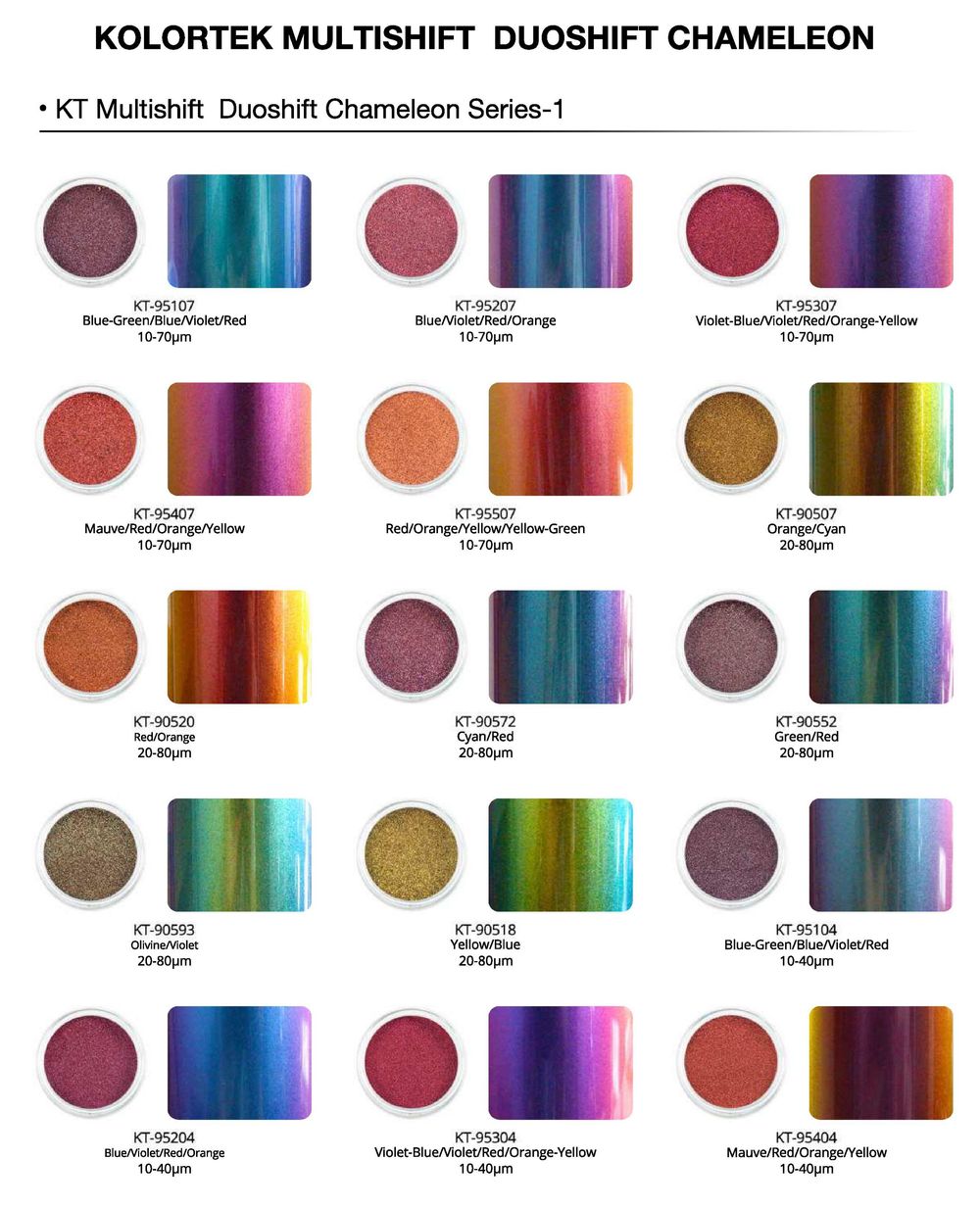
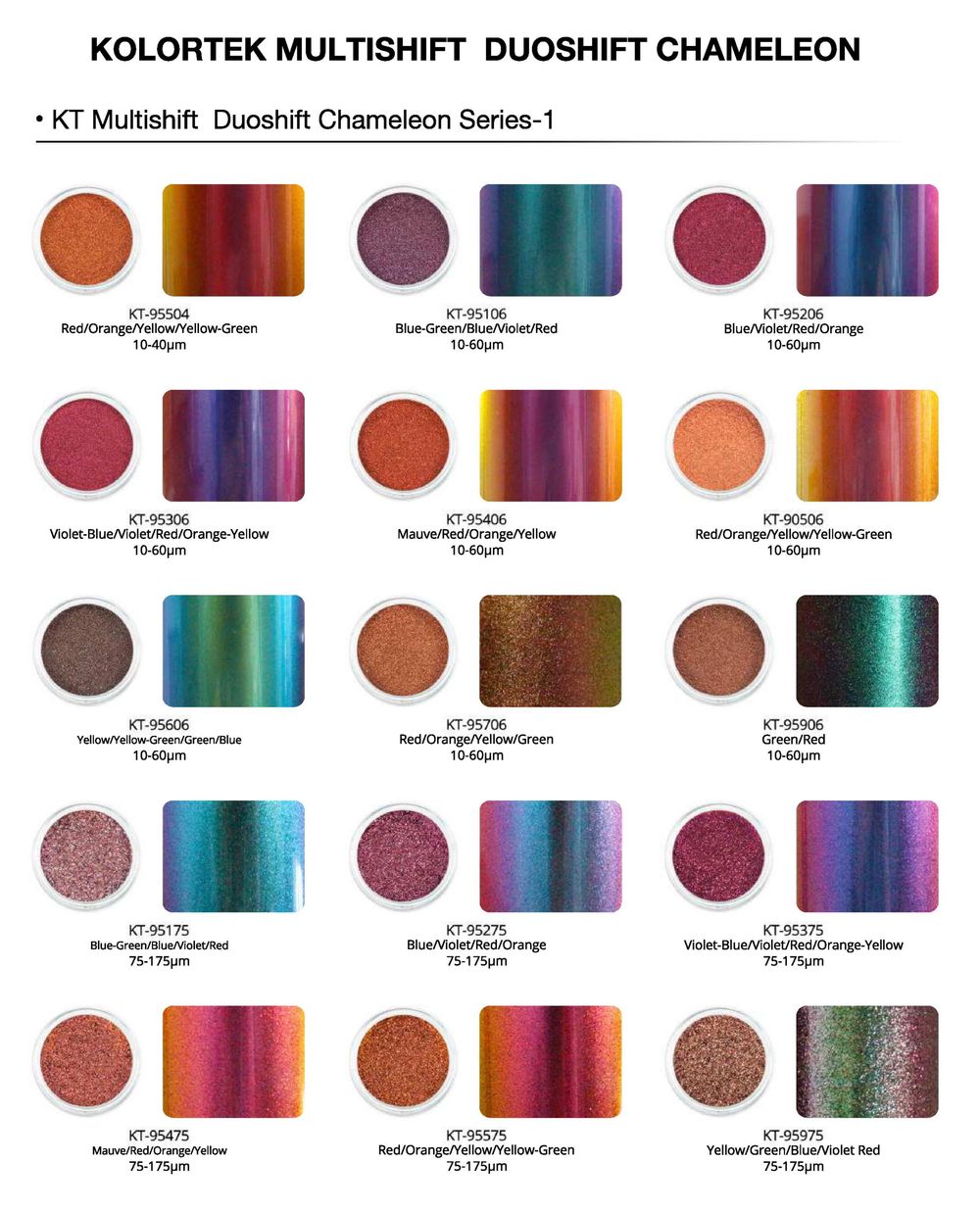
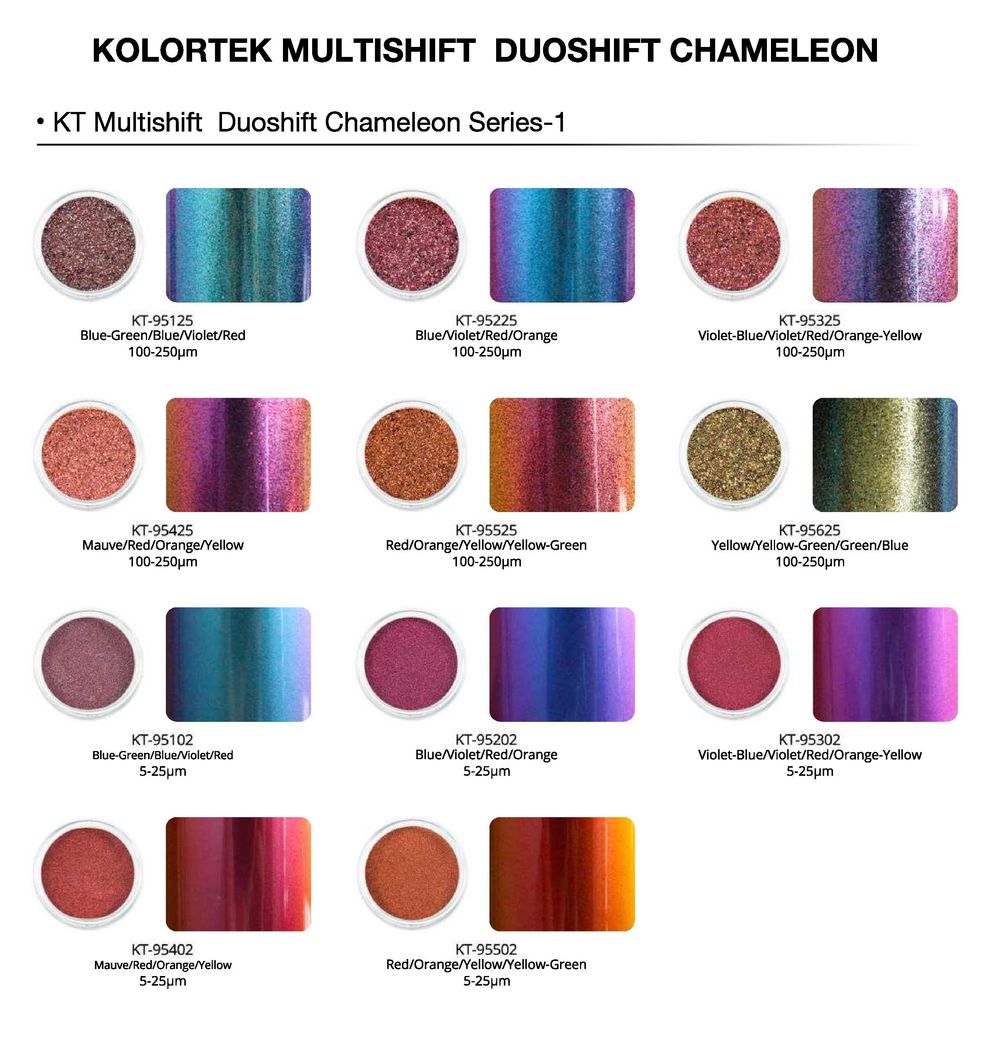
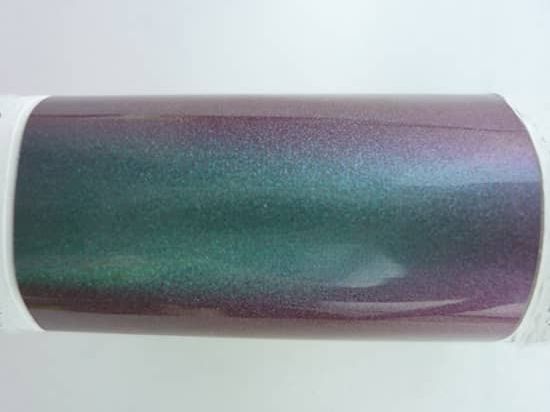
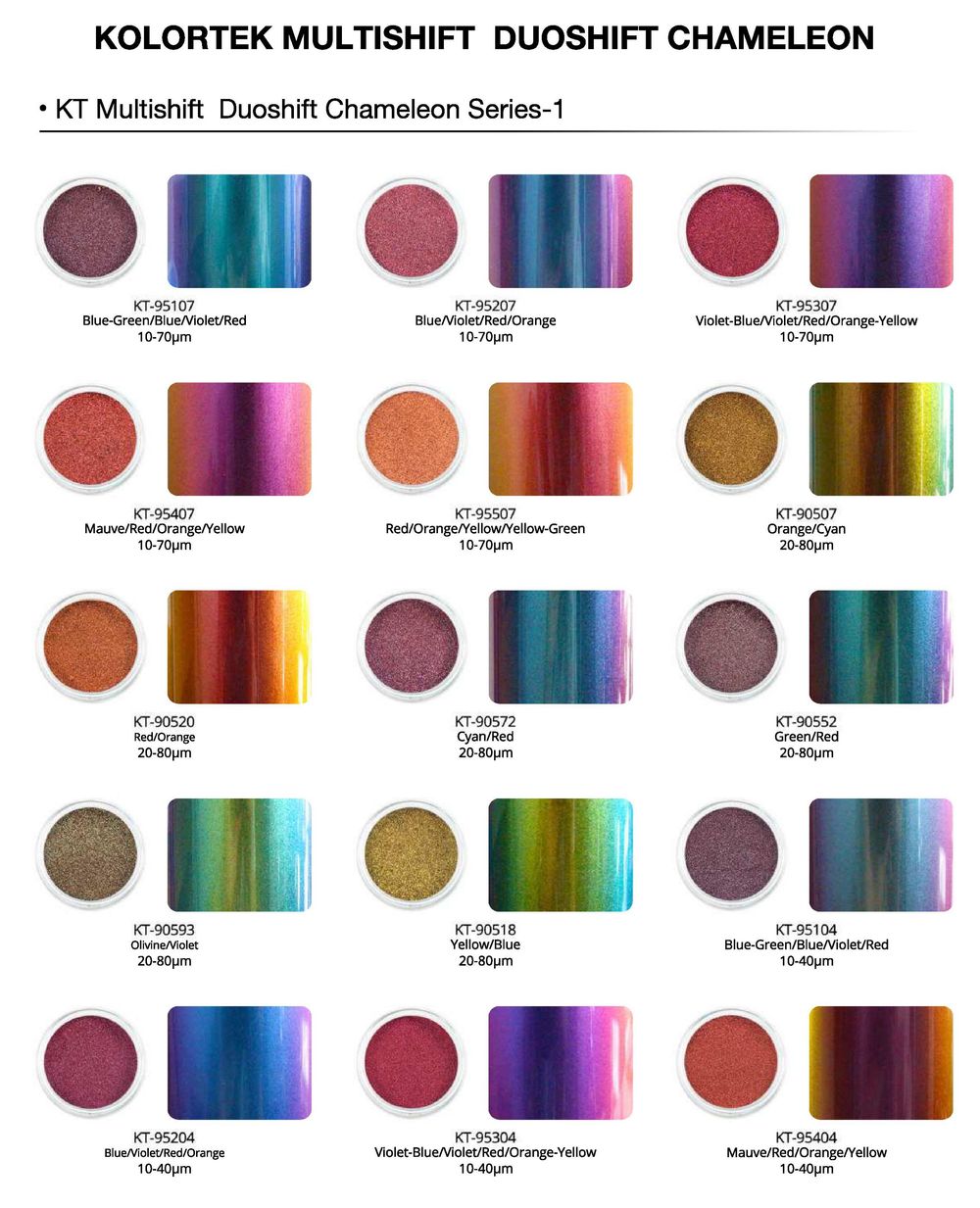
KT-90572 is a cyan/red color changing pigment from Kolortek's KT-9000 Magic Chameleon Series — a multi-layer interference pigment built on natural mica with iron oxide and silica coatings. It delivers a clean angle-dependent shift between cyan and red, with a particle size range of 20–80 μm (D50: 25–35 μm), and performs best on dark or black substrates where the goniochromatic effect reads at full intensity.
The optical engine behind KT-90572 is thin-film interference. The natural mica platelet carries successive layers of iron oxide and silica at precisely controlled thicknesses. As the viewing angle changes, the path length of reflected light shifts, and the destructive/constructive interference balance moves — producing the cyan-to-red travel visible on the cured surface. The effect is purely physical and structural, not dye-based, which is why the shift is repeatable batch to batch and resistant to fading under typical service conditions.
Substrate lightness is the single biggest variable a formulator controls. On a deep black ground, the cyan face-on color and the red flop read with full chromatic separation. On a white or pale substrate, both reflected colors are diluted by the substrate's own reflectance, and the perceived shift compresses considerably. In our application work we consistently recommend a black or very dark basecoat when maximising the visual impact of any KT-9000 grade.
| Property | Value |
|---|---|
| Product code | KT-90572 |
| Series | KT-9000 Magic Chameleon |
| Form | Powder |
| Color / appearance | Cyan / Red |
| Particle size range | 20–80 μm |
| D50 | 25–35 μm |
| Density | 2.8–3.2 kg/L |
| Bulk density | 26–30 g/100 mL |
| pH (4% H₂O) | 6.0–9.0 |
| Solubility | Insoluble in water |
| Odour | Odourless |
| INCI name | Mica / Iron Oxide / Silica |
| CAS No. | 12001-26-2 / 1309-37-1 / 7631-86-9 |
| Component | C.I. Number | Content (%) |
|---|---|---|
| Mica | C.I. 77019 | 46.0–51.0 |
| Iron oxide | C.I. 77891 | 10.0–20.0 |
| Silica | — | 34.0–39.0 |
The silica layer in the coating stack serves two roles: it fine-tunes the optical path length that sets the interference color, and it acts as a protective overcoat that contributes to the grade's general durability. The fully inorganic composition means there is no organic chromophore to bleach, which supports the KT-9000 series' reputation for good light and heat stability — though application-specific lightfastness data for KT-90572 should be confirmed through testing in your system.
The TDS for KT-90572 specifies the following maximum trace-element levels, which are relevant for cosmetic and regulated-market qualification:
| Element | Limit | Element | Limit |
|---|---|---|---|
| As | < 2 ppm | Pb | < 10 ppm |
| Hg | < 1 ppm | Cr | < 100 ppm |
| Ba | < 50 ppm | Sb | < 1 ppm |
| Ni | < 10 ppm | Cu | < 50 ppm |
| Cd | < 3 ppm | Zn | < 50 ppm |
KT-90572 sits in the mid-range of the KT-9000 particle size spectrum (20–80 μm), which balances sparkle and surface smoothness — a practical window for both coating films and cosmetic textures. The series is used across a broad range of end markets:
Dark or black substrates are non-negotiable for optimal shift legibility. A transparent or semi-transparent tinted binder over a black basecoat is the most common vehicle in automotive and coating applications. Pale or white substrates significantly reduce perceived color travel.
KT-90572 can be blended with transparent absorption pigments to modify the face-on base color and adjust the apparent shift range. This is a standard technique in the KT-9000 family — the interference pigment provides the angle-dependent travel while the transparent colorant anchors the face color. Keep absorption pigments transparent; opaque colorants mask the interference layers and kill the shift.
In automotive and industrial coating systems, always apply a clear topcoat over the effect layer. This protects the platelet orientation, enhances optical depth, and shields the coating from mechanical and environmental exposure. Skipping this step is the most common cause of premature visual degradation in chameleon finishes.
KT-90572 is not classified as hazardous under EU CLP (Regulation EC 1272/2008) or the prior Directives (67/548/EEC, 1999/45/EC). Standard good-practice measures apply during handling: avoid generating dust, use adequate ventilation, and wear gloves, eye protection, and a dust mask when dust is likely. Store in a sealed container in a well-ventilated area.
Kolortek operates under ISO 9001:2015 certification covering production and sales of pigments and glitters. At the company level, we maintain REACH registration documentation (specifically covering fluorphlogopite/synthetic mica grades), and cosmetic-grade options with supporting composition documents are available for applicable products under EU Cosmetics Regulation (EC) No. 1223/2009. Product-specific certification status for KT-90572 — including FDA color-additive compliance, Halal/Kosher scope, and formal REACH registration for this grade — should be confirmed directly with our technical team before regulatory submission.
The heavy metal limits listed in the TDS (As < 2 ppm, Hg < 1 ppm, Pb < 10 ppm — see table above) are test-based specification limits, not self-declared estimates. These figures are relevant for cosmetic and regulated coating applications where heavy metal caps are mandated.
What is the color shift sequence for KT-90572, and does the order depend on viewing angle?
KT-90572 shifts between cyan (face-on, direct light) and red (flop angle, oblique viewing). The transition is continuous — not a binary flip — as the angle changes. The exact shift sequence is governed by the multi-layer interference stack (iron oxide and silica on mica). This is a two-color duochrome effect, typical of KT-9000 grades used in cosmetics and decorative coatings. Best results require a black or dark substrate; the shift compresses significantly on light backgrounds.
Is this colour changing pigment powder suitable for cosmetic use?
The composition — Mica (C.I. 77019), Iron Oxide (C.I. 77891), Silica — uses INCI-listed inorganic ingredients common in cosmetic formulations. The TDS specifies heavy metal limits (e.g., As < 2 ppm, Pb < 10 ppm) relevant for cosmetic compliance. That said, final suitability depends on the target market and intended use. Product-specific confirmation against EU Cosmetics Regulation (EC) No. 1223/2009 or US FDA color-additive requirements should be obtained from Kolortek before commercial cosmetic use.
What particle size should I choose for automotive paint vs. nail polish?
KT-90572 has a particle range of 20–80 μm with a D50 of 25–35 μm. For automotive spray applications, this range works well — larger platelets (toward 80 μm) increase sparkle intensity but can affect surface texture in thin films. For nail polish and cosmetic lacquers, the lower end of the distribution (20–40 μm) typically gives a smoother, more uniform effect. If you need a tighter cut for a specific application, contact our team to discuss available particle size variants within the KT-9000 chameleon effect pigment series.
Can KT-90572 be combined with other effect pigments in the same formulation?
Yes. KT-9000 grades are compatible with most resin systems and can be blended with transparent absorption pigments to modify the base color or tighten the apparent shift range. Combining with other interference pigments — such as grades from the KT-9000 series with different shift sequences — is possible but should be tested, as layered interference effects can interact unpredictably. Avoid opaque pigments in the same layer, as these block the platelet alignment and extinguish the color shift.
Contact our technical team to discuss formulation requirements or to request a sample of KT-90572 for your specific application.
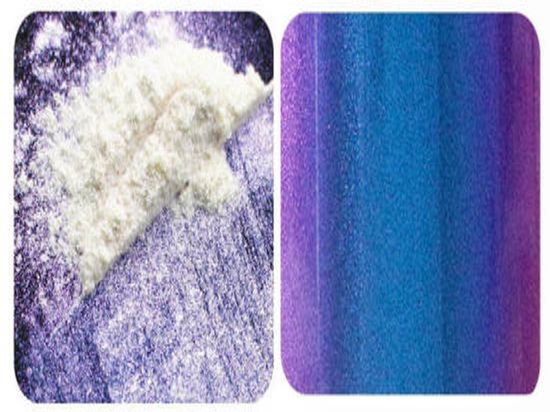
KT-92230 is a multichrome pigment that shifts through a full blue-purple-red-orange sequence as the viewing angle changes — one of the broadest color-travel arcs we produce in the KT-9000 series. Built on a natural mica substrate with a multi-layer TiO₂/Fe₂O₃/silica/tin oxide coating, it comes in a 25–130 μm particle size that delivers strong angular contrast and high visual impact across automotive finishes, decorative coatings, and specialty printing.
Read More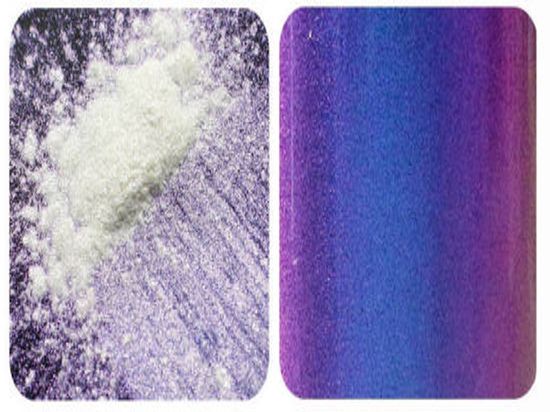
KT-92330 is a multi-layer interference pigment from Kolortek's KT-9000 Magic Chameleon Series, producing a continuous color shift sequence — indigo through purple, red, orange, and yellow — as the viewing angle changes. Built on natural mica coated with TiO₂, silica, and tin oxide, it delivers a high-mirror goniochromatic effect with a 25–130 μm particle size distribution engineered for maximum visual impact. This color shifting pigment powder performs best over dark or black substrates, where the full angular color travel is most legible.
Read More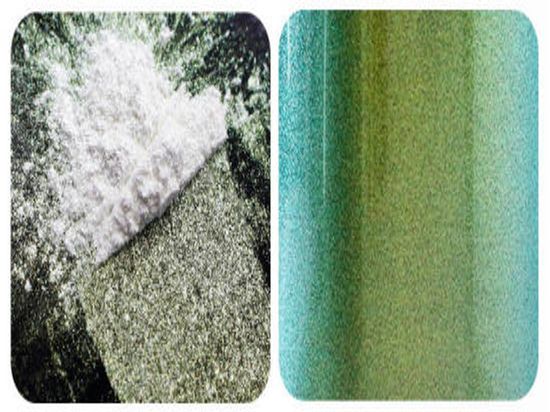
KT-92630 is a large-particle chameleon paint pearl from our KT-9000 Magic Chameleon Series, producing a sequential golden-to-kelly-green-to-blue color travel as the viewing angle shifts. With a 25–130 μm particle range, it delivers high visual impact in automotive custom finishes, decorative coatings, and specialty applications where a pronounced, multi-stop color flip is the goal. The substrate is natural mica with a multi-layer TiO₂/SiO₂/metal-oxide coating that generates the goniochromatic interference effect.
Read More
KT-92175 is the large-particle grade of our chameleon pigment for resin, built on a natural mica substrate with a multi-layer TiO₂, silica, and tin oxide coating that produces a continuous cyan-to-blue-to-purple-to-red angle-dependent color shift. At 75–175μm, it is the highest-sparkle option in the KT-9000 Magic Chameleon Series' KT-921** Cyan-Blue-Purple-Red range. Compatible with epoxy and UV resin at loadings of 1–10% by weight, the effect reads strongest on dark or black substrates where the goniochromatic shift has maximum contrast.
Read More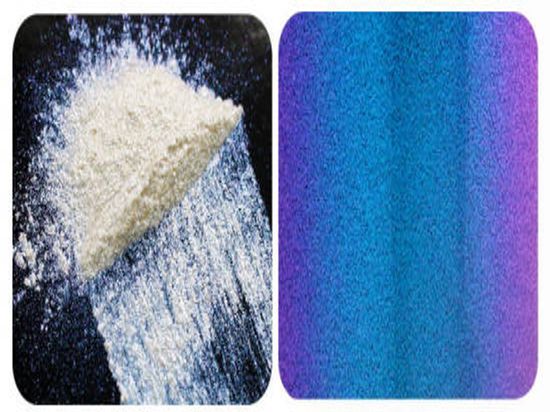
KT-92275 is a large-particle duochrome loose pigment from our KT-9000 Magic Chameleon Series, delivering a full blue-purple-red-orange color travel sequence that shifts continuously across the visible spectrum as the viewing angle changes. With a particle size range of 75–175 μm, this grade is engineered specifically for applications where maximum sparkle is the priority — loose eyeshadow, nail art toppers, and high-impact decorative cosmetics where the angular shift needs to read clearly against the skin or a dark base.
Read More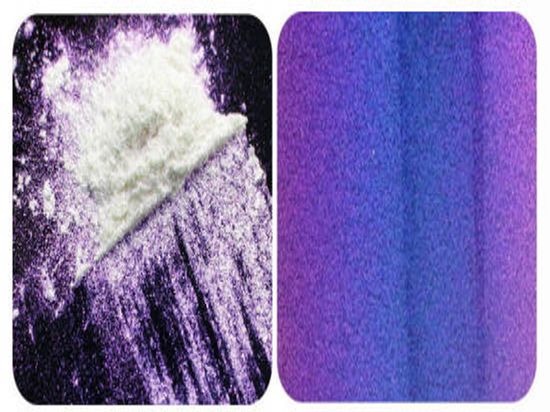
KT-92375 is a large-particle ghost chameleon pigment from Kolortek's KT-9000 Magic Chameleon Series, delivering a continuous five-stage color shift — indigo → purple → red → orange → yellow — as the viewing angle changes. Built on natural mica coated with titanium dioxide, silica, and tin oxide, it carries a particle size of 75–175 μm for maximum sparkle. We developed this grade specifically for high-impact automotive finishes, custom coatings, and luxury decorative applications where a dramatic, angle-dependent color shift is the primary design goal.
Read More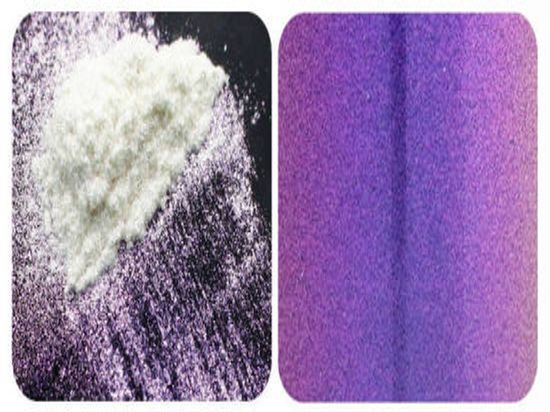
KT-92475 is a large-particle chameleon pigment from the KT-9000 Magic Chameleon Series, producing a continuous mauve → red → orange → yellow color shift that sweeps across the visible spectrum as the viewing angle changes. With a particle size of 75–175 μm and a natural mica substrate coated with titanium dioxide, silica, and tin oxide, it delivers the coarse, high-sparkle texture that nail art formulators need for maximum visual drama — particularly over a dark or black base coat.
Read More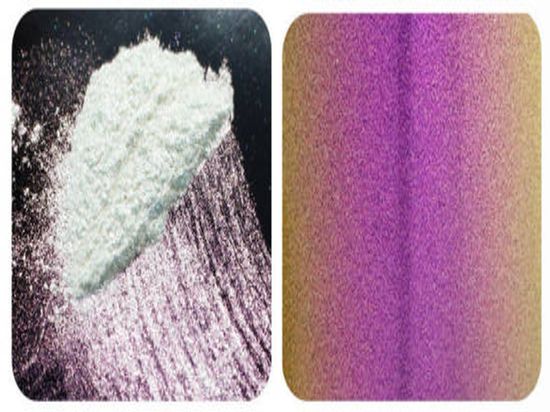
KT-92575 is a large-flake chameleon pearl powder from our KT-9000 Magic Chameleon Series, producing a dramatic angle-dependent color shift spanning red, orange, yellow, and kelly green on dark substrates. Built on a natural mica substrate with a multi-layer coating of titanium dioxide, silica, and tin oxide, it delivers an INCI composition suited to high-end cosmetic and nail art formulations. The 75–175 μm particle range gives it the high-sparkle, deep color-travel behavior that distinguishes it from finer cosmetic pearl grades.
Read More
 English
 Français
 Deutsch
 Русский
 Español
 Português