
Leave A Message
If you are interested in our products and want to know more details,please leave a message here,we will reply you as soon as we can.
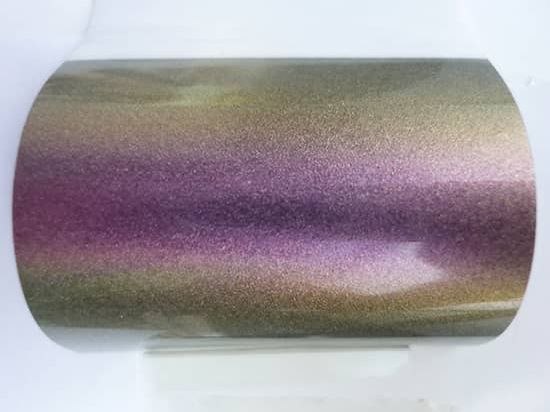
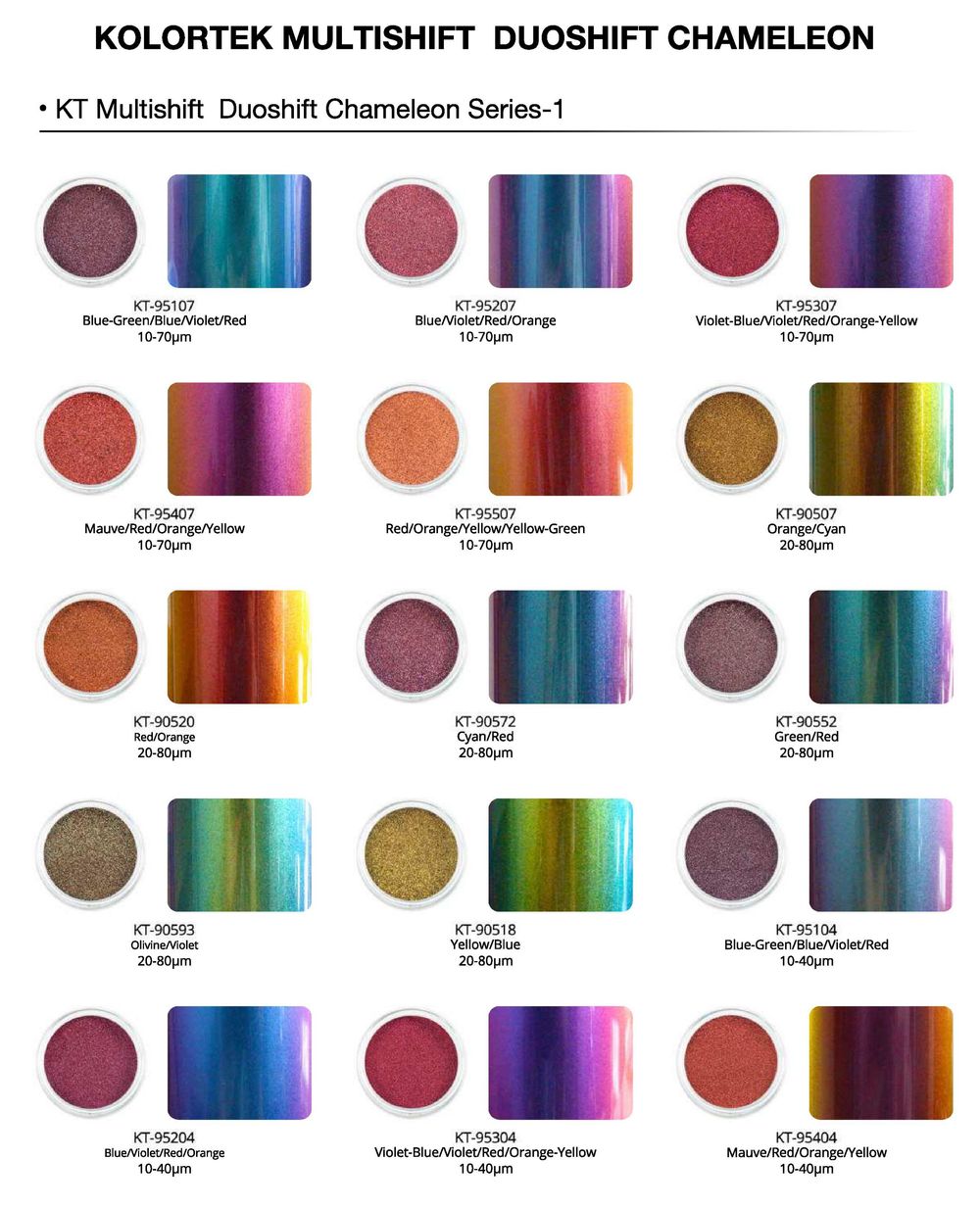
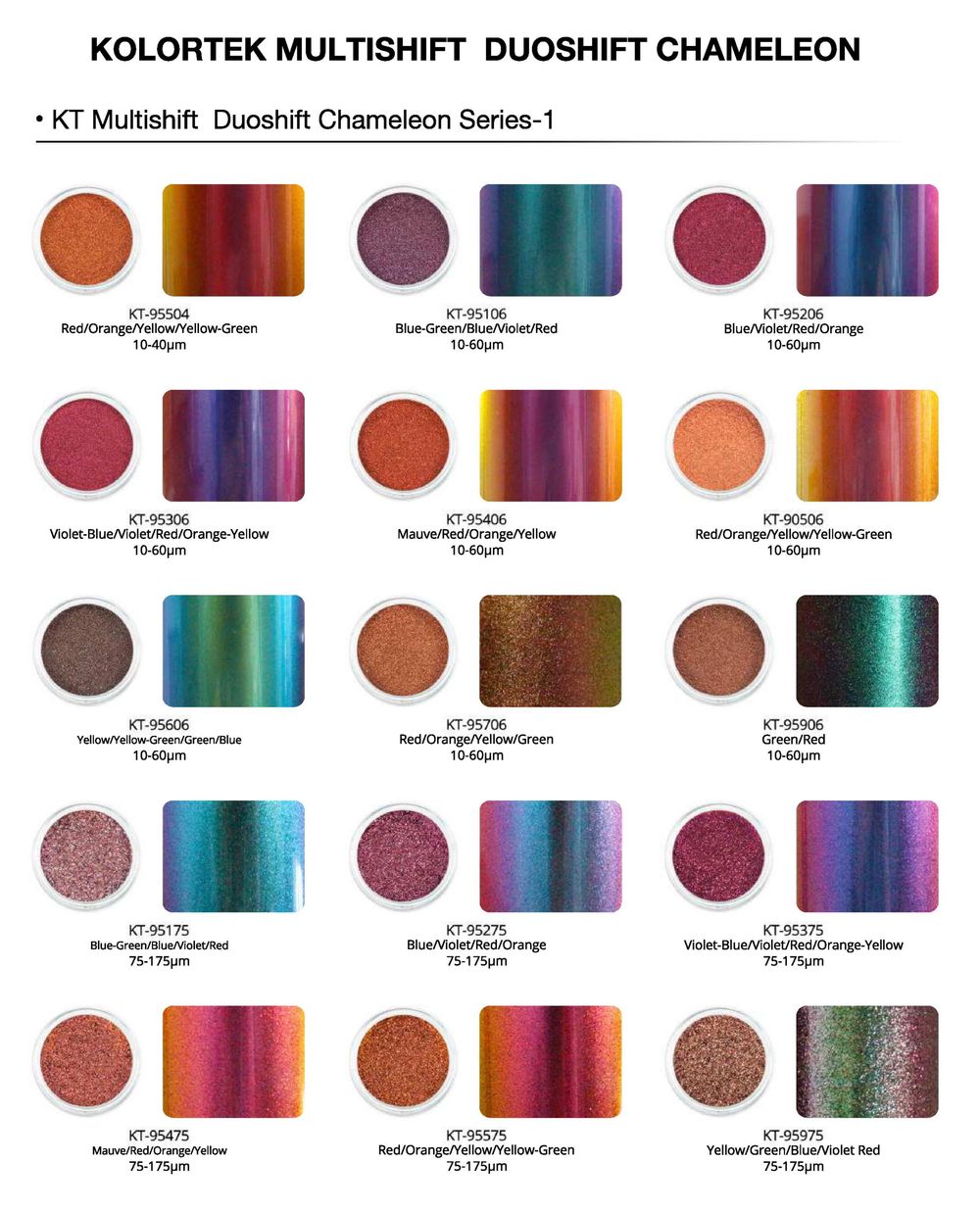
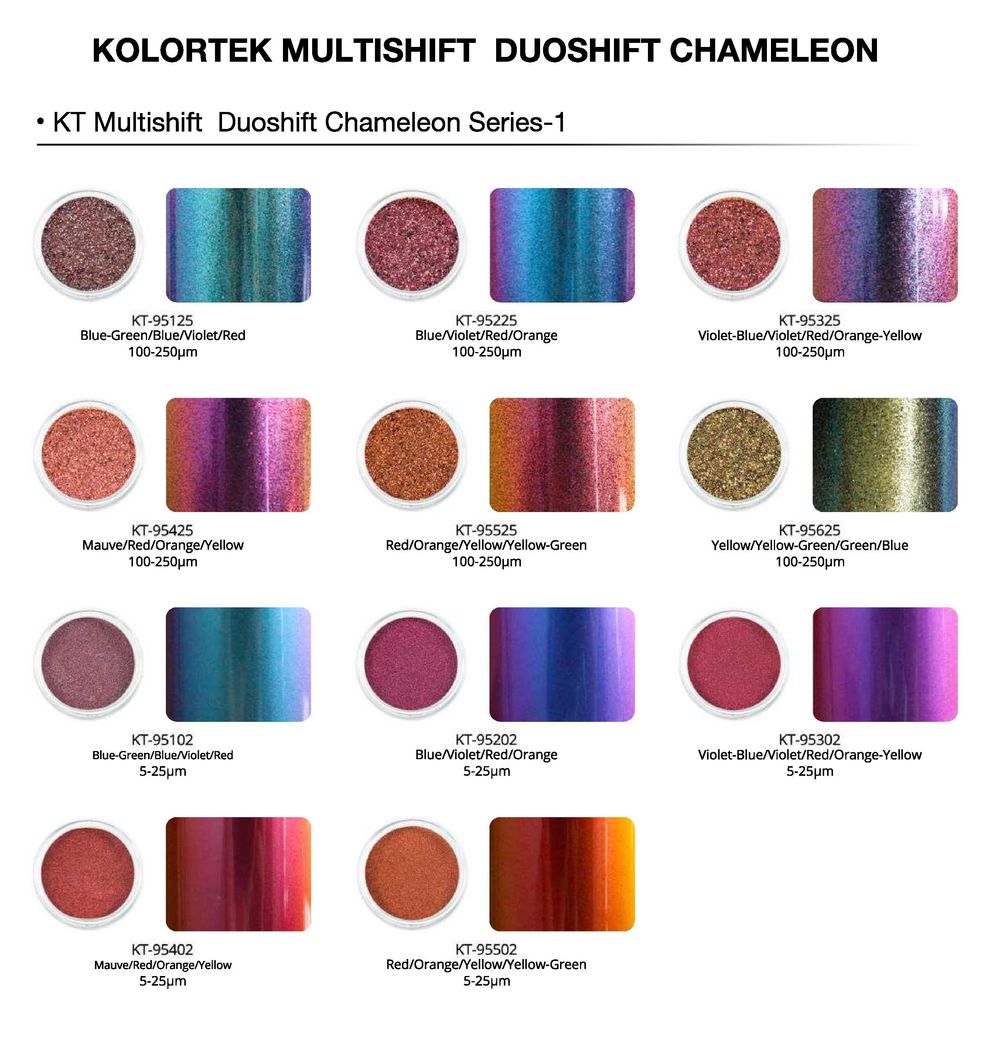
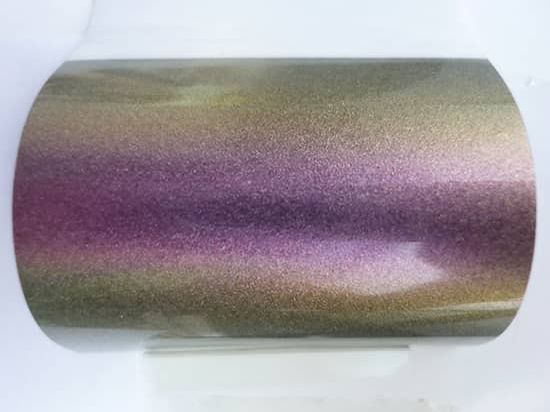
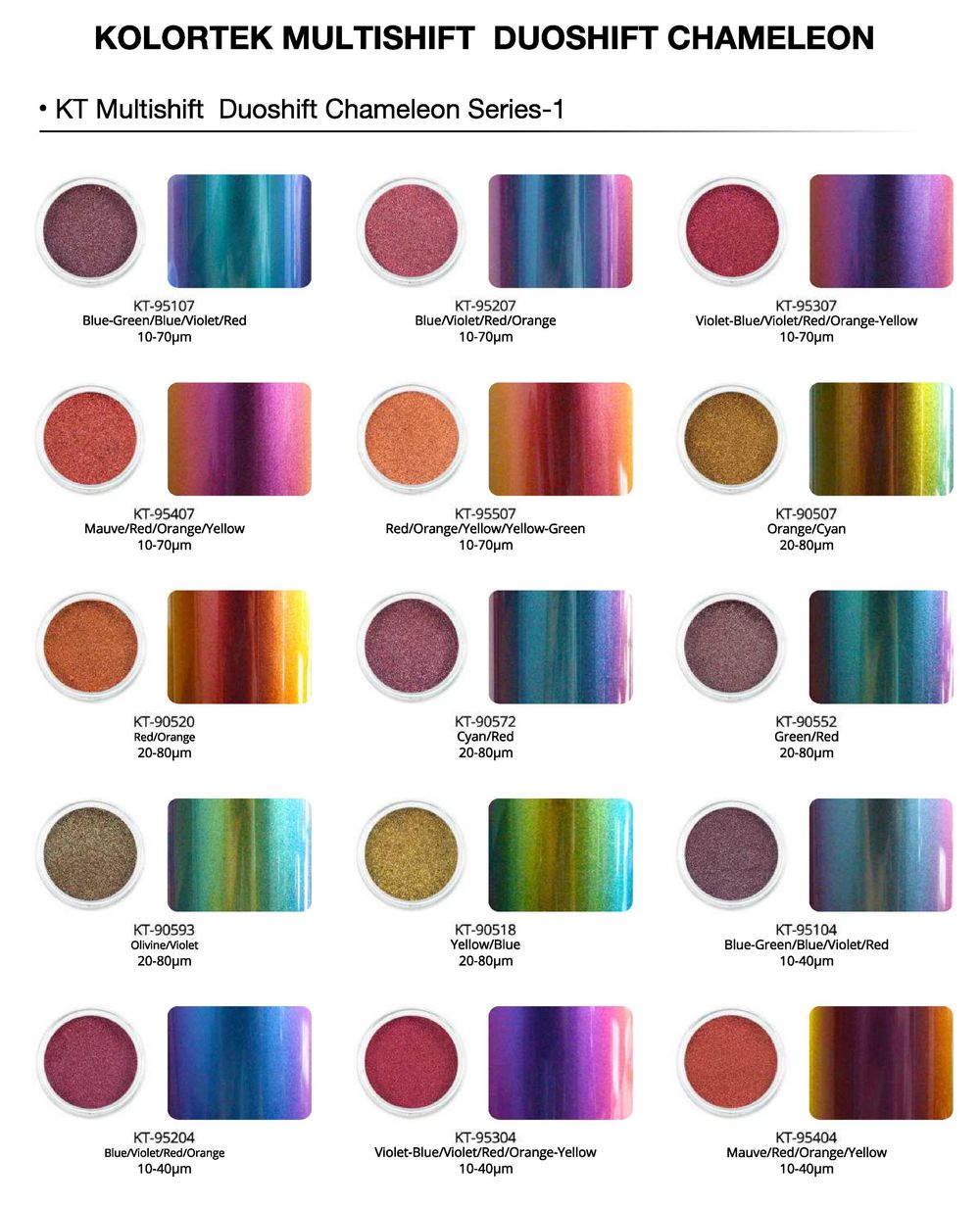
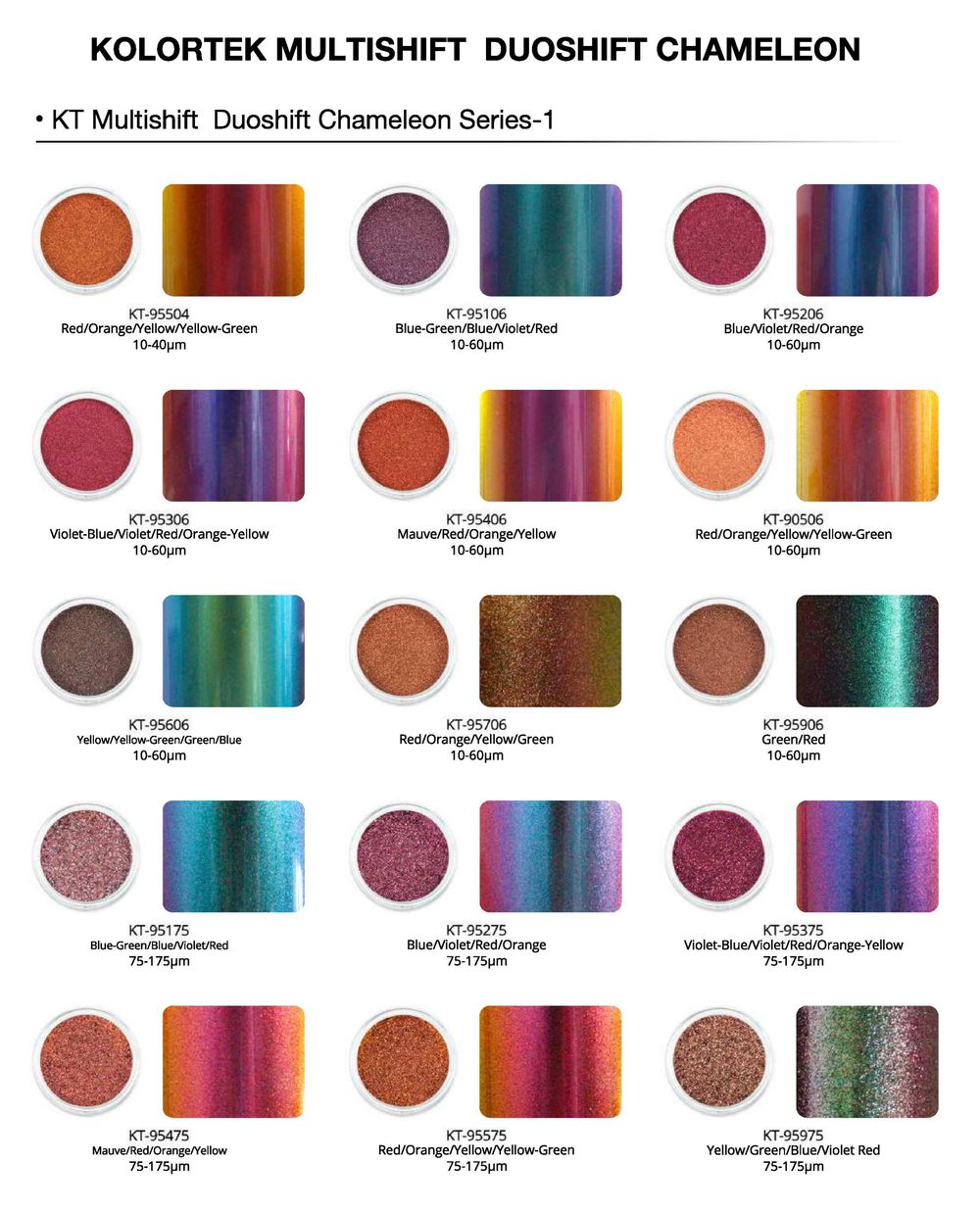
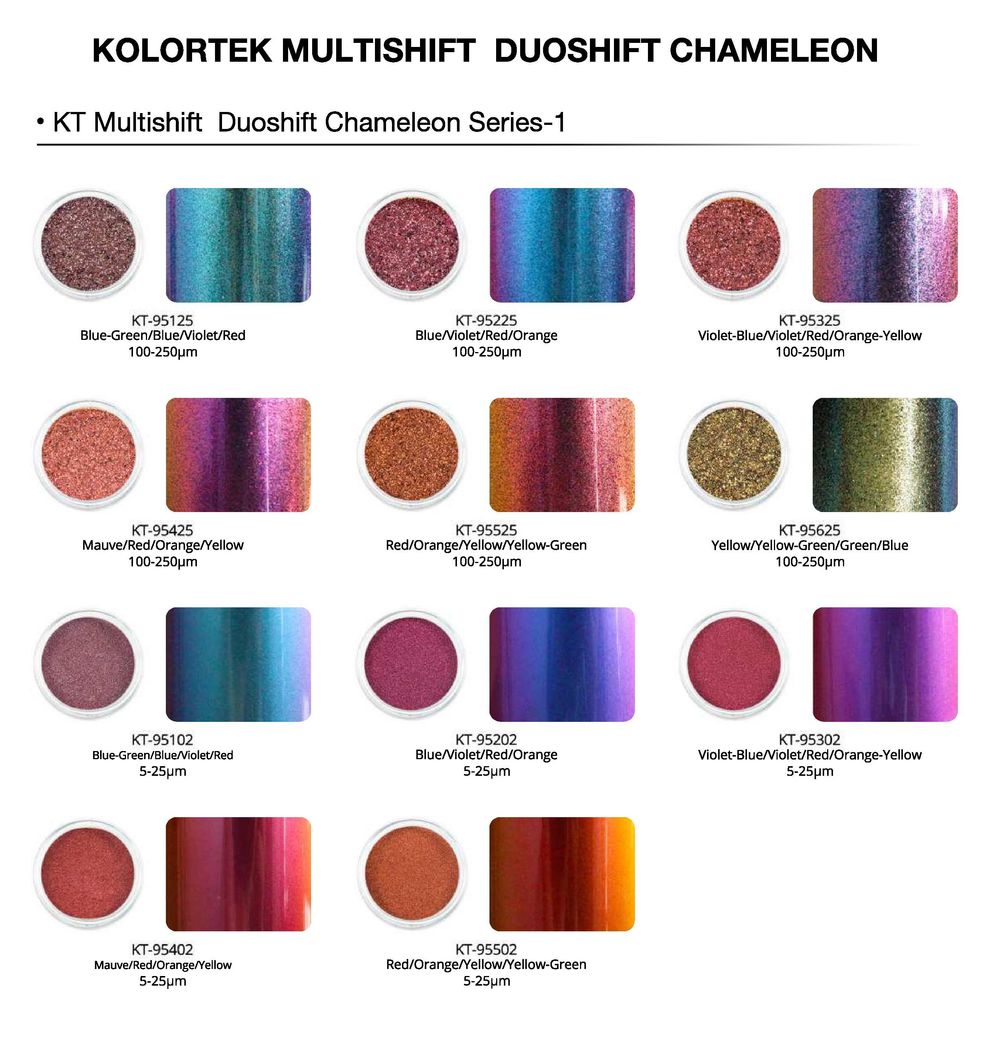
KT-90229 is a multichrome pigment in our KT-9000 Magic Chameleon Series, producing a red-to-olivine color travel that shifts with viewing angle through multi-layer TiO₂/silica interference technology on a natural mica substrate. With a particle size of 20–80 μm and a D50 of 25–35 μm, it delivers a controlled, high-impact goniochromatic effect suited to automotive finishes, decorative coatings, high-end cosmetics, and luxury printing applications.
The KT-9000 Magic Chameleon Series is built on natural mica platelets coated with alternating layers of TiO₂, Fe₂O₃, silica, and additional metal oxides. The interference mechanism is purely physical — as the angle of incident light changes, the optical path length through the coating stack changes, and a different wavelength is selectively reflected. KT-90229 exploits this to produce a warm red at one viewing angle that transitions toward olivine as the angle opens.
Unlike a single-layer pearl pigment that simply shifts between a specular highlight and a transmission color, this multi-layer architecture drives a distinct, named color at each extreme of the shift. The red-to-olivine pairing is one of the more distinctive combinations we offer in the series — the two endpoints sit far enough apart on the spectrum to give a clearly readable transition, especially in formulations applied over dark substrates.
One thing to note: the perceived travel intensity is substrate-dependent. On black or very dark bases the effect reads at full contrast; on white or light-colored substrates the shift is substantially muted. We factor this into application guidance routinely when working with coating and cosmetics customers alike.
| Parameter | Value |
|---|---|
| Product Code | KT-90229 |
| Series | KT-9000 Magic Chameleon |
| Form | Powder |
| Color / Appearance | Red / Olivine (angle-dependent) |
| Particle Size | 20–80 μm |
| D50 | 25–35 μm |
| pH (4% H₂O) | 6.0–9.0 |
| Density | 2.6–3.1 kg/L |
| Bulk Density | 23–29 g/100g |
| Solubility in Water | Insoluble |
| Odour | Odourless |
| INCI Name | Mica / Titanium Dioxide / Silica |
| Light & Weather Resistance | Good (inorganic metal oxide coating) |
| CLP Classification | Not classified (EC No. 1272/2008) |
| Component | C.I. Number | Content (%) |
|---|---|---|
| Mica | 77019 | 48.0–53.0 |
| Titanium Dioxide | 77891 | 13.0–23.0 |
| Silica | — | 29.0–34.0 |
| Element | Limit | Element | Limit |
|---|---|---|---|
| As | <2 ppm | Pb | <10 ppm |
| Hg | <1 ppm | Cr | <100 ppm |
| Ba | <50 ppm | Sb | <1 ppm |
| Ni | <10 ppm | Cu | <50 ppm |
| Cd | <3 ppm | Zn | <50 ppm |
The KT-9000 series is compatible with most resin systems, making KT-90229 accessible across a broad range of coating platforms. Automotive custom finishes and wraps represent the highest-volume use case we see — the multi-layer construction holds up well under a clear topcoat, which we always recommend in automotive contexts to protect the interference layers and maximize optical depth. The same approach applies to motorcycle helmets, sporting goods, and other decorative coating substrates.
Beyond automotive, the red/olivine shift fits well in luxury packaging, security and anti-counterfeiting printing, and high-end cosmetics including nail art. The all-inorganic composition — mica, TiO₂, silica — is consistent with INCI requirements, and cosmetic-grade documentation is available; final suitability under EU Cosmetics Regulation (EC) No. 1223/2009 depends on the selected grade and intended use, so contact us to confirm before committing to a formulation.
For plastics and synthetic leather, the series has an established track record. In printing applications — particularly security printing for banknotes and negotiable securities — the goniochromatic shift provides a machine-readable and visually obvious authentication feature that is difficult to replicate with conventional single-layer pigments.
A practical note on substrate selection: applying KT-90229 over a black basecoat consistently produces the most readable red-to-olivine transition. Light or white substrates wash out the contrast between the two interference endpoints. If your system cannot use a dark base, combining KT-90229 with a compatible transparent absorption pigment can partially compensate by darkening the underlying optical environment — though the degree of shift improvement will vary by formulation.
Dispersion is where most problems originate with platelet-based effect pigments. The multi-layer interference coating on KT-90229 is intact by design and needs to stay that way through your mixing process. Never run this pigment through a sand mill, bead mill, or high-speed disperser. All of these will mechanically fracture the mica platelets and destroy the layered structure responsible for the color shift — you will end up with a washed-out, degraded effect that no downstream adjustment can recover.
The correct approach is to pre-wet the pigment in a portion of your solvent or resin component first, then incorporate the slurry into the main batch under low-speed stirring at the final addition stage. Adding it late keeps shear exposure minimal. In our application lab, we typically see the best results when the pre-wetting step is given adequate time — rushing this phase often leads to uneven dispersion rather than any mechanical damage, but uneven distribution will still compromise the uniformity of the color travel in the finished film.
The pH window of 6.0–9.0 covers the majority of waterborne and solvent-borne coating systems without compatibility issues. The pigment is water-insoluble and odourless, which simplifies handling in most production environments. General loading in paints and coatings runs 1–20% by weight depending on desired effect intensity; product-specific loading guidance for KT-90229 is available from our technical team for your particular resin system.
Avoid generating dust during handling — use appropriate ventilation and wear a dust mask, eye protection, and gloves. The product is not classified as hazardous under CLP Regulation (EC) No. 1272/2008 or Directive 67/548/EEC, but standard industrial hygiene practices apply. Store in a well-ventilated location in a sealed container.
KT-90229 is produced under our ISO 9001:2015 quality management system, which covers production and sales of pigments. REACH compliance documentation is available; note that our registered REACH certificate specifically covers fluorphlogopite (synthetic mica) grades — for natural mica grades, confirm the applicable registration documentation with us directly.
For cosmetic applications, composition documentation supporting EU Cosmetics Regulation (EC) No. 1223/2009 review is available on request. US FDA color-additive framework grades are also offered for relevant product applications. Halal and Kosher documentation may be available for applicable grades — check the current product attachment before making application-specific claims.
What is the color shift range of KT-90229, and on what substrates does it perform best?
KT-90229 shifts from red to olivine as the viewing angle changes, driven by multi-layer TiO₂/silica interference on natural mica at a particle size of 20–80 μm (D50 25–35 μm). The shift is most readable on dark or black substrates, which provide the optical contrast the interference layers need. On light or white bases, the perceived color travel is substantially reduced.
Can KT-90229 be used in cosmetic formulations, and is it compliant with EU regulations?
The KT-9000 series, including KT-90229, is applied in high-end cosmetics and nail art. Its INCI name is Mica / Titanium Dioxide / Silica, and it carries an all-inorganic composition with heavy metals controlled well below standard limits (e.g., Pb <10 ppm, As <2 ppm). Cosmetic-grade documentation supporting EU Cosmetics Regulation (EC) No. 1223/2009 is available; final compliance confirmation depends on grade and intended application — contact us to verify before formulating.
What processing equipment should be avoided when dispersing this multi chrome pigment?
Sand mills, bead mills, and high-speed dispersers must not be used with KT-90229 or any KT-9000 series grade. High-shear equipment fragments the mica platelets and disrupts the multi-layer interference coating, permanently degrading the color shift effect. The correct method is low-speed stirring, with the pigment pre-wetted in solvent or resin and added at the final formulation stage.
Which industries typically use KT-9000 series multichrome pigment grades?
The KT-9000 series is used across automotive custom finishes and wraps, decorative coatings (motorcycle helmets, sporting goods), high-end cosmetics and nail art, luxury packaging, security and anti-counterfeiting printing (banknotes, negotiable securities), plastics, and synthetic leather. The series is compatible with most resin systems and suitable for both solvent-borne and waterborne platforms within the product's pH range of 6.0–9.0.
Contact our technical team to discuss formulation requirements or to request a sample of KT-90229 for your specific application.
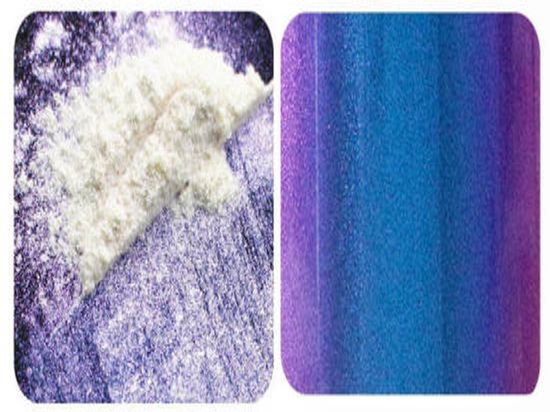
KT-92230 is a multichrome pigment that shifts through a full blue-purple-red-orange sequence as the viewing angle changes — one of the broadest color-travel arcs we produce in the KT-9000 series. Built on a natural mica substrate with a multi-layer TiO₂/Fe₂O₃/silica/tin oxide coating, it comes in a 25–130 μm particle size that delivers strong angular contrast and high visual impact across automotive finishes, decorative coatings, and specialty printing.
Read More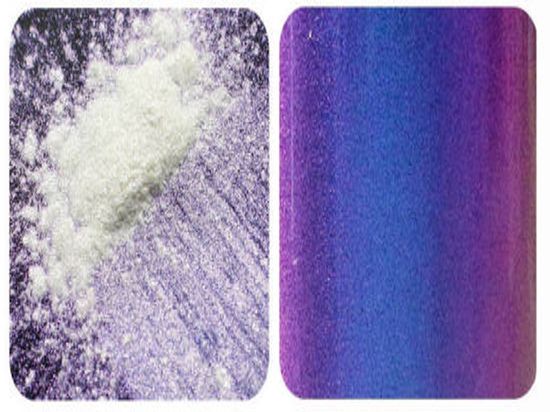
KT-92330 is a multi-layer interference pigment from Kolortek's KT-9000 Magic Chameleon Series, producing a continuous color shift sequence — indigo through purple, red, orange, and yellow — as the viewing angle changes. Built on natural mica coated with TiO₂, silica, and tin oxide, it delivers a high-mirror goniochromatic effect with a 25–130 μm particle size distribution engineered for maximum visual impact. This color shifting pigment powder performs best over dark or black substrates, where the full angular color travel is most legible.
Read More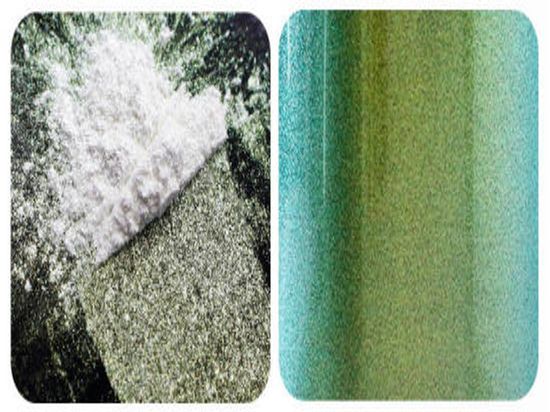
KT-92630 is a large-particle chameleon paint pearl from our KT-9000 Magic Chameleon Series, producing a sequential golden-to-kelly-green-to-blue color travel as the viewing angle shifts. With a 25–130 μm particle range, it delivers high visual impact in automotive custom finishes, decorative coatings, and specialty applications where a pronounced, multi-stop color flip is the goal. The substrate is natural mica with a multi-layer TiO₂/SiO₂/metal-oxide coating that generates the goniochromatic interference effect.
Read More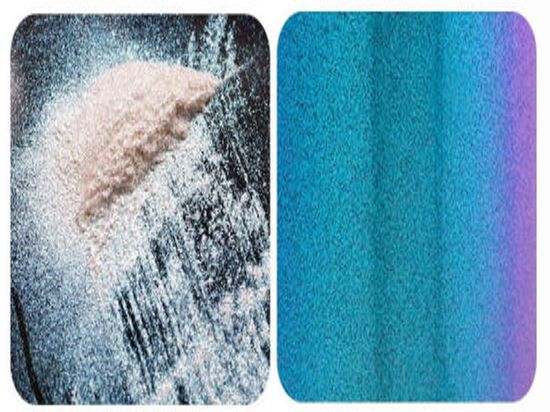
KT-92175 is the large-particle grade of our chameleon pigment for resin, built on a natural mica substrate with a multi-layer TiO₂, silica, and tin oxide coating that produces a continuous cyan-to-blue-to-purple-to-red angle-dependent color shift. At 75–175μm, it is the highest-sparkle option in the KT-9000 Magic Chameleon Series' KT-921** Cyan-Blue-Purple-Red range. Compatible with epoxy and UV resin at loadings of 1–10% by weight, the effect reads strongest on dark or black substrates where the goniochromatic shift has maximum contrast.
Read More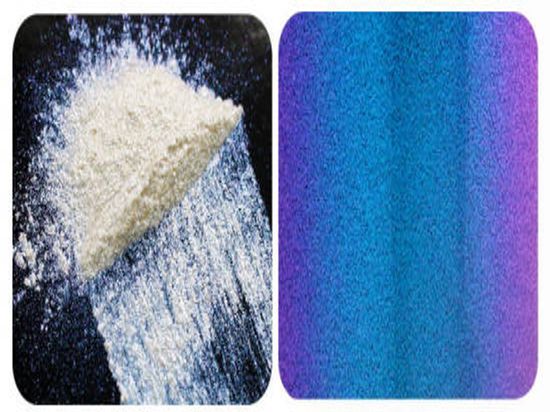
KT-92275 is a large-particle duochrome loose pigment from our KT-9000 Magic Chameleon Series, delivering a full blue-purple-red-orange color travel sequence that shifts continuously across the visible spectrum as the viewing angle changes. With a particle size range of 75–175 μm, this grade is engineered specifically for applications where maximum sparkle is the priority — loose eyeshadow, nail art toppers, and high-impact decorative cosmetics where the angular shift needs to read clearly against the skin or a dark base.
Read More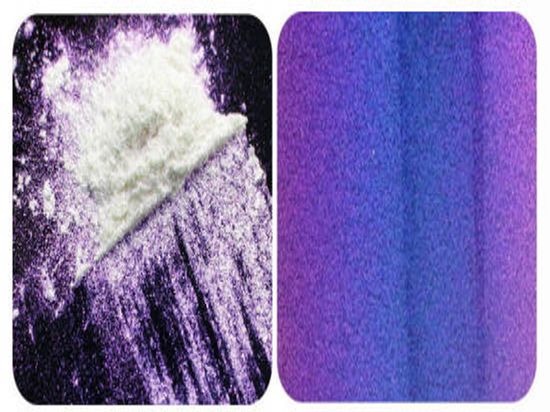
KT-92375 is a large-particle ghost chameleon pigment from Kolortek's KT-9000 Magic Chameleon Series, delivering a continuous five-stage color shift — indigo → purple → red → orange → yellow — as the viewing angle changes. Built on natural mica coated with titanium dioxide, silica, and tin oxide, it carries a particle size of 75–175 μm for maximum sparkle. We developed this grade specifically for high-impact automotive finishes, custom coatings, and luxury decorative applications where a dramatic, angle-dependent color shift is the primary design goal.
Read More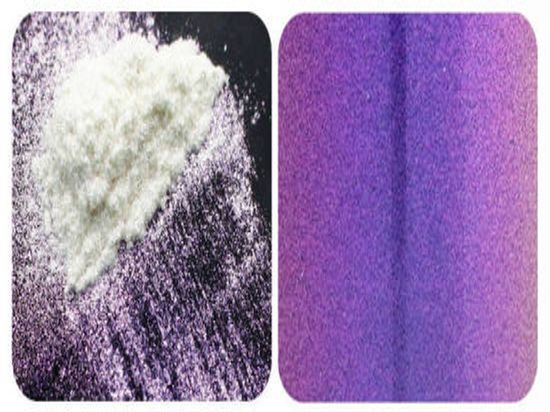
KT-92475 is a large-particle chameleon pigment from the KT-9000 Magic Chameleon Series, producing a continuous mauve → red → orange → yellow color shift that sweeps across the visible spectrum as the viewing angle changes. With a particle size of 75–175 μm and a natural mica substrate coated with titanium dioxide, silica, and tin oxide, it delivers the coarse, high-sparkle texture that nail art formulators need for maximum visual drama — particularly over a dark or black base coat.
Read More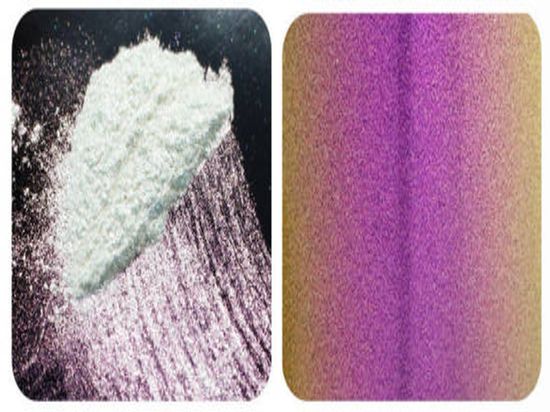
KT-92575 is a large-flake chameleon pearl powder from our KT-9000 Magic Chameleon Series, producing a dramatic angle-dependent color shift spanning red, orange, yellow, and kelly green on dark substrates. Built on a natural mica substrate with a multi-layer coating of titanium dioxide, silica, and tin oxide, it delivers an INCI composition suited to high-end cosmetic and nail art formulations. The 75–175 μm particle range gives it the high-sparkle, deep color-travel behavior that distinguishes it from finer cosmetic pearl grades.
Read More
 English
 Français
 Deutsch
 Русский
 Español
 Português