
Leave A Message
If you are interested in our products and want to know more details,please leave a message here,we will reply you as soon as we can.
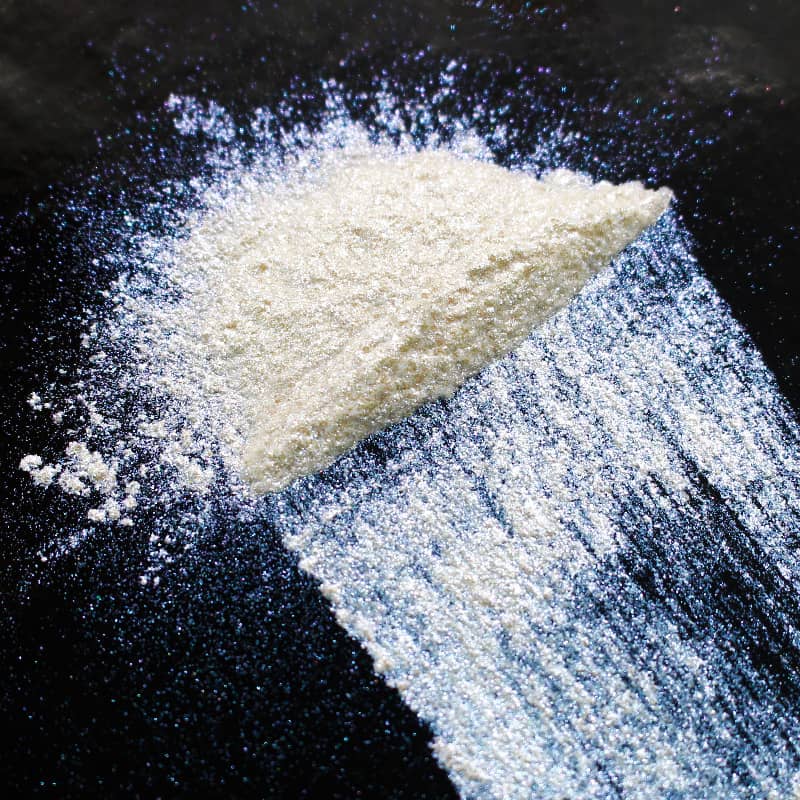
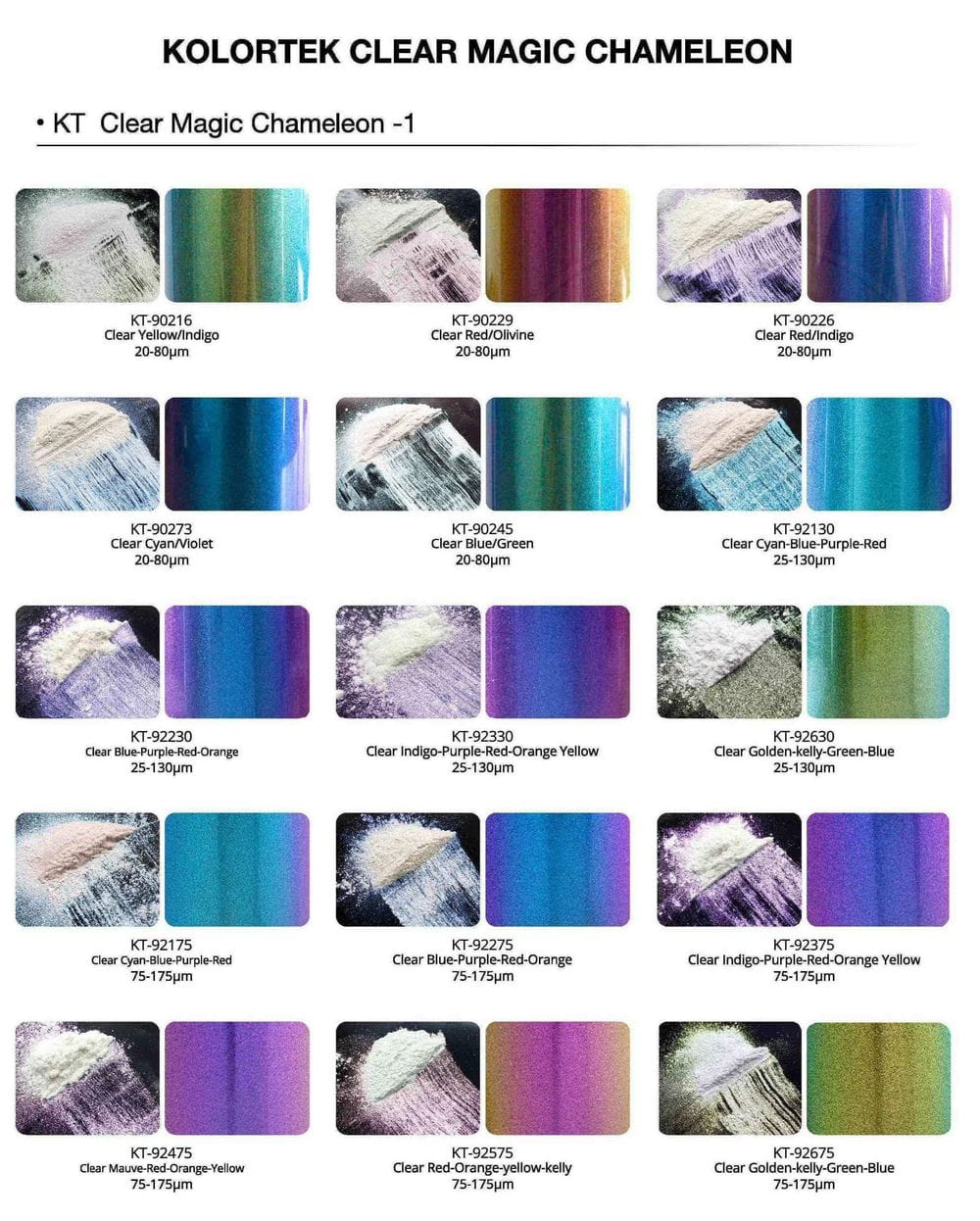
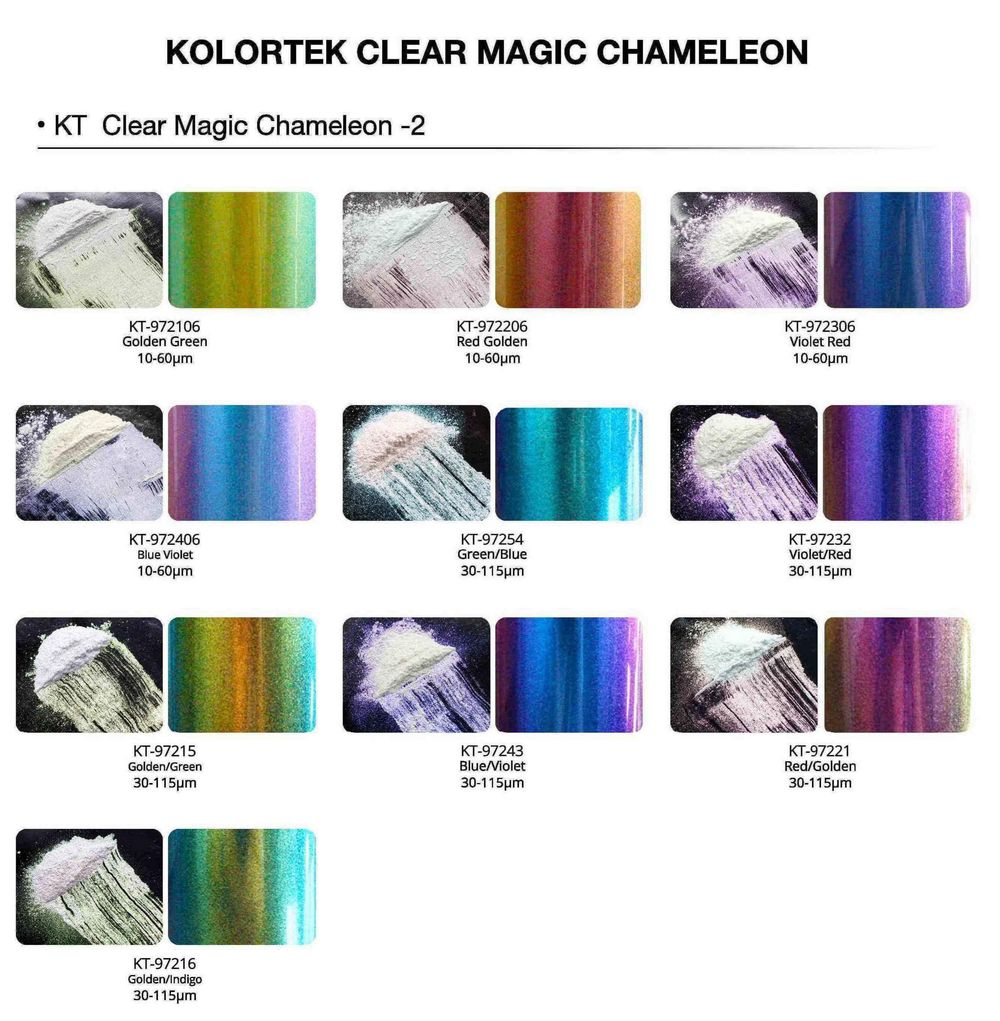
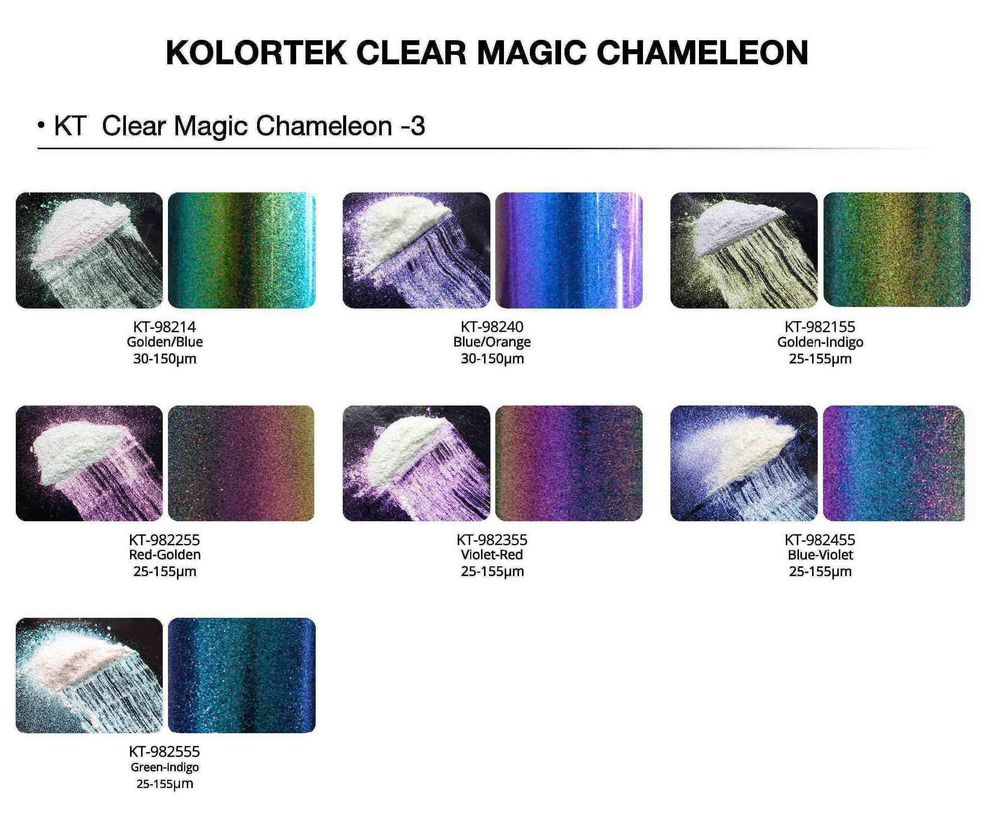
KT-92275 blue-purple-red-orange Duochrome Loose Pigment for cosmetics
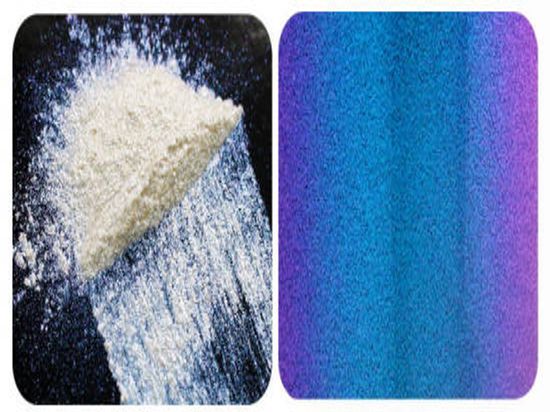
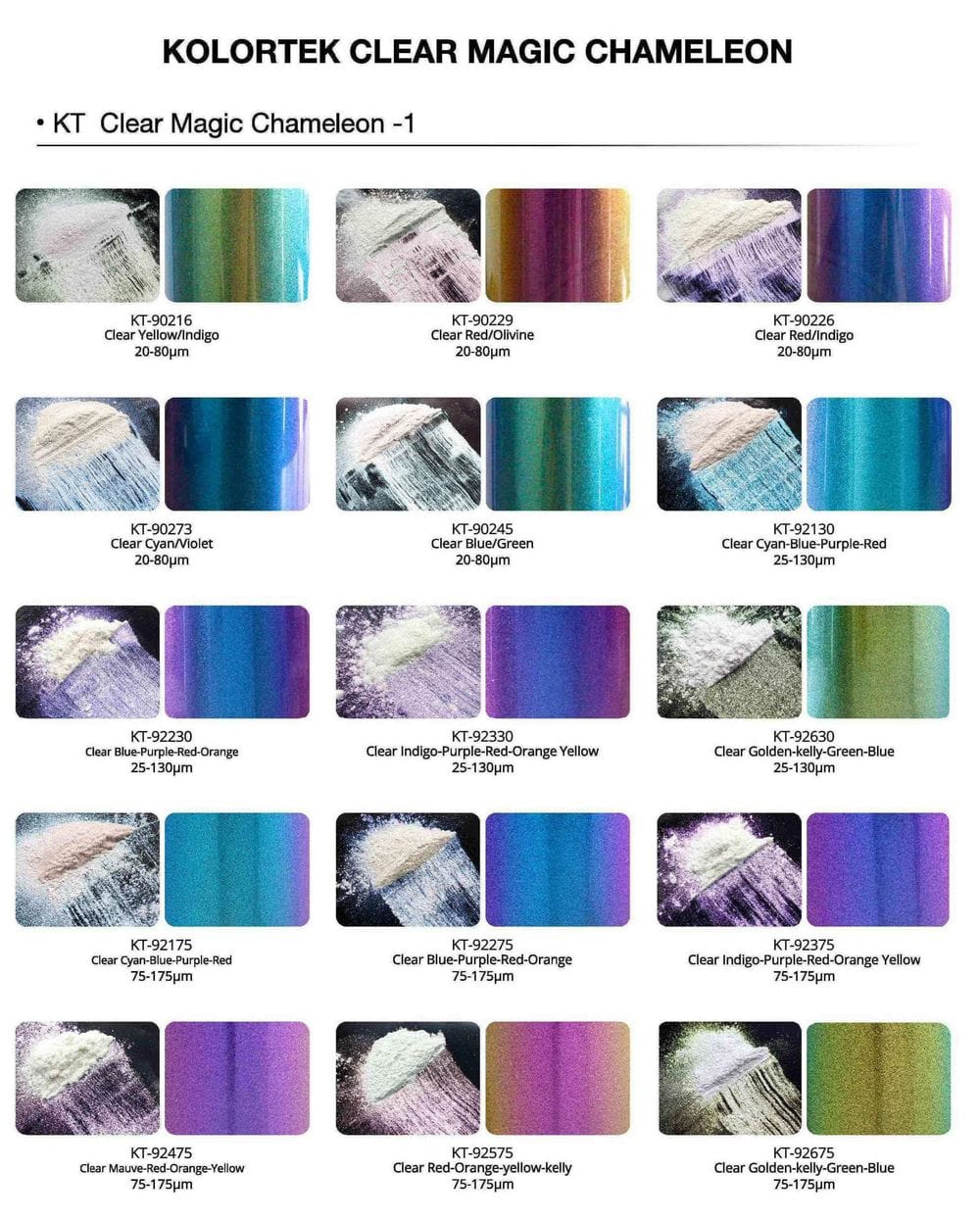
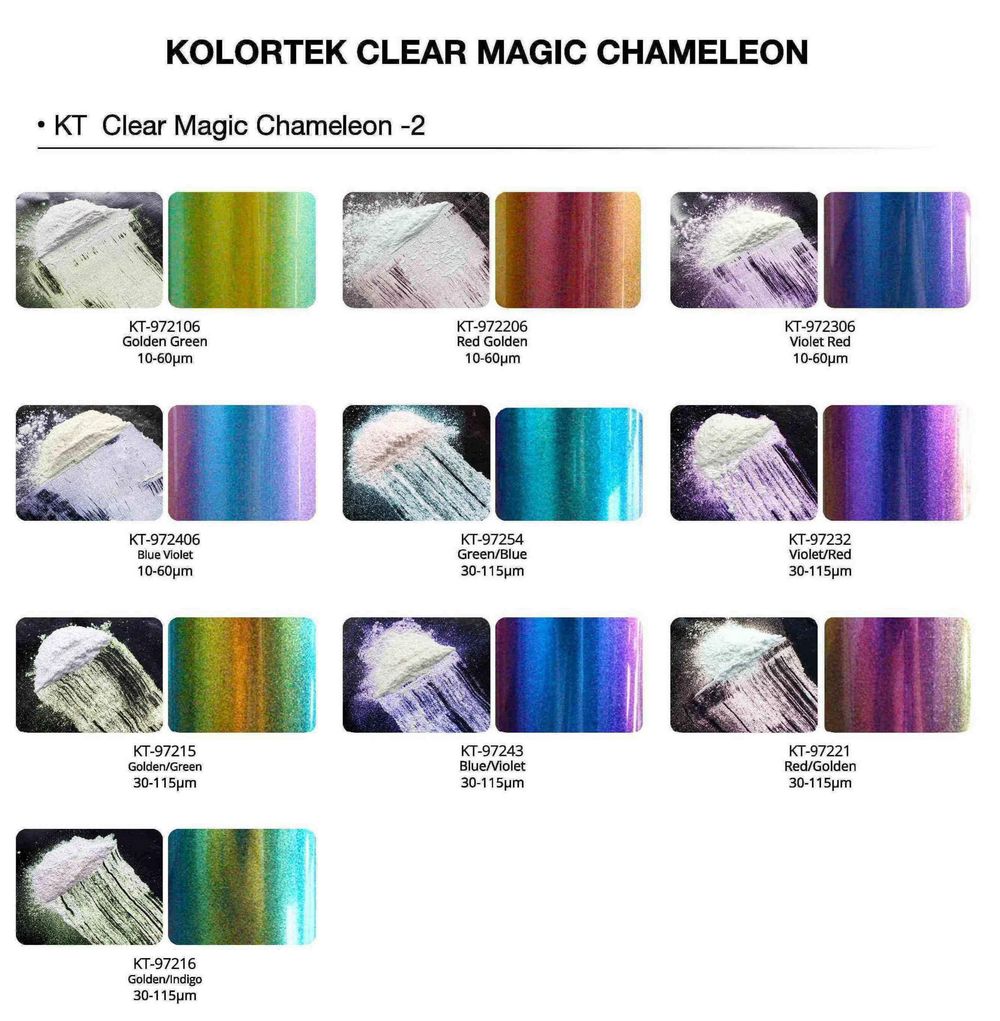
Within the KT-922** sub-series, nine particle size grades are available — from 5–25 μm satin-finish powder through to 100–250 μm decorative glitter. KT-92275 sits at the large end of that range. At 75–175 μm, individual platelets are large enough to behave almost like micro-mirrors: each facet catches and returns light from a distinct angle, producing the high mirror effect that the KT-9000 series is designed around.
The practical difference for a formulator is significant. Finer grades — the 02 (5–25 μm) or 06 (10–60 μm) sizes — give more uniform coverage and work better in inks or thin-film coatings where a smooth color field matters. KT-92275 trades coverage area for intensity: fewer platelets per gram, but each one contributes a much brighter, more directional flash. In loose powder cosmetics, this translates directly to the kind of visible color pop that reads on camera and under club lighting.
| Parameter | Value |
|---|---|
| Form | Powder |
| Particle size range | 75–175 μm |
| Particle size D50 | 80–135 μm |
| pH (4% H₂O) | 6.0–9.0 |
| Density | 2.6–3.1 kg/L |
| Bulk density | 15–25 g/100 mL |
| Solubility in water | Insoluble |
| Odour | Odourless |
| INCI name | Mica, Titanium Dioxide, Silica, Tin Oxide |
| Component | C.I. Number | Content (%) |
|---|---|---|
| Mica | C.I. 77019 | 56.0–67.0% |
| Titanium Dioxide | C.I. 77891 | 13.0–18.0% |
| Silica | — | 17.0–22.0% |
| Tin Oxide | C.I. 77861 | 0–1.0% |
All four components of KT-92275 carry broad regulatory recognition across the major cosmetics markets. Under EU Regulation (EC) No 1223/2009, the colorants are assessed against Annex IV — the specific grade and intended use determine final compliance, and we supply supporting composition documentation to facilitate that review. In the US, mica is a permitted color additive under 21 CFR 73.2496; the inorganic oxide components are generally exempt from batch certification requirements. For the Chinese market, all four INCI components appear on the IECIC inventory, and the heavy metal limits specified in our TDS — Pb <10 ppm, As <2 ppm, Hg <1 ppm, Cd <3 ppm — align with or are stricter than CSAR thresholds. Japan's MHLW positive list covers mica, titanium dioxide, tin oxide, and silica.
The product is not classified under CLP Regulation (EC) No 1272/2008, nor under the earlier directives 67/548/EEC and 1999/45/EC. That said, as with any fine powder, dust generation during handling should be controlled — adequate ventilation and a dust mask are standard precautions when working with loose pigment in bulk quantities.
The KT-9000 series overall is widely used across automotive custom finishes, luxury packaging, and decorative coatings. Within cosmetics specifically, color-shifting pigments in this class are most frequently applied in eyeshadow and nail polish — formats where the angle-dependent shift is visible in use. KT-92275's large particle size (75–175 μm) makes it best suited to loose powder formats, pressed powders where sparkle is the lead attribute, nail toppers, and body shimmer products.
| Application | Recommended Loading |
|---|---|
| Loose eyeshadow | 5–60% |
| Pressed eyeshadow | 5–50% |
| Highlighter | 5–30% |
| Body shimmer | 2–10% |
| Lip gloss / lipstick | 1–20% |
| Cream / lotion | 1–15% |
One thing to note on substrate selection: the blue-purple-red-orange shift in this series is most vivid on dark or black bases. On lighter substrates the goniochromatic range is still present but the contrast is significantly reduced. For loose eyeshadow used over a bare or pale lid, formulators often pair KT-92275 with a dark black or deep navy pressed base in the same palette to give the shift a proper background to work against.
At 75–175 μm, the platelets in KT-92275 are large relative to standard cosmetic pigments, which makes processing method selection more consequential. High-shear equipment — high-speed dispersers, three-roll mills — can fracture platelet edges and reduce both sparkle intensity and color travel range. In our application work we consistently see better results with low-shear paddle or planetary mixing, particularly for the larger particle size grades.
For emulsion-based formats, pre-disperse the pigment in the oil phase before combining with the water phase. In powder formulations — which is where this grade is most commonly used — add KT-92275 after the bulk dry blend is complete, as a late-stage addition. This limits the cumulative mechanical exposure to the platelets during processing.
Surface-treated grades (Dimethicone, Triethoxycaprylylsilane, Lauroyl Lysine) improve dispersibility and skin adhesion. If the target formulation is a long-wear or transfer-resistant product, a treated grade is worth considering — contact us to discuss which surface treatment option aligns with your system.
The blue-purple-red-orange color travel effect is available across nine particle size grades. KT-92275 is the large-sparkle option within that range; formulators needing a finer, more uniform color field — for a tinted foundation or a printed ink — would typically start with the 02 or 06 grades instead.
| Grade Code | Particle Size (μm) | Character |
|---|---|---|
| KT-92202 | 5–25 | Satin / fine; good coverage, suited to inks and cosmetics |
| KT-92204 | 10–40 | Fine pearl |
| KT-92206 | 10–60 | Standard; most popular for coatings |
| KT-92207 | 10–70 | Medium |
| KT-92215 | 20–100 | Flash effects |
| KT-92225 | 25–130 | High visual impact |
| KT-92230 | 25–130 | High visual impact |
| KT-92275 | 75–175 | Large particle, maximum sparkle ← this grade |
| KT-922100 | 100–250 | Extra large, decorative |
What is the particle size of KT-92275, and how does it affect performance in loose eyeshadow?
KT-92275 has a particle size range of 75–175 μm (D50: 80–135 μm), placing it in the large-particle category within the KT-922** series. In loose eyeshadow, this size range delivers maximum sparkle and a pronounced directional flash rather than a diffuse glow. Typical loading for loose eyeshadow is 5–60%. The large platelets function as individual micro-reflectors, making the blue-to-orange color shift visible and dynamic across movement angles.
Does the duochrome pigment KT-92275 meet cosmetic regulatory requirements for the EU, US, and China?
All four INCI components — Mica (C.I. 77019), Titanium Dioxide (C.I. 77891), Silica, and Tin Oxide (C.I. 77861) — are listed on the EU Annex IV colorant list (subject to intended use confirmation), US FDA 21 CFR 73.2496 (mica), China's IECIC inventory, and Japan's MHLW positive list. Heavy metal limits in the TDS (Pb <10, As <2, Hg <1, Cd <3 ppm) meet or are stricter than CSAR thresholds. Composition documentation is available on request.
What substrate color is needed for the chameleon eyeshadow pigment to show the full blue-purple-red-orange shift?
The full blue-purple-red-orange color travel in KT-92275 is most visible on dark or black substrates. On white or pale bases, the contrast that drives the perceived shift is significantly reduced. In loose eyeshadow palettes, pairing this pigment with a dark matte or deep-toned base shade, or applying over a dark eyeshadow primer, produces the most dramatic goniochromatic effect. This is a structural characteristic of all color-travel interference pigments, not a product-specific limitation.
Can KT-92275 be used in nail polish, and are there other particle sizes available in the same color shift?
The KT-922** blue-purple-red-orange color travel effect is available in nine particle sizes from 5–25 μm up to 100–250 μm. For nail polish, where suspension stability and brush-out performance matter, finer grades such as KT-92202 (5–25 μm) or KT-92206 (10–60 μm) are typically more workable. KT-92275 at 75–175 μm is better suited to nail toppers or glitter-topcoat formulas where large-particle sparkle is a deliberate design choice rather than a suspension challenge.
Contact our technical team to request a TDS, composition documentation, or samples of KT-92275 and related grades for your formulation evaluation.
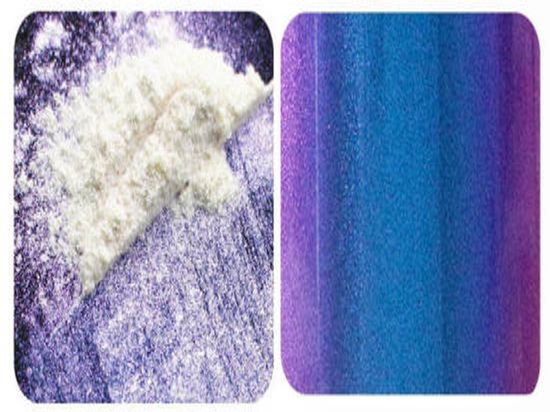
KT-92230 is a multichrome pigment that shifts through a full blue-purple-red-orange sequence as the viewing angle changes — one of the broadest color-travel arcs we produce in the KT-9000 series. Built on a natural mica substrate with a multi-layer TiO₂/Fe₂O₃/silica/tin oxide coating, it comes in a 25–130 μm particle size that delivers strong angular contrast and high visual impact across automotive finishes, decorative coatings, and specialty printing.
Read More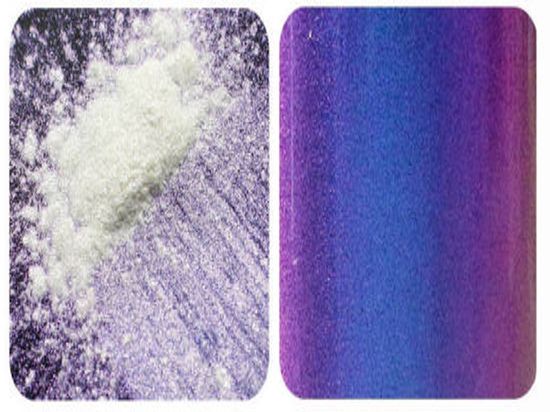
KT-92330 is a multi-layer interference pigment from Kolortek's KT-9000 Magic Chameleon Series, producing a continuous color shift sequence — indigo through purple, red, orange, and yellow — as the viewing angle changes. Built on natural mica coated with TiO₂, silica, and tin oxide, it delivers a high-mirror goniochromatic effect with a 25–130 μm particle size distribution engineered for maximum visual impact. This color shifting pigment powder performs best over dark or black substrates, where the full angular color travel is most legible.
Read More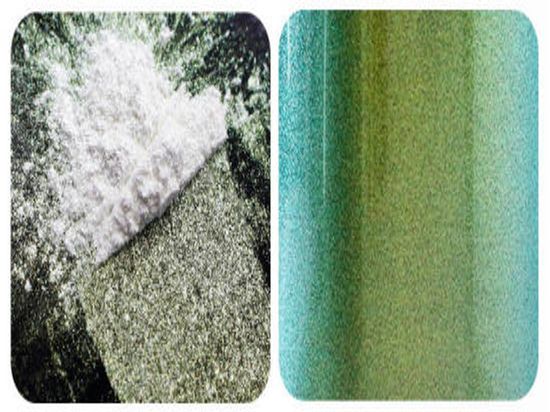
KT-92630 is a large-particle chameleon paint pearl from our KT-9000 Magic Chameleon Series, producing a sequential golden-to-kelly-green-to-blue color travel as the viewing angle shifts. With a 25–130 μm particle range, it delivers high visual impact in automotive custom finishes, decorative coatings, and specialty applications where a pronounced, multi-stop color flip is the goal. The substrate is natural mica with a multi-layer TiO₂/SiO₂/metal-oxide coating that generates the goniochromatic interference effect.
Read More
KT-92175 is the large-particle grade of our chameleon pigment for resin, built on a natural mica substrate with a multi-layer TiO₂, silica, and tin oxide coating that produces a continuous cyan-to-blue-to-purple-to-red angle-dependent color shift. At 75–175μm, it is the highest-sparkle option in the KT-9000 Magic Chameleon Series' KT-921** Cyan-Blue-Purple-Red range. Compatible with epoxy and UV resin at loadings of 1–10% by weight, the effect reads strongest on dark or black substrates where the goniochromatic shift has maximum contrast.
Read More
KT-92275 is a large-particle duochrome loose pigment from our KT-9000 Magic Chameleon Series, delivering a full blue-purple-red-orange color travel sequence that shifts continuously across the visible spectrum as the viewing angle changes. With a particle size range of 75–175 μm, this grade is engineered specifically for applications where maximum sparkle is the priority — loose eyeshadow, nail art toppers, and high-impact decorative cosmetics where the angular shift needs to read clearly against the skin or a dark base.
Read More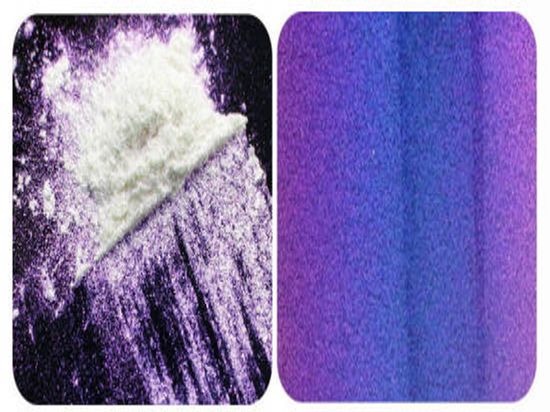
KT-92375 is a large-particle ghost chameleon pigment from Kolortek's KT-9000 Magic Chameleon Series, delivering a continuous five-stage color shift — indigo → purple → red → orange → yellow — as the viewing angle changes. Built on natural mica coated with titanium dioxide, silica, and tin oxide, it carries a particle size of 75–175 μm for maximum sparkle. We developed this grade specifically for high-impact automotive finishes, custom coatings, and luxury decorative applications where a dramatic, angle-dependent color shift is the primary design goal.
Read More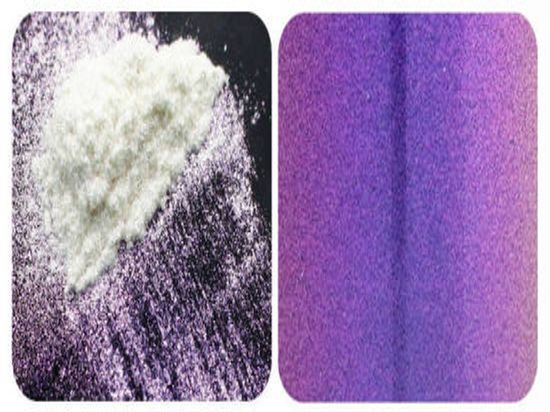
KT-92475 is a large-particle chameleon pigment from the KT-9000 Magic Chameleon Series, producing a continuous mauve → red → orange → yellow color shift that sweeps across the visible spectrum as the viewing angle changes. With a particle size of 75–175 μm and a natural mica substrate coated with titanium dioxide, silica, and tin oxide, it delivers the coarse, high-sparkle texture that nail art formulators need for maximum visual drama — particularly over a dark or black base coat.
Read More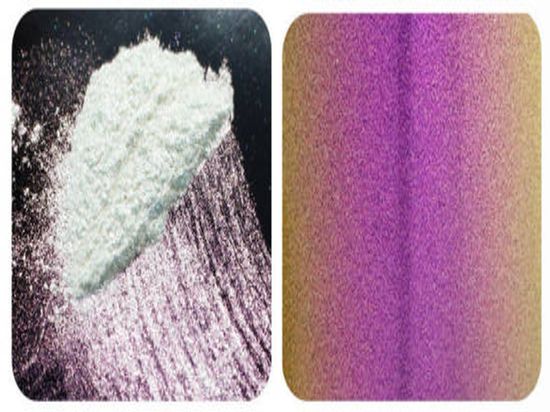
KT-92575 is a large-flake chameleon pearl powder from our KT-9000 Magic Chameleon Series, producing a dramatic angle-dependent color shift spanning red, orange, yellow, and kelly green on dark substrates. Built on a natural mica substrate with a multi-layer coating of titanium dioxide, silica, and tin oxide, it delivers an INCI composition suited to high-end cosmetic and nail art formulations. The 75–175 μm particle range gives it the high-sparkle, deep color-travel behavior that distinguishes it from finer cosmetic pearl grades.
Read More
 English
 Français
 Deutsch
 Русский
 Español
 Português