
Leave A Message
If you are interested in our products and want to know more details,please leave a message here,we will reply you as soon as we can.
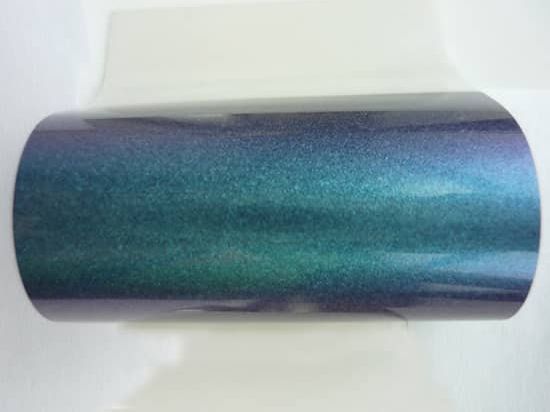
KT-90273 Cyan/Violet Chameleon Mica for resin applications
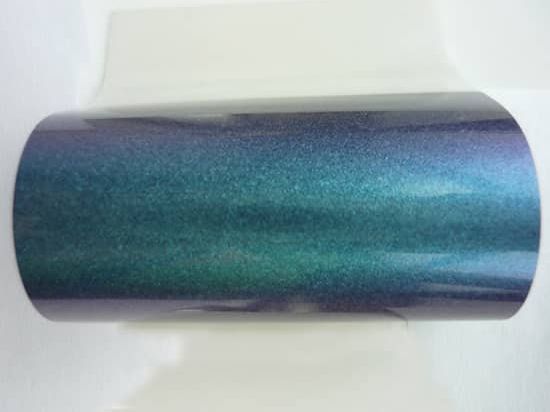
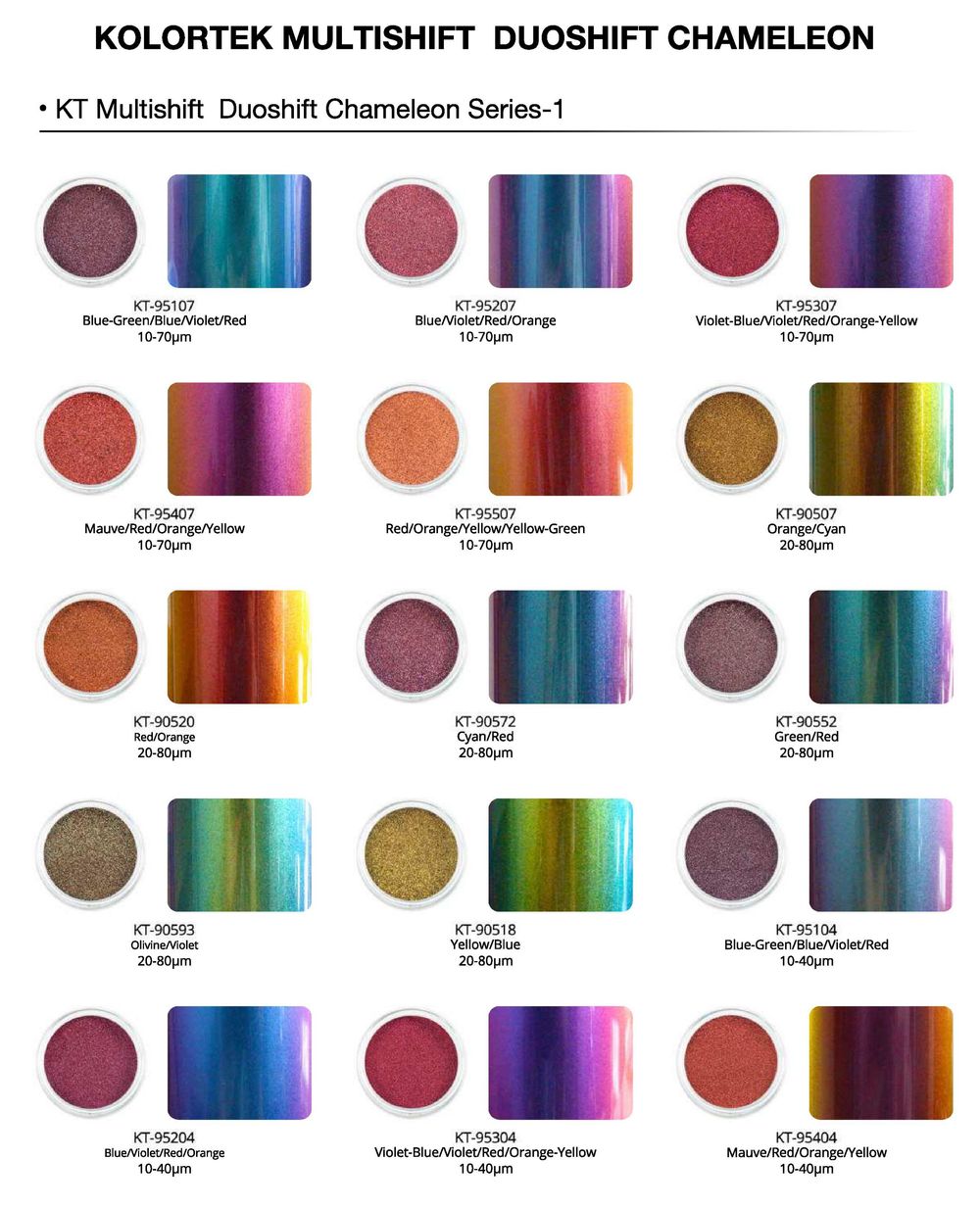
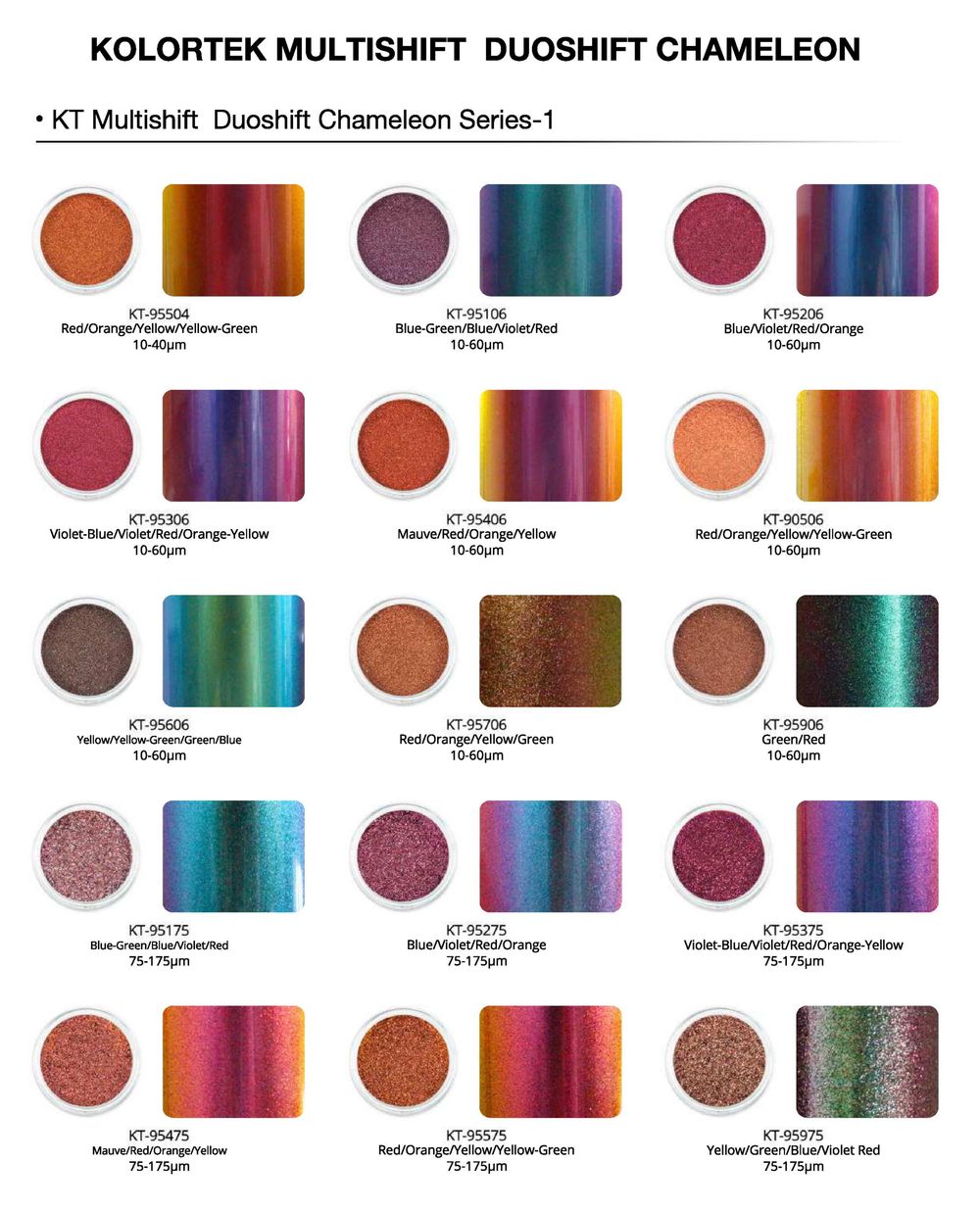
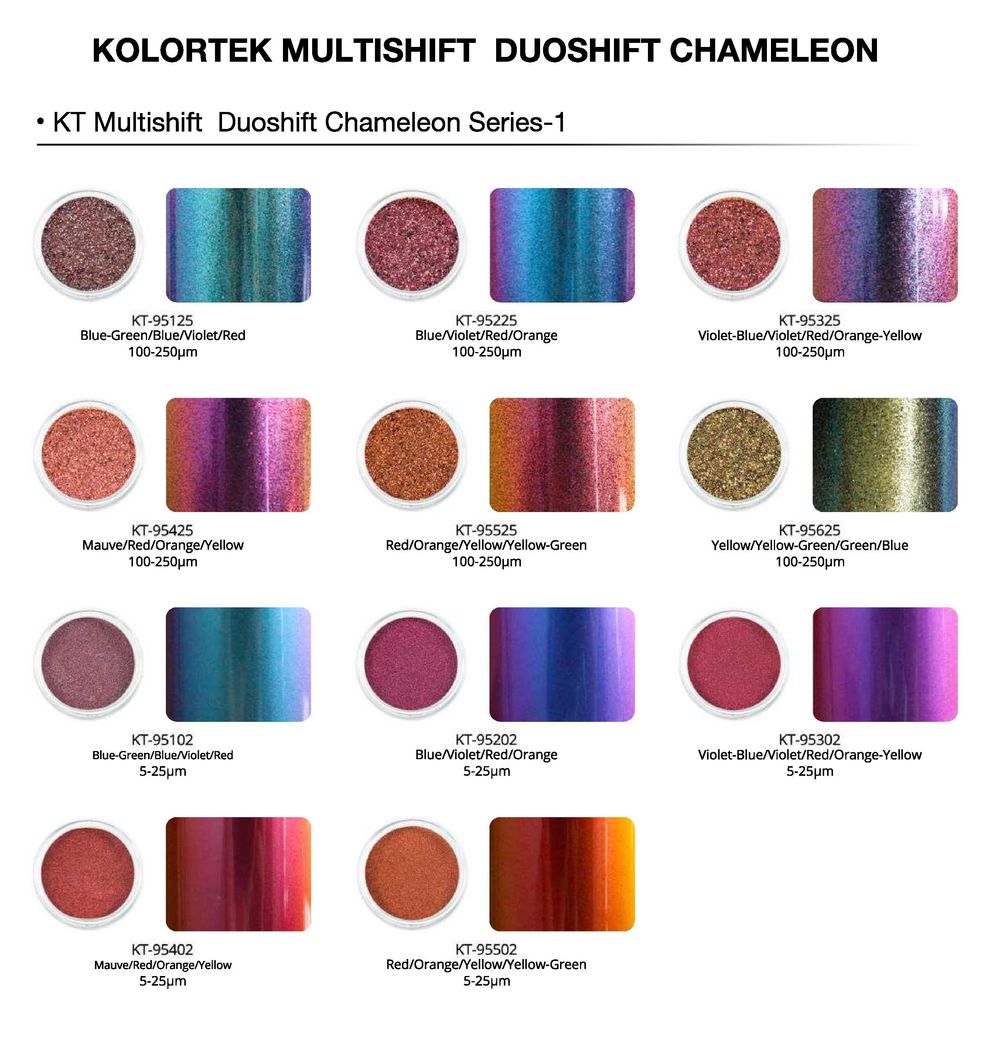
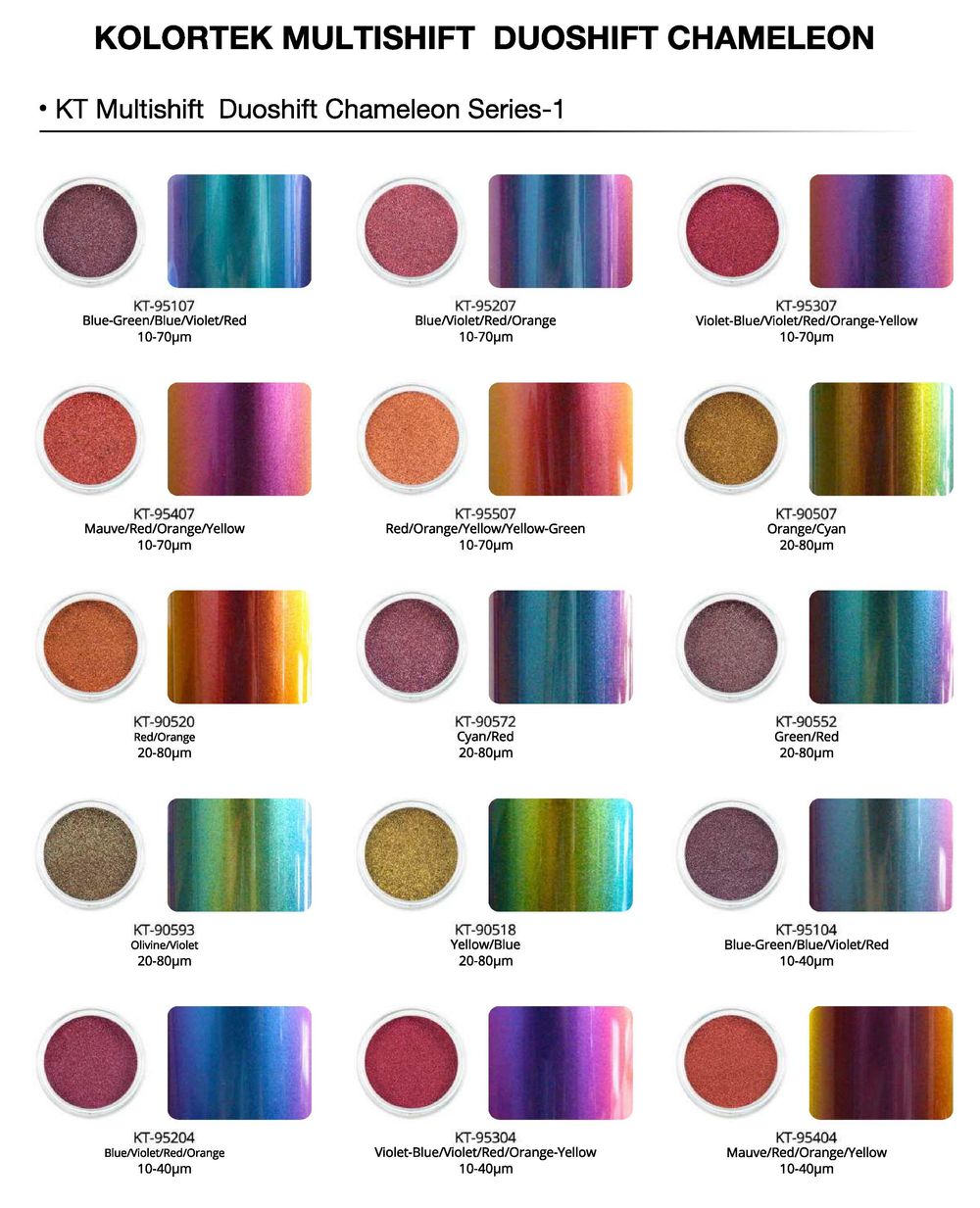
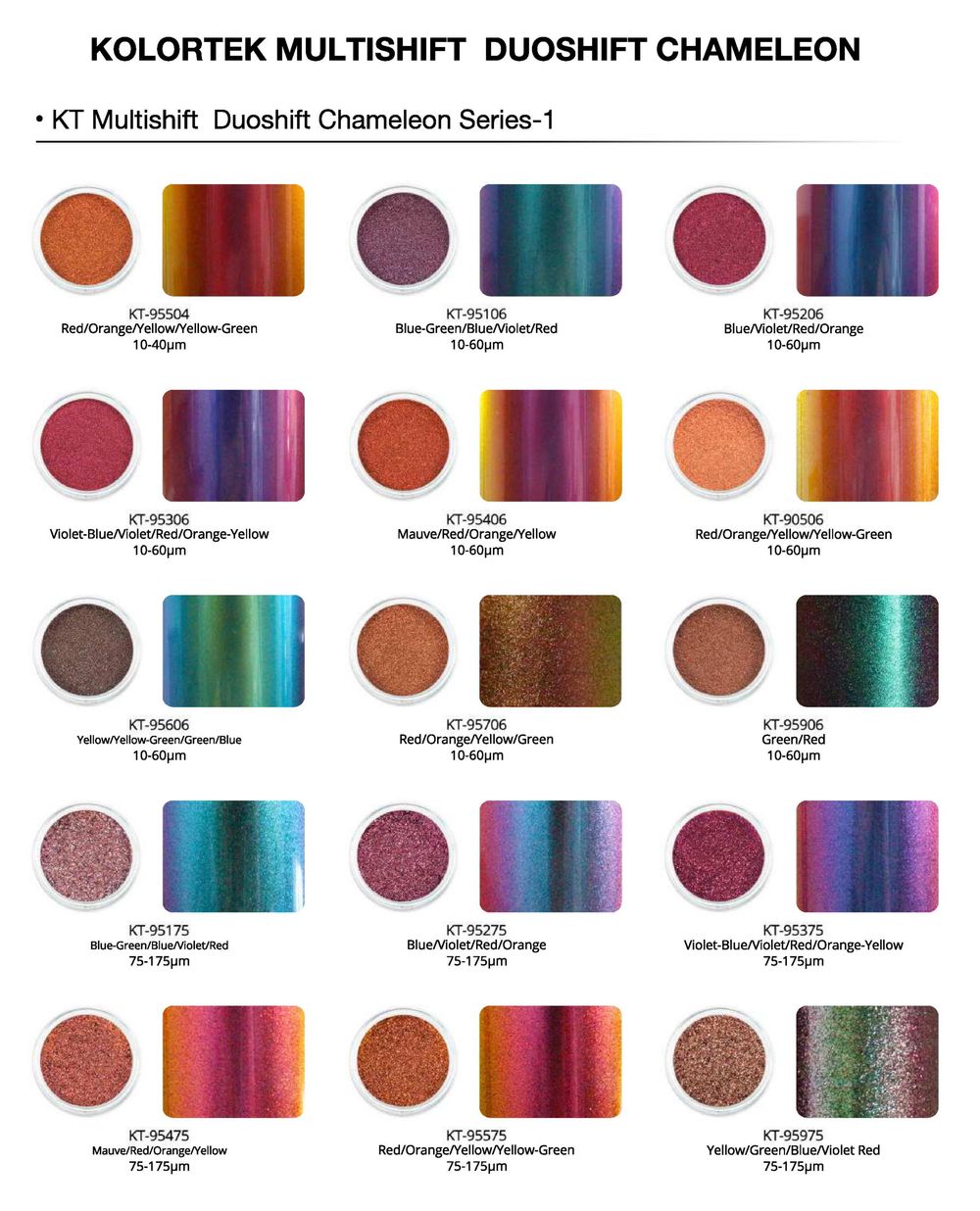
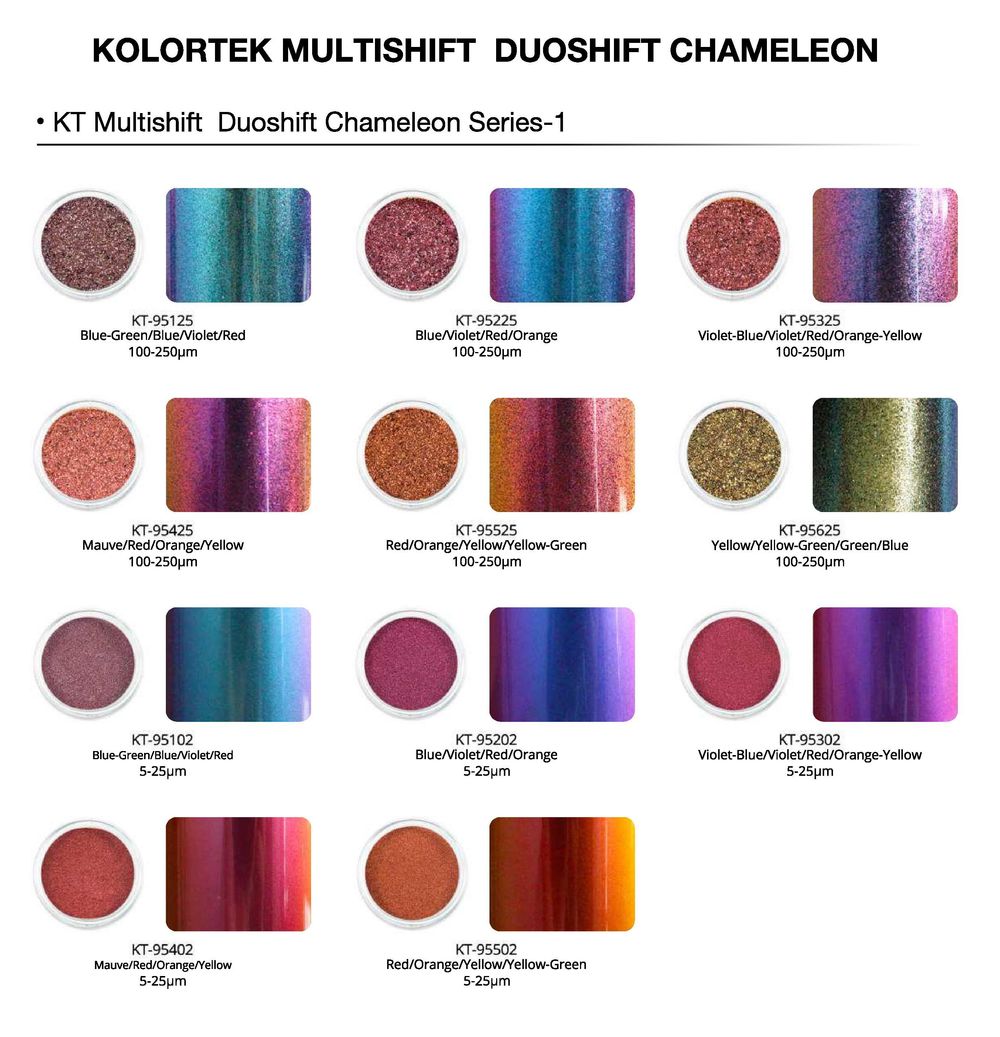
KT-90273 is a cyan/violet chameleon mica powder from our KT-9000 Magic Chameleon Series — a multi-layer TiO₂/Silica-coated natural mica delivering a dramatic angle-dependent shift between cyan and violet. With a particle size of 20–80 μm and a D50 in the 25–35 μm range, it disperses readily in epoxy, UV resin, and most resin systems, making it one of the most requested chameleon mica powder for resin applications we supply to decorative and industrial formulators alike.
The color travel in KT-90273 is driven by thin-film optical interference across its multi-layer coating — natural mica substrate carrying alternating layers of titanium dioxide and silica. As the viewing angle changes, the dominant wavelength of reflected light shifts from cyan to violet. The effect is goniochromatic, meaning it is angle-dependent rather than simply iridescent, producing what our application lab would describe as a "color that moves with the observer."
One thing formulators consistently notice in our trials: the perceived shift depth is strongly substrate-dependent. On black or very dark backgrounds, the cyan-to-violet travel reads at full intensity. On light or white substrates, the shift compresses significantly and the visual impact drops. This is not a product limitation — it is a fundamental property of interference pigments — but it is something to plan for when specifying a dark base coat or a black resin layer.
The pigment is odourless, insoluble in water, and not classified as hazardous under CLP or the relevant EU Directives. Heavy metal content is tightly controlled: lead and nickel both below 10 ppm, cadmium below 3 ppm, arsenic below 2 ppm — well within the limits demanded by most coatings and cosmetics specifications.
| Parameter | Value |
|---|---|
| Product Code | KT-90273 |
| Series | KT-9000 Magic Chameleon |
| Color Shift | Cyan / Violet |
| Form | Powder |
| Particle Size | 20–80 μm |
| D50 | 25–35 μm |
| Density | 2.7–3.1 kg/L |
| Bulk Density | 23–29 g/100 g |
| pH (4% H₂O) | 6.0–9.0 |
| Solubility | Insoluble in water |
| Odour | Odourless |
| INCI Name | Mica, Titanium Dioxide, Silica |
| Hazard Classification | Not classified as hazardous (CLP; Dir. 67/548/EEC; Dir. 1999/45/EC) |
| Component | C.I. Number | Content (%) |
|---|---|---|
| Mica | 77019 | 42.0–47.0% |
| Titanium Dioxide | 77891 | 13.0–23.0% |
| Silica | — | 35.0–40.0% |
| Metal | Limit | Metal | Limit |
|---|---|---|---|
| As (Arsenic) | < 2 ppm | Pb (Lead) | < 10 ppm |
| Hg (Mercury) | < 1 ppm | Cr (Chromium) | < 100 ppm |
| Cd (Cadmium) | < 3 ppm | Ni (Nickel) | < 10 ppm |
| Ba (Barium) | < 50 ppm | Sb (Antimony) | < 1 ppm |
| Cu (Copper) | < 50 ppm | Zn (Zinc) | < 50 ppm |
KT-90273 is compatible with most resin systems. In practice, the largest volume of requests we handle is for epoxy and UV resin applications — river tables, geode-style castings, custom phone cases, and decorative tile work where the angle-shifting cyan/violet reads strongly under directional light. That said, the KT-9000 series is equally at home in lacquer systems, industrial and plastic coatings, dispersion paints, powder coatings, leather coatings, and printing inks — including security printing where the angle-dependent color shift adds a functional anti-counterfeiting dimension.
For cosmetic applications, the INCI declaration (Mica, Titanium Dioxide, Silica) aligns with the ingredient listing requirements under EU Cosmetics Regulation (EC) No 1223/2009. Cosmetic-grade suitability, however, depends on the selected grade and intended use — confirm with our team for specific cosmetic or nail product applications.
The standard approach we recommend for resin art and casting work is straightforward: weigh out 1–10% pigment by weight relative to the resin batch, pre-wet the powder with a small aliquot of the resin component before introducing it to the full volume, then fold rather than agitate aggressively. Bubbles are a real concern with platelet-form pigments — the flat mica flakes will trap and highlight any air pockets that form near the surface, so slow, deliberate mixing matters more here than with conventional absorption pigments.
Loading rate influences the visual outcome in two ways. A lower loading (1–3%) in a translucent resin produces a more diffuse, depth-effect shift. Higher loadings (5–10%) increase perceived color saturation and the mirror-like quality of the surface but will increase viscosity and may affect substrate smoothness in thin-film applications. Finding the right balance depends on the specific resin system viscosity — something we typically work through with customers during sample evaluation.
At Kolortek, our quality management system operates under ISO 9001:2015 certification, covering production and sales of pigments and glitters. KT-90273 is produced and documented in compliance with REACH Regulation (EC) No. 1907/2006. The product is not classified as hazardous under CLP or the relevant EU Directives, and heavy metal content is held to the limits listed in the specifications above.
We supply supporting documentation — TDS, MSDS, and composition certificates — as standard. For buyers sourcing color shift mica powder for resin into regulated end markets (EU cosmetics, US personal care, automotive OEM supply chains), please specify the intended application when requesting samples so we can confirm grade suitability and provide the relevant documentation package.
KT-90273 is a fine inorganic powder; standard dust-handling precautions apply. Wear gloves, eye protection, and an approved dust mask when dispensing. Store in a sealed container in a well-ventilated area, away from moisture. For skin or eye contact, flush with clean water; for inhalation exposure, move to fresh air. No special hazard classification applies beyond standard powder handling.
What resin types is KT-90273 chameleon mica compatible with?
KT-90273 is compatible with most resin systems, including epoxy, UV-cure resin, lacquer, and polyurethane-based coatings. It is also used in plastisols, powder coatings, leather coatings, and printing inks. The pigment is insoluble in water and inert in typical organic solvent systems, so it does not react with the resin matrix. For a specific system not listed, we can provide compatibility guidance on request.
What loading rate should I use for chameleon mica powder for resin casting?
For epoxy and UV resin applications, a loading range of 1–10% by weight is typical. Lower loadings (1–3%) produce a more translucent, depth-oriented effect; higher loadings (5–10%) give stronger color saturation and a more reflective surface. Pre-mixing the pigment with a small amount of resin before adding to the full batch ensures even distribution and avoids dry-powder agglomerates in the finished cast.
Why does the cyan/violet color shift look weak in my resin piece?
The most common cause is a light-coloured substrate or background. KT-90273's interference-based color shift requires a dark background to read at full intensity — ideally black. On white or translucent resin without a dark base layer, the shift compresses and the cyan/violet travel becomes much less visible. Adding a black base layer beneath the pigmented resin layer is the most reliable fix.
Is KT-90273 suitable for cosmetic or nail art use?
The KT-9000 series is used in high-end cosmetics and nail art applications, and the INCI declaration for KT-90273 — Mica, Titanium Dioxide, Silica — is consistent with EU Cosmetics Regulation (EC) No. 1223/2009 ingredient requirements. That said, final suitability for a specific cosmetic product depends on the grade selected and the intended use category. Contact our technical team with your application details for confirmation and supporting documentation.
Contact our technical team to discuss formulation requirements or to request a sample of KT-90273 for your specific application.
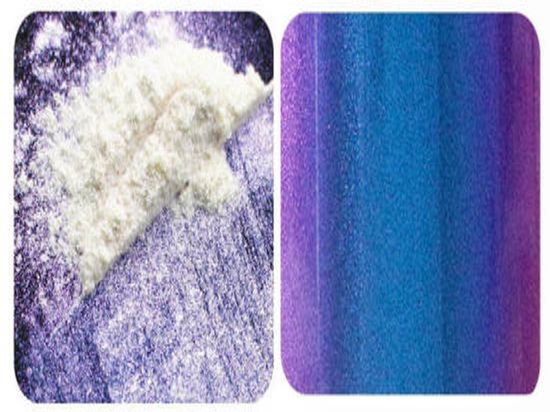
KT-92230 is a multichrome pigment that shifts through a full blue-purple-red-orange sequence as the viewing angle changes — one of the broadest color-travel arcs we produce in the KT-9000 series. Built on a natural mica substrate with a multi-layer TiO₂/Fe₂O₃/silica/tin oxide coating, it comes in a 25–130 μm particle size that delivers strong angular contrast and high visual impact across automotive finishes, decorative coatings, and specialty printing.
Read More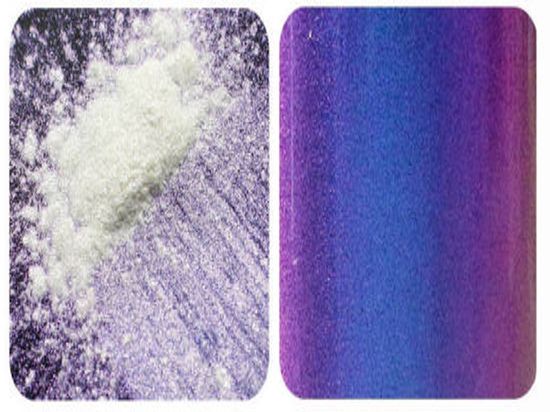
KT-92330 is a multi-layer interference pigment from Kolortek's KT-9000 Magic Chameleon Series, producing a continuous color shift sequence — indigo through purple, red, orange, and yellow — as the viewing angle changes. Built on natural mica coated with TiO₂, silica, and tin oxide, it delivers a high-mirror goniochromatic effect with a 25–130 μm particle size distribution engineered for maximum visual impact. This color shifting pigment powder performs best over dark or black substrates, where the full angular color travel is most legible.
Read More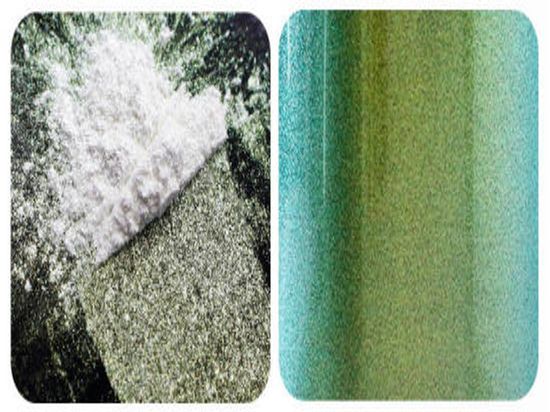
KT-92630 is a large-particle chameleon paint pearl from our KT-9000 Magic Chameleon Series, producing a sequential golden-to-kelly-green-to-blue color travel as the viewing angle shifts. With a 25–130 μm particle range, it delivers high visual impact in automotive custom finishes, decorative coatings, and specialty applications where a pronounced, multi-stop color flip is the goal. The substrate is natural mica with a multi-layer TiO₂/SiO₂/metal-oxide coating that generates the goniochromatic interference effect.
Read More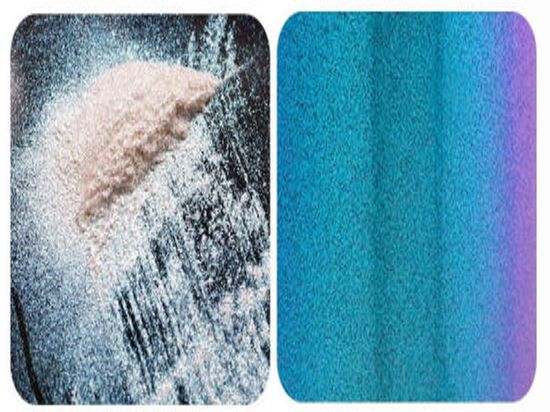
KT-92175 is the large-particle grade of our chameleon pigment for resin, built on a natural mica substrate with a multi-layer TiO₂, silica, and tin oxide coating that produces a continuous cyan-to-blue-to-purple-to-red angle-dependent color shift. At 75–175μm, it is the highest-sparkle option in the KT-9000 Magic Chameleon Series' KT-921** Cyan-Blue-Purple-Red range. Compatible with epoxy and UV resin at loadings of 1–10% by weight, the effect reads strongest on dark or black substrates where the goniochromatic shift has maximum contrast.
Read More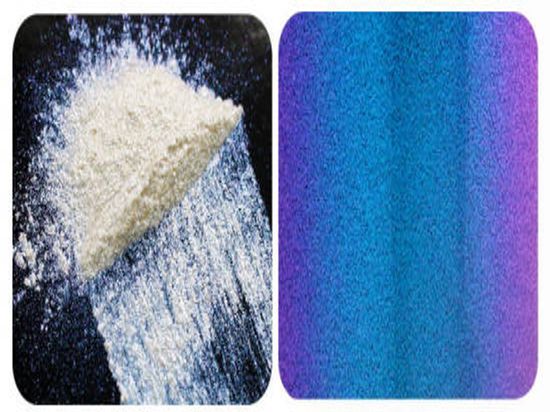
KT-92275 is a large-particle duochrome loose pigment from our KT-9000 Magic Chameleon Series, delivering a full blue-purple-red-orange color travel sequence that shifts continuously across the visible spectrum as the viewing angle changes. With a particle size range of 75–175 μm, this grade is engineered specifically for applications where maximum sparkle is the priority — loose eyeshadow, nail art toppers, and high-impact decorative cosmetics where the angular shift needs to read clearly against the skin or a dark base.
Read More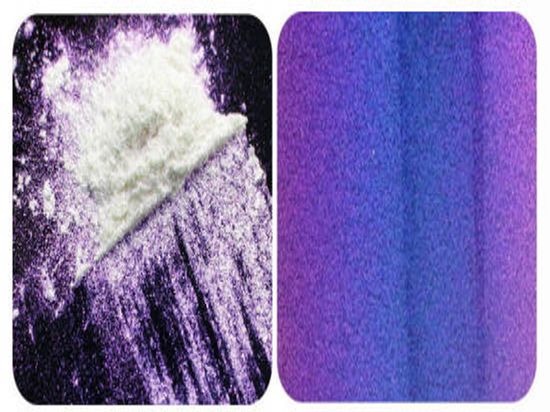
KT-92375 is a large-particle ghost chameleon pigment from Kolortek's KT-9000 Magic Chameleon Series, delivering a continuous five-stage color shift — indigo → purple → red → orange → yellow — as the viewing angle changes. Built on natural mica coated with titanium dioxide, silica, and tin oxide, it carries a particle size of 75–175 μm for maximum sparkle. We developed this grade specifically for high-impact automotive finishes, custom coatings, and luxury decorative applications where a dramatic, angle-dependent color shift is the primary design goal.
Read More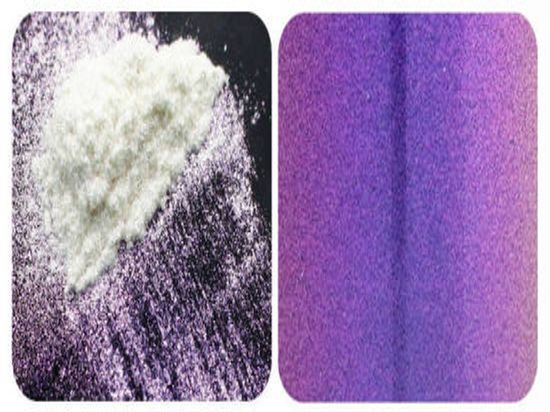
KT-92475 is a large-particle chameleon pigment from the KT-9000 Magic Chameleon Series, producing a continuous mauve → red → orange → yellow color shift that sweeps across the visible spectrum as the viewing angle changes. With a particle size of 75–175 μm and a natural mica substrate coated with titanium dioxide, silica, and tin oxide, it delivers the coarse, high-sparkle texture that nail art formulators need for maximum visual drama — particularly over a dark or black base coat.
Read More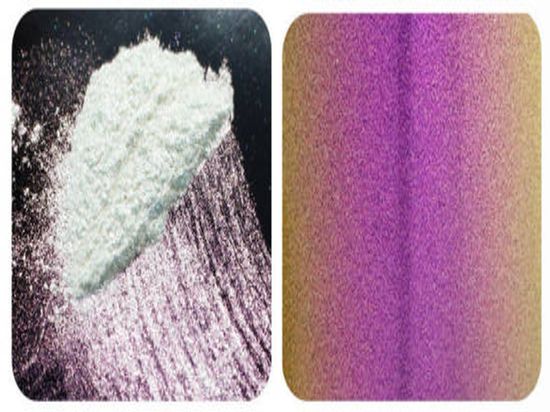
KT-92575 is a large-flake chameleon pearl powder from our KT-9000 Magic Chameleon Series, producing a dramatic angle-dependent color shift spanning red, orange, yellow, and kelly green on dark substrates. Built on a natural mica substrate with a multi-layer coating of titanium dioxide, silica, and tin oxide, it delivers an INCI composition suited to high-end cosmetic and nail art formulations. The 75–175 μm particle range gives it the high-sparkle, deep color-travel behavior that distinguishes it from finer cosmetic pearl grades.
Read More
 English
 Français
 Deutsch
 Русский
 Español
 Português