
Leave A Message
If you are interested in our products and want to know more details,please leave a message here,we will reply you as soon as we can.
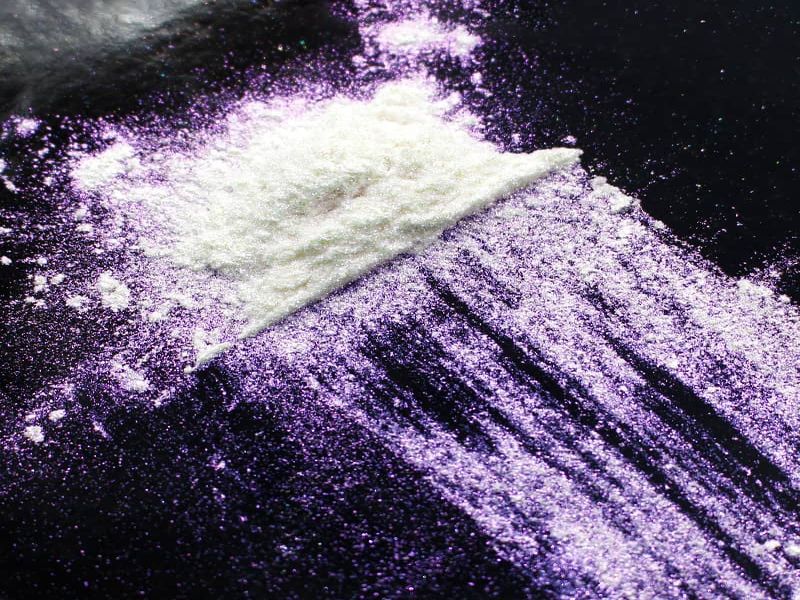
Kolortek's KT-924** mauve chameleon pigment delivers a continuous angular color travel from clear mauve through red, orange, and into yellow — a goniochromatic shift driven by multi-layer thin-film interference on a synthetic mica substrate. Available in particle sizes from 5–25 μm (cosmetic satin) up to 100–250 μm (maximum sparkle), the series is formulated to meet cosmetic-grade heavy metal limits and is compatible with both water-based and solvent-based systems. For formulators specifying a mauve chameleon pigment in high-end color cosmetics, nail art, or decorative coatings, the KT-924** is the series to evaluate first.
The visual drama in the KT-924** comes from thin-film interference — the same physics responsible for the iridescence of a soap bubble, but engineered with precision. A synthetic mica platelet acts as the substrate. Multiple alternating layers of metal oxides are deposited onto that substrate, each calibrated to a specific optical thickness. As the angle of incident light or the viewing angle changes, the constructive interference wavelength shifts, moving the perceived hue from the mauve anchor through red, orange, and finally to yellow.
In our application lab, we refer to this as a "color travel" pigment rather than simply a duochrome, because the shift is not a binary flip between two hues — it is a continuous sweep across a warm spectral band. That continuous travel is what sets a true chameleon pigment apart from conventional two-tone interference grades.
One constraint worth stating plainly: goniochromatic effects are only fully visible on dark or black substrates. On white or pale substrates, the reflective background competes with the interference color and washes out the shift. This is not a deficiency of the pigment — it is the physics of thin-film optics — but it is a formulation variable that must be designed in from the start.
The model number convention makes grade selection straightforward. The suffix code maps directly to a particle size distribution, and the choice of size governs coverage, surface smoothness, and sparkle intensity. The table below covers the full available range.
| Model Code | Particle Size (μm) | Effect Character | Typical Use |
|---|---|---|---|
| KT-92402 | 5–25 | Satin / fine, smooth coverage | Cosmetics (recommended grade), lip products, foundation |
| KT-92404 | 10–40 | Fine pearl, moderate sparkle | Eyeshadow, nail art |
| KT-92406 | 10–60 | Standard pearl | Nail art, decorative coatings |
| KT-92407 | 10–70 | Medium sparkle | Coatings, luxury packaging |
| KT-92415 | 20–100 | Flash effect | Automotive custom finishes, decorative coatings |
| KT-92425 / KT-92430 | 25–130 | High visual impact sparkle | Nail art, security printing, luxury packaging |
| KT-92475 | 75–175 | Maximum sparkle | Decorative coatings, specialty nail art |
| KT-924100 | 100–250 | Extra-large, glitter-grade sparkle | Specialty decorative, coatings accent effects |
From our experience supporting cosmetic customers, the 02 grade (5–25 μm) is the starting point for most skin-contact formulations. It provides the smoothest surface feel on the skin and the most uniform color travel across a pressed powder or liquid lip product. Larger particle sizes yield a more dramatic sparkle but can affect skin feel and application texture — a trade-off that is worth evaluating on actual substrate mockups before finalizing a formula.
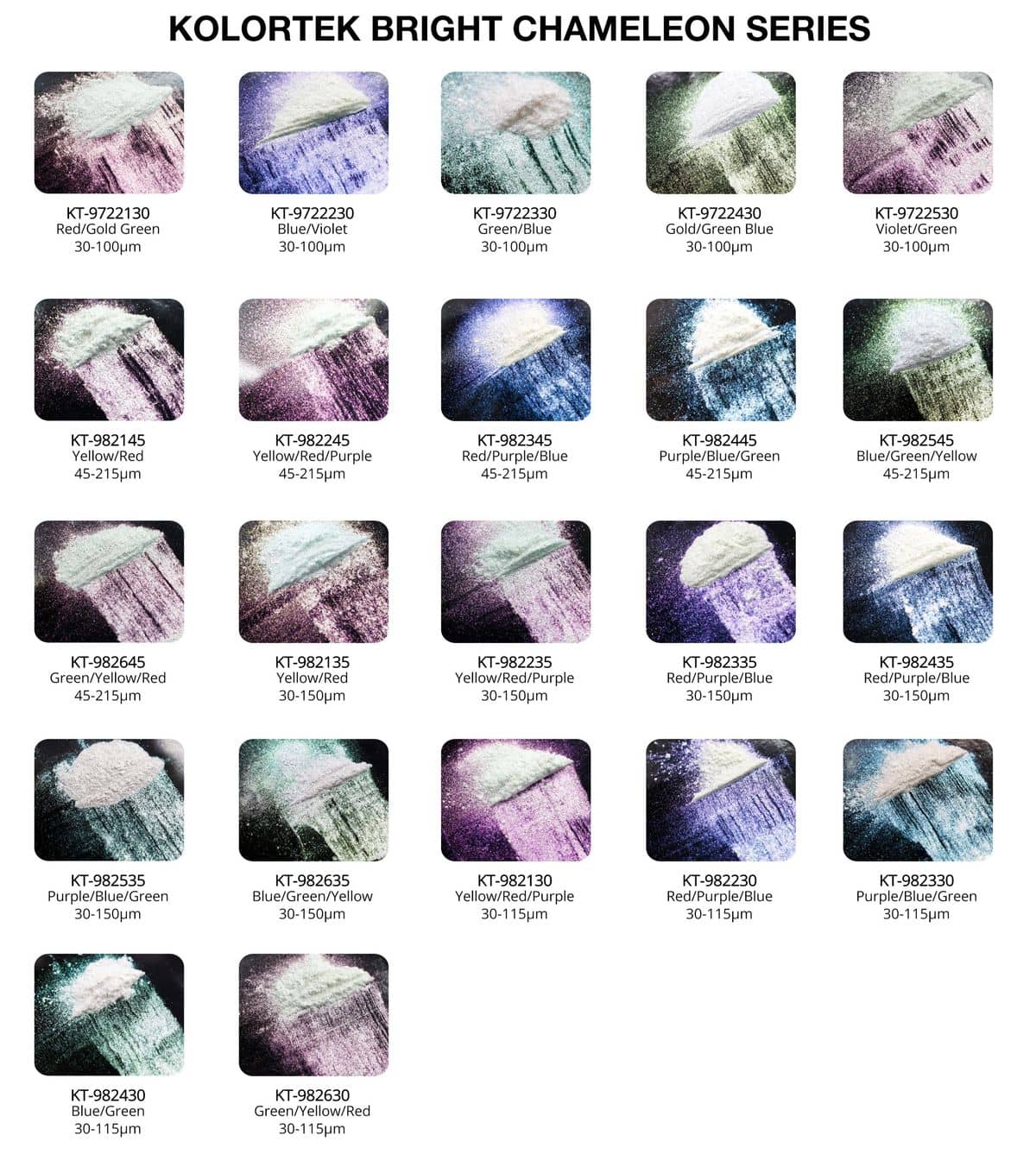
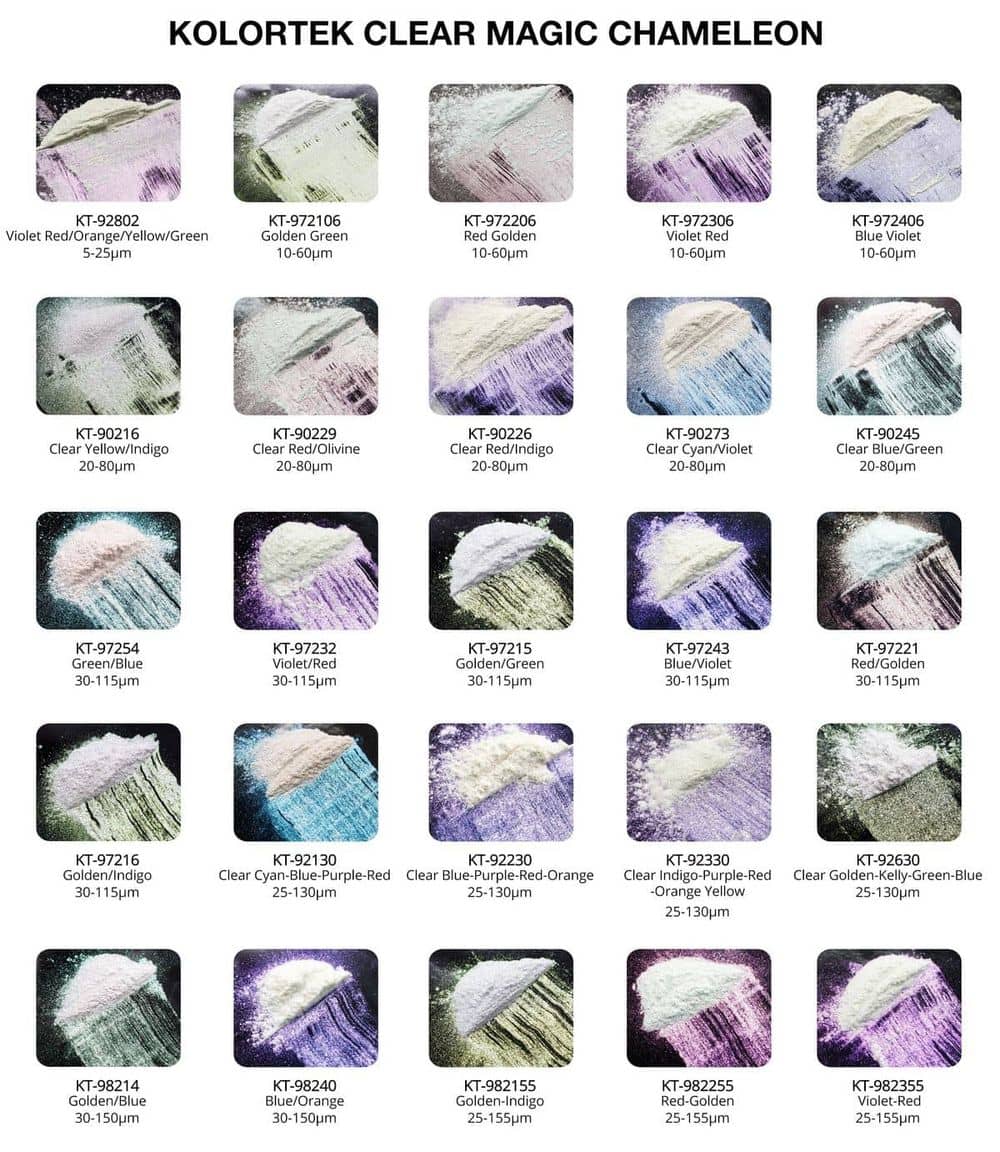
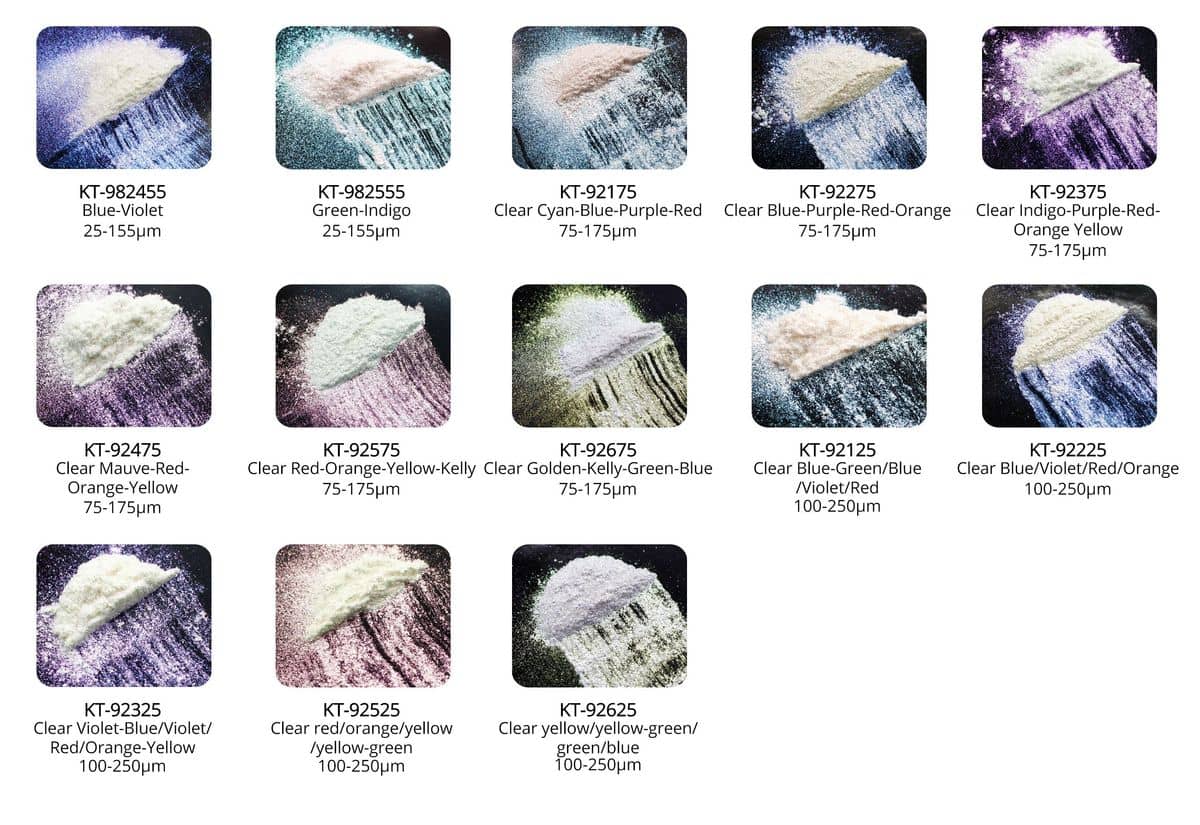
View our complete chameleon pigment catalog: Kolortek Chameleon Pigment Catalog
The color shift sequence — clear mauve to red to orange to yellow — is produced entirely by inorganic iron oxide and metal oxide coatings. Because the chromophores are inorganic, the pigment is classified as light-fast. Unlike organic dyes or some hybrid pigments, the color travel in KT-924** will not fade through UV exposure under typical use conditions. This is a meaningful practical advantage in applications where shelf life or display durability matters, such as pressed eyeshadow compacts that may sit under store lighting for extended periods.
Density runs approximately 2.9–3.2 g/cm³, consistent with synthetic mica-based interference pigments. In practice, this means the platelets will settle in low-viscosity liquid systems over time — a normal characteristic of the platelet morphology, not a quality concern. Adequate suspending agents or rheology modifiers in the formulation address this.
The KT-924** is heat stable, though the upper service temperature varies with the coating or resin system it is incorporated into. It is compatible with most resin systems — both solvent-based and water-based — making it usable across the range of typical cosmetic and coating formulation platforms. Specific pH tolerance data is not published for this grade; for formulations at pH extremes, we recommend benchtop stability testing before scale-up.
The primary application space for this grade is high-end color cosmetics — eyeshadow, lip products, and nail art — where the mauve-to-yellow color travel creates a level of visual sophistication that single-interference or standard pearlescent grades cannot deliver. The KT-924** is also used in automotive custom finishes and luxury packaging, where the same goniochromatic behavior reads as depth and movement on curved surfaces.
Security printing is another area where the color travel functions as an authentication marker — the angular shift is visually distinctive and difficult to reproduce with conventional pigments. We have supplied KT-9000 series grades into decorative coating projects where the angular color change serves both an aesthetic and a verification function.
One application note specific to coatings: applying a clear coat over the pigmented layer significantly enhances the perceived depth of the color travel. The clear coat eliminates surface scatter and lets the interference colors read cleanly. We recommend this as standard practice for any coating system where maximum visual impact is the goal.
The interference effect depends entirely on intact, flat platelet geometry. Platelet fracture — caused by high-shear equipment — reduces aspect ratio, diminishes the color travel, and cannot be reversed. Avoid high-speed dispersers and three-roll mills. The correct approach is low-shear paddle or planetary mixing, with the pigment pre-wetted in the oil phase before it is introduced to water-phase components or powders.
In our lab, we pre-disperse the pigment in a small amount of oil carrier first — this coats the platelets and reduces inter-particle friction during blending. For pressed powder formats, blend at the lowest speed that achieves uniform distribution, then compress. Overtreating a pressed powder mix with chameleon pigment can degrade the surface finish and reduce the apparent color shift in the final product.
Published loading rates for the KT-924** specifically are not available in our current documentation. As a general reference, cosmetic-grade effect pigments are typically used at 5–50% in eyeshadow formulations and 1–20% in lip products — ranges that apply to the category, not to this specific model. Higher loading intensifies the color shift but may affect texture and skin feel, particularly with larger particle size grades. We recommend evaluating a loading range of at least three concentrations during development.
The KT-924** can be blended with transparent absorption pigments to shift the anchor color or narrow the travel range. Combining with a transparent red oxide, for example, reinforces the red portion of the shift and suppresses the yellow end. This is a straightforward formulation technique that gives colorists meaningful tuning capability without changing the core interference structure of the pigment.
Kolortek's production is ISO 9001:2015 certified. For cosmetic applications, the KT-924** is manufactured to controlled heavy metal limits: Pb <10 ppm, As <3 ppm, Hg <1 ppm, and Cd <5 ppm. These limits align with the requirements of the major regulatory frameworks our cosmetic customers work under.
Regulatory documentation can be supplied to support registrations under EU Cosmetics Regulation EC 1223/2009, US FDA (as an exempt color using inorganic pigments), Japan MHLW (inorganic components listed on the positive list), and China CSAR/IECIC. REACH registration is confirmed for synthetic mica (fluorphlogopite) as a component. SGS test reports are available on request. For Halal or Kosher certification, contact us directly — these are product-scope certifications that require model-specific verification.
SDS documentation ships with every order. For large-volume or OEM supply programs, we can provide batch-specific test records aligned to your incoming quality control requirements.
What is the color shift sequence of Kolortek's mauve chameleon pigment, and what causes it?
The KT-924** shifts from clear mauve through red and orange to yellow as the viewing angle changes. The shift is driven by thin-film interference: metal oxide layers deposited on synthetic mica platelets produce constructive interference at different wavelengths depending on the angle of incident and reflected light. Because the chromophores are inorganic, the effect is light-fast under normal use conditions.
Which particle size grade of KT-924** is recommended for lip and eye cosmetic formulations?
For skin-contact cosmetic formulations, the 02 grade — KT-92402, with a particle size of 5–25 μm — is the recommended starting point. It provides the smoothest surface feel and most uniform color travel in pressed powder, lip product, and eyeshadow formats. Larger grades (10–40 μm and above) deliver more sparkle but affect texture, which needs to be assessed against the target skin-feel specification.
Is the KT-924** suitable for EU and US cosmetic market registration?
Yes. The KT-924** is manufactured to cosmetic-grade heavy metal limits (Pb <10 ppm, As <3 ppm, Hg <1 ppm, Cd <5 ppm) and documentation can be provided to support registration under EU Cosmetics Regulation EC 1223/2009 and US FDA requirements for exempt inorganic colors. Kolortek holds ISO 9001:2015 certification, and SGS test reports are available on request.
Why does the color shift effect weaken on light-colored substrates?
Goniochromatic interference pigments produce color by selectively reflecting specific wavelengths. On a white or pale substrate, background reflection competes with and overpowers the interference color, reducing the apparent shift. Dark or black substrates absorb the background reflection, allowing the interference hues to read clearly. This applies to all thin-film interference pigments, including the entire KT-9000 series, and should be accounted for during substrate and base coat selection.
Contact our technical team to discuss grade selection and formulation requirements for your specific cosmetic or coating application.
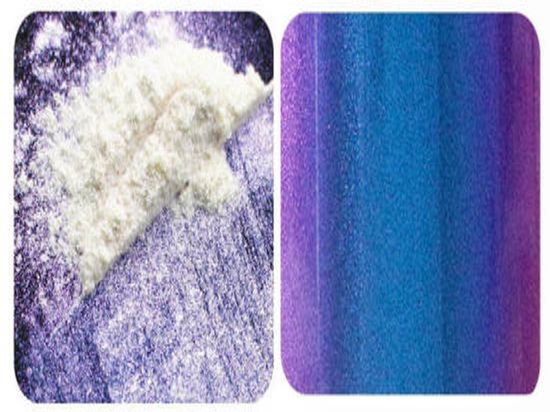
KT-92230 is a multichrome pigment that shifts through a full blue-purple-red-orange sequence as the viewing angle changes — one of the broadest color-travel arcs we produce in the KT-9000 series. Built on a natural mica substrate with a multi-layer TiO₂/Fe₂O₃/silica/tin oxide coating, it comes in a 25–130 μm particle size that delivers strong angular contrast and high visual impact across automotive finishes, decorative coatings, and specialty printing.
Read More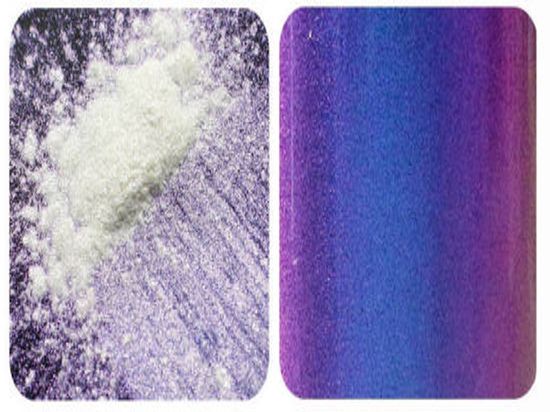
KT-92330 is a multi-layer interference pigment from Kolortek's KT-9000 Magic Chameleon Series, producing a continuous color shift sequence — indigo through purple, red, orange, and yellow — as the viewing angle changes. Built on natural mica coated with TiO₂, silica, and tin oxide, it delivers a high-mirror goniochromatic effect with a 25–130 μm particle size distribution engineered for maximum visual impact. This color shifting pigment powder performs best over dark or black substrates, where the full angular color travel is most legible.
Read More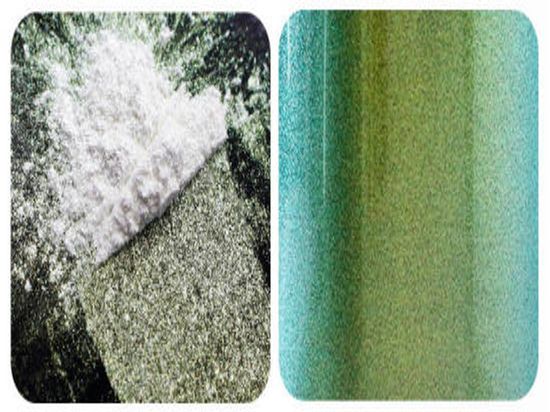
KT-92630 is a large-particle chameleon paint pearl from our KT-9000 Magic Chameleon Series, producing a sequential golden-to-kelly-green-to-blue color travel as the viewing angle shifts. With a 25–130 μm particle range, it delivers high visual impact in automotive custom finishes, decorative coatings, and specialty applications where a pronounced, multi-stop color flip is the goal. The substrate is natural mica with a multi-layer TiO₂/SiO₂/metal-oxide coating that generates the goniochromatic interference effect.
Read More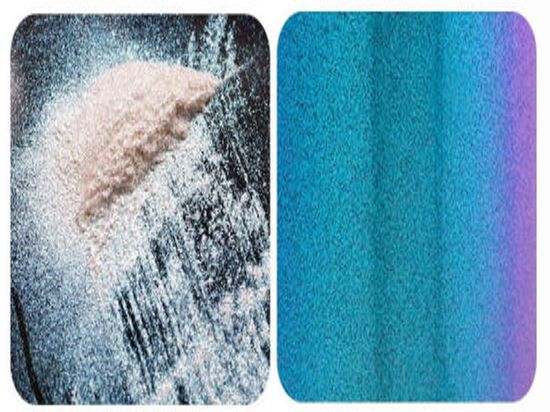
KT-92175 is the large-particle grade of our chameleon pigment for resin, built on a natural mica substrate with a multi-layer TiO₂, silica, and tin oxide coating that produces a continuous cyan-to-blue-to-purple-to-red angle-dependent color shift. At 75–175μm, it is the highest-sparkle option in the KT-9000 Magic Chameleon Series' KT-921** Cyan-Blue-Purple-Red range. Compatible with epoxy and UV resin at loadings of 1–10% by weight, the effect reads strongest on dark or black substrates where the goniochromatic shift has maximum contrast.
Read More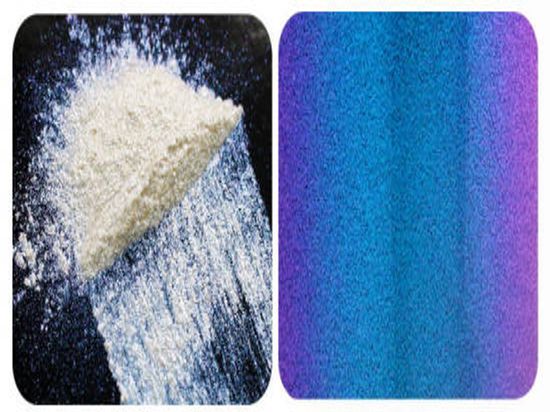
KT-92275 is a large-particle duochrome loose pigment from our KT-9000 Magic Chameleon Series, delivering a full blue-purple-red-orange color travel sequence that shifts continuously across the visible spectrum as the viewing angle changes. With a particle size range of 75–175 μm, this grade is engineered specifically for applications where maximum sparkle is the priority — loose eyeshadow, nail art toppers, and high-impact decorative cosmetics where the angular shift needs to read clearly against the skin or a dark base.
Read More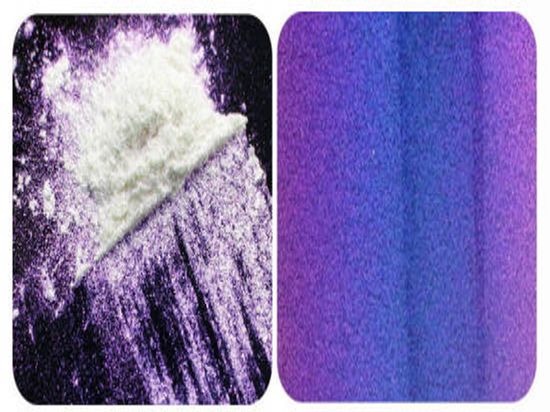
KT-92375 is a large-particle ghost chameleon pigment from Kolortek's KT-9000 Magic Chameleon Series, delivering a continuous five-stage color shift — indigo → purple → red → orange → yellow — as the viewing angle changes. Built on natural mica coated with titanium dioxide, silica, and tin oxide, it carries a particle size of 75–175 μm for maximum sparkle. We developed this grade specifically for high-impact automotive finishes, custom coatings, and luxury decorative applications where a dramatic, angle-dependent color shift is the primary design goal.
Read More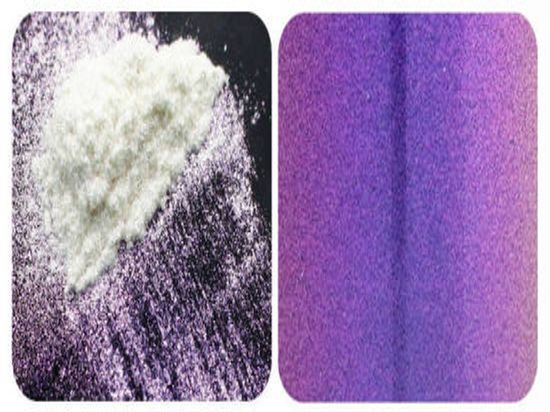
KT-92475 is a large-particle chameleon pigment from the KT-9000 Magic Chameleon Series, producing a continuous mauve → red → orange → yellow color shift that sweeps across the visible spectrum as the viewing angle changes. With a particle size of 75–175 μm and a natural mica substrate coated with titanium dioxide, silica, and tin oxide, it delivers the coarse, high-sparkle texture that nail art formulators need for maximum visual drama — particularly over a dark or black base coat.
Read More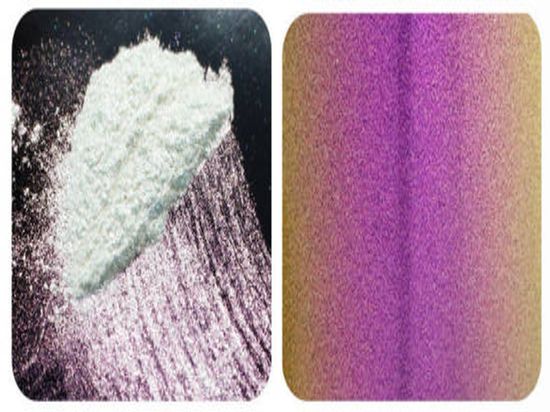
KT-92575 is a large-flake chameleon pearl powder from our KT-9000 Magic Chameleon Series, producing a dramatic angle-dependent color shift spanning red, orange, yellow, and kelly green on dark substrates. Built on a natural mica substrate with a multi-layer coating of titanium dioxide, silica, and tin oxide, it delivers an INCI composition suited to high-end cosmetic and nail art formulations. The 75–175 μm particle range gives it the high-sparkle, deep color-travel behavior that distinguishes it from finer cosmetic pearl grades.
Read More
 English
 Français
 Deutsch
 Русский
 Español
 Português