
Leave A Message
If you are interested in our products and want to know more details,please leave a message here,we will reply you as soon as we can.
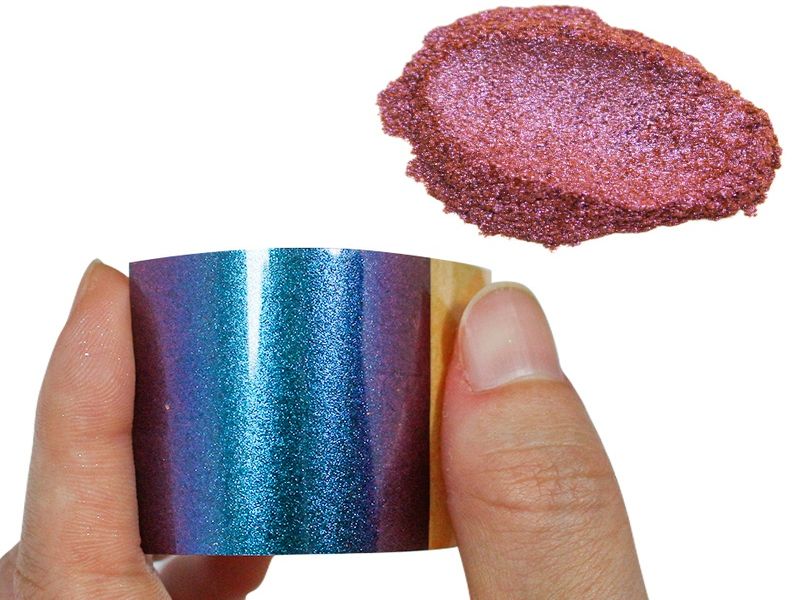
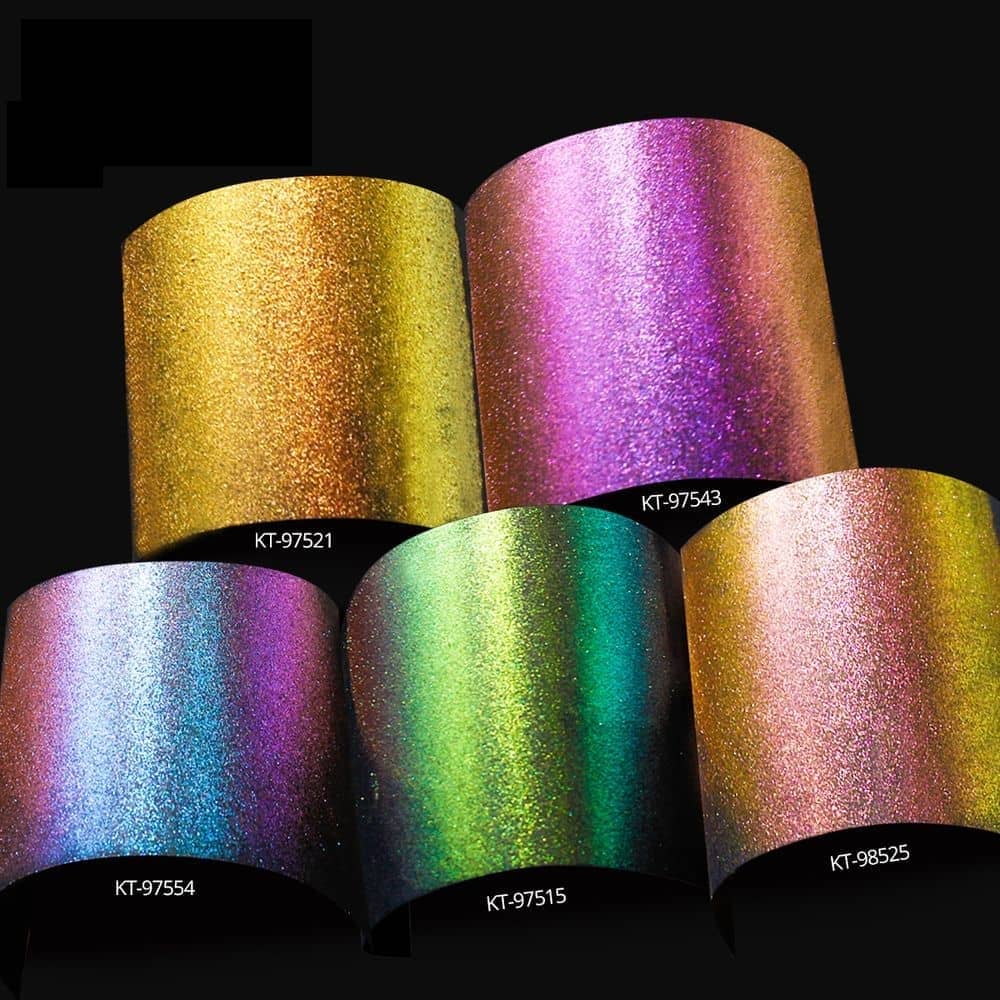
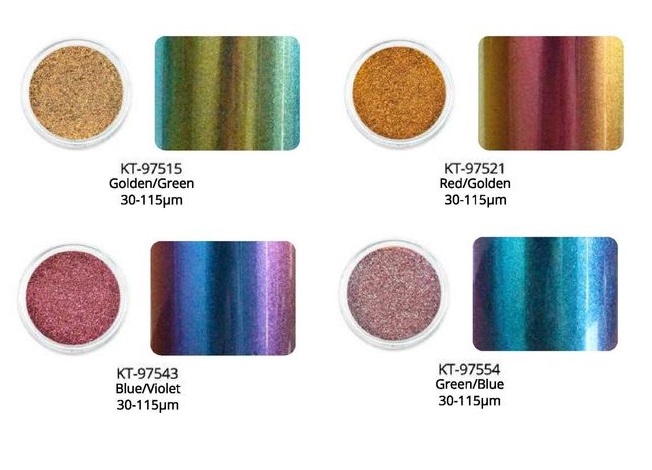
KT-97543 is a Blue/Violet chameleon mica powder built for resin work — a multi-layer interference pigment on a natural mica substrate that shifts color with viewing angle, from blue at normal incidence to violet at a glancing angle. In our lab, the effect reads strongest over a black or very dark base layer, so we usually pair it with a black resin backing coat. Typical loading runs 1–10% by weight.
Chameleon pigments work by interference, not absorption. KT-97543 carries a multi-layer coating — TiO₂, Fe₂O₃, silica and other metal oxides stacked over a natural mica core — and the thickness of those layers determines which wavelengths reinforce at a given viewing angle. Tilt the part and the peak wavelength walks through the spectrum. For this grade the travel runs blue to violet, which is a narrower shift than the triple-color 97000 and 98000 sub-series, and that's usually an advantage in resin: duochrome reads as depth rather than novelty.
The mica substrate is what gives the cast surface its movement. Suspended in a clear resin matrix, individual platelets orient at slightly different angles through the thickness of the casting, so a single part shows a continuous gradient rather than one flat color. That property is why this material is chosen for cast pieces, domed parts, and anything viewed in the round — a flat panel loses most of the effect, a three-dimensional form amplifies it.
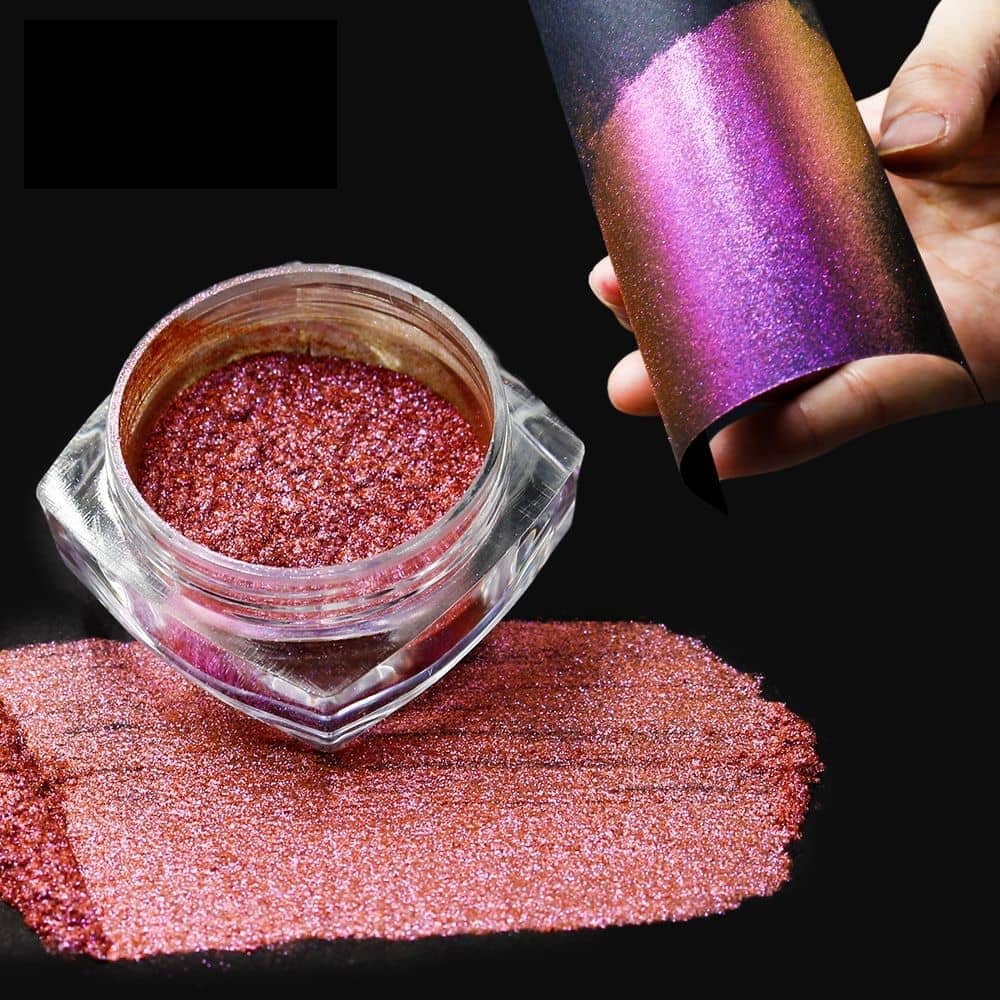
Values below come from our KT-97543 technical data sheet. Where we don't have a published figure, we say so rather than estimate.
| Property | Value |
|---|---|
| Colour / Effect | Blue / Violet, angle-dependent color travel |
| Form | Powder, odourless |
| Particle size | 30–115 μm (D50 46–58 μm) |
| Density | 2.7–3.2 kg/L |
| pH | 6.0–9.0 (4% in H₂O) |
| Solubility in water | Insoluble |
| INCI name | Mica, Silica, Titanium dioxide, Iron oxide, Tin oxide |
Epoxy and UV resins are forgiving matrices for interference pigments, but three things decide whether the result looks right or looks muddy.
Chameleon and duochrome mica powders are translucent in effect — they modify light bouncing back from whatever sits behind them. Over a white or light substrate, transmitted light washes out the interference and the shift nearly disappears. Over black, the interference peak is the only thing coming back to the eye, which is where the blue-to-violet travel becomes obvious. The practical sequence for cast work: black base layer first, let it cure or gel, then pour the pigment-loaded resin over it. Adding black pigment directly into the same resin as the mica works too, but it flattens the effect — you're absorbing light that would otherwise reflect off the platelets.
For resin art and castings we work in the 1–10% by weight range, adjusting for the size of the piece and how opaque the effect needs to be. Thicker pigment loading increases the perceived color shift but can start to affect surface smoothness in thin pours, so there's a practical ceiling. Pre-mix the powder into a small aliquot of resin first — a teaspoon of resin to the full pigment charge — and stir it to a smooth paste before adding it to the main batch. Dropping dry powder straight into a large batch leaves agglomerates that never fully wet out, and those show up as dull streaks in the cured part.
Stir slowly. This is the one processing point that comes up in every conversation we have with resin customers: entrapped air next to a pearl platelet is highly visible, because the platelet reflects into a bubble and the bubble scatters in all directions. Slow, folded mixing, a short dwell time before pouring, and a vacuum or pressure pot where the piece allows it will do more for appearance than any change in loading. With UV resin on fast cures, the same logic applies — mix, then rest, then pour.
KT-97543 can be combined with transparent absorption pigments to move the base color and narrow or widen the apparent shift range. A small amount of transparent violet or blue can deepen the glancing-angle color; a touch of transparent red pulls the highlight warmer. Keep additions small and test in the actual resin system — absorption pigments change the transmitted spectrum that the mica layers are working against, and the interaction isn't always intuitive.
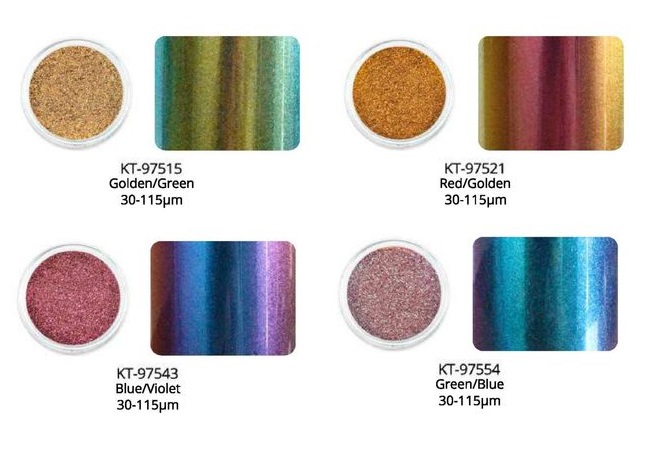
Within the KT-9000 Magic Chameleon Series, grades are grouped by shift type and particle size. KT-97543 sits in the duochrome group at 30–115 μm — coarse enough for visible sparkle in a casting, fine enough to still distribute evenly in a thin pour. Finer grades in the series (10–40 μm, 10–60 μm) suit spraying and thinner films where a 115 μm top end would be too coarse.
Beyond resin, the series is used across automotive custom finishes and wraps, high-end cosmetics and nail art, luxury packaging and printing, security printing, and decorative coatings such as motorcycle helmets and sporting goods. With a weatherproof coating system, chameleon grades go into automotive and architectural applications. Compatible pigment systems for automotive and exterior coating work typically want a clear topcoat to protect the pigment and build depth.
We'd rather be plain about this than let a buyer assume coverage we can't document for a specific grade.
Avoid breathing dust and avoid dust accumulation in the workspace. Store in a well-ventilated place. Wear gloves, eye protection, and an approved dust mask where dust is generated; an apron and boots are sensible for bulk handling. On skin contact, wash with plenty of water. On eye contact, flush with gently flowing fresh water and get medical advice if irritation persists. If inhaled, move to fresh air and rest.
We don't have a published shelf life or a numeric lightfastness rating for KT-97543 in our current data. The series is built on inorganic colorants — iron oxide and metal oxides — which is where the light and weather resistance of the KT-9000 range comes from. For exterior or long-service-life programs, tell us the exposure conditions and the coating system, and we'll advise based on the closest tested configuration rather than a generic figure.
How do I use KT-97543 chameleon epoxy pigment in a casting?
Load 1–10% by weight of the resin, pre-mixed into a small aliquot of resin before adding to the full batch. Pour over a cured black base layer — the blue-to-violet shift is barely visible on white or light substrates. Mix slowly to avoid bubbles, which are especially obvious near pearl platelets.
What particle size is KT-97543 and does it matter for resin?
KT-97543 runs 30–115 μm with a D50 of 46–58 μm. That's a mid-to-coarse grade: it produces distinctly visible sparkle and orientates well through the thickness of a casting. In very thin pours or where a smooth, fine-grained appearance is wanted, a finer grade such as the 10–40 μm option in the KT-9000 series is a better fit.
Does this duochrome mica powder work in UV resin as well as epoxy?
Yes — the KT-9000 series is compatible with most resin systems, and our resin guide covers both epoxy and UV resin with the same 1–10% loading range. UV resin cures fast, so mix fully before adding photoinitiator-triggered cure time pressure, and give the batch a short dwell to let air escape before pouring.
Is KT-97543 a cosmetic-grade pigment?
The KT-97543 data sheet does not state cosmetic-grade status, so we don't present it as such. For nail art, cosmetic, or any skin-contact application, specify a cosmetic-grade grade and we'll supply the composition documentation you need under EU Cosmetics Regulation (EC) No 1223/2009 for the grade and market in question.
Tell us your resin system, pour thickness, and target viewing angle, and we'll recommend the right KT-9000 grade and loading for it — or write to contact@kolortek.com.
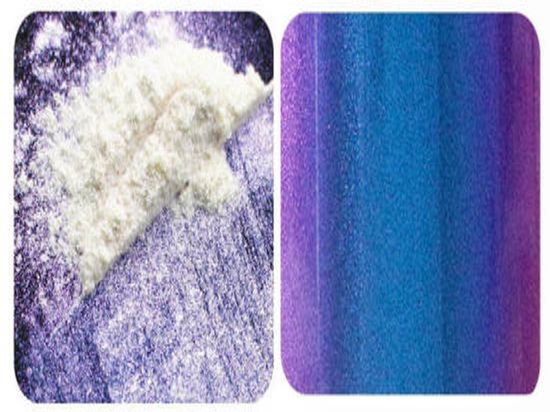
KT-92230 is a multichrome pigment that shifts through a full blue-purple-red-orange sequence as the viewing angle changes — one of the broadest color-travel arcs we produce in the KT-9000 series. Built on a natural mica substrate with a multi-layer TiO₂/Fe₂O₃/silica/tin oxide coating, it comes in a 25–130 μm particle size that delivers strong angular contrast and high visual impact across automotive finishes, decorative coatings, and specialty printing.
Read More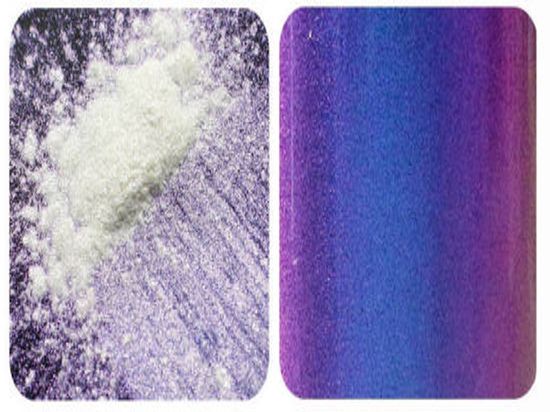
KT-92330 is a multi-layer interference pigment from Kolortek's KT-9000 Magic Chameleon Series, producing a continuous color shift sequence — indigo through purple, red, orange, and yellow — as the viewing angle changes. Built on natural mica coated with TiO₂, silica, and tin oxide, it delivers a high-mirror goniochromatic effect with a 25–130 μm particle size distribution engineered for maximum visual impact. This color shifting pigment powder performs best over dark or black substrates, where the full angular color travel is most legible.
Read More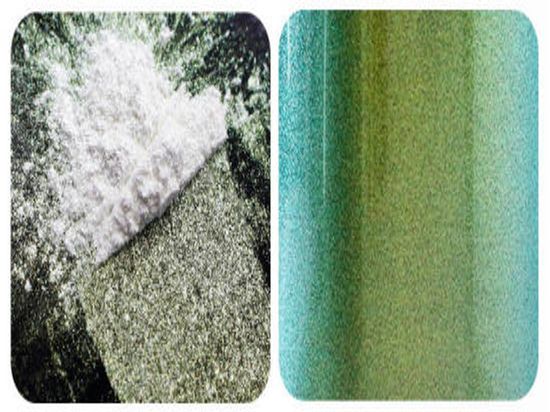
KT-92630 is a large-particle chameleon paint pearl from our KT-9000 Magic Chameleon Series, producing a sequential golden-to-kelly-green-to-blue color travel as the viewing angle shifts. With a 25–130 μm particle range, it delivers high visual impact in automotive custom finishes, decorative coatings, and specialty applications where a pronounced, multi-stop color flip is the goal. The substrate is natural mica with a multi-layer TiO₂/SiO₂/metal-oxide coating that generates the goniochromatic interference effect.
Read More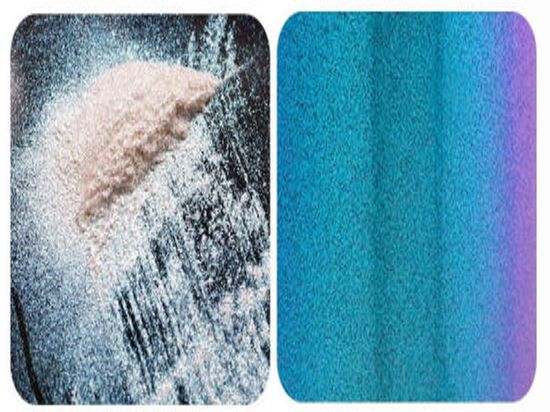
KT-92175 is the large-particle grade of our chameleon pigment for resin, built on a natural mica substrate with a multi-layer TiO₂, silica, and tin oxide coating that produces a continuous cyan-to-blue-to-purple-to-red angle-dependent color shift. At 75–175μm, it is the highest-sparkle option in the KT-9000 Magic Chameleon Series' KT-921** Cyan-Blue-Purple-Red range. Compatible with epoxy and UV resin at loadings of 1–10% by weight, the effect reads strongest on dark or black substrates where the goniochromatic shift has maximum contrast.
Read More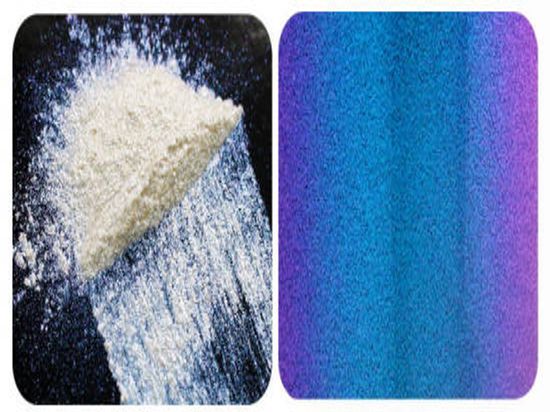
KT-92275 is a large-particle duochrome loose pigment from our KT-9000 Magic Chameleon Series, delivering a full blue-purple-red-orange color travel sequence that shifts continuously across the visible spectrum as the viewing angle changes. With a particle size range of 75–175 μm, this grade is engineered specifically for applications where maximum sparkle is the priority — loose eyeshadow, nail art toppers, and high-impact decorative cosmetics where the angular shift needs to read clearly against the skin or a dark base.
Read More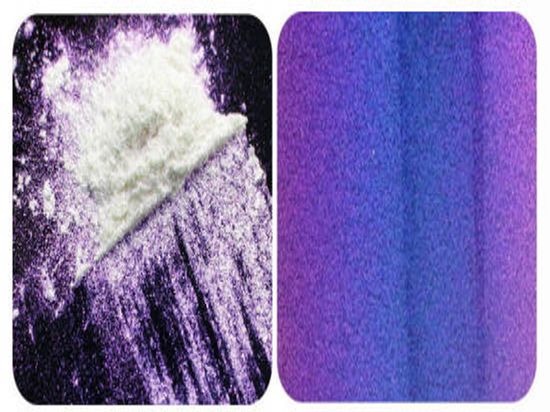
KT-92375 is a large-particle ghost chameleon pigment from Kolortek's KT-9000 Magic Chameleon Series, delivering a continuous five-stage color shift — indigo → purple → red → orange → yellow — as the viewing angle changes. Built on natural mica coated with titanium dioxide, silica, and tin oxide, it carries a particle size of 75–175 μm for maximum sparkle. We developed this grade specifically for high-impact automotive finishes, custom coatings, and luxury decorative applications where a dramatic, angle-dependent color shift is the primary design goal.
Read More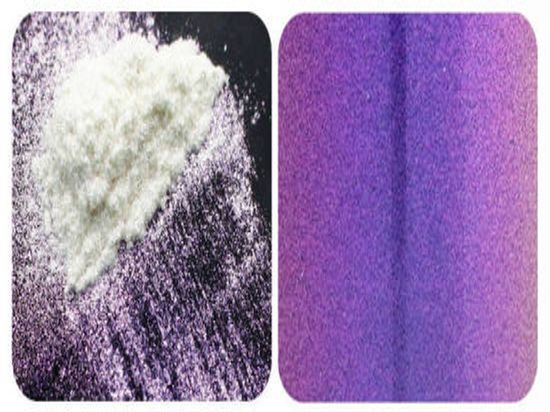
KT-92475 is a large-particle chameleon pigment from the KT-9000 Magic Chameleon Series, producing a continuous mauve → red → orange → yellow color shift that sweeps across the visible spectrum as the viewing angle changes. With a particle size of 75–175 μm and a natural mica substrate coated with titanium dioxide, silica, and tin oxide, it delivers the coarse, high-sparkle texture that nail art formulators need for maximum visual drama — particularly over a dark or black base coat.
Read More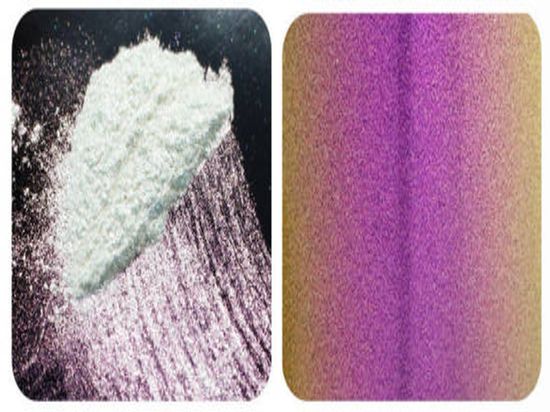
KT-92575 is a large-flake chameleon pearl powder from our KT-9000 Magic Chameleon Series, producing a dramatic angle-dependent color shift spanning red, orange, yellow, and kelly green on dark substrates. Built on a natural mica substrate with a multi-layer coating of titanium dioxide, silica, and tin oxide, it delivers an INCI composition suited to high-end cosmetic and nail art formulations. The 75–175 μm particle range gives it the high-sparkle, deep color-travel behavior that distinguishes it from finer cosmetic pearl grades.
Read More
 English
 Français
 Deutsch
 Русский
 Español
 Português