
Leave A Message
If you are interested in our products and want to know more details,please leave a message here,we will reply you as soon as we can.
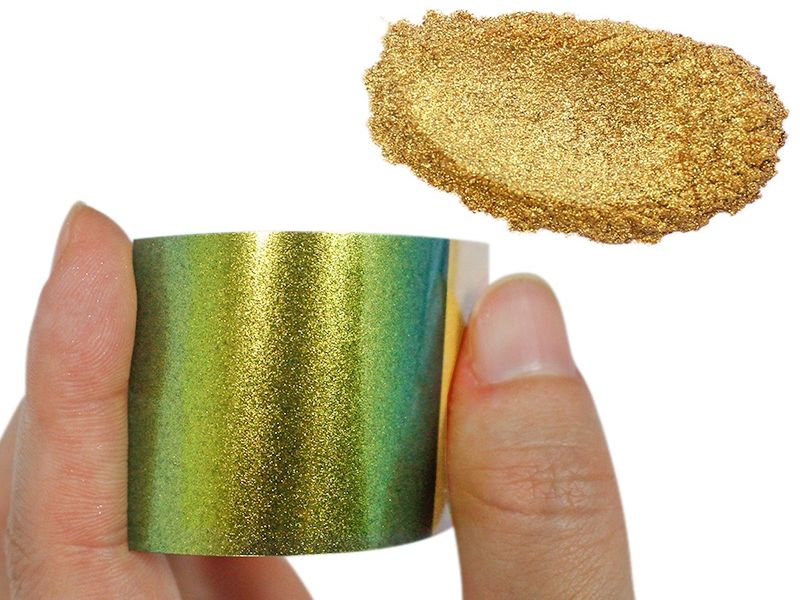
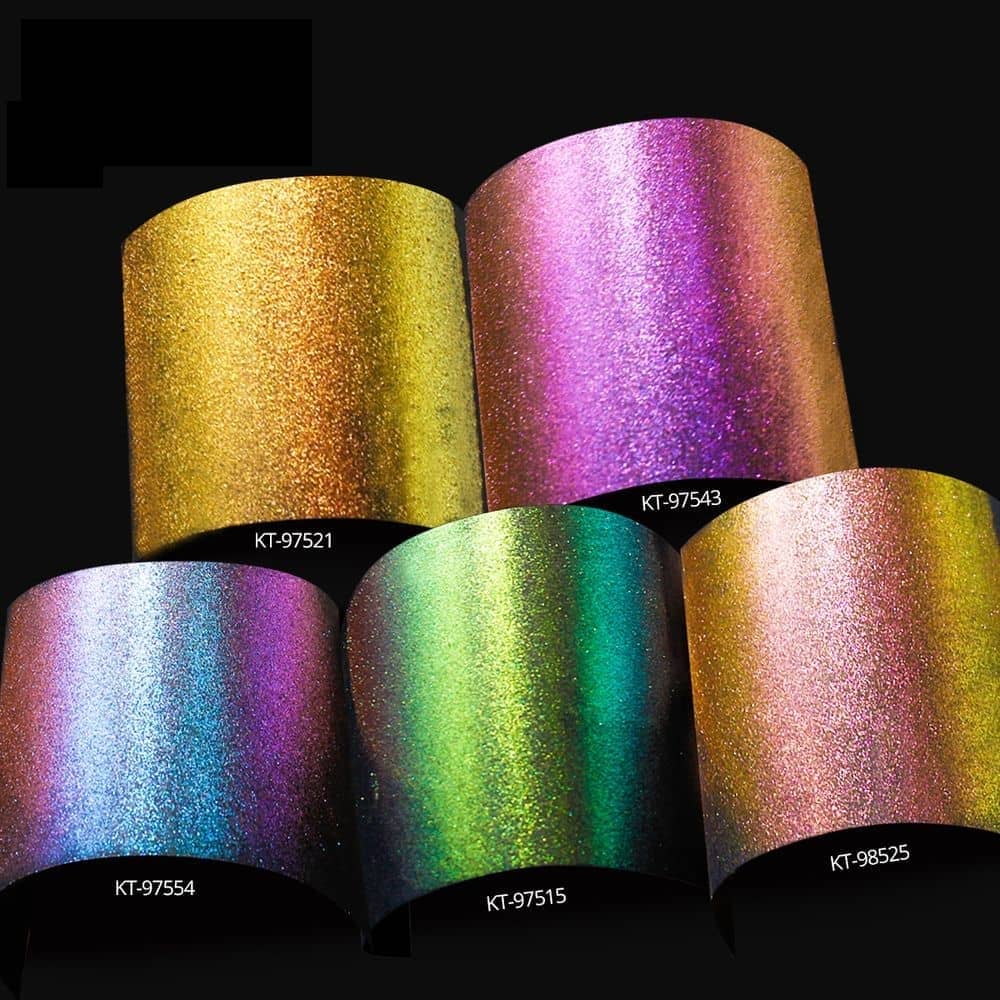
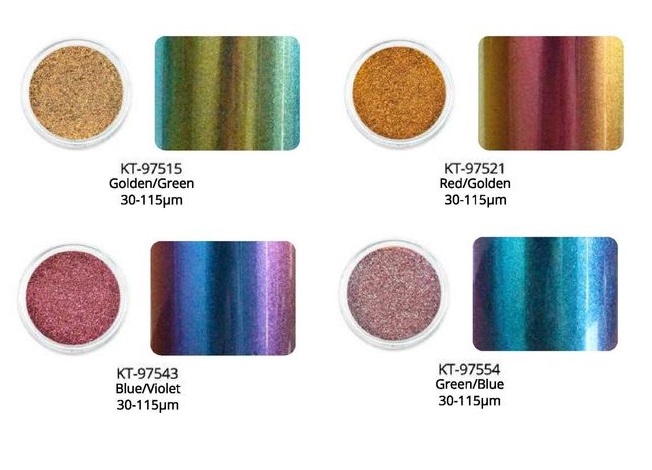
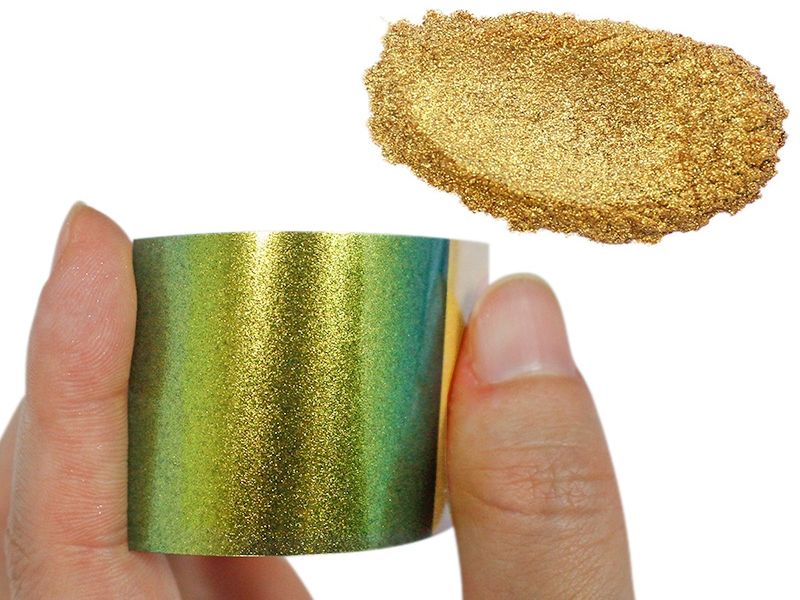
KT-97515 is a golden/green chameleon pigment powder from our KT-9000 Magic Chameleon Series — a multi-layer mica-based effect pigment that shifts between a warm golden tone and a vivid green depending on the viewing angle. Built on natural mica coated with TiO₂, Fe₂O₃, SiO₂, and tin oxide, it delivers a clean goniochromatic shift across a 30–115 μm particle range. It works across automotive finishes, decorative coatings, cosmetics, and specialty printing, and is compatible with most resin systems.
The KT-97515 effect is angle-dependent — what reads as a saturated gold at face-on incidence transitions to a clear green at a flank angle. This is the core mechanism of the KT-9000 series: multi-layer interference stacking on natural mica that produces distinct color travel rather than a simple sparkle or sheen. The iron oxide layer anchors the warm gold undertone, while the titanium dioxide and silica overlayers control the interference color that dominates at oblique angles.
In our application lab, we consistently see the strongest perceived shift on dark or black substrates. Light or white backgrounds reduce contrast and compress the visible color travel — something worth testing early in any formulation project. A clear topcoat enhances depth and protects the platelet orientation, particularly in automotive and coating applications.
| Property | Value |
|---|---|
| Form | Powder |
| Colour / Appearance | Golden / Green (angle-dependent) |
| Particle Size Range | 30–115 μm |
| D50 | 46–58 μm |
| pH (4% H₂O) | 6.0–9.0 |
| Density | 2.6–3.2 kg/L |
| Bulk Density | 27–31 g/100 mL |
| Solubility in Water | Insoluble |
| Odour | Odourless |
| Hazard Classification | Not classified — EC No. 1272/2008 (CLP) |
KT-97515 is an inorganic mixture. All coloristic and interference effects come from the multi-layer metal oxide coating on the mica platelet — no organic dyes, no solvent-borne chromophores.
| Component | C.I. Number | Content |
|---|---|---|
| Mica | C.I. 77019 | 52.0–56.0% |
| Silica | — | 32.0–36.0% |
| Titanium Dioxide | C.I. 77891 | 3.0–7.0% |
| Iron Oxide | C.I. 77491 | 4.0–8.0% |
| Tin Oxide | C.I. 77861 | 0–1.0% |
All heavy metal limits are controlled at the manufacturing stage. The values below apply to the finished KT-97515 grade.
| Element | Limit | Element | Limit |
|---|---|---|---|
| As | < 2 ppm | Pb | < 10 ppm |
| Hg | < 1 ppm | Cr | < 100 ppm |
| Ba | < 50 ppm | Sb | < 1 ppm |
| Ni | < 10 ppm | Cu | < 50 ppm |
| Cd | < 3 ppm | Zn | < 50 ppm |
From our experience supporting customers across coatings and cosmetics, the golden/green color travel of KT-97515 performs most visibly in applications where the viewing angle changes dynamically — which makes it a natural fit for automotive custom finishes, motorcycle helmet coatings, and sporting goods where light rakes across curved surfaces.
The KT-9000 series is also widely used in high-end cosmetics and nail art, luxury packaging, security and anti-counterfeiting printing, and decorative architectural coatings. Extended use cases include synthetic leather, powder coatings, industrial plastics, and dispersion paints. That said, application suitability depends on the specific resin system, substrate, and regulatory framework — we recommend confirming grade compatibility before committing to a formulation.
One practical note on substrate choice: dark or black substrates amplify the perceived color contrast between gold and green. White or light substrates suppress the shift and yield a more subtle result. This is not unique to KT-97515 — it applies across the KT-9000 series — but it's the first variable to dial in when evaluating the visual effect.
Handling a platelet-based effect pigment like KT-97515 correctly at the dispersion stage is where most formulation errors happen. The rule is simple but often ignored: use slow paddle mixing only. High-speed dispersers, bead mills, and sand mills fracture the platelets, which compresses the particle size distribution and degrades the angle-dependent color shift you are trying to preserve.
Pre-disperse the pigment in a portion of solvent or resin before incorporating it into the full batch, and add it at the last stage under gentle stirring. General loading guidance for the KT-9000 series is 1–20% by weight depending on the effect intensity required — start at the lower end and increase incrementally, as overloading can reduce clarity of the shift and affect substrate smoothness.
A key consideration for spray applications: KT-97515 has a particle size range of 30–115 μm, with a D50 of 46–58 μm. Larger particles in that distribution can clog conventional spray nozzles. Test nozzle compatibility before committing to a spray process, or evaluate finer grades if clogging is a recurring issue.
The pH window for KT-97515 is 6.0–9.0 (measured at 4% H₂O), which is compatible with most waterborne and solvent-based resin systems. If you are working with acid-catalyzed baking enamels or other reactive chemistries, test compatibility specifically — acid catalyst systems can sit outside the safe pH window at elevated temperatures.
Kolortek operates under an ISO 9001:2015 quality management system covering the production and sales of pigments and fillers. A TDS is available for KT-97515, and an MSDS/SDS is provided with all shipments. Regulatory documentation packages are available on request.
For applications requiring compliance with EU Cosmetics Regulation (EC) No. 1223/2009 or US FDA color-additive frameworks, cosmetic-grade options with supporting composition documentation are available — final suitability is grade- and use-dependent and should be confirmed for the specific application. REACH registration on file covers fluorphlogopite (synthetic mica) grades; for KT-97515 specifically, which uses natural mica, request product-specific confirmation.
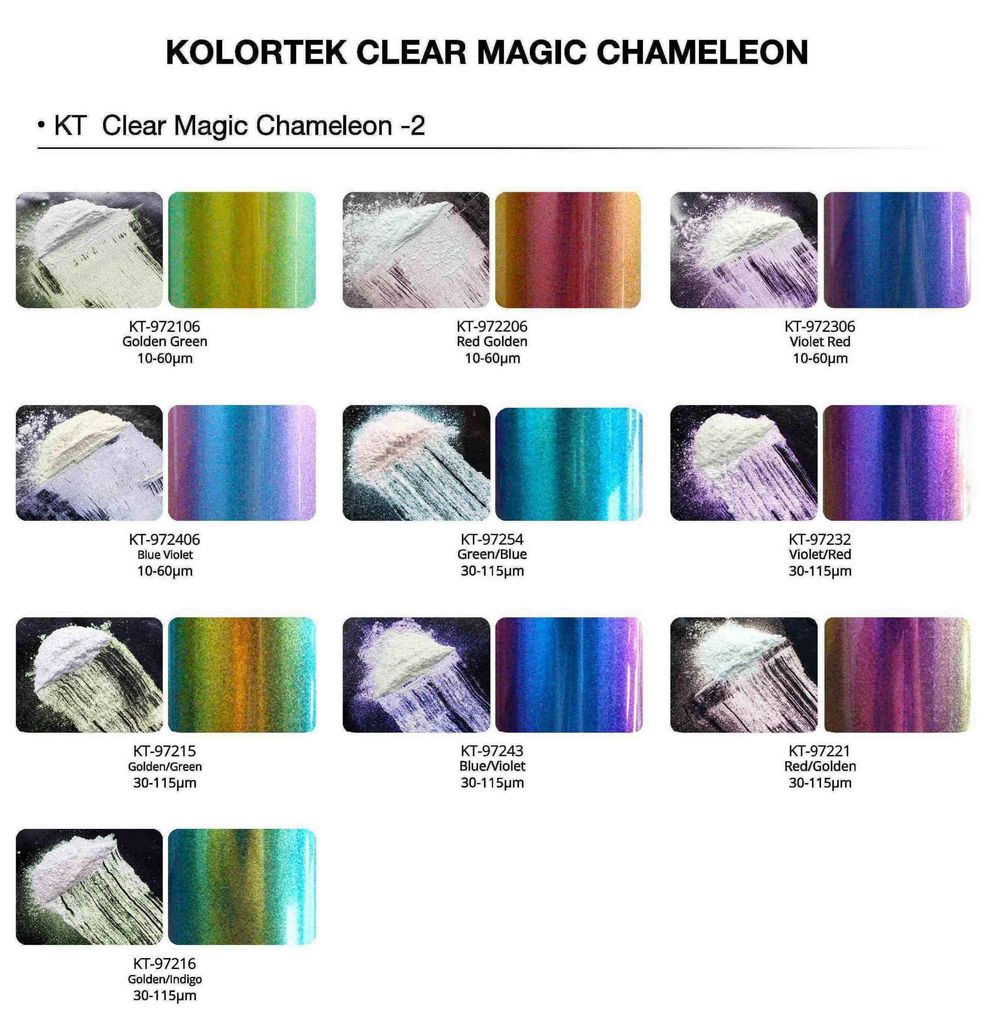
KT-97515 sits within the broader KT-9000 Magic Chameleon Series, which spans duochrome (2-color) and multicolor (3+ color shift) sub-series. If the golden/green shift range needs extending — or if you need a different color travel axis — the series includes additional codes worth evaluating. Below are the current multicolor variants in the golden/green and adjacent shift ranges:
| Model Code | Color Travel | Particle Size |
|---|---|---|
| KT-972106 | Golden Green | 10–60 μm |
| KT-972206 | Red Golden | 10–60 μm |
| KT-973206 | Violet Red | 10–60 μm |
| KT-974206 | Blue Violet | 10–60 μm |
The KT-9000 series runs across multiple sub-series — 96000, 96200, 96300, 96500, 97000, 98000, 98500 — with over 100 active codes in total. If KT-97515's 30–115 μm particle range is not a fit for your process (spray nozzle constraints, for example), adjacent golden/green grades at finer cuts are available for discussion.
What is the particle size of KT-97515, and does it affect spray application?
KT-97515 has a particle size range of 30–115 μm with a D50 of 46–58 μm. The upper end of that distribution can block conventional spray nozzles, so nozzle compatibility testing is necessary before adopting a spray process. For finer-cut golden/green grades better suited to spray lines, contact our technical team to identify an appropriate alternative within the KT-9000 series.
What loading rate should I use for this golden green color shift pigment?
The KT-9000 series general guidance is 1–20% by weight, depending on the desired effect intensity. Start at the lower end of the range and increase gradually. Overloading can reduce the clarity of the angle-dependent color shift and introduce surface texture issues. A clear topcoat is recommended for automotive and decorative coating applications to protect platelet orientation and enhance perceived depth.
Is KT-97515 suitable as a chameleon pigment powder for cosmetic formulations?
High-end cosmetics and nail art are listed applications for the KT-9000 series, and KT-97515's inorganic composition — mica, silica, TiO₂, iron oxide, tin oxide — is consistent with cosmetic-grade effect pigments. That said, compliance with EU Cosmetics Regulation (EC) No. 1223/2009 or US FDA color-additive requirements is grade- and use-specific. We supply cosmetic-grade options with supporting documentation; confirm the specific grade and intended use with our team before proceeding.
Why does the color shift look weaker on my substrate than in the sample reference?
Substrate color is the most common variable. The golden/green shift in KT-97515 — and across the KT-9000 series — is most vivid over dark or black backgrounds. Light or white substrates reduce the contrast between the two interference colors and compress the visible shift. If you are evaluating on a light substrate, test over black before concluding the pigment is underperforming. Film thickness and topcoat application also affect how the shift reads in the final part.
Contact our technical team to discuss formulation requirements or to request a TDS, SDS, or sample for KT-97515.
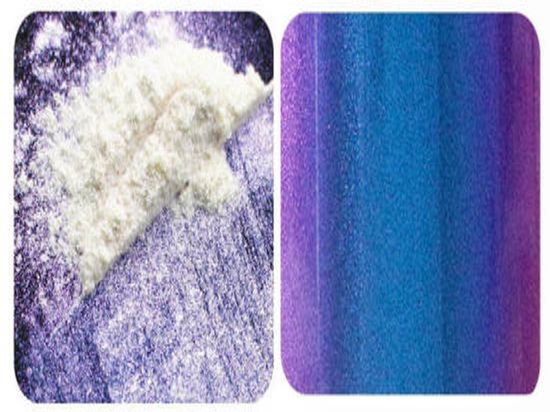
KT-92230 is a multichrome pigment that shifts through a full blue-purple-red-orange sequence as the viewing angle changes — one of the broadest color-travel arcs we produce in the KT-9000 series. Built on a natural mica substrate with a multi-layer TiO₂/Fe₂O₃/silica/tin oxide coating, it comes in a 25–130 μm particle size that delivers strong angular contrast and high visual impact across automotive finishes, decorative coatings, and specialty printing.
Read More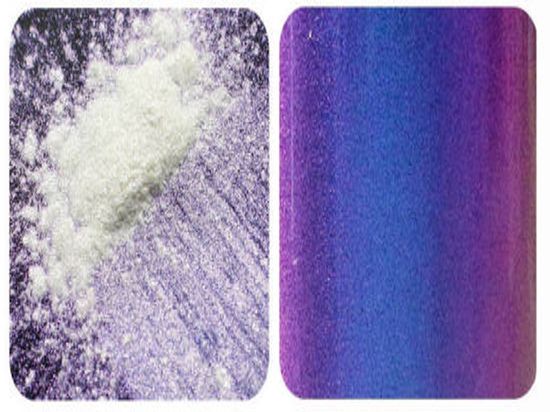
KT-92330 is a multi-layer interference pigment from Kolortek's KT-9000 Magic Chameleon Series, producing a continuous color shift sequence — indigo through purple, red, orange, and yellow — as the viewing angle changes. Built on natural mica coated with TiO₂, silica, and tin oxide, it delivers a high-mirror goniochromatic effect with a 25–130 μm particle size distribution engineered for maximum visual impact. This color shifting pigment powder performs best over dark or black substrates, where the full angular color travel is most legible.
Read More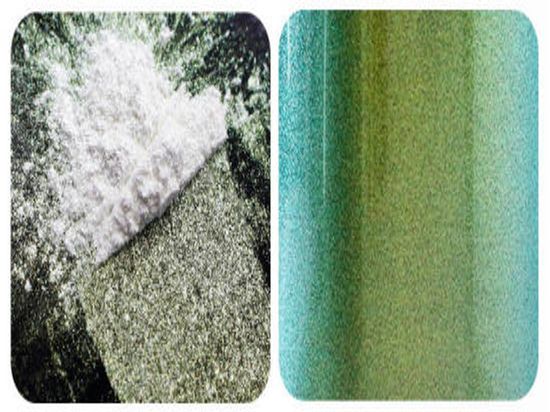
KT-92630 is a large-particle chameleon paint pearl from our KT-9000 Magic Chameleon Series, producing a sequential golden-to-kelly-green-to-blue color travel as the viewing angle shifts. With a 25–130 μm particle range, it delivers high visual impact in automotive custom finishes, decorative coatings, and specialty applications where a pronounced, multi-stop color flip is the goal. The substrate is natural mica with a multi-layer TiO₂/SiO₂/metal-oxide coating that generates the goniochromatic interference effect.
Read More
KT-92175 is the large-particle grade of our chameleon pigment for resin, built on a natural mica substrate with a multi-layer TiO₂, silica, and tin oxide coating that produces a continuous cyan-to-blue-to-purple-to-red angle-dependent color shift. At 75–175μm, it is the highest-sparkle option in the KT-9000 Magic Chameleon Series' KT-921** Cyan-Blue-Purple-Red range. Compatible with epoxy and UV resin at loadings of 1–10% by weight, the effect reads strongest on dark or black substrates where the goniochromatic shift has maximum contrast.
Read More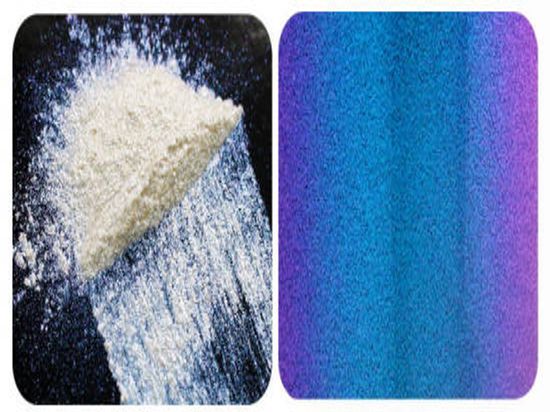
KT-92275 is a large-particle duochrome loose pigment from our KT-9000 Magic Chameleon Series, delivering a full blue-purple-red-orange color travel sequence that shifts continuously across the visible spectrum as the viewing angle changes. With a particle size range of 75–175 μm, this grade is engineered specifically for applications where maximum sparkle is the priority — loose eyeshadow, nail art toppers, and high-impact decorative cosmetics where the angular shift needs to read clearly against the skin or a dark base.
Read More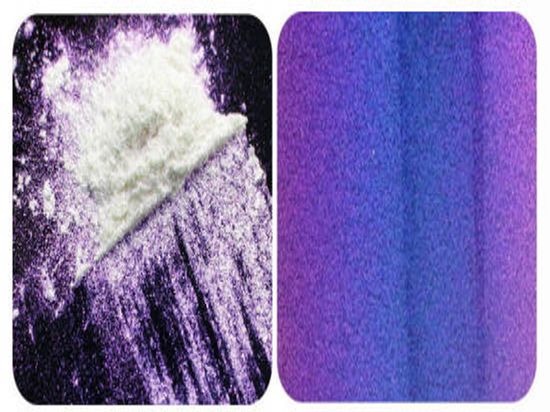
KT-92375 is a large-particle ghost chameleon pigment from Kolortek's KT-9000 Magic Chameleon Series, delivering a continuous five-stage color shift — indigo → purple → red → orange → yellow — as the viewing angle changes. Built on natural mica coated with titanium dioxide, silica, and tin oxide, it carries a particle size of 75–175 μm for maximum sparkle. We developed this grade specifically for high-impact automotive finishes, custom coatings, and luxury decorative applications where a dramatic, angle-dependent color shift is the primary design goal.
Read More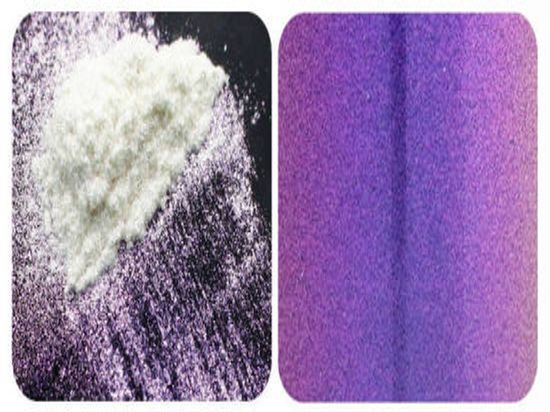
KT-92475 is a large-particle chameleon pigment from the KT-9000 Magic Chameleon Series, producing a continuous mauve → red → orange → yellow color shift that sweeps across the visible spectrum as the viewing angle changes. With a particle size of 75–175 μm and a natural mica substrate coated with titanium dioxide, silica, and tin oxide, it delivers the coarse, high-sparkle texture that nail art formulators need for maximum visual drama — particularly over a dark or black base coat.
Read More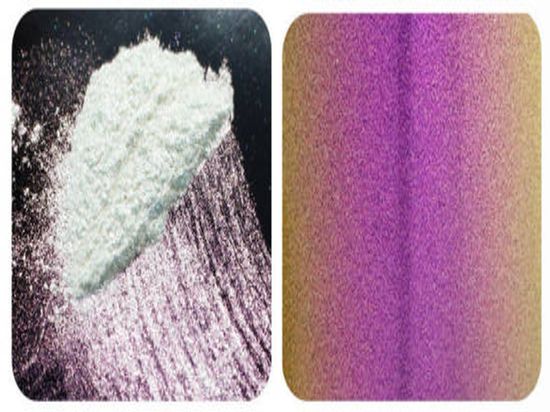
KT-92575 is a large-flake chameleon pearl powder from our KT-9000 Magic Chameleon Series, producing a dramatic angle-dependent color shift spanning red, orange, yellow, and kelly green on dark substrates. Built on a natural mica substrate with a multi-layer coating of titanium dioxide, silica, and tin oxide, it delivers an INCI composition suited to high-end cosmetic and nail art formulations. The 75–175 μm particle range gives it the high-sparkle, deep color-travel behavior that distinguishes it from finer cosmetic pearl grades.
Read More
 English
 Français
 Deutsch
 Русский
 Español
 Português