Leave A Message
If you are interested in our products and want to know more details,please leave a message here,we will reply you as soon as we can.
Cosmetic Grade Mica Powder for Makeup: Which Certificate Applies
The certificate that comes with a cosmetic powder depends on what it legally is: a coated pearl, a lake or a filler. Each one needs a different document.
The requisition arrives with three lines on it, and all three say "cosmetic grade mica powder" or "cosmetic grade powder". The buyer's brief says cosmetic grade. The supplier list says cosmetic grade, every row of it. Somewhere behind those three lines sit three different documents, and only one of them is a certificate in the sense the buyer has in mind.
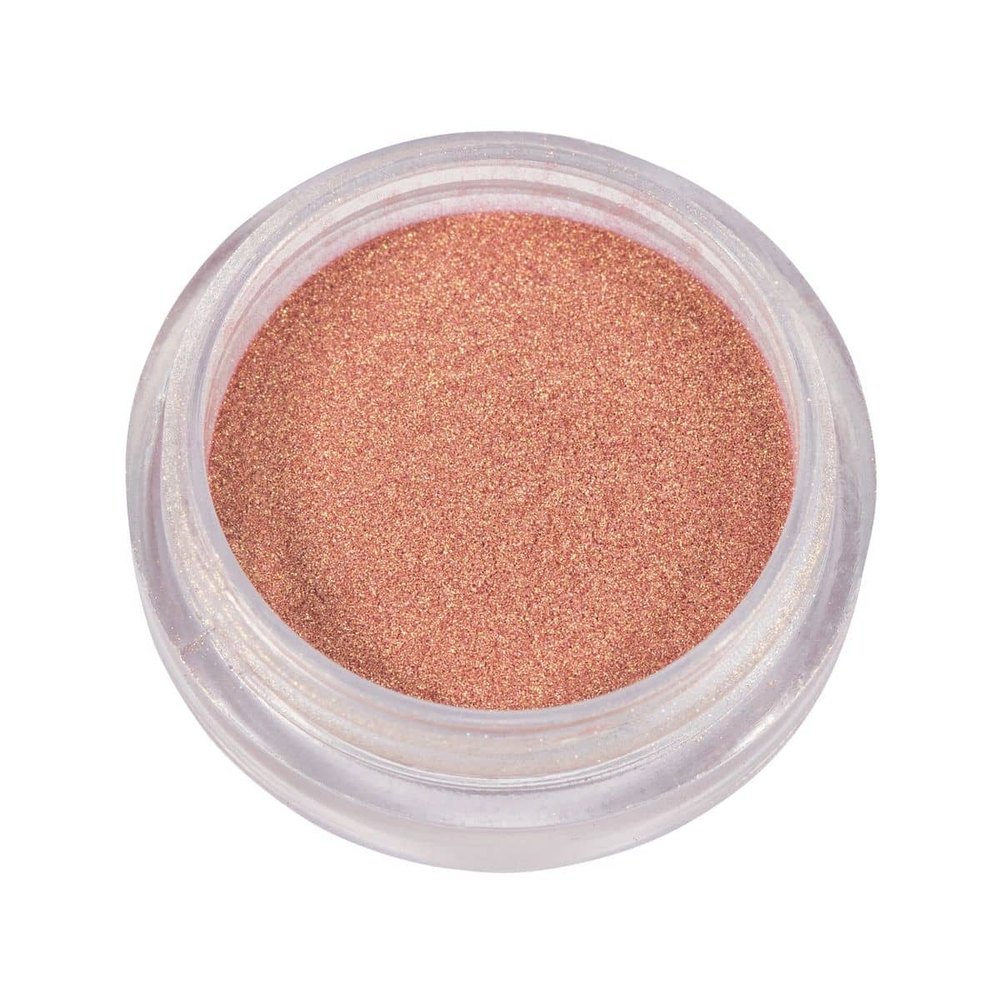
Fig. 1 — Coated pearl powders for cosmetics, interference colours over natural and synthetic mica substrates. The colour is a thin oxide layer on a platelet, not a dye. Product photo.
A coated pearl is a colour additive exempt from certification. An aluminium lake is a colour additive subject to certification. A filler is not a colourant at all.
That is the whole split. Under EU Regulation (EC) No 1223/2009 the test is whether the colourant appears in Annex IV, and each entry in that list carries its own conditions of use. Under US rules the test is whether the colour additive sits in 21 CFR Parts 74 and 82, which are certifiable, or in Part 73, which is exempt from certification. A filler sits in neither, because neither list is about fillers.
| What is on the shelf | What it is under the colour rules | What ships with it |
|---|---|---|
| Coated pearl, natural mica | Colour additive, exempt from certification | Certificate of analysis, heavy metals against the section |
| Coated pearl, synthetic mica or borosilicate | Colour additive, exempt from certification; the substrate is checked on its own | Certificate of analysis, specification, both listings named |
| Aluminium lake | Colour additive, subject to certification | FDA lot number on the batch certificate |
| Filler | Not a colourant; no CI number, not in Annex IV | Specification and INCI name |
| Zinc oxide | Filler, or UV filter / OTC active, depending on the claim | Document set follows the claim on the finished product |
Read the third column aloud. For the pearl, an email arrives with the drum containing a certificate of analysis and a specification. The certificate of analysis states lead, arsenic and mercury and names the section they were measured against. There is no FDA lot number on it, and its absence is correct, not a gap.
For the lake, the email carries a batch certificate with an FDA lot number on it. For the filler, the email carries a specification and an INCI name, and nothing about colour at all.
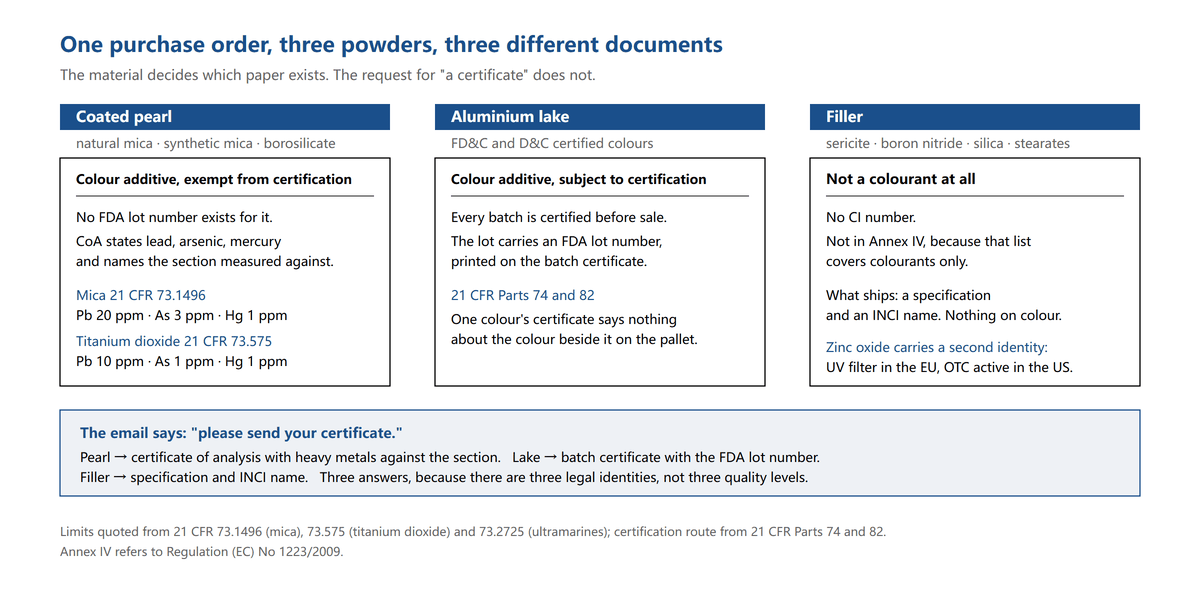
Fig. 2 — Two of the three powders are colourants and one is not. Within the colourants, one is certified batch by batch and the other is exempt from certification but capped on heavy metals — which is why the same request for a certificate produces three different answers. (illustrative)
A lake is a water-soluble dye precipitated onto an insoluble substrate, usually alumina. The dye is laid onto the particle and locked there. The powder you receive is insoluble in the oil-wax system.
That insolubility is the reason the material exists. In lipstick and lip gloss, a soluble dye would migrate into the oil phase and travel. A lake stays where it was milled. It does not bleed past the lip line, and it does not tint the oil around it.
Because a lake is a certifiable colour additive, every batch is certified before it can be sold, and the lot carries an FDA lot number. The rule sits in 21 CFR Parts 74 and 82. This is the only one of the three materials on that purchase order where the word "certificate" is literally correct.
The families we supply as lakes are FD&C Yellow 5 and Yellow 6, FD&C Red 40, FD&C Blue 1, D&C Yellow 10, and the D&C reds 6, 7, 21, 27 and 28.
One thing to hold onto: a lake's lot certificate is item-specific. The certificate that comes with a drum of D&C Red 7 Lake says nothing about the D&C Red 27 Lake next to it on the same pallet, even when both were ordered on one purchase order. Different colour, different certification, different lot number.
The prefix in front of the colour is not decoration, and buyers get it wrong. FD&C means the same colour is also cleared for food. D&C means drugs and cosmetics only. That single letter decides where the colour may legally go, and it is worth checking against the finished product's market before the formula is signed off.
The lake colours we can supply and their specifications are listed in the D&C lakes catalogue.
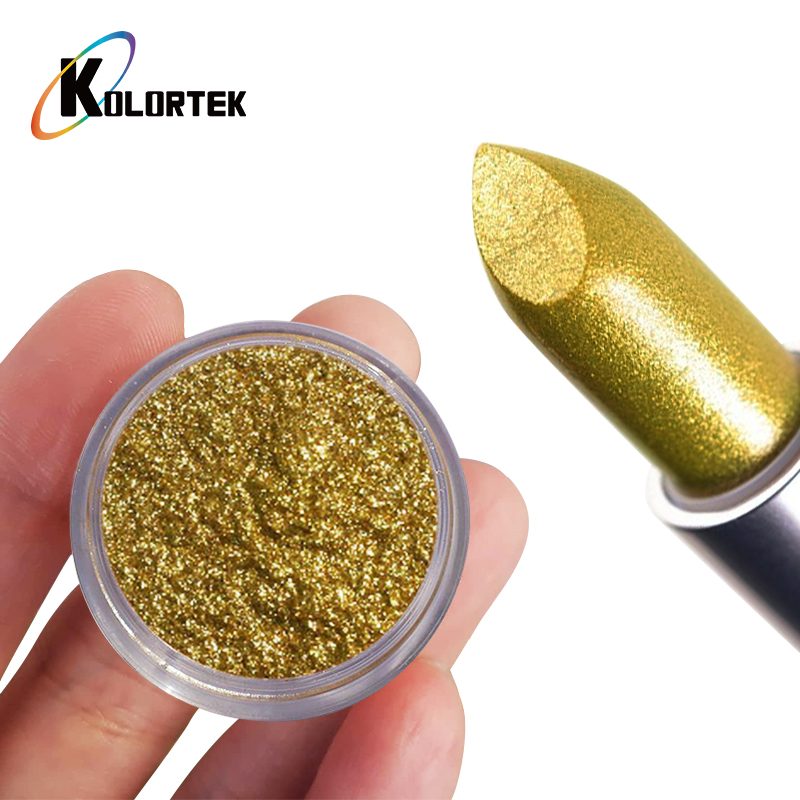
Fig. 3 — A lipstick bullet beside the powder it was made from. The oil-wax system is where insolubility earns its keep: the colour has to stay where it was milled. Application photo.
"Exempt from certification" is a specific legal status, not a compliment. The FDA does not certify each batch of these materials, because it does not consider batch-by-batch certification necessary for public health. It is not a statement that the material is unregulated.
Mica, under 21 CFR 73.1496, permits lead at not more than 20 ppm, arsenic at not more than 3 ppm, and mercury at not more than 1 ppm.
Titanium dioxide, under 21 CFR 73.575, permits lead at not more than 10 ppm, arsenic at not more than 1 ppm, antimony at not more than 2 ppm, and mercury at not more than 1 ppm. The dioxide itself must be not less than 99.0 %.
Ultramarines, under 21 CFR 73.2725, permit lead at not more than 20 ppm, arsenic at not more than 3 ppm, and mercury at not more than 1 ppm. They are cleared for externally applied cosmetics including the eye area. Synthetic iron oxides sit in the same exempt part, 21 CFR Part 73.
Now put those two listings side by side. Mica permits 20 ppm lead. Titanium dioxide permits 10 ppm lead. Both are exempt from certification.
Two listings that both say "exempt from certification" permit different amounts of lead, so "is it certified" is the wrong question to ask about a pearl. The right question is: does your certificate of analysis state lead, arsenic and mercury, and against which section?
That question matters because the pearl sold as "cosmetic grade mica powder" is a composite. A substrate carries a titanium dioxide layer, an iron oxide layer, or both. More than one listing is therefore in play inside one drum, and a certificate of analysis that names only mica has told you half the story.
The substrate that sits underneath the coating decides part of this before the coating does. Synthetic fluorphlogopite and borosilicate are different substrates from natural mica, with different listing situations and different size bands to work within.
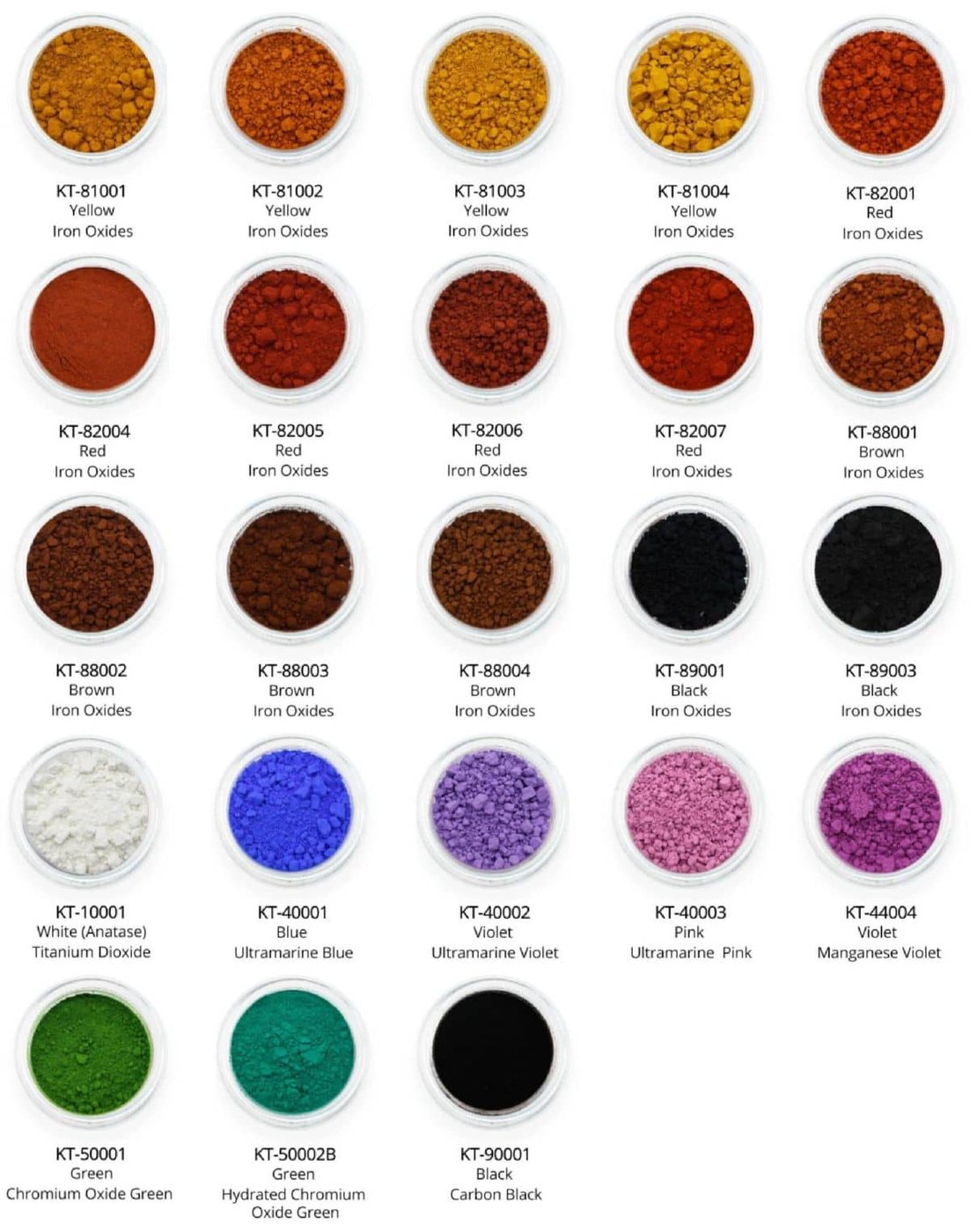
Fig. 4 — The inorganic cosmetic colour families as supplied: iron oxides, anatase titanium dioxide, ultramarines, manganese violet, chromium oxide green, carbon black. Each family sits under its own listing, so the section — not the colour name — is what a certificate of analysis has to name. Product photo.
Sericite, matte sericite, silk mica, boron nitride, silica microsphere, magnesium myristate, magnesium stearate, zinc stearate. These do the opposite job to a pearl. They cut gloss, add slip, absorb oil and soften focus.
The regulatory point is blunt and almost nobody writes it down. A filler has no CI number and is not in Annex IV, because Annex IV is a list of colourants. A material that is not on that list is not a colourant.
Which means a filler cannot legally be used to adjust a shade. Adding sericite to lighten a red is not a weak tint. It is diluting a colourant with a non-colourant, and the shade you land on has no permit behind it. If the goal is a lighter shade, the legal routes are titanium dioxide or a pearl one step lighter.
Then there is the double identity, which is the fact on this page most readers will not have seen. Zinc oxide is a filler with a second regulatory identity: in the EU it is listed as a UV filter, and in the US it is an OTC sunscreen active. It is the same drum either way.
Which set of documents applies depends on what the finished product claims, not on what the powder is. If the claim is texture and coverage, it is a filler and the filler paperwork applies. If the claim involves UV protection, a different regime switches on and the paperwork changes with it.
Treated grades exist for the fillers. The treatment is chosen against the oil phase and the wear claim, and the specific treatment is confirmed on the specification for the grade ordered.
The filler grades and their INCI names are set out in the cosmetic fillers catalogue.
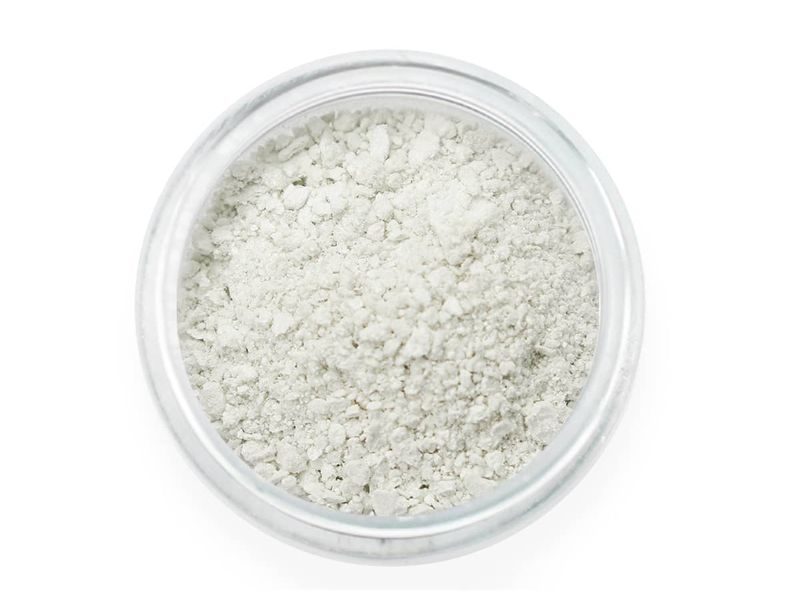
Fig. 5 — A mica-based filler as supplied. It has no CI number and no place in Annex IV, because it is not a colourant — its job is slip, oil absorption and gloss control. Product photo.
Three consequences follow from the split, and they show up in the formula rather than in the document pack.
Loading is set by format, and by which of the three you are adding. Pressed eyeshadow carries 5–50 % pearl, loose eyeshadow 5–60 %, lipstick and lip gloss 1–20 %, foundation 3–15 %, highlighter 5–30 %. A lake sits far below those figures, because it is there for hue and its tinting strength is many times a pearl's. A filler can run higher still, because it is not there for colour at all.
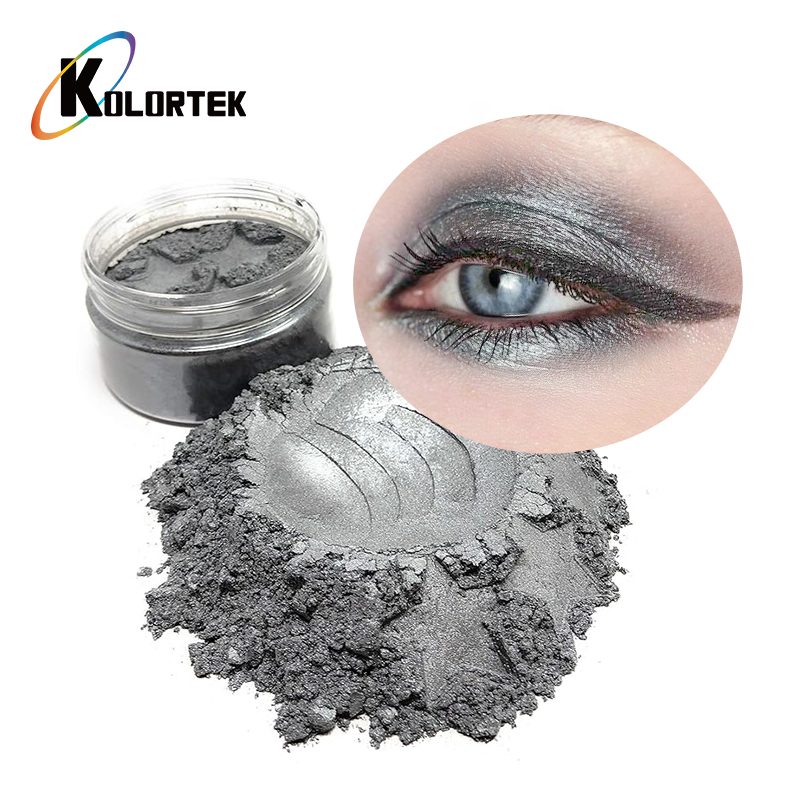
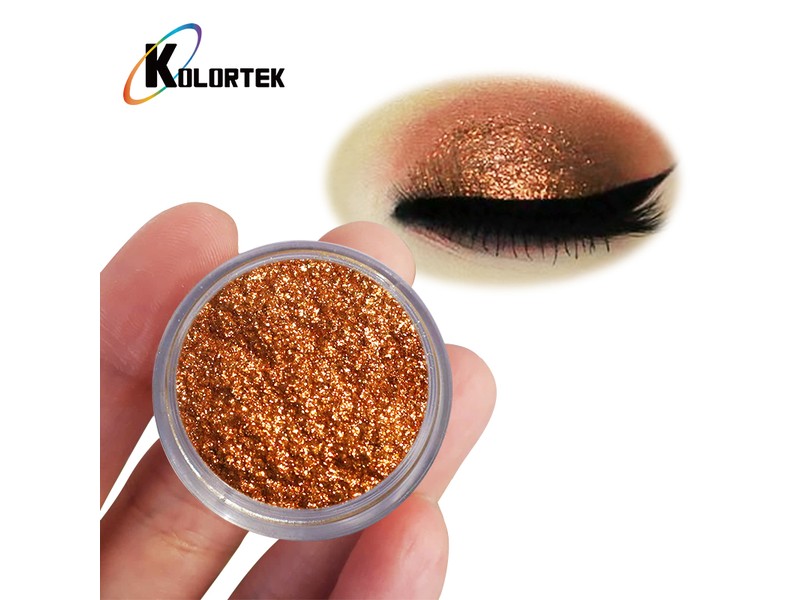
Fig. 6 — An eye format: the powder as supplied, and the look it produces on the lid. The same three materials meet in this one pan, and each arrived with a different document. Application photo.
Particle size is a format decision before it is a look decision. The 5–25 µm band suits lipstick and foundation, where grit is felt. The 20–60 µm band suits eyeshadow, where the sparkle has to read at arm's length. The 40–200 µm band suits highlighter and loose powder, where a visible flake is the point.
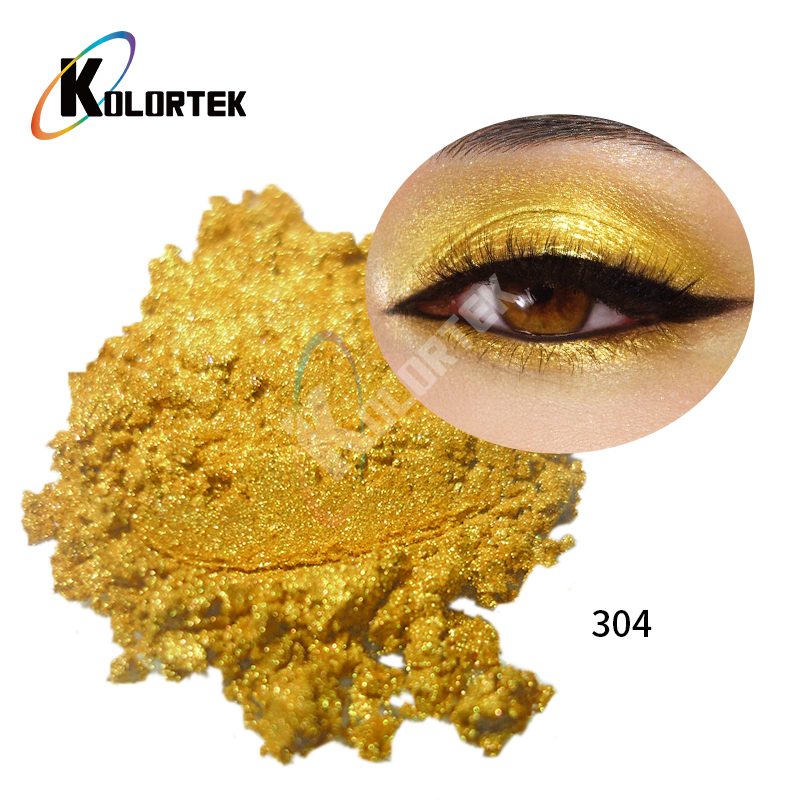
Fig. 7 — A gold shade worked onto the lid, with the powder it came from. What reads at arm’s length is flake size, not hue — which is why the band is chosen before the shade. Application photo.
Shear is a pearl problem, and only a pearl problem. A pearl is a platelet, and high-shear dispersers and three-roll mills fracture the plate, so the lustre drops. Use low-shear paddle or planetary mixing, pre-disperse in the oil phase before combining with powders, and add the pigment late in the dry blend.
A lake has no platelet to break. A filler does not care. That asymmetry is the identity split turning up on the factory floor, in the same order the paperwork did.
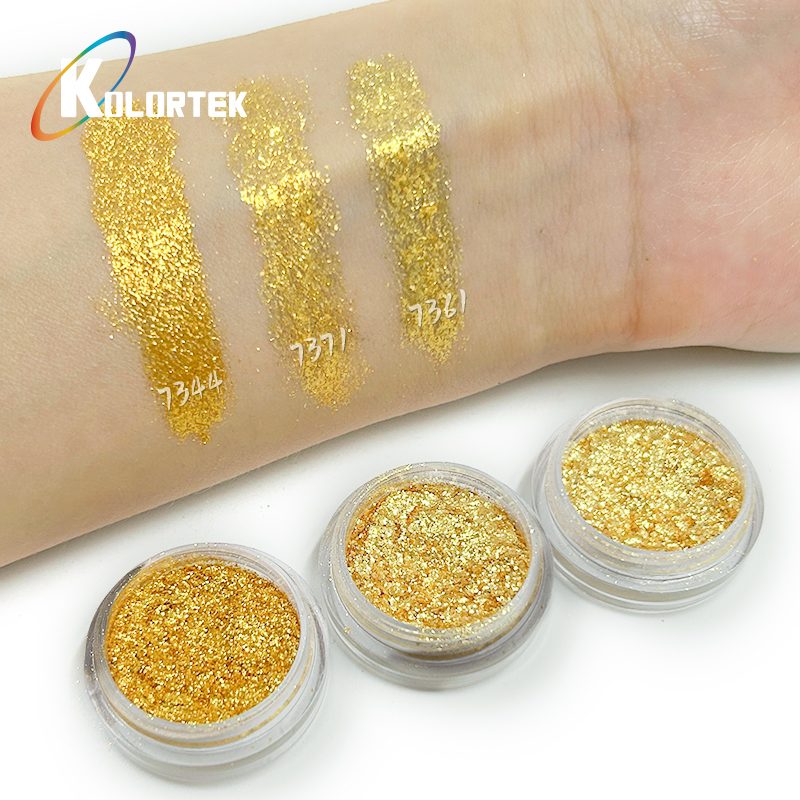
Fig. 8 — Swatches on skin beside the pots they came from. In lip and eye formats the colour is judged on skin, not in the pot, and the texture beside it is the other half of the judgement. Application photo.
Most clients send "please send your certificate". That sentence gets a blank stare or the wrong file. Rewriting the request as four questions returns the right paper the first time.
For this colour, is it certified per batch, or exempt from certification? The answer tells you whether an FDA lot number exists at all.
For an exempt material, does the certificate of analysis state lead, arsenic and mercury, and against which section?
For a lake, does the lot on the certificate match the lot on the drum?
For a filler, what INCI name will appear on the label, and is any function other than filler being claimed?
We can put in writing the composition, the INCI name, the CFR section a material falls under, the heavy-metal data on the certificate of analysis for the lot, and the technical data sheet and safety data sheet for the grade. We cannot sign as your safety assessor or decide which claims the finished product may carry. That stays with your regulatory affairs.
The colour families these documents apply to run from the coated pearls through the lakes to the oxides and ultramarines, each with its own listing behind it.
No. Mica and the titanium dioxide and iron oxide layers on it are colour additives exempt from certification, so no FDA lot certificate exists for them. What you should ask for instead is a certificate of analysis that states lead, arsenic and mercury against 21 CFR 73.1496 for mica or 73.575 for titanium dioxide, plus the specification for the grade. A lake is the opposite case.
No, not legally as a colour adjustment. Fillers carry no CI number and are not listed in Annex IV, because that list covers colourants only. A filler will lighten what you see while removing the colourant's permit along with its strength. Use titanium dioxide or a lighter pearl.
Not the same. FD&C means the colour is also cleared for food use; D&C means drugs and cosmetics only. Both are certifiable, so both arrive with an FDA lot number — but the prefix tells you where the colour may legally go.
No. Annex IV entries carry their own conditions — several reds are restricted as to mucous membranes or the eye area, and the entry, not the colour name, is what applies. Check the entry for the specific CI number before the formula is fixed.
Tell us the format (pressed, loose, lip, cream), the market it sells in, and whether the colour is a pearl, a lake or an oxide. We will confirm which document applies to that material and send the specification and the certificate of analysis for the grade.
The certificate that comes with a cosmetic powder depends on what it legally is: a coated pearl, a lake or a filler. Each one needs a different document.
Read More
Selecting the right cosmetic pigment powder for face and eye formulations requires balancing color performance, skin compatibility, and regulatory compliance across powder, cream, and liquid systems. From pearlescent shimmer and metallic finishes to flat matte coverage, eyeshadow pigment powder and foundation pigment systems each demand different base materials, surface treatments, and dispersibility profiles. These pigments are used across pressed powders, loose eyeshadows, liquid foundations, blushers, and highlighters — anywhere precise color payoff and a reliable skin feel are non-negotiable.
Read More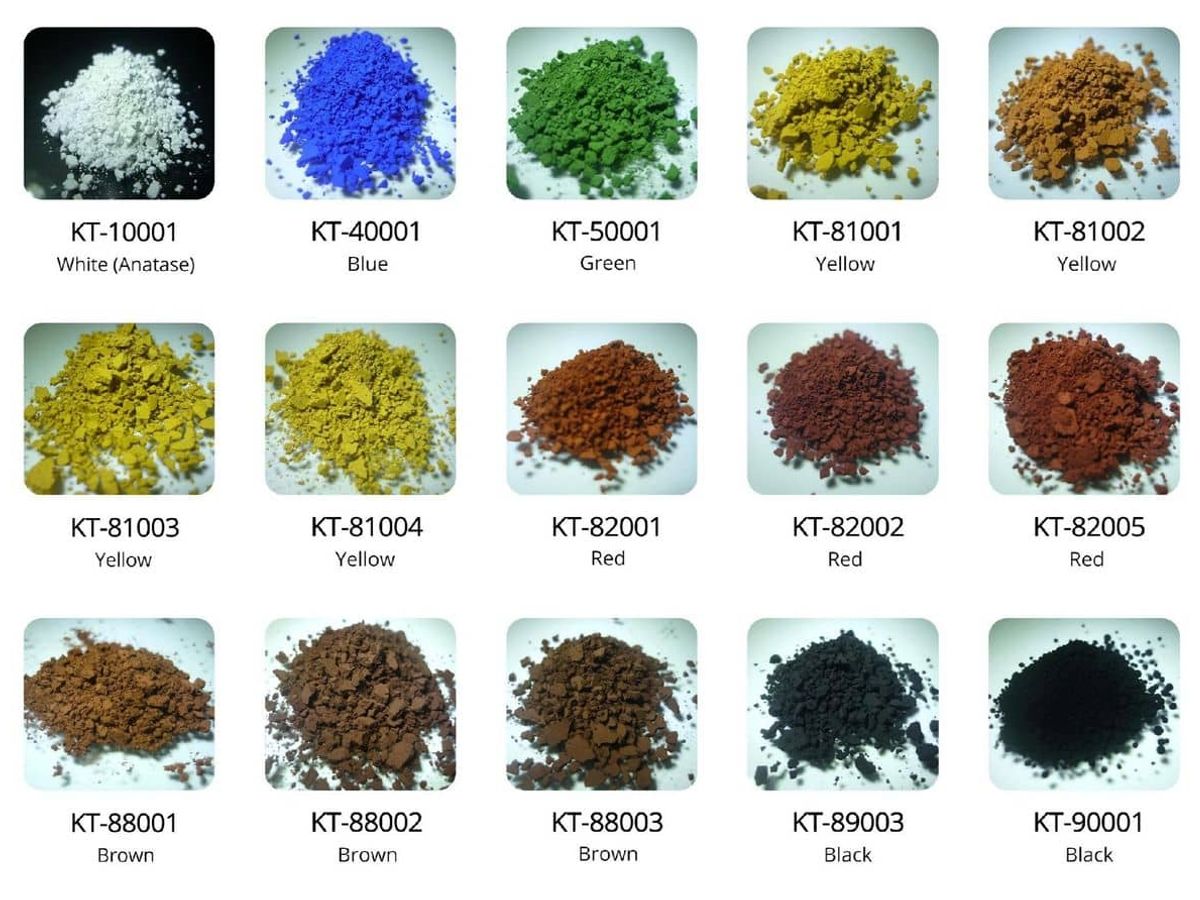
Matte cosmetic pigments — including iron oxides, ultramarines, and D&C Lakes — are the foundational colorants behind face powders, foundations, eyeshadows, and skin-tone blushers that require a flat, non-reflective finish. Cosmetic iron oxide in yellow, red, black, and brown grades delivers reliable, skin-safe color across a wide tonal range, while oxide pigment foundation formulations depend on these same materials for consistent coverage and smooth skin integration. Unlike effect pigments, these matte oxides absorb rather than reflect light, making them the go-to choice wherever a velvety, diffused color result is required.
Read More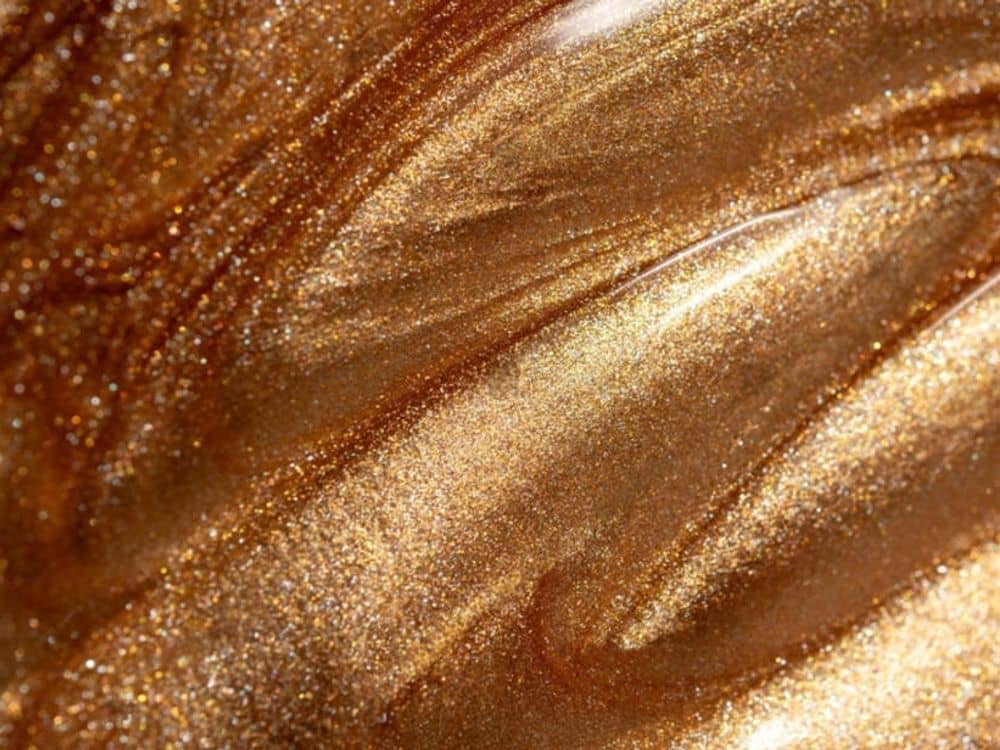
Decorative cosmetics rely on shimmer pigment powder to deliver the dimensional brilliance consumers expect — from soft satin glows in face powders to high-intensity metallic flashes in eyeshadow palettes. Pearlescent, holographic, color-shifting, and glitter-type pigments are the primary effect systems used, each serving a distinct visual role across eye, lip, face, and nail formats. When the formulation demands depth, sparkle, or chameleon color movement, selecting the right decorative cosmetic colorant is the core technical decision.
Read More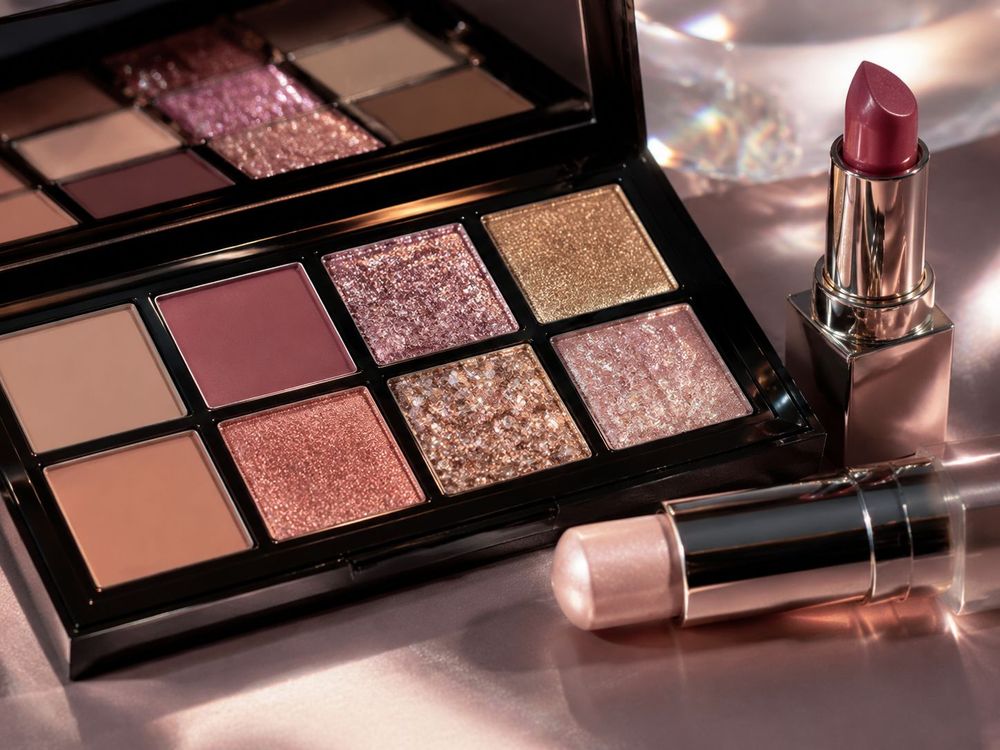
Selecting the right cosmetic pigment requires matching particle size, substrate chemistry, and regulatory status to your specific product format and target market. At Kolortek, our cosmetic pigment selection guide covers everything from natural shimmer mica to color-travel interference pigments — each chosen to meet both performance and compliance requirements. Whether you are formulating an eyeshadow palette or a premium highlighter, the correct pigment selection for cosmetics is the single most critical variable in achieving the visual effect your brand promises.
Read More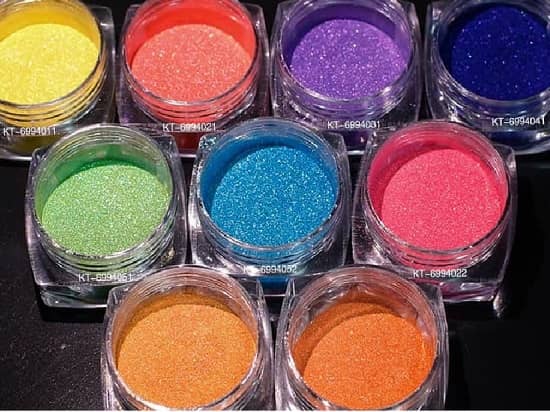
Cosmetic grade pearl pigment from Kolortek is manufactured to meet the heavy metal and microbiological limits required by major regulatory frameworks — EU EC 1223/2009, US FDA, China CSAR, and Japan MHLW — and is available across three substrate platforms: natural mica, synthetic mica (fluorphlogopite), and borosilicate glass. Particle sizes range from 5–25 μm for smooth foundation-grade finishes up to 60–300 μm for bold highlighter and loose powder sparkle. As a direct manufacturer with 20+ years in effect pigments, we supply pearlescent pigment in volumes ranging from sampling quantities through full production runs, with TDS, COA, SDS, INCI declarations, and heavy metal test reports provided as standard.
Read More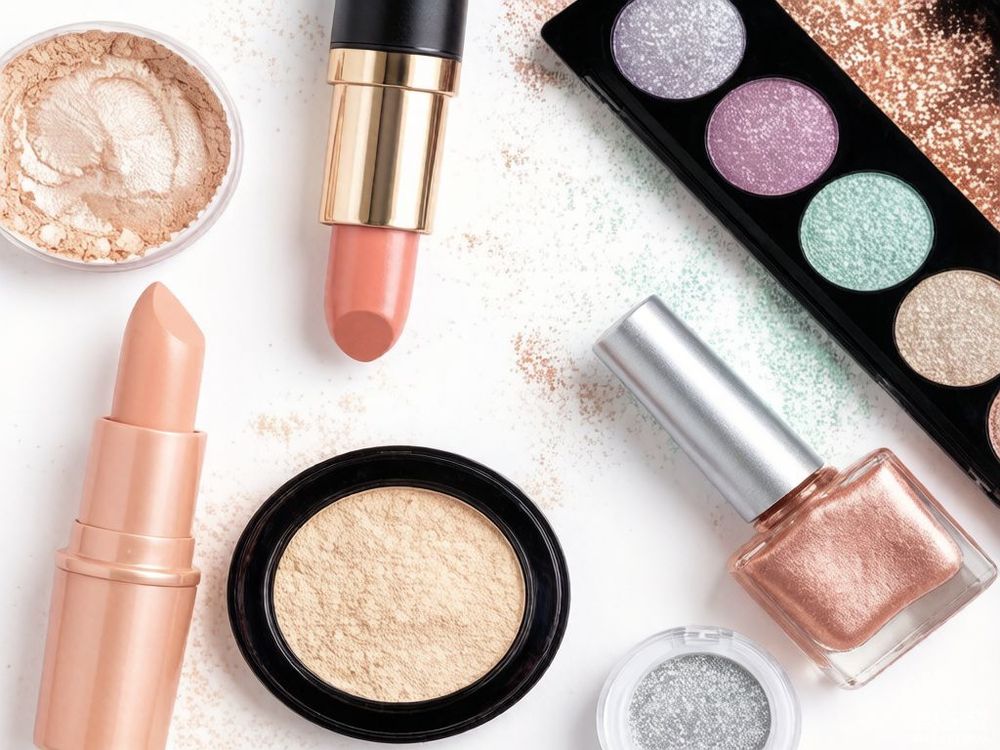
Pearl pigment for cosmetics delivers the luminous, multi-dimensional shimmer that defines modern color cosmetics — from eyeshadows and highlighters to lip glosses and tinted moisturizers. At Kolortek, we formulate cosmetic pearl solutions across mica-based, borosilicate, and synthetic fluorphlogopite substrates, each engineered to meet specific performance, regulatory, and aesthetic requirements. Selecting the right cosmetic pigment depends on particle size, substrate chemistry, surface treatment, and the market's regulatory framework.
Read More
 English
 Français
 Deutsch
 Русский
 Español
 Português