
Leave A Message
If you are interested in our products and want to know more details,please leave a message here,we will reply you as soon as we can.
A Synstar code encodes three decisions: substrate, coating system, particle-size tier. Reading them separately keeps 112 grades from becoming one flat list.
Item No. :
KT-7000 Synstar Series — 7100 silver white / 7200 interference / 7300 gold / 7400 multicolors / 7500 metal luster / 706000 & 699 cosmetic multicolorsColor Effect :
Pearlescent to metallic luster on synthetic mica; interference colours in the 7200 block; TiO₂-free golds on the D suffix (KT-733061D / 733072D / 733073D) and across the whole 7500 block by compositionParticle Size :
Five tiers in the 7500 block — Standard 10–60, Flash 20–100, Shimmer 40–200, Sparkle 60–300, Super 200–700 μmComposition :
Synthetic fluorphlogopite substrate on all grades; inorganic coatings — TiO₂ (7100), TiO₂+SnO₂ (7200), TiO₂+Fe₂O₃ (7300), colourants (7400/706000/699), Fe₂O₃ only (7500); D suffix = Fe₂O₃+silicaBrand :
KolortekMOQ :
Set per grade and per pack size; quoted against the selected codeApplication :
Automotive OEM and refinish coatings, luxury packaging and printing, high-temperature plastics (PC / PET), cosmetics as filler and effect — pressed powders, lipsticks, creams and lotionsKolortek's Synstar range is a synthetic mica pearl line built on one substrate, synthetic fluorphlogopite, and carried across 112 grade codes in the current catalogue. The codes are not a running sequence. Each one records a coating system, a particle-size tier and, in the metal luster block, the colour as well. Read as three separate decisions, the range is navigable. Read as one flat list, every grade looks like another shade of the same thing.
KT-7511, KT-7521, KT-7541, KT-7561 and KT-7571 all carry the same colour word: bronze. They sit in one block of the catalogue, the 7500 metal luster sub-series, and their fourth digit is identical. What separates them is the digit before it — and that digit moves the particle-size band by more than a factor of ten from the finest grade to the coarsest.
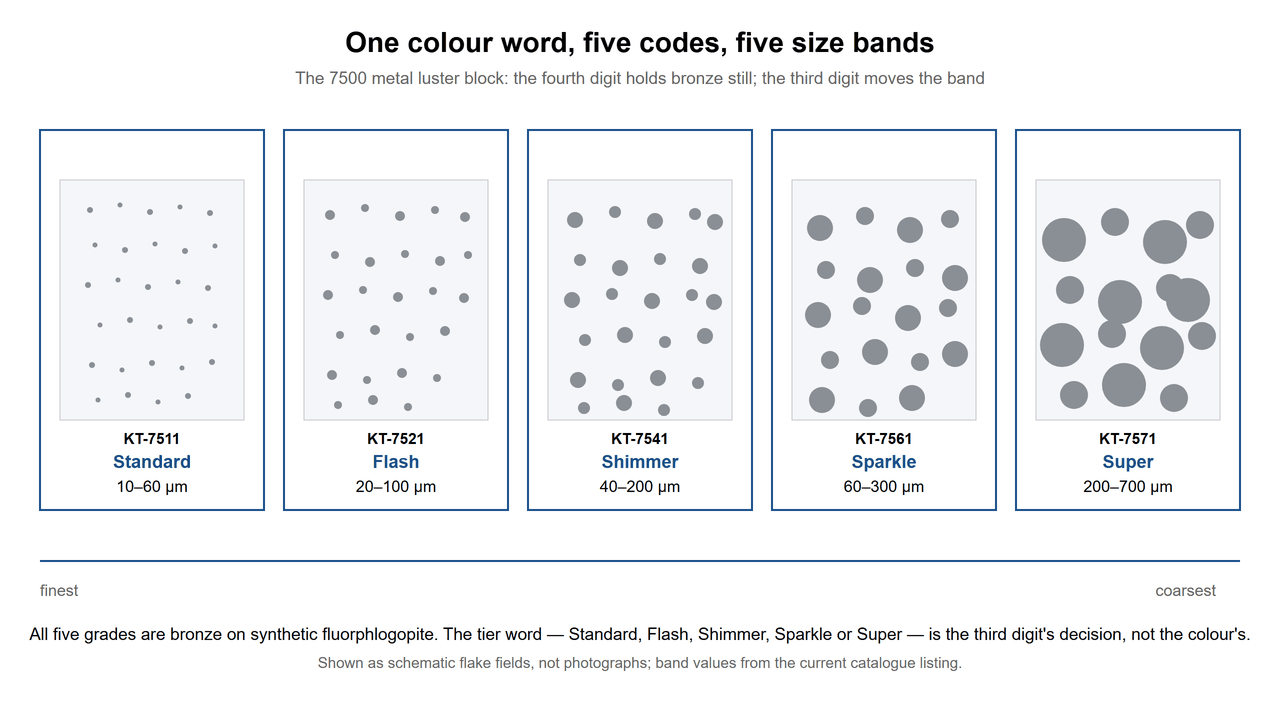
Fig. 1 — Five bronze codes in one block, with particle-size bands rising from 10–60 μm to 200–700 μm.
The effect names attached to those bands are not loose labels. Standard, Flash, Shimmer, Sparkle and Super each correspond to one code block and one particle-size range inside it. A buyer who asks for a bronze synthetic mica without naming the tier will receive whichever grade the sample rack happens to hold, and the difference between two of those grades is visible at arm's length.
That is why this page reads the range by decode rather than by shade. With 112 codes in the catalogue, a flat colour list turns every grade into a near-duplicate of its neighbour; the code structure is what keeps them distinct.
Every grade in the range starts from the same flake: synthetic fluorphlogopite, a mica grown under controlled conditions rather than mined. The practical differences appear at the flake level before any coating is applied — no mineral inclusions to read as dark specks in a pressed powder, a whiter base tone, and tighter batch-to-batch consistency than a mined flake can hold across seasons.
Those substrate properties carry through the coating. White pearls come out cleaner, interference colours carry higher chroma, and the flake tolerates higher processing temperatures than natural mica — one reason the range appears in high-temperature plastics such as polycarbonate and PET as well as in automotive OEM and refinish coatings, luxury packaging and printing.
In cosmetics the same substrate works uncoated or lightly coated as a filler: pressed eye shadows, lipsticks, creams and lotions. There it contributes pressability and skin feel rather than colour, which is why the substrate appears in two different roles across the range — the effect role and the filler role — without changing its chemistry. The two roles use different grade families, and the code block tells you which one you are looking at before any sample is opened.
Read left to right, a Synstar code settles three separate questions. The substrate comes first and is fixed for the range: synthetic fluorphlogopite throughout. What the digits then vary is the coating system and the particle-size tier, and each of those is held in a different part of the number.
The coating system follows the sub-series block. KT-7100 grades carry a titanium dioxide layer for silver white. KT-7200 adds tin oxide for interference colours. KT-7300 pairs titanium dioxide with iron oxide for golds. KT-7400 reaches its colours through colourants on the flake. KT-7500 drops titanium dioxide and builds the effect on iron oxide alone. The cosmetic multicolor blocks — KT-706000 and the 699 cosmetic grades — work through colourants as well.
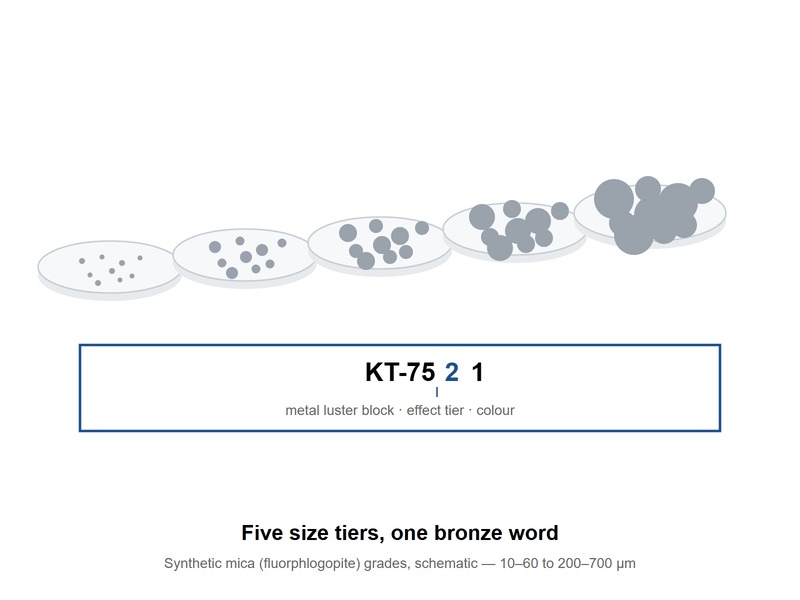
Inside the 7500 block the code becomes more specific still. The third digit selects the effect tier and the fourth selects the colour, and that structure holds for all fourteen codes in the block. The same tier words recur in other blocks — the Flash gold in the 7300 block is one example — but their size boundaries are set per block, so a Flash in 7300 is not automatically a Flash in 7500.
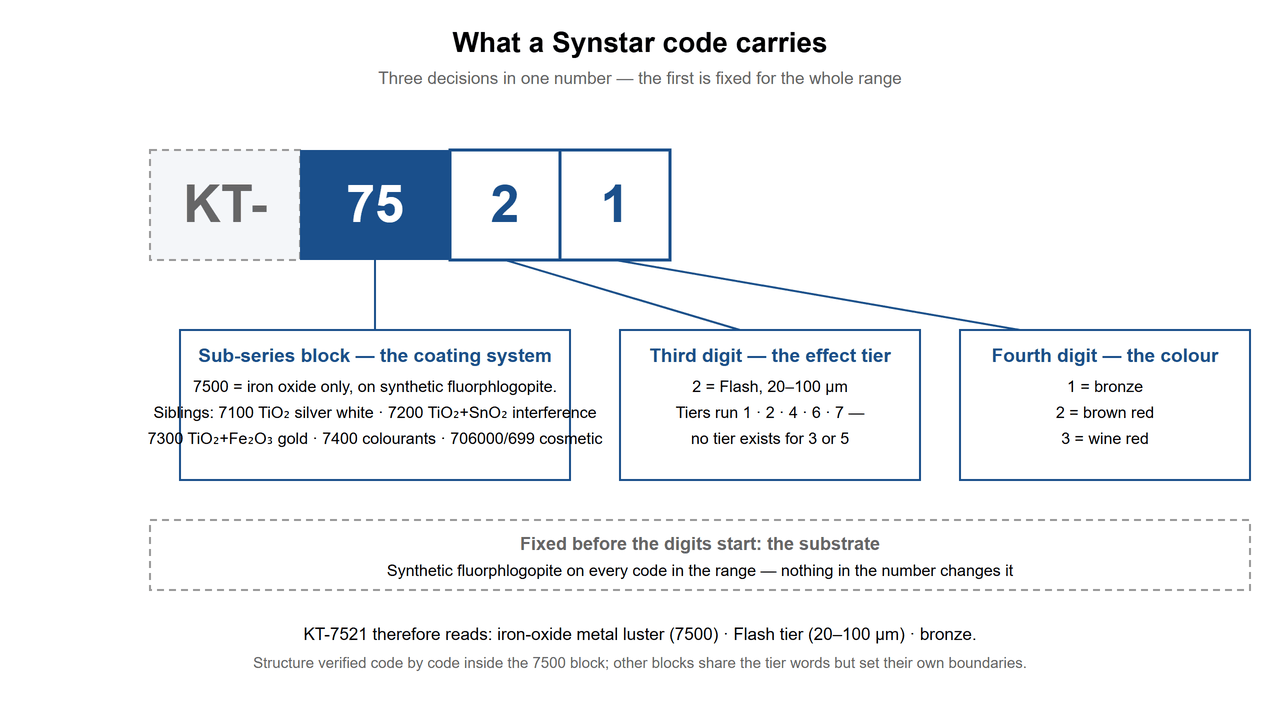
Fig. 2 — A Synstar code read as three decisions: fixed substrate, sub-series coating system, then effect digit and colour digit.
The 7500 metal luster sub-series lists fourteen codes across five tiers. The table below is the decode: the effect word, the third digit that encodes it, the particle-size band, and the colour codes available inside each band. Every row is checked against the current catalogue listing rather than inferred from the pattern.
| Effect word | Third digit | Particle size | Colour codes in the block |
|---|---|---|---|
| Standard | 1 | 10–60 μm | KT-7511 bronze · KT-7512 brown red · KT-7513 wine red |
| Flash | 2 | 20–100 μm | KT-7521 bronze · KT-7523 wine red |
| Shimmer | 4 | 40–200 μm | KT-7541 bronze · KT-7542 brown red · KT-7543 wine red |
| Sparkle | 6 | 60–300 μm | KT-7561 bronze · KT-7562 brown red · KT-7563 wine red |
| Super | 7 | 200–700 μm | KT-7571 bronze · KT-7573 wine red |
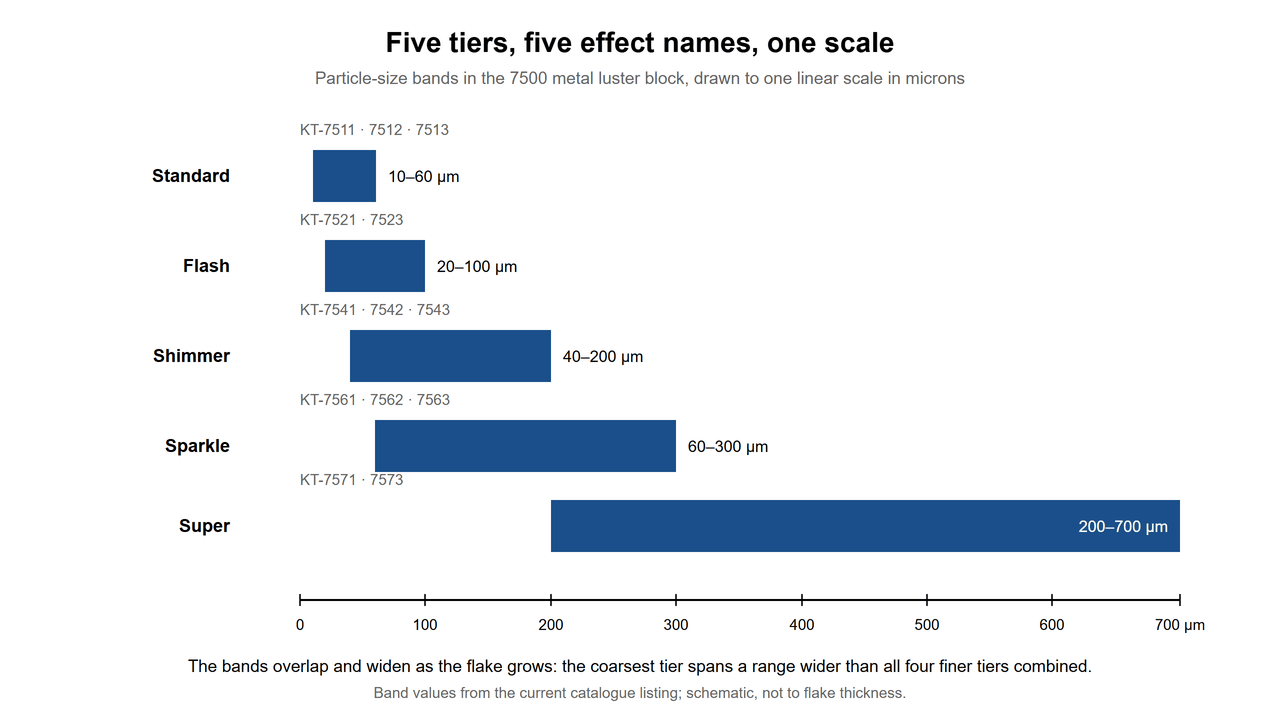
Fig. 3 — The five tiers as size bands on one scale, from 10–60 μm up to 200–700 μm.
Two boundaries matter when using it. First, the tier digits are 1, 2, 4, 6 and 7 — the sequence skips 3 and 5, the catalogue assigns no tier to those digits, so the gaps are real rather than an omission in this table. Second, the catalogue also lists KT-7522 inside the Flash block; this page names only the colour designations the listing itself prints.
For orientation, the standard-tier bronze grade sits at KT-7511, and the coarsest wine red in the range is KT-7573 at 200–700 μm. Between those two ends, the tier you choose is decided by how the finished surface will be viewed, not by the colour — the colour is the fourth digit's job.
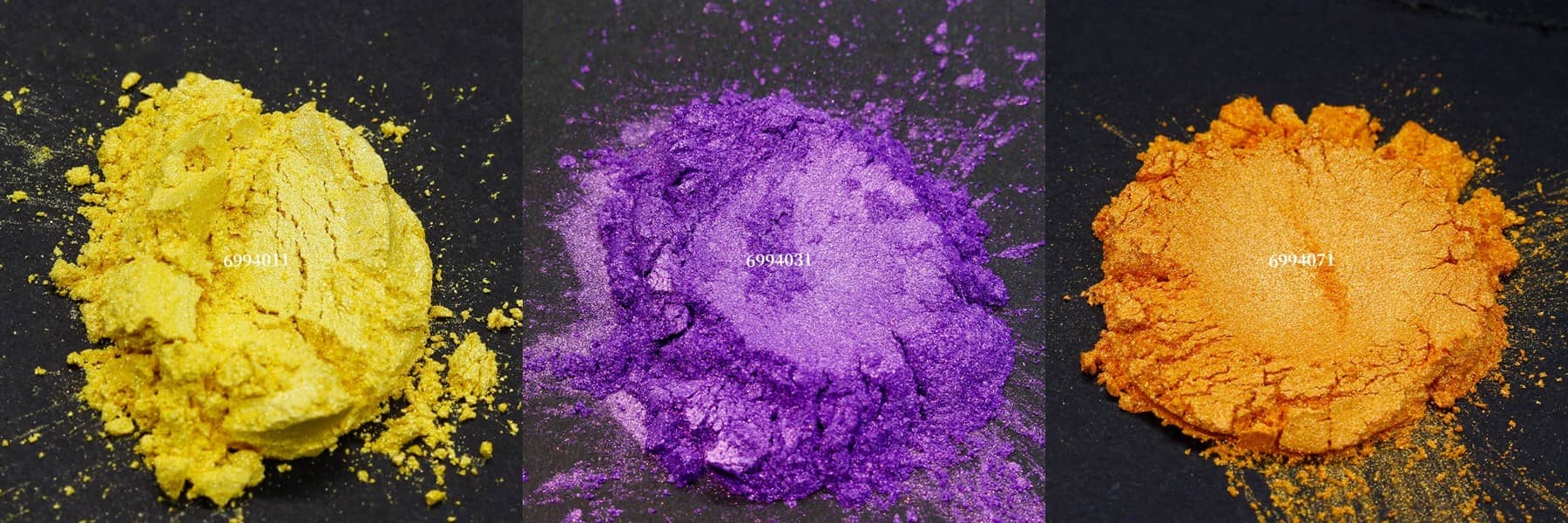
The separation between tier and colour shows inside a single tier, too. The catalogue lists three cosmetic-multicolour grades at the same 10–60 μm band — KT-6994011 Primrose Yellow, KT-6994031 Amethyst and KT-6994071 Amber — and the only difference the listing records between them is the colourant package: FD&C Yellow 5 on the first, D&C Red 28 on the second, D&C Red 28 with FD&C Yellow 6 on the third. Same particle band, three different colours.
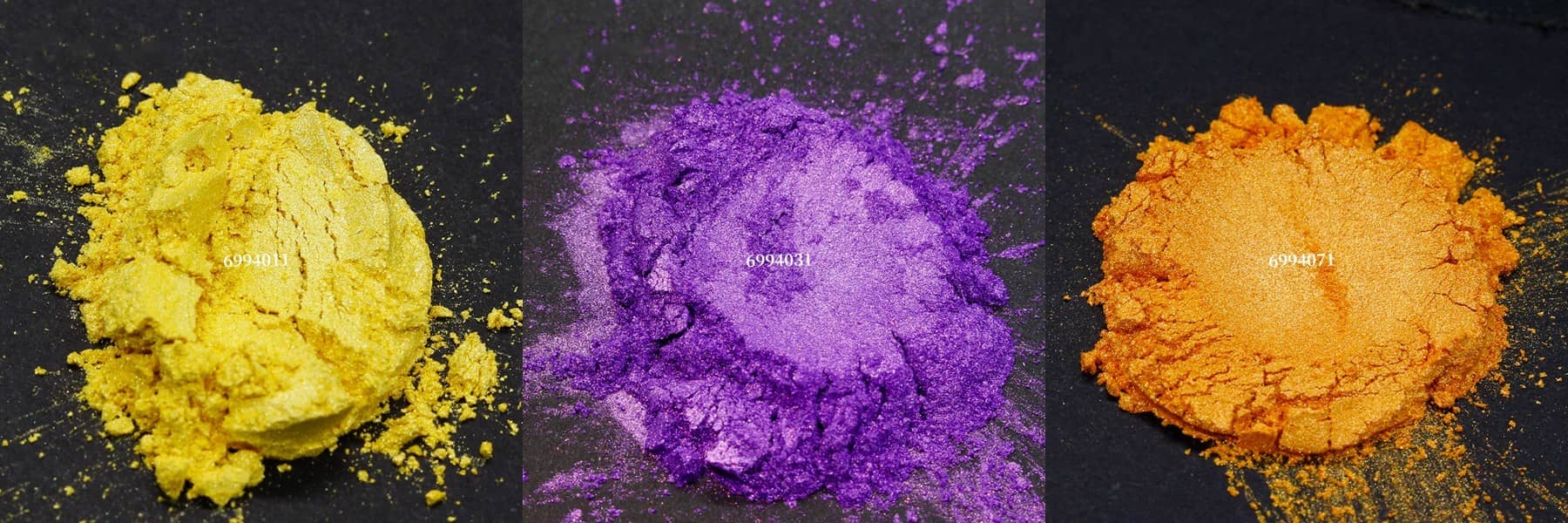
Fig. 4 — Powder of three cosmetic-multicolour grades that share the 10–60 μm band: KT-6994011 Primrose Yellow, KT-6994031 Amethyst, KT-6994071 Amber (grade codes visible in each panel). The tier sets the particle texture; the colourant package sets the colour.
The D suffix marks a gold built without titanium dioxide. The catalogue lists three: KT-733061D at 10–60 μm, KT-733072D at 20–150 μm and KT-733073D at 30–200 μm. Their coating is iron oxide over silica, which produces the gold effect without a titanium dioxide layer in the stack.
The 7500 block reaches the same position by construction. Its coating is iron oxide alone, so the whole metal luster sub-series is titanium dioxide-free without carrying a suffix. The D codes extend that option into the gold direction, where the standard 7300 build does use a titanium dioxide layer.
This matters in a formulation that is managing its titanium dioxide content. The shimmer gold grade is carried as a titanium dioxide-free product in its own right, and the same logic covers the flash gold at 20–150 μm. Comparing them against the standard 7300 golds in your own system is the reliable check, because the coating chemistry differs even where the colour word is shared.
Key takeaways
A Synstar code is three decisions stacked in one number: a fixed substrate, a sub-series coating system, and a particle-size tier.
Inside the 7500 block the third digit is the effect tier — 1, 2, 4, 6 or 7 — and the fourth is the colour: 1 bronze, 2 brown red, 3 wine red.
Five size tiers run 10–60, 20–100, 40–200, 60–300 and 200–700 μm, mapped to the effect words Standard, Flash, Shimmer, Sparkle and Super.
The D suffix marks a titanium dioxide-free gold on iron oxide and silica; the 7500 block is titanium dioxide-free by composition alone.
The tier gaps at digits 3 and 5 are real, and the decode has been verified code by code only inside the 7500 block — other blocks share the tier words but set their own size boundaries.
MOQ for the Synstar range is set per grade and per pack size. Contact us with your grade selection and target volume for a specific quote. Quoting against a code rather than a colour word also fixes the particle-size band inside the enquiry, which is the variable most often left open and the one that changes the answer most.
Custom sample packs are built around the target application. Tell us the substrate you are colouring, the effect word you are aiming at, and the particle-size band your process can carry; the pack is assembled against those three answers rather than pulled from a colour-sorted rack.
We hold an ISO 9001:2015 certified quality management system. Certificates and compliance documentation covering REACH, RoHS, Halal, Kosher and US FDA registration are provided on request for the required grade and target market.
Download the borosilicate-based pearlescent pigments catalogue for the full grade listing across the pearl ranges, including the Synstar blocks referenced on this page.
Regulatory documentation for the Synstar range — INCI declarations, heavy-metal screening and market-specific certificates — is provided on request for the required grade. Ask for the documents against a specific code rather than against the range name: the coating system differs by block, and the declaration follows the coating rather than the sub-series label.
The substrate itself is synthetic fluorphlogopite, produced under controlled conditions rather than mined. Where a market's rules distinguish synthetic from natural mica, the distinction sits at the substrate level and applies across every code in the range, whatever its coating system or particle-size tier.
Send your substrate, your target effect word and the particle-size band your process can carry. A sample pack drawn from the matching tier is more useful than a colour-sorted set, because the tier — not the colour — decides how the effect reads on the finished part. If you are working to a titanium dioxide constraint, say so at the same time: it removes the standard 7300 golds from the set and saves a round of samples that could not have been used anyway.
No. The coating system may be the same, but the flake underneath is not: one is grown synthetic fluorphlogopite, the other is mined natural mica. Whiteness, inclusion level, batch consistency and temperature tolerance all sit at the substrate, so two pearls with identical colour words can still behave differently in the same formula.
The tier words recur, but the size boundaries are set per block. A Flash grade in the 7300 gold block runs on its own band, which is not identical to the 7500 Flash band. Treat the table on this page as valid for the 7500 block, and read the listing for the other blocks.
It changes the coating chemistry, not the substrate. A D-suffixed gold is iron oxide over silica with no titanium dioxide layer, while the standard 7300 gold carries titanium dioxide with iron oxide. The effect direction is the same; the composition is not.
Answer three questions: the substrate you are colouring, the effect word you are aiming at, and the particle-size band your process can carry. Those three answers point at one code block and usually at one or two codes inside it — which is the sample pack worth building.
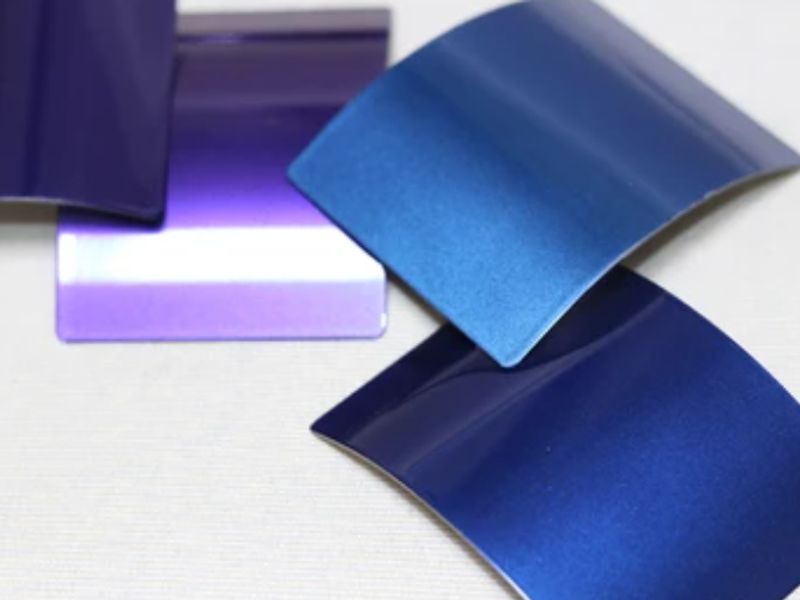
Merck's Iriodin line has been a reference standard in effect pigments for decades. Strong luster, consistent particle size distribution, broad color range — the reasons formulators specify it are well understood. The question that comes up more often now isn't whether Iriodin performs, but whether it's the only option worth specifying.
Read More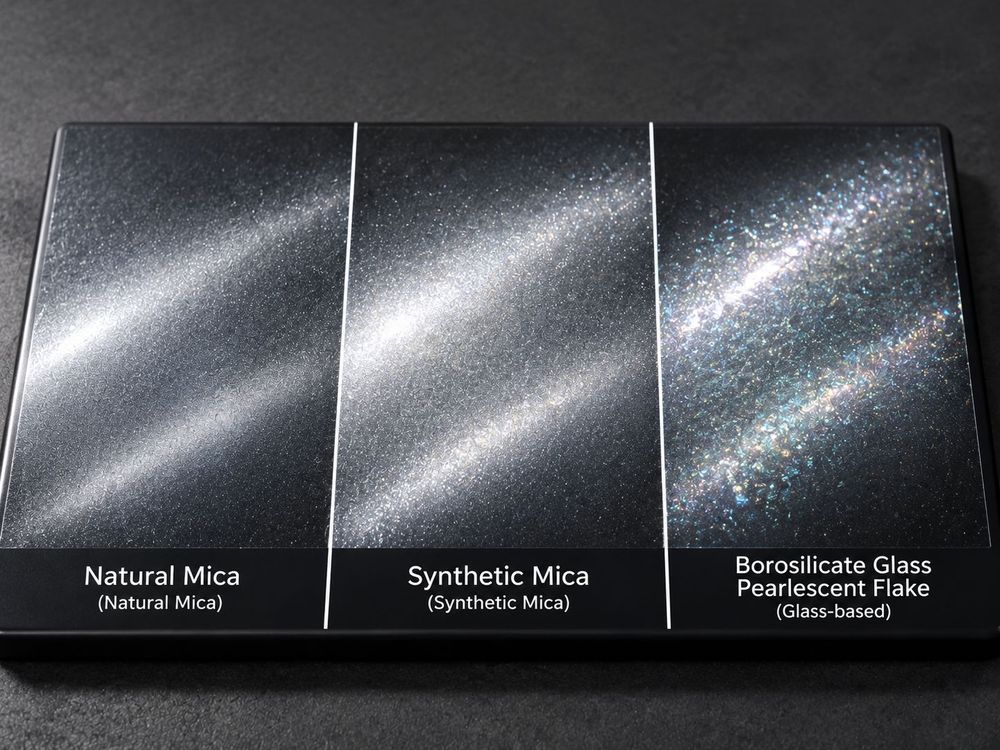
Kolortek supplies wholesale pearlescent pigment direct from our manufacturing facility in China — covering seven product series from standard natural mica grades to synthetic mica and borosilicate platforms, available in multiple particle size distributions. Whether you're scaling a new formulation or securing a reliable long-term supply chain, we work directly with formulators and procurement teams to match the right grade to the right application, with batch-to-batch consistency and full technical support from first sample to full-volume order.
Read More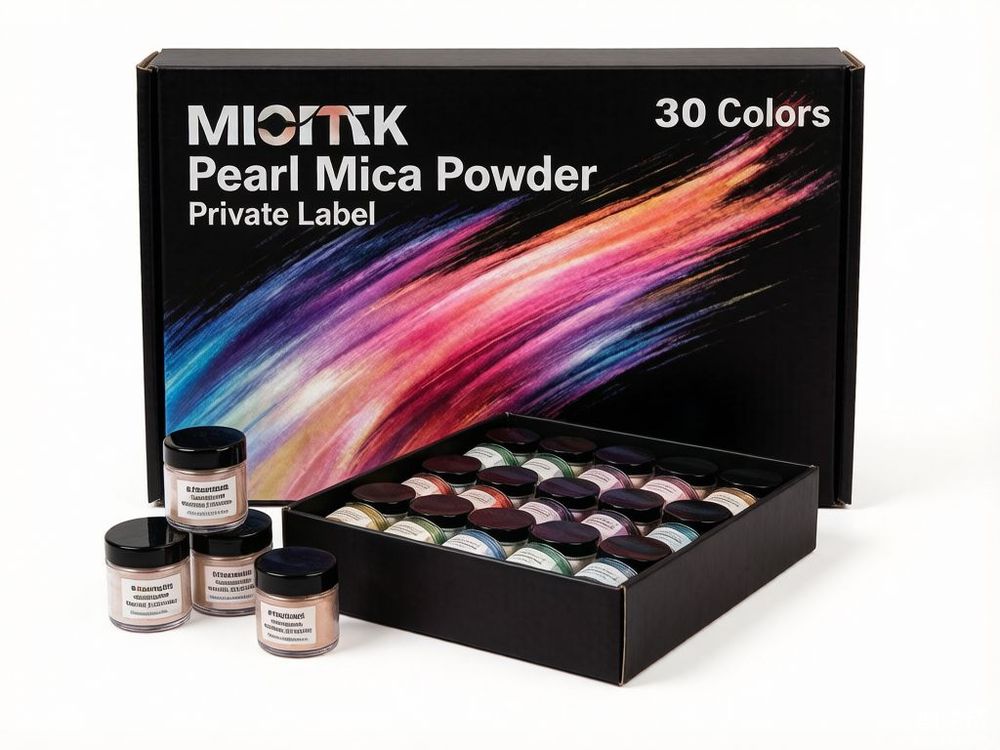
Private label pearlescent mica pigment manufacturing allows brands to source factory-direct effect pigments with custom packaging and branding—eliminating middleman markup while maintaining full control over product presentation. At Kolortek, we produce natural and synthetic mica-based pearlescent pigments across multiple series (KT-100 Silver White, KT-200 Interference, KT-300 Gold, KT-500 Metal Luster, KT-6000 Multicolor, KT-7000 Synstar synthetic mica) and offer OEM/ODM services from sample sachets to bulk industrial containers, enabling cosmetic brands, coatings formulators, and specialty ink manufacturers to launch branded pigment lines without capital investment in production infrastructure.
Read More
A Synstar code encodes three decisions: substrate, coating system, particle-size tier. Reading them separately keeps 112 grades from becoming one flat list.
Read More
 English
 Français
 Deutsch
 Русский
 Español
 Português