Leave A Message
If you are interested in our products and want to know more details,please leave a message here,we will reply you as soon as we can.
Cosmetics Solutions with Pearl Pigments: Formulation Guide for Color Cosmetics & Skincare
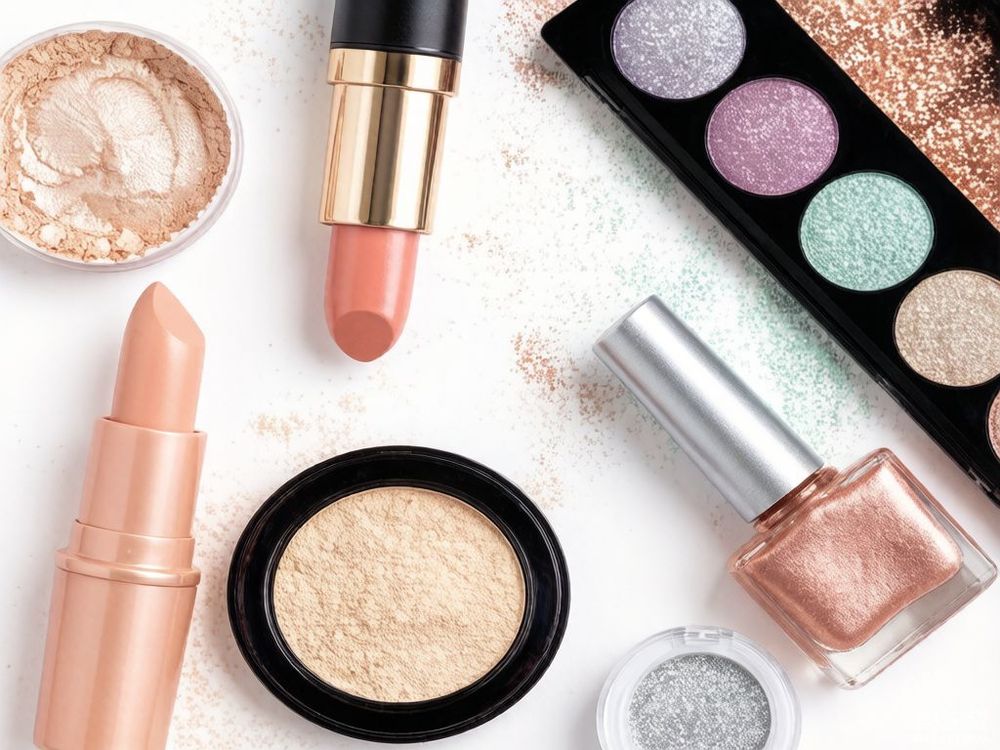
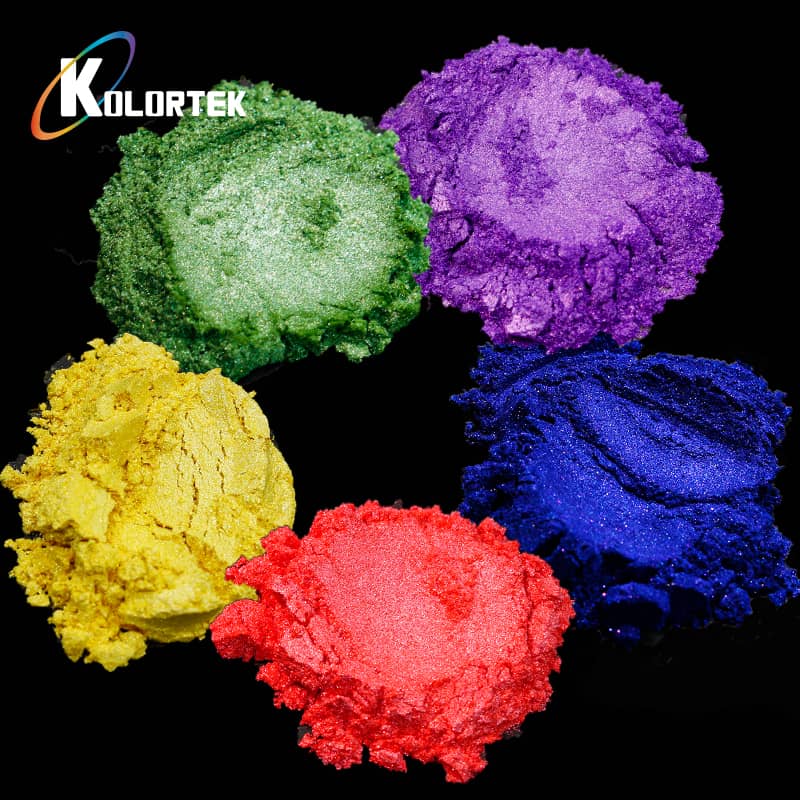
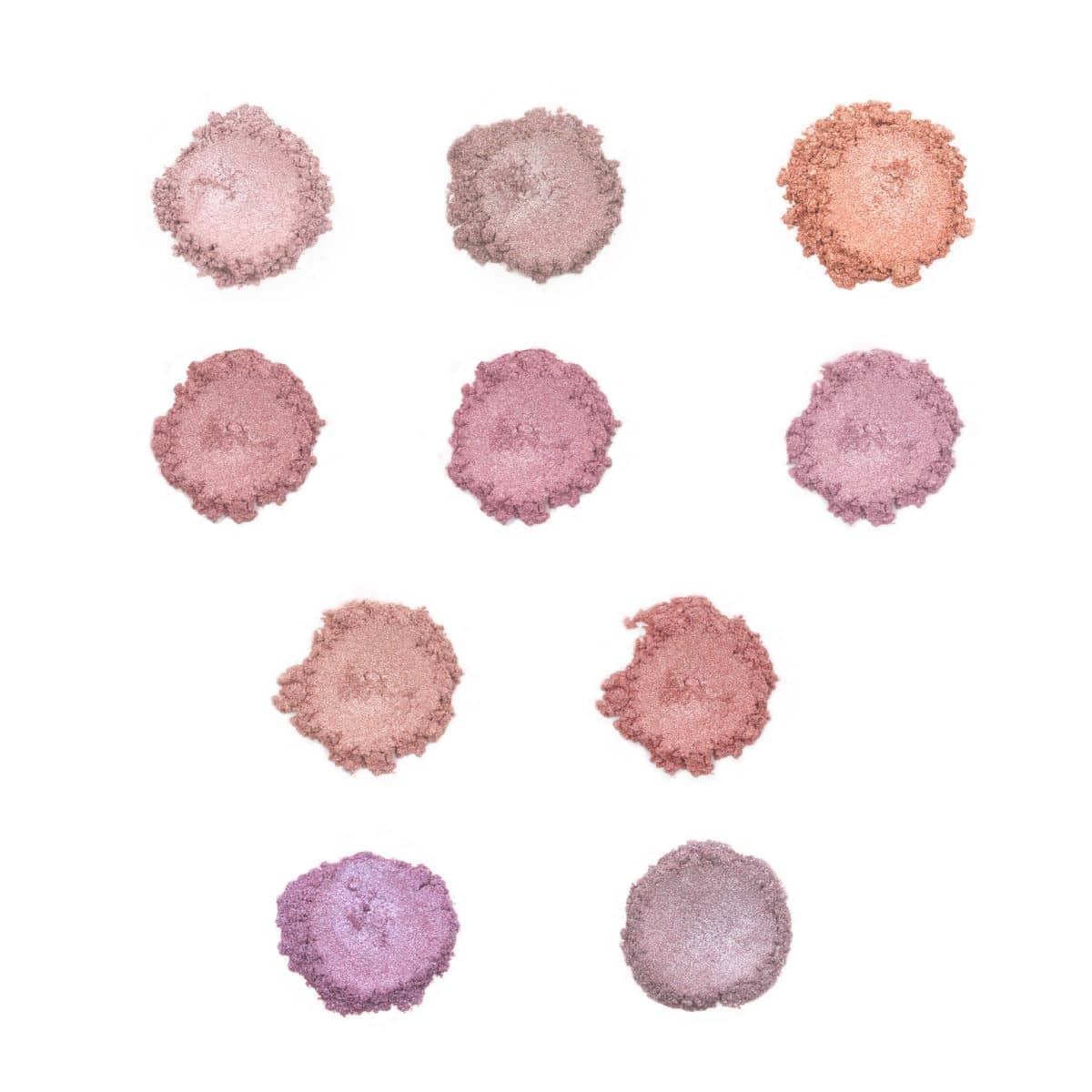
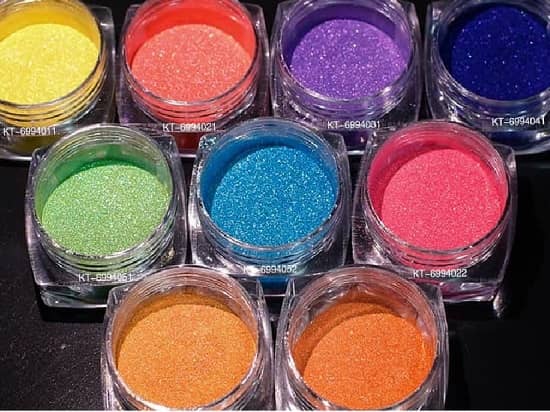
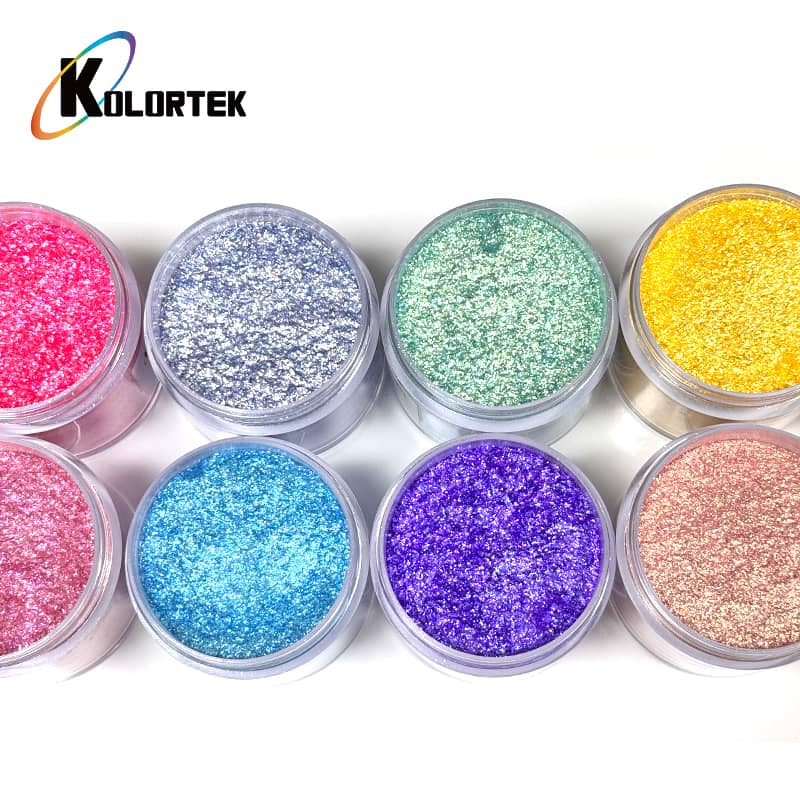
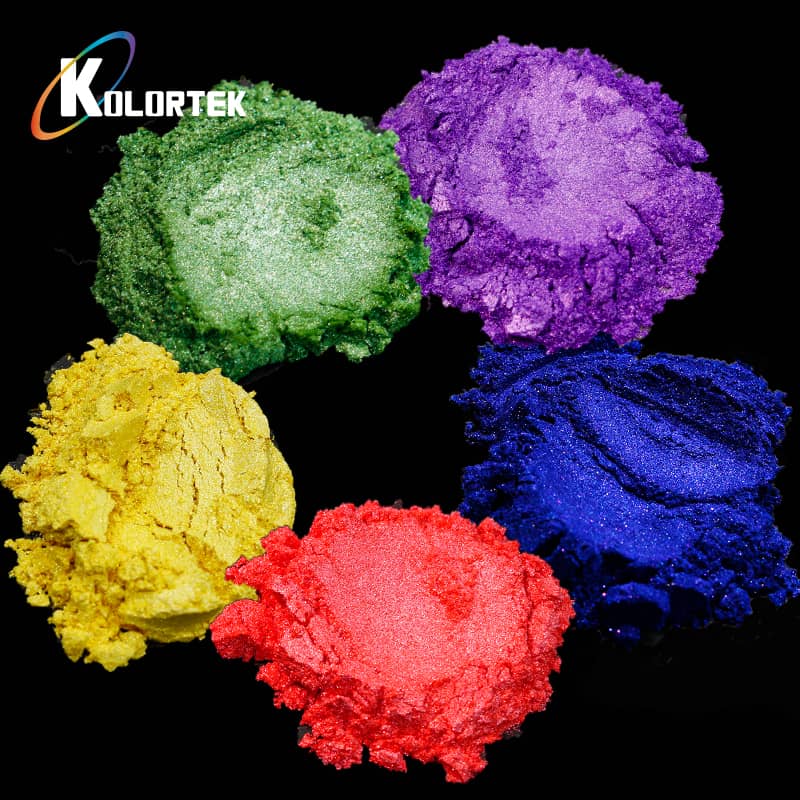
Pearl pigment for cosmetics delivers the luminous, multi-dimensional shimmer that defines modern color cosmetics — from eyeshadows and highlighters to lip glosses and tinted moisturizers. At Kolortek, we formulate cosmetic pearl solutions across mica-based, borosilicate, and synthetic fluorphlogopite substrates, each engineered to meet specific performance, regulatory, and aesthetic requirements. Selecting the right cosmetic pigment depends on particle size, substrate chemistry, surface treatment, and the market's regulatory framework.
The cosmetics industry runs on light interaction. Consumers purchase eyeshadow palettes, highlighters, and lip glosses specifically because of how they interact with light — depth, glow, color travel, and dimension that flat organic dyes cannot replicate. Pearl pigments achieve this by exploiting thin-film interference: multiple transparent layers of metal oxide coatings on a platelet substrate generate color through light wave interference rather than absorption. The result is a luminous, skin-flattering effect that shifts with the viewing angle.
At Kolortek, we supply mica powder for cosmetics and specialty effect substrates across virtually every finished product category: pressed and loose eyeshadows, blushes, bronzers, highlighters, lipsticks, lip glosses, foundations, BB/CC creams, setting powders, body shimmer lotions, and nail products. Each category imposes distinct requirements — particle size, loading level, substrate type, surface chemistry, and regulatory status — and our application engineering team works with formulators to navigate every dimension of that decision.
Key industry forces shaping pigment selection today include: clean beauty demands for transparent ingredient labels, growing regulatory scrutiny of TiO₂ in powder inhalation contexts (EU), the phaseout of plastic glitter under EU microplastic regulations (Regulation 2023/2055), and consumer appetite for multi-chrome color-shift effects in prestige launches. Our product portfolio has evolved to address each of these trends directly.
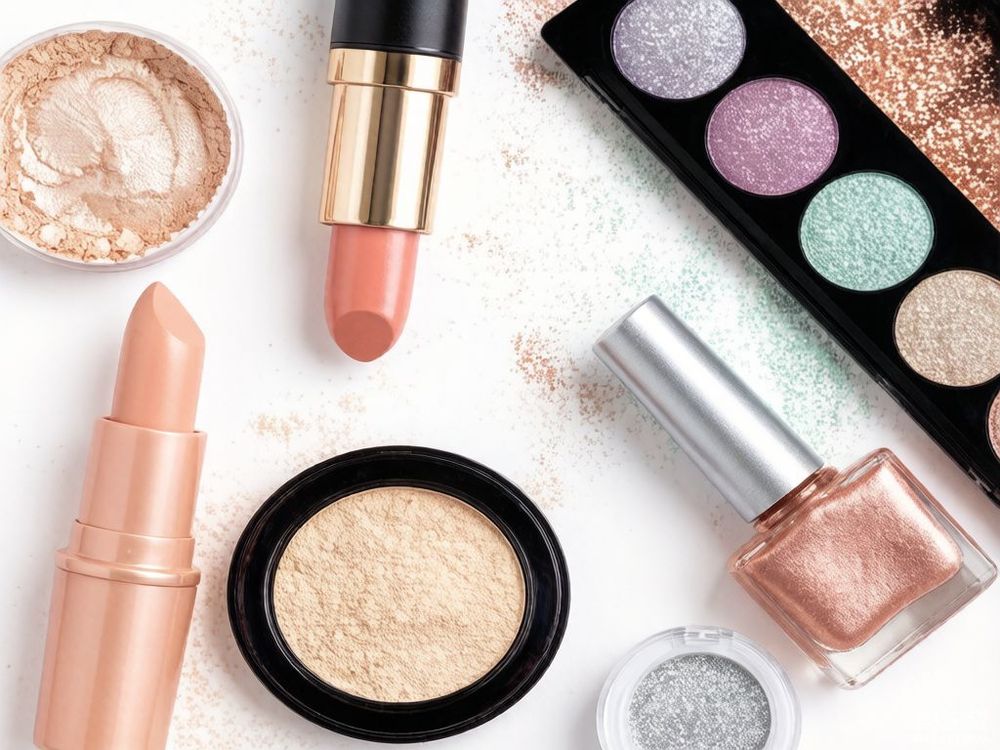
The workhorse of our cosmetic lineup, these series cover the broadest range of applications and shades. Each uses a different substrate chemistry, and that substrate choice has real downstream implications:
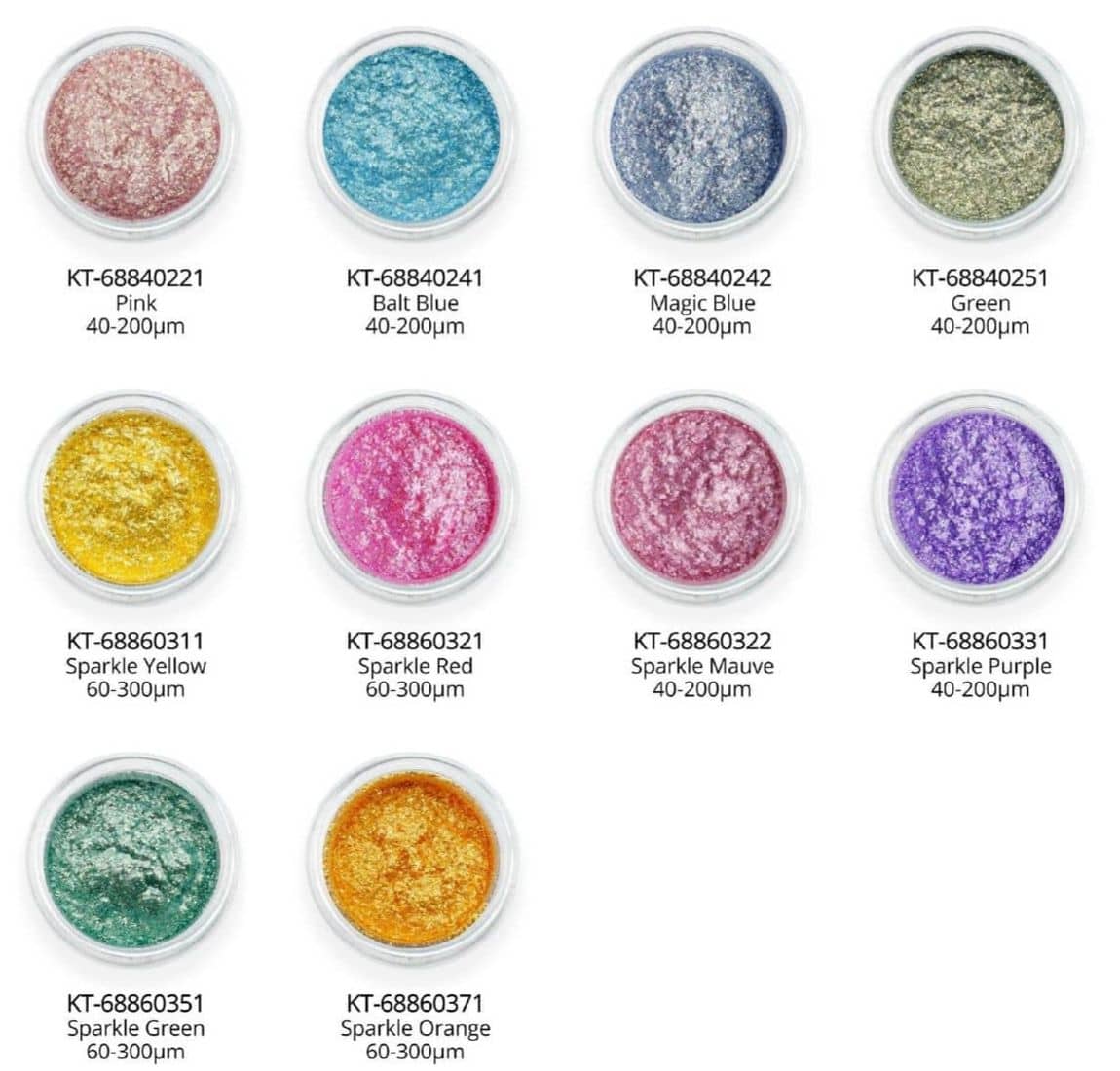
Where standard mica sparkles, borosilicate glass flake substrates dazzle. The high refractive index of calcium sodium borosilicate generates a brilliance and transparency that mica cannot match. Our KT-68840 series (40–200 μm) covers Pink, Baltic Blue, and Magic Blue — ideal for premium highlighters and loose powders. The KT-68860 series (60–300 μm) takes that further into bold editorial sparkle across Yellow, Red, Green, Blue, and Orange shades. Loading levels of 5–30% in highlighters deliver the wet, glassy luminosity that dominates luxury product launches.
One practical note: borosilicate flakes require more careful handling than mica. Their glass substrate is more brittle — avoid any processing step that applies compressive force. In pressed powder formulations, reduce pressing pressure and confirm tablet hardness with the higher-sparkle, larger-particle grades.
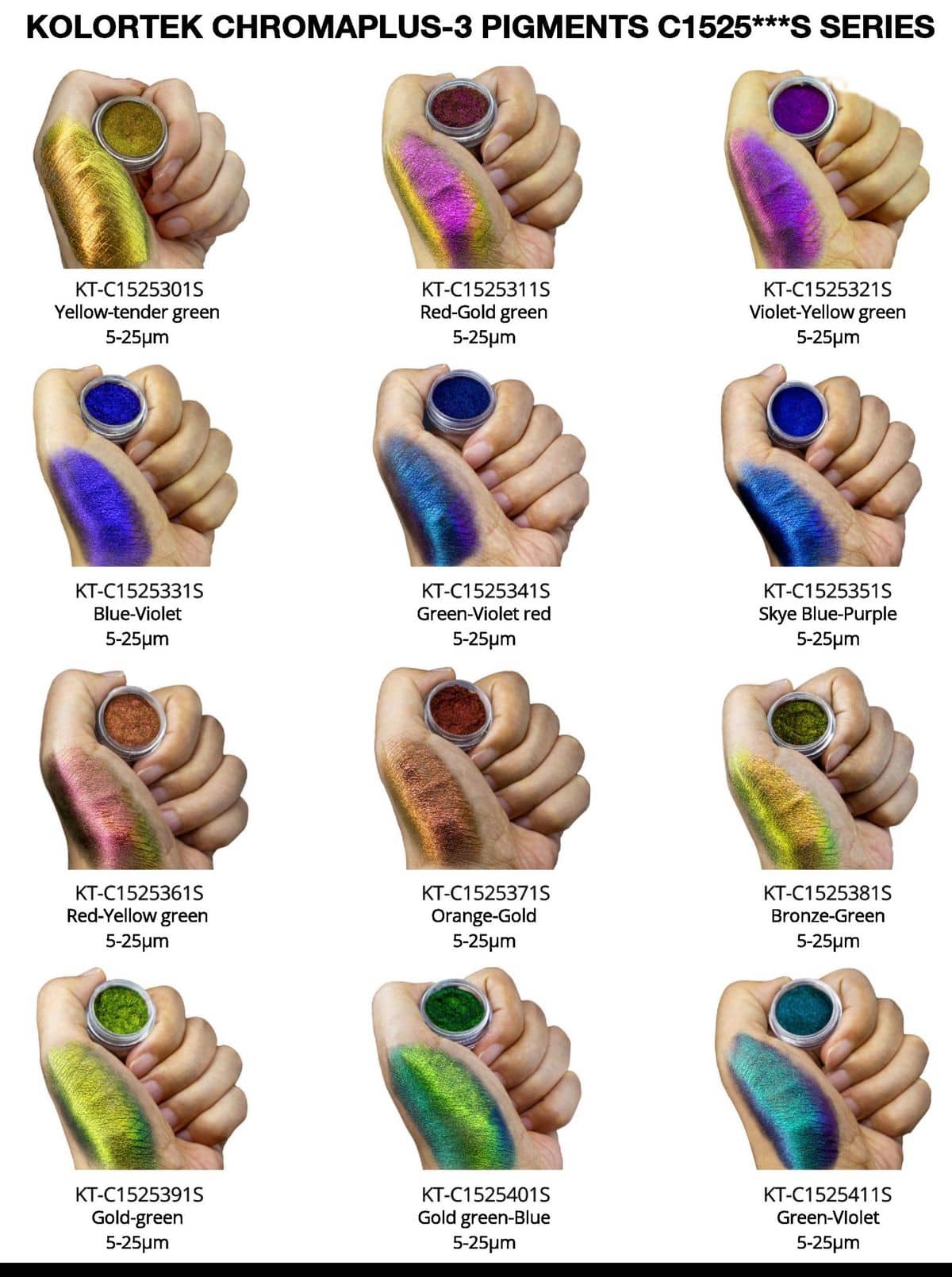
ChromaPlus represents precision multilayer interference engineering for dramatic color-shift effects. ChromaPlus-1 (C150***, 10–60 μm, 17 shades) and ChromaPlus-3 (15–75 μm or 5–25 μm, 12 shades) serve premium eyeshadows and highlighters. ChromaPlus-4 (C1535***, 20–80 μm, 10 TiO₂-free shades) addresses brands formulating for clean-label multi-chrome effects — a rare combination.
The Aurora range takes a different visual direction: ethereal, translucent shimmer with rainbow-like radiance. Aurora Diamond (ARD16***) delivers brilliant diamond-like sparkle; Aurora Morandi (AMD11**) offers muted, sophisticated tones for minimalist luxury; the Pastel series (APF11**/21**/12**) produces soft pastel aurora effects increasingly popular in Korean-inspired formulations. For nail polish specifically, only the ARS6***/ARS21**/ARS31** Aurora sub-series should be used — these are the solvent-resistant grades; AM-series Auroras are for powder cosmetics only.
Holographic Multichrome (HMC6**, 12 shades) combines holographic sparkle with multi-angle color shift — a genuinely distinctive effect that commands attention on shelf and in user-generated content. ChromaFlakes Cosmetic (C950*** series) uses irregular large flakes for maximum dimensional impact in body shimmer and editorial highlighters.
Pigment loading of 5–50% is typical, with particle sizes of 20–60 μm providing visible shimmer without grittiness. We recommend blending KT-688 or KT-699 interference pigments with functional fillers — Silk Sericite (KT-SS1250) for natural texture and transparency, Boron Nitride (KT-YB08) for slip and soft focus — and using 5–15% binder to ensure tablet integrity. Add pearl pigments as the final dry-blend step to minimize platelet fracture. For color-travel eyeshadows targeting prestige retail, ChromaPlus-1 or ChromaPlus-3 at 10–30% loading delivers the multi-chrome shift that photographs distinctively on social media.
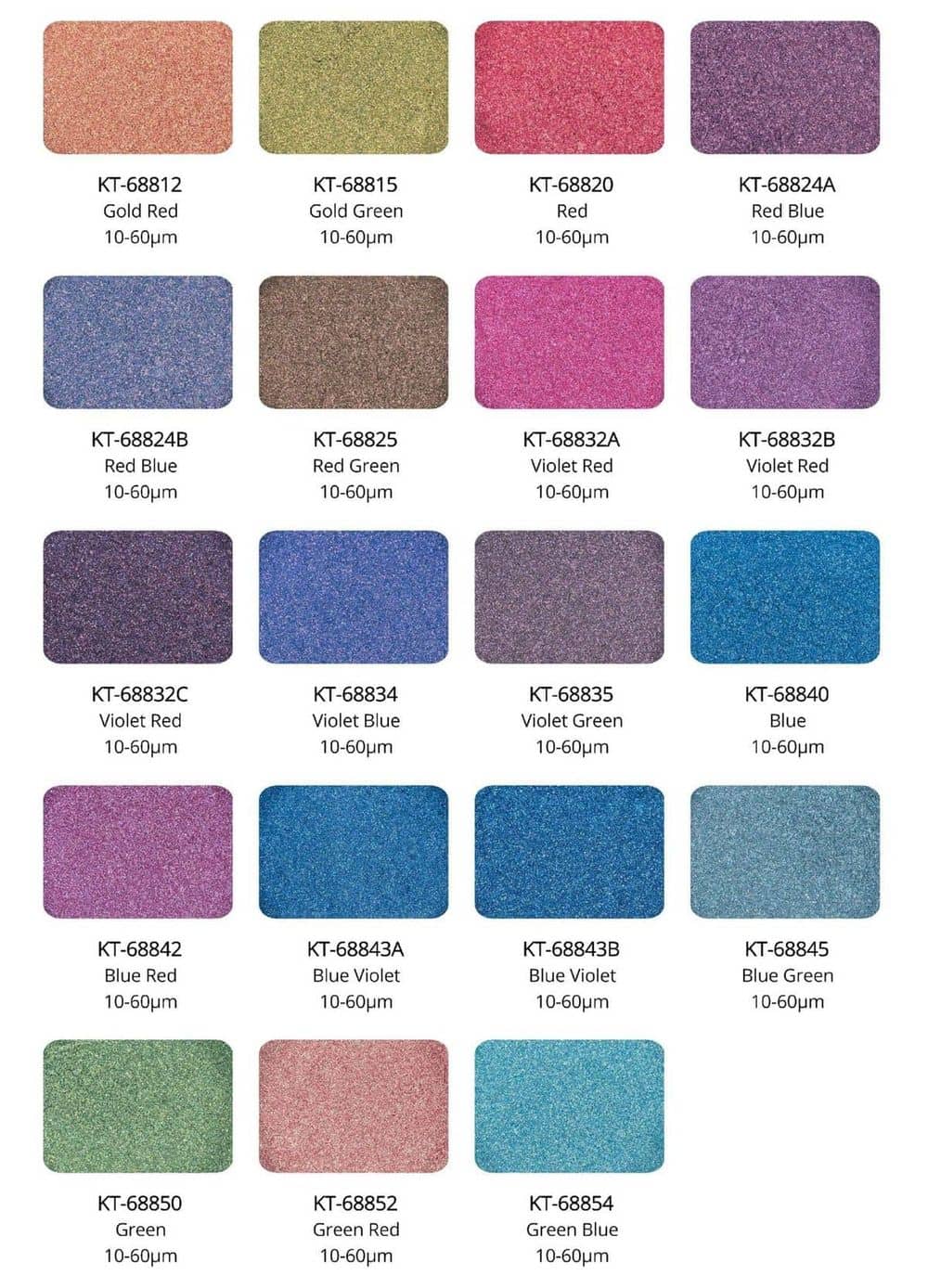
Loading levels of 1–20% are standard. Substrate selection matters here for regulatory reasons: Iron Oxides, TiO₂, and Mica are universally lip-approved across major markets. Iron Blue (CI 77510 / Ferric Ferrocyanide) is not lip-approved in many regions and should be excluded from lip formulations. For vivid lip colors, KT-688 shades like 68812 Gold Red or 68820 Red combined with D&C Lakes (Red 6, Red 7, Red 27) produce rich, lustrous lipstick shades. Fine particle grades (5–25 μm) maintain smooth application feel — critical in lip products where texture is as important as color.
Pigment loading of 3–15% for pearls, supplemented with Cosmetic Matte Oxides (Iron Oxide yellows, reds, browns, TiO₂ white, Zinc Oxide) for base color and coverage. Pre-disperse pearl pigments in the oil phase before emulsification — this wets the pigment surface, improves color development, and prevents agglomeration in the finished emulsion. Triethoxycaprylylsilane-treated grades (TS suffix) disperse more readily in ester and oil systems. Silica Microsphere (KT-SA-7) at 2–5% provides oil absorption and helps maintain a non-greasy skin feel throughout wear.
This is where borosilicate pigments earn their position. KT-68840 (Pink, Baltic Blue, Magic Blue) or KT-68860 (Sparkle Yellow, Sparkle Red, Sparkle Green) at 10–25% loading in a Sericite/Boron Nitride base produces the high-impact luminosity that defines luxury highlighters. Keep mixing gentle and blend time short — the 60–300 μm flakes in KT-68860 are visually stunning but mechanically delicate. Dimethicone-treated grades (G suffix) improve skin adhesion and payoff on the skin surface.
Regulatory compliance is not an afterthought at Kolortek — it is built into product selection. Key market-specific considerations:
| Pigment Type / Series | Visual Effect | Best For | Key Advantage | Considerations |
|---|---|---|---|---|
| KT-655 (Natural Mica, TiO₂/SnO₂ only) | Pure interference shimmer, clean tones | Clean beauty formulations, multi-market global launches | Broadest regulatory acceptance; no D&C dyes; all-inorganic | Color range narrower than dye-coated series |
| KT-688 (Natural Mica, D&C coated) | Vivid multi-color interference, high chromaticity | Eyeshadows, lip products, face powders — standard color cosmetics | Wide shade range; excellent color intensity; cost-effective | D&C dye shades require FDA batch certification in US |
| KT-699 (Synthetic Mica / Fluorphlogopite) | High brightness, premium shimmer with extended shade range | Premium products, ethical supply chain positioning, prestige launches | Higher purity than natural mica; supports ethical sourcing claims | Verify organic colorant shades per market before use |
| KT-68840 / KT-68860 (Borosilicate) | Maximum sparkle intensity, brilliant transparency | Highlighters, loose sparkle powders, body shimmer | Unmatched brilliance from high refractive index glass substrate | Substrate fragility — avoid compressive force; handle gently |
| ChromaPlus (C150***, C1535***) | Dramatic multi-angle color shift, up to 17 shades | Prestige eyeshadows, multi-chrome highlighters, luxury palettes | TiO₂-free option (C1535***); strongest visual differentiation on shelf | Higher cost per kg; effect most visible at lower loading levels (10–20%) |
| Aurora Series (ARD, AMD, APF) | Ethereal translucent shimmer, rainbow radiance | Premium highlighters, K-beauty inspired powders, luxury skincare | Unique glowing aesthetic; pastel and Morandi tones unavailable elsewhere | AM-series not solvent-resistant; ARS-series required for nail polish |
| Holographic Multichrome (HMC6**) | Holographic sparkle combined with multi-angle color shift | Editorial makeup, bold eyeshadows, festival and special-occasion products | Dual-effect: holographic + color travel in one pigment | Strong visual impact; formulate to let effect stand out (keep base neutral) |
The KT-655 Series is our recommended starting point for global multi-market formulations. Its all-inorganic TiO₂/SnO₂ coating contains no organic dyes, giving it the broadest simultaneous acceptance under EU EC 1223/2009, FDA exempt color status, MHLW positive list approval, and China IECIC listing. It is the lowest-risk choice when regulatory alignment across markets is a priority.
Particle size directly determines the visual character and skin feel of the finished product. Use 5–25 μm grades for smooth, satin finishes in lipsticks and foundations where texture is critical. Move to 20–60 μm for visible shimmer in eyeshadows. Select 40–200 μm borosilicate or mica grades when bold, high-impact sparkle is the goal — as in loose highlighters and body shimmer powders. Mixing particle size ranges within a formula can create layered, more complex visual effects.
Yes, with careful ingredient selection. Iron Oxides, TiO₂, approved Mica grades, and confirmed D&C Lakes are universally accepted for lip use across major markets. Iron Blue (CI 77510 / Ferric Ferrocyanide) is not lip-approved in many regions and must be excluded. Always verify the lip-approval status of each colorant in your target markets before finalizing a lip formulation, as regulations differ between the EU, US, Japan, and China.
Pressed eyeshadows typically use 5–50% pearl pigment loading, and loose eyeshadows can go up to 60%. The balance is made up of fillers (Sericite, Boron Nitride, Silica) and binders (5–15% for pressed formats). Start around 15–25% for a classic shimmer eyeshadow, and increase toward 40–50% for high-intensity single-pigment pans. At very high loadings, ensure sufficient binder to maintain tablet integrity without sacrificing payoff.
For clean beauty without organic dyes, the KT-655 Series is the primary answer. For TiO₂-free multi-chrome effects — a more specific requirement appearing in prestige launches — ChromaPlus-4 (C1535*** series, 20–80 μm, 10 shades) provides dramatic color-shift effects without any TiO₂ in the interference stack, addressing both clean beauty labeling goals and the EU inhalation classification concern for TiO₂ in powder products.
We offer three key surface treatments across cosmetic filler and pigment grades: Dimethicone (G suffix) for hydrophobic performance and improved skin adhesion — recommended for long-wear and waterproof formulations; Triethoxycaprylylsilane (TS suffix) for enhanced dispersion in ester-heavy oil phases; and Lauroyl Lysine (LL suffix), an amino acid coating that provides exceptional skin feel and a silky slip suited to premium powder products. Choosing the right treatment for your formulation system consistently improves final product performance and wear characteristics.

Selecting the right cosmetic pigment powder for face and eye formulations requires balancing color performance, skin compatibility, and regulatory compliance across powder, cream, and liquid systems. From pearlescent shimmer and metallic finishes to flat matte coverage, eyeshadow pigment powder and foundation pigment systems each demand different base materials, surface treatments, and dispersibility profiles. These pigments are used across pressed powders, loose eyeshadows, liquid foundations, blushers, and highlighters — anywhere precise color payoff and a reliable skin feel are non-negotiable.
Read More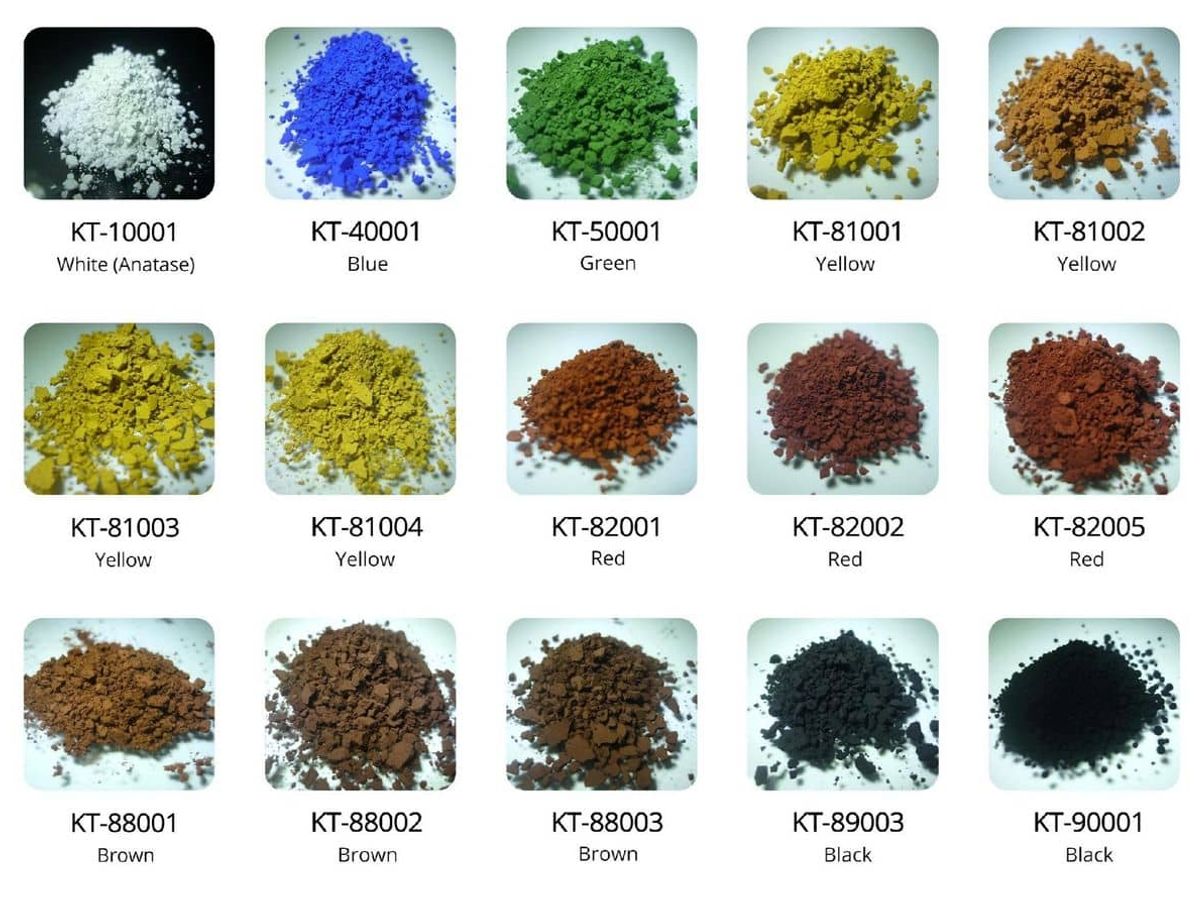
Matte cosmetic pigments — including iron oxides, ultramarines, and D&C Lakes — are the foundational colorants behind face powders, foundations, eyeshadows, and skin-tone blushers that require a flat, non-reflective finish. Cosmetic iron oxide in yellow, red, black, and brown grades delivers reliable, skin-safe color across a wide tonal range, while oxide pigment foundation formulations depend on these same materials for consistent coverage and smooth skin integration. Unlike effect pigments, these matte oxides absorb rather than reflect light, making them the go-to choice wherever a velvety, diffused color result is required.
Read More
Decorative cosmetics rely on shimmer pigment powder to deliver the dimensional brilliance consumers expect — from soft satin glows in face powders to high-intensity metallic flashes in eyeshadow palettes. Pearlescent, holographic, color-shifting, and glitter-type pigments are the primary effect systems used, each serving a distinct visual role across eye, lip, face, and nail formats. When the formulation demands depth, sparkle, or chameleon color movement, selecting the right decorative cosmetic colorant is the core technical decision.
Read More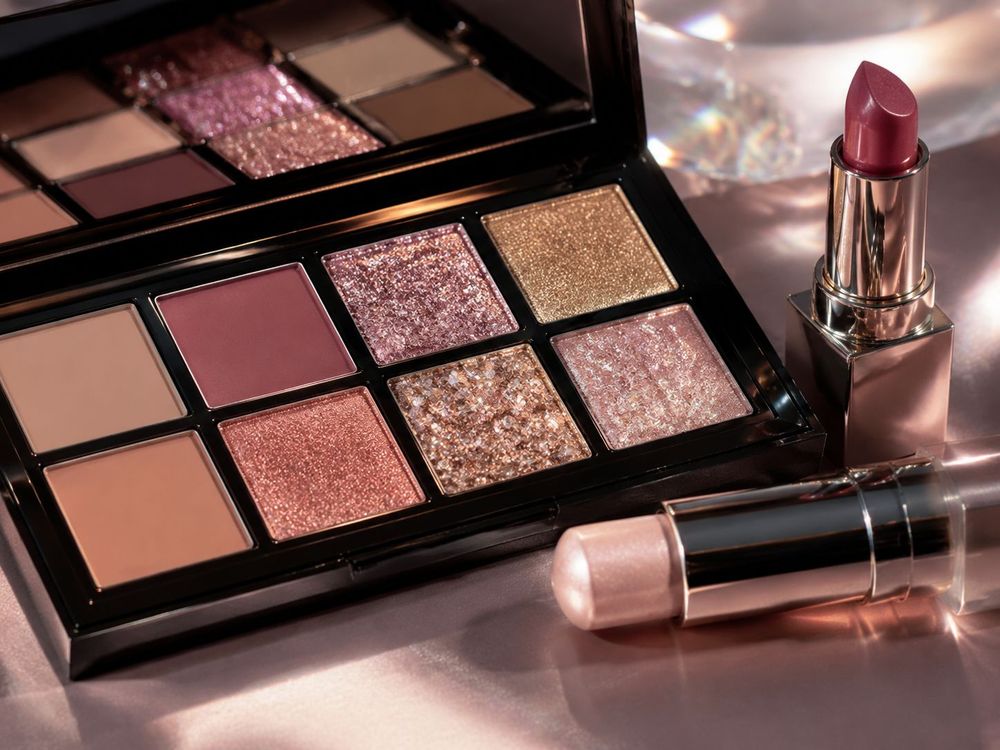
Selecting the right cosmetic pigment requires matching particle size, substrate chemistry, and regulatory status to your specific product format and target market. At Kolortek, our cosmetic pigment selection guide covers everything from natural shimmer mica to color-travel interference pigments — each chosen to meet both performance and compliance requirements. Whether you are formulating an eyeshadow palette or a premium highlighter, the correct pigment selection for cosmetics is the single most critical variable in achieving the visual effect your brand promises.
Read More
Cosmetic grade pearl pigment from Kolortek is manufactured to meet the heavy metal and microbiological limits required by major regulatory frameworks — EU EC 1223/2009, US FDA, China CSAR, and Japan MHLW — and is available across three substrate platforms: natural mica, synthetic mica (fluorphlogopite), and borosilicate glass. Particle sizes range from 5–25 μm for smooth foundation-grade finishes up to 60–300 μm for bold highlighter and loose powder sparkle. As a direct manufacturer with 20+ years in effect pigments, we supply pearlescent pigment in volumes ranging from sampling quantities through full production runs, with TDS, COA, SDS, INCI declarations, and heavy metal test reports provided as standard.
Read More
Pearl pigment for cosmetics delivers the luminous, multi-dimensional shimmer that defines modern color cosmetics — from eyeshadows and highlighters to lip glosses and tinted moisturizers. At Kolortek, we formulate cosmetic pearl solutions across mica-based, borosilicate, and synthetic fluorphlogopite substrates, each engineered to meet specific performance, regulatory, and aesthetic requirements. Selecting the right cosmetic pigment depends on particle size, substrate chemistry, surface treatment, and the market's regulatory framework.
Read More
 English
 Français
 Deutsch
 Русский
 Español
 Português