
Leave A Message
If you are interested in our products and want to know more details,please leave a message here,we will reply you as soon as we can.
A Thermochromic Reading Is Not a Temperature Record
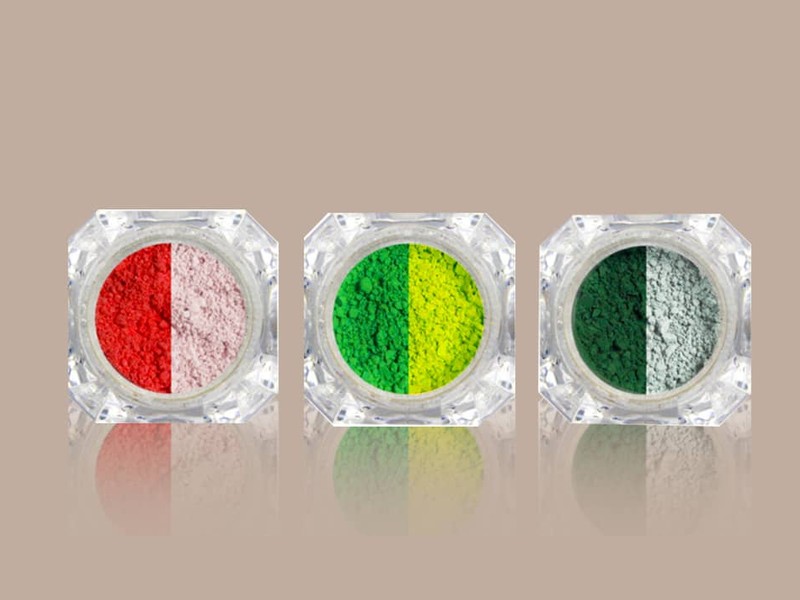
A reversible thermochromic pigment reports the temperature it is at, not the one it has passed through. Where that limits a criterion, and how to test it.
Item No. :
Thermochromic KTP series — colored-to-colorless and colored-to-colored; KT-MLC01 liquid crystalColor Effect :
Reversible colour change on warming; colour clears above the activation region and returns on cooling; no residue of an earlier excursionParticle Size :
1–10 μm (standard series); 3–10 μm (BPA-free and colored-to-colored)Composition :
Microencapsulated leuco dye system — color former, developer and solvent in a shellBrand :
Kolortek / OEMMOQ :
1KGApplication :
Touch-activated display on cups and packaging, food-contact parts (BPA-free series, not for direct ingestion), industrial coatings, screen printing, security features activated by heat; liquid crystal type for continuous temperature indicationOne number goes on the label. One colour sits in the jar. The label states a nominal figure; the powder answers in the present tense. Deciding whether a thermochromic pigment can carry a temperature criterion comes down to that gap. A criterion needs evidence that outlives the moment it was taken. A reversible colour supplies none.
The pouch below prints 31 °C. Treat that as a nominal activation temperature: the middle of the colour change, not the line where the colour flips.
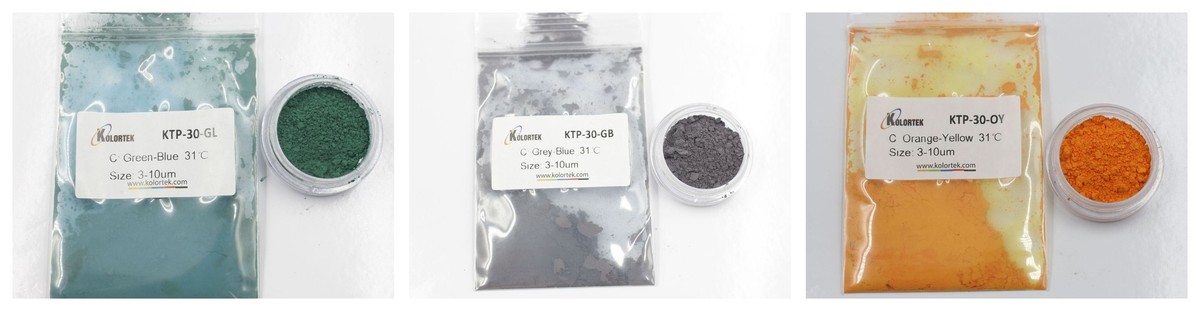
Figure 1 — A single value on the label; the powder in the jar is green at the moment of the photograph.
The change spreads across a span. Warm the powder through the activation region and the colour retreats in stages — solid below, part-faded inside, gone above. How wide the span runs is set by the formulation, so it shifts from one thermochromic pigment to the next.
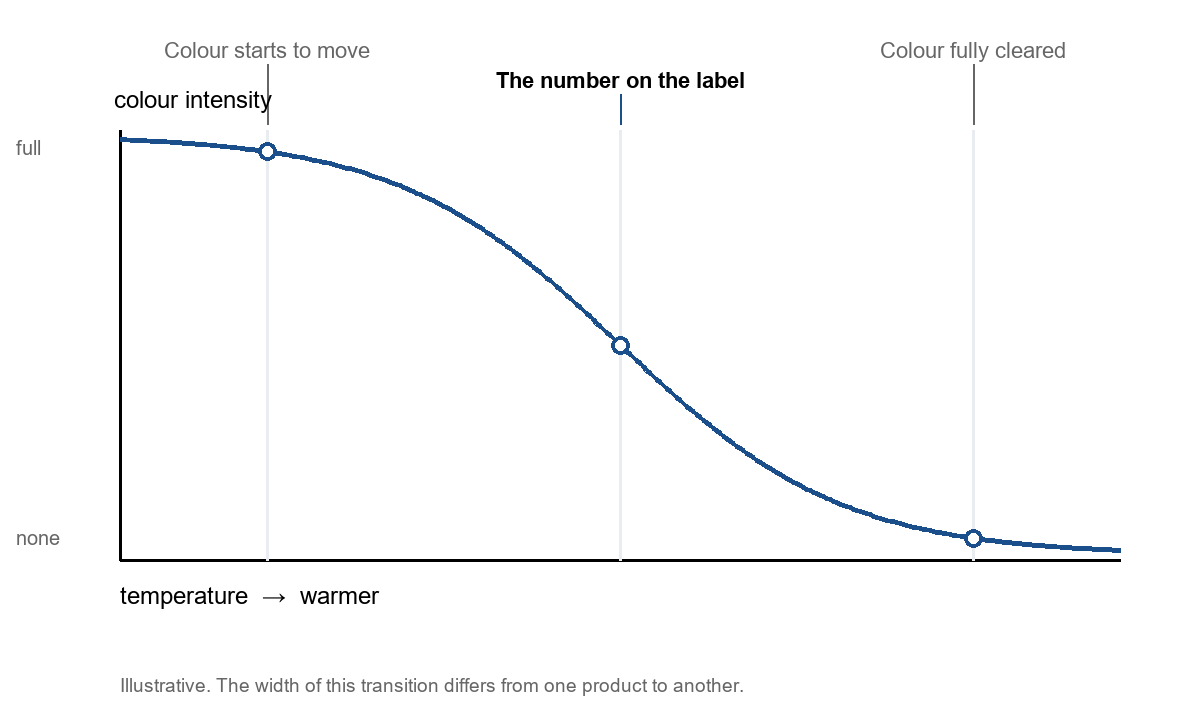
Figure 2 — Schematic of colour strength against temperature: the nominal value sits mid-slope and the change completes across a band (illustrative).
The span stops being academic once a tolerance enters the drawing. Write ±0.5 °C and the material is still part-way through its change at your limit. An inspector, or a camera, sees half-faded colour there — half-faded sits on neither side of pass or fail.
So the first question is how wide the change runs, ahead of which colour to choose. An instrument and an eye place the middle of that ramp differently, and neither reading is wrong. Ask for the transition width of the product you are specifying; it is worth more than any general statement, this page included.
Reversible means the colour answers for the present and keeps nothing. Warm the pigment past its activation region and it clears. Cool it back and the original colour returns. The same material is capable of thousands of cycles, and every one ends where it began — no darkened window, no one-way shift, no residue of the excursion.
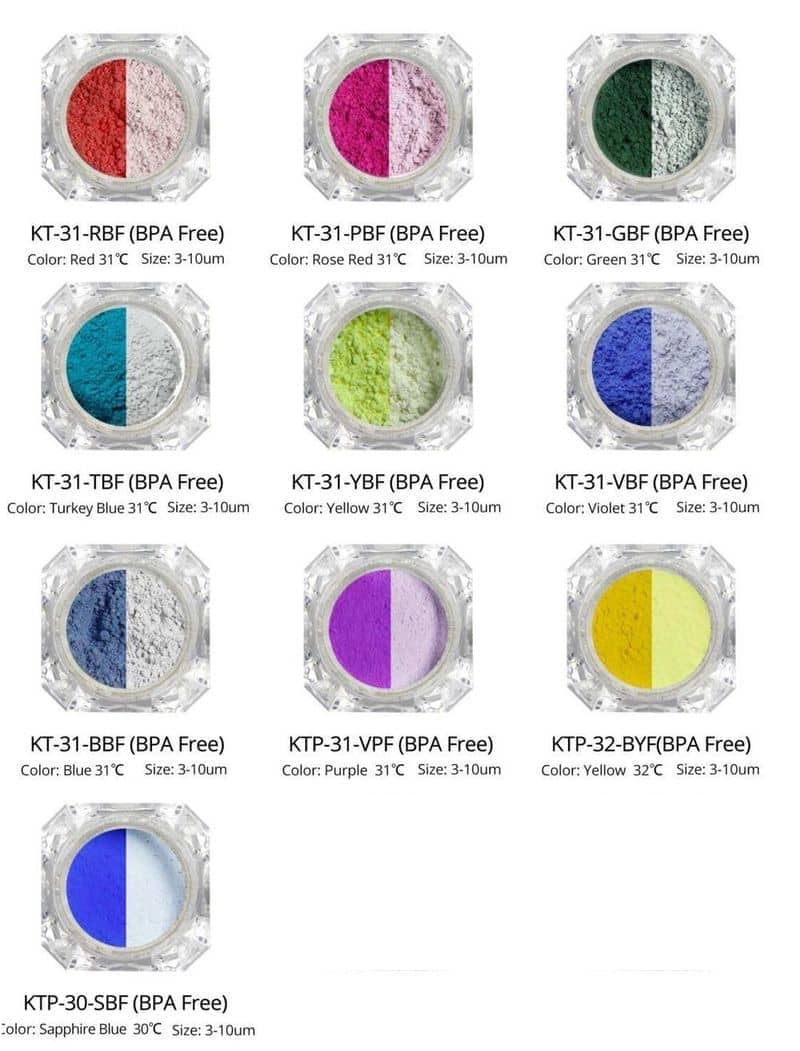
Figure 3 — Ten BPA-free colours at nominal values of 30, 31 and 32 °C, each jar holding coloured and cleared material at once.
Ask whether a shipment rose above its limit at any point in the last 48 hours, and this material has no answer. It travelled as a display, and a display resets.
Video — Kolortek Thermochromic Pigments

Figure 4 — Two colours present on one piece of woven fabric at the same time.
Treat that as a boundary, not a shortfall. A cup that turns as the drink cools is the intended job, not a logger that failed; the BPA-free series is built for food-contact parts on that basis and is not for direct ingestion.
Where the requirement turns historical — proof, traceability, a pass or fail that outlives the event — the part needs an irreversible indicator, and a reversible pigment is the wrong instrument. Where the requirement is a reading now, the same pigment is the right one.
Warm a pigment and it clears at one reading. Cool it and the colour returns at another. The two directions do not cross in the same place. That belongs to the material class, not to one poor batch, and it is the second thing to settle before anyone writes a threshold.
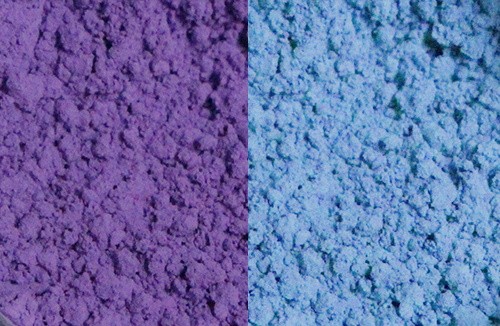
Figure 5 — A second nominal point at the same 31 °C with a different colour pair: grey to blue.
Characterise on heating alone — the easier test — and the cooling leg crosses somewhere else. An inspector who only ever sees the cold state then applies a number that does not hold. Measure both directions, or loosen the criterion until the gap cannot bite.
We publish no hysteresis figure as a general constant, because it is not one. It has to be established for the pigment and for the read-out you will use: a person at arm's length, a camera, an instrument. Ask, and the answer comes back for that product.
Time is the other axis. The table puts common requirements against the timescale each needs, and against whether a reversible pigment can serve it.
| What the job needs to show | How long the reading must live | Can a reversible pigment serve it? |
|---|---|---|
| The surface temperature right now, for an operator at the part | Instant, while the part is in hand | Yes |
| That a warm step happened, checked at the line | Minutes, read while still warm | Yes |
| Whether a drink is too hot for a user to hold | Minutes, read by that user | Yes |
| That a shipment stayed in range through transit | Days, read after arrival | No — the reading resets |
| That a short excursion happened, once it is over | Any time after the event | No — no trace remains |
| An audit trail for a regulated product | Months, read by a third party | No — the pigment keeps no record |
Above 60 °C the microcapsules are permanently damaged. Nothing recovers: the colour does not return when the part cools, and the reading is gone.
High shear during mixing ruptures capsules, and broken ones are gone for the same reason. A part that met a hard mixer carries fewer working capsules than the powder that went in.
Both are failures of the reading, not process settings.
If your route passes above 60 °C or through a high-shear mixer, the question is not how to run that step — industrial coatings covers that — but whether a reversible pigment survives your route at all. The surface can still carry pigment and still look correct; what it no longer does is report temperature.
Ultraviolet light degrades the microcapsules, and light resistance is limited. This is the slow failure: nothing dramatic happens at any moment, and no event marks the day a part stopped reporting honestly.
Exposure accumulates, so a part that lives indoors and one that faces the sky do not age alike. That makes light a service-life question rather than a mixing question: how much the part will meet, over how long, and whether the reading holds that long.
Where the part lives in daylight, treat light as a limit on how long the reading lasts, not as a mixing adjustment. The colour on the day you unpack the jar answers none of it.
The two formats answer different questions.
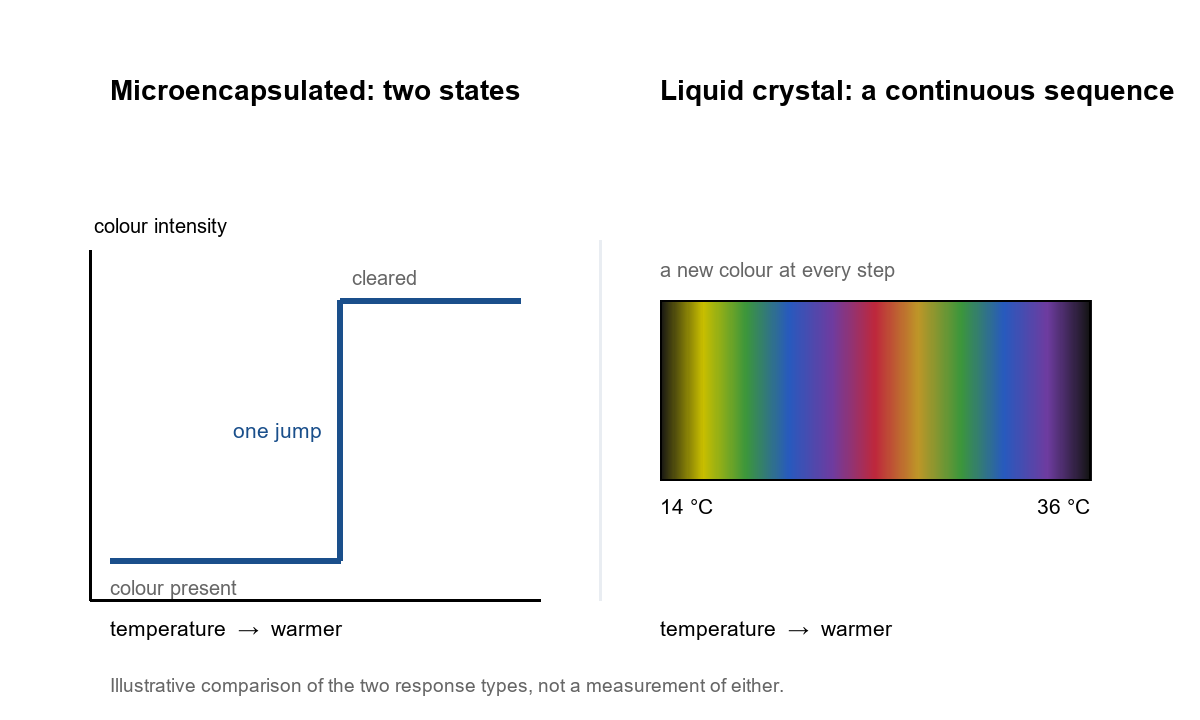
Figure 6 — Drawing comparing a stepped two-state response with a continuous spectrum from 14 to 36 °C (illustrative).
A microencapsulated pigment behaves as a switch. Below its activation region the colour is present; above it, the colour is gone. A middle exists, but the design intent is two states, so a reader who needs above-or-below gets a clean distinction. Colour-to-colour products work the same way, with a second colour standing where blank would be.
The liquid crystal type is a scale. MLC01 runs a continuous spectrum from 14 °C to 36 °C, moving through colours rather than stepping between states, so a reader sees direction and roughly how far along the span the part sits.
One temperature on the criterion, and the switch is the format to specify. Direction and distance along the span, and the scale is. Neither is more accurate; they report different things. Both sit inside the broader special effect pigments category.
No. A reversible pigment reports the present state only. Once the temperature falls back into range the original colour returns and no trace of the excursion survives, so a part read on arrival says nothing about the trip.
No. The printed value is the centre of the colour change, not a trip point. The colour completes its transition across a band of temperature whose width depends on the product; get that width before you write a tolerance.
No. Heating and cooling do not cross at the same reading, a property of this class of material rather than a fault in one batch. Characterise both directions, or you will set a threshold that holds one way only.
Exposure above 60 °C, high shear during mixing, and prolonged ultraviolet light. Each one damages the microcapsules, and once they are damaged the colour stops tracking temperature at all — the part still looks pigmented but reports nothing.
Send us three figures and we can say which reading your part gives: the temperature you are judging, the error you can accept there, and whether you need a record afterwards or a reading at the time.
Range and documents are in catalog #14, Kolortek Thermochromic Pigments — ISO 9001 certified, others provided on request — and on the download page. If the third answer is a record, put that in your first line and send us what it has to prove.
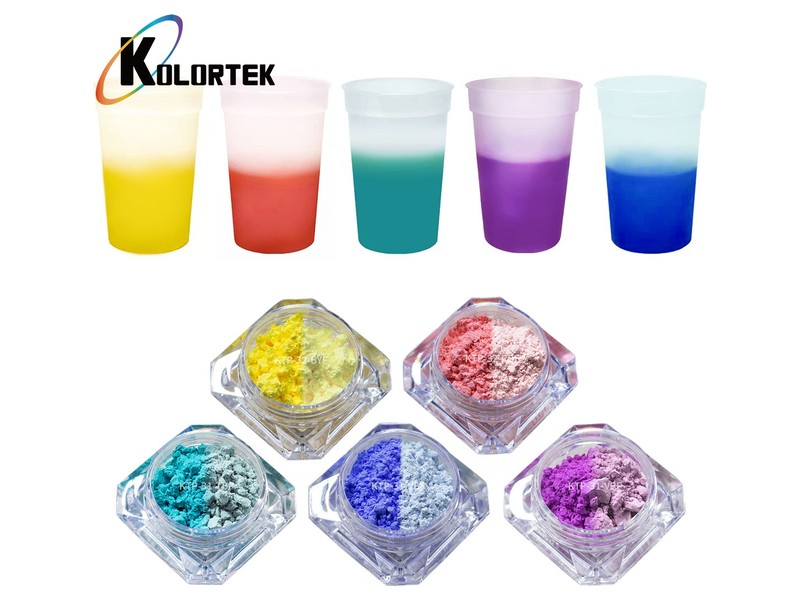
Thirty thermochromic grades from a 1 kg minimum: how the activation band, the separate second colour and three process limits decide a repeatable order.
Read More
A reversible thermochromic pigment reports the temperature it is at, not the one it has passed through. Where that limits a criterion, and how to test it.
Read More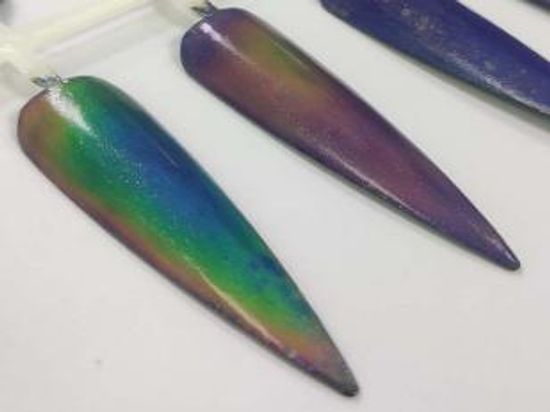
KT-MLC01 is a water-based thermochromic liquid crystal that cycles through twelve distinct colors — from black through copper, yellow, green, blue, and violet — across a 14℃ to 36℃ temperature window, making it one of the more visually dynamic options in the thermochromic category. Unlike single-transition thermochromic pigments, these mood liquid colors deliver a continuous chromatic shift in a single liquid formulation, suited for custom decorative paints, textile printing, and novelty cosmetic applications. Formulators looking to introduce live color-shift behavior into coatings or printed substrates will find the liquid format straightforward to incorporate.
Read More
KTP-16-BR is a red thermochromic pigment that transitions from vivid red to fully colorless when temperature rises above 16°C — making it one of the lowest activation-point options in Kolortek's standard range. As a heat sensitive pigment, it's well-suited for applications where near-ambient temperature triggers are required, including temperature-indicating textiles, novelty printing, and decorative coatings. Formulators working with color change with temperature effects will find the fine 1–10μm particle size integrates cleanly into most ink and coating systems.
Read More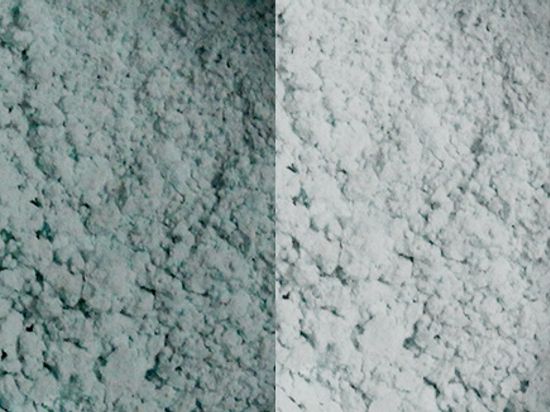
KTP-17-MG is a thermochromic powder that transitions from malachite green to fully colorless at 17°C — a low activation threshold that makes it effective for skin-contact, ambient-response, and cool-environment applications. As a heat reactive pigment, it integrates cleanly into printing, coating, and cosmetic systems where a sharp, reversible color reveal is the intended effect. Typical end-uses include nail formulations, textile printing, and craft coatings.
Read More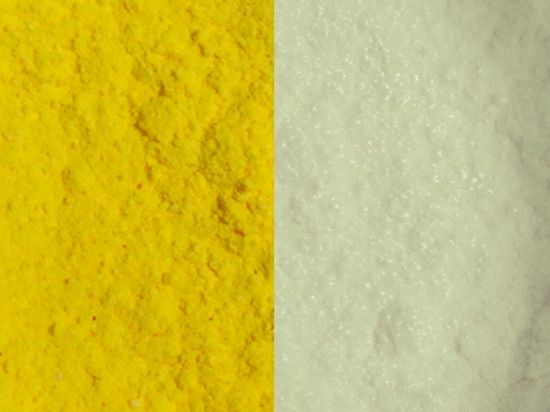
KTP-32-BY is a thermochromic powder that transitions from vivid yellow to colorless at 32°C — a body-temperature-adjacent activation point that makes it well-suited for skin-contact applications like cosmetics and nail products. This heat sensitive pigment powder disperses cleanly in most coating and printing systems, and is also available in a BPA Free food grade version for product contact use cases such as cups and utensils. Formulators working in textiles printing, craft art, or specialty inks will find the 1–10μm particle range compatible with a broad range of application methods.
Read More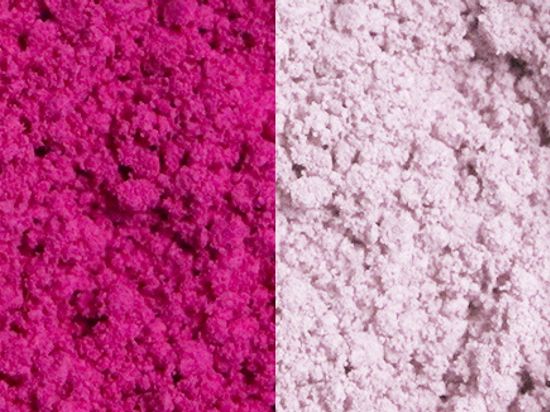
KTP-31-PBF is a rose red thermochromic pigment powder that transitions to colorless at 31°C — a body-temperature-proximate activation point well-suited for skin-contact and food-contact applications. Certified BPA Free, this heat reactive pigment is formulated for cosmetics, nail systems, and food-contact printing where safety compliance is non-negotiable. It performs equally well in textile printing and craft applications where a clean, reversible color-fade effect is the design intent.
Read More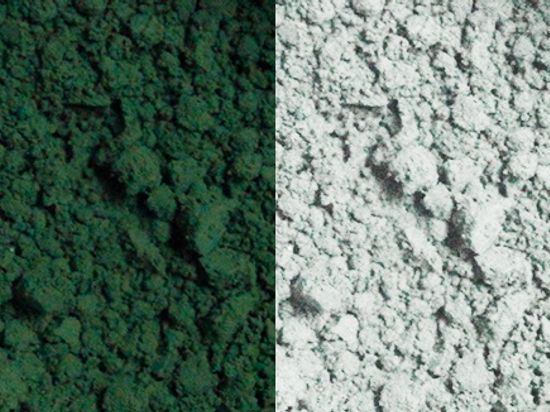
KTP-31-GBF is a food grade thermochromic pigment that shifts from vivid green to fully colorless at 31°C — clean, reversible, and BPA Free. Engineered for direct skin and food contact surface applications, this heat sensitive pigment powder is well suited for cosmetic formulations, nail products, and food contact items like cups and spoons. Its fine 3–10μm particle size ensures smooth dispersion across both water- and solvent-based systems.
Read More
 English
 Français
 Deutsch
 Русский
 Español
 Português