
Leave A Message
If you are interested in our products and want to know more details,please leave a message here,we will reply you as soon as we can.
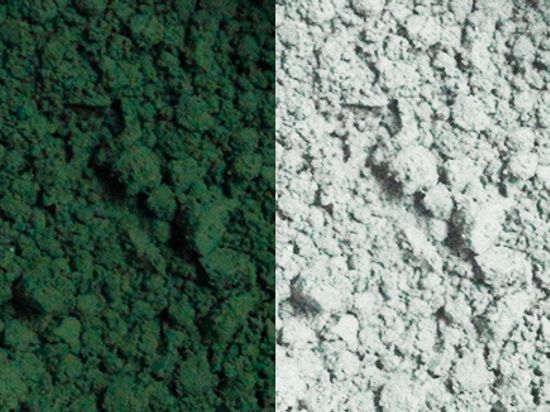
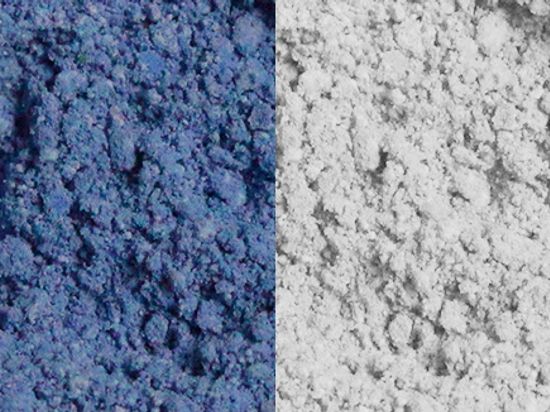
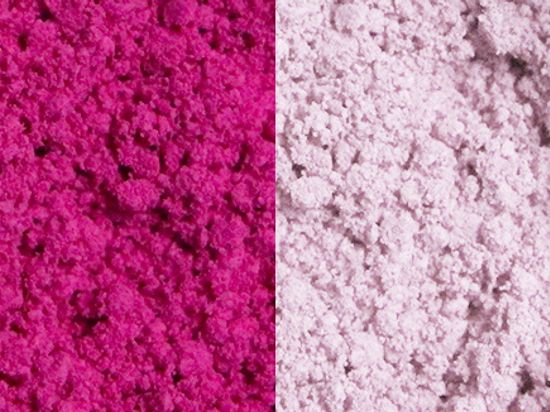
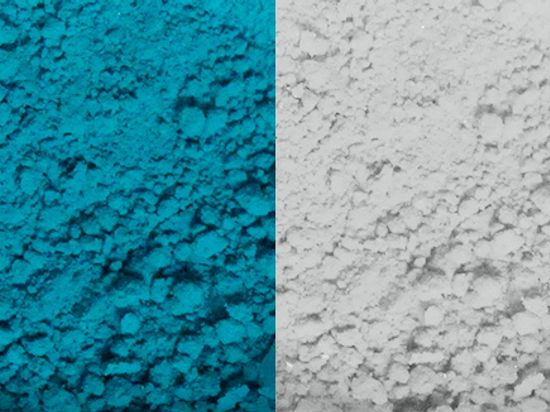
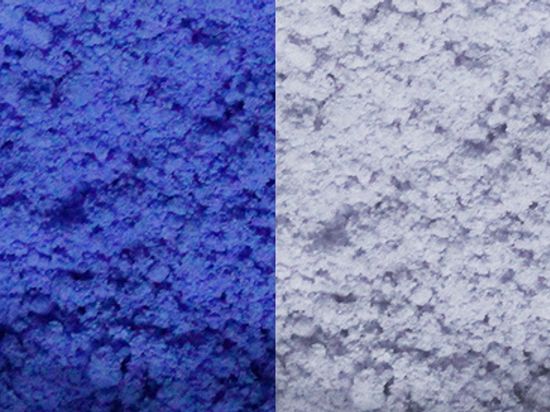
Food-contact applications change everything when you're specifying a thermochromic pigment. Standard reversible leuco dye systems often contain BPA or related compounds that make them non-starters for drinkware, food packaging, or anything that might end up near a child's mouth.
Item No. :
Thermochromic Pigment BPA FreeColor Effect :
Multi colorsParticle Size :
1-10μm, 3-10μmBrand :
Kolortek / OEMMOQ :
1KGApplication :
Packaging, Printing Inks, Cosmetics, Textiles, Toys, Paints & Coatings, Food Contact (BPA-free series), Safety IndicatorsFood-contact applications change everything when you're specifying a thermochromic pigment. Standard reversible leuco dye systems often contain BPA or related compounds that make them non-starters for drinkware, food packaging, or anything that might end up near a child's mouth.
KTP-31-RBF addresses that directly. It's a BPA-free formulation designed for applications where regulatory compliance matters as much as color performance.
This is a colored-to-colorless thermochromic pigment that transitions at approximately 31°C (88°F). Below the activation temperature, the pigment displays its base red color. As temperature rises past the threshold, it becomes transparent, revealing whatever substrate or base coat sits underneath.
The transition isn't instantaneous — expect a shift zone of roughly 3–5°C depending on film thickness and substrate thermal mass. Thinner films respond faster but show the transition gradient more noticeably.
In practice, this activation point sits just above typical ambient conditions but well below body temperature, making it responsive to hand contact without being overly sensitive to room temperature fluctuations.
The BPA-free certification opens doors that standard thermochromic formulations can't touch:
Standard coatings and custom paint formulations work, though you'll want to verify cure schedules don't exceed the pigment's thermal stability window.
Not recommended: Automotive coatings. The combination of UV exposure, thermal cycling, and durability requirements typically exceeds what encapsulated leuco dye systems can reliably deliver long-term.
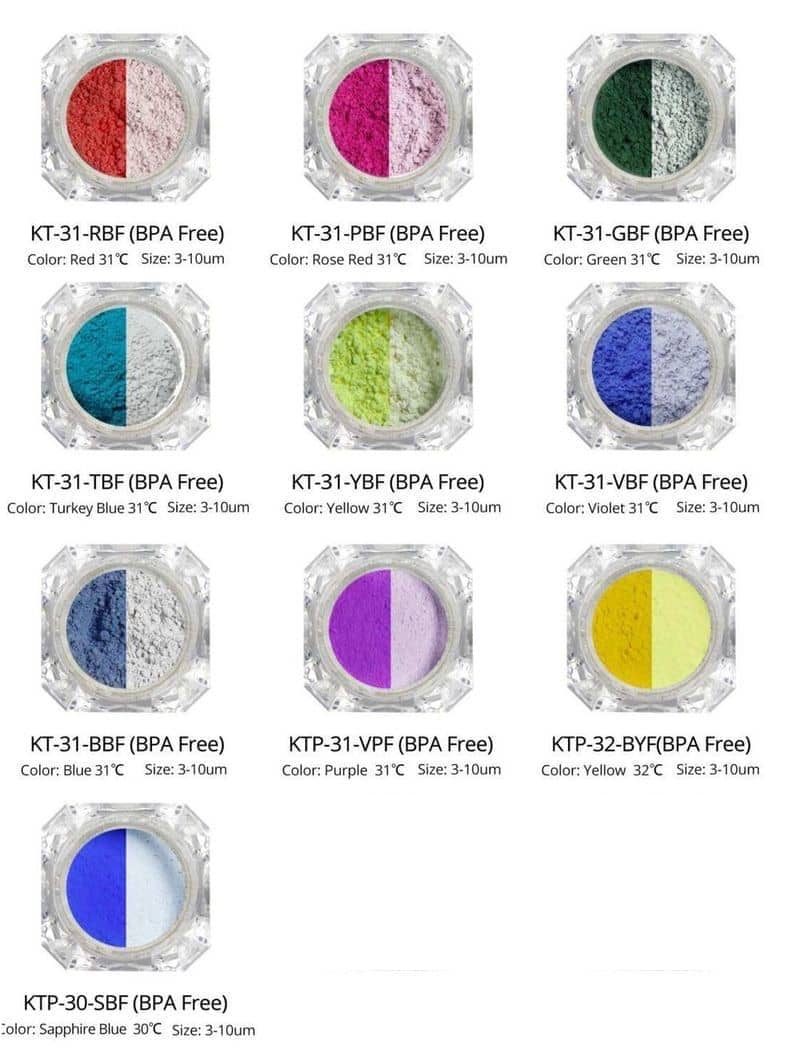
Dispersion method matters. The microcapsules protecting the leuco dye system are typically 2–7 microns, which means you're not dealing with nano-scale particles. High-shear mixing will destroy the capsules and kill the thermochromic effect.
Gentle incorporation is non-negotiable.
Loading rates depend entirely on the depth of color you need and whether you're working over a contrasting base coat. For visible effect over white, start testing around 5–8% by weight. Over black or dark colors where you want the reveal effect, you might push 10–15%. Beyond that, you're adding cost without much visual return.
Binder compatibility is usually broad — acrylics, polyurethanes, and water-based systems generally work well. Solvent-based systems are fine if the solvents don't attack the capsule wall. When in doubt, run a small batch test and check for color retention after mixing.
That said, the heat sensitive pigment capsules themselves are sensitive to prolonged heat exposure during formulation. Keep processing temperatures below 60°C when possible, and avoid extended hold times at elevated temperature.
Reversibility is reliable through hundreds of cycles under normal use conditions. Fatigue shows up eventually — usually as a slower transition speed or incomplete return to the colored state — but for consumer products with realistic service lives, it's rarely an issue.
UV stability is the weak point, as it is with most thermochromic systems. Direct sunlight accelerates degradation. If the application involves outdoor exposure or display windows, either plan for shorter service life or incorporate UV absorbers into the topcoat. We've seen reasonable results with clear coats containing benzotriazole or HALS additives, though it's always application-specific.
Lightfastness is moderate. Interior applications hold up well. Exterior applications without UV protection will fade noticeably within months.
Reformulating away from BPA-containing developers sometimes means sacrificing a bit of color intensity or sharpness in the transition zone. The chemistry doesn't always allow perfect equivalence.
With KTP-31-RBF, the trade-off is modest. You get regulatory compliance and access to food-contact markets in exchange for what most users describe as negligible performance difference compared to standard versions.
For applications where BPA concerns don't apply, the standard KTP-31 series might offer marginally better saturation. For anything remotely close to food, skin, or children, the BPA-free version isn't optional — it's the baseline.
Can this be used in injection-molded plastics?
Generally not recommended. Melt temperatures in most thermoplastic processes exceed the thermal degradation point of the microcapsules. Surface coating or printing onto molded parts is the standard approach. Some lower-temperature processes like certain TPU formulations might work, but you'd need trial runs to confirm capsule survival.
What's the shelf life of the pigment before incorporation?
Typically 12–18 months when stored sealed in a cool, dry environment. Heat and humidity are the enemies. Once the capsules are compromised during storage, there's no recovering the effect. If you're seeing weak or incomplete transitions in fresh formulations, check your pigment storage conditions first.
Is the transition temperature adjustable after purchase?
No. The activation temperature is locked in during capsule manufacture. If 31°C doesn't match your application needs, you need a different pigment grade from the start. The KTP series includes options from 16°C to 45°C for exactly this reason.
How does film thickness affect the visual transition?
Thicker films show richer color in the active state but transition more slowly due to thermal lag through the coating thickness. Thinner films respond faster but may look less saturated. For most temperature sensitive paint applications, 20–40 micron dry film thickness offers a reasonable balance. Testing on your actual substrate is the only way to dial it in properly.
If you're evaluating KTP-31-RBF for a specific application, sample quantities let you validate compatibility with your existing formulation and confirm the activation temperature suits your use case.
Technical discussions around loading rates, binder selection, or application-specific durability requirements usually save time compared to trial-and-error formulation work. We've worked with this chemistry long enough to know where the common pitfalls show up.
Request samples or technical support: Contact our team to discuss your formulation requirements, substrate compatibility, or regulatory documentation needs. Sample sizes are available for qualified development projects.
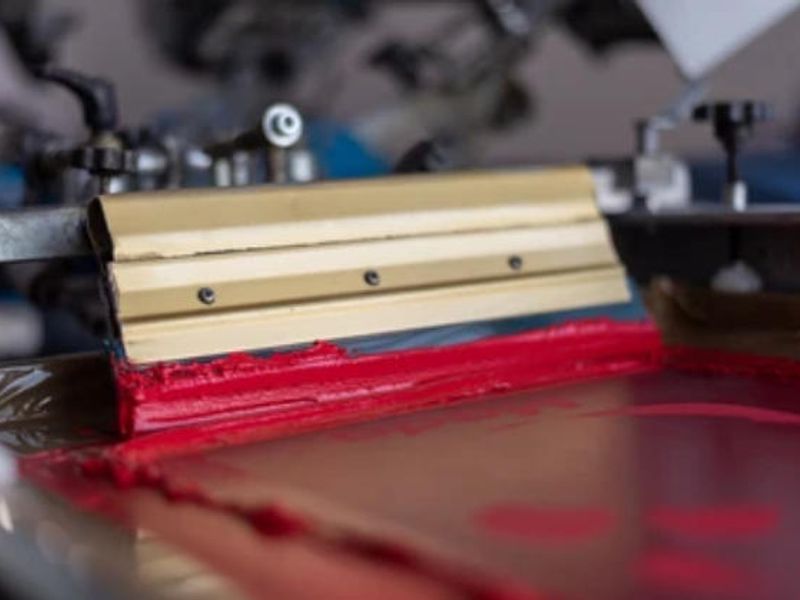
Screen printing with thermochromic ink is one of the more demanding pigment applications — you're asking a material to perform a reversible color transition reliably, across thousands of print cycles, under real-world handling conditions. The pigment has to disperse cleanly into the ink vehicle, survive the shear of the squeegee, and still respond predictably to temperature after it's cured onto the substrate.
Read More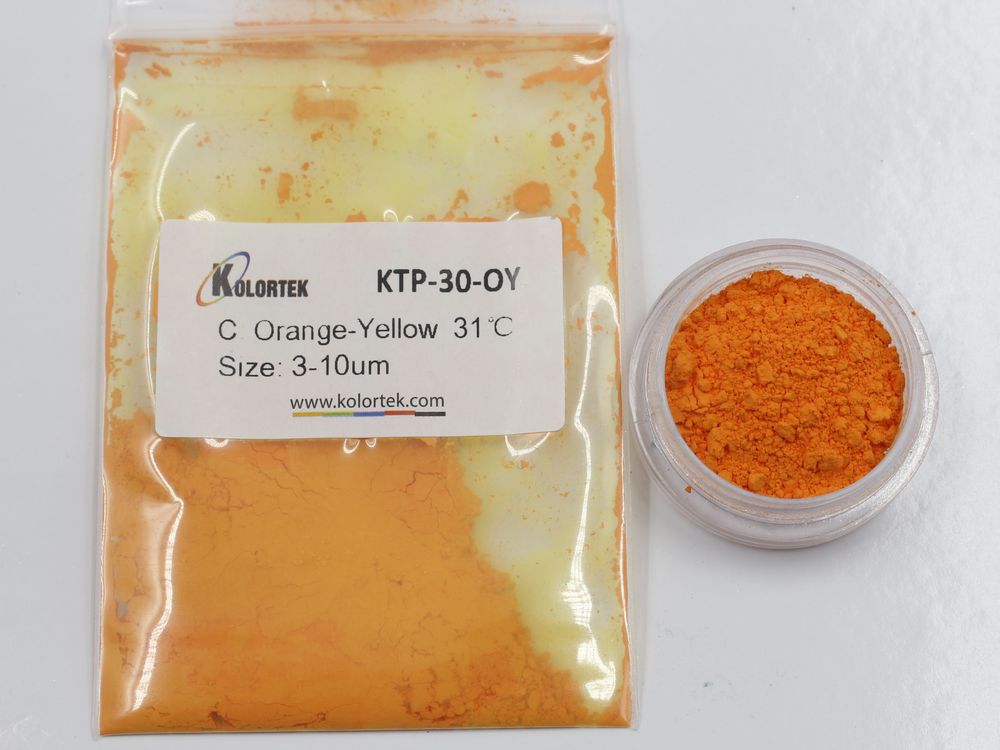
Fabric is one of the more demanding substrates for thermochromic chemistry. The dye has to survive wash cycles, flex without cracking, bond to fiber structures that weren't designed to hold encapsulated colorants, and still deliver a clean, repeatable color transition. That's a tighter brief than most people expect when they first start sourcing.
Read More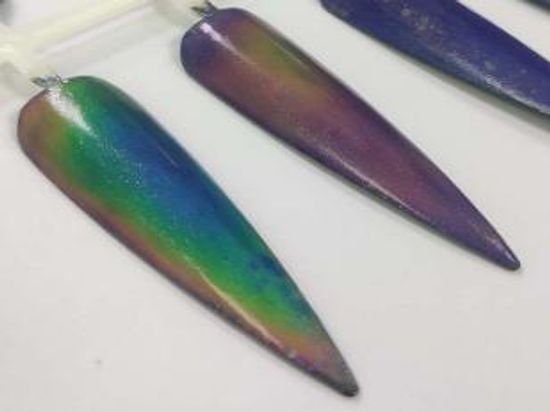
KT-MLC01 is a water-based thermochromic liquid crystal that cycles through twelve distinct colors — from black through copper, yellow, green, blue, and violet — across a 14℃ to 36℃ temperature window, making it one of the more visually dynamic options in the thermochromic category. Unlike single-transition thermochromic pigments, these mood liquid colors deliver a continuous chromatic shift in a single liquid formulation, suited for custom decorative paints, textile printing, and novelty cosmetic applications. Formulators looking to introduce live color-shift behavior into coatings or printed substrates will find the liquid format straightforward to incorporate.
Read More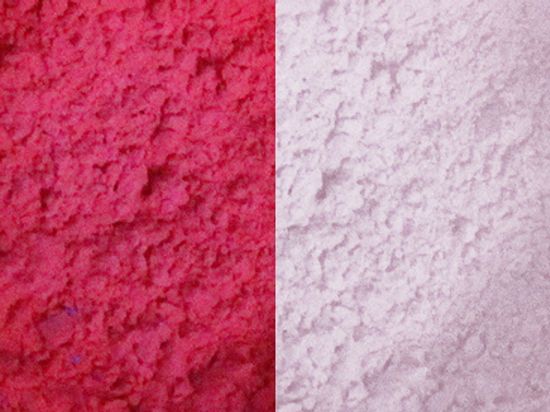
KTP-16-BR is a red thermochromic pigment that transitions from vivid red to fully colorless when temperature rises above 16°C — making it one of the lowest activation-point options in Kolortek's standard range. As a heat sensitive pigment, it's well-suited for applications where near-ambient temperature triggers are required, including temperature-indicating textiles, novelty printing, and decorative coatings. Formulators working with color change with temperature effects will find the fine 1–10μm particle size integrates cleanly into most ink and coating systems.
Read More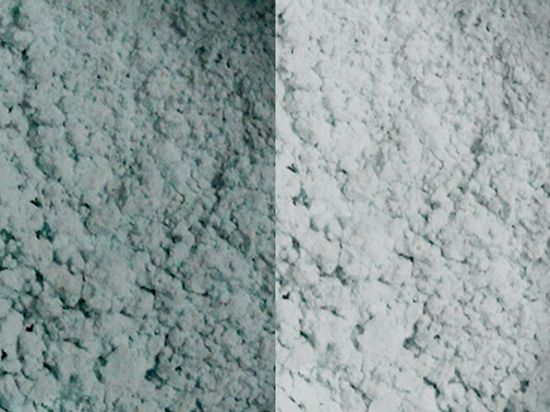
KTP-17-MG is a thermochromic powder that transitions from malachite green to fully colorless at 17°C — a low activation threshold that makes it effective for skin-contact, ambient-response, and cool-environment applications. As a heat reactive pigment, it integrates cleanly into printing, coating, and cosmetic systems where a sharp, reversible color reveal is the intended effect. Typical end-uses include nail formulations, textile printing, and craft coatings.
Read More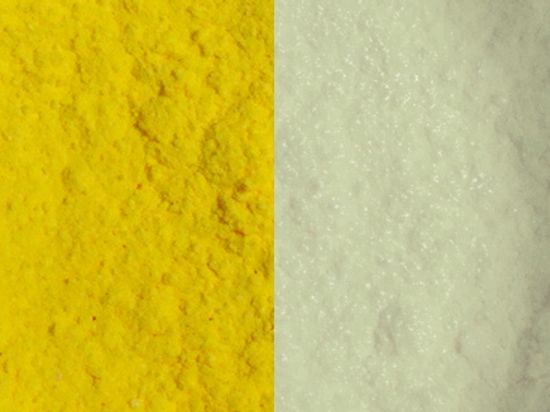
KTP-32-BY is a thermochromic powder that transitions from vivid yellow to colorless at 32°C — a body-temperature-adjacent activation point that makes it well-suited for skin-contact applications like cosmetics and nail products. This heat sensitive pigment powder disperses cleanly in most coating and printing systems, and is also available in a BPA Free food grade version for product contact use cases such as cups and utensils. Formulators working in textiles printing, craft art, or specialty inks will find the 1–10μm particle range compatible with a broad range of application methods.
Read More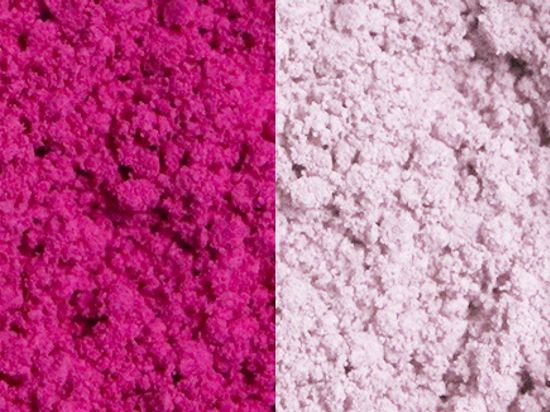
KTP-31-PBF is a rose red thermochromic pigment powder that transitions to colorless at 31°C — a body-temperature-proximate activation point well-suited for skin-contact and food-contact applications. Certified BPA Free, this heat reactive pigment is formulated for cosmetics, nail systems, and food-contact printing where safety compliance is non-negotiable. It performs equally well in textile printing and craft applications where a clean, reversible color-fade effect is the design intent.
Read More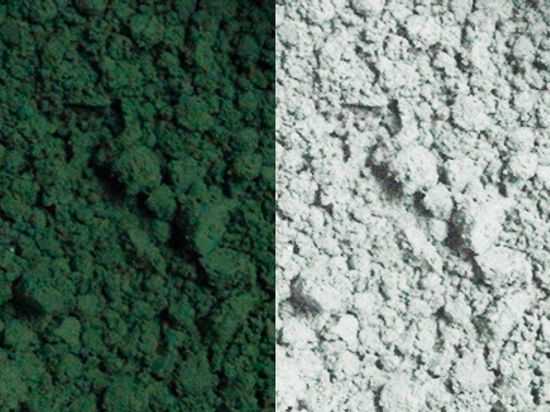
KTP-31-GBF is a food grade thermochromic pigment that shifts from vivid green to fully colorless at 31°C — clean, reversible, and BPA Free. Engineered for direct skin and food contact surface applications, this heat sensitive pigment powder is well suited for cosmetic formulations, nail products, and food contact items like cups and spoons. Its fine 3–10μm particle size ensures smooth dispersion across both water- and solvent-based systems.
Read More
 English
 Français
 Deutsch
 Русский
 Español
 Português