
Leave A Message
If you are interested in our products and want to know more details,please leave a message here,we will reply you as soon as we can.
Thermochromic Pigment Red 16°C Colored to Colorless KTP-16-BR
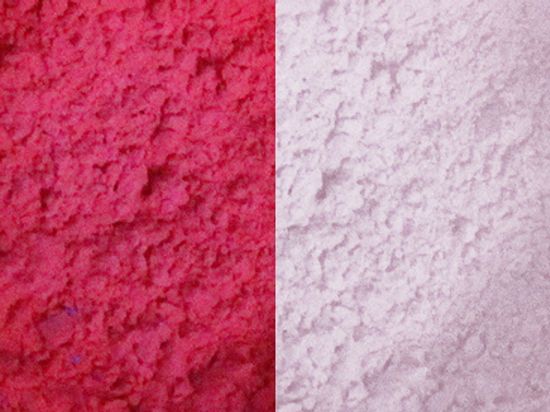
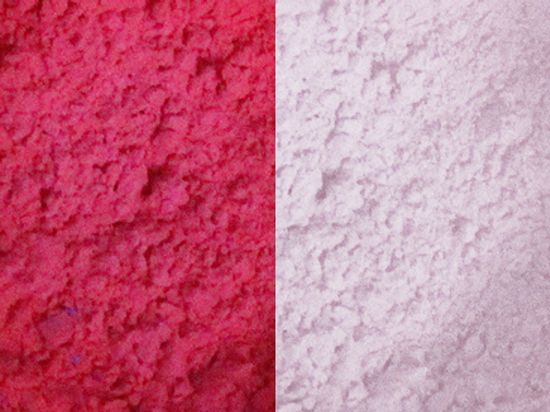
KTP-16-BR is a red thermochromic pigment that transitions from vivid red to fully colorless when temperature rises above 16°C — making it one of the lowest activation-point options in Kolortek's standard range. As a heat sensitive pigment, it's well-suited for applications where near-ambient temperature triggers are required, including temperature-indicating textiles, novelty printing, and decorative coatings. Formulators working with color change with temperature effects will find the fine 1–10μm particle size integrates cleanly into most ink and coating systems.
Item No. :
KTP-16-BRColor Effect :
Red 16℃Particle Size :
1-10μmBrand :
Kolortek / OEMMOQ :
1KGApplication :
Packaging, Printing Inks, Cosmetics, Textiles, Toys, Paints & Coatings, Food Contact (BPA-free series), Safety IndicatorsKTP-16-BR operates on a leuco dye mechanism. Below 16°C, the pigment presents a saturated red. As the substrate temperature crosses the activation threshold, the chromogenic system becomes colorless — exposing whatever base coat, print, or graphics sit beneath. The transition is reversible: cooling the substrate restores the original red.
In practice, this means the visual effect is entirely dependent on your base layer. A white substrate produces a clean disappearing red effect. A contrasting base coat — dark, printed, or patterned — creates a reveal effect that only becomes visible at temperature. This is worth planning at the formulation stage, not as an afterthought.
| Parameter | Value |
|---|---|
| Model | KTP-16-BR |
| Color (Below Activation Temp) | Red |
| Color (Above Activation Temp) | Colorless |
| Activation Temperature | 16°C |
| Particle Size | 1–10μm |
| Type | Colored to Colorless |
| Series | Standard (Non-Food Grade) |
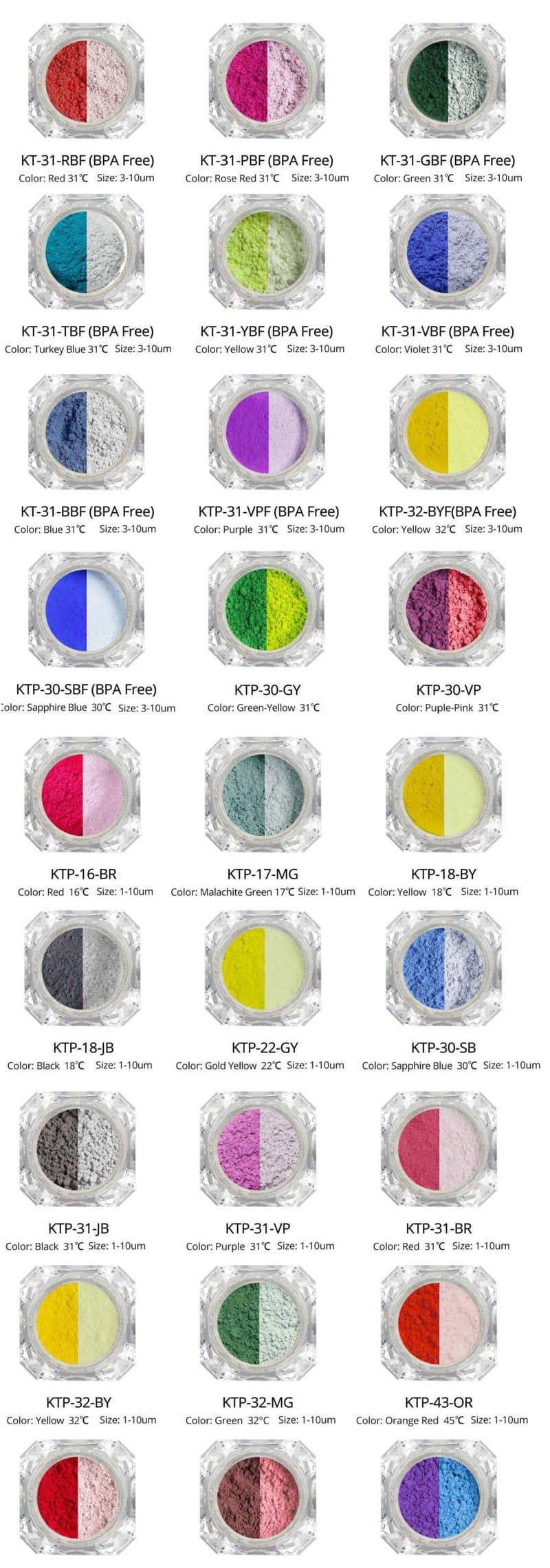
KTP-16-BR sits within a broader range of activation temperatures and colors. The table below covers the standard colored-to-colorless lineup for cross-reference during formulation planning.
| Model | Color | Activation Temp | Particle Size |
|---|---|---|---|
| KTP-16-BR | Red | 16°C | 1–10μm |
| KTP-17-MG | Malachite Green | 17°C | 1–10μm |
| KTP-18-BY | Yellow | 18°C | 1–10μm |
| KTP-18B-JB | Black | 18°C | 1–10μm |
| KTP-22-GY | Gold Yellow | 22°C | 1–10μm |
| KTP-30-SB | Sapphire Blue | 30°C | 1–10μm |
| KTP-31-JB | Black | 31°C | 1–10μm |
| KTP-31-VP | Purple | 31°C | 1–10μm |
| KTP-31-BR | Red | 31°C | 1–10μm |
| KTP-32-BY | Yellow | 32°C | 1–10μm |
| KTP-32-MG | Green | 32°C | 1–10μm |
| KTP-43-OR | Orange Red | 45°C | 1–10μm |
| KTP-45-BR | Red | 45°C | 1–10μm |
A BPA Free food-grade series is also available with activation temperatures at 30°C, 31°C, and 32°C, covering red, yellow, green, blue, violet, purple, and sapphire blue in a 3–10μm particle size range. These are intended for food contact applications such as cups and spoons — not for direct ingestion.
The 16°C activation point makes KTP-16-BR relevant for applications that need to respond to room-temperature or slightly chilled conditions. Typical use cases include:
Worth noting: KTP-16-BR is a standard-series pigment and is not cleared for food contact use. If the application involves direct contact with food or beverages, the BPA Free series is the appropriate choice.
Thermochromic pigments based on leuco dye systems are sensitive to UV exposure and certain solvents. For outdoor or high-UV applications, a UV-protective topcoat is strongly recommended to preserve longevity of the color-change effect. Extended UV exposure without protection will degrade the chromogenic performance over time.
When dispersing KTP-16-BR, avoid prolonged high-shear mixing at elevated temperatures — sustained processing heat can partially activate or stress the microcapsule structure. Cold or ambient-temperature dispersion using low-shear mixing is the standard approach.
That said, compatibility with the carrier resin or medium should always be validated at lab scale before full production. Leuco-based thermochromic pigments can be sensitive to highly acidic or alkaline systems, and some solvent types can affect capsule integrity. TDS and MSDS documentation is available to support this evaluation.
For layered effects, design the base coat first. The colorless state of KTP-16-BR is transparent enough to reveal a well-designed underprint clearly — but base coat pigment strength and opacity need to be balanced against the thermochromic layer thickness to achieve a clean visual transition.
Kolortek offers red-colored thermochromic pigments at three distinct activation points: 16°C (KTP-16-BR), 31°C (KTP-31-BR), and 45°C (KTP-45-BR). Choosing between them comes down entirely to the thermal conditions in the intended use environment.
| Model | Activation Temp | Typical Use Context |
|---|---|---|
| KTP-16-BR | 16°C | Cool ambient, refrigerated environments, low-temperature indicators |
| KTP-31-BR | 31°C | Body-temperature or warm-touch applications, skin-contact items |
| KTP-45-BR | 45°C | Hot liquid containers, high-heat surface indicators |
At room temperature (typically 20–25°C), KTP-16-BR will already be in its colorless state unless the environment is actively cooled. This is a critical detail: if the application requires the red color to be visible under normal indoor conditions, a 31°C or higher activation point is more appropriate.
Q: At standard room temperature (22°C), will KTP-16-BR appear red or colorless?
At 22°C — which is above the 16°C activation threshold — the pigment will be in its colorless state. To see the red color, the substrate needs to be cooled below 16°C. This is a common selection error: if red visibility at room temperature is required, consider KTP-31-BR or KTP-31-VP instead.
Q: Is KTP-16-BR suitable for food contact packaging or beverage cups?
No. KTP-16-BR is a standard-series pigment and is not certified for food contact use. For food contact applications — such as cups, spoons, or similar items — the BPA Free food-grade series (e.g., KTP-31-RBF) is the appropriate selection.
Q: Can this pigment be used in water-based ink systems?
Yes, the microencapsulated particle structure is compatible with water-based carriers. Dispersion should be carried out at ambient temperature with low-shear mixing to avoid mechanical stress on the capsules. Confirm compatibility with any specific binder or resin system at bench scale before scale-up.
Q: How durable is the color-change effect over repeated cycles?
Under normal indoor conditions with UV protection in place, the thermochromic effect is durable across a significant number of thermal cycles. UV exposure without a protective topcoat is the primary factor that degrades performance. Outdoor or high-UV applications require appropriate overcoat protection, and cycle durability should be evaluated under actual end-use conditions.
TDS, MSDS, and COA are available for KTP-16-BR. Sample quantities can be arranged for formulation testing. For technical questions about activation temperature selection, dispersion method, or substrate compatibility, contact the Kolortek technical team directly at contact@kolortek.com.
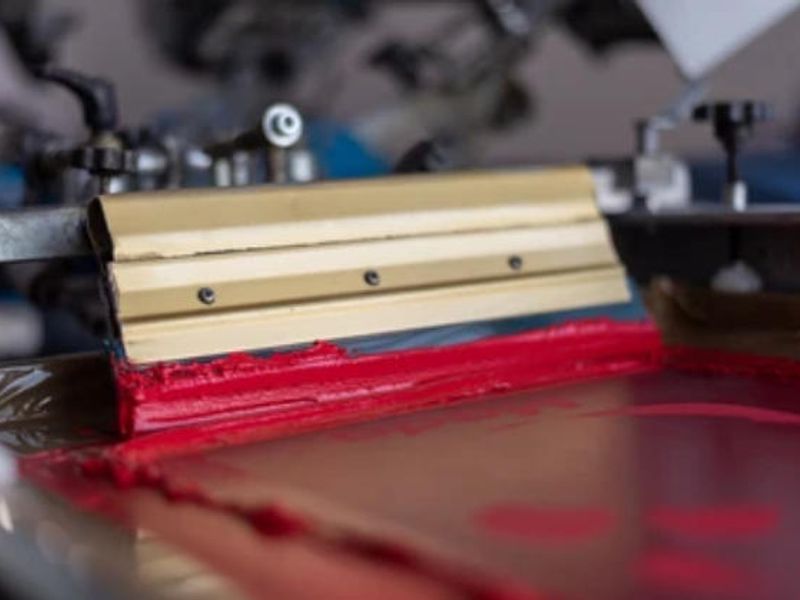
Screen printing with thermochromic ink is one of the more demanding pigment applications — you're asking a material to perform a reversible color transition reliably, across thousands of print cycles, under real-world handling conditions. The pigment has to disperse cleanly into the ink vehicle, survive the shear of the squeegee, and still respond predictably to temperature after it's cured onto the substrate.
Read More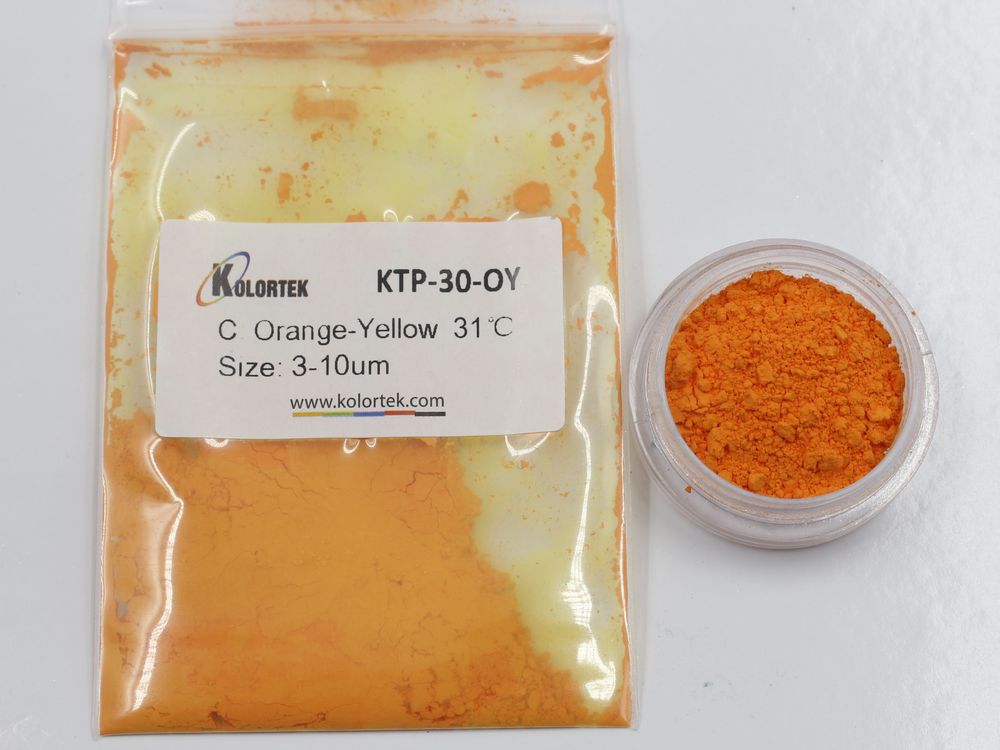
Fabric is one of the more demanding substrates for thermochromic chemistry. The dye has to survive wash cycles, flex without cracking, bond to fiber structures that weren't designed to hold encapsulated colorants, and still deliver a clean, repeatable color transition. That's a tighter brief than most people expect when they first start sourcing.
Read More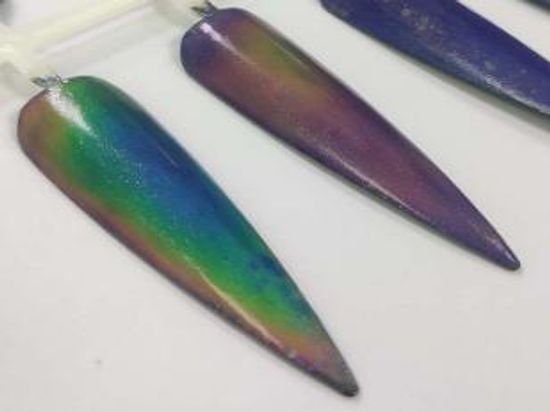
KT-MLC01 is a water-based thermochromic liquid crystal that cycles through twelve distinct colors — from black through copper, yellow, green, blue, and violet — across a 14℃ to 36℃ temperature window, making it one of the more visually dynamic options in the thermochromic category. Unlike single-transition thermochromic pigments, these mood liquid colors deliver a continuous chromatic shift in a single liquid formulation, suited for custom decorative paints, textile printing, and novelty cosmetic applications. Formulators looking to introduce live color-shift behavior into coatings or printed substrates will find the liquid format straightforward to incorporate.
Read More
KTP-16-BR is a red thermochromic pigment that transitions from vivid red to fully colorless when temperature rises above 16°C — making it one of the lowest activation-point options in Kolortek's standard range. As a heat sensitive pigment, it's well-suited for applications where near-ambient temperature triggers are required, including temperature-indicating textiles, novelty printing, and decorative coatings. Formulators working with color change with temperature effects will find the fine 1–10μm particle size integrates cleanly into most ink and coating systems.
Read More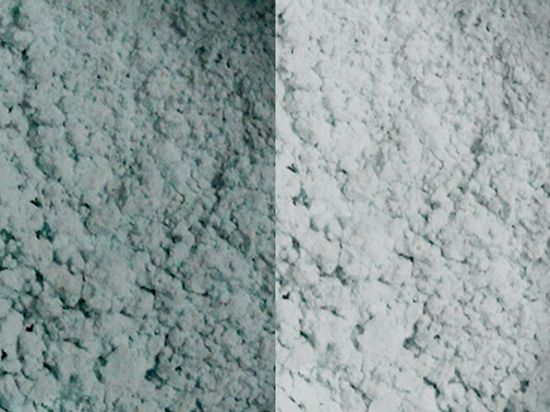
KTP-17-MG is a thermochromic powder that transitions from malachite green to fully colorless at 17°C — a low activation threshold that makes it effective for skin-contact, ambient-response, and cool-environment applications. As a heat reactive pigment, it integrates cleanly into printing, coating, and cosmetic systems where a sharp, reversible color reveal is the intended effect. Typical end-uses include nail formulations, textile printing, and craft coatings.
Read More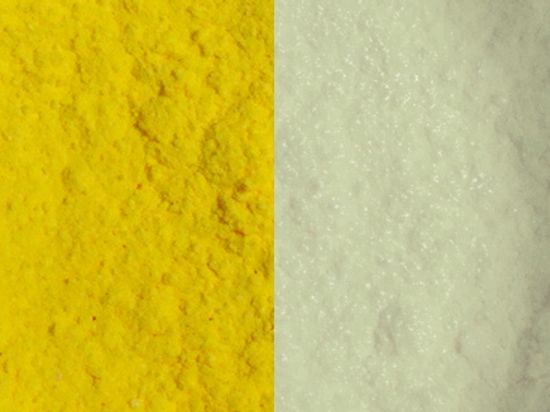
KTP-32-BY is a thermochromic powder that transitions from vivid yellow to colorless at 32°C — a body-temperature-adjacent activation point that makes it well-suited for skin-contact applications like cosmetics and nail products. This heat sensitive pigment powder disperses cleanly in most coating and printing systems, and is also available in a BPA Free food grade version for product contact use cases such as cups and utensils. Formulators working in textiles printing, craft art, or specialty inks will find the 1–10μm particle range compatible with a broad range of application methods.
Read More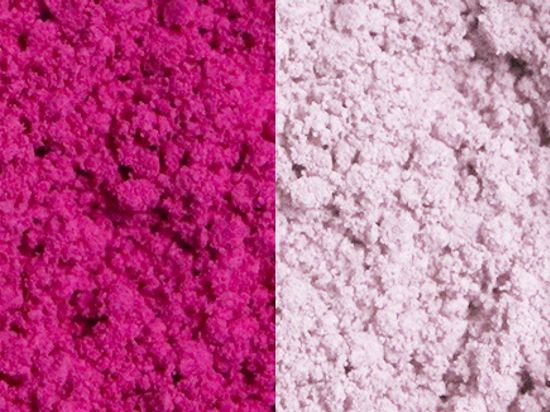
KTP-31-PBF is a rose red thermochromic pigment powder that transitions to colorless at 31°C — a body-temperature-proximate activation point well-suited for skin-contact and food-contact applications. Certified BPA Free, this heat reactive pigment is formulated for cosmetics, nail systems, and food-contact printing where safety compliance is non-negotiable. It performs equally well in textile printing and craft applications where a clean, reversible color-fade effect is the design intent.
Read More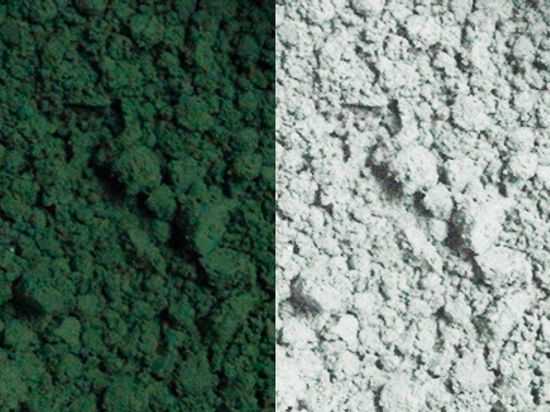
KTP-31-GBF is a food grade thermochromic pigment that shifts from vivid green to fully colorless at 31°C — clean, reversible, and BPA Free. Engineered for direct skin and food contact surface applications, this heat sensitive pigment powder is well suited for cosmetic formulations, nail products, and food contact items like cups and spoons. Its fine 3–10μm particle size ensures smooth dispersion across both water- and solvent-based systems.
Read More
 English
 Français
 Deutsch
 Русский
 Español
 Português