Leave A Message
If you are interested in our products and want to know more details,please leave a message here,we will reply you as soon as we can.
BPA Free Thermochromic Powder Rose Red 31°C KTP-31-PBF
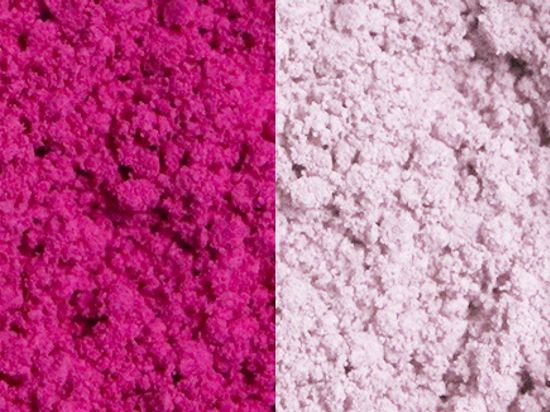
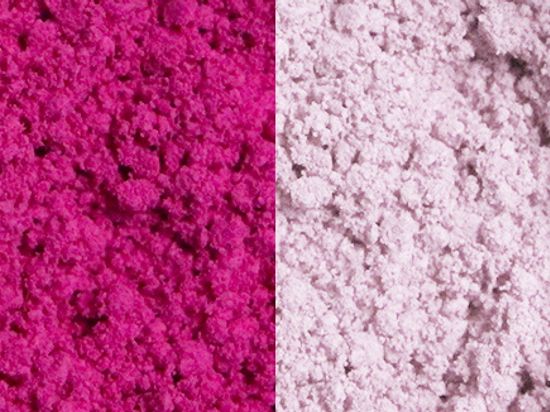
KTP-31-PBF is a rose red thermochromic pigment powder that transitions to colorless at 31°C — a body-temperature-proximate activation point well-suited for skin-contact and food-contact applications. Certified BPA Free, this heat reactive pigment is formulated for cosmetics, nail systems, and food-contact printing where safety compliance is non-negotiable. It performs equally well in textile printing and craft applications where a clean, reversible color-fade effect is the design intent.
Item No. :
KTP-31-PBF (BPA Free)Color Effect :
Rose Red 31℃Particle Size :
3-10μmBrand :
Kolortek / OEMMOQ :
1KGApplication :
Packaging, Printing Inks, Cosmetics, Textiles, Toys, Paints & Coatings, Food Contact (BPA-free series), Safety IndicatorsThis is a microencapsulated leuco dye system — rose red in its resting state, colorless above 31°C. The color transition is fully reversible. Cool the substrate below the activation threshold, the rose red returns. Raise it above, it disappears — cleanly, with no intermediate haze in a well-formulated system.
The BPA Free designation isn't a marketing label here. It reflects a real formulation change in the encapsulation chemistry that makes this series suitable for applications where conventional thermochromic pigments — which may contain bisphenol A as a color developer — would be restricted. That includes food-contact surfaces and cosmetic use cases subject to regulatory scrutiny.
Particle size runs 3–10μm, which is compatible with most coating, printing, and cosmetic dispersion processes without requiring unusual milling steps.
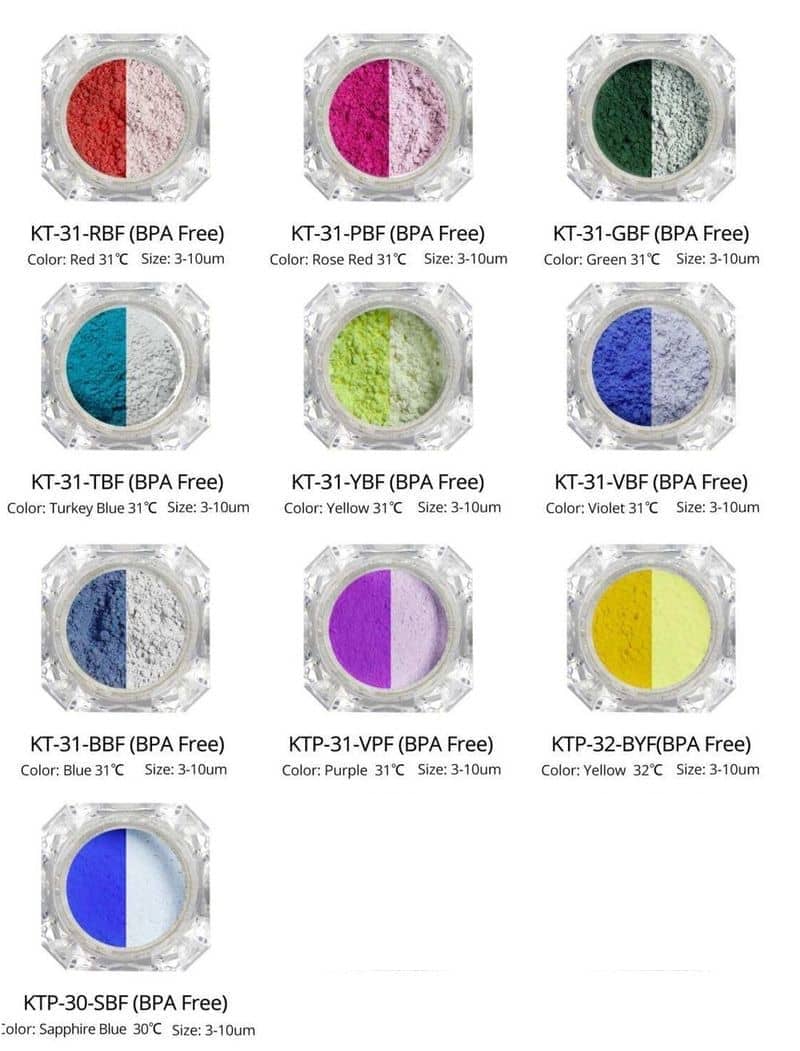
KTP-31-PBF is part of a broader BPA Free lineup. All variants listed below are Colored to Colorless and share the same 3–10μm particle size. The activation temperature range covers 30–32°C depending on the grade selected.
| Model | Color | Activation Temp. | Particle Size | Type |
|---|---|---|---|---|
| KTP-31-PBF | Rose Red | 31°C | 3–10μm | Colored → Colorless |
| KTP-31-RBF | Red | 31°C | 3–10μm | Colored → Colorless |
| KTP-31-GBF | Green | 31°C | 3–10μm | Colored → Colorless |
| KTP-31-TBF | Turkey Blue | 31°C | 3–10μm | Colored → Colorless |
| KTP-31-YBF | Yellow | 31°C | 3–10μm | Colored → Colorless |
| KTP-31-VBF | Violet | 31°C | 3–10μm | Colored → Colorless |
| KTP-31-BBF | Blue | 31°C | 3–10μm | Colored → Colorless |
| KTP-31-VPF | Purple | 31°C | 3–10μm | Colored → Colorless |
| KTP-32-BYF | Yellow | 32°C | 3–10μm | Colored → Colorless |
| KTP-30-SBF | Sapphire Blue | 30°C | 3–10μm | Colored → Colorless |
If your application calls for a color-to-color transition rather than color-to-colorless, Kolortek also offers a separate Colored To Another Colored series — ask for those models specifically when requesting samples.
The 31°C activation temperature puts this pigment squarely in the body-temperature-sensitive range, which opens up a specific set of use cases that lower-temperature grades don't serve as cleanly.
A few things that matter in practice when specifying or formulating with KTP-31-PBF:
Thermochromic pigments are microencapsulated — the capsule is the functional element, not just a carrier. That has direct implications for how you handle them in your process.
Avoid high-shear dispersion. Aggressive milling or rotor-stator mixing above recommended shear thresholds can rupture the microcapsules, permanently degrading the thermochromic response. Pre-disperse in a compatible carrier at low shear, then let down into your system.
Processing temperatures matter. If your ink, coating, or resin system requires elevated temperature curing or processing — particularly above 80°C — test compatibility carefully. Sustained high-temperature exposure can compromise both the encapsulation integrity and the leuco dye system.
In practice, aqueous systems tend to be more straightforward. Solvent-based systems work but require verification that the solvent doesn't interact with the capsule wall. Request the TDS for carrier and solvent compatibility guidance before committing to a formulation direction.
That said, the thermochromic powder itself is a dry, free-flowing powder — it disperses cleanly into a range of vehicles when handled correctly. Loading levels typically run 5–15% depending on the application and the depth of color shift effect required.
Standard leuco dye thermochromic systems commonly use bisphenol A as the color developer component. For applications such as toy packaging, food utensils, cosmetics, and children's products, that's a regulatory problem in most major markets.
The BPA Free series substitutes an alternative color developer that achieves the same reversible thermochromic function without BPA. The trade-off — if any — is typically minimal in terms of color intensity and transition sharpness at the 31°C range, but formulators should always run their own application-specific performance validation.
If your application doesn't involve food contact, cosmetics, or sensitive end-use markets, the standard series may offer a broader color range. If it does, BPA Free is the only appropriate starting point.
Q: Is KTP-31-PBF suitable for direct food contact applications?
A: Yes. The BPA Free designation means this series is formulated for use in food-contact applications such as coated cups, printed spoons, and similar items. It is the appropriate grade for those applications — the standard thermochromic series is not.
Q: What base coat color should I use underneath this pigment in a Colored to Colorless system?
A: That depends entirely on your design intent. When the pigment activates above 31°C and becomes colorless, whatever is underneath becomes visible. A white base reads as "blank." A colored base creates an apparent color change from rose red to that base color. Plan your substrate or base coat as an active design element, not a background.
Q: Can this pigment be used in UV-curable ink systems?
A: It requires careful validation. UV curing processes can involve brief but intense energy exposure. The key concern is whether the UV dose and any associated heat spike compromise capsule integrity. Some UV ink systems are compatible; others are not. Testing under your specific cure conditions is necessary before committing to production.
Q: Are samples and technical documentation available before placing a bulk order?
A: Yes. Samples, TDS, MSDS, and COA are available on request. Formulation support can also be arranged. Contact contact@kolortek.com with your application details to get the right documentation and sample quantity for your evaluation.
To request samples of KTP-31-PBF or any BPA Free thermochromic grade, or to discuss formulation compatibility for your specific substrate and process, contact the Kolortek technical team at contact@kolortek.com. Provide your application, carrier system, and processing conditions for a faster, more targeted response.
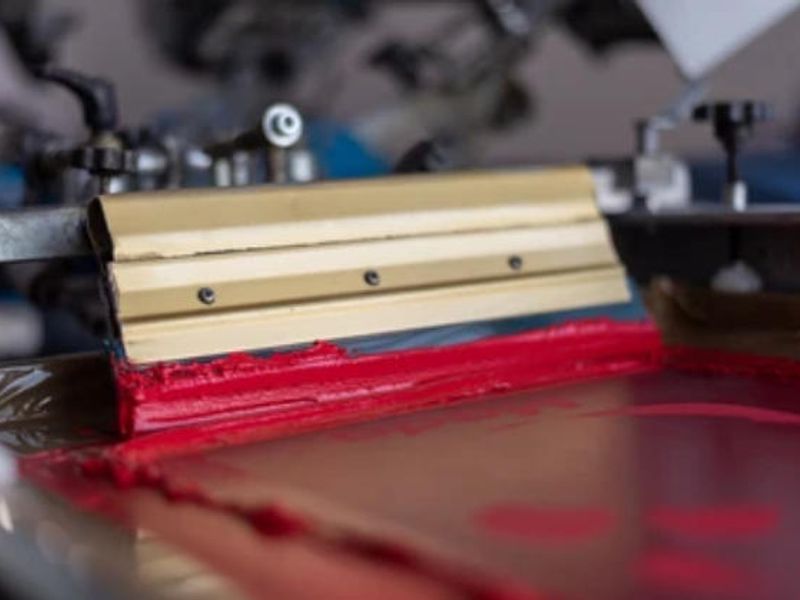
Screen printing with thermochromic ink is one of the more demanding pigment applications — you're asking a material to perform a reversible color transition reliably, across thousands of print cycles, under real-world handling conditions. The pigment has to disperse cleanly into the ink vehicle, survive the shear of the squeegee, and still respond predictably to temperature after it's cured onto the substrate.
Read More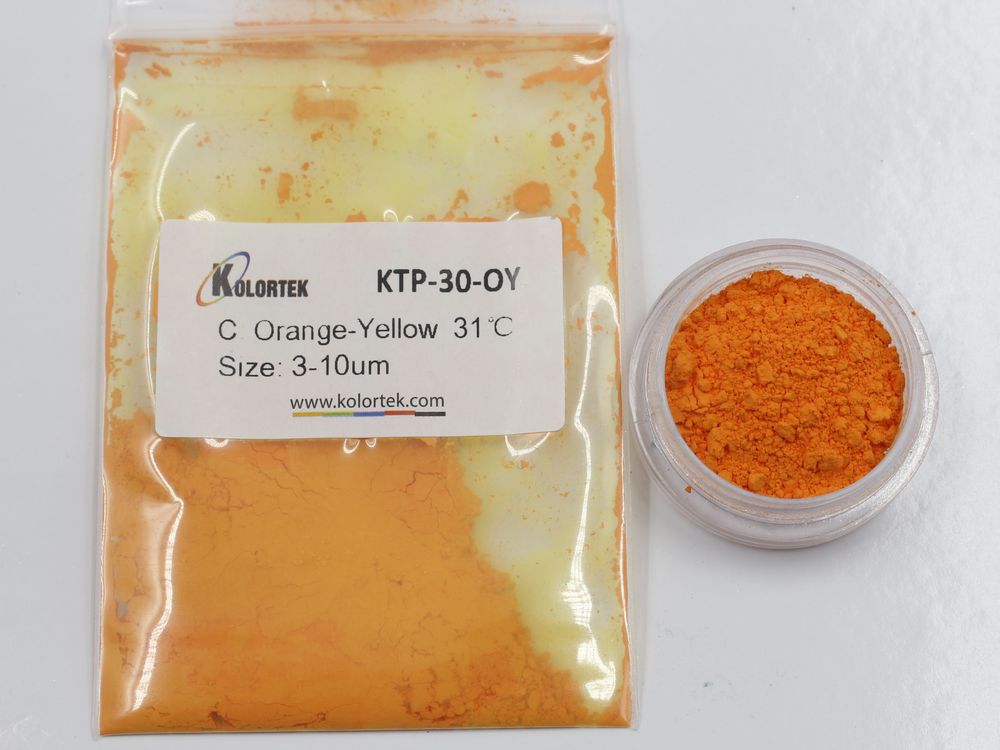
Fabric is one of the more demanding substrates for thermochromic chemistry. The dye has to survive wash cycles, flex without cracking, bond to fiber structures that weren't designed to hold encapsulated colorants, and still deliver a clean, repeatable color transition. That's a tighter brief than most people expect when they first start sourcing.
Read More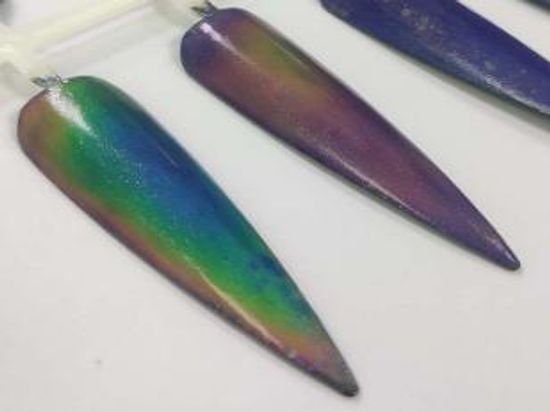
KT-MLC01 is a water-based thermochromic liquid crystal that cycles through twelve distinct colors — from black through copper, yellow, green, blue, and violet — across a 14℃ to 36℃ temperature window, making it one of the more visually dynamic options in the thermochromic category. Unlike single-transition thermochromic pigments, these mood liquid colors deliver a continuous chromatic shift in a single liquid formulation, suited for custom decorative paints, textile printing, and novelty cosmetic applications. Formulators looking to introduce live color-shift behavior into coatings or printed substrates will find the liquid format straightforward to incorporate.
Read More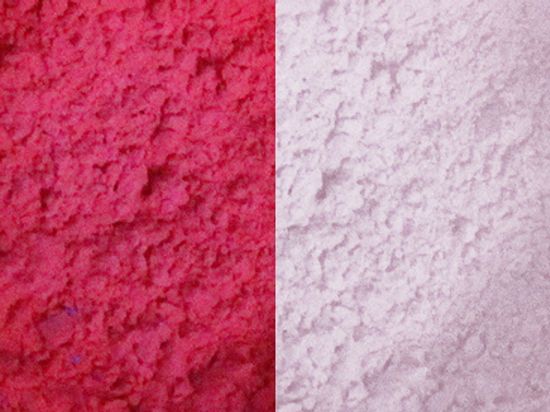
KTP-16-BR is a red thermochromic pigment that transitions from vivid red to fully colorless when temperature rises above 16°C — making it one of the lowest activation-point options in Kolortek's standard range. As a heat sensitive pigment, it's well-suited for applications where near-ambient temperature triggers are required, including temperature-indicating textiles, novelty printing, and decorative coatings. Formulators working with color change with temperature effects will find the fine 1–10μm particle size integrates cleanly into most ink and coating systems.
Read More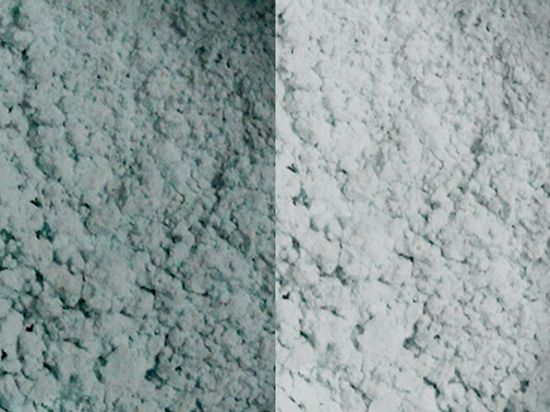
KTP-17-MG is a thermochromic powder that transitions from malachite green to fully colorless at 17°C — a low activation threshold that makes it effective for skin-contact, ambient-response, and cool-environment applications. As a heat reactive pigment, it integrates cleanly into printing, coating, and cosmetic systems where a sharp, reversible color reveal is the intended effect. Typical end-uses include nail formulations, textile printing, and craft coatings.
Read More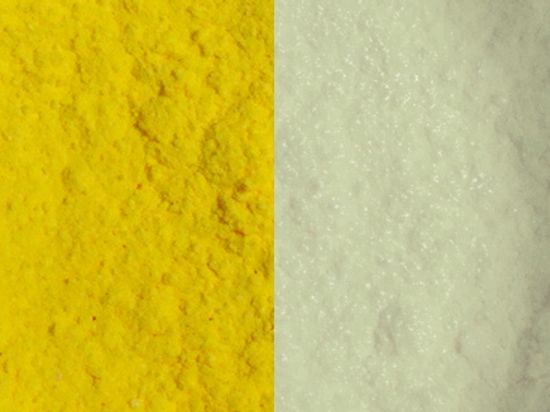
KTP-32-BY is a thermochromic powder that transitions from vivid yellow to colorless at 32°C — a body-temperature-adjacent activation point that makes it well-suited for skin-contact applications like cosmetics and nail products. This heat sensitive pigment powder disperses cleanly in most coating and printing systems, and is also available in a BPA Free food grade version for product contact use cases such as cups and utensils. Formulators working in textiles printing, craft art, or specialty inks will find the 1–10μm particle range compatible with a broad range of application methods.
Read More
KTP-31-PBF is a rose red thermochromic pigment powder that transitions to colorless at 31°C — a body-temperature-proximate activation point well-suited for skin-contact and food-contact applications. Certified BPA Free, this heat reactive pigment is formulated for cosmetics, nail systems, and food-contact printing where safety compliance is non-negotiable. It performs equally well in textile printing and craft applications where a clean, reversible color-fade effect is the design intent.
Read More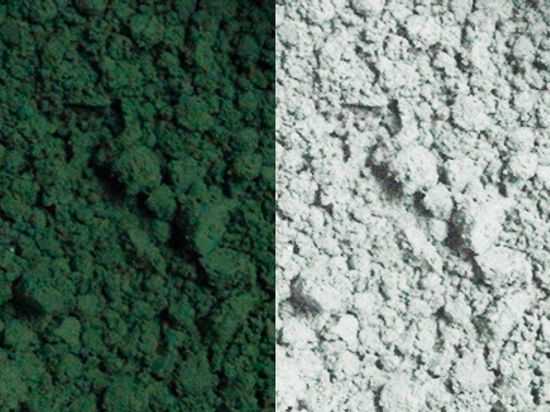
KTP-31-GBF is a food grade thermochromic pigment that shifts from vivid green to fully colorless at 31°C — clean, reversible, and BPA Free. Engineered for direct skin and food contact surface applications, this heat sensitive pigment powder is well suited for cosmetic formulations, nail products, and food contact items like cups and spoons. Its fine 3–10μm particle size ensures smooth dispersion across both water- and solvent-based systems.
Read More
 English
 Français
 Deutsch
 Русский
 Español
 Português