
Leave A Message
If you are interested in our products and want to know more details,please leave a message here,we will reply you as soon as we can.
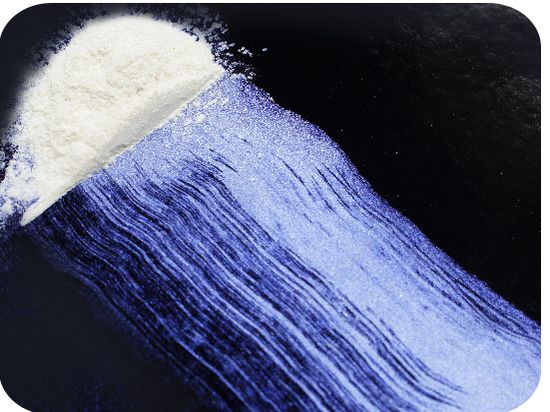
KT-T60-23-WR is our alumina-based xirallic replacement galaxy blue pigment, engineered as a direct drop-in alternative to Merck Xirallic T60-23. Built on a high-refractive-index Al₂O₃ crystal substrate (RI 1.76) with a 6–30 μm particle range, it delivers a faceted, crystal-clear blue sparkle in automotive basecoat systems — the kind of depth and brilliance that mica-based pigments structurally cannot match.
The difference between an Al₂O₃-based crystal pigment and a conventional mica-based pearl starts at the substrate level. Mica flakes carry a naturally rough surface and a refractive index around 1.58. Alumina flakes are exceptionally smooth and have a refractive index of 1.76. That combination — smooth surface, higher RI — enables the thin, uniform multi-layer optical coatings that produce genuine sparkle rather than diffuse luster.
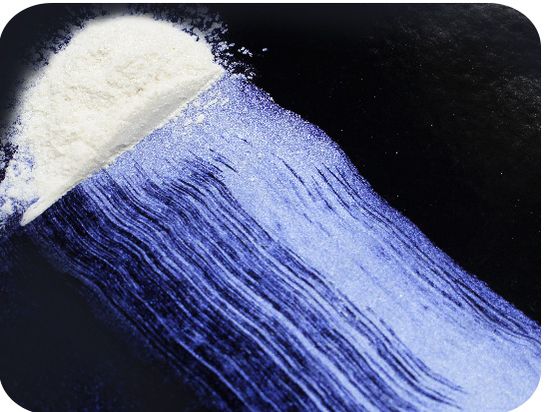
In our application work with automotive customers, the visual distinction is immediately apparent: where mica-based pigments create a soft, continuous sheen, KT-T60-23-WR produces discrete, faceted flash points — individual "crystals" of light visible across the panel. That is the visual signature automotive designers specify when they call for a galaxy blue effect.
Transparency in clear coat is high, which preserves the full depth of the underlying dark basecoat. Orientation and flow characteristics are also well-suited to spray application, giving a uniform sparkle distribution without clustering.
| Parameter | Value / Detail |
|---|---|
| Model | KT-T60-23-WR |
| Series | XiallicSparks |
| Substrate | Alumina (Al₂O₃) crystal flake |
| Refractive Index | 1.76 (vs. mica: 1.58) |
| Particle Size | 6–30 μm |
| Color / Effect | Galaxy Blue; faceted crystal sparkle; non-pearlescent |
| Heat Stability | Stable at standard automotive cure: 140–160°C / 20–30 min |
| Weather Resistance | Excellent |
| Chemical Resistance | Good resistance to automotive fluids |
| Recommended Loading | 3–8% on total paint weight |
| Xirallic Equivalent | Xirallic T60-23 |
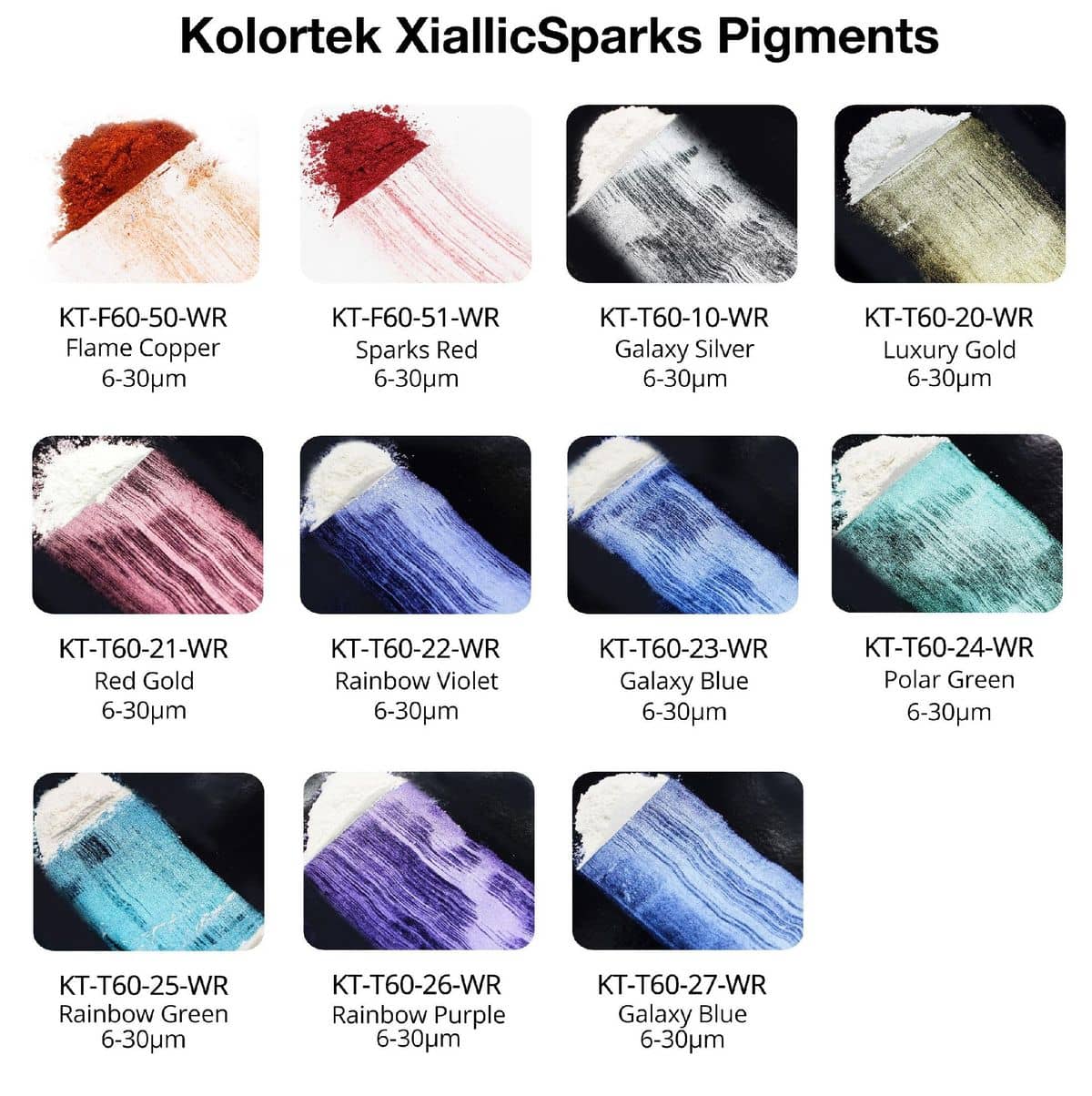
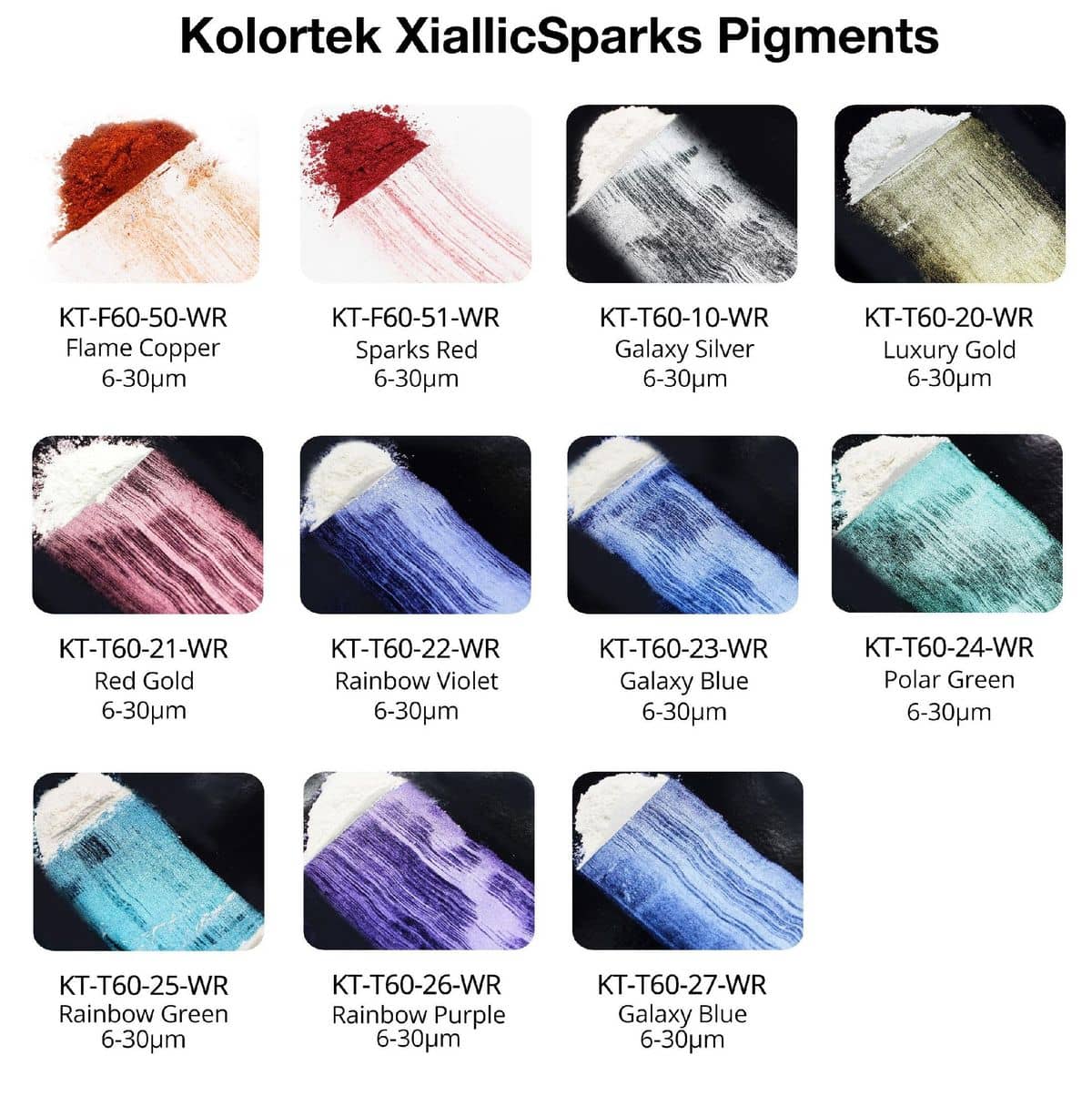
KT-T60-23-WR sits within the XiallicSparks product line, which covers the full range of crystal effect colors on Al₂O₃ substrate. All grades share the 6–30 μm particle range. A second Galaxy Blue variant, KT-T60-27-WR, is also listed in this series; if your reference formula specifies a specific hue angle within the galaxy blue range, contact our technical team to confirm which grade matches your target.
| Model | Color / Effect | Particle Size |
|---|---|---|
| KT-T60-10-WR | Galaxy Silver | 6–30 μm |
| KT-T60-20-WR | Luxury Gold | 6–30 μm |
| KT-T60-21-WR | Radiant Red | 6–30 μm |
| KT-T60-22-WR | Rainbow Violet | 6–30 μm |
| KT-T60-23-WR | Galaxy Blue | 6–30 μm |
| KT-T60-24-WR | Polar Green | 6–30 μm |
| KT-T60-25-WR | Rainbow Green | 6–30 μm |
| KT-T60-26-WR | Rainbow Purple | 6–30 μm |
| KT-T60-27-WR | Galaxy Blue (variant) | 6–30 μm |
| KT-F60-50-WR | Flame Copper | 6–30 μm |
| KT-F60-51-WR | Sparks Red | 6–30 μm |
KT-T60-23-WR is designed for automotive OEM and premium refinish basecoat/clearcoat systems. It also performs well in high-end industrial coatings for consumer electronics and luxury goods where the same crystal sparkle aesthetic is required. The XiallicSparks series is not recommended for cosmetic applications or general decorative use.
One thing to note from working with automotive coatings customers: the basecoat color underneath makes a significant difference. A black or dark ground coat maximizes the contrast between the crystal sparkle and the background, which is how the "galaxy" effect name earns its meaning. Applied over a light or white base, the effect reads quite differently. A high-gloss clear coat applied over the basecoat is standard practice to lock in the effect and preserve weather and chemical resistance.
Heat stability at 140–160°C for 20–30 minutes covers standard automotive oven cure cycles without effect degradation. Weather resistance is excellent, and the pigment shows good resistance to automotive fluids — relevant for OEM specifications that include fuel, oil, and brake fluid exposure testing.
Pre-disperse KT-T60-23-WR in a small portion of binder before adding to the bulk batch. A cowles blade or equivalent high-speed disperser works well. The critical rule is to avoid any milling equipment or high-shear conditions that could fracture the alumina flakes — broken flakes mean reduced sparkle intensity and a loss of the faceted crystal signature that makes this pigment worth specifying.
Typical loading runs 3–8% on total paint weight in automotive basecoats. Within that range, actual sparkle intensity is also influenced by application technique. Multiple thin spray passes consistently produce more uniform sparkle distribution than a single heavy coat, which tends to cause orientation issues and uneven flake density.
For best flake orientation, use coating systems with a slow solvent flash and good flow characteristics. The smooth alumina surface contributes naturally to good orientation, but solvent selection still plays a role — rapid flash can trap flakes at poor angles before they settle parallel to the substrate.
When a customer formula references Xirallic T60-23, KT-T60-23-WR is the direct equivalent in our XiallicSparks series. The substrate type (Al₂O₃), particle size range (6–30 μm), and optical coating approach are matched to that reference. In our experience supporting customers through Xirallic transitions, the drop-in process is straightforward when the formulator is working in the same basecoat system — no reformulation of the surrounding coating architecture is typically required.
That said, any pigment substitution in an approved automotive formula should go through the customer's internal color and performance sign-off process. We can provide samples and the product TDS to support that evaluation. SDS is supplied with shipment.
For applications outside the automotive coatings context, the standard Kolortek pearlescent series — KT-100 through KT-9000 — covers a broad range of substrates and effect types better suited to cosmetics, plastics, inks, and general decorative use. XiallicSparks grades are specifically engineered for the demands of automotive coating systems and are not the right starting point for those other categories.
Is KT-T60-23-WR a true 1:1 replacement for Merck Xirallic T60-23?
Yes. KT-T60-23-WR is the direct XiallicSparks equivalent to Xirallic T60-23. Both are based on Al₂O₃ crystal flake substrate at a 6–30 μm particle range with multi-layer optical coatings for galaxy blue crystal sparkle. It is designed as a drop-in replacement in existing automotive basecoat formulas, though any substitution in a certified automotive formula should be validated through your standard color and performance approval process.
What makes a galaxy blue al2o3 pigment visually different from a mica-based blue pearl?
The difference is the substrate. Al₂O₃ flakes have a refractive index of 1.76 and an exceptionally smooth surface, compared to mica at RI 1.58 with a rougher texture. The higher RI and smoother surface enable thin, uniform multi-layer coatings that produce discrete, faceted sparkle points — a crystal flash effect. Mica-based pigments produce a diffuse, continuous luster. The two effects are visually distinct, and automotive designers specify them separately.
What is the recommended loading rate for KT-T60-23-WR in automotive basecoats?
Typical loading is 3–8% on total paint weight for automotive basecoat applications. Apply over a black or dark basecoat to maximize the crystal effect contrast, followed by a high-gloss clear coat. Multiple thin spray passes produce more uniform sparkle distribution than a single heavy application.
Can KT-T60-23-WR be used in cosmetics or nail products?
No. XiallicSparks grades, including KT-T60-23-WR, are not recommended for cosmetic or decorative applications. For cosmetic-grade effect pigments, Kolortek's separate product lines formulated under FDA and EU Cosmetics Regulation (EC) No 1223/2009 frameworks are the correct starting point. Contact our technical team to identify the right grade for a cosmetics application.
Contact our technical team to discuss formulation requirements or to request samples for your Xirallic replacement evaluation.
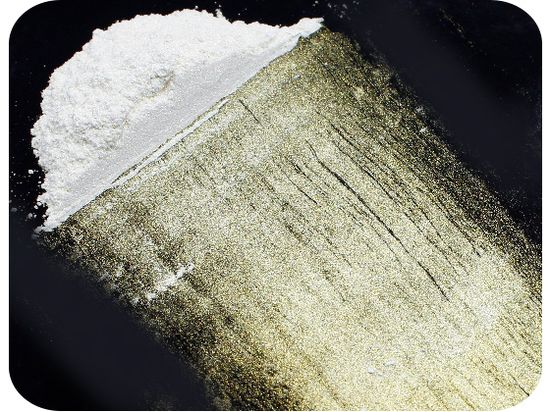
KT-T60-20-WR is Kolortek's direct aluminum oxide gold pigment in the XiallicSparks series — a factory-confirmed equivalent to Merck Xirallic® T60-20. Built on α-Al₂O₃ flakes rather than mica, it delivers a sharp, crystal-effect gold sparkle with exceptional chroma and flake orientation in automotive basecoat/clearcoat systems. Particle size runs 6–30 μm (D50: 9–11 μm), with heat stability to 140–160 °C for 20–30 minutes — fully compatible with standard automotive OEM cure cycles.
Read More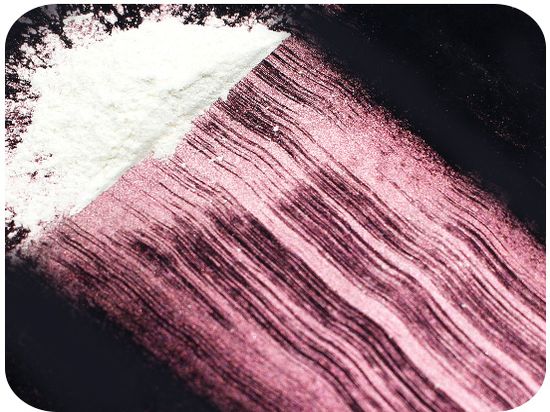
KT-T60-21-WR Radiant Red is a direct xirallic substitute radiant red pigment built on an alumina (Al₂O₃) flake substrate — not mica — producing the faceted, mirror-sharp crystal sparkle that defines the Xirallic® aesthetic. It maps directly to Merck Xirallic® T60-21, making it a 1:1 drop-in reference for formulators working in automotive OEM basecoats or premium refinish systems who need an equivalent shade and optical performance at factory-direct pricing.
Read More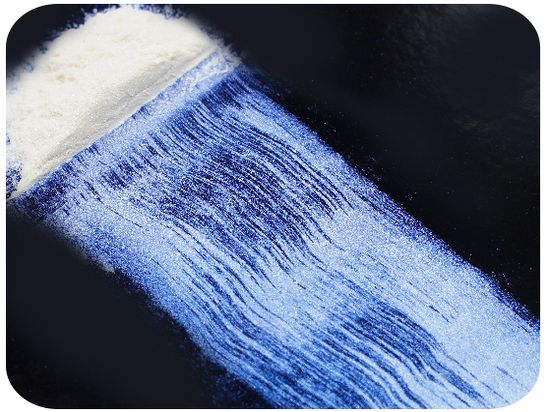
KT-T60-22-WR Rainbow Violet XiallicSparks is our direct equivalent to Xirallic T60-22 — an al2o3 violet effect pigment built on aluminum oxide flake substrate rather than mica. With a refractive index of 1.76 and a 6–30 μm particle size, it produces the sharp, faceted crystal sparkle that defines high-end automotive basecoat finishes. Where mica-based pigments deliver a soft diffuse glow, this grade gives you tight, mirror-like highlights with exceptional chroma and color purity in a Rainbow Violet effect.
Read More
KT-T60-23-WR is our alumina-based xirallic replacement galaxy blue pigment, engineered as a direct drop-in alternative to Merck Xirallic T60-23. Built on a high-refractive-index Al₂O₃ crystal substrate (RI 1.76) with a 6–30 μm particle range, it delivers a faceted, crystal-clear blue sparkle in automotive basecoat systems — the kind of depth and brilliance that mica-based pigments structurally cannot match.
Read More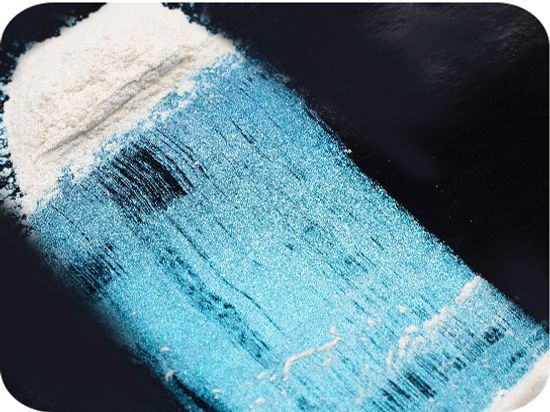
KT-T60-25-WR is an alumina (Al₂O₃) crystal-effect pigment in our XiallicSparks series, producing a vivid Rainbow Green sparkle with the kind of faceted, high-brilliance character you see in top-tier automotive OEM finishes. With a 6–30 μm particle size range and an Al₂O₃ substrate refractive index of 1.76 — significantly higher than standard mica — this rainbow green Al₂O₃ pigment delivers exceptional chroma and clarity in basecoat/clearcoat systems, at factory-direct pricing.
Read More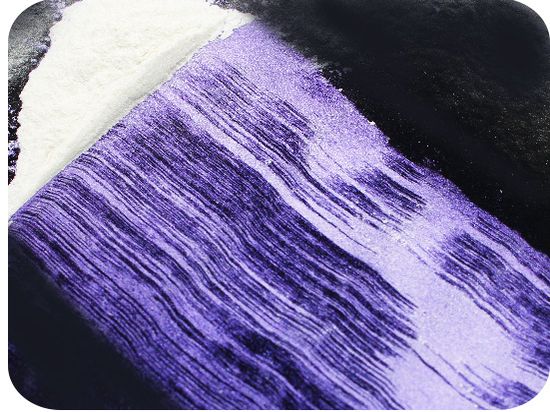
KT-T60-26-WR Rainbow Purple is an alumina-based crystal-effect pigment from our XiallicSparks series, producing a vivid rainbow purple sparkle in automotive basecoat-clearcoat systems. Built on an Al₂O₃ flake substrate — not mica — it delivers higher chroma, sharper highlights, and better flake orientation than conventional pearl pigments. With a particle size range of 6–30 μm and a D50 of 9–11 μm, it is engineered specifically for high-end automotive OEM and refinish applications where a distinct, crystal-like purple sparkle is the design intent.
Read More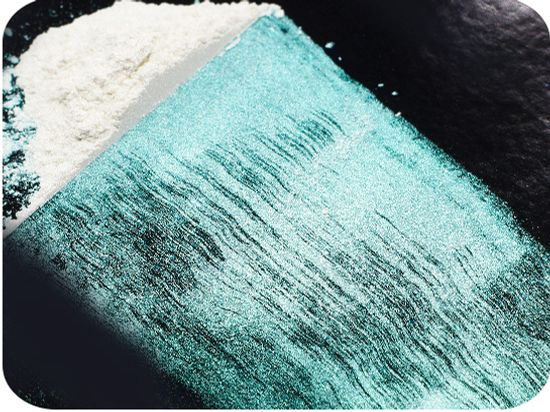
XiallicSparks is Kolortek's line of aluminum oxide effect pigment available in bulk supply, engineered as direct alternatives to Merck Xirallic® in automotive OEM and premium industrial coating applications. Built on an Al₂O₃ flake substrate rather than mica, the series delivers the faceted, crystal-like sparkle that defines high-end automotive finishes — at factory-direct pricing that typically runs 20–40% below Merck equivalents for comparable performance. If you're evaluating a xirallic alternative wholesale source, this is the product line to assess.
Read More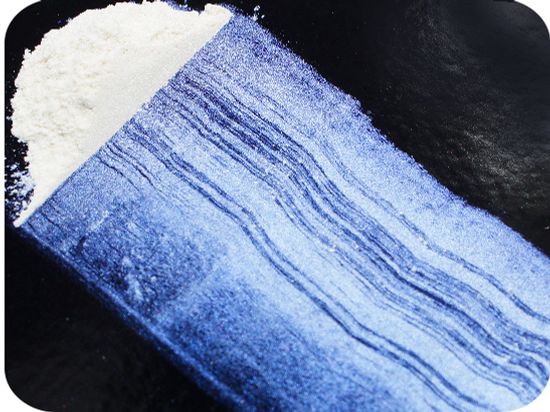
If you're sourcing a xirallic equivalent factory direct and need the same aluminum oxide crystal substrate that drives Merck Xirallic's signature faceted sparkle, Kolortek's XiallicSparks series — product codes KT-T60 and KT-F60 — delivers that effect at 20–40% lower cost than branded equivalents. With eleven grades covering colors from Galaxy Silver to Flame Copper, particle sizes of 6–30 μm, and factory-direct supply from our manufacturing base in China, these are purpose-built alternatives for automotive coating formulators who want performance without the Merck price tag.
Read More
 English
 Français
 Deutsch
 Русский
 Español
 Português