Leave A Message
If you are interested in our products and want to know more details,please leave a message here,we will reply you as soon as we can.
Phosphorescent Pigment: Colour, Size and the Water Question
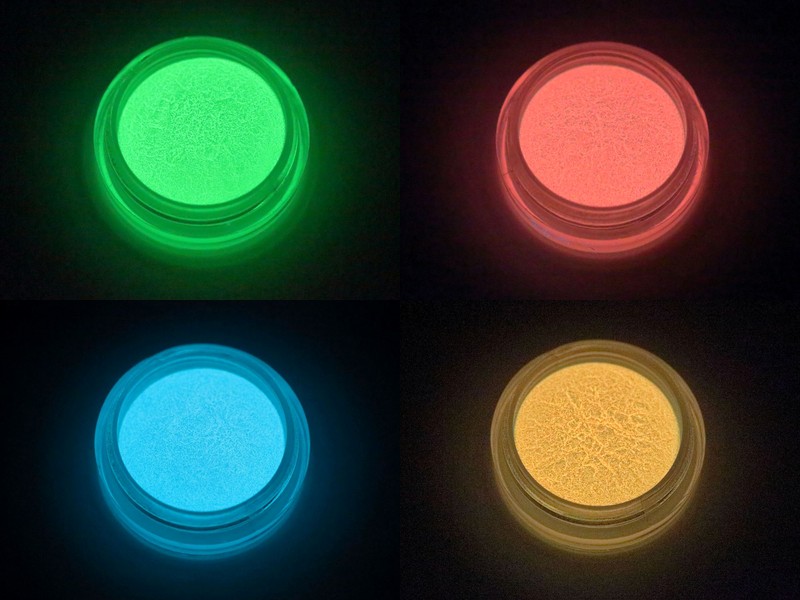
Phosphorescent pigment for plastic, print and water-based systems: cool colours come in any particle size, warm colours at one. 1 kg minimum, ISO 9001:2015.
Item No. :
KT-G and KT-SG codes — strontium aluminate for the cool colours and the water-based range, zinc sulfide for the warm sulphide coloursColor Effect :
Photoluminescent afterglow after charging under any bright source; emission runs from blue green and sky blue through yellow green and purple to red, orange and blueParticle Size :
5–75 μm in total; the strontium aluminate colours are cut from 5–25 μm up to 65–75 μm, the water-based and zinc sulfide colours ship in one band eachComposition :
Strontium aluminate doped with rare-earth activators, or zinc sulfide — powder-level detail on the TDSBrand :
KolortekMOQ :
1 kgApplication :
Injection moulded and cast parts, coatings, screen inks, safety and egress marking, textile printing, resin craft, nail artYour part has to hold a charge through the dark — a moulded housing, a printed label, a coated panel. Three details pick the powder: the emission colour you need, the particle size your process will pass, and whether water touches the pigment. Answer those three in that order and one exchange usually settles the enquiry.
The powder is the last decision, not the first. Four kinds of work cover most glow projects, and each one shortens the list before anyone argues about colour.
An injection-moulded or extruded part takes the powder into the melt. There, how the grain sits in the resin and what it does to the surface finish outweigh the finest cut you can buy. A screen-printed film or label is governed by the mesh: a grain wider than the opening stays on the screen, whatever the datasheet claims. A water-based coating or slurry removes most of the range before size is even considered. A cast resin or a heavy section is the reverse case — room for a coarse, bright grain that would blind a fine screen.
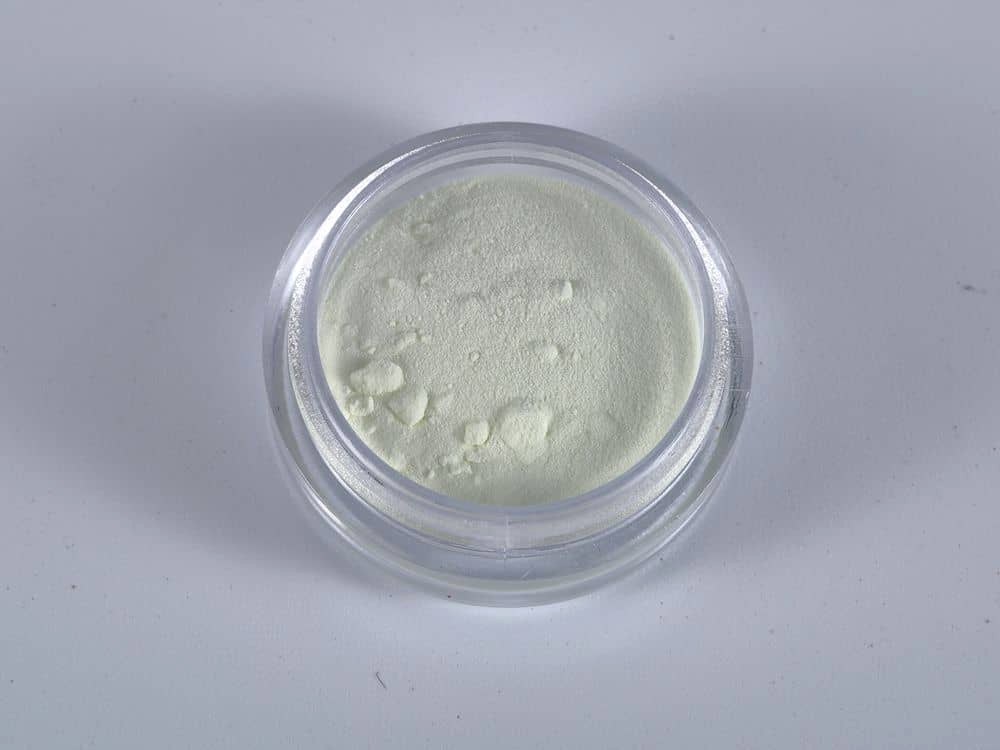
Fig. 1 — A strontium powder in ordinary room light. Nothing about the dry colour predicts what it will emit.
Under room light every powder reads as a pale mineral. Off-white to faint yellow-green across the cool colours; a trace of tint in the jar for the warm ones. Dry colour predicts almost nothing about emission, so a charged sample is the only honest way to judge a colour before you commit to a batch.
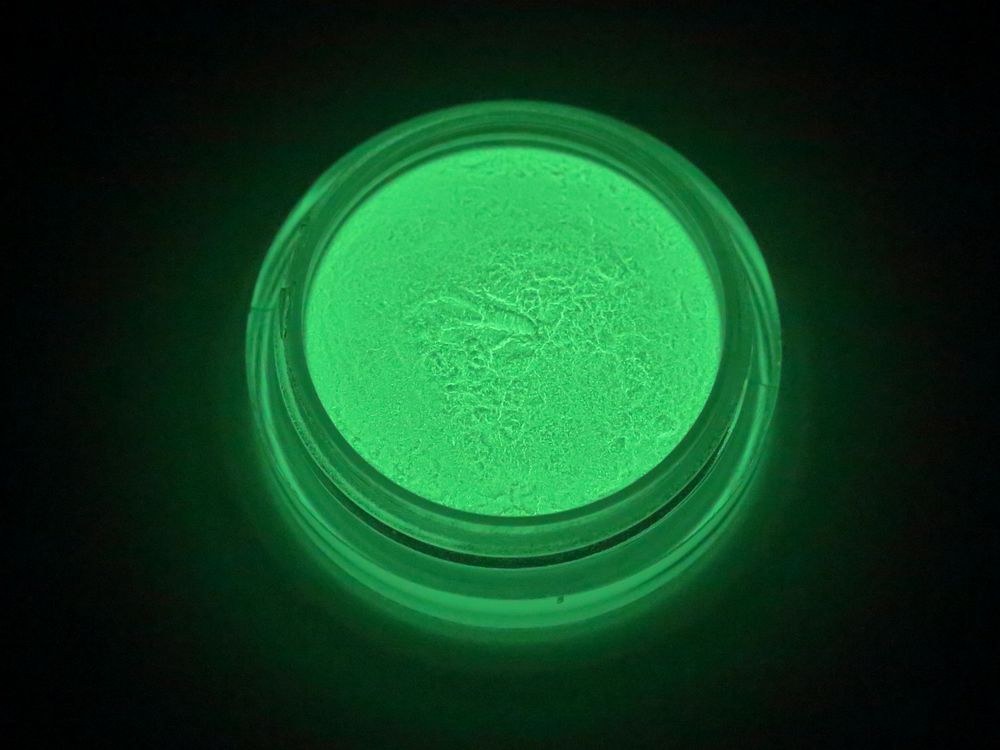
Fig. 2 — The same jar, charged and photographed in the dark. Emission colour and powder colour are unrelated.
Particle size decides most projects, because it is the one number your equipment sets and your customer does not.
A 20 μm print film will not take a 60 μm grain. The screen blocks, the print goes patchy, and the fault gets blamed on the pigment when the size caused it. That same powder inside a 120 μm coating disappears into the film without a trace.
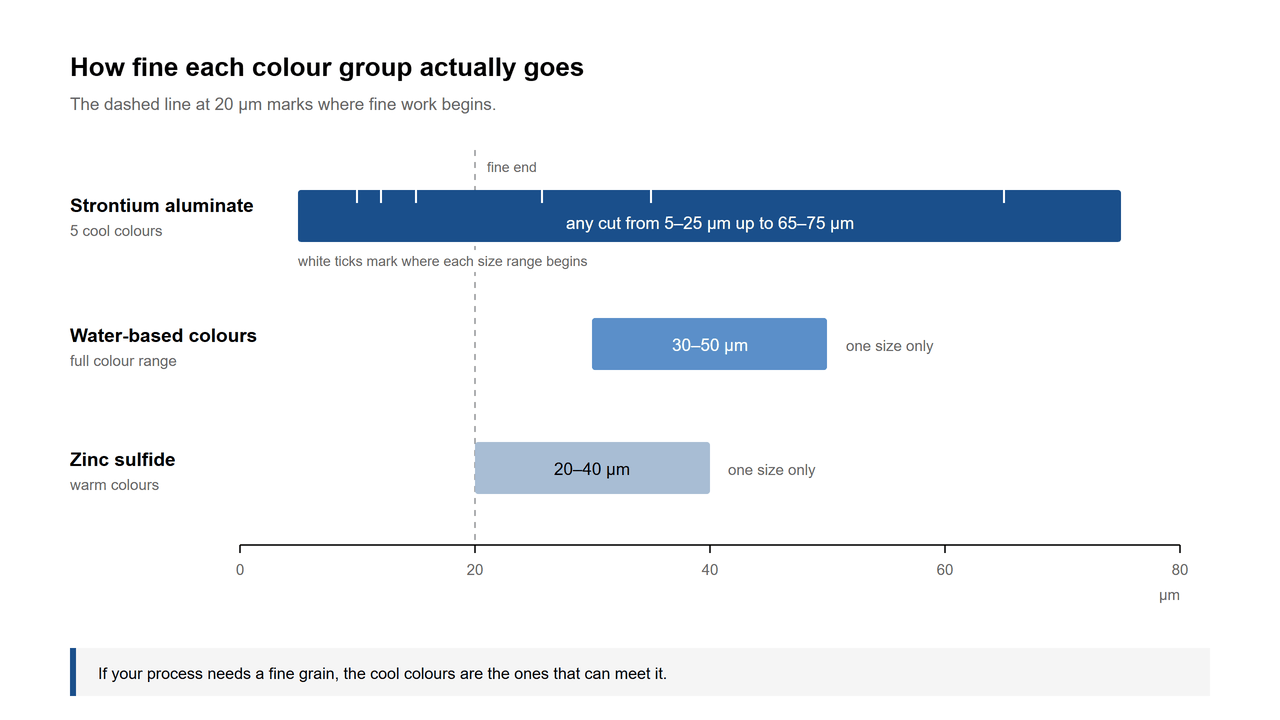
Fig. 3 — Schematic. How fine each colour group actually goes. The cool colours step down to 5 μm; the warm colours sit in one band.
Below 20 μm the range offers five powders — tender green at 5–25 μm, yellow green at 10–25 μm and at 12–25 μm, blue green at 15–25 μm, purple at 15–25 μm. All five are cool colours. For thin-film and fine-mesh work that is the practical floor, and it is worth knowing before the artwork is drawn.
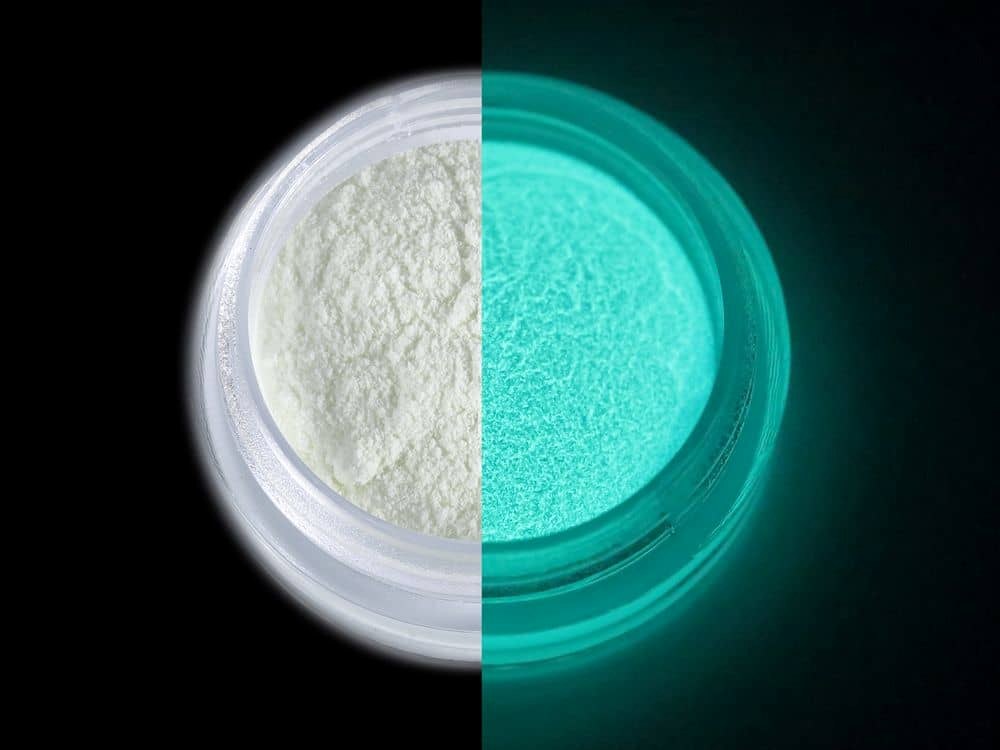
Fig. 4 — The finest cut, at 5–25 μm, split between room light and emission.
Size trades against brightness. A coarse grain carries more phosphor mass in each particle, so it reads brighter at the instant the lights go off and keeps reading longer. A fine grain covers more area per gram and fits inside a thin film — the property that makes fine mesh and thin coatings possible in the first place.
A fine cut is a fit, not an upgrade. A 65–75 μm grain in a 20 μm print film is not a brighter glow; it is a blocked mesh.
Where the section is thick and surface finish is not the constraint, buy at the coarse end. 45–75 μm holds its charge longer and carries further across a dark room, which is how a cast decorative piece or a heavy housing usually gets judged.
Cool colours and warm colours come from different chemistry. That one fact explains most of the awkward answers a buyer gets when asking for red in a fine cut.
Blue green, yellow green, tender green, sky blue and purple sit on a strontium aluminate base. It takes rare-earth doping well, returns a long afterglow, and is milled across a range of cuts from 5–25 μm up to 65–75 μm. On these colours, size is a genuine choice.
Red, orange, pink and the deeper warm tones come from a second base — either a water-based system or zinc sulfide. Neither is milled to more than one band. Ask for red and the size is settled for you. Ask for a size first and the colour list narrows to the cool end.
| The colour you want | Particle size open to you | Base |
|---|---|---|
| Blue green, yellow green, tender green, sky blue, purple | 5–25 μm up to 65–75 μm | Strontium aluminate |
| Red, orange red, pink orange, orange yellow, violet, green, blue | 30–50 μm | Water-based |
| Yellow, orange yellow, orange red, red, yellow green | 20–40 μm | Zinc sulfide |
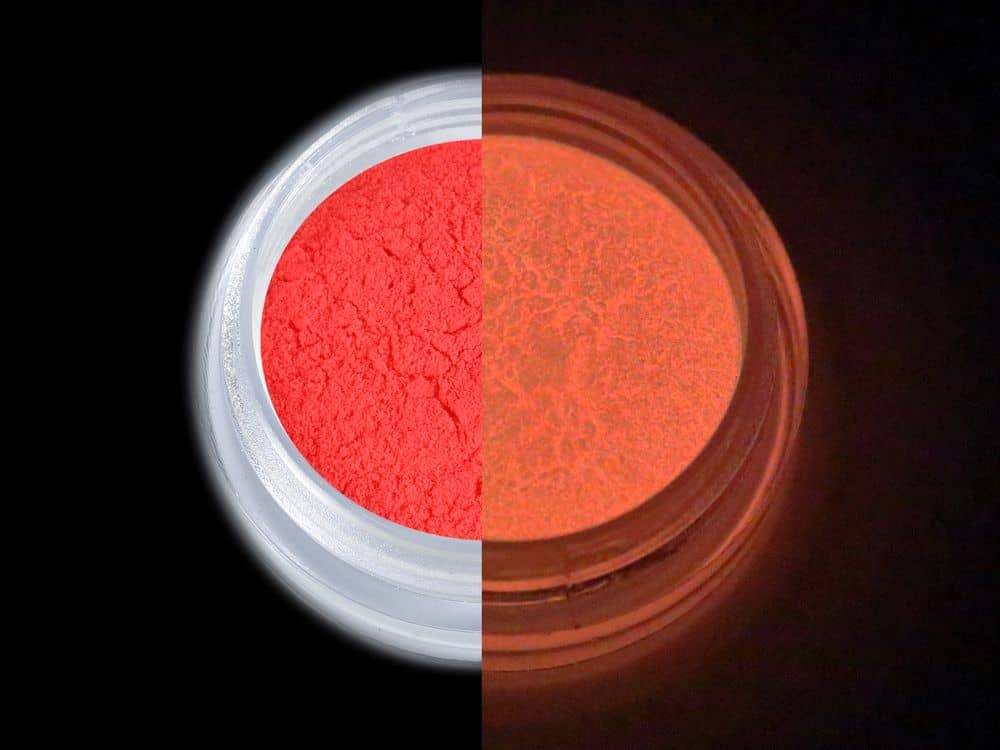
Fig. 5 — A red powder split down the middle: room light on the left, emitting on the right. It ships at 30–50 μm only.
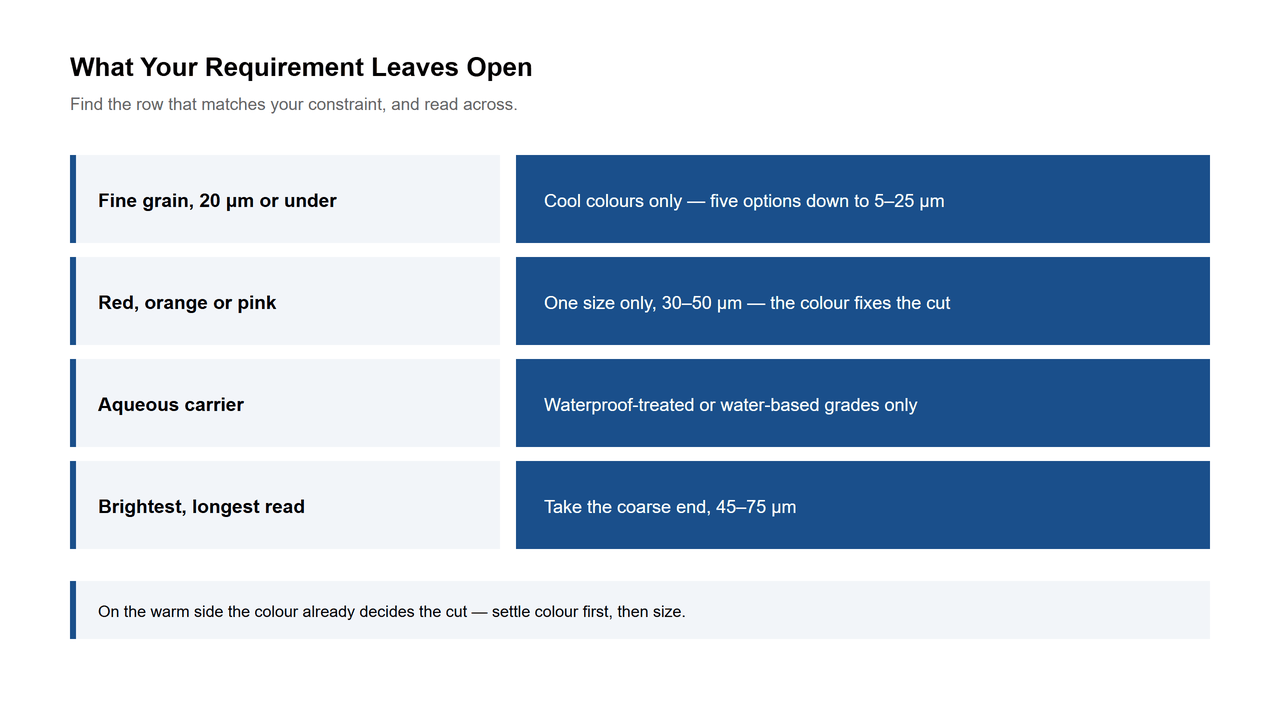
Fig. 6 — Schematic. What each requirement leaves open. A warm colour and a free choice of size sit in different blocks.
This question usually arrives last and matters most. Strontium aluminate reacts with water, and the reaction is not a surface stain that wipes off. It attacks the host lattice, and the emission goes with the lattice. Drying afterwards does not bring it back, because the crystal that stored the charge is no longer the crystal you shipped.
Three routes survive an aqueous process. Two cool powders ship as water-based versions of their nearest neighbours — blue green at 15–25 μm and yellow green at 10–25 μm. A third, yellow green at 20–38 μm, carries a waterproof surface treatment. The whole water-based colour range is aqueous by design, which makes its single size band a fair trade rather than a limitation.
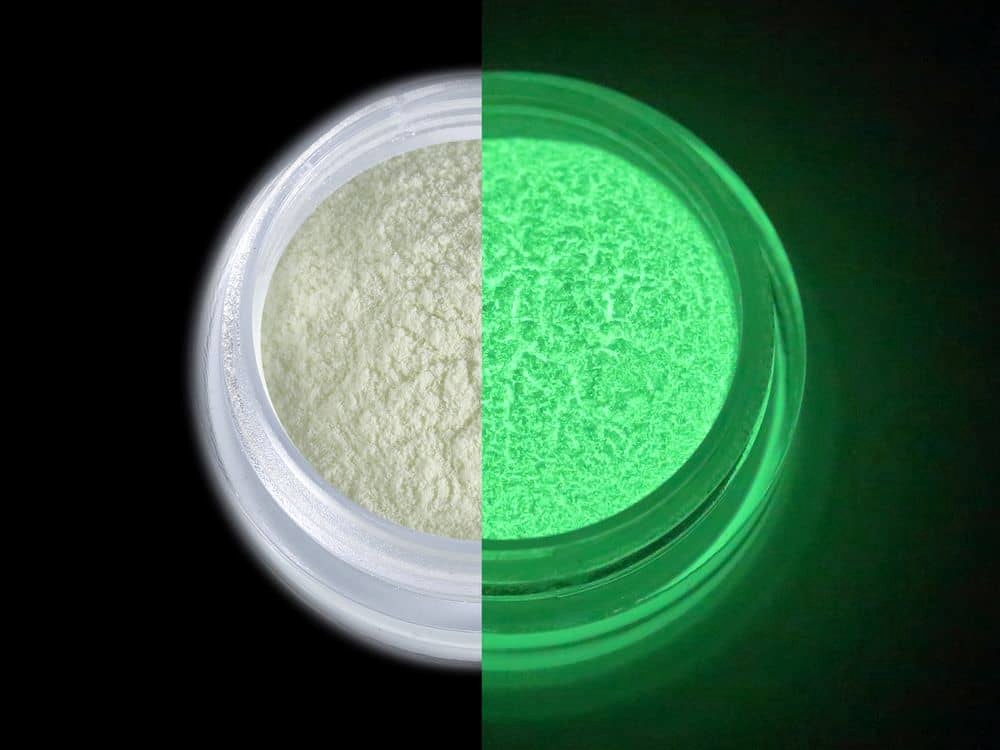
Fig. 7 — A waterproof-treated powder at 20–38 μm. The surface treatment is what lets the emission survive an aqueous carrier.
If your carrier is aqueous, settle the water question before size. Sizing a powder the carrier will break down means doing the work twice.
Coated grades cover the middle case — a standard colour that has to pass through a wet stage it was not built for. If that is your situation, say so in the first message. The coating is chosen for the carrier, not for the colour.
The 8–12 hour figure attached to strontium aluminate describes the chemistry. It is not a fixed value for any individual powder, and quoting it as one is how a specification becomes a dispute after delivery.
Four things move that number, and none of them usually travel with the figure.
Colour comes first: a purple reads weaker than a yellow green, and that is a property of the dopant rather than a fault. Particle size comes second, for the reason above. Charge comes third — two minutes under a torch is not a daylight charge, and a sample charged behind window glass has lost most of the useful band before it starts. The end point comes fourth: where you decide the glow has finished. Two labs can disagree on the same sample and both be right.
Put the charge condition and the measurement condition in the same sentence as the number. A reply that carries all three is a measurement of your powder. A reply with the number alone describes a chemistry.
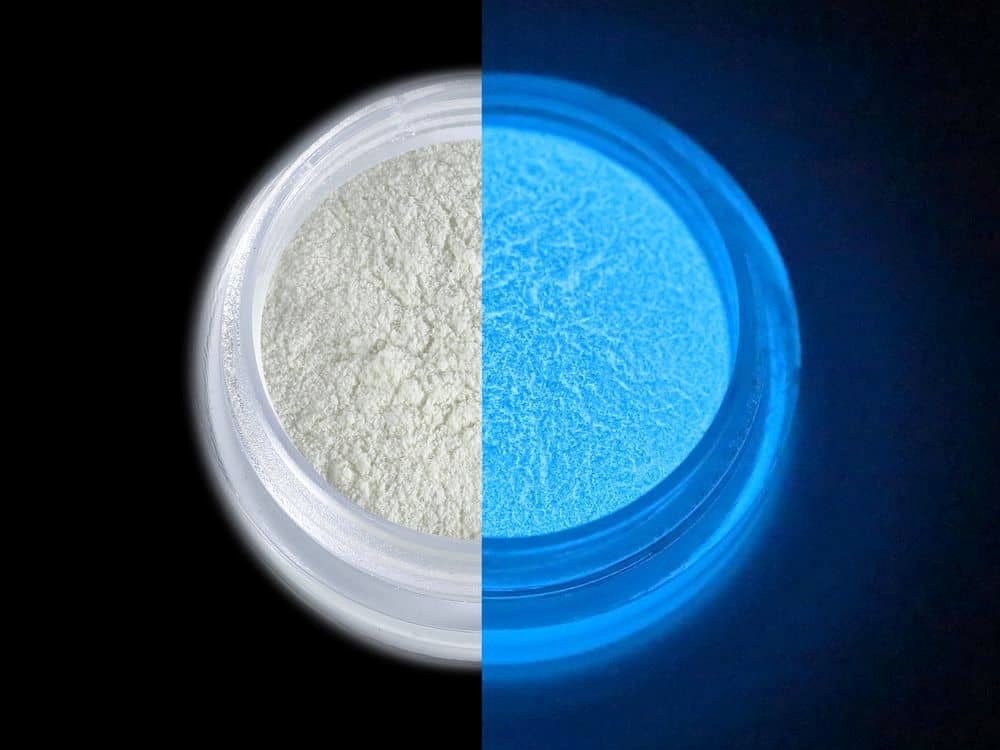
Fig. 8 — A sky blue powder at 35–45 μm, split between room light and emission.
Send us three things: the base or carrier your process runs on, the emission colour you are aiming for, and the film thickness, mesh count or wall section the grain has to pass. Those three narrow the range faster than any pile of datasheets.
From them we can name the one or two powders that fit, the size range that reaches your afterglow target, and a TDS with its measurement conditions written on it, so your own test can be read against ours.
All powders ship from a 1 kg minimum under ISO 9001:2015, with TDS, MSDS and COA issued per item and a custom sample pack for a first trial. The Glow in the Dark Pigments catalogue lists every powder with its size range; the glow in the dark pigment category page sorts them by emission colour; the strontium aluminate glow powder page covers the cool range in more detail; and the note on why strontium aluminate glows explains the energy traps behind the afterglow.
Phosphorescent pigment for plastic, print and water-based systems: cool colours come in any particle size, warm colours at one. 1 kg minimum, ISO 9001:2015.
Read More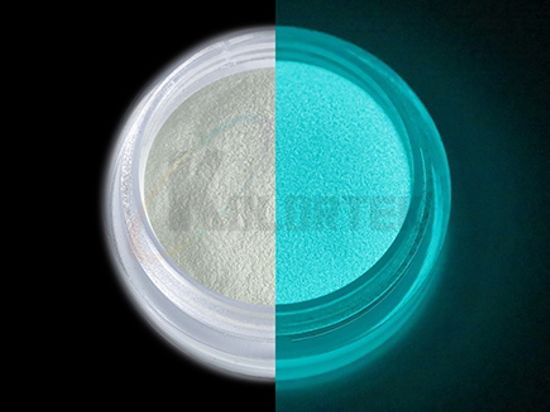
KT-GBG02 is a Blue Green strontium aluminate phosphorescent pigment in the coarse 65–75μm particle size range — a glow-in-the-dark pigment that absorbs ambient light (sunlight, fluorescent, LED) during exposure and releases it as a sustained blue-green glow after the light source is removed.
Read More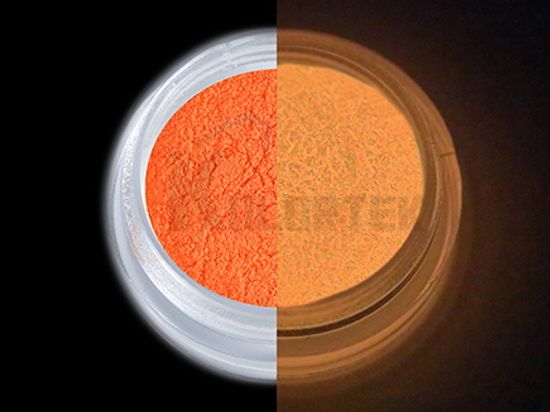
KT-GOR-03 is an Orange Red phosphorescent glow-in-the-dark pigment in the 30–50μm particle size range, formulated for direct use in water-based systems — a surface-treated strontium aluminate grade that resists the moisture-induced degradation that limits standard glow pigments in waterborne coatings, water-based adhesives, and aqueous craft formulations.
Read More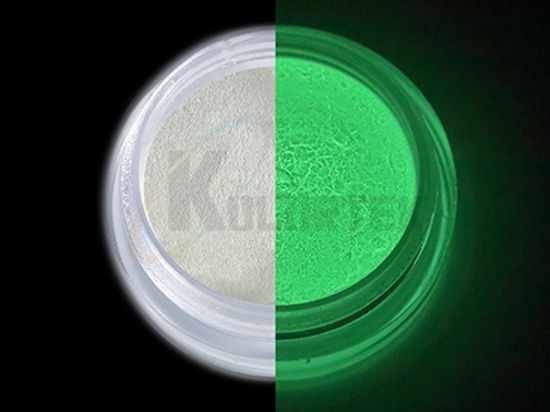
KT-GYG03 SC is a Yellow Green strontium aluminate phosphorescent pigment in the fine 12–25μm particle size range — the standard fine grade in Kolortek's glow-in-the-dark series, designed for coatings, printing inks, plastics compounding, and applications where particle size must remain within tight tolerances for smooth film formation.
Read More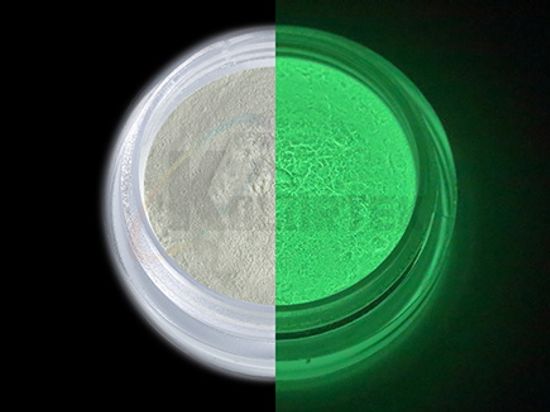
KT-GYG03DSA is a Yellow Green zinc sulfide (ZnS) phosphorescent pigment in the 20–40μm particle size range — the cost-effective glow-in-the-dark option in the Kolortek range for applications where a short-duration afterglow is functionally sufficient and the price premium of strontium aluminate is not warranted.
Read More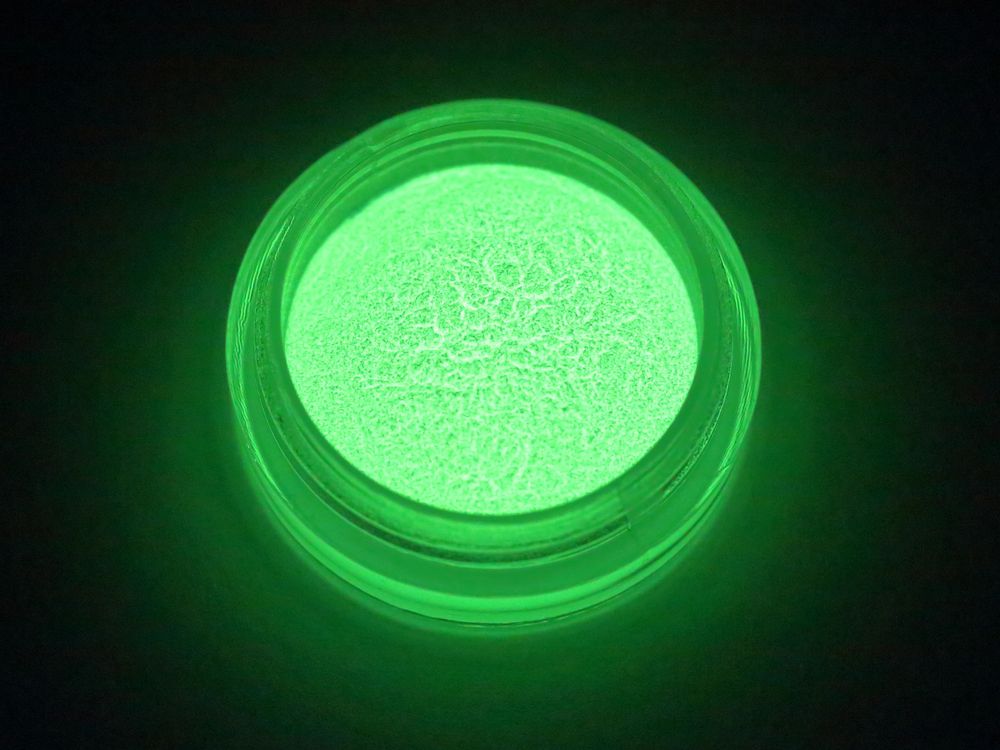
Kolortek's glow in the dark pigment series delivers reliable afterglow across a broad color range — from yellow-green and blue-green to orange-red and violet — making it a practical base material for coatings, printing inks, nail products, and safety-marking applications. Available in both strontium aluminate and zinc sulfide formulations, with water-based compatible grades included, these powders integrate cleanly into a wide range of carrier systems. Whether you're sourcing luminous pigment powder for decorative cosmetics or functional safety applications, the lineup covers the particle size and chemistry options most formulations actually need.
Read More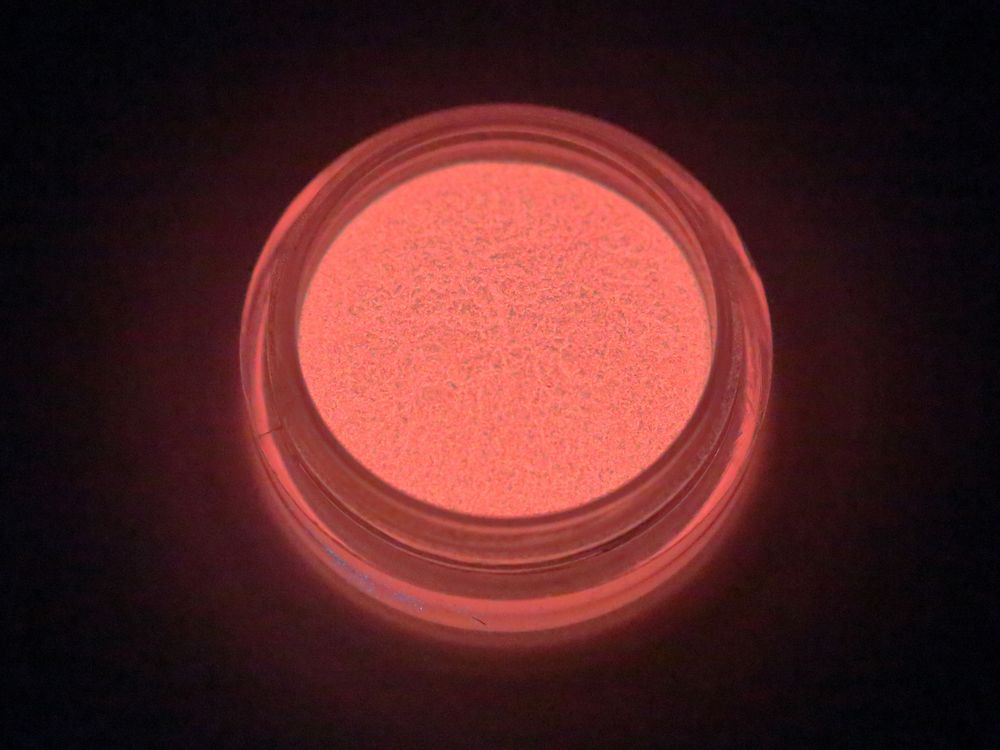
Kolortek's strontium aluminate-based glow in the dark powder delivers long-duration afterglow in a range of emission colors — from yellow-green and blue-green to violet, orange, and red — making it a reliable base material for paints, coatings, inks, and decorative applications. Available in both standard and water-based formulations, the photoluminescent powder charges rapidly under ambient or UV light and releases stored energy as a sustained, visible glow in darkness.
Read More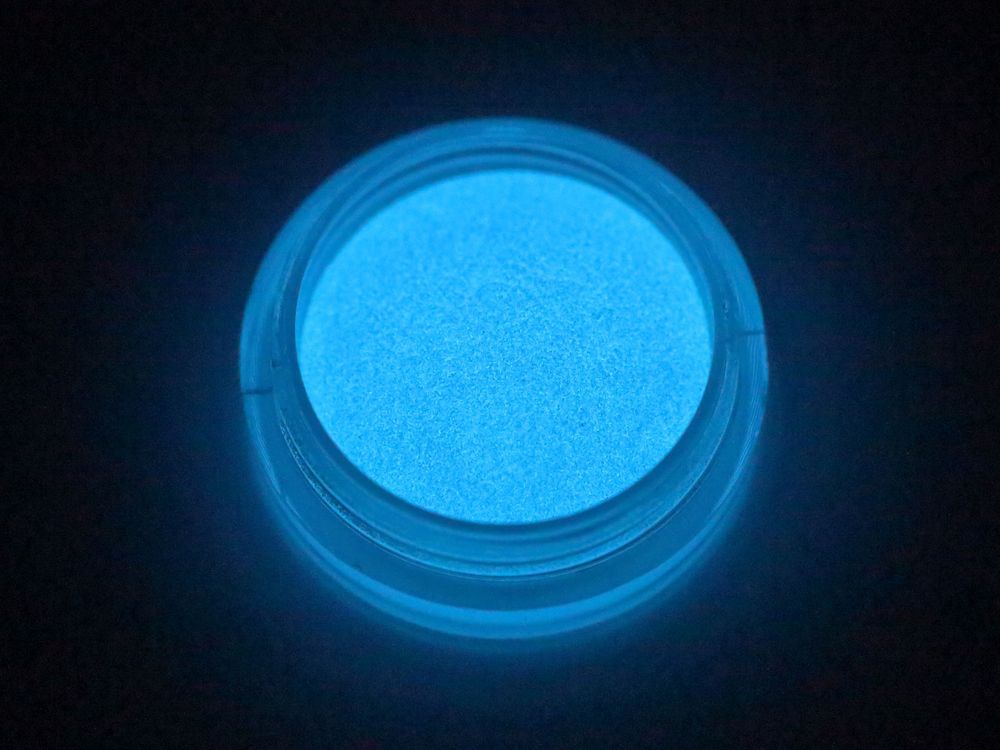
A long-afterglow phosphorescent pigment that charges under sunlight or interior light and releases a steady glow for hours in the dark. Available in sky blue, yellow-green, violet, orange, and red tones, this glow in dark powder works in both solvent and water-based systems, making it a practical luminescent pigment for paints, inks, craft art, nails, and safety-marking applications.
Read More
 English
 Français
 Deutsch
 Русский
 Español
 Português