
Leave A Message
If you are interested in our products and want to know more details,please leave a message here,we will reply you as soon as we can.
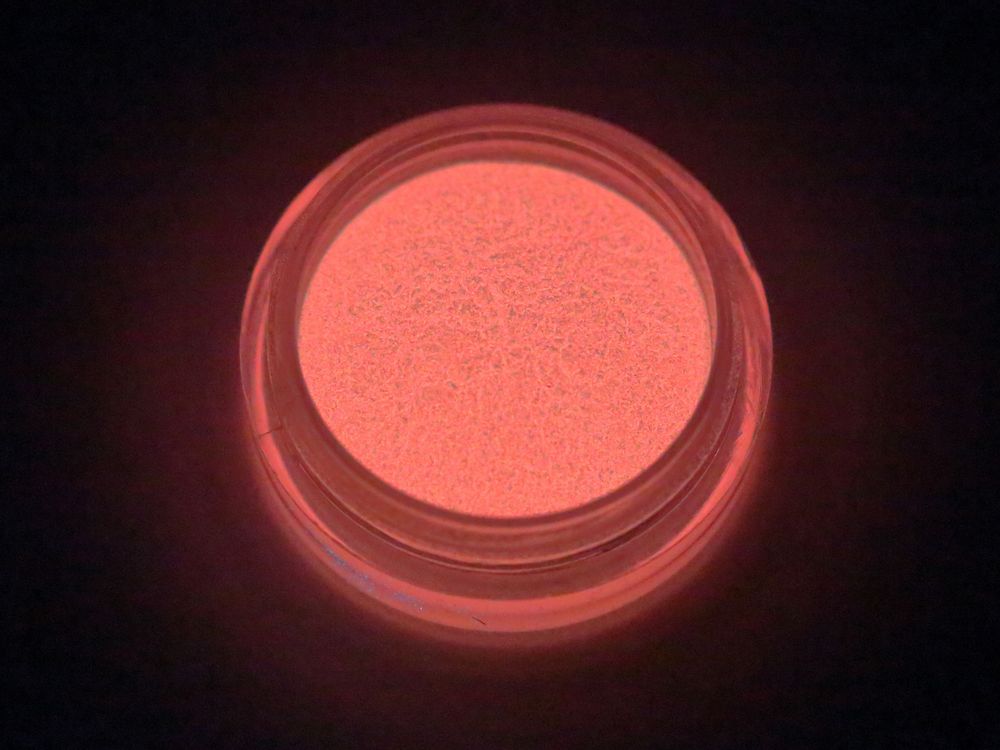
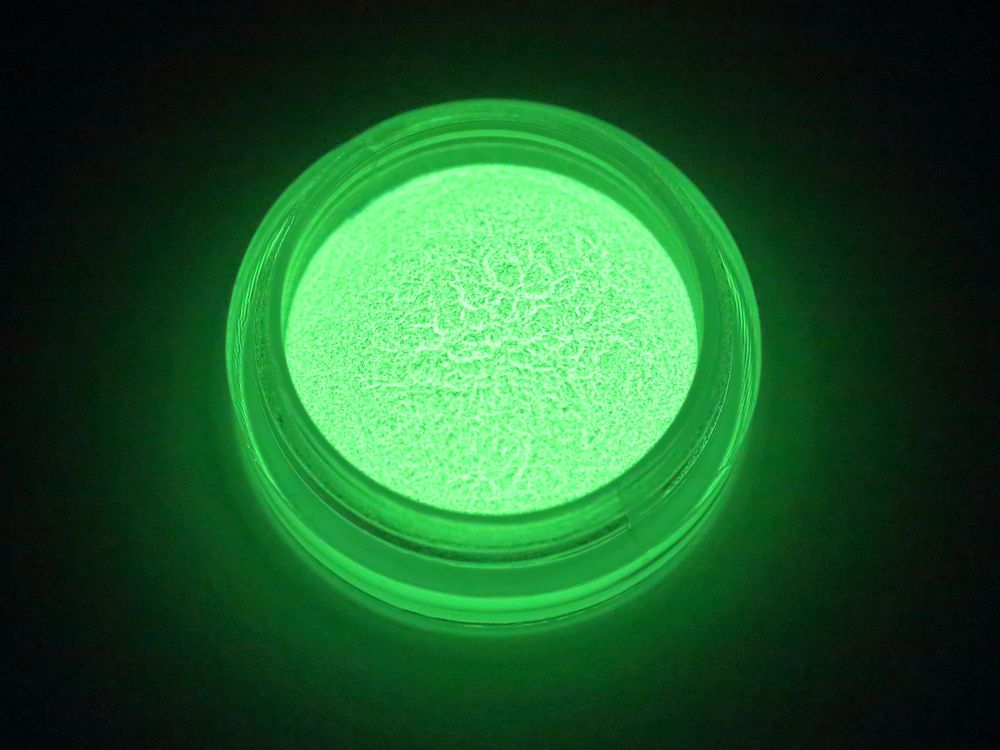
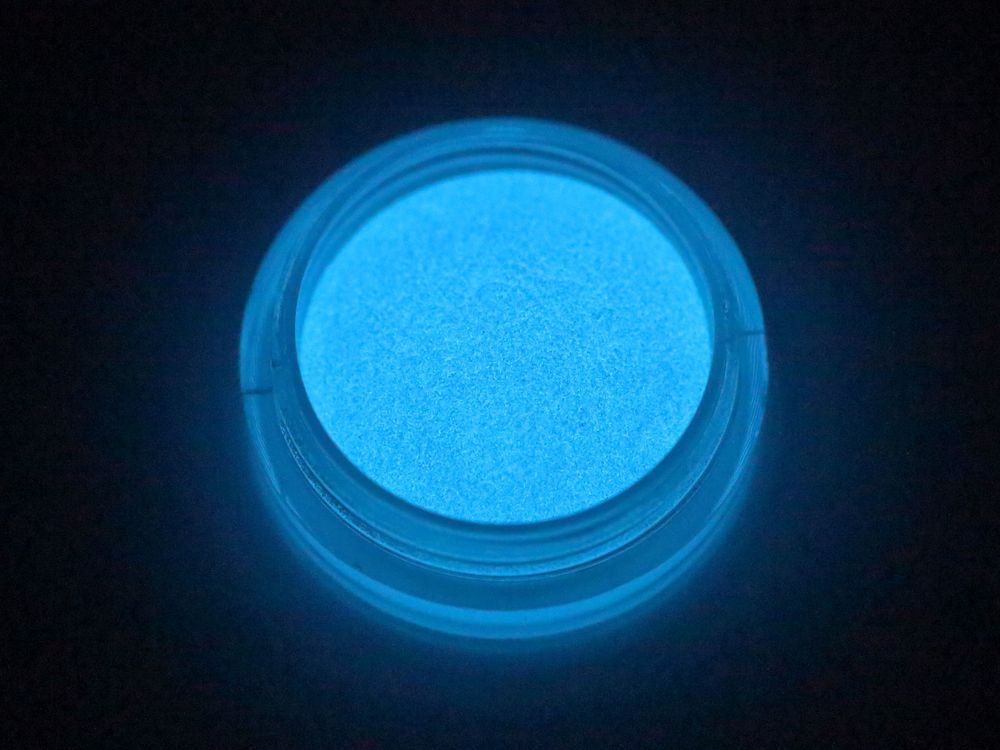
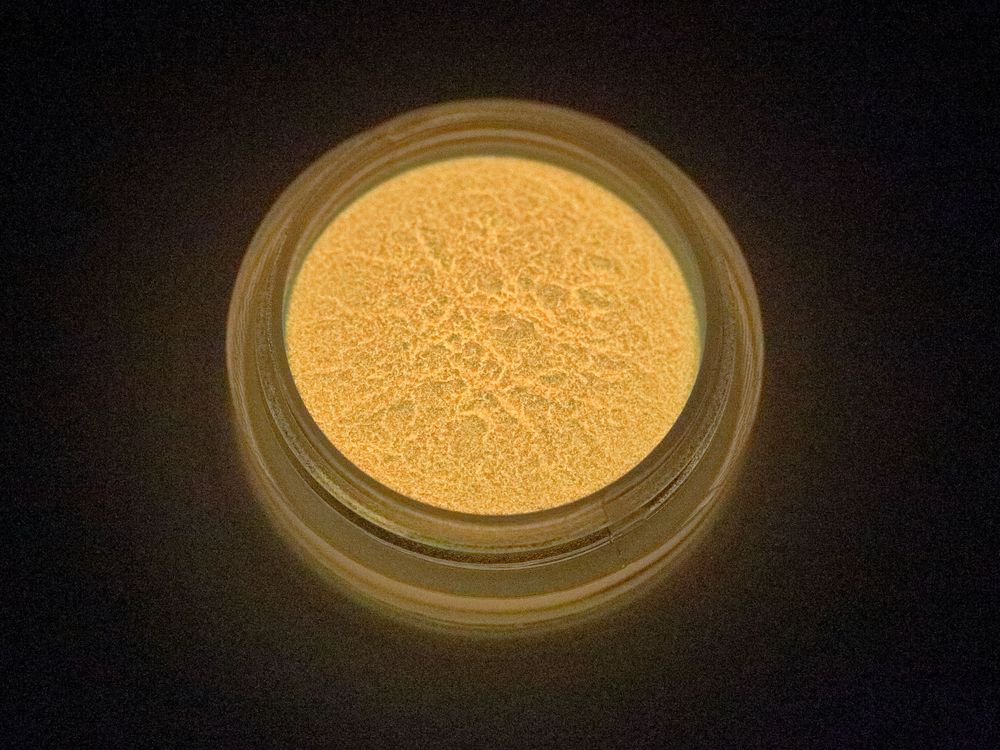
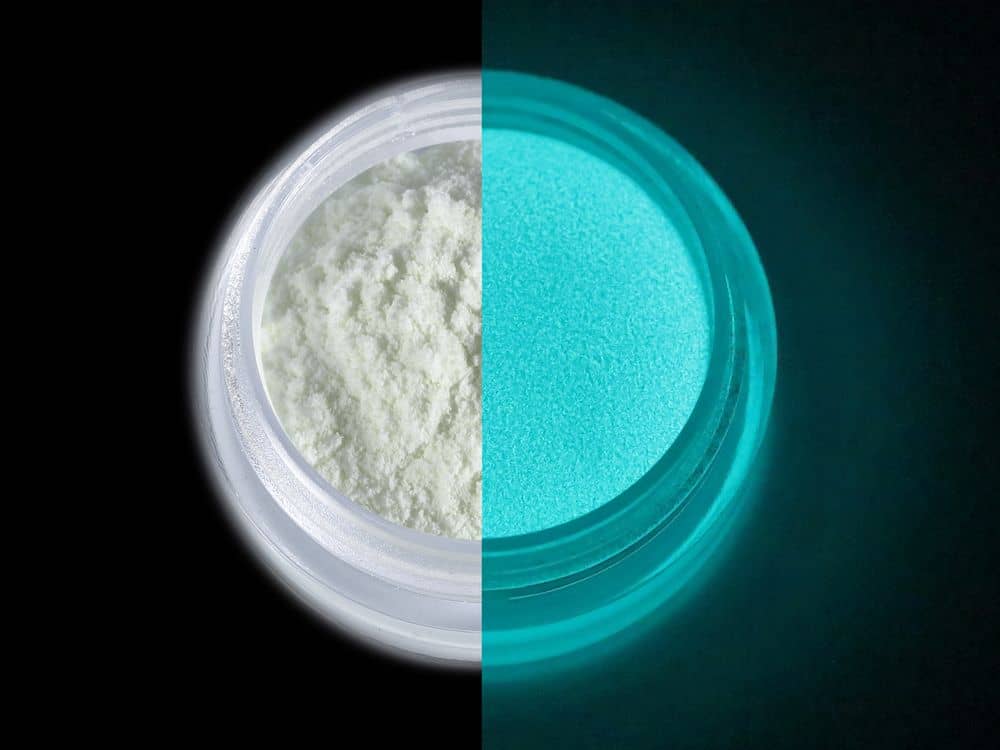
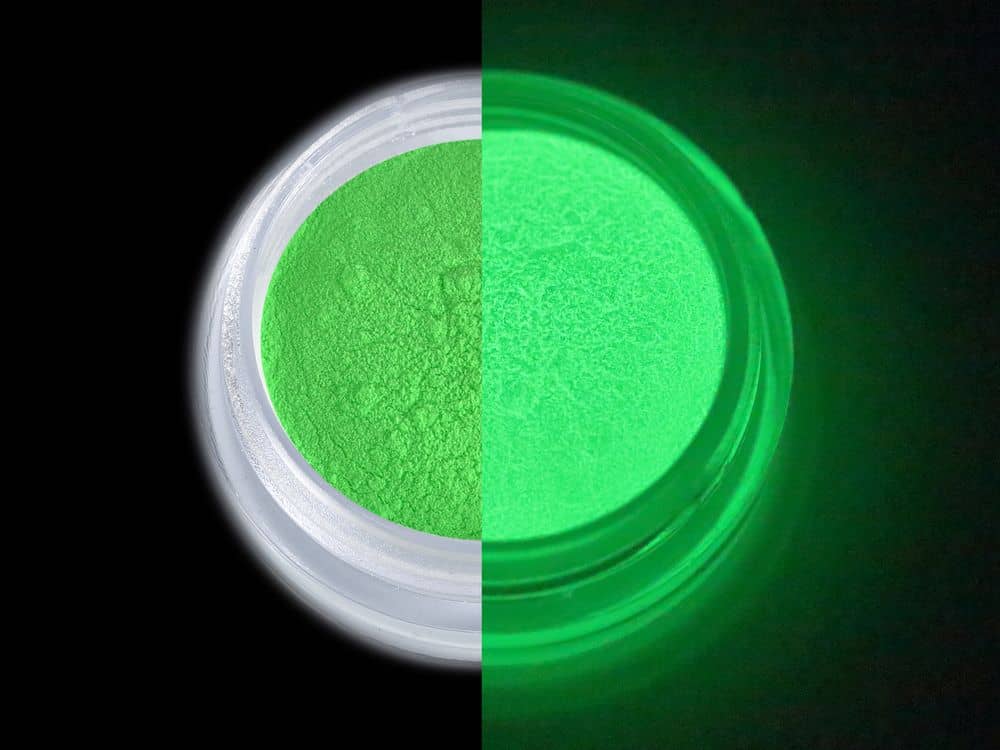
Kolortek's strontium aluminate-based glow in the dark powder delivers long-duration afterglow in a range of emission colors — from yellow-green and blue-green to violet, orange, and red — making it a reliable base material for paints, coatings, inks, and decorative applications. Available in both standard and water-based formulations, the photoluminescent powder charges rapidly under ambient or UV light and releases stored energy as a sustained, visible glow in darkness.
Item No. :
Glow in dark PigmentsColor Effect :
MluticolorsComposition :
Strontium AluminateBrand :
Kolortek / OEMMOQ :
25KGThese are inorganic photoluminescent pigments that absorb light — sunlight, fluorescent, or UV — and re-emit it as visible glow after the light source is removed. The base chemistry is strontium aluminate (SrAl₂O₄) doped with rare-earth activators, which gives significantly stronger and longer afterglow performance compared to older zinc sulfide-based materials. Kolortek also supplies zinc sulfide variants for applications where cost is prioritized over brightness or glow duration.
In practice, the particle size you select directly affects how the material disperses, how it prints or coats, and how bright the final result appears in application. Finer grades (5–25 µm) are typically used in printing inks and cosmetic-grade formulations. Coarser grades (30–75 µm) carry more photoluminescent mass per particle and tend to perform better in thick-film coatings, cast resin, or molded plastics.
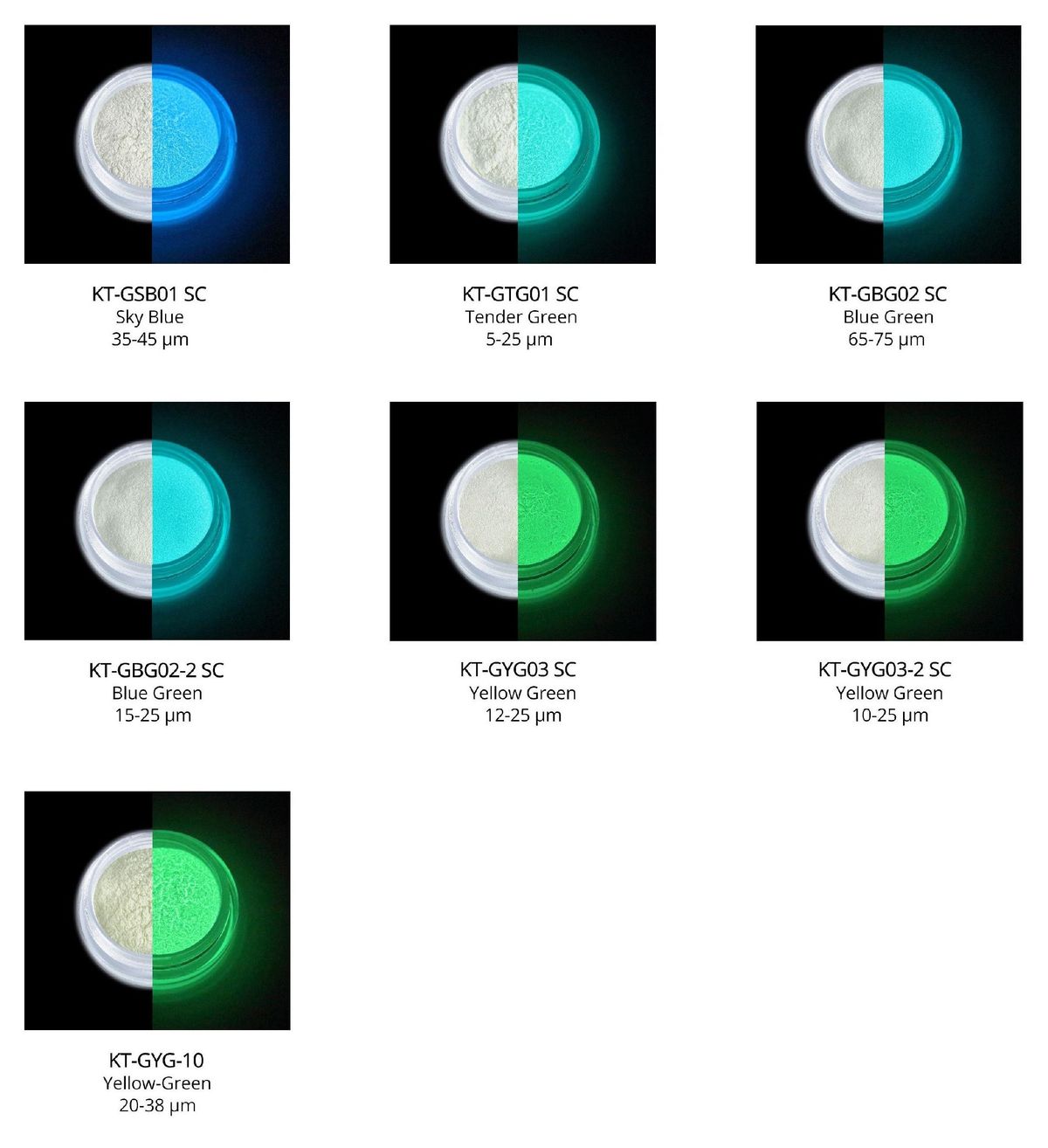
The range covers strontium aluminate and zinc sulfide types, across multiple colors and particle size cuts. Water-based and waterproof-treated grades are available for compatibility with aqueous systems.
| Model | Emission Color | Particle Size (µm) | Type / Notes |
|---|---|---|---|
| KT-GSB01 SC | Sky Blue | 35–45 | Strontium aluminate |
| KT-GTG01 SC | Tender Green | 5–25 | Strontium aluminate, fine grade |
| KT-GBG02 SC | Blue Green | 65–75 | Strontium aluminate, coarse |
| KT-GBG02-2 SC | Blue Green | 15–25 | Water-based luminous |
| KT-GYG03 SC | Yellow Green | 12–25 | Strontium aluminate |
| KT-GYG03-2 SC | Yellow Green | 10–25 | Water-based luminous |
| KT-GP04 SC | Purple | 15–25 | Strontium aluminate |
| KT-GYG-10 | Yellow Green | 20–38 | Waterproof treated; usable in water-based systems |
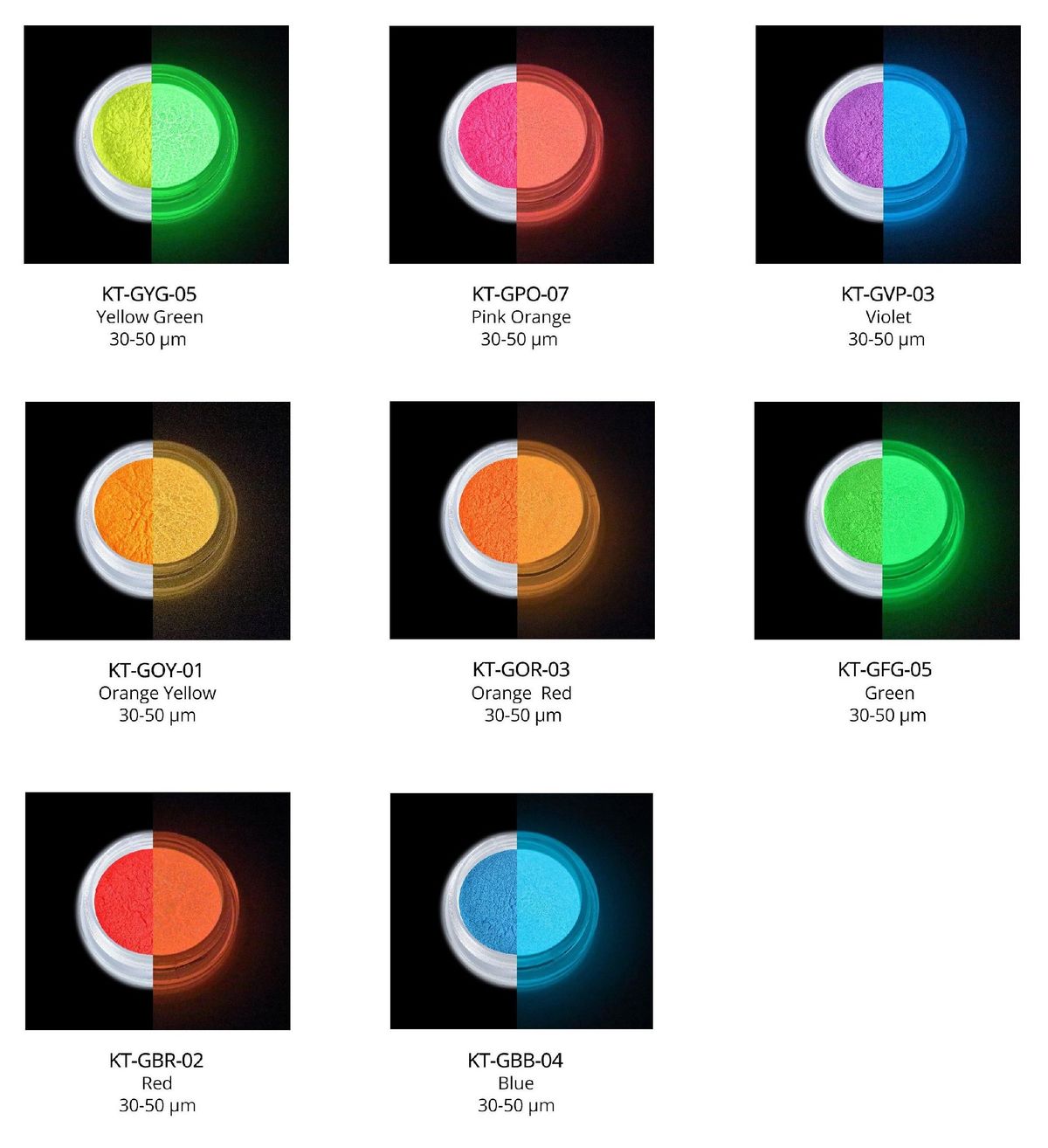
| KT-GYG-05 | Yellow Green | 30–50 | Water-based |
| KT-GPO-07 | Pink Orange | 30–50 | Water-based |
| KT-GVP-03 | Violet | 30–50 | Water-based |
| KT-GOY-01 | Orange Yellow | 30–50 | Water-based |
| KT-GOR-03 | Orange Red | 30–50 | Water-based |
| KT-GFG-05 | Green | 30–50 | Water-based |
| KT-GBR-02 | Red | 30–50 | Water-based |
| KT-GBB-04 | Blue | 30–50 | Water-based |
| KT-GYG03DSA | Yellow Green | 20–40 | Zinc Sulfide |
| KT-SGWY-01A | Orange Yellow | 20–40 | Zinc Sulfide |
| KT-SGWY-11 | Yellow | 20–40 | Zinc Sulfide |
| KT-SGWR-02 | Red | 20–40 | Zinc Sulfide |
| KT-SGOR-03 | Orange Red | 20–40 | Zinc Sulfide |
These pigments are used across a wide range of applications where dark-visibility or afterglow effects are required. Common end uses include:
A few points worth understanding before specifying these materials:
Dispersion approach matters here more than with most colorants. Strontium aluminate particles are harder than many pigments, so aggressive milling — ball mills, high-shear media mills — will fracture particles and reduce glow performance. Gentle dispersion using a high-speed disperser or cowles blade at moderate speed is generally more appropriate. Pre-wetting with the carrier or a compatible dispersant before adding to the full batch helps.
That said, the material's refractive index is relatively low, so it doesn't scatter light strongly on its own. In transparent or translucent matrices — clear coat, resin casting, nail gel — glow performance tends to be strongest because emitted photons aren't absorbed or scattered before reaching the surface. In pigmented or opaque systems, the base color will compete with the glow emission. Light-colored bases (white, pale yellow, light grey) are consistently more effective than dark bases.
Worth noting: these pigments are not recommended for high-temperature processing above their thermal stability threshold. For compounding into thermoplastics, confirm the processing temperature ceiling with the specific grade datasheet before committing to a formulation.
| Property | Strontium Aluminate | Zinc Sulfide |
|---|---|---|
| Afterglow duration | Long (hours) | Short (minutes) |
| Glow brightness | High | Low–moderate |
| Water sensitivity | Sensitive (requires treated grades for aqueous use) | More stable |
| Cost | Higher | Lower |
| Typical use case | Safety, performance coatings, demanding applications | Cost-sensitive decorative applications |
Q: Can these glow powders be used in water-based paints or coatings?
A: Yes, but only with the correct grade. Standard strontium aluminate will hydrolyze in water-based systems, losing glow performance quickly. Use the water-based designated series or the waterproof-treated KT-GYG-10 grade specifically developed for aqueous compatibility. Do not substitute a standard SC grade in a water-based paint and expect stable performance.
Q: What loading rate is typically needed to achieve visible glow in a coating or resin?
A: This depends on the matrix and film thickness, but typical loading in clear systems runs between 10–30% by weight. Thicker films carry more photoluminescent mass, so a lower percentage can be effective in cast resin compared to a thin ink layer. Testing against your target film build and substrate is the only reliable approach — there's no universal number.
Q: Are these pigments safe for cosmetic applications?
A: Some grades in the decorative cosmetics series are formulated for that use. Formulators should request full compositional data and verify compliance with applicable regional regulations (EU Cosmetics Regulation, FDA guidelines, etc.) for the specific intended use — particularly for skin-contact or rinse-off versus leave-on categories. Do not assume all grades are cosmetic-approved.
Q: How should glow powder be stored to maintain performance?
A: Keep sealed in a dry environment away from moisture. Humidity is the main degradation factor for strontium aluminate. Avoid open storage or extended exposure to humid air. Sealed in original packaging under dry conditions, shelf life is typically long, but once moisture ingress occurs, performance loss is irreversible.
If you're evaluating a specific grade for coating, ink, plastic, or cosmetic use, sample quantities and technical datasheets are available on request. Specify your system type (solvent-based, water-based, resin), target application, and any processing constraints — that information helps narrow down the right grade quickly.
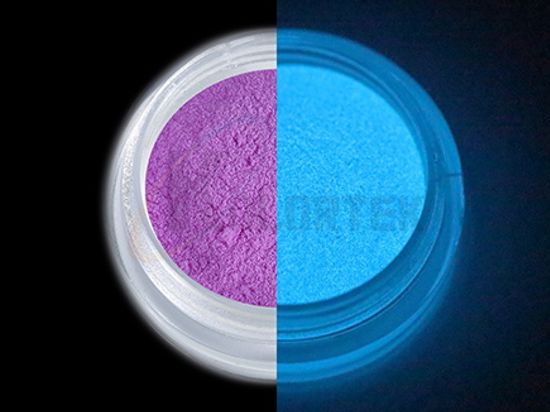
Glow in the Dark Pigments are phosphorescent powders that absorb light energy from natural or artificial sources and re-emit it as a visible glow in darkness. Unlike fluorescent pigments, which require a continuous light source to produce their effect, phosphorescent pigments store energy and release it gradually after the light source is removed. They are used across safety, decorative, cosmetic, and industrial applications where passive light emission in dark conditions is required.
Read More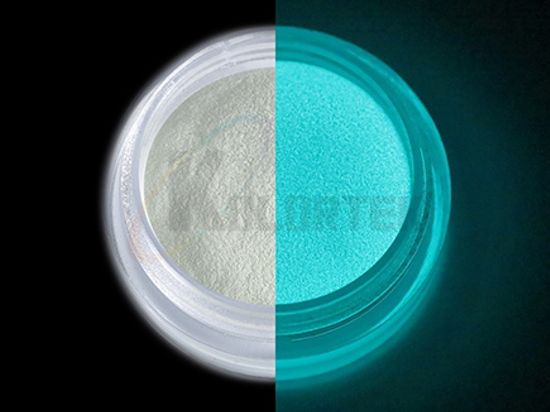
KT-GBG02 is a Blue Green strontium aluminate phosphorescent pigment in the coarse 65–75μm particle size range — a glow-in-the-dark pigment that absorbs ambient light (sunlight, fluorescent, LED) during exposure and releases it as a sustained blue-green glow after the light source is removed.
Read More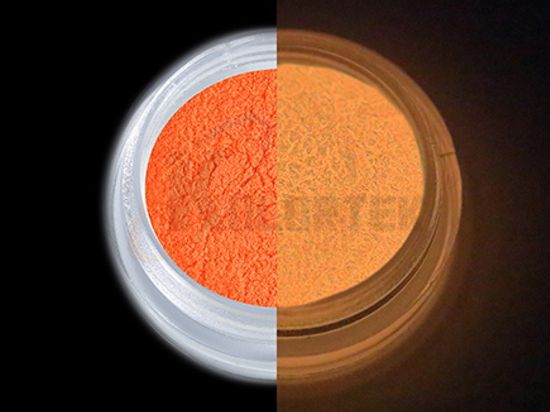
KT-GOR-03 is an Orange Red phosphorescent glow-in-the-dark pigment in the 30–50μm particle size range, formulated for direct use in water-based systems — a surface-treated strontium aluminate grade that resists the moisture-induced degradation that limits standard glow pigments in waterborne coatings, water-based adhesives, and aqueous craft formulations.
Read More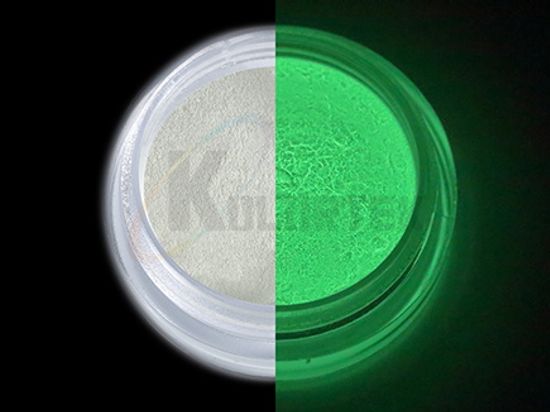
KT-GYG03 SC is a Yellow Green strontium aluminate phosphorescent pigment in the fine 12–25μm particle size range — the standard fine grade in Kolortek's glow-in-the-dark series, designed for coatings, printing inks, plastics compounding, and applications where particle size must remain within tight tolerances for smooth film formation.
Read More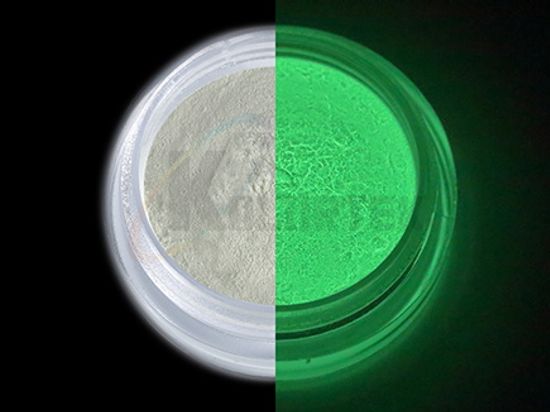
KT-GYG03DSA is a Yellow Green zinc sulfide (ZnS) phosphorescent pigment in the 20–40μm particle size range — the cost-effective glow-in-the-dark option in the Kolortek range for applications where a short-duration afterglow is functionally sufficient and the price premium of strontium aluminate is not warranted.
Read More
Kolortek's glow in the dark pigment series delivers reliable afterglow across a broad color range — from yellow-green and blue-green to orange-red and violet — making it a practical base material for coatings, printing inks, nail products, and safety-marking applications. Available in both strontium aluminate and zinc sulfide formulations, with water-based compatible grades included, these powders integrate cleanly into a wide range of carrier systems. Whether you're sourcing luminous pigment powder for decorative cosmetics or functional safety applications, the lineup covers the particle size and chemistry options most formulations actually need.
Read More
Kolortek's strontium aluminate-based glow in the dark powder delivers long-duration afterglow in a range of emission colors — from yellow-green and blue-green to violet, orange, and red — making it a reliable base material for paints, coatings, inks, and decorative applications. Available in both standard and water-based formulations, the photoluminescent powder charges rapidly under ambient or UV light and releases stored energy as a sustained, visible glow in darkness.
Read More
A long-afterglow phosphorescent pigment that charges under sunlight or interior light and releases a steady glow for hours in the dark. Available in sky blue, yellow-green, violet, orange, and red tones, this glow in dark powder works in both solvent and water-based systems, making it a practical luminescent pigment for paints, inks, craft art, nails, and safety-marking applications.
Read More
 English
 Français
 Deutsch
 Русский
 Español
 Português