
Leave A Message
If you are interested in our products and want to know more details,please leave a message here,we will reply you as soon as we can.
Chameleon Pigment Flakes for Coatings: Angle-Dependent Shift on Curved Surfaces
Chameleon pigment flakes act as mirror elements, so a curved part shows several hues of one colour travel at once. Compare the F95, S9 and rainbow flake groups.
Item No. :
Chromashift ChromaFlakes — F95 / S9 (colour & multicolour shift) and F92***A / S92*** (rainbow)Color Effect :
Optically variable (OVP / OVI) — angle-dependent colour travelParticle Size :
Irregular large flakes (no micron band specified)Composition :
All-inorganic multi-layer thin-film interference on platelet substrateBrand :
KolortekMOQ :
0.1 kg (Chromashift / OVI range)Application :
Coatings, printing inks, automotive finishes, cosmetics and nail art, decorative finishesThe Chromashift ChromaFlakes group is Kolortek's large-flake format of its optically variable pigment (OVP / OVI) line — a distinct product family from the KT-9000 mica-powder range. Each flake is a multi-layer thin-film interference platelet specified by its irregular large-flake morphology, not by a micron band, and designed for maximum visual impact in low-loading applications. There are four sub-series covering two-colour shift, multi-colour shift, and full-spectrum rainbow travel; the right code is the one whose printed colour travel matches the two colours already in your design brief.

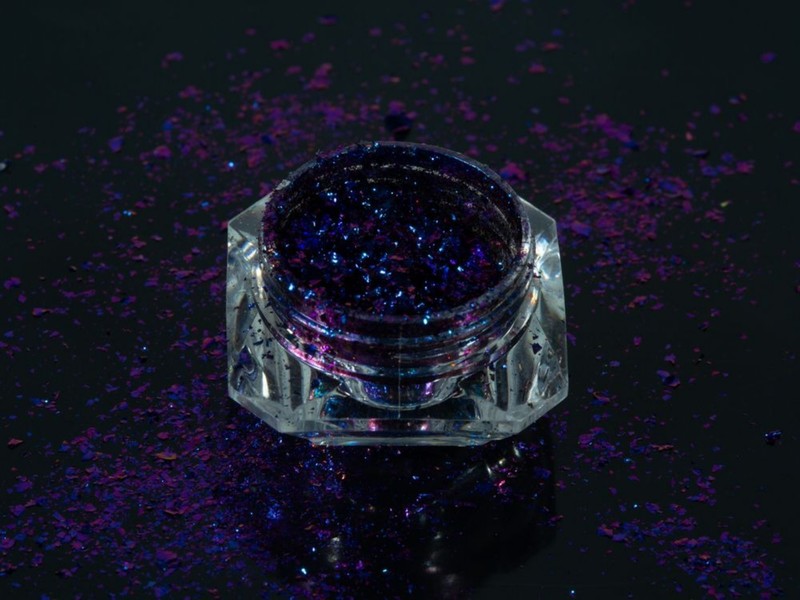
Fig. 1 — ChromaFlakes colour-shift flakes, showing the irregular large-flake format.
An optically variable pigment works by thin-film interference: a stack of inorganic layers reflects a specific colour that shifts as the viewing angle changes. What changes with format is geometry.
A fine powder grade carries many small platelets per unit area. Their orientations, even when broadly parallel, have enough spread that the reflected colour fans across a range of angles simultaneously. The result is a bright, lively sparkle — correct for many finishes.
A ChromaFlake is something different. Its large, flat face presents a single, well-defined surface normal. That face reflects its interference colour in one tight direction, the way a small mirror does. The colour is not scattered; it is sent. The travel you see is not the statistical average of thousands of competing orientations — it is the coherent output of a surface element with one orientation. That is why a flake grade reads differently from a powder at the same loading, and why the two behave differently on a curved part.
The Chromashift ChromaFlakes group is the large-flake realisation of that principle. It sits entirely within the Chromashift pigment range — Kolortek's OVP / OVI line. It is not part of the KT-9000 mica-powder series; those are separate products, covered on the mica-powder travel grades page.
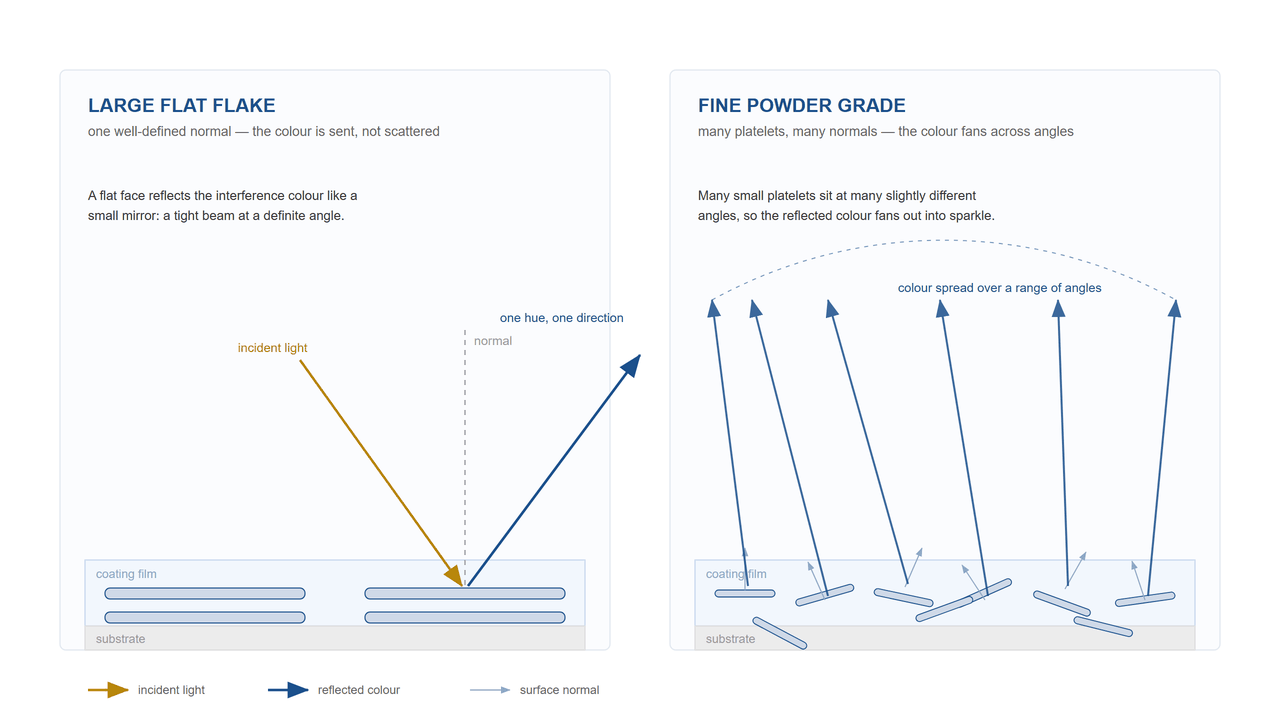
Fig. 2 — A large flat platelet presents one normal; a fine powder scatters across many (illustrative).
Four sub-series make up the Chromashift ChromaFlakes group. All are specified as irregular large flakes — there is no micron figure attached to any code. The catalogue prints each code with its colour travel as a two-word pair or a short sequence; that printed travel is the specification.
| Sub-series | Format | Representative codes (colour travel) |
|---|---|---|
| F95 series | Colour-shift flakes | KT-F9521 (Red Yellow) · KT-F9542 (Blue Red) · KT-F9535 (Purple Green) · KT-F9565 (Orange Green) · KT-F9553 (Green Purple) · KT-F9554 (Pink Green) · KT-F9552 (Green Red) · KT-F9546 (Blue Orange) · KT-F9561 (Orange Yellow) |
| S9 series | Multi-colour shift flakes | KT-S9325 (Mauve green) · KT-S9210 (Red gold) · KT-S9140 (Gold silver-blue) · KT-S9085 (Bronze green) · KT-S9532 (Jade mauve) · KT-S9054 (Jade Blue) · KT-S9432 (Blue mauve) |
| F92***A series | Rainbow ChromaFlakes, full-spectrum play | KT-F92153A (Yellow Green-Purple Red) · KT-F92432A (Blue-Purple Red) · KT-F92725A (Orange Red-Green) · KT-F92043A (Gold Green-Blue) · KT-F92021A (Red-Yellow) |
| S92*** series | Rainbow ChromaFlakes | KT-S92543 (Green Blue-violet) · KT-S92432 (Blue Purple-red) · KT-S92025 (Solferino Green) · KT-S92615 (Orange Green) |
How to read the table:
No single flake code suits every brief. The right code is the one whose printed colour travel matches the two colours your design brief already names. If your brief says blue-to-red, KT-F9542 is the starting point. If it says jade-to-mauve, KT-S9532 is. The table is the spec sheet, not a ranking.
For reference: the regular optically variable pigments in the powder grades — K1 series (10–60 μm and 5–25 μm), S1 series (15–25 μm), and R-series (10–45 μm) — are specified by a micron band and give consistent distribution across the film. The flake grades are specified by morphology only. Those are two different selection criteria for two different effects, and they are not interchangeable on the same job.
This is the behaviour that explains why flake grades get specified for bottles, helmets, moulded trim pieces, and large decorative shells rather than for flat panels — and it follows directly from the mirror-element geometry described above.
On a flat panel, the surface normal points the same direction everywhere. As you move, or as the light source moves, the whole panel shifts hue in unison. You experience the colour travel as a change in time: tilt the part and it changes. The effect is real, but it is sequential.
On a curved surface, the normal rotates continuously across the geometry. At any single instant, the observer's eye sees a range of surface angles simultaneously. A flask curves away from you in every direction; a helmet has a crown, flanks, and a visor line. Those different zones present different normals to the same eye at the same moment. The interference coating on each zone reflects the hue that corresponds to that angle — so the travel reads as a gradient across the part, not as a single hue that switches. Two or three colours of the same travel can be visible on one part at once.
Now connect this to the flake format. Because each ChromaFlake behaves as a small mirror with a single, well-defined normal, the colour it delivers from a given zone is coherent — one hue, cleanly, from that patch of surface. The gradient that builds up across the curved part stays readable rather than dissolving into undifferentiated sparkle. A fine powder would populate the same zone with platelets at a spread of micro-orientations; the gradient would still exist, but it would be softer and less distinct. The large flat face is what keeps the effect legible at a distance.
The practical consequence is this: specify the effect on the production part, not on a flat drawdown. A flake grade that looks restrained on a flat test panel can be exactly correct on the curved part it is designed for, because the part's geometry is doing work that the flat panel cannot do. The reverse is also true — a grade that looks dramatic on a flat swatch may be too quiet on a tight curve. The part shape is part of the specification.
A clear topcoat protects the platelets and deepens the perceived effect on automotive and industrial finishes.
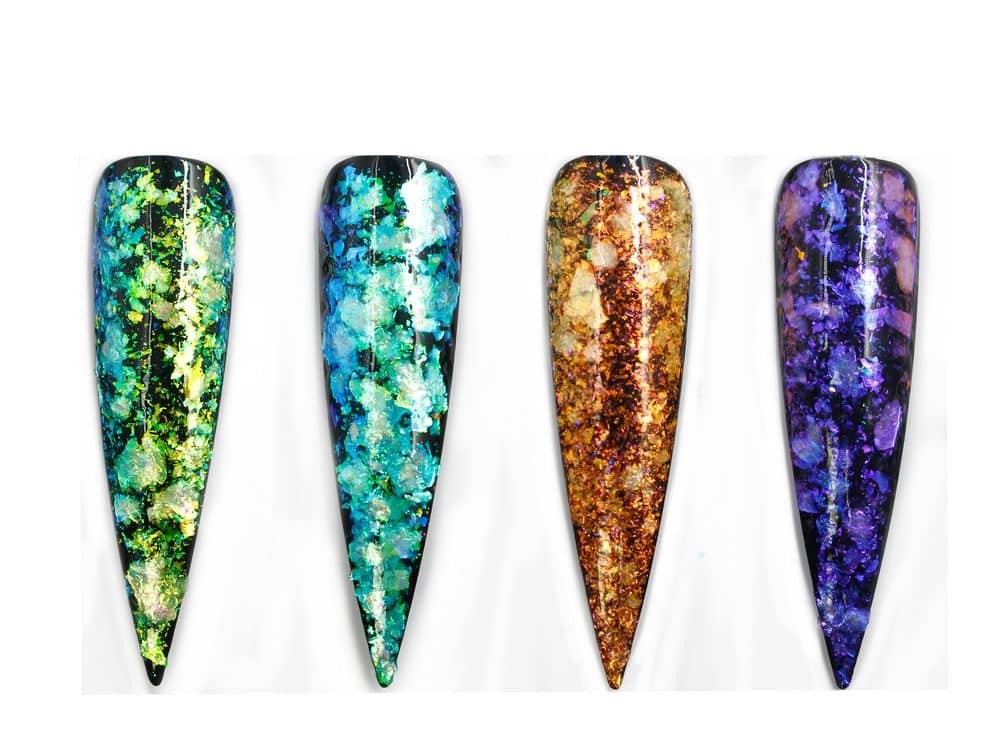
Fig. 3 — Colour travel reading as a gradient across a curved coated surface (for reference only).
For the mirror-element behaviour to work, the flakes must lie roughly parallel to the substrate. Film formation handles most of this: as the coating levels and dries or cures, shear flow and surface tension flatten the platelets against the substrate. You do not need to do anything unusual to achieve orientation — but you can disrupt it.
The failure modes are practical ones. A spray pass that is too fast and too dry traps the flakes before they settle. A very thick wet film build can allow platelets to drift at random angles as the film moves during levelling. A poorly flowing system — wrong viscosity for the application method, incompatible rheology additives — does the same. The symptom in all cases is a dull, low-contrast travel: the reflected colour is being scattered by misoriented flakes rather than directed from a coherent surface.
Flake grades are specified for low-loading work. A small number of large, flat platelets delivers the effect across a large area, because each platelet covers more surface than a fine-powder particle does. The starting loading for any given system is confirmed on trial — every coating system is different, and the catalogue phrase "low-loading applications" is a starting direction, not a number.
ChromaFlakes are compatible with solvent-based, water-based, and UV-curable coating and printing systems. The pigment is all-inorganic and chemically inert in the binder — it does not react with standard additives or crosslinkers. Over a dark or black basecoat the travel is at its strongest; the dark base absorbs the wavelengths that are not reflected, so the shift reads at full contrast. Over a light substrate the effect becomes subtler. That is optics, not a defect, and it applies to every OVP on the market. See how shade-pair families differ for more on how basecoat colour interacts with travel contrast.
MOQ for the Chromashift / OVI range is 0.1 kg. Custom sample packs are built around the application and dispatched within 5 working days. Stock items ship within 2 weeks. Made-to-order production and custom colour matching run 3–4 weeks. Private-label packaging and OEM production to customer specification are available.
Price is quoted per series, order quantity, and packaging. Payment is accepted by online bank payment, T/T, Western Union, and PayPal.
Download the Chromashift Collection catalogue for the code list, or read through the questions buyers ask before ordering if you are comparing suppliers.
Related pages on this site:
ChromaFlakes are all-inorganic and light-fast. The construction is weather-resistant and stable to typical processing temperatures.
Kolortek's quality management system is ISO 9001:2015 certified. REACH, RoHS, Halal, Kosher, US FDA registration, and independent SGS test reports are provided on request for the required grade and target market. TDS, SDS, and COA are available.
Full details of testing and certification scope are on the quality standards and testing page.
When you contact us, give us three things: the code or colour travel you are targeting, the coating system you are working in (solvent-based, water-based, or UV), and the shape or curvature of the part the coating will go on. That last point matters — a sample tested on a flat drawdown will not tell you what the same grade does on a curved production part. We build sample packs around the application so that the trial is relevant to the actual job.
Use the contact form or send the details directly. Sample packs are dispatched within 5 working days.
No. Size is part of the difference, but it is not the reason they behave differently. A large, flat platelet has a well-defined surface normal — it reflects its interference colour in one specific direction, the way a small mirror does. A fine powder grade distributes that reflected colour across a spread of angles because the individual platelets vary in orientation. The flake format produces coherent, directional travel; the powder format produces a broader, more scattered sparkle. They are different optical elements, not the same element in different sizes.
Curvature sweeps the surface normal through a range of angles. On a curved part, the observer sees several surface angles at once — each zone reflects the hue that corresponds to its own normal. The travel reads as a gradient across the part simultaneously, not as a single hue that the whole part shares. A flat panel shows the same travel, but sequentially: you have to tilt it to see the shift. The curved part shows multiple stages of the shift at the same time.
ChromaFlakes are specified by morphology, not by a micron band. Every code in the group is listed in the catalogue as irregular large flakes. Micron bands — such as 10–60 μm or 5–25 μm — apply to the powder grades in the K1, S1, and R-series, which are separate products. Do not carry a micron figure from a powder grade across to a flake code.
Yes. The Chromashift ChromaFlakes range is compatible with solvent-based, water-based, and UV-curable coating and printing systems. The pigment is all-inorganic and chemically inert — it does not react with binders or additives. Confirm the starting loading on your own system by trial; every formulation is different.
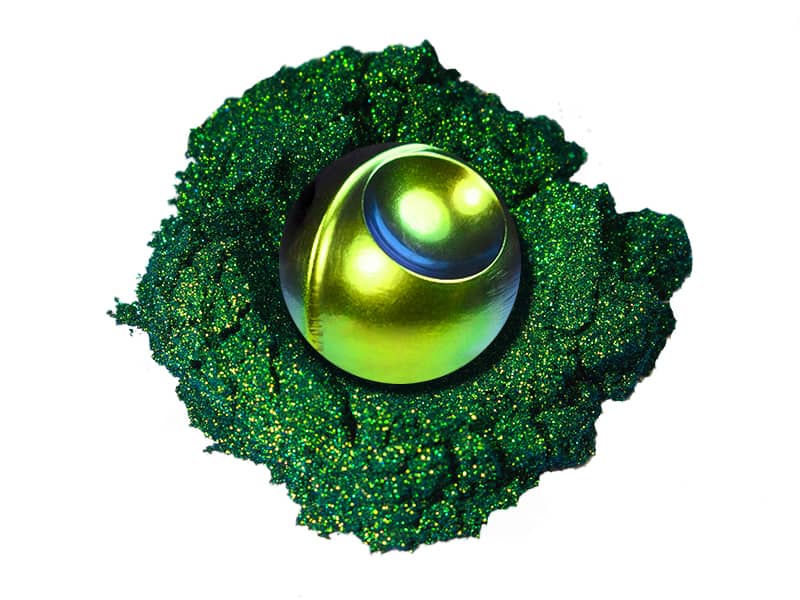
Kolortek Chromashift Optical Variable Pigments represent a sophisticated class of multi-layer interference materials. Utilizing a high-purity silica substrate combined with aluminum and iron layers, these pigments produce a sharp, definitive color shift and intense color travel. Unlike standard pearls, Chromashift offers a powerful flowing effect, providing premium visual depth for high-end industrial, automotive, and anti-counterfeiting applications.
Read More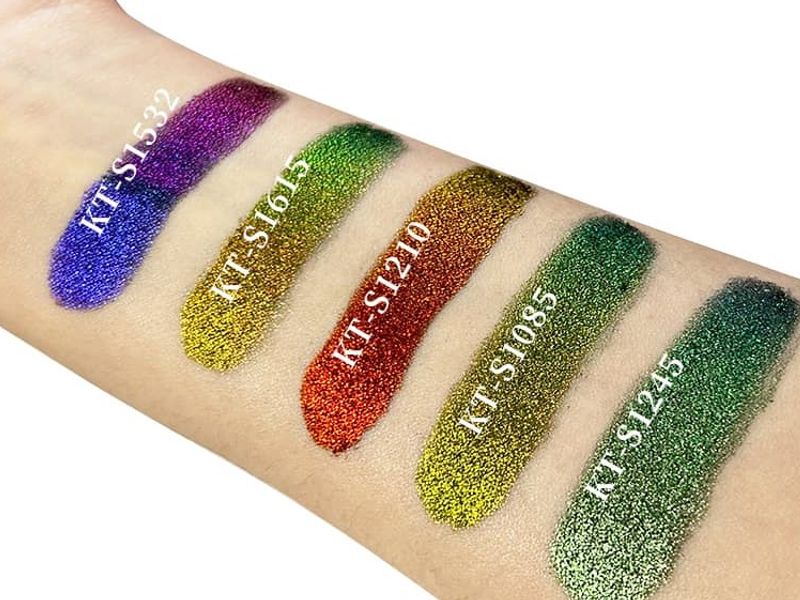
Chromashift pigment is a high-performance colour shifting pigment that produces a vivid, fluid color transition across the visible spectrum when the viewing angle changes — delivering effects far beyond what conventional interference or metallic pigments can achieve. The chromashift pigment lineup spans duochrome to multicolor shift options, with particle sizes suited to everything from fine gravure inks to large-flake decorative coatings. Formulators working in automotive coatings, security printing, and cosmetic finishes will find consistent, angle-dependent color travel across all standard substrates.
Read More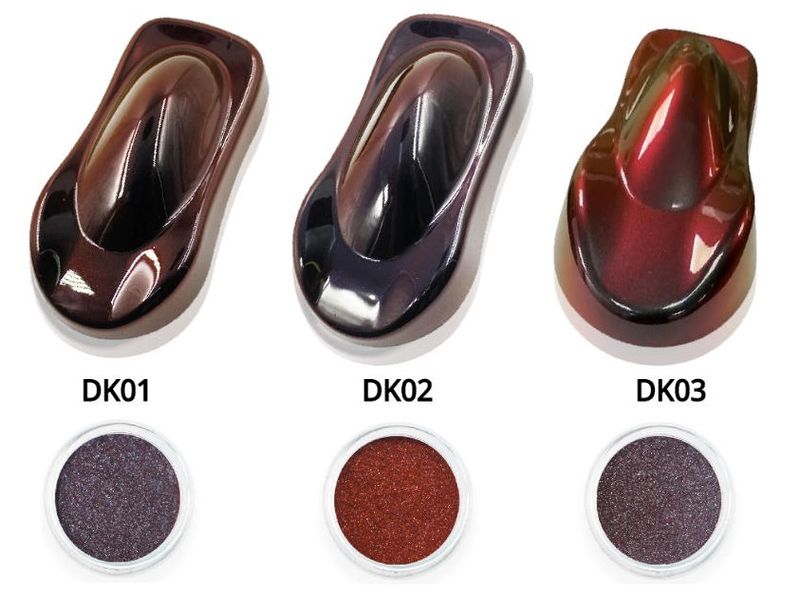
Devil Kiss pigment delivers a deep black base that flips through red, purple, green, and gold as the viewing angle changes — a true "black change" travel rarely seen in standard pearl effects. This chameleon color shift pigment works across nail polish, automotive coatings, inks, and plastics, with both industrial and cosmetic grades available. As a color shift pigment supplier, we stock multiple shift directions so formulators can match the exact flop they need.
Read More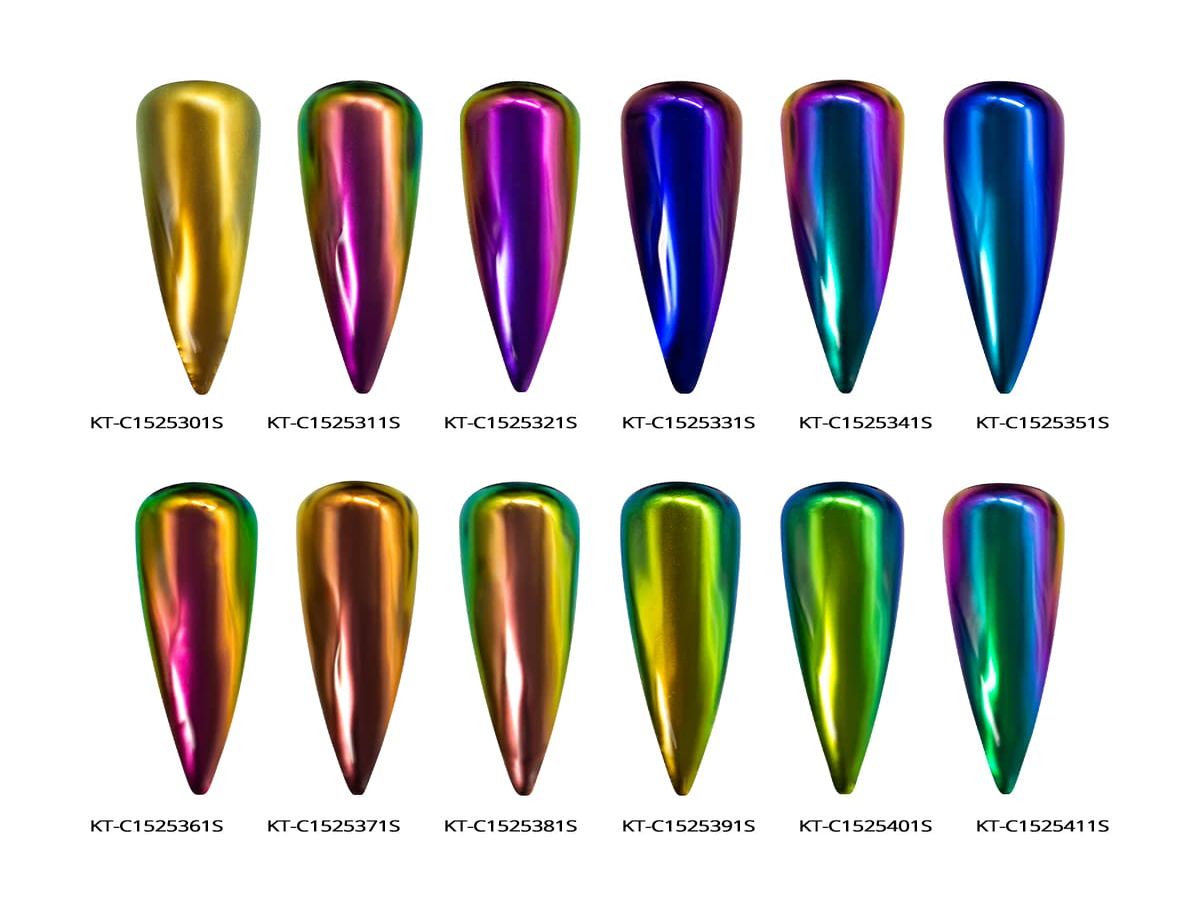
Kolortek's chameleon pigment series covers a wide range of angle-dependent color shifting powders — from interference-based pearlescents to magnetic cat eye flakes — engineered for automotive coatings, cosmetics, and high-security printing. Each grade delivers a strong color flowing effect as viewing angle shifts, with collections spanning duochrome transitions, multicolor sequences, and holographic multichrome responses. Whether you're formulating a color shift pigment into nail gel, gravure ink, or a thermoplastic masterbatch, there's a specific product line built for that substrate.
Read More
Chameleon pigment flakes act as mirror elements, so a curved part shows several hues of one colour travel at once. Compare the F95, S9 and rainbow flake groups.
Read More
 English
 Français
 Deutsch
 Русский
 Español
 Português