After two decades of fielding calls, emails, and trade show conversations, we've noticed that the same questions come up — over and over — before a buyer decides to commit to a mica powder manufacturer. These aren't bad questions. They're exactly the right ones. This mica manufacturer FAQ pulls together the ten most important questions we hear at Kolortek, answered with the specificity you actually need to make a smart procurement decision.
Quick Answer
Buyers evaluating a mica powder manufacturer consistently ask about certifications, particle size performance, substrate differences, sustainability, and minimum order requirements. This mica powder procurement guide answers the ten most critical questions — from regulatory compliance and technical specifications to OEM services and ethical sourcing — so you can shortlist suppliers with confidence.
Key Takeaways
- Natural and synthetic mica are not interchangeable — synthetic fluorphlogopite offers higher purity, 1100°C thermal stability, and addresses ethical sourcing concerns that natural mica cannot.
- Particle size is the single biggest lever controlling visual output: 1–15 μm produces satin coverage; 75–175 μm produces coarse sparkle — specifying this upfront saves reformulation cycles.
- Certifications have scope limits — an ISO 9001 certificate covers a quality system, not a specific product's cosmetic compliance; always verify documentation grade by grade.
- Sustainability questions are now procurement-stage requirements, not afterthoughts — synthetic mica, biodegradable glitter, and TiO₂-free options each solve a different regulatory or ethical problem.
- A capable manufacturer should offer TDS, SDS, custom color matching, and sample supply before you place a first order — if they can't, that's a red flag.
Why Buyers Ask These Questions in the First Place
The global effect pigment market sits at roughly USD 1.2–1.5 billion and grows at 5–7% annually. Pearlescent pigments are the largest segment, with demand pulling from automotive coatings, premium cosmetics, packaging, and plastics. That growth has also expanded the supplier pool dramatically — and not all suppliers are equal. Qualification cycles for automotive customers alone run 12–24 months. Cosmetic brands face EU, FDA, and increasingly MoCRA (US, 2022) compliance requirements. A wrong sourcing decision doesn't just waste money — it can stall a product launch or create a liability.
At Kolortek, we've worked with buyers ranging from indie cosmetic startups to Tier 1 automotive coating formulators, and the following ten questions represent the genuine inflection points in any serious procurement conversation.
The 10 Questions — Answered
1. What's the difference between natural mica and synthetic mica — and does it matter for my application?
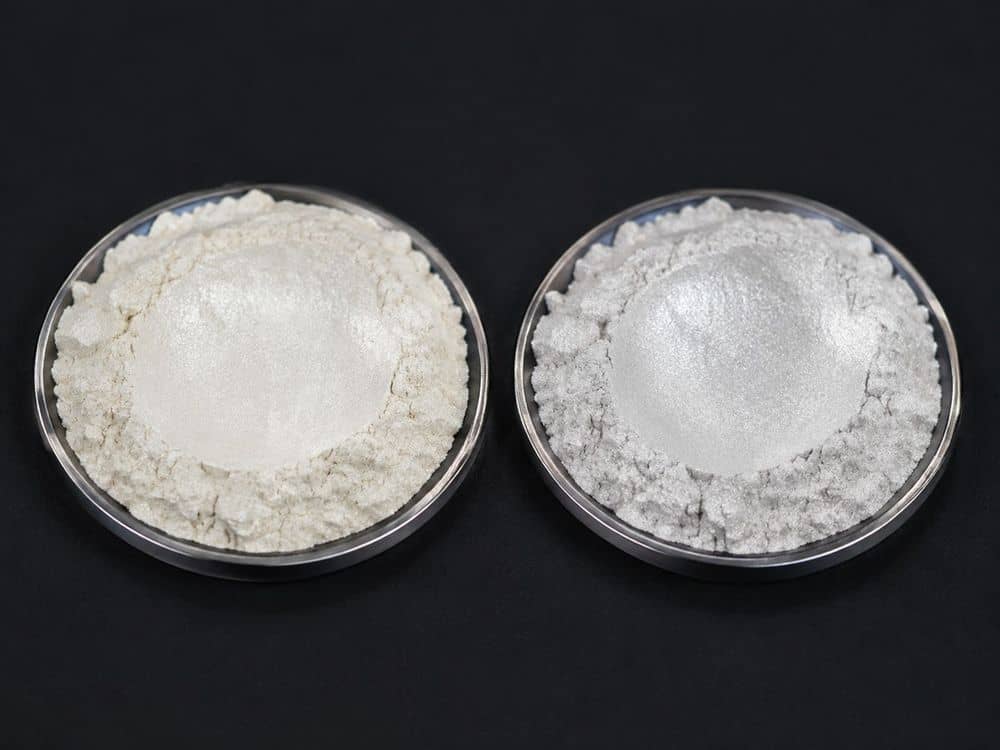
It matters significantly. Natural mica (muscovite) is mined, abundant, and cost-effective — a solid choice for general industrial or standard cosmetic applications. Synthetic mica (fluorphlogopite) is manufactured under controlled conditions, yielding higher purity, brighter whiteness, and superior transparency. Thermal stability is a practical differentiator: natural mica holds to ~800°C; synthetic mica withstands up to 1100°C, which matters for engineering plastics processed at high temperatures or specialty coatings.
There's also an ethical dimension. Natural mica mining — particularly in India and Madagascar — has faced serious child labor scrutiny. Synthetic mica eliminates that supply-chain risk entirely. Our KT-7000 Synstar series was developed partly in direct response to cosmetic brand procurement policies requiring traceable, mine-free sourcing. If your brand has a clean-beauty or ESG commitment, this question isn't optional.
2. What certifications do I actually need — and what do they really cover?
This is where the most confusion lives. Certifications are not blanket product approvals — each has a defined scope, and confusing them creates compliance gaps.
Our ISO 9001:2015 certification covers the quality management system for production and sales of pigments, glitters, and fillers. Our REACH registration certificate specifically covers fluorphlogopite — other substrate grades require separate product-level confirmation. SGS test reports we hold apply to specific sample batches of Chromashift pigments, not the entire range. Halal and Kosher certifications apply only to listed products intended for those categories. For cosmetics, US FDA establishment registration confirms our facility status — it is not product approval. EU Cosmetics Regulation (EC) No 1223/2009 compliance depends on the specific grade and its intended use.
The practical implication: always request documentation tied to the exact grade you're sourcing, not the manufacturer's broadest available certificate.
3. How do I choose the right particle size for my application?
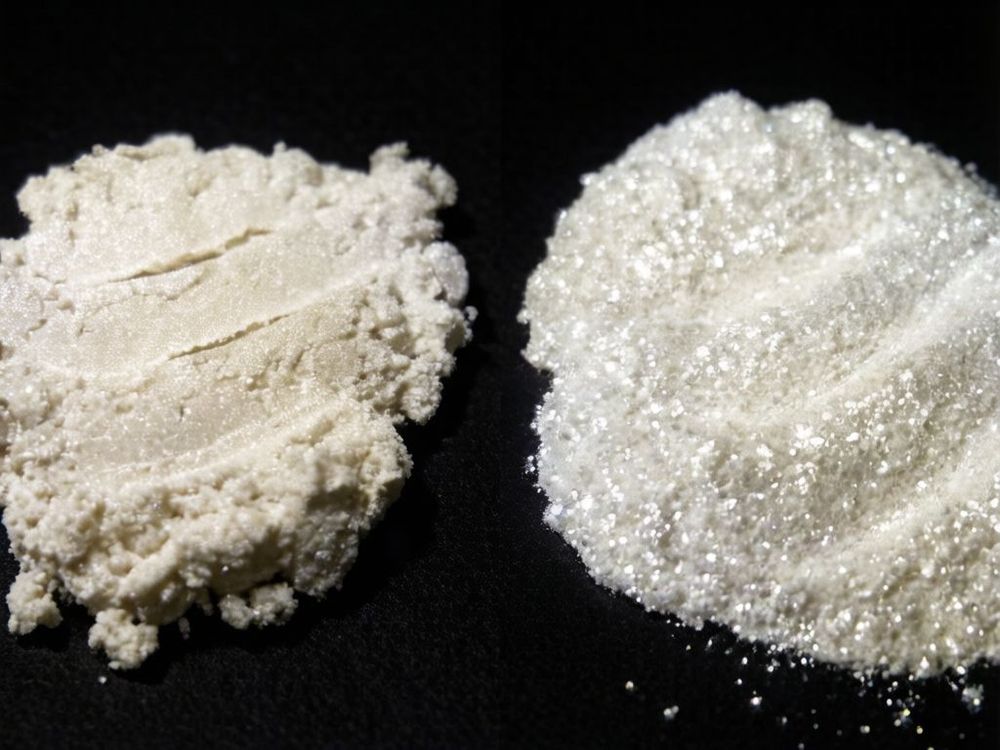
Particle size is the most direct technical lever you control before mixing a single batch. The visual output changes dramatically across the range:
| Particle Size (μm) |
Visual Effect |
Typical Applications |
| 1–15 μm |
Satin, smooth, high coverage |
Foundation, skincare, industrial coatings |
| 5–25 μm |
Fine luster, silky |
Lipstick, pressed powders, printing inks |
| 10–60 μm |
Standard pearl, most versatile |
General cosmetics, automotive, plastics |
| 20–100 μm |
Sparkle and flash |
Eye shadow, nail polish, decorative coatings |
| 75–175+ μm |
High sparkle, individual flakes visible |
Special effects, crafts, specialty packaging |
A common mistake we see: buyers sourcing a coarse grade (75–175 μm) for a lipstick formula expecting a smooth pearl finish, then wondering why the texture feels gritty. Match the particle size to the substrate and the tactile expectation, not just the color reference.
4. What is the recommended dosage for my formulation type?
Dosage varies widely by application. For automotive basecoats, 1–10% is standard. Industrial coatings can run 1–20%. Plastics injection molding typically uses 0.5–2% at the final article level (masterbatch concentrates run 20–50% and are let-down at the compounding stage). Printing inks for offset work best at 10–30% using fine grades; screen printing can tolerate coarser grades at 20–40%. Cosmetics pressed powders may use anywhere from 5–50% depending on the intended effect; liquid and cream formulas typically run 1–15%; nail polish 0.5–10%.
These are starting ranges, not hard rules. Our application team regularly helps formulators dial these in based on specific resin systems, substrate requirements, and target visual outcomes.
5. What heavy metal and regulatory thresholds do your cosmetic-grade pigments meet?
Under EU Cosmetics Regulation, the relevant colorant heavy-metal limits are Pb ≤10 ppm, As ≤2 ppm, Hg ≤1 ppm, and Cd ≤5 ppm. Our cosmetic-grade lines are manufactured with strict control protocols designed to remain below these international thresholds. For buyers targeting the US market, note that MoCRA (2022) has expanded FDA authority over cosmetic facilities, and our registration status covers our manufacturing operation.
One regulatory nuance worth flagging: TiO₂ in powder form has been classified as a suspected carcinogen (Category 2, inhalation route) under EU CLP. This affects handling procedures for dry powder pigments during manufacturing — it is not a concern in finished liquid, paste, or pressed formulas where inhalable dust is not generated. If your production involves open powder handling, your SDS review and occupational exposure procedures should reflect this classification.
6. What sustainability options are available — and which problem does each solve?
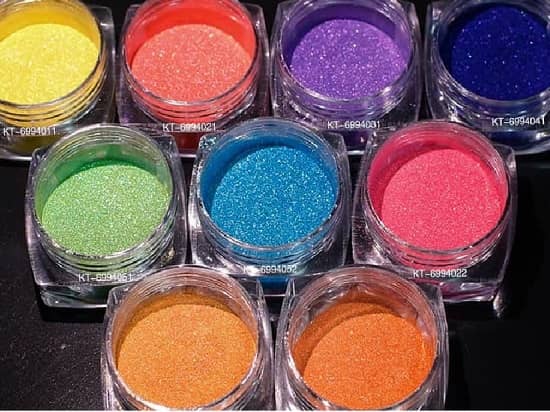
Sustainability in mica pigments is not a single issue — it's three separate problems requiring three different solutions:
- Ethical sourcing concern: Switch to synthetic mica (fluorphlogopite). Eliminates dependence on mined mica and the associated child-labor supply-chain risks.
- Microplastic compliance: Use biodegradable glitter. The EU's Annex XVII microplastic restriction under REACH directly impacts conventional PET glitter in leave-on and rinse-off cosmetics. Our cellulose and PLA-based biodegradable glitter series addresses this.
- TiO₂ regulatory pressure: Specify TiO₂-free grades. ECHA's classification and growing consumer pressure have accelerated demand for pearlescent systems that don't rely on TiO₂ coatings.
Asking a supplier "are you sustainable?" is too broad to be useful. Asking "do you offer synthetic mica, biodegradable glitter, and TiO₂-free pigments as separate product lines?" gives you actionable answers.
7. What technical documentation will you provide, and when?
At minimum, a serious mica powder manufacturer should provide: a full Technical Data Sheet (TDS) covering physical and chemical properties, application guidelines, and usage levels; an MSDS/SDS for every product shipped; INCI name and CI Number for cosmetic grades; and CAS numbers for ingredient inventory compliance. Regulatory documentation packages — batch-specific heavy metals analysis, REACH documentation, application-specific compliance letters — should be available on request, tied to the specific grade and destination market.
If a supplier can only offer generic, undated documents that aren't traceable to a lot number or specific product grade, that's a documentation gap that will come back to haunt you during a regulatory audit.
8. What is your MOQ — and can you accommodate small batch or R&D orders?
MOQ rigidity has historically been a pain point when working with large-scale manufacturers, especially for indie brands, startups, or formulators in early development stages. At Kolortek, we designed our order structure specifically to accommodate this — small batch orders are welcome, and we offer complimentary evaluation samples for qualified inquiries so formulators can validate performance before committing to production volumes. Our range scales from sample sachets through to bulk industrial containers.
The honest advice: always clarify whether the MOQ applies per SKU, per shade, or per order — because a "low MOQ" policy that requires ten SKUs minimum is effectively a high entry barrier for a small buyer.
9. Can you match or cross-reference to existing grades I'm already using?
This is one of the most practical questions a formulator can ask — and one that separates technically capable manufacturers from distributors reselling catalogue grades. We run an Iriodin® cross-reference program that maps our product series against established industry benchmarks, making second-sourcing or supplier transitions significantly more efficient for formulators who've already qualified a specific optical performance in their system.
Custom color matching involves spectrophotometric analysis and application testing in the target system — not just a visual approximation under a single light source. Color matching under D65 illumination can look correct while failing under incandescent or LED, so the testing protocol matters as much as the equipment.
10. What services beyond product supply can I expect from your manufacturing team?
The gap between a commodity supplier and a technical partner shows up here. A capable manufacturer should offer formulation guidance across your application type — coatings, cosmetics, plastics, printing inks — with an R&D and application team that can advise on dispersion methods, compatibility issues, and processing parameters. OEM and ODM manufacturing for proprietary pigment specifications, private label packaging, and custom particle size distribution tailoring should all be options.
Our application team has worked across automotive and industrial coatings, cosmetic pressed powders, emulsions, anhydrous formats, nail lacquers, inks, and plastics. We can advise on specific issues — for example, why high-shear mixing fractures platelet particles and destroys luster, or why pH outside 3–10 can attack TiO₂ and iron oxide coatings.
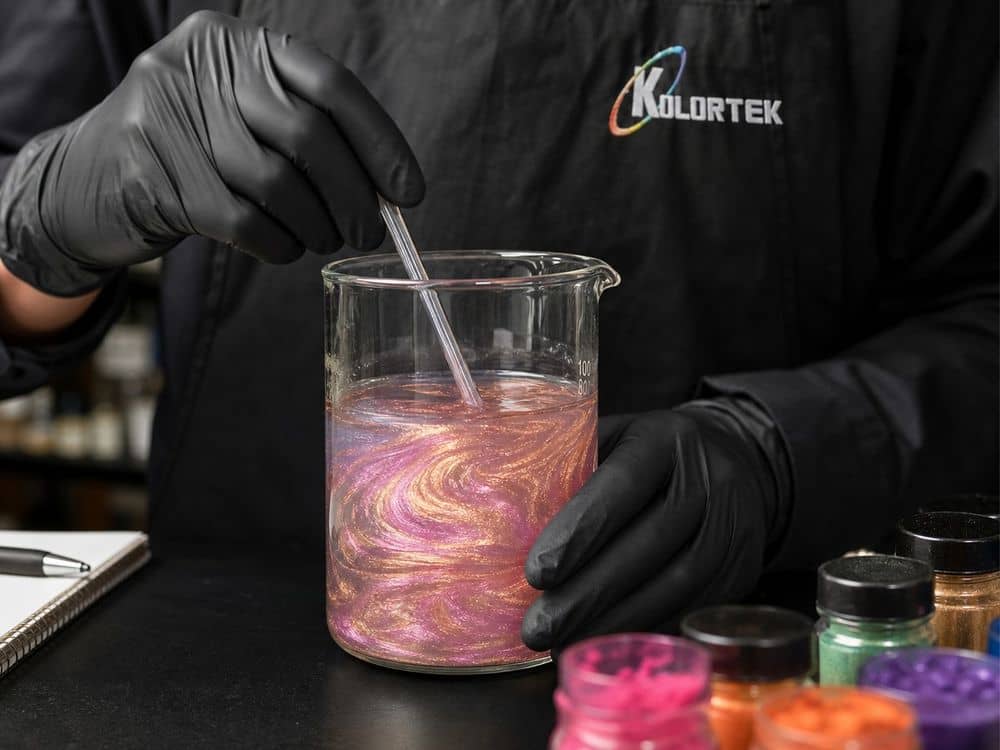
Expert Insight: What the First Conversation Really Reveals
At Kolortek, we've found that the quality of the first conversation with a potential mica supplier reveals more than any brochure. A supplier who responds to "what particle size do I need for a loose highlighter powder?" with a genuine recommendation — rather than "we have many options, please see our catalogue" — is demonstrating application knowledge that matters downstream.
One practical test we recommend: ask a prospective supplier to explain the difference in visual output between a 10–60 μm interference grade and a 40–200 μm sparkle grade in a pressed powder compact. The answer should address not just sparkle intensity but also texture on skin, payout behavior, and how particle size interacts with binder concentration. If they can walk through that explanation fluently, you're talking to a manufacturer. If they redirect you to a spec sheet, you're likely talking to a trading company.
Another practical signal: does the supplier proactively flag limitations of their own documentation? A manufacturer whose REACH registration covers only fluorphlogopite but confidently presents it as covering all substrates is either sloppy with compliance or hoping you won't check. Honest scope acknowledgment is a sign of a mature quality system.
Manufacturer Evaluation Scorecard
| Evaluation Criterion |
What to Look For |
Red Flag |
| Substrate Range |
Both natural and synthetic mica manufacturing capability |
Single substrate with no alternatives offered |
| Certifications |
Grade-specific, dated documentation with lot traceability |
Generic range-wide certificates, undated docs |
| Technical Documentation |
TDS + SDS + INCI + CI Number per grade, on request |
Only a product list available pre-order |
| Application Support |
Direct access to R&D/application team |
All technical questions routed to sales only |
| Sustainability Options |
Synthetic mica, biodegradable glitter, TiO₂-free — as separate, real product lines |
Vague "eco" claims with no product-level specifics |
| Order Flexibility |
Sample supply + small batch + scalable volume |
High MOQ with no sample availability |
| Cross-Reference Capability |
Documented grade-matching program for industry standards |
No comparative data available |
| Batch Consistency |
QC data and lot-to-lot color consistency records |
No QC data available or visible lot variation in samples |
FAQ: What Buyers Ask Us Most
How do I know if a mica powder is truly cosmetic grade versus industrial grade?
Cosmetic-grade mica pigments are manufactured under cosmetic GMP conditions and come with supporting documentation: INCI naming, CI Numbers, heavy-metals analysis results, and compliance statements referencing specific regional regulations (EU 1223/2009, FDA color additive requirements, etc.). Industrial-grade pigments may perform similarly in visual terms but lack this documentation chain. If a supplier cannot provide INCI-named documentation with lot-traceable heavy metals data, it is not cosmetic grade for regulatory purposes, regardless of what the label says.
What is the difference between interference pigments and color-travel (chameleon) pigments?
Both create color through thin-film interference rather than dye absorption, but the degree of angle-dependency is very different. Standard interference pigments (like Kolortek's KT-200 series) produce a single interference color that intensifies or shifts slightly at different viewing angles. Color-travel pigments (like the KT-9000 Magic Chameleon series) use precisely engineered multi-layer stacks — typically 5–9 layers — to produce dramatic, perceptible color shifts between two or more distinct colors as the viewing angle changes. The multi-layer complexity is what drives both the visual performance and the higher cost.
Which regulatory markets have the strictest requirements for mica-based cosmetic pigments, and how should I prepare?
The EU currently maintains the most comprehensive framework — Regulation 1223/2009 requires a full Cosmetic Product Safety Report (CPSR), and the microplastic restriction under REACH Annex XVII is the most sweeping globally. China's CSAR 2021 and IECIC inventory system require ingredient pre-clearance, and NMPA filing is mandatory for imported cosmetics. The US MoCRA (2022) introduced new facility registration and product listing requirements. For a multi-market launch, EU documentation tends to be the most demanding baseline — if you build your compliance file to EU standards first, you'll have most of what other markets need already assembled.
Can mica pigments be used in food contact applications or packaging intended for food contact?
This depends entirely on the specific grade, the nature of the contact (direct vs. indirect, aqueous vs. fatty foodstuffs), and the destination market's positive-list system. Pigments used in food-contact plastics or packaging must comply with applicable migration limits and be listed under the relevant regulation (EU 10/2011 for plastics, FDA regulations for the US market). Do not assume industrial-grade or even cosmetic-grade pigments are automatically food-contact approved — request specific compliance documentation for the intended contact scenario.
How should I handle and store mica pigments to maintain performance over time?
Store mica pigments in sealed containers away from moisture and strong light; while TiO₂-coated and iron-oxide-coated grades are chemically stable (pH 3–10 range, good solvent resistance), prolonged exposure to strong acids or alkalis can degrade the metal oxide coating. Avoid high-shear mixing during formulation — it fractures the platelet structure and permanently reduces luster. Pre-wet with solvent or resin before incorporation and use gentle stirring or wide-gap three-roll mill settings. Under proper storage conditions, shelf life is typically 2–3 years in original sealed packaging.
What information should I have ready before requesting a custom color match from a mica manufacturer?
Provide the reference standard (physical sample or spectrophotometric data), the target application system (resin type, solvent or waterborne, application method), the intended substrate, and the evaluation conditions (illuminant, geometry, gloss level). If you're cross-referencing an existing grade from another supplier, share the grade name and, if possible, a sample. The more context you provide upfront, the faster and more accurate the first match iteration will be — attempting to match from a verbal description or a JPEG photo of a finished product is a reliable way to generate multiple rounds of back-and-forth iterations.
The best mica powder manufacturers distinguish themselves not just by product range, but by how precisely and honestly they answer exactly these kinds of questions. Technical depth, documentation integrity, and application support are the real differentiators — and they surface clearly in the first few exchanges. At Kolortek, we've built our entire supplier relationship model around being the kind of manufacturer that gives you real answers before you've placed a single order. If you're evaluating suppliers and want to put these criteria to the test, our team is ready for the conversation.

 English
 Français
 Deutsch
 Русский
 Español
 Português