Quick Answer
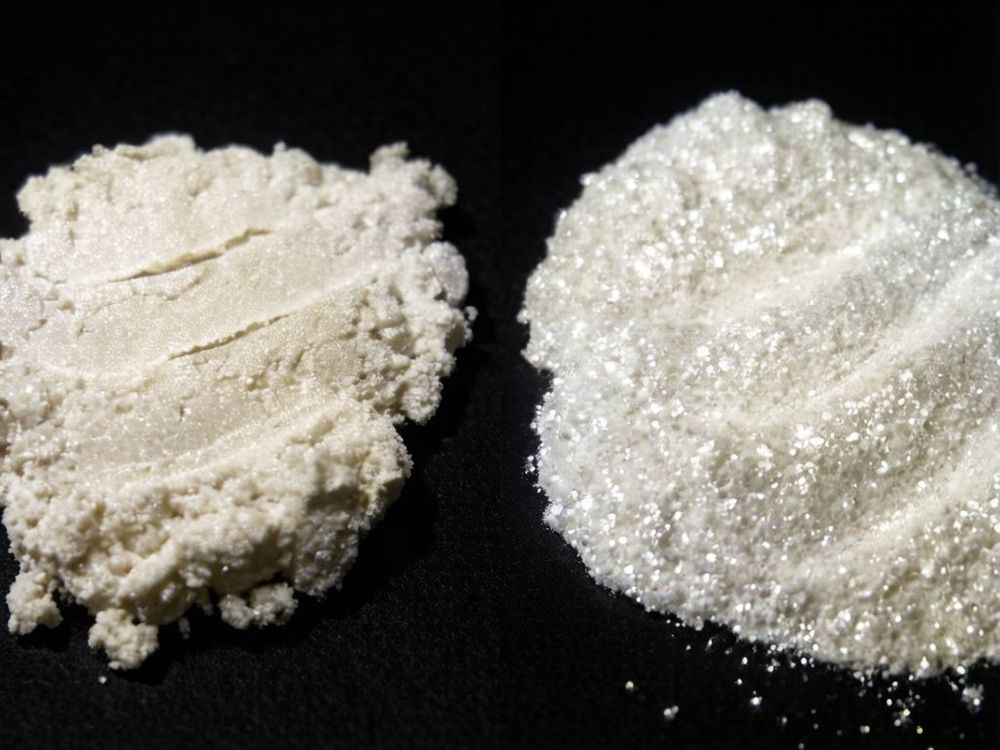
When it comes to the fine vs coarse pearl pigment debate, particle size is the single most important parameter governing visual effect — and choosing incorrectly costs you far more than a reformulation. Fine pearl pigments (1–25 μm) deliver satin coverage and silky texture ideal for cosmetics and offset printing inks, while coarse grades (100–250+ μm) produce dramatic sparkle and individual visible flakes suited to decorative arts and specialty packaging. This pearlescent pigment guide breaks down exactly how particle size performance shifts across the full spectrum — so you can match the right grade to your application from day one.
Key Takeaways
- Particle size controls the visual trade-off: Fine grades (1–25 μm) produce satin luster and high coverage; coarse grades (100–250+ μm) produce maximum sparkle but poor hiding power.
- Shear sensitivity scales with particle size: Coarse platelets are significantly more vulnerable to fracture during high-shear mixing — protecting them during processing is critical to preserving the sparkle effect.
- Application dictates the grade: Offset printing inks require fine grades due to thin film thickness; screen printing inks can accommodate coarser grades. Getting this wrong causes print failures.
- Mid-range (10–60 μm) is the industry workhorse: This range covers automotive basecoats, general cosmetics, and plastics — offering a practical balance of luster and coverage.
- Regulatory context matters: EU microplastic restrictions target glitter-type coarser particles more directly than fine pearl grades, making particle size a compliance variable — not just an aesthetic one.
Why Particle Size Is the Master Variable in Pearl Pigment Performance
Most formulators think about pearl pigments in terms of color — gold, silver, interference violet — but color is only half the story. The visual character of any pearlescent effect is equally determined by the physical size of the pigment platelets suspended in your medium. At Kolortek, after more than two decades of producing effect pigments across natural mica, synthetic mica, borosilicate, silica, and alumina substrates, we have seen one pattern repeat itself consistently: formulators who get the particle size wrong struggle regardless of how well-chosen their color or substrate is.
Pearlescent pigments function through multi-layer thin-film optical interference. A flat, transparent platelet — whether mica or glass flake — is coated with high-refractive-index metal oxides such as titanium dioxide (TiO₂) or iron oxide. The platelet's flat geometry enables specular (mirror-like) reflection, which is the fundamental mechanism behind pearl luster. Particle size governs how much usable flat surface area aligns with the viewing angle inside any given film — and that directly determines whether you see a soft satin glow or an explosive, glitter-like flash.
A common misconception worth debunking immediately: bigger particles are not simply "more sparkly" versions of fine particles. They represent a genuinely different optical phenomenon. Fine particles produce many small specular reflection events that average into a smooth, high-coverage luminosity. Coarse particles produce fewer but much larger reflection events — individual visible flakes catching and throwing light. These are not on a continuous scale of "more or less"; they are qualitatively different effects serving different design intentions.
The Physics Behind the Fine vs Coarse Pearl Pigment Difference
Specular vs Diffuse Reflection
Specular reflection — the clean, directional, mirror-like bounce of light from a smooth surface — is the engine of pearl luster. Larger platelets offer more uninterrupted flat surface per particle, producing stronger specular events. This is why coarse grades deliver that dramatic individual-flake flash that fine grades simply cannot replicate.
Diffuse reflection, by contrast, scatters light in multiple directions from rough or irregular surfaces and reduces luster while increasing a matte, chalky appearance. Particle breakage — a real risk during high-shear processing — converts your specular reflectors into diffuse scatterers. This is why protecting platelet integrity during formulation is non-negotiable, especially for coarse grades.
Aspect Ratio: The Hidden Performance Multiplier
Aspect ratio, the diameter-to-thickness ratio of a platelet, is a critical but often underappreciated performance parameter. Higher aspect ratios generally produce better luster because more of the platelet's surface area is parallel to the substrate surface in a dried film, maximizing the proportion of light hitting it at the ideal angle for specular reflection. Substrate choice interacts directly with this: synthetic mica (fluorphlogopite) platelets offer higher purity and superior transparency compared to natural mica, allowing the interference colors generated by TiO₂ coatings to express with greater brightness — at any particle size.
Pearl Pigment Size Comparison: Full Spectrum Reference Table
| Particle Size (μm) |
Visual Effect |
Texture / Feel |
Hiding Power |
Typical Applications |
| 1–15 |
Satin, smooth, high coverage |
Very fine, silky |
High |
Foundation, skincare, industrial coatings |
| 5–25 |
Fine luster |
Silky smooth |
High |
Lipstick, pressed powders, offset printing inks |
| 10–60 |
Standard pearl, most common |
Smooth, slight grain |
Medium |
General cosmetics, automotive coatings, plastics |
| 20–100 |
Sparkle / flash effect |
Noticeable sparkle |
Medium–Low |
Eye shadow, nail polish, decorative coatings |
| 40–200 |
Glitter / sparkle, visible particles |
Grainy sparkle |
Low |
Glitter nail products, decorative plastics |
| 75–175+ |
High sparkle, individual flakes |
Coarse, decorative |
Very Low |
Special effects, crafts, specialty packaging |
| 100–250+ |
Maximum visual impact |
Very coarse, large flakes |
Minimal |
Decorative arts, large-area effects |
Application-Specific Selection: Which Particle Size for Which Use Case
Cosmetics: Fine Grades Dominate, But Context Determines Everything
In cosmetics formulation, the relationship between particle size and application zone is well established. Foundation and skincare products require the 1–15 μm range — silky texture is non-negotiable when material sits directly against skin. Pressed powders and lipsticks typically use 5–25 μm grades for fine luster without graininess. Move to eye shadow and the calculus changes: 10–60 μm is standard, and 20–100 μm grades are used specifically when the brief calls for visible sparkle. Nail polish glitter products push into the 40–200 μm territory where individual particles are part of the design intent.
The regulatory dimension matters here too. EU microplastic restrictions specifically target glitter-type particles in leave-on and rinse-off cosmetics — a regulatory pressure that falls disproportionately on coarser particle grades. Fine pearl pigments face a different concern: TiO₂-coated pearls in powder form require careful handling due to inhalation risk classification for the inhalable fraction. These are two distinct compliance conversations depending on which part of the particle size spectrum you are working with.
Automotive Coatings: Mid-Range Is the Baseline, Sparkle Grades Add Drama
Automotive OEM and refinish applications typically anchor at 10–60 μm for standard pearl basecoats, loaded at 1–10% by weight. When designers want a more dynamic sparkle or flip effect — increasingly common in premium vehicle segments — 20–100 μm grades are incorporated, sometimes in tricoat systems where a dedicated effect layer carries the sparkle while a color layer provides the hue. The mid-range sweet spot here is not accidental: automotive basecoat film thicknesses are engineered to orient platelets parallel to the surface, and the 10–60 μm range aligns well with the film build parameters that maximize this orientation.
Printing Inks: The Strictest Particle Size Constraint in Any Application
Printing inks represent the most unforgiving application environment for particle size selection. Offset printing operates with very thin film deposits — fine grades (5–25 μm) are not just preferred but effectively mandatory. Larger particles will cause plate clogging, uneven ink transfer, and print defects. Screen printing allows more latitude because the higher film thickness can accommodate coarser grades in the 20–40% loading range. Getting this distinction wrong is one of the most common and costly mistakes we see from formulators new to printing inks. The particle size ceiling in offset work is a hard technical constraint, not a stylistic preference.
Plastics and Industrial Coatings: Mid to Coarse Range Drives Decorative Versatility
Plastics applications split naturally between functional and decorative. General-use plastics coloration draws from the 10–60 μm range for a clean, smooth pearl appearance. Decorative plastics — packaging, consumer electronics housings, promotional items — increasingly specify 40–200 μm grades when the design brief calls for visible sparkle or dramatic texture. In industrial coatings requiring a smooth finish, fine grades deliver better coverage and surface uniformity.
Processing Considerations: Where Fine and Coarse Grades Diverge in Formulation
Shear Sensitivity: The Coarse Grade Vulnerability
This is the processing insight that saves the most reformulation cycles: coarse pearl pigment platelets are substantially more vulnerable to fracture under high-shear mixing than fine grades. When a large platelet breaks, it does not become a fine pearl — it becomes a defect, contributing diffuse rather than specular reflection and permanently degrading the sparkle effect you specified. At Kolortek, we consistently recommend avoiding high-shear dispersers and prolonged grinding with any pearlescent pigment, but the urgency is highest for coarse grades. Pre-wetting with solvent or resin before incorporation and gentle stirring are the standard protective practices. If a three-roll mill is required, wide gap settings are essential.
Dosage and Loading: Size Affects the Economics
Loading levels interact with particle size in ways that affect both performance and cost. Automotive basecoats run 1–10% by weight. Printing inks — which require fine grades for offset — run 10–30%; screen printing inks can go 20–40%. Cosmetic pressed powders span an enormous range, 5–50%, depending on the effect intensity required. Understanding the dosage norms for your application helps set realistic expectations about both the coverage achieved and the quantity of pigment needed per batch.
Substrate Choice: How It Interacts With Particle Size
The substrate on which the metal oxide coating is applied is a second major variable — and it interacts with particle size in important ways. Natural mica (muscovite) is available across a wide range from 5–700 μm, making it the most flexible substrate for any application zone. It is cost-effective and abundant. Synthetic mica (fluorphlogopite) spans the same size range but delivers higher whiteness, superior transparency, and temperature resistance up to 1,100°C — a significant advantage in engineering plastics or high-temperature powder coatings where natural mica would discolor.
Borosilicate glass flake substrates, available 5–250 μm, offer exceptional optical transparency and a genuinely smooth platelet surface — pushing specular reflection efficiency above what mica substrates achieve. Silica (SiO₂) substrates are inherently fine (2–50 μm) and are used specifically when matte or soft-focus effects are the objective rather than sparkle. Alumina (Al₂O₃) platelets (5–50 μm) are also fine-range substrates offering excellent brightness. Understanding that substrate selection shapes the "quality" of any given particle size effect — not just the size itself — is part of what separates a sophisticated formulation from a commodity one.
From Our Lab: The Insight That Guides Every Size Recommendation We Make
A customer once came to us with a problem that seemed, on the surface, to be about color: their automotive topcoat was producing a pearl effect that looked "flat and lifeless" compared to a competitor reference they were trying to match. They had the right interference color range — a blue-to-violet shift — but the visual energy simply was not there. When we reviewed their formulation, the color was correct. The particle size was not. They were using a 10–25 μm grade because it was what they knew. The reference they were trying to match was clearly built on a 40–80 μm sparkle grade in a dedicated effect layer. The difference was not a coating chemistry issue — it was a particle architecture issue.
This is the practical reality of the fine vs coarse pearl pigment question: it is not just an aesthetic preference. It determines the fundamental optical mechanism at work in your film. We now routinely ask customers to share a visual reference early in the selection conversation — not just a color target — because the particle size selection is often more decisive than the color choice. At Kolortek, our product range covers 5–700 μm on mica substrates and 5–250 μm on borosilicate, which means we can meet a formulator wherever their application requires them to be, without asking them to compromise on one variable to access the other.
Substrate vs Particle Size: Quick Selection Matrix
| Substrate |
Available Size Range (μm) |
Key Performance Advantage |
Best For |
| Natural Mica |
5–700 |
Cost-effective, wide size range |
General cosmetics, coatings, plastics |
| Synthetic Mica |
5–700 |
Higher purity, temp resistance to 1,100°C, brighter whites |
High-performance cosmetics, engineering plastics, high-temp coatings |
| Borosilicate (Glass Flake) |
5–250 |
Exceptional transparency and brilliance |
Premium cosmetics, specialty coatings requiring optical clarity |
| Silica (SiO₂) |
2–50 |
Matte/soft-focus effects, controlled PSD |
Skincare, soft-focus cosmetics |
| Alumina (Al₂O₃) |
5–50 |
High refractive index, excellent brightness |
Fine-grade applications requiring high color intensity |
The Bottom Line on Pearl Pigment Particle Size Selection
The key thing to remember when navigating the pearl pigment size comparison is this: particle size is not a fine-tuning variable — it is a foundational design decision. Fine grades produce satin, coverage-rich luster. Coarse grades produce sparkle, transparency, and visible flake drama. The mid-range 10–60 μm zone is where most industrial applications live by default, but the full spectrum from 1 μm to 700 μm exists for good reason. Every point on that spectrum serves a legitimate application need, and the formulator's job is to match the physics of the pigment to the physics of the final product. Substrate, coating chemistry, and processing conditions all refine the outcome — but particle size sets the envelope within which all of those refinements operate. When a formulator works with a pigment supplier who holds inventory across the full size range and across multiple substrate platforms — natural mica, synthetic mica, borosilicate — they retain the flexibility to optimize rather than compromise.
Frequently Asked Questions: Fine vs Coarse Pearl Pigment
What particle size range should I use for cosmetic foundation formulations?
For foundation and skincare applications, the 1–15 μm range is standard. At this size, the pigment produces a silky, smooth texture that is imperceptible on skin while delivering a satin, high-coverage luminosity. Coarser grades introduce graininess that is unacceptable for skin-contact base products.
Why do fine pearl pigments perform better in offset printing inks than coarse grades?
Offset printing deposits extremely thin ink films, and the printing plates and ink train cannot accommodate large particles — coarse grades cause clogging, uneven ink transfer, and print defects. Fine grades (5–25 μm) fit within the physical constraints of the process. Screen printing, with its thicker film deposits, can use grades up to the 40–200 μm range at 20–40% loadings.
How does particle size affect hiding power in pearlescent pigments?
Hiding power decreases as particle size increases. Fine grades (1–25 μm) produce higher coverage because the greater number of small platelets per unit area more effectively obscures the underlying substrate. Coarse grades (100–250+ μm) are essentially transparent in the areas between platelets, giving a glittering but low-coverage effect. Iron oxide-coated grades offer better hiding power than pure TiO₂ pearls at any given particle size.
Can I mix fine and coarse pearl pigments in the same formulation to get both coverage and sparkle?
Yes — blending fine and coarse grades in a single formulation or as separate layers in a multi-coat system is a legitimate design strategy. Automotive tricoat systems often separate the functions: a basecoat carries color and coverage, a dedicated effect layer provides sparkle using coarser grades, and a clearcoat protects the system. In single-coat cosmetic formulations, a blend allows the fine fraction to deliver coverage while the coarse fraction adds visible sparkle, though optimizing the ratio requires testing.
Why is my coarse pearl pigment losing its sparkle after mixing — what went wrong?
This is almost certainly the result of platelet fracture during high-shear mixing or prolonged grinding. Coarse platelets are the most vulnerable to mechanical damage because their large surface area makes them susceptible to shear forces that simply break them into smaller, irregular fragments. Broken platelets shift from specular to diffuse reflection — eliminating the sparkle. Remedy: pre-wet the pigment with solvent or resin before incorporation, use gentle stirring, and if a three-roll mill is required, set it to wide gap settings.
Do EU microplastic restrictions affect fine pearl pigments as much as coarse grades?
No — the EU microplastic restrictions introduced under REACH primarily target glitter-type particles characteristic of coarser grades used in leave-on and rinse-off cosmetics. Fine pearl pigments (1–25 μm) face different regulatory scrutiny — specifically around TiO₂ in powder form, which is classified as a suspected carcinogen by inhalation (Category 2 under EU CLP), making powder handling protocols important for fine-grade manufacturing and formulation environments. Both issues require attention, but they affect different parts of the particle size spectrum.

 English
 Français
 Deutsch
 Русский
 Español
 Português