
Leave A Message
If you are interested in our products and want to know more details,please leave a message here,we will reply you as soon as we can.
Wholesale AC1200BX antique bronze powder 1200 mesh for printing inks
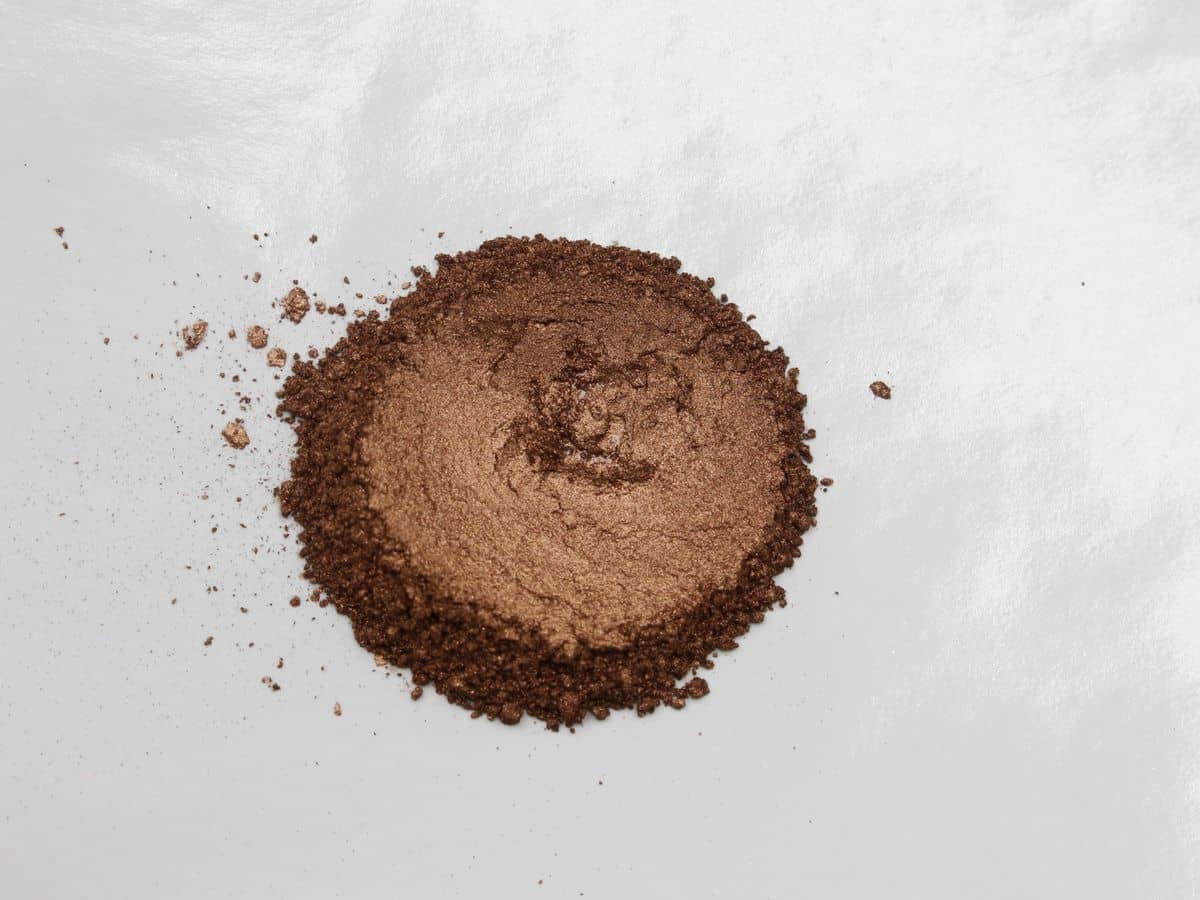
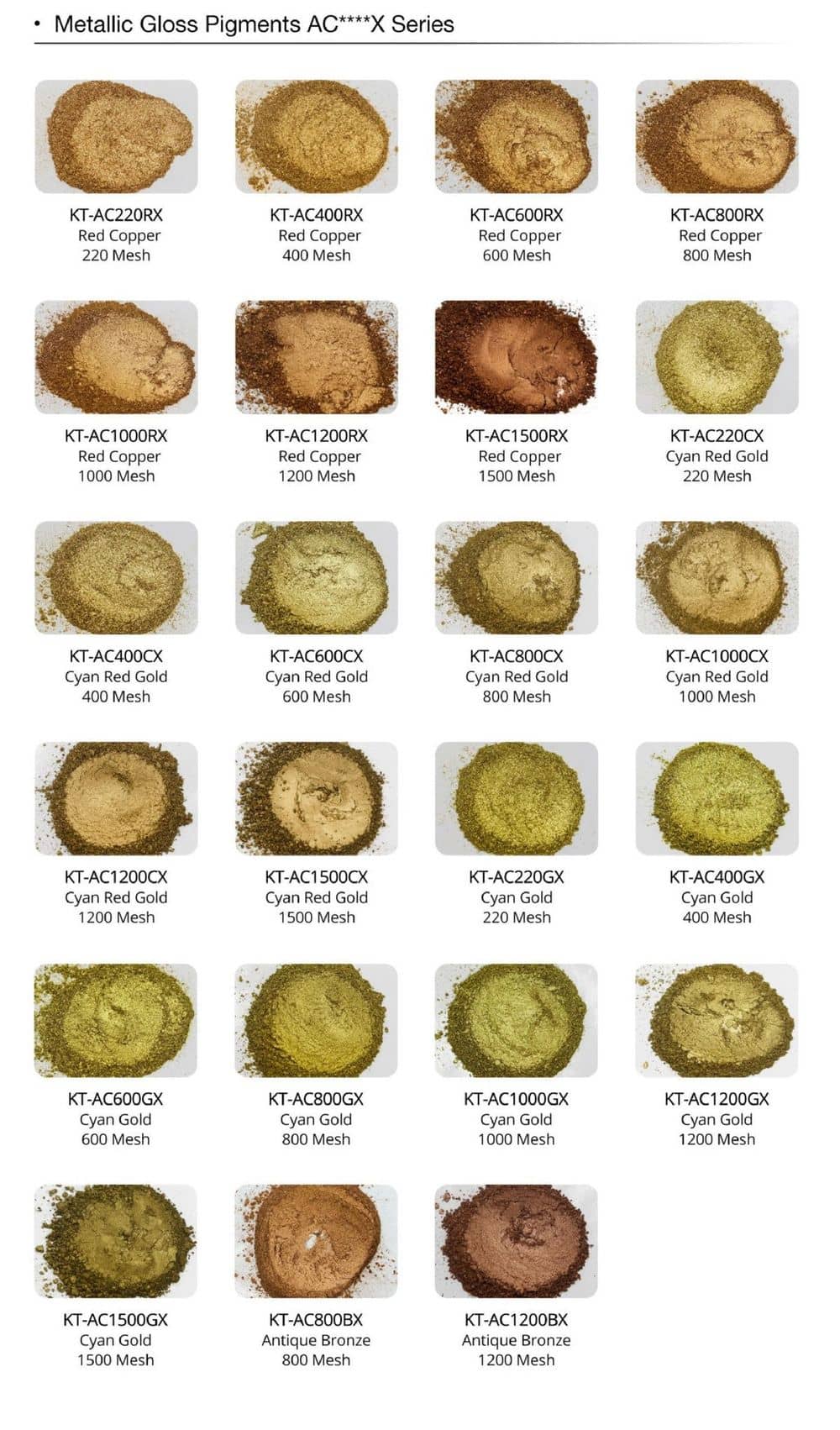
For printing ink formulators sourcing bulk antique bronze powder in extra-fine grades, the KT-AC1200BX delivers a genuine copper-zinc alloy metallic effect at 1200 mesh — classifying it as extra fine within our BX Series. At typical loadings of 3–8%, it achieves full opacity with a silky, smooth metallic finish well-suited to high-quality offset and gravure printing. The flake-based construction produces true metallic reflection, not a pearl or interference effect.
Most bronze powder grades in the 600–800 mesh range are workhorses — suitable for decorative coatings, craft applications, and general-purpose metallic effects. When formulating for fine printing substrates, though, that coarser particle distribution creates visible texture, uneven ink lay, and inconsistent metallic sheen on close-inspection pieces like premium packaging or greeting cards.
The KT-AC1200BX sits in the 1200–1500 mesh range that we classify as extra fine. The finer flake population translates directly to a silky surface feel, more uniform metallic coverage, and the print definition that high-quality offset and gravure workflows demand. The antique bronze color tone — distinct from the cleaner yellows of a pale gold — adds warmth and depth that works particularly well on packaging, labels, and decorative printed collateral where a heritage or craft aesthetic is specified.
Critically, this is a real metal pigment. The metallic reflection comes from actual copper-zinc alloy particles, not from light interference across a mica substrate. In our experience, formulators switching from mica-based bronze-toned pearlescents to the KT-AC1200BX often comment on the qualitative difference in opacity and "weight" of the metallic effect — particularly at lower film builds.
The BX Series covers both 800 mesh and 1200 mesh antique bronze options, giving formulators a direct path to matching mesh grade to print process or coating requirement. The table below summarizes the available grades.
| Model | Series | Mesh Size | Classification | Recommended Use |
|---|---|---|---|---|
| KT-AC811 | Antique Bronze | 800 mesh | Fine | Standard coatings, craft, decorative |
| KT-AC812 | Antique Bronze | 1200 mesh | Extra Fine | Fine printing inks, fine coatings |
| KT-AC800BX | Antique Bronze BX | 800 mesh | Fine | Standard coatings, BX color variant |
| KT-AC1200BX | Antique Bronze BX | 1200 mesh | Extra Fine | High-quality offset & gravure printing, fine coatings |
Because the KT-AC1200BX consists of actual metal flakes rather than coated mica substrates, it delivers excellent opacity at the 3–8% loading range. This is a meaningful advantage over pearlescent alternatives in applications where substrate show-through is unacceptable. The antique bronze tone is warm and mid-depth — not as yellow as a rich gold, not as red as a copper — which makes it readable as a heritage bronze across a wide range of substrates and ink colors.
Metal-based construction gives the KT-AC1200BX solid heat stability — there is no thermal degradation pathway comparable to organic pigments. That said, the copper-zinc alloy chemistry does carry chemical reactivity limits that formulators must account for. The usable pH window is pH 6–9. Below pH 6, acidic attack on the metal surface causes tarnishing and color shift. Above pH 9, alkaline conditions similarly degrade the flake and destabilize the metallic appearance. For any application in aggressive chemical environments, this is a non-negotiable formulation constraint.
One thing to note: as a metal-particle pigment, the KT-AC1200BX is electrically conductive. It should not be specified in applications requiring dielectric or electrically insulating properties — circuits, certain electronic encapsulations, or specific functional coatings. For standard decorative printing and coating use, this is rarely a concern, but it is worth flagging during formulation review. On the handling and logistics side, the powder is classified as a non-flammable solid and is not subject to hazardous goods transport restrictions.
The extra-fine 1200 mesh particle distribution makes the KT-AC1200BX most relevant to processes that demand close surface contact between ink and substrate. The primary recommended applications from our selection data are high-quality offset printing and gravure printing — both of which benefit from fine flake populations that pass cleanly through narrow print gaps without clogging or streaking.
Practical applications where we see this grade specified include:
One use case worth highlighting: the KT-AC1200BX can function as a metallic foil substitute in several printing applications, providing a continuous metallic bronze field without the mechanical complexity of foil stamping. The cost economics of this substitution depend heavily on the specific design and run length, but it is an option we discuss regularly with packaging converters.
Not for personal care: Metal pigments in this series are not cosmetic-grade and must not be used in personal care, skincare, or leave-on products. This applies regardless of mesh size.
Metal flake pigments are mechanically vulnerable in a way that mica-based pearlescents are not. High-shear processes — ball mills, high-intensity rotor-stator mixers — physically deform the flakes, flattening their aspect ratio and degrading both the metallic luster and the opacity. In our application lab, we use low-shear mixing as the baseline approach, with high-speed dispersers fitted with Cowles blades acceptable when the tip speed is kept within ranges that avoid flake deformation. The goal is wet-out and distribution, not mechanical breakdown.
The specific gravity of copper-zinc alloy is notably higher than mica or organic pigment alternatives. Adequate agitation during production and at point of use prevents sedimentation, which can otherwise create loading inconsistencies across a print run.
Water contact is the primary stability risk for copper-zinc alloy pigments. Direct, unprotected exposure to water triggers surface oxidation and can cause hydrogen gassing in sealed containers. The KT-AC1200BX is formulated for use in water-based systems, but only with appropriate surface protection — silica coating, stearate treatment, or polymer encapsulation are the conventional approaches. If you are developing a water-based metallic bronze ink and have questions about which protective system is compatible with your binder chemistry, our technical team can walk through the options.
Store in sealed containers in dry conditions. Exposure to humidity and air over time will cause progressive oxidation of the flake surface, degrading metallic appearance before the product reaches the press. This is standard handling practice for any metal-based pigment, but worth confirming in warehouse and inventory processes when purchasing in volume.
What is the recommended loading rate for KT-AC1200BX antique bronze powder in printing inks?
The KT-AC1200BX performs at full opacity at loadings of 3–8% in typical printing ink formulations. Because it is a true metal flake with high hiding power, lower additions often achieve the metallic coverage that would require higher loadings from mica-based alternatives. Specific loading should be optimized against the resin system, film build, and substrate in development trials.
Can antique bronze powder wholesale be used in water-based ink formulations?
Yes, with the right formulation approach. The KT-AC1200BX is compatible with water-based systems provided the metal flake surface is adequately protected — through silica coating, stearate treatment, or polymer encapsulation — to prevent oxidation and gassing. Unprotected copper-zinc alloy in direct water contact will degrade. The pH must also be maintained between 6 and 9; water-based systems with acidic or alkaline binders outside this window will cause tarnishing.
What is the difference between 800 mesh and 1200 mesh antique bronze powder for printing applications?
The 800 mesh grades (KT-AC811, KT-AC800BX) are fine and suitable for standard coatings and general decorative printing. The 1200 mesh KT-AC1200BX is classified as extra fine and is specifically recommended for high-quality offset and gravure printing, where finer flake particle distribution produces a smoother ink lay, better print definition, and a silkier metallic surface finish. The coarser 800 mesh grades can introduce visible texture at the fine print resolutions these processes demand.
Is KT-AC1200BX suitable for cosmetic or personal care formulations?
No. Metal pigments in the Kolortek Gold Bronze Powder Series, including KT-AC1200BX, are not cosmetic-grade and must not be used in personal care products, skin-contact applications, or leave-on formulations. For cosmetic metallic effects, Kolortek's pearlescent and cosmetic-grade pigment series are the appropriate product families to evaluate instead.
Contact our technical team to discuss formulation requirements or to request samples of KT-AC1200BX for your specific printing ink or coating application.
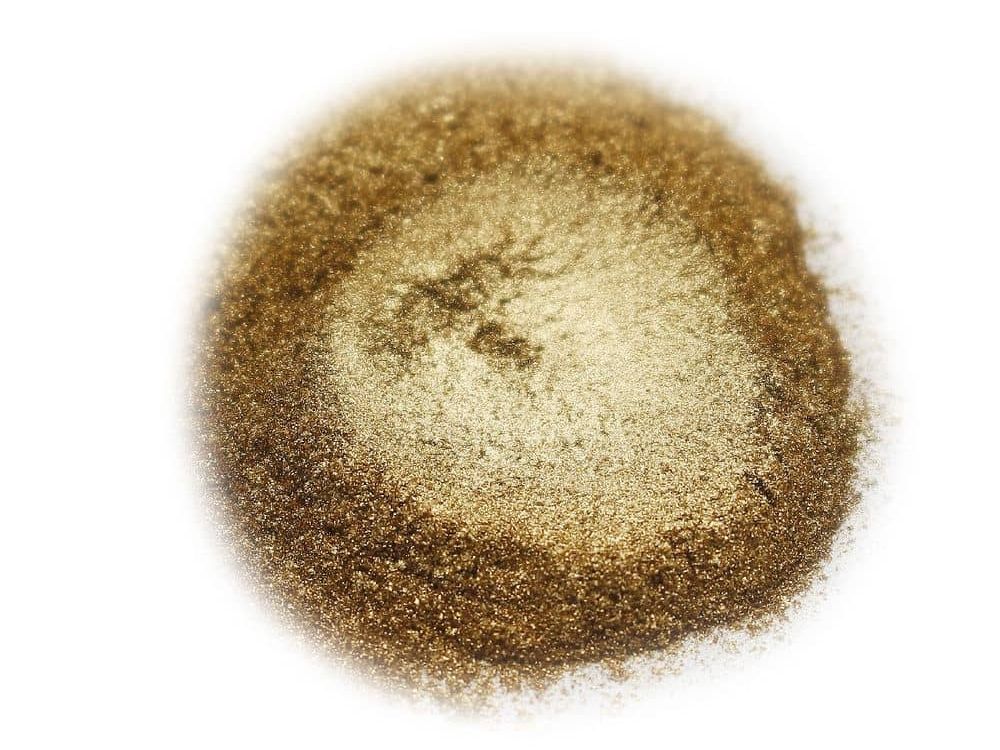
KT-AC810 is an 800-mesh cyan red gold bronze powder delivering smooth, uniform metallic coverage at 3–8% loading. From our experience in decorative coatings and printing inks, this fine-particle copper-zinc alloy provides opaque, true-metal reflection — ideal for packaging, gift wrap, and high-end craft applications where you need consistent gold bronze powder bulk performance without visible flake texture.
Read More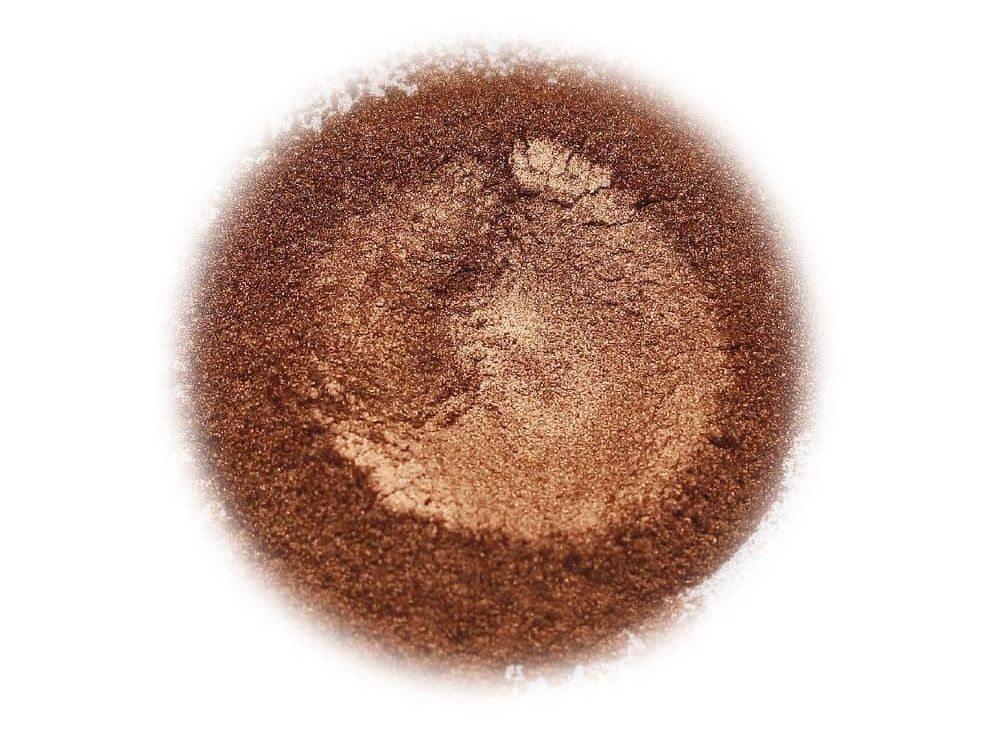
AC811 antique bronze metallic powder delivers genuine copper-zinc alloy metallic reflection at 800 mesh fineness — a smooth, uniform bronze finish you can't replicate with interference pigments. At Kolortek, we position this grade for printing inks, decorative coatings, and plastics where a true metallic surface is required. Typical loading is 3–8%, fully opaque, with excellent hiding power and thermal stability for high-temperature processing.
Read More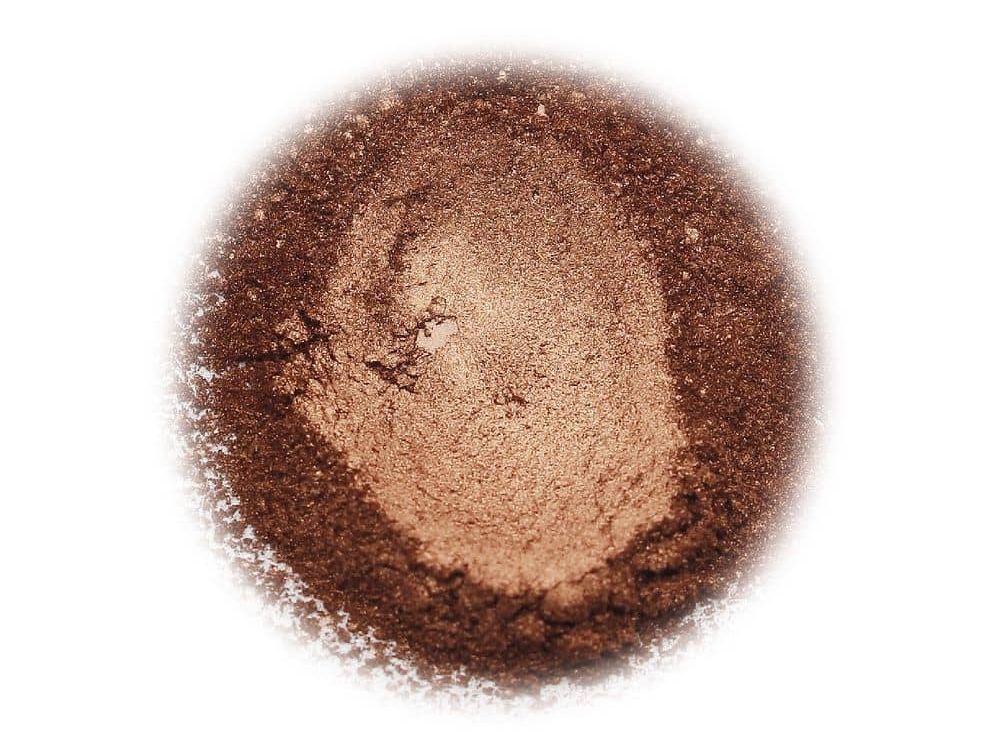
AC812 Antique Bronze is a 1200-mesh extra-fine metallic pigment from Kolortek's Gold Bronze Powder Series, delivering a silky-smooth antique bronze finish with exceptional opacity at 3–8% loading. We designed this copper-zinc alloy powder for high-quality printing applications and fine decorative coatings where a genuine metallic effect—not a pearlescent imitation—is required.
Read More
KT-AC816 is a cyan gold bronze powder manufactured by Kolortek from copper-zinc alloy, available at 200 mesh — a coarser grade that delivers maximum metallic sparkle and strong visual presence on the substrate. As a gold bronze powder manufacturer with over two decades of production experience, we supply this grade into decorative coatings, printing inks, plastics masterbatch, and craft applications where a bold, fully opaque gold-bronze effect is the primary requirement. Typical loading runs 3–8% for complete opacity.
Read More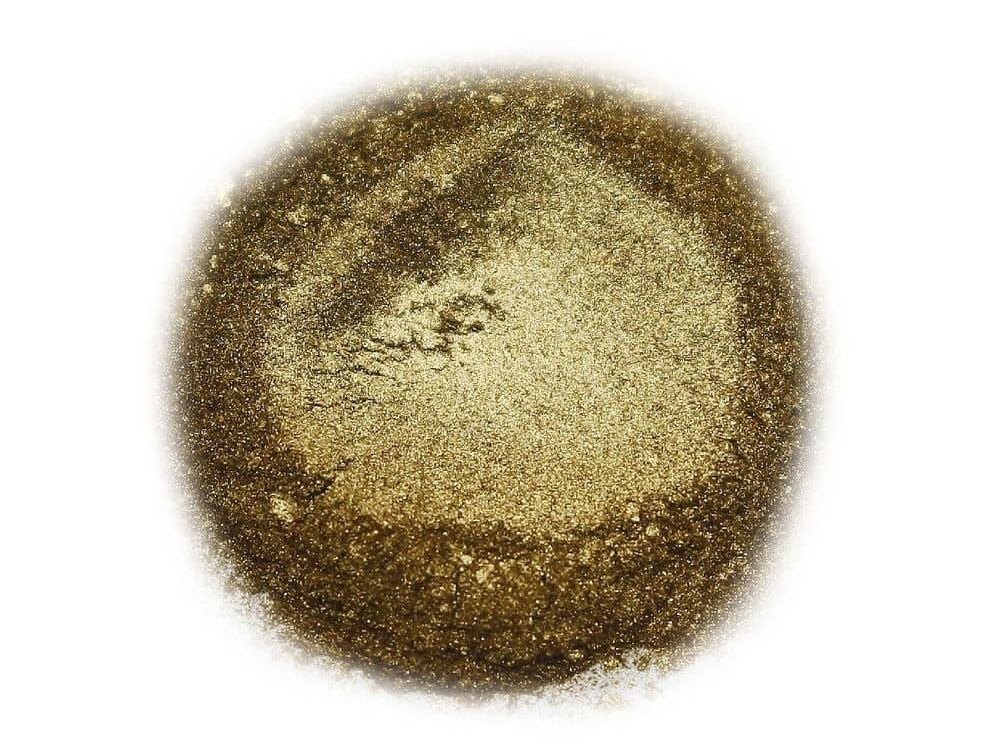
KT-AC818 Cyan Gold bronze powder is a fine-mesh metallic pigment designed for decorative coatings and plastics applications where a smooth, opaque gold finish with a cyan undertone is required. At 800 mesh particle size, this copper-zinc alloy powder delivers full hiding power at 3–8% loading and integrates into water-based systems when properly formulated, making it a practical choice for wholesale buyers sourcing plastics bronze powder or coating bronze powder in bulk.
Read More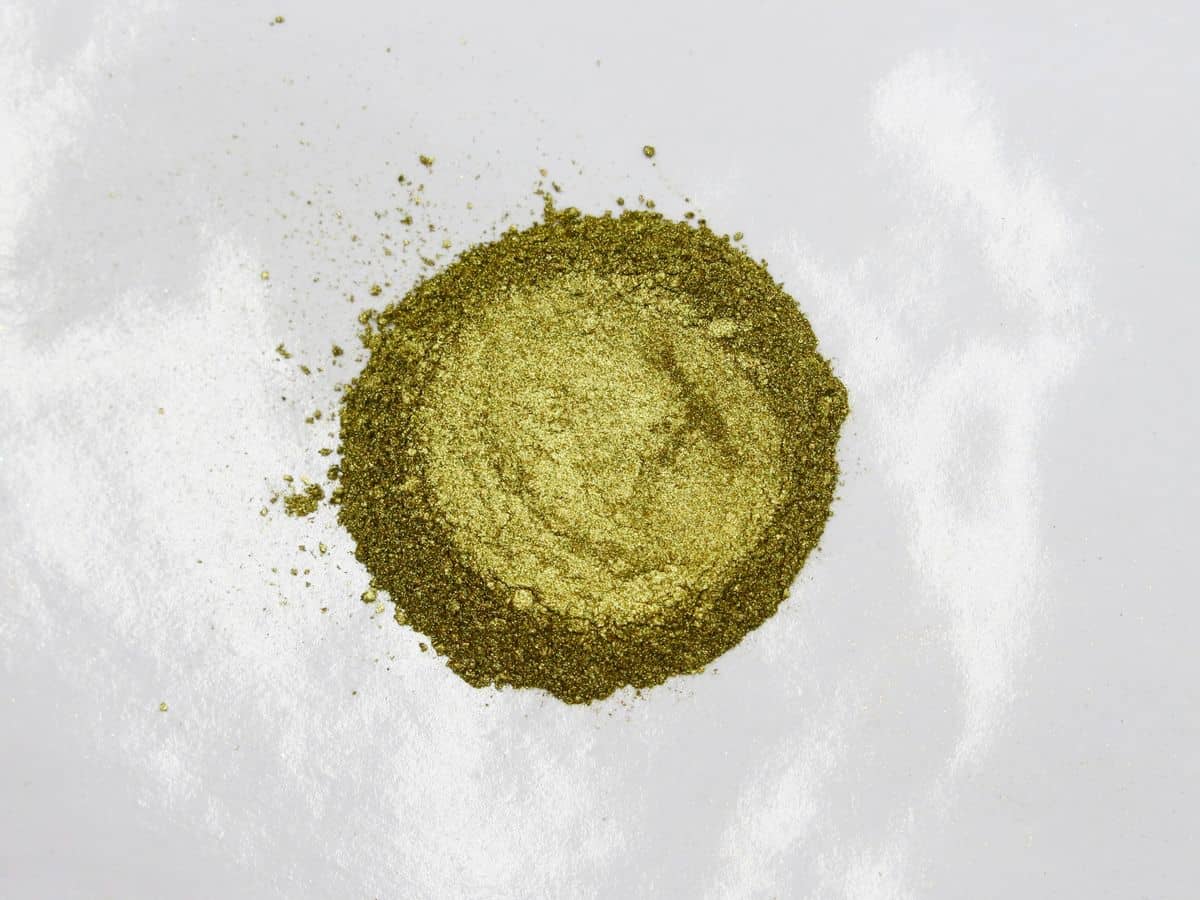
For printing ink formulators who need a consistent, high-coverage metallic finish, our AC1000GX at 1000 mesh delivers a smooth cyan-gold metallic effect with excellent hiding power at loadings of 3–8%. As wholesale gold bronze powder sourced direct from our manufacturing facility, it is classified in our fine-grade range (800–1000 mesh), where individual flakes are no longer visible and the resulting print surface reads as a uniform, continuous metal tone — the grade we see specified most often for packaging, labels, and decorative print applications.
Read More
For printing ink formulators sourcing bulk antique bronze powder in extra-fine grades, the KT-AC1200BX delivers a genuine copper-zinc alloy metallic effect at 1200 mesh — classifying it as extra fine within our BX Series. At typical loadings of 3–8%, it achieves full opacity with a silky, smooth metallic finish well-suited to high-quality offset and gravure printing. The flake-based construction produces true metallic reflection, not a pearl or interference effect.
Read More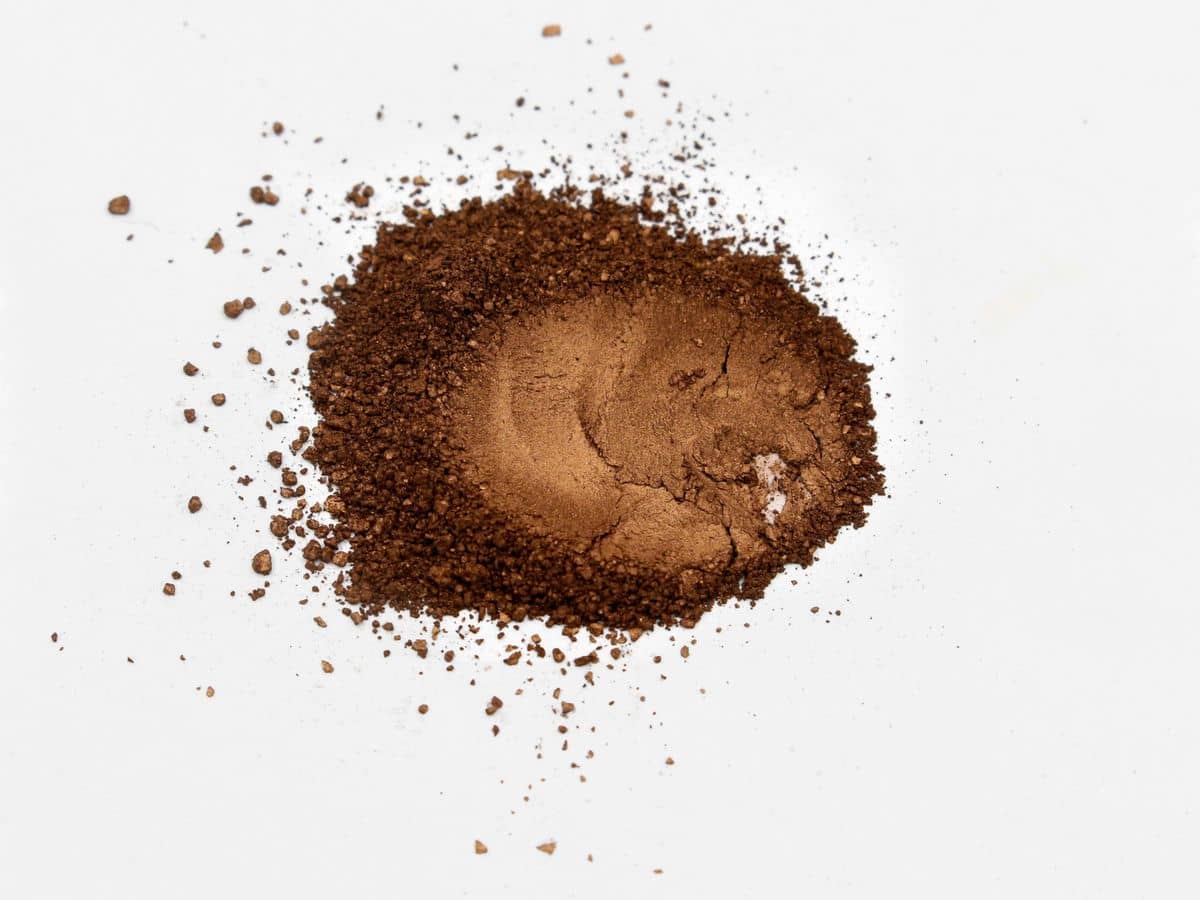
AC1500RX (KT-AC1500RX) is Kolortek's 1500-mesh extra-fine red copper gold bronze powder — a copper-zinc alloy metallic pigment delivering a true, opaque metallic finish in decorative coatings, printing inks, and plastics. As a dedicated red copper powder supplier, we produce this grade specifically for applications where a warm, rich copper tone and smooth, fine-particle surface are required. At 3–8% loading, it achieves full opacity with genuine metallic luster, not the soft sheen of mica-based interference pigments.
Read More
 English
 Français
 Deutsch
 Русский
 Español
 Português