
Leave A Message
If you are interested in our products and want to know more details,please leave a message here,we will reply you as soon as we can.
Wholesale AC1000GX cyan gold bronze powder 1000 mesh for printing inks
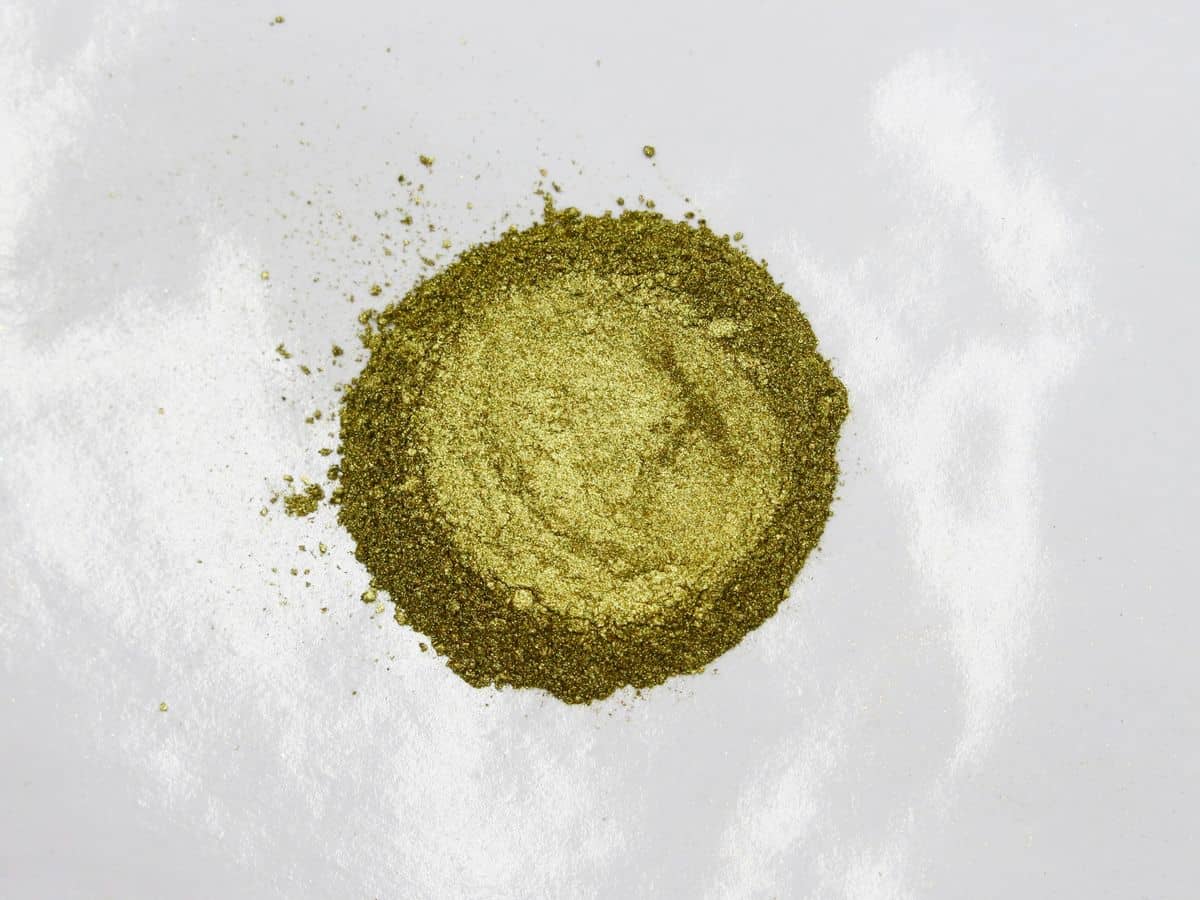
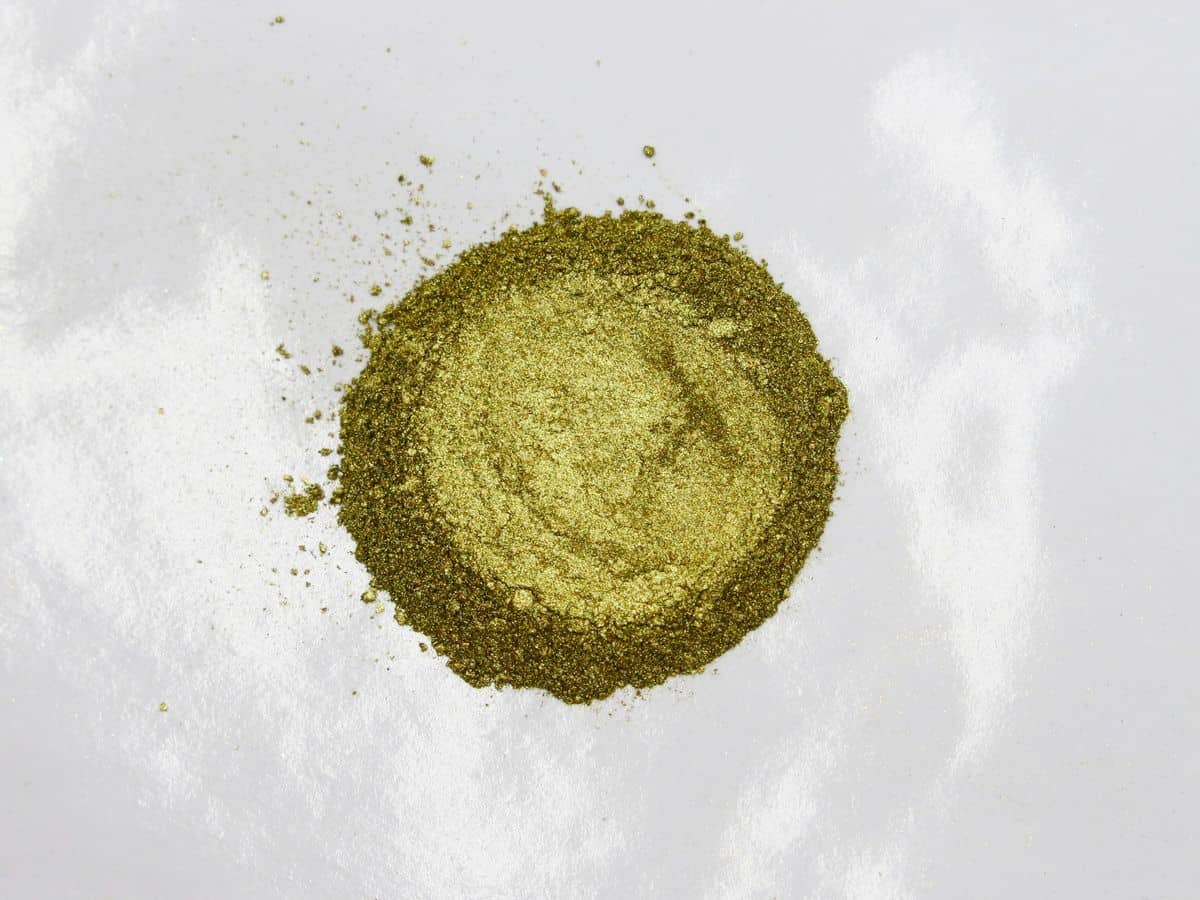
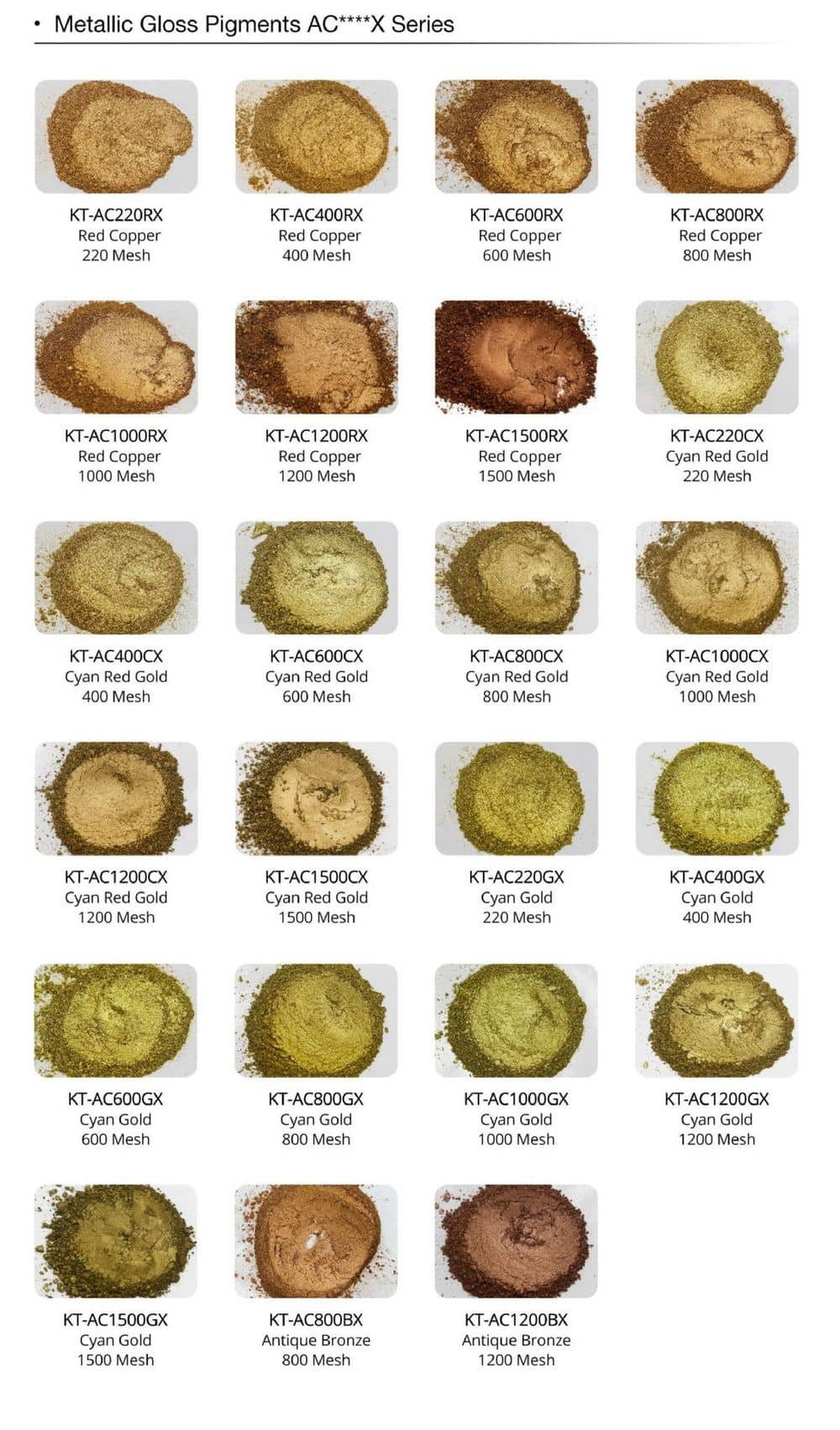
For printing ink formulators who need a consistent, high-coverage metallic finish, our AC1000GX at 1000 mesh delivers a smooth cyan-gold metallic effect with excellent hiding power at loadings of 3–8%. As wholesale gold bronze powder sourced direct from our manufacturing facility, it is classified in our fine-grade range (800–1000 mesh), where individual flakes are no longer visible and the resulting print surface reads as a uniform, continuous metal tone — the grade we see specified most often for packaging, labels, and decorative print applications.
AC1000GX is a true metallic effect pigment based on copper-zinc alloy — not a mica-based interference pigment with a gold-toned coating. That distinction matters in practice. Copper-zinc alloy flakes reflect light the way a metal surface does: specularly, with depth and warmth that interference pigments approximate but cannot fully replicate. The cyan-gold color of the GX series sits between a rich yellow-gold and a cooler, slightly green-shifted tone, giving printed surfaces a distinctive character that reads as genuinely metallic rather than decorative shimmer.
At 1000 mesh, the flakes are fine enough that no individual particle is perceptible in the dried ink film — a critical requirement for high-resolution printing where texture or graininess would read as a defect. The result is a smooth, opaque metallic layer with full coverage at standard ink pigment loads. In our experience, this is the mesh size most commonly requested by ink formulators working on cosmetic packaging and premium label stock, and it sits at the upper end of the fine-grade range we define as 800–1000 mesh.
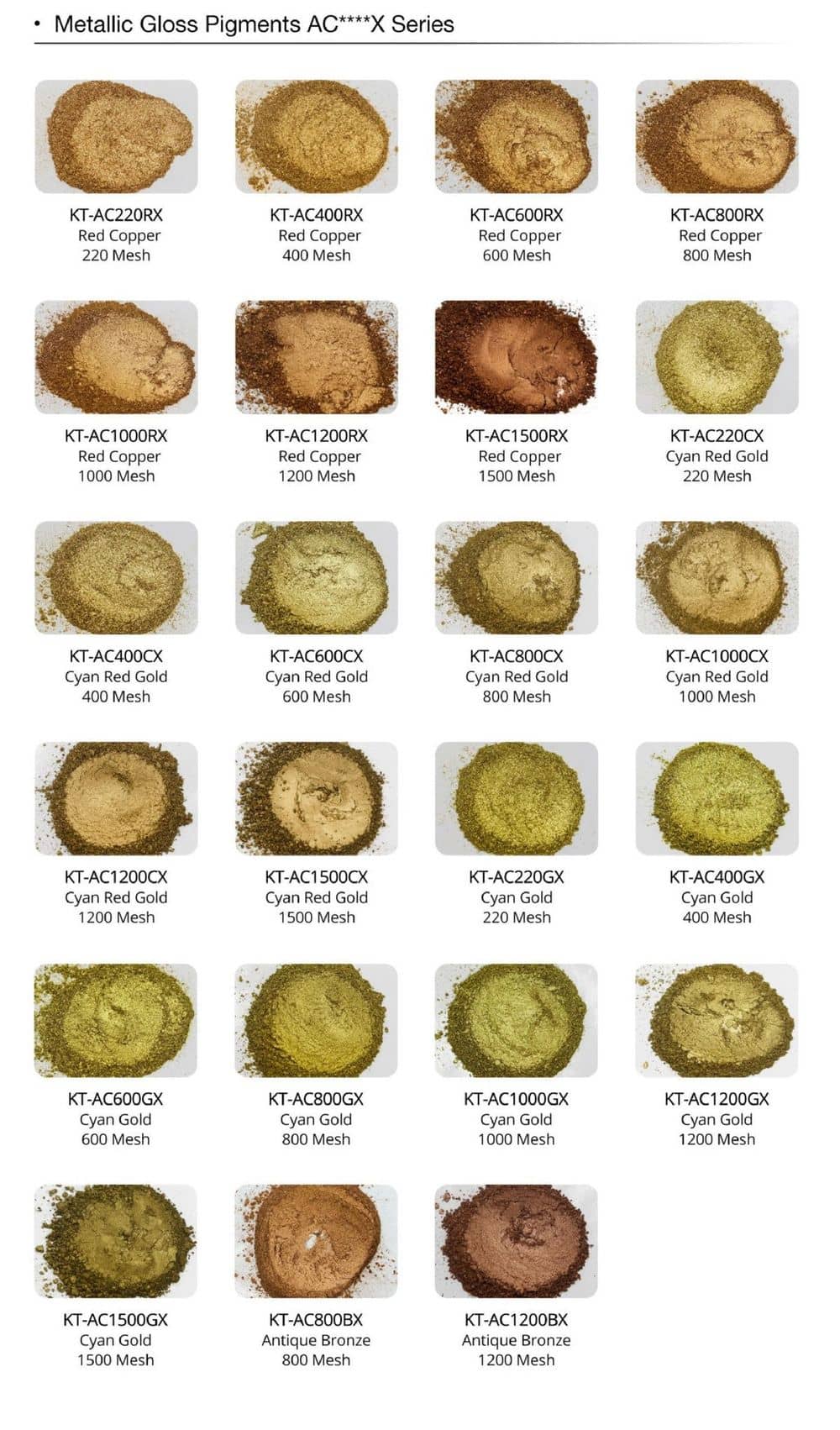
The Cyan Gold GX Series spans seven mesh sizes, giving formulators the flexibility to match particle fineness to their specific process and substrate. Coarser grades (220–800 mesh) produce a more textured, glittering metallic appearance suited to craft, decorative coatings, and thick-film applications. The fine grades — 800 mesh and above — are the range of choice for printing inks, fine coatings, and plastics masterbatch.
| Model Code | Mesh Size | Grade | Typical Applications |
|---|---|---|---|
| KT-AC220GX | 220 | Coarse | Craft, thick decorative coatings |
| KT-AC800GX (approx.) | 800 | Fine | Printing inks, decorative coatings |
| AC1000GX | 1000 | Fine | Printing inks, fine coatings, plastics masterbatch |
| KT-AC1200GX | 1200 | Very fine | Fine coatings, high-resolution printing |
| KT-AC1500GX | 1500 | Ultra fine | Specialty inks, precision coatings |
The GX series is part of a broader Gold Bronze Powder portfolio that includes related series for other color profiles: Red Copper RX Series (KT-AC220RX through KT-AC1500RX), Cyan Red Gold CX Series (KT-AC220CX through KT-AC1500CX), and Antique Bronze BX grades (KT-AC800BX, KT-AC1200BX). Formulators needing to coordinate metallic tones across a product range can select across these series to match color families while maintaining consistent particle-size behavior.
Copper-zinc alloy pigments cover a spectrum from warm yellow-gold through green-shifted cyan-gold to orange bronze and red copper, depending on alloy ratio and surface treatment. The GX series is tuned for the cyan-gold end of that range — a tone with enough warmth to read as gold but with a cooler undertone that distinguishes it from standard flavone or pale gold grades. At 1000 mesh, the color develops uniformly across the ink film without streaking or mottling.
Hiding power is excellent. Copper-zinc flakes are fully opaque by nature, and at the typical loading range of 3–8% in printing ink systems, AC1000GX provides complete substrate coverage. Unlike pearl pigments, which are semi-transparent and rely on substrate color to build the final effect, this grade delivers its metallic gold tone independently of what lies beneath.
One constraint formulators need to respect: copper-zinc alloy is pH-sensitive. Exposure to formulations with pH below 6 or above 9 can trigger a reaction that causes discoloration and gas generation. This applies to both solvent-based and water-based systems. In water-based inks specifically, bare unprotected bronze powder reacts with water to produce hydrogen — a hazard that also degrades the pigment itself. The AC-series designation indicates surface protection (silica, stearate, or polymer encapsulation) engineered for water-based compatibility, but the pH window must still be respected in the final formulation.
The material is also electrically conductive, as you would expect from a metal flake. That property is irrelevant in most printing ink contexts but is worth flagging for any specialty application where electrical insulation is a requirement.
The 800–1500 mesh range is the recommended window for printing ink applications, and AC1000GX sits at the midpoint of that range. It is the grade we see most consistently requested across packaging, label, gift wrap, greeting card, and security printing applications — contexts where the ink film is thin, the substrate surface is smooth, and the metallic finish needs to read cleanly without visible texture.
Beyond inks, the same fineness makes AC1000GX a viable option in fine decorative coatings (1000–1200 mesh range per our selection guide) and plastics masterbatch (800–1200 mesh range). For bulk plastics coloring or thick-film coatings where a more pronounced sparkle is acceptable, coarser grades in the GX series are a more economical choice.
This material is not cosmetic-grade. Metal pigments based on copper-zinc alloy are not approved for use in personal care products, and AC1000GX should not be specified for any application involving skin contact.
Metal flake pigments require low-shear dispersion to preserve the platelet geometry that produces the metallic reflection. High-speed dispersers fitted with Cowles-style blades work well for wetting and distributing AC1000GX at this particle size. Avoid ball mills and high-intensity rotor-stator mixers — both generate sufficient shear to deform or fracture the flakes, which softens the metallic effect and shifts the color toward a duller, matte tone.
Water-based ink formulation with bronze powder requires attention to two variables: surface protection and pH control. The AC-series grades are surface-treated for water-based compatibility, but the formulation pH must remain between 6 and 9 throughout the ink's shelf life — not just at the point of manufacture. pH drift over time in water-based systems is a real mechanism, and formulators should verify pH stability across the expected shelf period. If the formulation includes components that acidify on aging (certain resins, crosslinkers), buffer selection becomes relevant.
Store in sealed containers in dry conditions. Metal flakes oxidize gradually when exposed to air and moisture, which shifts the color and reduces metallic reflectance. Opened containers should be resealed promptly. SDS/MSDS documentation is supplied with all shipments.
Kolortek holds ISO 9001:2015 certification covering the production and sales of pigments and related materials. For REACH compliance, we provide documentation on request — note that REACH registration scope varies by grade, and product-specific confirmation should be sought for AC1000GX before import into the EU. No claims are made for FDA food-contact, RoHS, or Halal/Kosher suitability for this grade.
As a non-flammable solid, AC1000GX is not classified as hazardous for transport under standard freight regulations.
What mesh size of gold bronze powder is best for printing inks?
The recommended range for printing inks is 800–1500 mesh. At this fineness, individual metal flakes are not visible in the dried ink film, producing a smooth, uniform metallic surface. AC1000GX at 1000 mesh is the grade we see most frequently specified for packaging, label, and decorative print applications — it sits in the center of the recommended window and delivers excellent hiding power at loadings of 3–8%.
Can fine gold bronze powder bulk orders be used in water-based ink systems?
Yes, with the right grade and formulation controls. Unprotected copper-zinc alloy reacts with water, generating hydrogen gas and discoloration. Surface-treated grades — designated as the AC series at Kolortek — are engineered for water-based compatibility. The formulation pH must be maintained between 6 and 9; exposure outside this range will cause reaction and color shift regardless of surface treatment.
How does cyan gold bronze powder differ from a pearl gold pigment?
They are fundamentally different material types. Pearl gold pigments are semi-transparent mica flakes coated with metal oxides; their gold tone comes from interference color and depends heavily on substrate and viewing angle. Bronze powder like AC1000GX is actual copper-zinc metal — fully opaque, with a specular metallic reflection that does not shift with viewing angle in the same way. At equal loadings, bronze powder delivers higher opacity and a warmer, denser metallic character that interference pigments cannot replicate.
What other bronze and metallic grades does Kolortek supply in bulk?
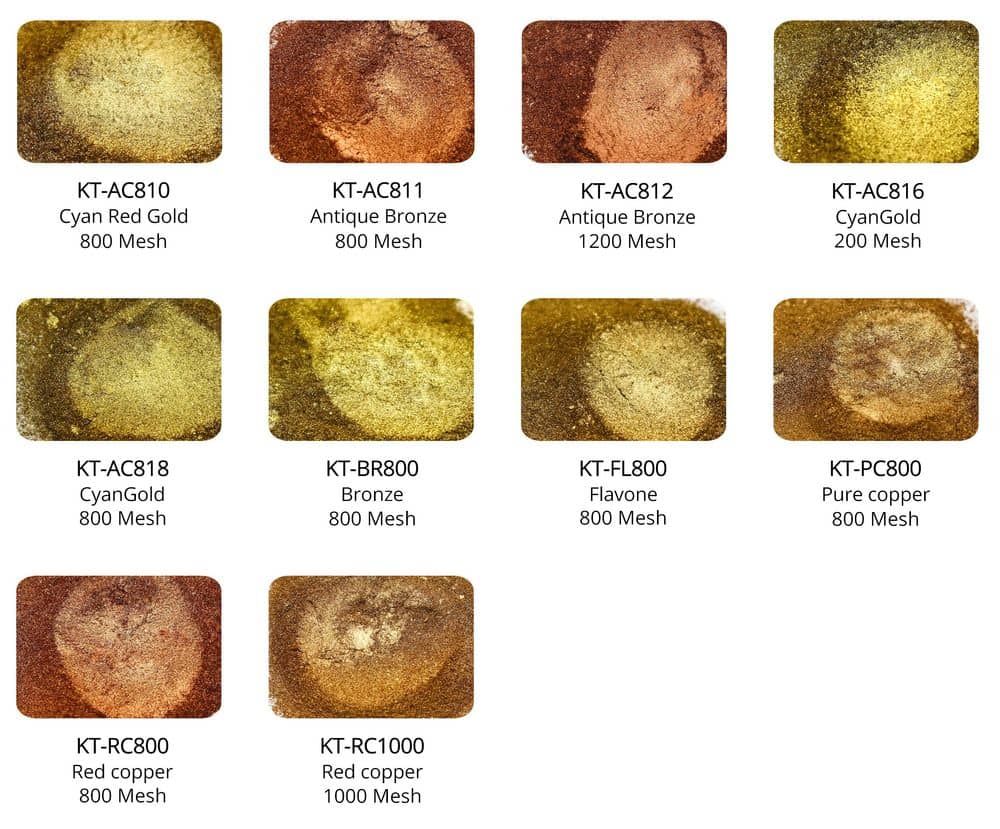
The Gold Bronze Powder portfolio includes several series covering different color profiles: the Cyan Gold GX Series (KT-AC220GX through KT-AC1500GX), Red Copper RX Series (KT-AC220RX through KT-AC1500RX), Cyan Red Gold CX Series (KT-AC220CX through KT-AC1500CX), and Antique Bronze BX grades (KT-AC800BX, KT-AC1200BX). Standard grades including KT-BR800 Bronze, KT-FL800 Flavone, KT-PC800 Pure Copper, and KT-RC800/KT-RC1000 Red Copper are also available.
Contact our technical team to discuss mesh size selection, water-based formulation compatibility, or volume requirements for your specific printing ink application.
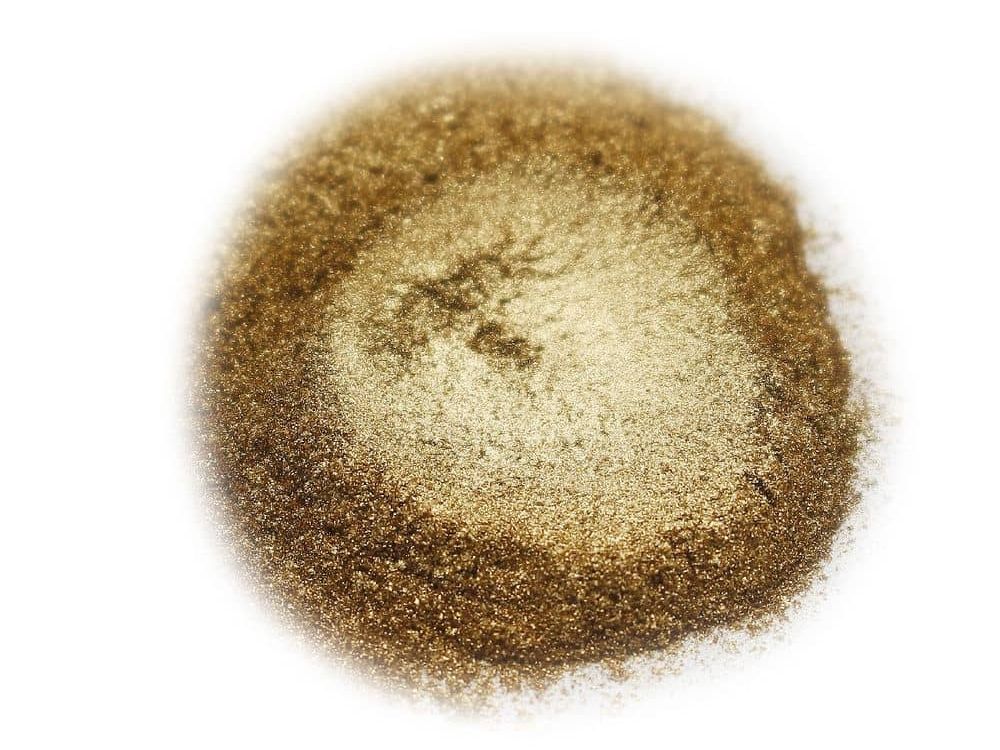
KT-AC810 is an 800-mesh cyan red gold bronze powder delivering smooth, uniform metallic coverage at 3–8% loading. From our experience in decorative coatings and printing inks, this fine-particle copper-zinc alloy provides opaque, true-metal reflection — ideal for packaging, gift wrap, and high-end craft applications where you need consistent gold bronze powder bulk performance without visible flake texture.
Read More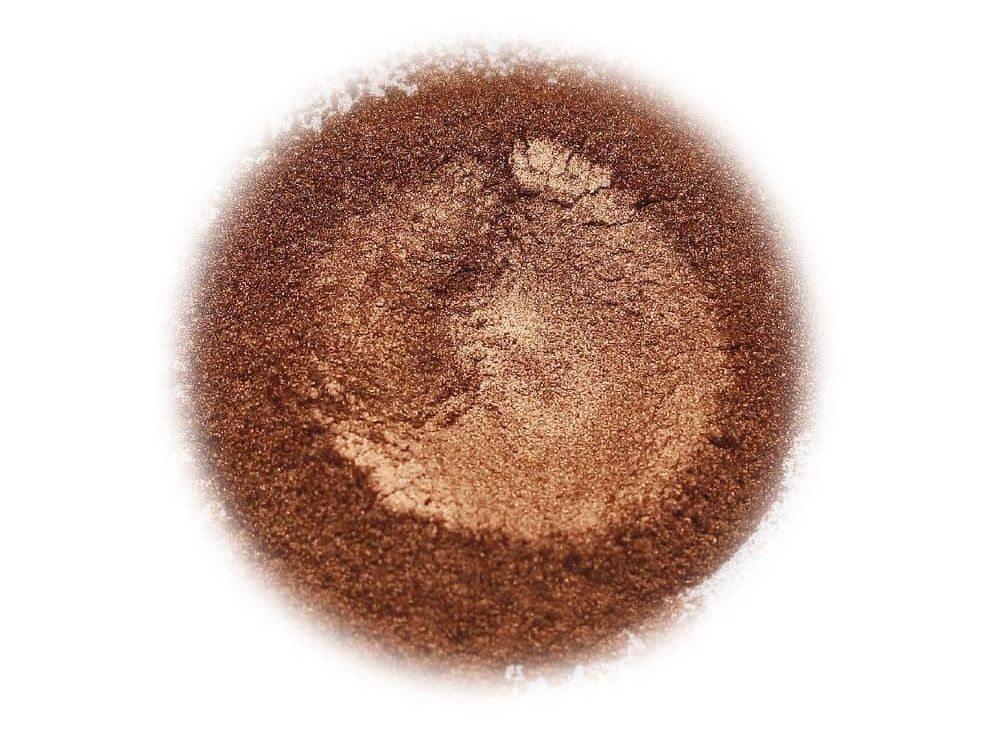
AC811 antique bronze metallic powder delivers genuine copper-zinc alloy metallic reflection at 800 mesh fineness — a smooth, uniform bronze finish you can't replicate with interference pigments. At Kolortek, we position this grade for printing inks, decorative coatings, and plastics where a true metallic surface is required. Typical loading is 3–8%, fully opaque, with excellent hiding power and thermal stability for high-temperature processing.
Read More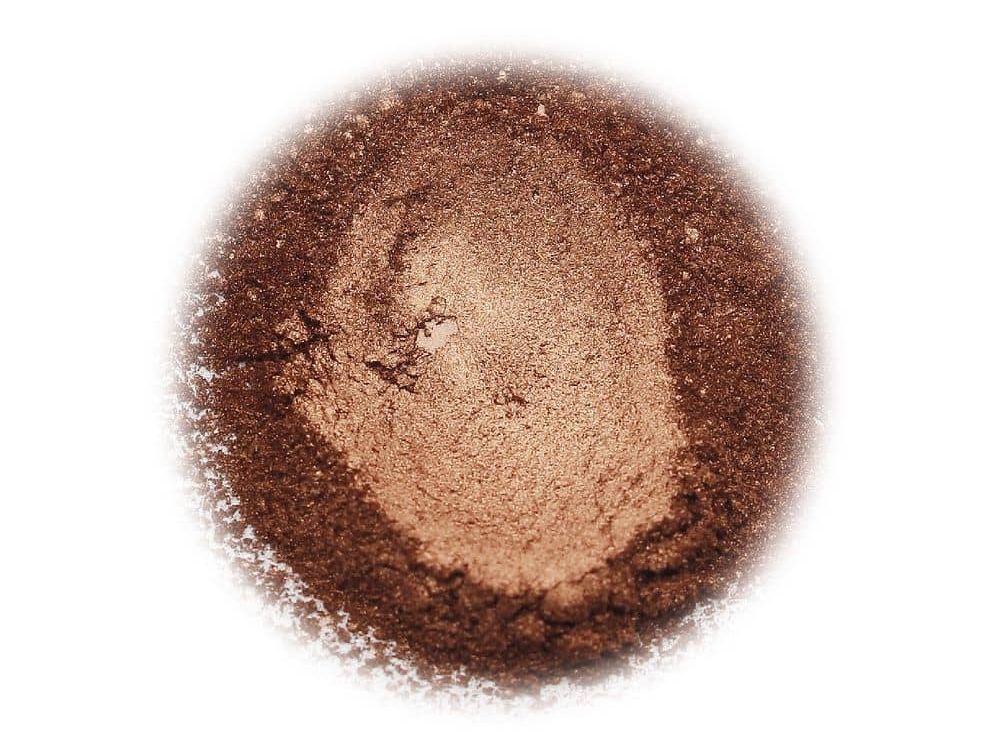
AC812 Antique Bronze is a 1200-mesh extra-fine metallic pigment from Kolortek's Gold Bronze Powder Series, delivering a silky-smooth antique bronze finish with exceptional opacity at 3–8% loading. We designed this copper-zinc alloy powder for high-quality printing applications and fine decorative coatings where a genuine metallic effect—not a pearlescent imitation—is required.
Read More
KT-AC816 is a cyan gold bronze powder manufactured by Kolortek from copper-zinc alloy, available at 200 mesh — a coarser grade that delivers maximum metallic sparkle and strong visual presence on the substrate. As a gold bronze powder manufacturer with over two decades of production experience, we supply this grade into decorative coatings, printing inks, plastics masterbatch, and craft applications where a bold, fully opaque gold-bronze effect is the primary requirement. Typical loading runs 3–8% for complete opacity.
Read More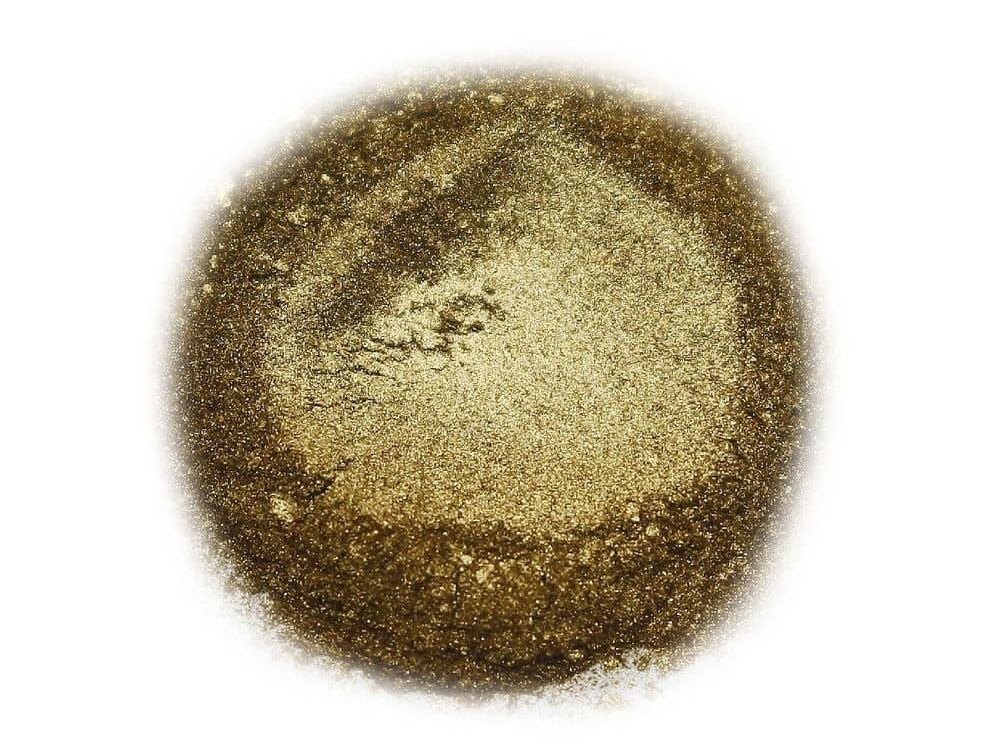
KT-AC818 Cyan Gold bronze powder is a fine-mesh metallic pigment designed for decorative coatings and plastics applications where a smooth, opaque gold finish with a cyan undertone is required. At 800 mesh particle size, this copper-zinc alloy powder delivers full hiding power at 3–8% loading and integrates into water-based systems when properly formulated, making it a practical choice for wholesale buyers sourcing plastics bronze powder or coating bronze powder in bulk.
Read More
For printing ink formulators who need a consistent, high-coverage metallic finish, our AC1000GX at 1000 mesh delivers a smooth cyan-gold metallic effect with excellent hiding power at loadings of 3–8%. As wholesale gold bronze powder sourced direct from our manufacturing facility, it is classified in our fine-grade range (800–1000 mesh), where individual flakes are no longer visible and the resulting print surface reads as a uniform, continuous metal tone — the grade we see specified most often for packaging, labels, and decorative print applications.
Read More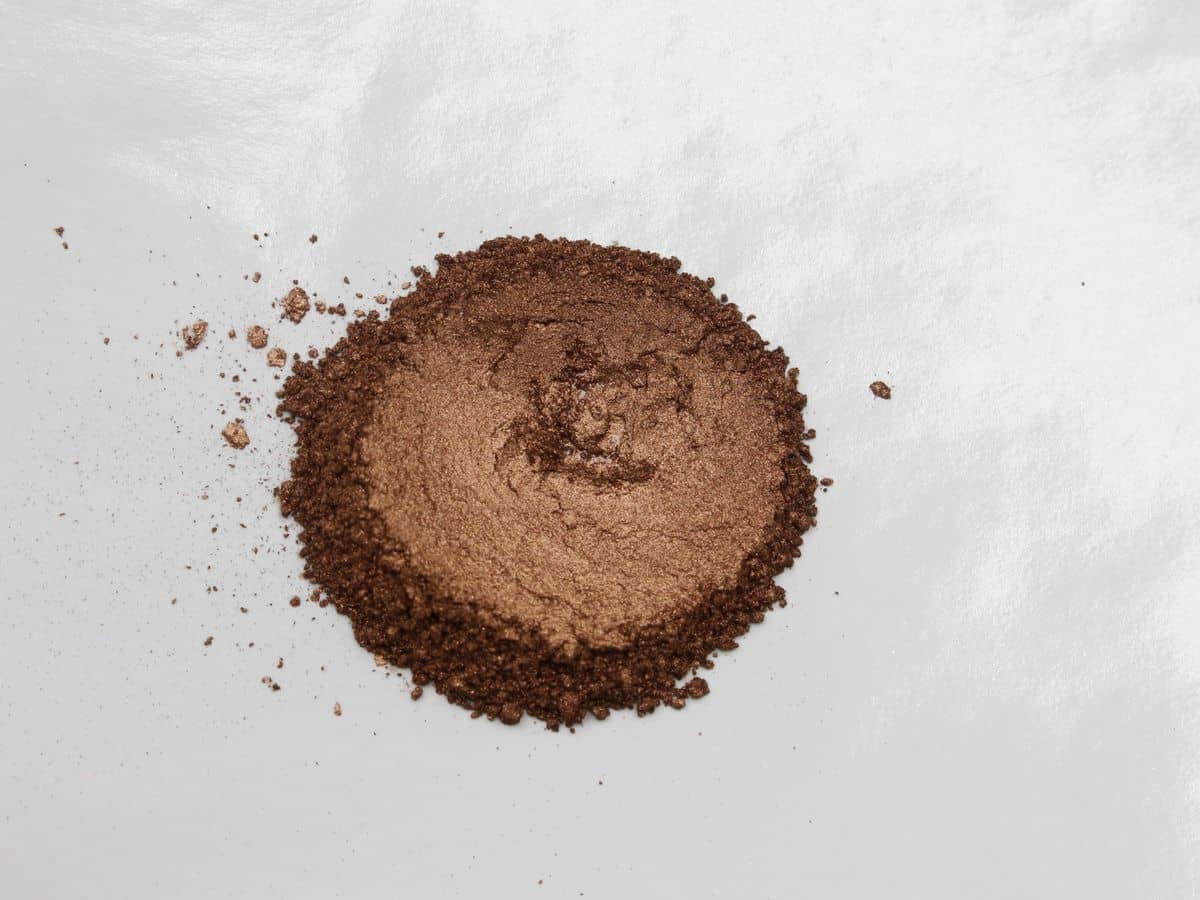
For printing ink formulators sourcing bulk antique bronze powder in extra-fine grades, the KT-AC1200BX delivers a genuine copper-zinc alloy metallic effect at 1200 mesh — classifying it as extra fine within our BX Series. At typical loadings of 3–8%, it achieves full opacity with a silky, smooth metallic finish well-suited to high-quality offset and gravure printing. The flake-based construction produces true metallic reflection, not a pearl or interference effect.
Read More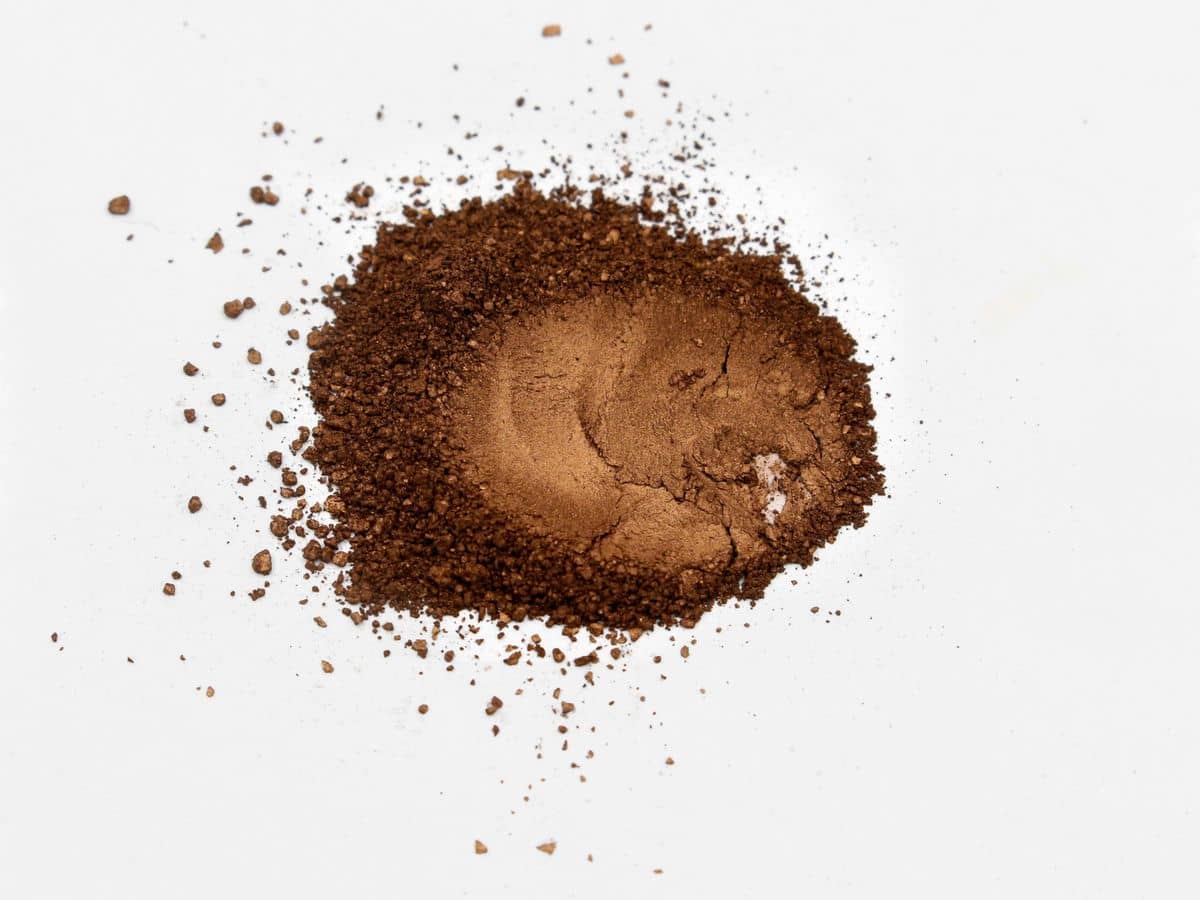
AC1500RX (KT-AC1500RX) is Kolortek's 1500-mesh extra-fine red copper gold bronze powder — a copper-zinc alloy metallic pigment delivering a true, opaque metallic finish in decorative coatings, printing inks, and plastics. As a dedicated red copper powder supplier, we produce this grade specifically for applications where a warm, rich copper tone and smooth, fine-particle surface are required. At 3–8% loading, it achieves full opacity with genuine metallic luster, not the soft sheen of mica-based interference pigments.
Read More
 English
 Français
 Deutsch
 Русский
 Español
 Português