
Leave A Message
If you are interested in our products and want to know more details,please leave a message here,we will reply you as soon as we can.
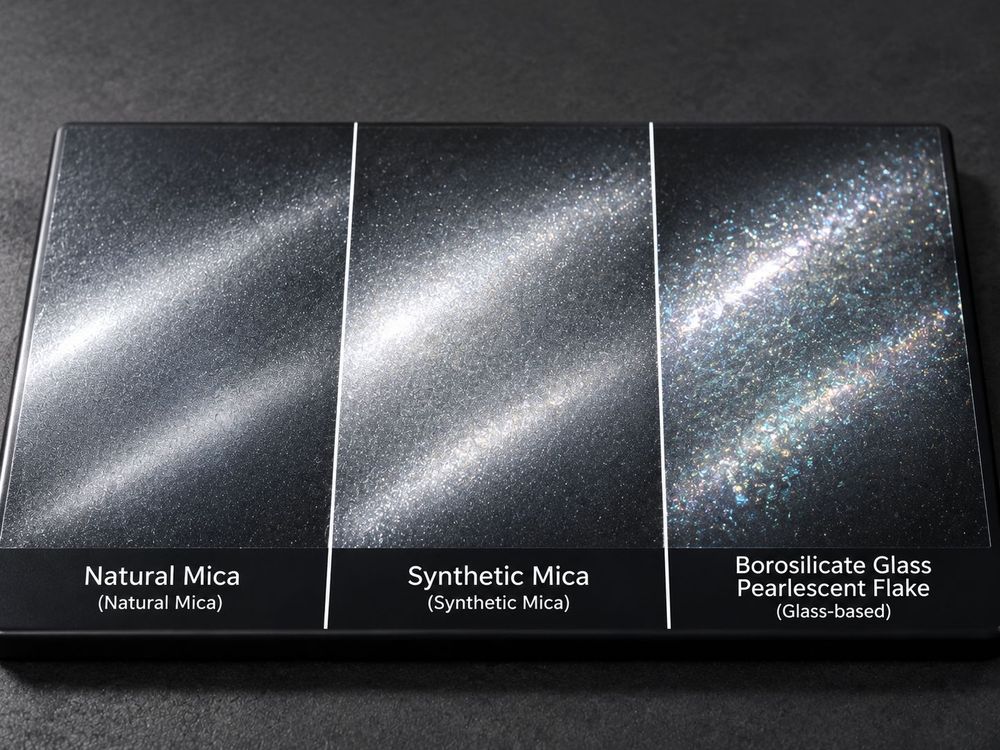
Kolortek supplies wholesale pearlescent pigment direct from our manufacturing facility in China — covering seven product series from standard natural mica grades to synthetic mica and borosilicate platforms, available in multiple particle size distributions. Whether you're scaling a new formulation or securing a reliable long-term supply chain, we work directly with formulators and procurement teams to match the right grade to the right application, with batch-to-batch consistency and full technical support from first sample to full-volume order.
Pearlescent pigments work through light interference and reflection on thin, layered flake particles — typically mica (natural or synthetic) or borosilicate glass — coated with metal oxides such as titanium dioxide or iron oxide. The visual effect depends on particle geometry, coating thickness, and how light passes through and reflects off each layer. This is fundamentally different from standard dye or opaque pigment coloring: the effect is structural, not purely chemical.
That distinction matters when you're evaluating a bulk supply source. Substrate platform, particle size distribution, and coating uniformity all directly affect luster intensity, color saturation, transparency, and compatibility with your resin or binder system. At Kolortek, we maintain three substrate platforms precisely because no single platform performs optimally across all end uses.
The table below maps our current series to their substrate, primary visual characteristics, and typical application fit. Each series is available across multiple particle size distributions — finer cuts favor even coverage and smooth texture; coarser cuts deliver higher sparkle and a more pronounced depth effect.
| Series | Substrate | Visual Effect | Primary Applications |
|---|---|---|---|
| KT-100 Silver White | Natural mica | Clean, bright white pearl luster | Coatings, plastics, inks, cosmetics |
| KT-200 Interference | Natural mica | Interference colors: gold, red, violet, blue, green | Automotive coatings, inks, cosmetics |
| KT-300 Gold | Natural mica | Metallic gold, bronze, copper tones; excellent weatherability | Architectural coatings, industrial, decorative inks |
| KT-500 Metal Luster | Natural mica | High-brilliance metallic effect | Plastics, powder coatings, industrial coatings |
| KT-6000 Multicolor | Natural mica | Interference base + inorganic absorption colorants; full-spectrum saturated colors | Plastics, coatings, inks; cosmetic suitability depends on regional regulations |
| KT-7000 Synstar | Synthetic mica (fluorphlogopite) | Brighter whiteness, enhanced sparkle, high purity | Cosmetics, high-end coatings, automotive refinish |
| KT-8000 DreamStar | Borosilicate (calcium sodium borosilicate glass flake) | Exceptional transparency and brilliance; smooth, sophisticated shimmer | Cosmetics, nail lacquers, premium coatings |
Our pearlescent pigment lines are formulated and tested across a wide range of industrial and decorative end uses. The right series depends less on a generic "performance tier" and more on what your substrate, process, and regulatory environment actually require.
For automotive OEM and refinish applications, the KT-200 Interference Series gives formulators precise control over interference color at defined coating thicknesses. The KT-300 Gold Series is a practical choice in architectural and industrial coatings where weatherability is a documented requirement. KT-500 Metal Luster grades deliver high-brilliance metallic effects suited to powder coatings, where thermal processing and electrostatic application put different demands on particle behavior than liquid systems.
In plastics processing, particle size selection becomes particularly important — coarser particles increase shear sensitivity during compounding, while finer distributions integrate more consistently in masterbatch. We supply grades across the natural mica platform (KT-100, KT-500, KT-6000) for injection molding, extrusion, and blow molding applications. KT-6000 Multicolor is used where a saturated color-luster combination is needed without resorting to organic dyes.
Cosmetic applications require both performance and regulatory compliance. The KT-7000 Synstar Series, built on REACH-registered fluorphlogopite, is the go-to platform where ingredient transparency matters — the synthetic substrate eliminates the variability and sourcing concerns associated with mined mica. The KT-8000 DreamStar borosilicate series brings a different quality to cosmetics: the glass flake substrate produces a clean, glass-like shimmer that reads differently from mica under skin-tone conditions, and is well-suited to nail lacquers and emulsion-based products.
For cosmetic buyers, we provide composition documentation supporting EU Cosmetics Regulation (EC) No 1223/2009 compliance, and we supply grades formulated to meet applicable US FDA color-additive requirements. Grade-level confirmation is required — broad certifications do not automatically extend to every SKU.
Ink applications span a wide viscosity and process range. Particle size selection again drives compatibility: gravure and flexo require finer distributions to clear anilox cell geometry and avoid streaking, while screen printing accommodates coarser grades that deliver more visible sparkle on the substrate. The KT-100 Silver White and KT-200 Interference series are the most commonly specified across ink systems.
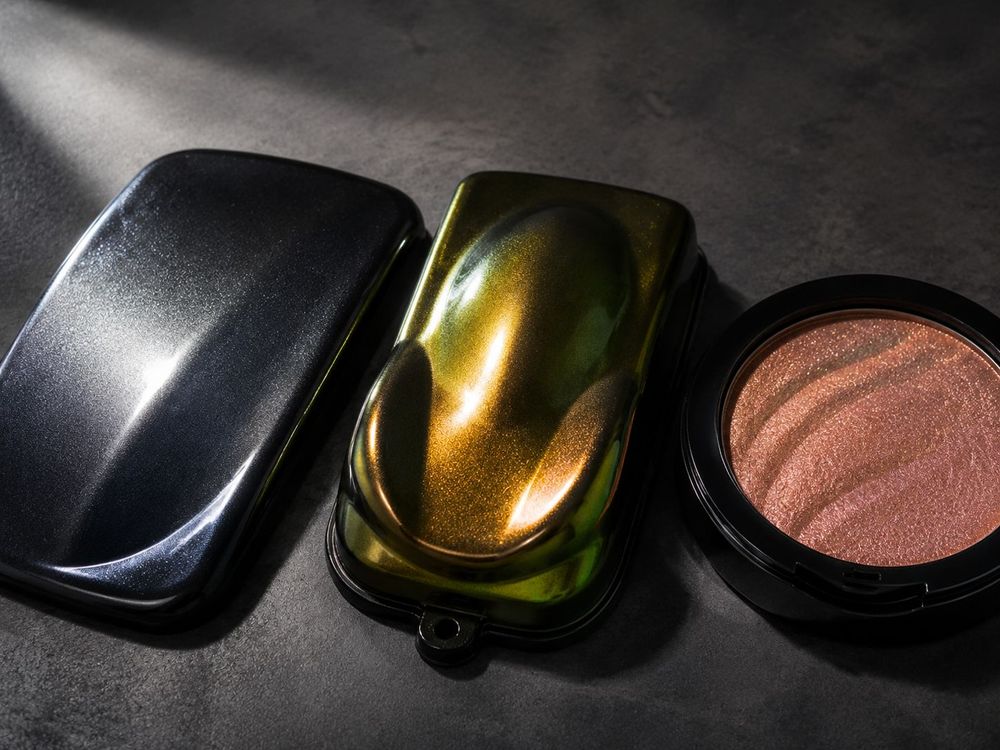
One of the more practical questions we get from technical buyers is whether to specify natural mica, synthetic mica, or borosilicate — and the answer isn't simply about performance tier. Each platform has a distinct profile:
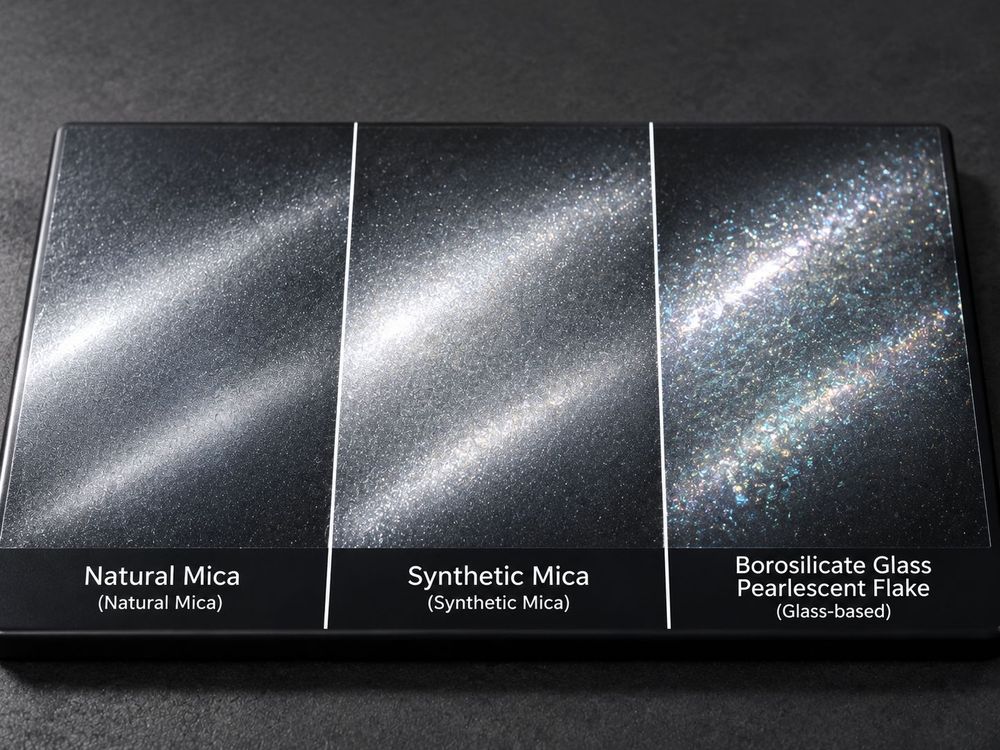
In practice, some formulation programs run two platforms in parallel — natural mica grades for industrial volume and synthetic mica or borosilicate grades for cosmetic or regulated end uses. We support that kind of split supply without requiring minimum order tiers across both.
Factory-direct supply from China introduces legitimate questions about quality management, documentation, and regulatory compliance. Here is what is verifiable on our end:
One thing we hear consistently from customers transitioning from other manufacturers is that compliance documentation gaps are where bulk purchases from unfamiliar sources create real downstream problems — especially in cosmetics and food-contact adjacent applications. We try to be explicit about what is covered and what requires grade-specific confirmation rather than issuing broad statements that don't hold up under audit.
What is the difference between natural mica and synthetic mica pearlescent pigments?
Natural mica is a mined mineral substrate; synthetic mica (fluorphlogopite) is produced under controlled conditions, yielding higher purity, brighter whiteness, and a more consistent crystal structure. Kolortek's KT-7000 Synstar Series uses synthetic mica and is REACH-registered, making it the preferred platform for cosmetic applications and for buyers with ESG sourcing requirements. Natural mica grades (KT-100 through KT-6000) remain the standard for high-volume industrial and coating applications.
Which pearlescent pigment series is suitable for automotive coatings?
The KT-200 Interference Series is the most commonly specified for automotive OEM and refinish coatings, providing interference colors — gold, red, violet, blue, and green — on natural mica. The KT-300 Gold Series is a documented option where weatherability is a primary requirement. For very high-brilliance metallic effects in industrial or automotive topcoats, the KT-500 Metal Luster Series is the relevant grade range. Particle size selection within each series affects flop angle and sparkle intensity.
Are Kolortek pearlescent pigments compliant with EU cosmetics regulations?
Cosmetic-grade options are available with supporting documentation for EU Cosmetics Regulation (EC) No 1223/2009. The KT-7000 Synstar (synthetic mica, REACH-registered) and KT-8000 DreamStar (borosilicate) series are the primary platforms for cosmetic end uses. Compliance is confirmed at the grade level — not as a blanket statement — because suitability depends on the specific model and intended application region. Contact our technical team with the target formulation type for grade-specific documentation.
Can I source bulk pearl luster pigment in multiple particle sizes from a single supplier?
Yes. Each Kolortek product series is available across multiple particle size distributions, covering the range from fine coverage grades to coarser high-sparkle grades within the same color/effect family. This allows a formulator or masterbatch producer to standardize on a single supplier and series while selecting the particle cut that fits the specific process — injection molding, gravure ink, pressed powder cosmetic, or otherwise. Small-order accommodation is available for qualification runs before scaling to full bulk volumes.
Contact our technical team to discuss formulation requirements, request grade-specific compliance documentation, or confirm particle size availability for your application.
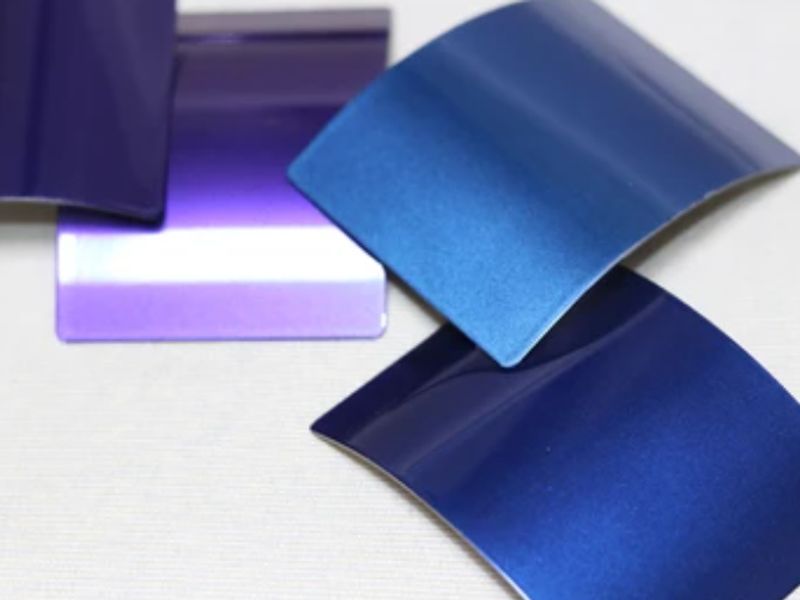
Merck's Iriodin line has been a reference standard in effect pigments for decades. Strong luster, consistent particle size distribution, broad color range — the reasons formulators specify it are well understood. The question that comes up more often now isn't whether Iriodin performs, but whether it's the only option worth specifying.
Read More
Kolortek supplies wholesale pearlescent pigment direct from our manufacturing facility in China — covering seven product series from standard natural mica grades to synthetic mica and borosilicate platforms, available in multiple particle size distributions. Whether you're scaling a new formulation or securing a reliable long-term supply chain, we work directly with formulators and procurement teams to match the right grade to the right application, with batch-to-batch consistency and full technical support from first sample to full-volume order.
Read More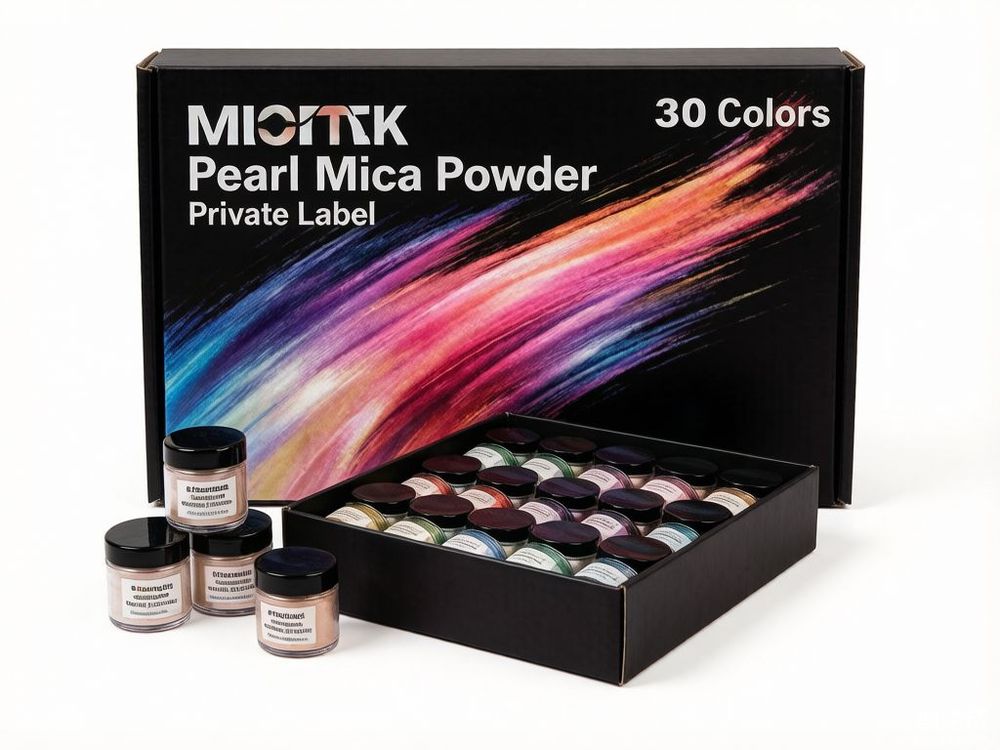
Private label pearlescent mica pigment manufacturing allows brands to source factory-direct effect pigments with custom packaging and branding—eliminating middleman markup while maintaining full control over product presentation. At Kolortek, we produce natural and synthetic mica-based pearlescent pigments across multiple series (KT-100 Silver White, KT-200 Interference, KT-300 Gold, KT-500 Metal Luster, KT-6000 Multicolor, KT-7000 Synstar synthetic mica) and offer OEM/ODM services from sample sachets to bulk industrial containers, enabling cosmetic brands, coatings formulators, and specialty ink manufacturers to launch branded pigment lines without capital investment in production infrastructure.
Read More
 English
 Français
 Deutsch
 Русский
 Español
 Português