
Leave A Message
If you are interested in our products and want to know more details,please leave a message here,we will reply you as soon as we can.
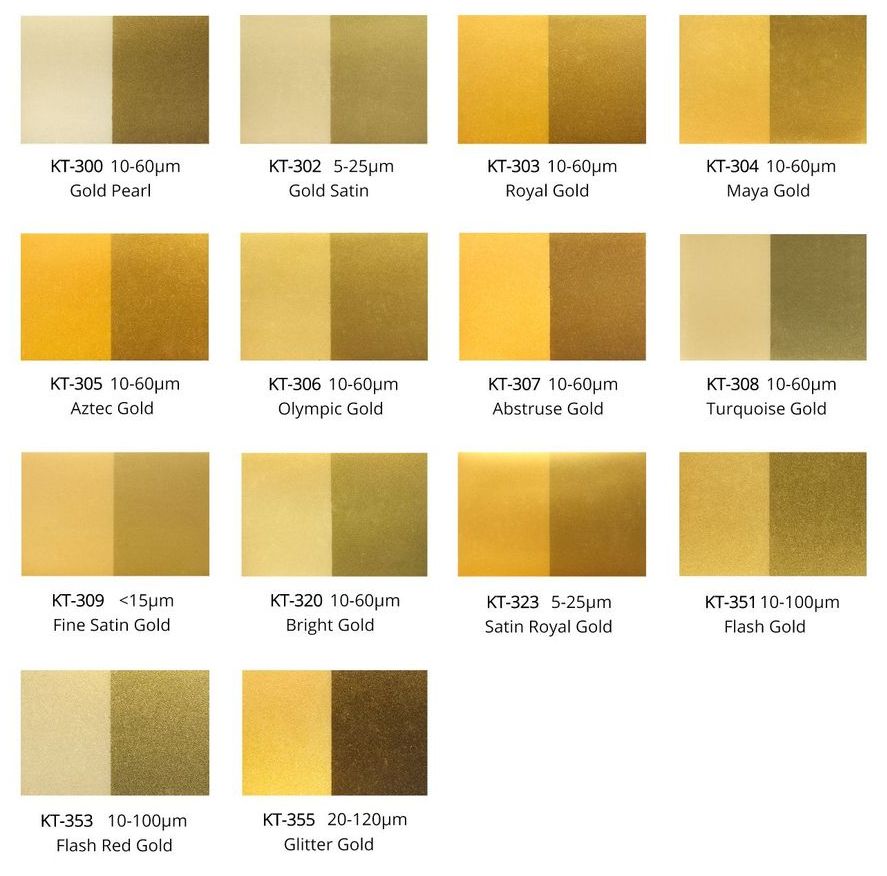
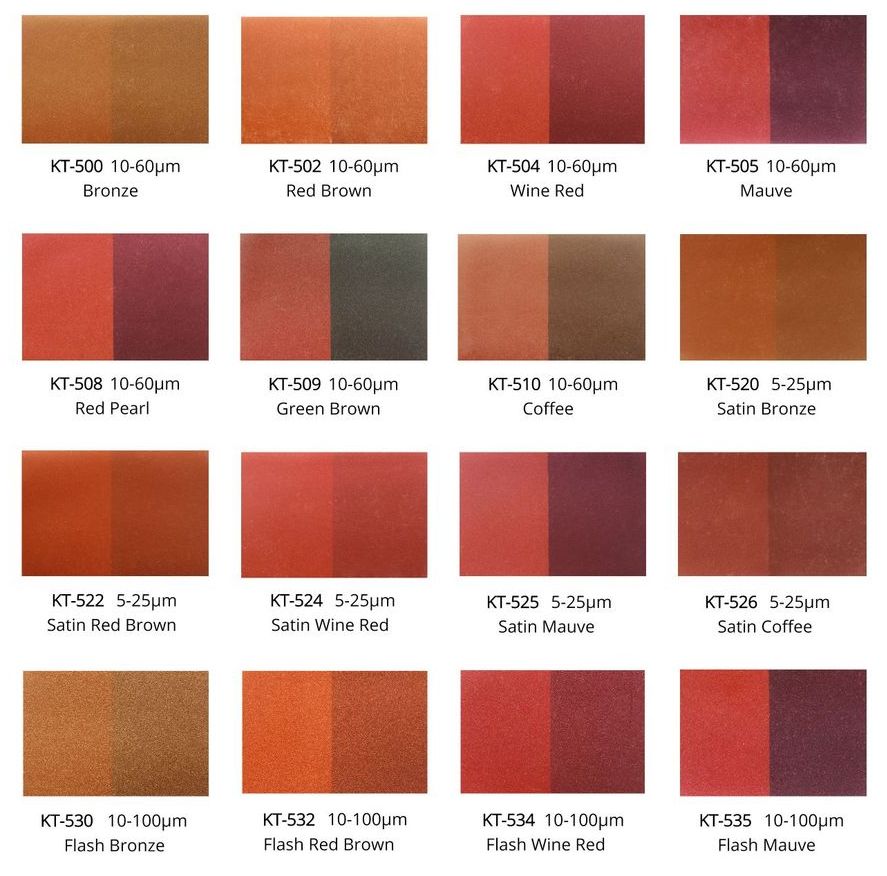
Merck's Iriodin line has been a reference standard in effect pigments for decades. Strong luster, consistent particle size distribution, broad color range — the reasons formulators specify it are well understood. The question that comes up more often now isn't whether Iriodin performs, but whether it's the only option worth specifying.
Item No. :
Pearlescent PigmentsColor Effect :
Silver White, Interference, Gold, Metal LusterParticle Size :
various particle sizes from fine to coarseComposition :
MicaBrand :
KolortekMOQ :
25 KGMerck's Iriodin line has been a reference standard in effect pigments for decades. Strong luster, consistent particle size distribution, broad color range — the reasons formulators specify it are well understood. The question that comes up more often now isn't whether Iriodin performs, but whether it's the only option worth specifying.
It isn't. Kolortek's pearlescent pigment series covers the same functional territory — mica-TiO₂ and mica-iron oxide systems, silver white through metallic luster, interference effects across the visible spectrum — with direct model-to-model equivalency across the most commonly specified Iriodin grades. For coating and paint formulators running qualification trials or looking to diversify supply, the transition is more straightforward than most expect.
The core pearlescent range spans six series. Each is built on natural mica substrates coated with metal oxides — primarily TiO₂, iron oxide, and tin oxide — to produce specific optical effects through thin-film interference. The Borosilicate Series uses synthetic fluorophlogopite as the base, giving cleaner color and higher brightness where that matters.
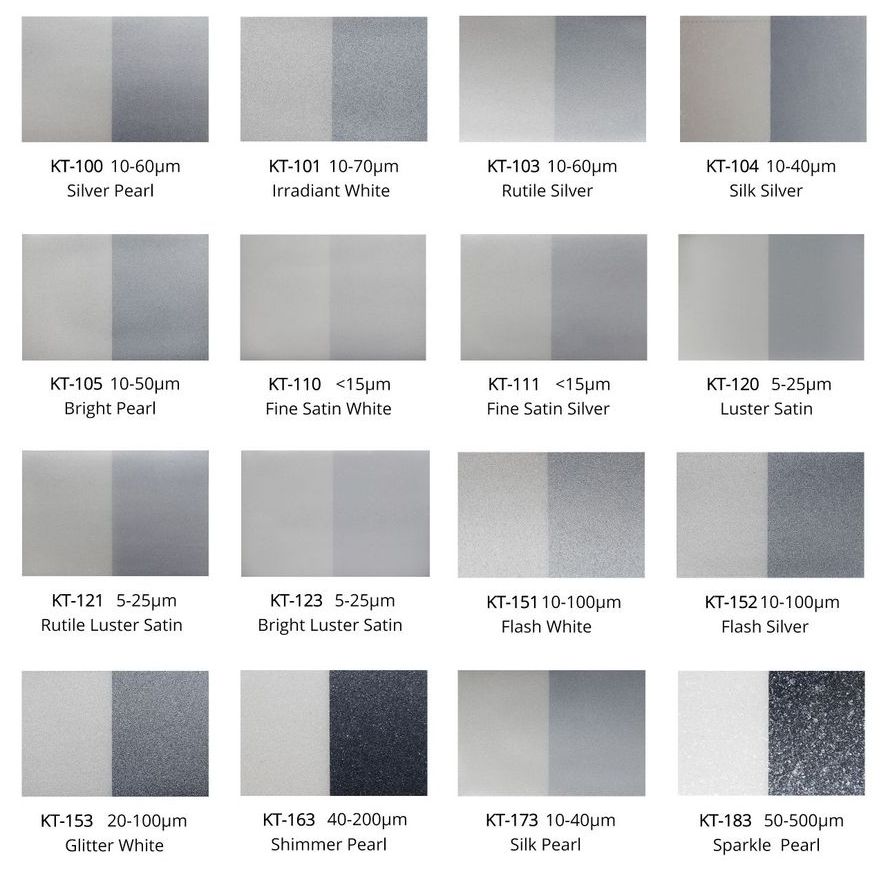
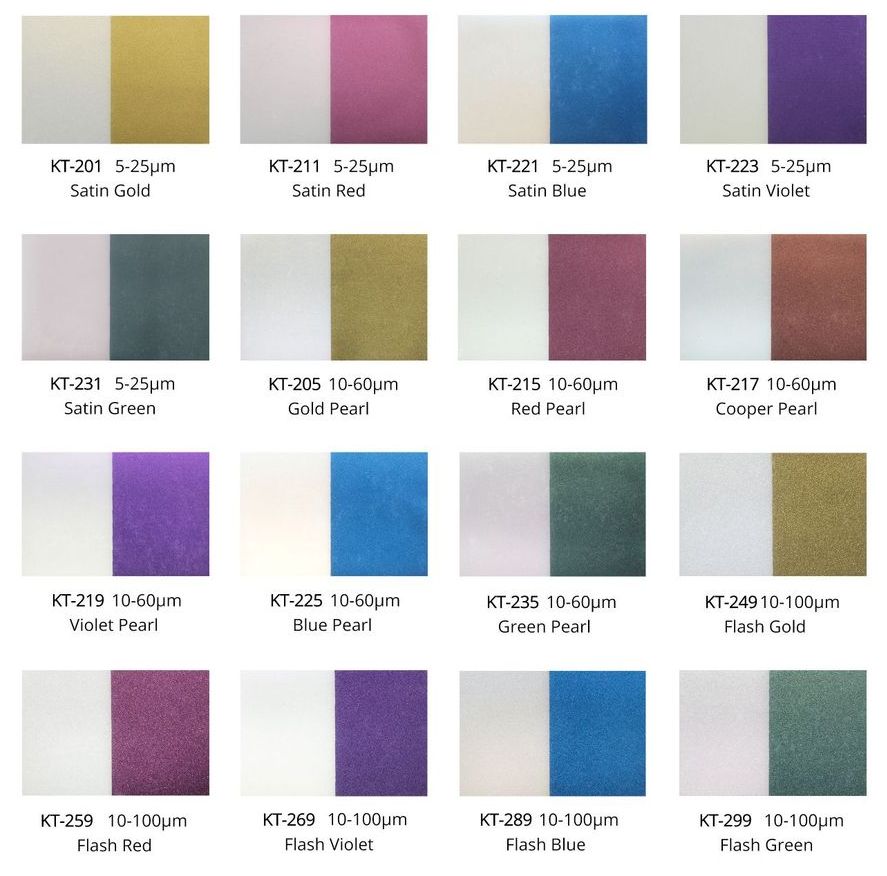
The table below maps the most commonly specified Iriodin grades to their Kolortek equivalents. Effect type, substrate chemistry, and particle size range are matched. As with any cross-reference, minor batch-to-batch differences in surface treatment or refractive index may require a quick drawdown comparison before full substitution.
| Iriodin Grade | Kolortek Equivalent | Effect / Color | Series |
|---|---|---|---|
| Iriodin 100 | KT-100 | Silver White Satin | Silver White |
| Iriodin 103 | KT-103 | Silver White Fine | Silver White |
| Iriodin 151 | KT-151 | Silver White Sparkle | Silver White |
| Iriodin 153 | KT-153 | Silver White Glitter | Silver White |
| Iriodin 163 | KT-163 | Silver White Coarse | Silver White |
| Iriodin 201 | KT-201 | Interference Gold | Interference |
| Iriodin 205 | KT-205 | Interference Gold Fine | Interference |
| Iriodin 215 | KT-215 | Interference Red Fine | Interference |
| Iriodin 219 | KT-219 | Interference Red | Interference |
| Iriodin 221 | KT-221 | Interference Blue | Interference |
| Iriodin 225 | KT-225 | Interference Blue Fine | Interference |
| Iriodin 231 | KT-231 | Interference Green | Interference |
| Iriodin 235 | KT-235 | Interference Green Fine | Interference |
| Iriodin 249 | KT-249 | Interference Violet | Interference |
| Iriodin 259 | KT-259 | Interference Violet Coarse | Interference |
| Iriodin 300 | KT-300 | Gold Satin | Gold |
| Iriodin 303 | KT-303 | Gold Fine | Gold |
| Iriodin 304 | KT-304 | Gold Medium | Gold |
| Iriodin 305 | KT-305 | Gold Fine Satin | Gold |
| Iriodin 306 | KT-306 | Gold Sparkle | Gold |
| Iriodin 309 | KT-309 | Gold Coarse | Gold |
| Iriodin 323 | KT-323 | Bright Gold | Gold |
| Iriodin 351 | KT-351 | Gold Glitter | Gold |
| Iriodin 353 | KT-353 | Gold Glitter Fine | Gold |
| Iriodin 355 | KT-355 | Gold Glitter Coarse | Gold |
| Iriodin 500 | KT-500 | Bronze Satin | Metal Luster |
| Iriodin 502 | KT-502 | Bronze Fine | Metal Luster |
| Iriodin 504 | KT-504 | Bronze Medium | Metal Luster |
| Iriodin 505 | KT-505 | Bronze Sparkle | Metal Luster |
| Iriodin 510 | KT-510 | Copper | Metal Luster |
| Iriodin 520 | KT-520 | Red Bronze | Metal Luster |
| Iriodin 522 | KT-522 | Red Bronze Fine | Metal Luster |
| Iriodin 524 | KT-524 | Red Bronze Medium | Metal Luster |
| Iriodin 530 | KT-530 | Red | Metal Luster |
| Iriodin 532 | KT-532 | Red Fine | Metal Luster |
| Iriodin 534 | KT-534 | Red Medium | Metal Luster |
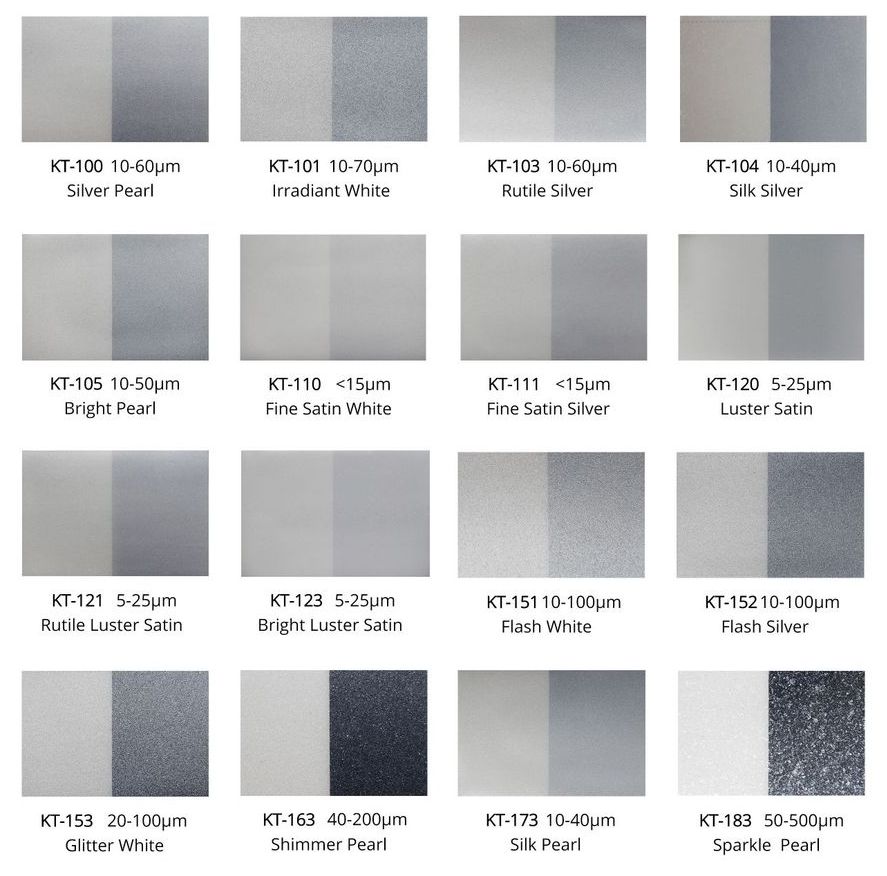
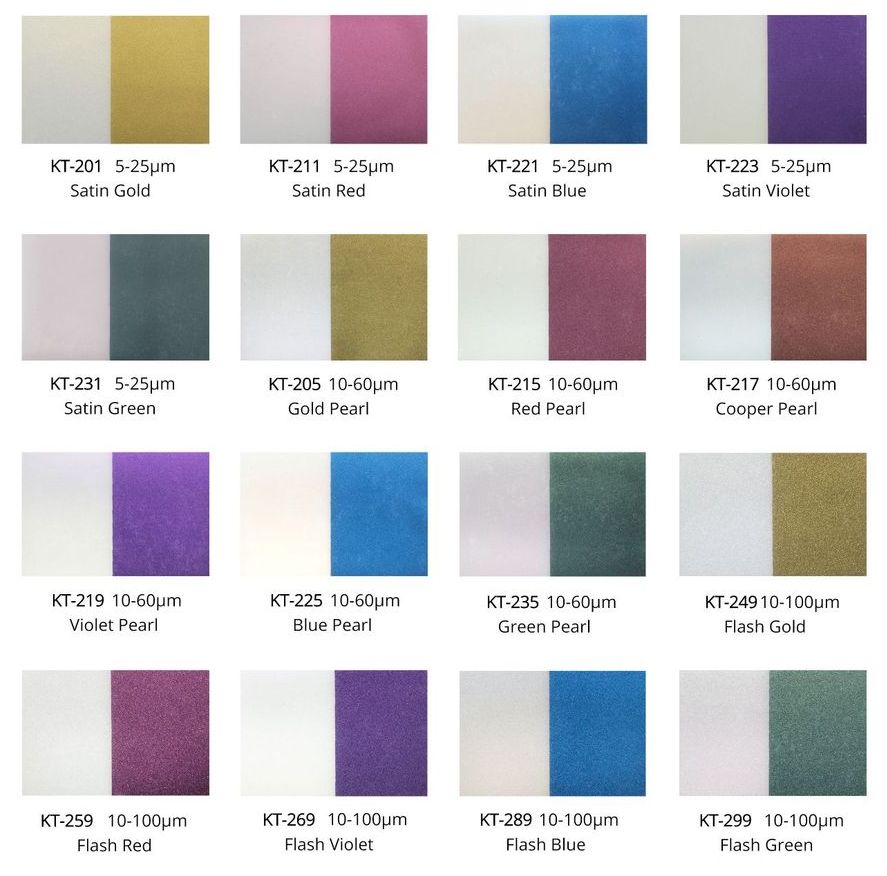
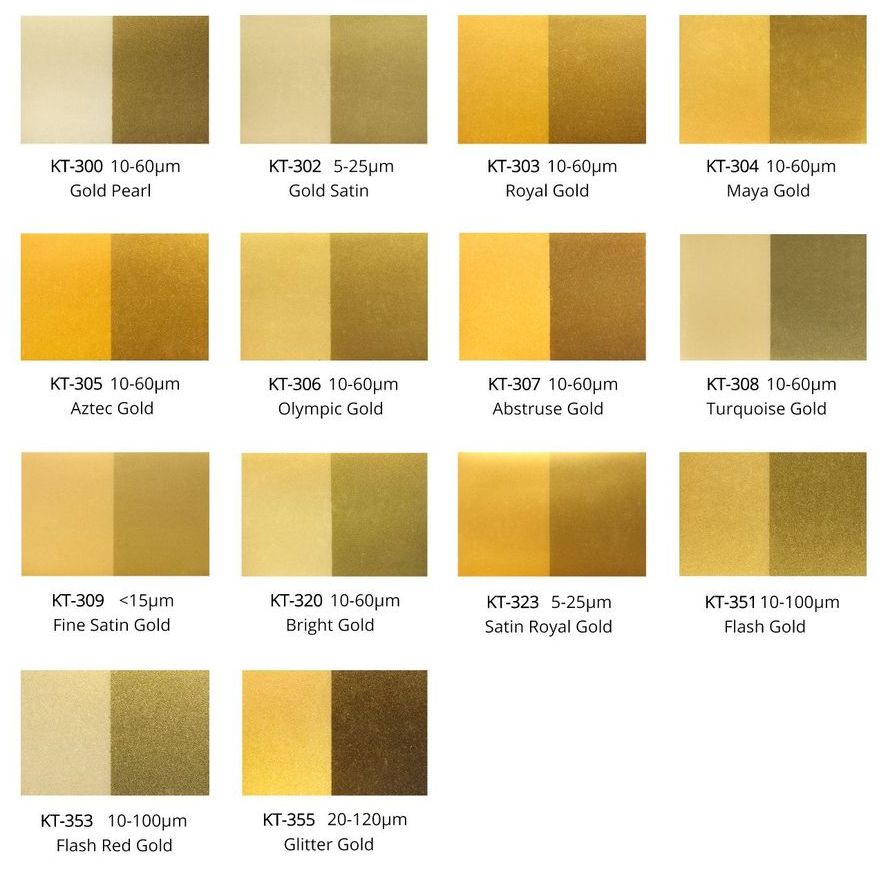
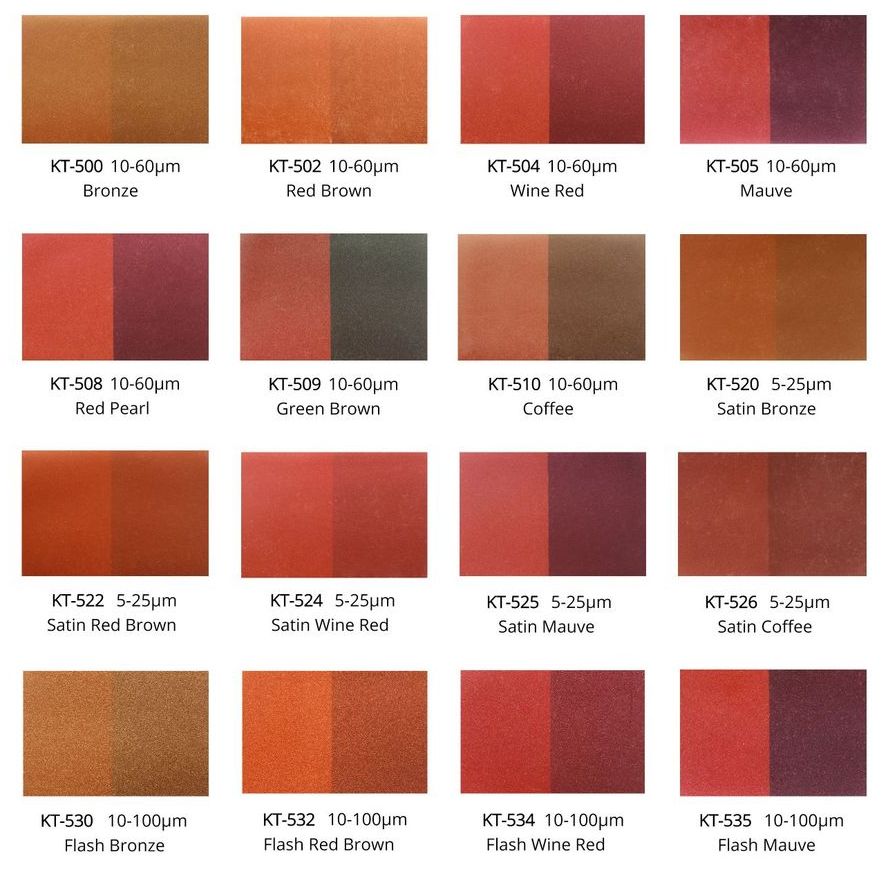
These pigments are designed for industrial and decorative coatings, architectural paints, automotive refinish, printing inks, and specialty finishes. The Silver White and Interference grades are the most common in waterborne and solventborne topcoats where transparency and depth are priorities. The Gold and Metal Luster grades show up more in wood coatings, metallic decorative paints, and effect ink systems where warm tone and hiding power work together.
In practice, particle size selection matters more than the color designation for most coating applications. Finer grades (5–25 µm) give smoother, more uniform luster with better film transparency. Coarser grades (50–200 µm) are specified where visible sparkle is the design intent — exterior decorative coatings, specialty finishes, or craft applications where tactile visual texture is required.
The Borosilicate Series is worth considering for applications that demand exceptional whiteness or where mica trace element content needs to be minimized — certain high-end architectural coatings and regulated end-use markets have moved in this direction.
TiO₂-coated mica pigments — which covers the Silver White and Interference series — are chemically inert under normal coating conditions. They're stable in both acid and alkaline systems within working pH ranges, and they don't bleed, migrate, or react with resin systems the way organic colorants can. That stability is part of why they've remained the baseline for effect pigments across so many systems.
The iron oxide grades (Gold and Metal Luster series) carry strong opacity in addition to their color. That dual function — both effect and concealment — makes them useful in single-coat systems where you'd otherwise need a separate hiding layer.
Interference pigments produce their characteristic dual-color flip through thin-film optical interference, not absorption. The reflected color and transmitted color are complementary. This means the effect reads differently depending on whether the coating is applied over a light or dark substrate — something to account for early in formulation, not at the drawdown stage.
Dispersion method is critical. Pearlescent pigments should not be subjected to high-shear mixing — ball mills, high-speed dissolvers running above 1500 RPM, or prolonged bead milling will fracture the platelets and degrade luster. Low-shear paddle mixing or gentle roll mixing is standard. Add the pigment last, after the base formulation is complete.
Pigment loading typically runs 2–8% by weight in coating systems, depending on particle size and target effect intensity. Finer grades may tolerate slightly higher loading without compromising transparency. Coarser grades tend to settle faster — adequate thickener or anti-settling agent should be part of the formulation from the start.
Compatibility with most standard resin systems — alkyd, acrylic, polyurethane, nitrocellulose — is generally straightforward. The mica substrate doesn't interact with these chemistries. That said, surface-treated grades behave differently from untreated grades in terms of wettability and dispersion speed; check the TDS for the specific product before assuming standard dispersion parameters carry over.
For waterborne systems, pay attention to pH stability. Most of these pigments are stable across pH 4–10, but aggressive alkaline environments can affect TiO₂ coating integrity over time, particularly in open-pot or long-shelf-life formulations.
Supply chain diversification is the most common driver. Single-source dependency on any one supplier — including Merck — carries real procurement risk. Having a qualified merck pearlescent pigments alternative on the approved supplier list gives purchasing teams flexibility when lead times extend or pricing shifts.
Cost structure is another factor. Direct-from-manufacturer pricing, without distributor margins built in, can be meaningful at volume. This is especially relevant for formulators running high-volume industrial coating lines where effect pigment usage is measured in tonnes rather than kilograms.
Merck's Iriodin line has been a reference standard in effect pigments for decades. Strong luster, consistent particle size distribution, broad color range — the reasons formulators specify it are well understood. The question that comes up more often now isn't whether Iriodin performs, but whether it's the only option worth specifying.
Read More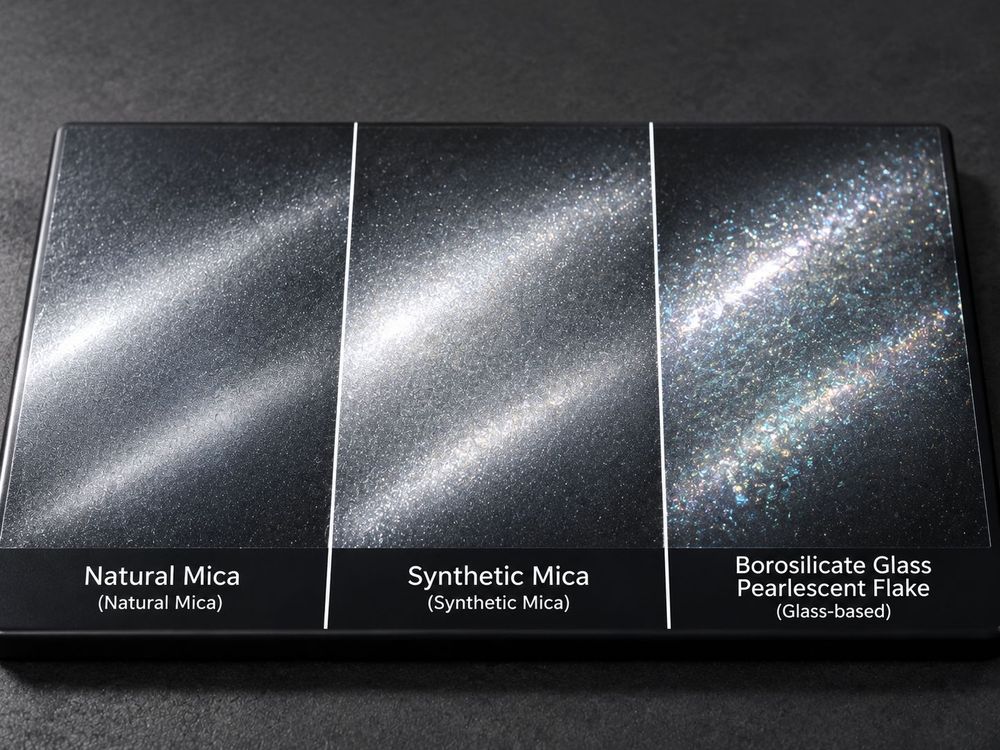
Kolortek supplies wholesale pearlescent pigment direct from our manufacturing facility in China — covering seven product series from standard natural mica grades to synthetic mica and borosilicate platforms, available in multiple particle size distributions. Whether you're scaling a new formulation or securing a reliable long-term supply chain, we work directly with formulators and procurement teams to match the right grade to the right application, with batch-to-batch consistency and full technical support from first sample to full-volume order.
Read More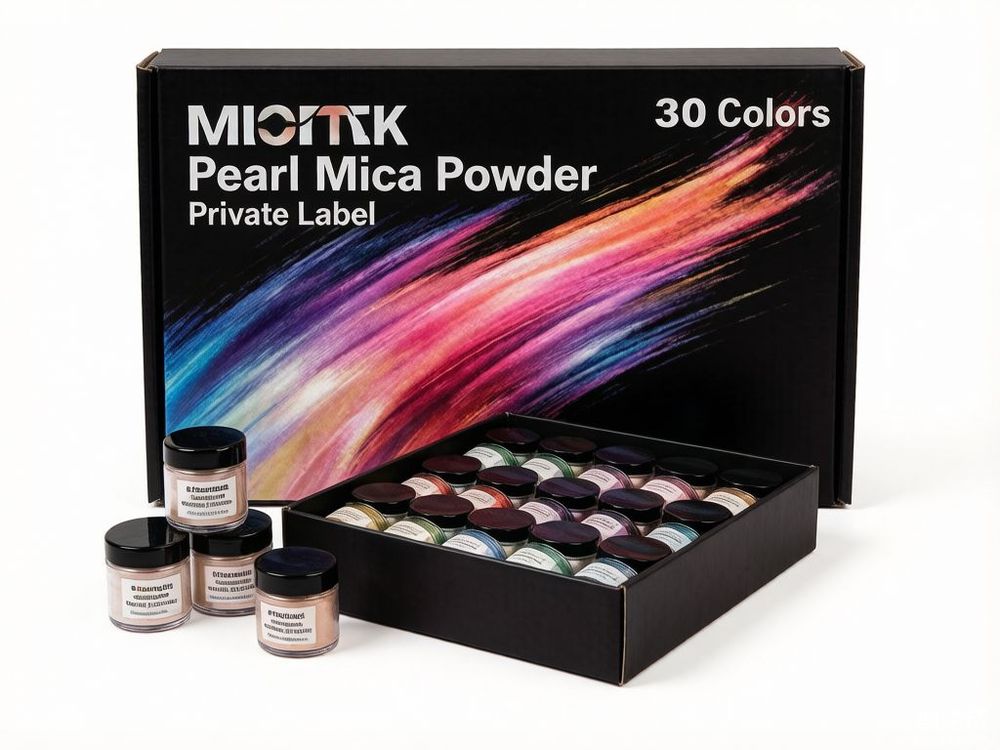
Private label pearlescent mica pigment manufacturing allows brands to source factory-direct effect pigments with custom packaging and branding—eliminating middleman markup while maintaining full control over product presentation. At Kolortek, we produce natural and synthetic mica-based pearlescent pigments across multiple series (KT-100 Silver White, KT-200 Interference, KT-300 Gold, KT-500 Metal Luster, KT-6000 Multicolor, KT-7000 Synstar synthetic mica) and offer OEM/ODM services from sample sachets to bulk industrial containers, enabling cosmetic brands, coatings formulators, and specialty ink manufacturers to launch branded pigment lines without capital investment in production infrastructure.
Read More
 English
 Français
 Deutsch
 Русский
 Español
 Português