Leave A Message
If you are interested in our products and want to know more details,please leave a message here,we will reply you as soon as we can.
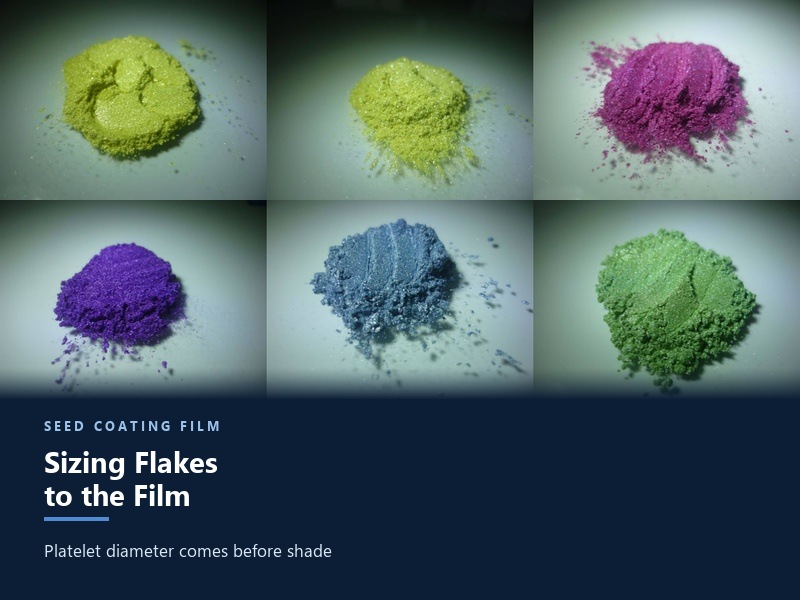
A seed coating film dries at 20 to 50 μm while a pearl platelet measures 10 to 100 μm. Sizing the flake to the film decides whether colour stays on the seed.
A seed coating line lays down a dry film roughly 20 to 50 μm thick. A standard pearl pigment platelet measures 10 to 100 μm across. At the coarse end that platelet is wider than the film meant to hold it, and no amount of colour testing fixes it. Sizing the flake to the film is the first decision on this line, and it comes before shade, before finish and before price.
At a Glance
A coated seed carries more than one layer. There is a base slurry that binds to the seed coat, a layer carrying the pigment and often the crop protection product, and a polish layer on the outside to stop the seeds sticking to each other in the bag. The pigment travels in the middle layer, and everything about how it looks is decided by how that layer dries around it.
A mica platelet is flat. Its thickness is a small fraction of its diameter, so when it settles out of a water-based slurry it lands face-down. That is the behaviour we want: a face-down platelet reflects light as a flat mirror, and thousands of them lying the same way produce the pearl effect. The same behaviour is what creates the constraint.
A face-down platelet occupies very little vertical space; it needs room for its diameter, not its thickness. If the diameter sits comfortably under the dried film, the platelet is fully embedded and the surface stays flat. If the diameter approaches the film thickness, the two edges of the platelet meet the surface from underneath and the film has to stretch over them — a small bump when it stretches, a break along the platelet edge when it cannot.
Both outcomes are decided by a number the customer already has and rarely volunteers: the dry film thickness of the line the seed will run on.
Formulators on this line have been writing the limit down for years. Seed coating patent literature describes effect pigments for seed coating at 15 μm or smaller, or 60 μm or smaller, depending on the layer they go into. That pairing is worth reading twice. It is not a marketing range; it is the size at which a platelet still behaves as part of the film instead of an inclusion in it.
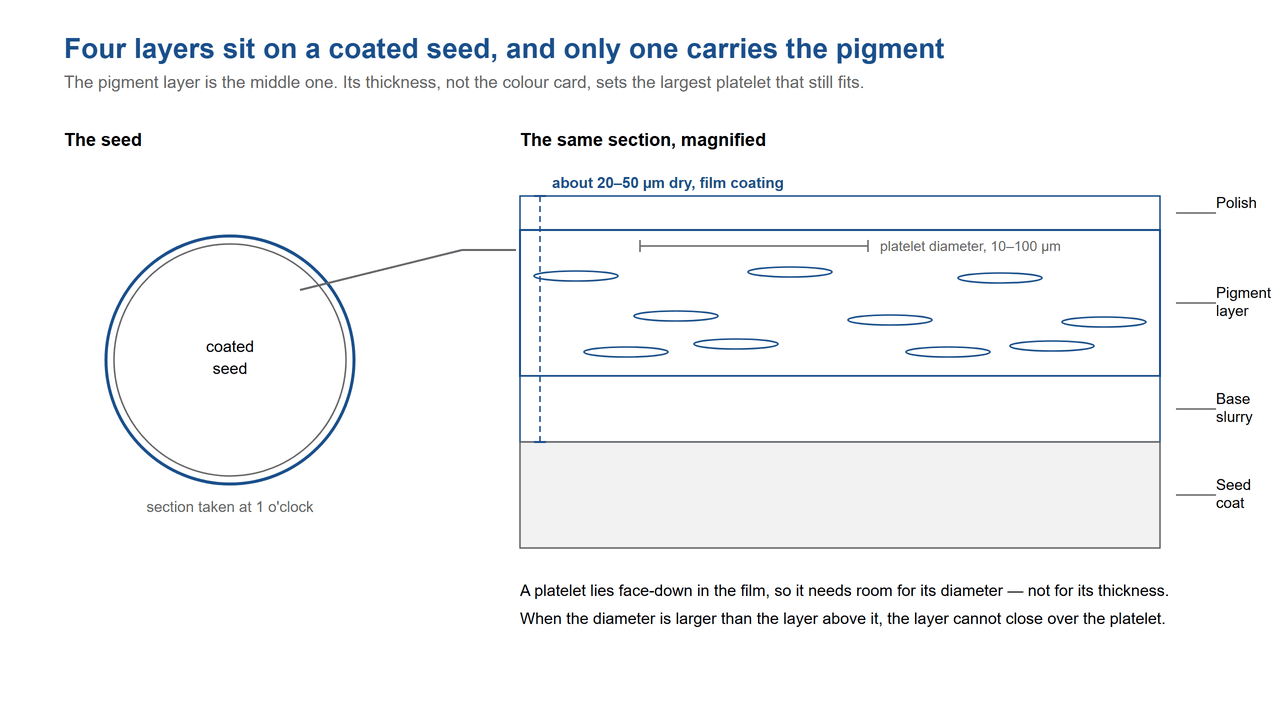
Figure 1. Four layers on a coated seed. The pigment travels in the third, which is also the layer whose thickness limits the platelet size.
Seed coating is not one process. The three routes used in practice build very different amounts of material onto the seed, and the difference is large enough that a grade which works on one route will fail on another. Asking which route the customer runs is a more useful first question than asking which colour they want.
A thin layer that changes appearance without changing seed size or shape. The seed still has to flow through a planter at its original dimensions, so the film stays thin — in the region of 20 to 50 μm dry. This is the route where the size constraint bites hardest, and the one where fine grades in the 5 to 25 μm band are used.
Material is built up until the seed is rounded, with weight gains around 30 per cent. The build-up is thick enough that a mid-range platelet has room, so 10 to 60 μm becomes usable and the coarser grades give a stronger visual signal.
Small or irregular seed is built up into a larger pellet so that it can be sown with standard equipment. Here the pigment sits deep inside a thick shell, and coarse platelets up to 200 μm can be used without ever meeting the outer surface. On this route appearance is mostly a batch marker rather than a finish.
| Process | What it does to the seed | Build-up | Platelet band that fits |
|---|---|---|---|
| Film coating | Appearance only, size unchanged | About 20–50 μm dry | 5–25 μm |
| Encrusting | Rounds the seed, weight gain near 30% | Tens of μm, uneven | 10–60 μm |
| Pelleting | Builds small seed into a pellet | A shell, not a film | 40–200 μm |
Read the third column against the fourth and the rule is visible without a formula: the platelet band sits just under the build-up, never above it.
Three cases cover almost everything we see on a coating line, and only one of them is what the spec sheet was written for.
The platelet sits fully inside the film, face-down and flat. Orientation is uniform, so the reflection is uniform and the surface stays sealed. Coverage is the weak point at this size, not appearance: fine platelets scatter less light per unit weight, which is why fine grades are usually run at a higher loading than coarse ones to reach the same visual weight.
Now the film has to drape over each platelet. Most platelets survive it, but the ones lying at a slight angle do not lie flat any more — and a platelet that is tilted reflects to a different place than its neighbours. On a coated seed this reads as light and dark speckling rather than an even pearl. Nothing is wrong with the pigment; the size band is simply wrong for the film.
The platelet can no longer be buried. Its edges reach the surface, the film thins to nothing over the highest point, and the platelet itself becomes part of the outer surface. This is the case that produces the two complaints we hear together: a surface that looks uneven, and colour that ends up in the bottom of the bag.
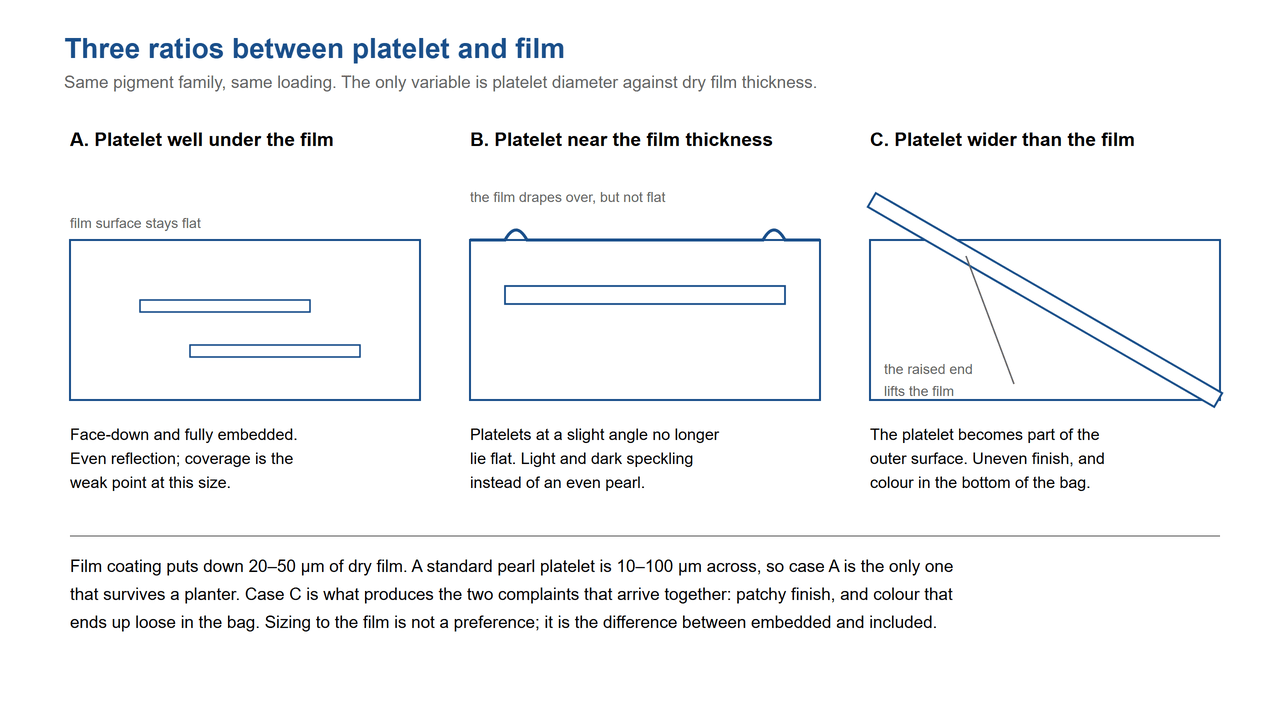
Figure 2. The same platelet at three ratios to film thickness. Only the left-hand case keeps the film continuous.
The general sequence on a coating pan is well established, and the pigment has exactly one correct place in it. Water and binder go in first. Build-up powder follows if the route needs it. The pigmented slurry is sprayed on while the pan turns, the batch is run for around 10 to 15 minutes to let the layer distribute, and the cycle repeats. Polish powder goes on at the end, and the batch is screened for size.
The pigment belongs in the spray slurry, never dusted on dry. A dry platelet dropped onto a tacky surface does not disperse; it clumps where it lands, and a clump behaves in the film exactly like one oversized particle — the failure you were trying to avoid, only worse.
Wetting decides whether the grade behaves as specified. A platelet that has not been wetted out stays in small stacks, and a stack reflects as one thick flake instead of several thin ones — a mixing question, not a pigment question.
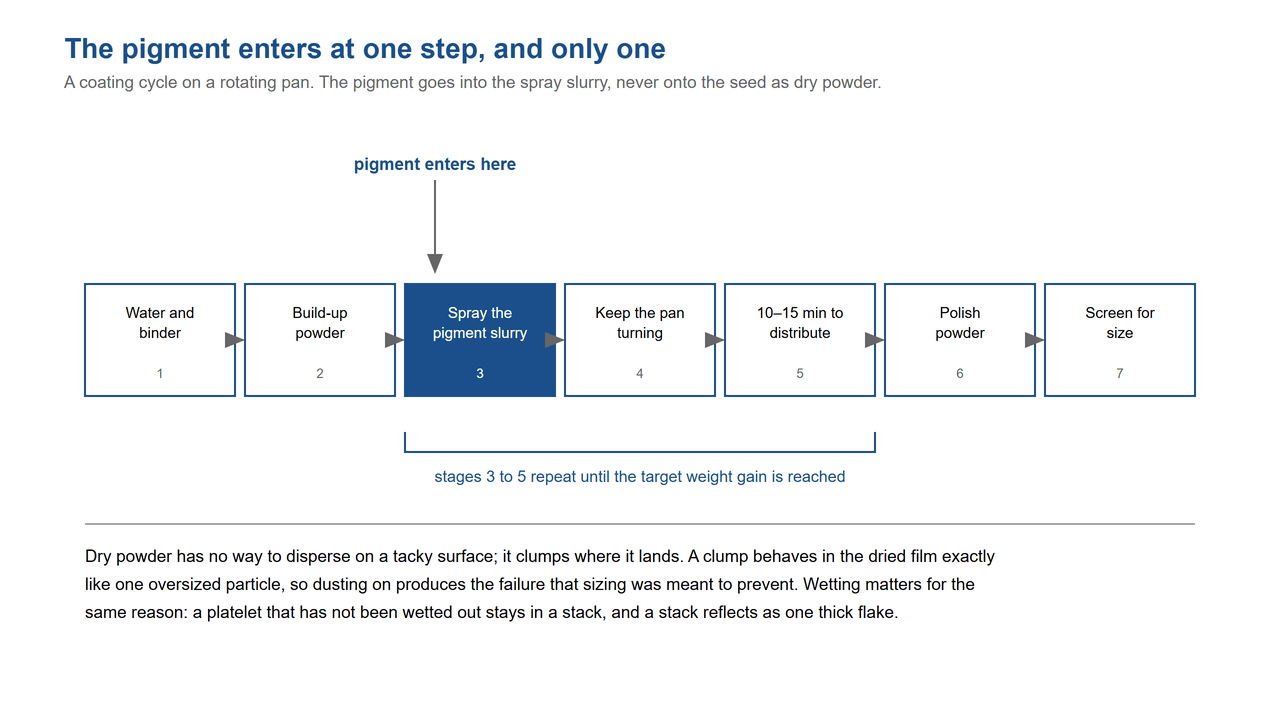
Figure 3. The seven stages of a coating cycle. The pigment enters at stage three, in the spray slurry.
Pearl pigments do not colour by absorbing light. They colour by reflecting it, which means loading behaves differently from a conventional pigment. Below a certain level there is not enough platelet area to build a reflection and the film looks weak. Above a certain level the platelets start to overlap each other, light stops passing through the film, and the effect turns flat and milky.
In plastics the working range is usually quoted at 0.5 to 2 per cent by weight. Seed coating has no single equivalent figure, because the number is set by slurry solids, the weight gain the route allows and the target appearance — all three belong to the customer's recipe. What transfers is the shape of the curve, not the number on it.
Overloading carries a second cost that has nothing to do with appearance. Extra platelet volume displaces binder, and a film with less binder is a more brittle film. On a seed that has to survive a planter, brittle is the failure that shows up last and hurts most.
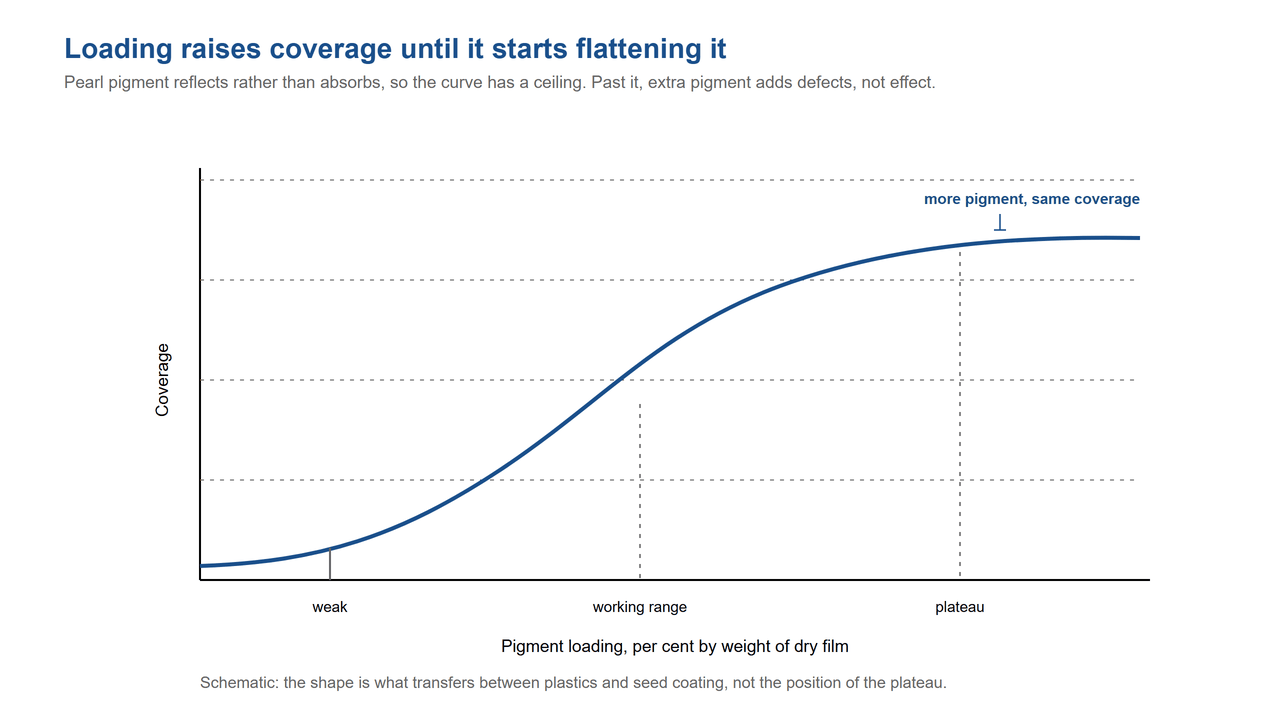
Figure 4. Coverage against loading. The plateau is where extra pigment stops adding effect and starts adding film defects.
Three things customers ask about after the seed is coated — how much colour comes off, how well it flows, how dusty it is — all trace back to the surface the film presents. That is why they are worth treating as one subject.
Shedding is a standard acceptance test on this line, and the useful part is that it can be done by eye: rub a batch, look at what comes off. When the platelet band is right for the film, the colour that leaves the seed is limited to the polish layer. When the band is too coarse, pigment leaves with fragments of film, and the amount that leaves rises sharply with handling.
A shedding check says nothing about how evenly the crop protection product is distributed. Colour is a visible marker for the presence of a coating layer, not a measurement of what is inside it. An even colour over an uneven dose looks perfect and tests badly later. We would rather say that plainly than let a colour card stand in for a distribution study.
A platelet lying face-down presents its flat face outward, so a film full of them leaves less soft binder exposed between the high points than a film filled with irregular particles. Less exposed binder means less for a seed to grip on a rotating plate and less to abrade away in a bag. That is the mechanism behind the flow and dust claims made on this line — a mechanism, not a measured improvement on your equipment.
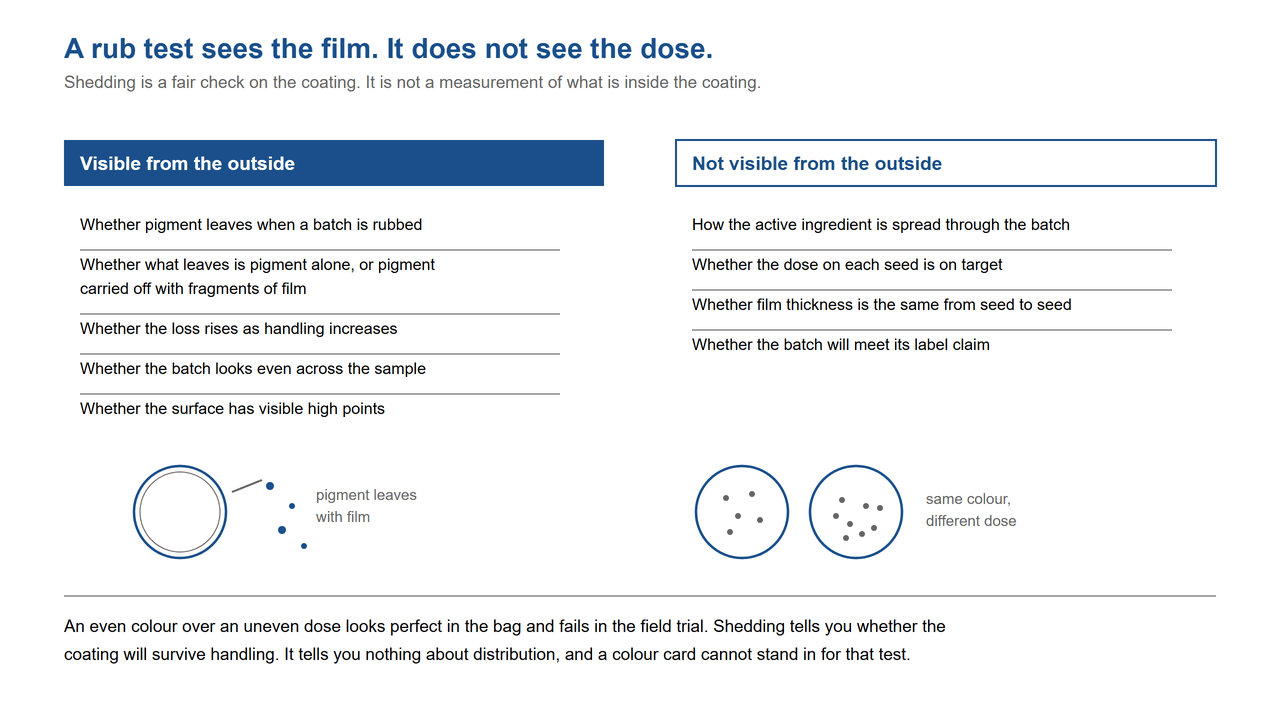
Figure 5. What a rub test shows and what it does not. The left column is visible on the seed; the right column is not.
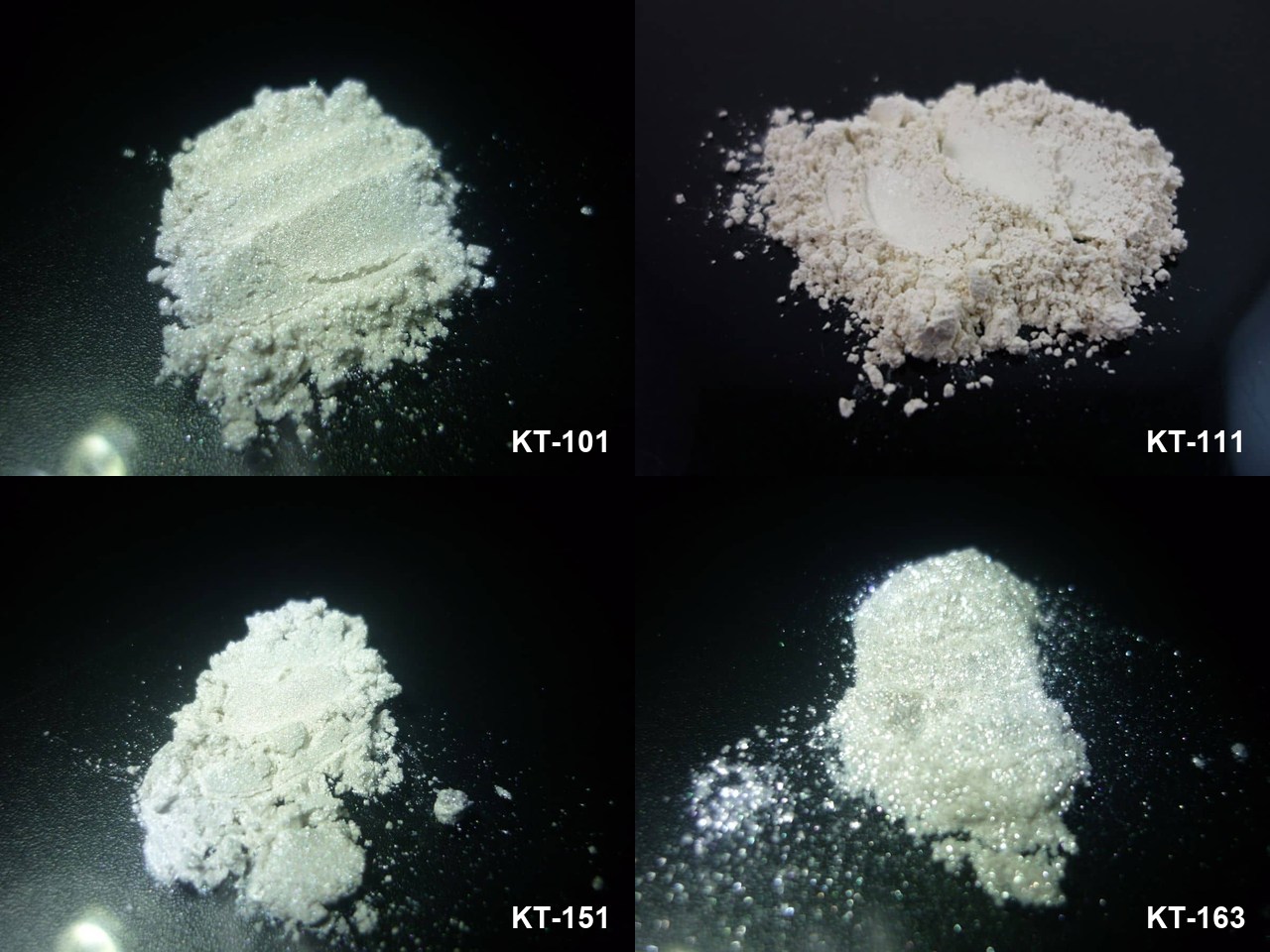
Figure 6. Fine-band pearl pigment powders. Grades in this band are the ones that fit a film coating without standing proud of the surface.
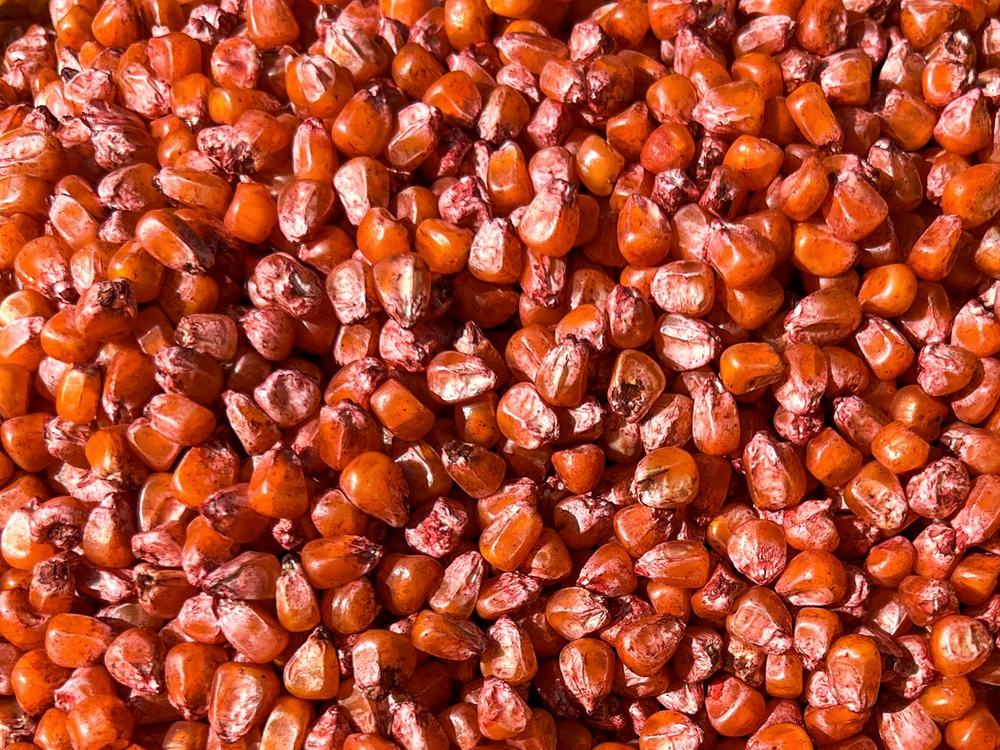
Figure 7. Red flint maize, colour in the kernel and not on it. A seed coat has to add opacity on top of the natural hue, not replace it.
Three questions, in this order, save the most time on a first enquiry. Ask which coating process the line runs, because that sets the build-up. Ask what the dry film thickness is on a finished seed, because that sets the ceiling for platelet size. Then choose the band, and only then look at colour.
For film coating, the fine bands are silver white mica pearl pigments and the interference grades, which shift colour with viewing angle and are harder to reproduce with a flat dye. Both sit in the pearlescent pigment range. Sizing for the 100 series is in the silver white catalogue, and a sample pack can be built around the process you are running rather than around a colour card.
The 5 to 25 μm band is the usual starting point, because it stays below a 20 to 50 μm dry film with margin to spare. If the film on your line is thinner than that, take the finest band available rather than assuming a mid-range grade will settle in.
No, and the distinction matters. The colour requirement for treated seed is written around an approved dye, and a pigment is a different class of material with a different regulatory identity. A pigment can add a second visual layer on top of a compliant system; it cannot stand in for the dye that system is built on.
The pigment is an inert mineral and does not react with the active ingredient. Whether a specific formulation stays stable with an added mineral load is a compatibility question that belongs in your own lab trial — we will tell you what the pigment is, and we will not tell you what your product does.
Three causes, in order of frequency: a platelet band close to the film thickness, pigment that was not fully wetted out before spraying, and uneven film build-up across the batch. The first is a grade choice, the second is mixing, and the third is equipment. Only the first is ours to fix.
A seed coating film dries at 20 to 50 μm while a pearl platelet measures 10 to 100 μm. Sizing the flake to the film decides whether colour stays on the seed.
Read More
Pearl loading in leather finishing is capped by the resin left between flakes, not by brightness. Two lines, four to eight percent, and one 50,000-cycle test.
Read More
A pearl patch washes out while the flat colour beside it holds. Flakes reflect radiant heat, so that patch cured late. Fix the dwell, not the pigment.
Read More
Mica sinks in melted wax, so the colour settles where the flame cannot reach it. Position, not loading, is what decides whether that colour survives a burn.
Read More
 English
 Français
 Deutsch
 Русский
 Español
 Português