
Leave A Message
If you are interested in our products and want to know more details,please leave a message here,we will reply you as soon as we can.
Black to Red Color Change Thermochromic Pigment, 31°C, 3–10μm – KTP-30-BR
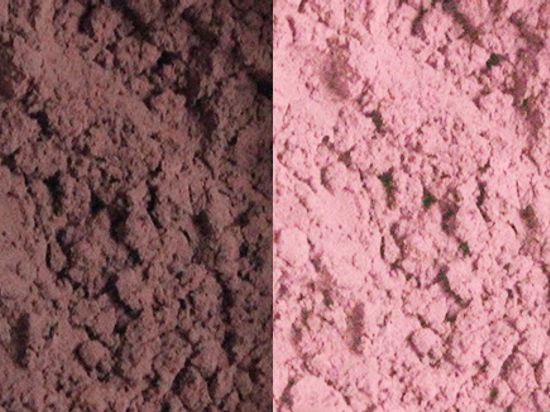
KTP-30-BR is a Black-to-Red color-changing thermochromic pigment with a 31°C activation temperature in the fine 3–10μm particle size range — a microencapsulated leuco dye pigment that shifts from black below 31°C to red above 31°C, producing a two-color visual transition triggered by body temperature or warm contact.
Item No. :
KTP-30-BRColor Effect :
Black-Red 31℃Particle Size :
3-10μmBrand :
Kolortek / OEMMOQ :
1KGApplication :
Packaging, Printing Inks, Cosmetics, Textiles, Toys, Paints & Coatings, Food Contact (BPA-free series), Safety Indicators
Black to Red Color Change Thermochromic Pigment, 31°C, 3–10μm – KTP-30-BR
Special Effect Pigments › Thermochromic Pigment Series › Colored-to-Colored
KTP-30-BR is a Black-to-Red color-changing thermochromic pigment with a 31°C activation temperature in the fine 3–10μm particle size range — a microencapsulated leuco dye pigment that shifts from black below 31°C to red above 31°C, producing a two-color visual transition triggered by body temperature or warm contact. The color-to-color shift (C2C) format makes KTP-30-BR distinct from the more common color-to-colorless grades — the color change is visible against any substrate color, not only dark bases, because the pigment maintains a visible color state on both sides of the transition. At 3–10μm, it disperses in printing inks, coatings, and nail lacquer without surface texture in thin films.
Most Kolortek thermochromic grades are Colored-to-Colorless (C2CL) — they are colored when cold and become transparent when warm, revealing whatever is underneath. This requires a dark or designed base coat to create a visible warm-state result. KTP-30-BR is a Colored-to-Colored (C2C) grade — it shifts between two distinct colors (black and red) at the 31°C threshold. Both the cold state and the warm state are visibly colored, which means the color change is apparent on any substrate and does not depend on a specifically designed base layer for the warm-state visual. For formulators designing products where the color change itself is the primary visual — without wanting to engineer a reveal-layer system — C2C grades are the more straightforward specification.
| Item No. | Color Shift | Particle Size | Activation |
|---|---|---|---|
| KTP-30-BR | Black → Red | 3–10μm | 31°C |
| KTP-30-VB | Purple → Blue | 3–10μm | 31°C |
| KTP-30-GY | Green → Yellow | 3–10μm | 31°C |
| KTP-30-VP | Violet → Pink | 3–10μm | 31°C |
| KTP-30-OY | Orange → Yellow | 3–10μm | 31°C |
| KTP-30-GB | Grey → Blue | 3–10μm | 31°C |
| KTP-30-GL | Green → Blue | 3–10μm | 31°C |
All C2C grades listed above activate at approximately 31°C — the body temperature threshold. The BPA Free series (KTP-31-RBF, KTP-31-GBF, etc.) covers the Colored-to-Colorless 31°C grades with food-grade compliance. Contact Kolortek for the complete thermochromic range including other activation temperatures.
| Parameter | Value / Notes |
|---|---|
| Item No. | KTP-30-BR |
| Color Shift | Black (below 31°C) → Red (above 31°C) |
| Change Type | Colored-to-Colored (C2C) — both states are visibly colored; no colorless phase |
| Activation Temperature | 31°C — body temperature threshold |
| Pigment Technology | Microencapsulated leuco dye system |
| Particle Size | 3–10μm |
| Reversibility | Fully reversible — repeatable thermal cycling under normal conditions |
| Substrate Dependency | None — color visible in both states on any substrate (advantage over C2CL grades) |
| Binder Compatibility | Water-based, mild solvent-based, UV-curable inks and coatings — confirm for specific systems |
| Mixing Requirement | Low-shear only — high-shear processing permanently destroys thermochromic function |
| Documentation | TDS, SDS on request |
| Brand | Kolortek |
Black-to-red — maximum contrast color-to-color shift: Among the Kolortek C2C range, black-to-red produces the highest perceived contrast between the two color states. Black at ambient temperature shifts to saturated red at body temperature — a transition that reads clearly in both directions under standard indoor lighting without requiring specific background colors or base coat engineering. For nail lacquer, the shift occurs when hands are warm and reverses when cooled; for cosmetic products, skin contact at normal body temperature triggers the transition.
31°C — the body temperature standard: The 31°C activation threshold is calibrated to respond reliably to human skin contact and body warmth without activating under typical room temperature conditions (20–25°C). Products formulated with KTP-30-BR remain black in ambient conditions and shift to red when held, worn, or touched — a touch-activated or wear-activated color change. For cosmetic applications, the change occurs naturally during product wear. For packaging, activation requires direct warm-body contact rather than passive ambient temperature changes.
C2C substrate independence — practical advantage in nail and cosmetic applications: Color-to-Colorless grades require a designed base coat to create a meaningful warm-state visual — the colorless state reveals whatever is underneath, which must be pre-planned. KTP-30-BR shifts from black to red regardless of what is beneath. In nail lacquer, this means the color change is visible over any base coat and in any light direction — the shift is intrinsic to the pigment layer, not dependent on a layered design system.
3–10μm fine particle range: The slightly coarser lower cut of 3μm (vs. 1μm for C2CL grades at 1–10μm) reflects the C2C capsule construction, which typically produces a slightly different size distribution than standard C2CL grades. At 3–10μm, KTP-30-BR disperses in printing inks and standard coating systems without visible particle texture in cured films. For screen printing, confirm against mesh specification. Kolortek maintains consistent capsule size distribution and activation temperature calibration across production batches across 20 years of thermochromic production — TDS and SDS available on request.
| Application | How KTP-30-BR Contributes | Notes |
|---|---|---|
| Nail lacquer | Black-to-red nail color change triggered by body warmth during wear | C2C — no base coat engineering needed; shift visible in all conditions; verify cosmetic compliance |
| Cosmetics | Touch-activated black-to-red in lipstick, body lotion, and specialty cosmetic products | 31°C activates on skin contact; C2C format visible without layered base coat system |
| Printing inks | Body-temperature-activated black-to-red in screen and specialty inks for labels, promotional print | 3–10μm suits screen printing; add at final mixing stage; low-shear only |
| Decorative coatings | Touch-responsive black-to-red color change in decorative and novelty surface coatings | 31°C activates on touch; reverts to black when surface cools to ambient temperature |
| Plastics | Body-temp-activated color change in novelty and promotional molded items | Confirm processing temperature limits; capsule integrity must be maintained through compounding |
Q: What is the main practical difference between KTP-30-BR (C2C) and KTP-31-BR (C2CL, Colored-to-Colorless) in nail lacquer?
A: KTP-31-BR (Colored-to-Colorless) is red when cold and becomes colorless when warm — the warm-state visual is the base coat or substrate color showing through. KTP-30-BR (Colored-to-Colored) is black when at ambient temperature and red when warm. In nail lacquer, KTP-31-BR requires a pre-designed base coat to create a meaningful warm-state result; KTP-30-BR shifts between two visible colors independent of what is underneath. For nail products where a bold dramatic color change is the brief — black nails that turn red on the hand — KTP-30-BR is the more direct specification.
Q: Does the black-to-red shift of KTP-30-BR work on white or light-colored surfaces?
A: Yes — because KTP-30-BR maintains a visibly colored state at both temperatures, the color change is visible regardless of the substrate color underneath. On a white substrate, black ink containing KTP-30-BR appears black at ambient temperature and red when warm. On a dark substrate, the same shift occurs. This is the core practical advantage of C2C grades over C2CL grades, where the warm colorless state depends entirely on the base to provide visual content.
Q: Can KTP-30-BR be blended with conventional black pigment to intensify the cold-state color?
A: Adding a non-thermochromic black pigment to a KTP-30-BR formulation will deepen the cold-state black but will also reduce the visual contrast of the warm-state red — the static black from the conventional pigment remains at all temperatures. The thermochromic component contributes the color-change red, but if it is surrounded by permanent black, the shift will appear as a dark red rather than a clean saturated red. Start with a small addition ratio and evaluate under your specific film thickness before committing to production loading levels.
The black-to-red shift of KTP-30-BR must be evaluated in your specific formulation and film thickness to confirm the transition clarity, loading level requirement, and activation behavior under your use conditions. Contact Kolortek to request a sample of KTP-30-BR alongside other C2C grades, download the TDS, or discuss the full thermochromic series for your application.
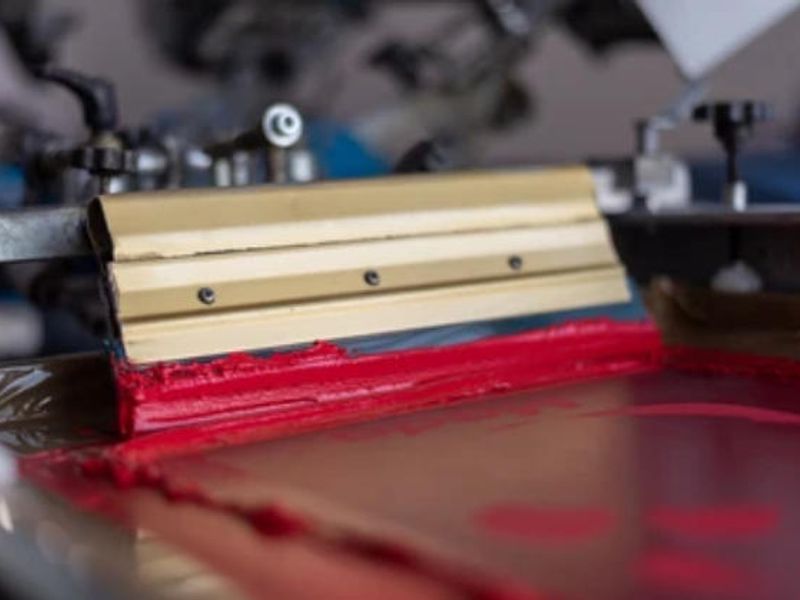
Screen printing with thermochromic ink is one of the more demanding pigment applications — you're asking a material to perform a reversible color transition reliably, across thousands of print cycles, under real-world handling conditions. The pigment has to disperse cleanly into the ink vehicle, survive the shear of the squeegee, and still respond predictably to temperature after it's cured onto the substrate.
Read More
Fabric is one of the more demanding substrates for thermochromic chemistry. The dye has to survive wash cycles, flex without cracking, bond to fiber structures that weren't designed to hold encapsulated colorants, and still deliver a clean, repeatable color transition. That's a tighter brief than most people expect when they first start sourcing.
Read More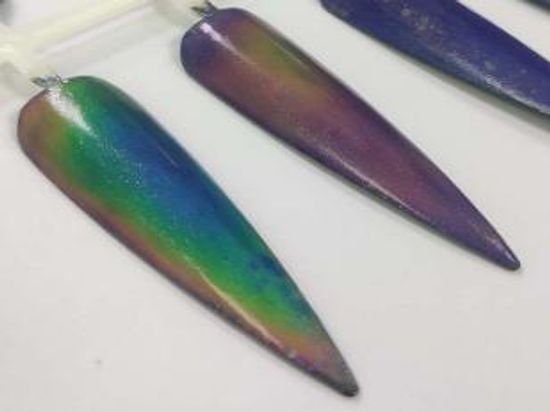
KT-MLC01 is a water-based thermochromic liquid crystal that cycles through twelve distinct colors — from black through copper, yellow, green, blue, and violet — across a 14℃ to 36℃ temperature window, making it one of the more visually dynamic options in the thermochromic category. Unlike single-transition thermochromic pigments, these mood liquid colors deliver a continuous chromatic shift in a single liquid formulation, suited for custom decorative paints, textile printing, and novelty cosmetic applications. Formulators looking to introduce live color-shift behavior into coatings or printed substrates will find the liquid format straightforward to incorporate.
Read More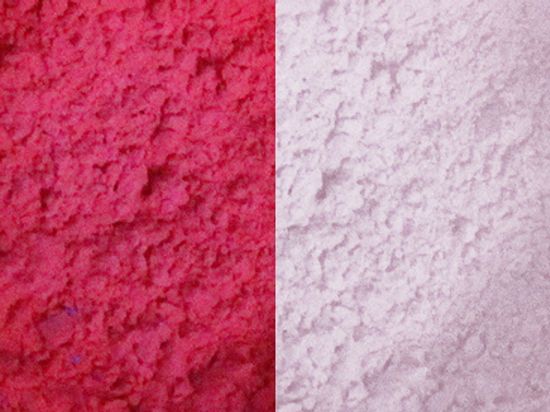
KTP-16-BR is a red thermochromic pigment that transitions from vivid red to fully colorless when temperature rises above 16°C — making it one of the lowest activation-point options in Kolortek's standard range. As a heat sensitive pigment, it's well-suited for applications where near-ambient temperature triggers are required, including temperature-indicating textiles, novelty printing, and decorative coatings. Formulators working with color change with temperature effects will find the fine 1–10μm particle size integrates cleanly into most ink and coating systems.
Read More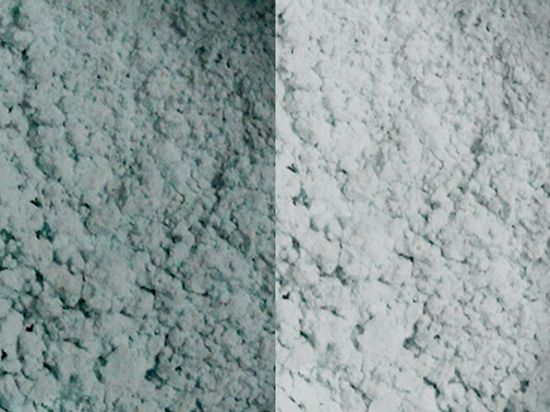
KTP-17-MG is a thermochromic powder that transitions from malachite green to fully colorless at 17°C — a low activation threshold that makes it effective for skin-contact, ambient-response, and cool-environment applications. As a heat reactive pigment, it integrates cleanly into printing, coating, and cosmetic systems where a sharp, reversible color reveal is the intended effect. Typical end-uses include nail formulations, textile printing, and craft coatings.
Read More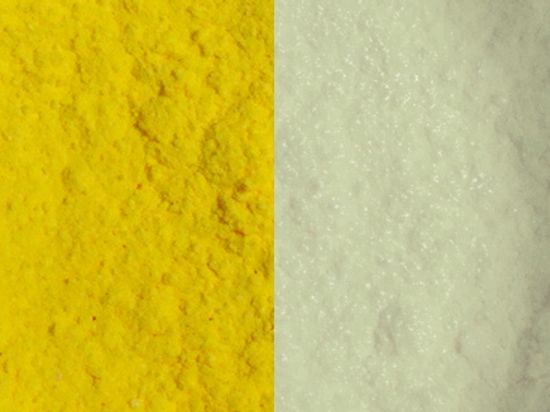
KTP-32-BY is a thermochromic powder that transitions from vivid yellow to colorless at 32°C — a body-temperature-adjacent activation point that makes it well-suited for skin-contact applications like cosmetics and nail products. This heat sensitive pigment powder disperses cleanly in most coating and printing systems, and is also available in a BPA Free food grade version for product contact use cases such as cups and utensils. Formulators working in textiles printing, craft art, or specialty inks will find the 1–10μm particle range compatible with a broad range of application methods.
Read More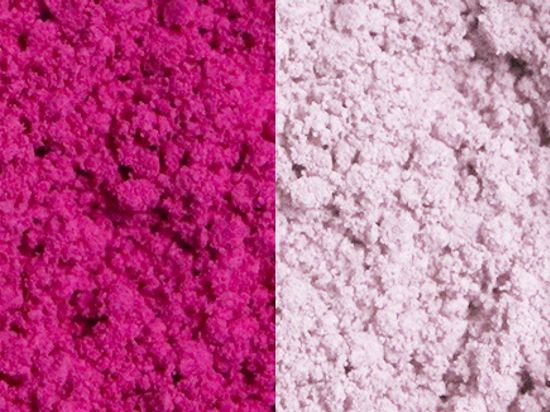
KTP-31-PBF is a rose red thermochromic pigment powder that transitions to colorless at 31°C — a body-temperature-proximate activation point well-suited for skin-contact and food-contact applications. Certified BPA Free, this heat reactive pigment is formulated for cosmetics, nail systems, and food-contact printing where safety compliance is non-negotiable. It performs equally well in textile printing and craft applications where a clean, reversible color-fade effect is the design intent.
Read More
KTP-31-GBF is a food grade thermochromic pigment that shifts from vivid green to fully colorless at 31°C — clean, reversible, and BPA Free. Engineered for direct skin and food contact surface applications, this heat sensitive pigment powder is well suited for cosmetic formulations, nail products, and food contact items like cups and spoons. Its fine 3–10μm particle size ensures smooth dispersion across both water- and solvent-based systems.
Read More
 English
 Français
 Deutsch
 Русский
 Español
 Português