
 English
 Français
 Deutsch
 Русский
 Español
 Português
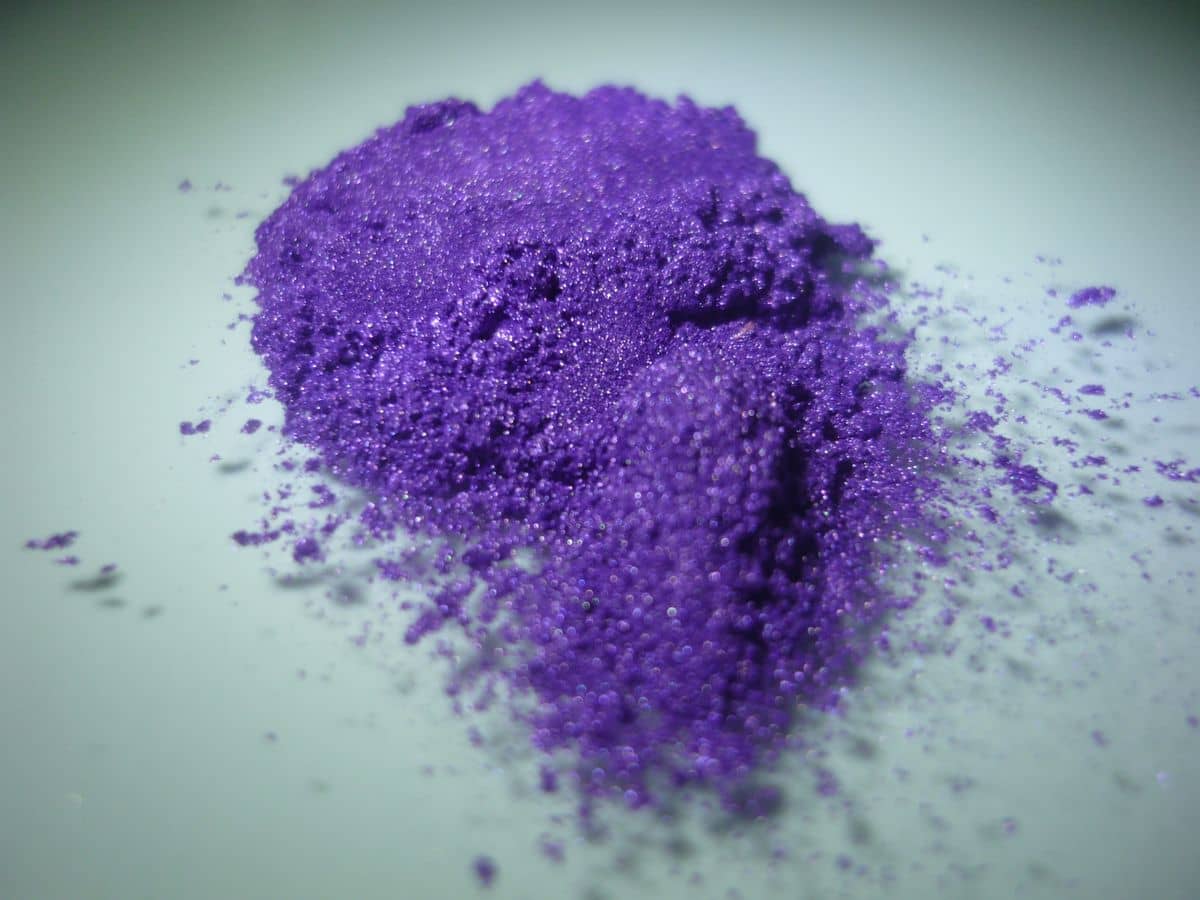
Pearlescent pigments are manufactured through a controlled, multi-stage wet-chemical process that coats transparent mica platelets (typically 5–200 µm in diameter) with thin, uniform layers of metal oxides—most commonly titanium dioxide (TiO₂), iron oxide (Fe₂O₃), or chromium oxide (Cr₂O₃)—using hydrolysis and calcination under ISO 9001-certified conditions. The resulting interference-based optical effect produces iridescence, color travel, and high luster without UV degradation. This process is scalable for cosmetic-grade, coating-grade, and industrial-grade batches while maintaining batch-to-batch spectral consistency.
- Core substrate: High-purity natural mica (≥99.5% muscovite), sourced and purified to meet USP/Ph. Eur. heavy metal limits
- Coating method: Controlled hydrolysis of metal salt precursors (e.g., TiOSO₄ or FeCl₃) followed by precise pH- and temperature-regulated precipitation
- Thermal treatment: Calcination at 600–850°C in inert or oxidizing atmospheres to crystallize oxide layers and fix refractive index
- Post-processing: Surface treatment with silanes, stearates, or alumina to ensure dispersion stability in water- or oil-based systems
- Quality verification: Every lot undergoes spectrophotometric analysis (D65/10°), particle size distribution (PSD via laser diffraction), and COA/TDS/MSDS documentation
Why This Question Matters to B2B Buyers & Formulators
This question typically arises during early-stage supplier evaluation—especially when sourcing for regulated applications (cosmetics, pharmaceuticals, food contact coatings) or performance-critical formulations (automotive clearcoats, luxury packaging inks). Decision-makers need verifiable process transparency—not just product specs—to assess regulatory compliance, scalability risk, and formulation compatibility. Unlike generic pigment queries, “How are pearlescent pigments manufactured?” signals technical due diligence: the buyer is evaluating whether the manufacturer controls critical process variables (e.g., oxide layer stoichiometry, crystallinity, surface charge) that directly impact color strength, dispersion stability, and photostability.
Related search intents: “pearlescent pigment synthesis method”, “how is mica coated with titanium dioxide”, “industrial-scale pearlescent pigment production”, “ISO-compliant pearlescent pigment manufacturing”.
Manufacturing Process: Step-by-Step Technical Breakdown
The industrial manufacturing of pearlescent pigments follows a repeatable, physics-driven sequence grounded in thin-film interference theory. Below is the standard process flow used by certified manufacturers like Kolortek:
| Step | Key Parameters | Purpose & Verification Method | Typical Tolerance Range (Per ISO 9001 Audit) |
|---|---|---|---|
| 1. Mica Purification & Sizing | pH 3–5 acid leaching; 200-mesh wet classification | Removes Fe²⁺/Mn²⁺ impurities; ensures narrow PSD (D50 = 15–45 µm) | Residual Fe |
| 2. Hydrolytic Coating | 70–95°C; pH 1.8–2.4; TiOSO₄ feed rate ±0.5 mL/min | Forms amorphous TiO₂ hydrate layer; nucleation density controlled by [H⁺] | Layer thickness: 45–250 nm (measured by TEM/XRD) |
| 3. Calcination | 720°C ± 15°C; N₂ atmosphere; ramp rate 3°C/min | Converts hydrate to rutile/anatase; fixes refractive index (n = 2.71–2.76) | Rutile content ≥ 92% (XRD Rietveld refinement) |
| 4. Surface Modification | 0.5–2.0 wt% hexamethyldisilazane (HMDS) or Al(OH)₃ sol | Enables stable dispersion in non-polar media; reduces agglomeration | Oil absorption ≤ 22 g/100g (ASTM D281); ζ-potential > |±25| mV |
What Makes the Process Technically Demanding?
- ✅ Refractive index matching: Substrate (mica n ≈ 1.58) and coating (rutile TiO₂ n ≈ 2.71) must be precisely aligned to achieve constructive interference at target wavelengths (e.g., 550 nm for silver-white).
- ✅ Layer uniformity: A deviation > ±5 nm in coating thickness causes visible metamerism or hue shift—verified via cross-sectional TEM and spectroscopic ellipsometry.
- ✅ Batch traceability: Each lot carries full COA with spectral reflectance curves (380–780 nm), PSD histogram, and heavy metal screening per ICH Q3D.
Evaluation & Practical Guidance for Procurement Teams
When vetting pearlescent pigment suppliers, avoid these common pitfalls:
- Price trap: Ultra-low-cost offers often indicate uncontrolled hydrolysis (broad PSD), insufficient calcination (low rutile % → poor lightfastness), or no surface treatment (poor dispersion → viscosity spikes in ink systems).
- Compliance gap: Cosmetic-grade pigments require D&C Lake certification (FDA 21 CFR §74.1701) or EU CosIng registration. Verify COA includes test reports from accredited labs (e.g., SGS, Intertek) for arsenic, lead, mercury, and cadmium.
- Delivery risk: Custom-coated lots (e.g., chameleon or holographic variants) require ≥4 weeks lead time due to sequential dual-layer deposition and annealing cycles—confirm supplier’s in-house coating capacity before RFQ.
- Compatibility blind spot: Unmodified pigments may flocculate in acrylic emulsions or silicone bases. Request dispersion stability data in your exact vehicle (e.g., “stable in Dow Corning 200 Fluid, 1 hr @ 1000 rpm”).
How Kolortek Co., Ltd. Enables Reliable, Scalable Sourcing
Founded in 2002 and headquartered in Huaian, Jiangsu, Kolortek operates an ISO 9001:2015-certified 18,000 m² facility with fully automated hydrolysis reactors, programmable calcination kilns, and in-line laser diffraction analyzers—all calibrated daily against NIST-traceable standards. With 20+ years of dedicated pearlescent pigment manufacturing, Kolortek delivers verified process control across three critical dimensions:
- Technical validation: Every shipment includes COA, TDS, and MSDS compliant with REACH, RoHS, FDA, and China GB standards. Spectral data is provided in CIE XYZ and LAB formats for digital color matching.
- Supply chain resilience: 1,000+ stock colors—including custom pearlescent blends—ready to ship globally within 5 business days. OEM/ODM clients receive full formulation support, including dispersion protocols and compatibility testing in target matrices (e.g., nail lacquer, automotive basecoat).
- Regulatory readiness: All cosmetic-grade pigments are manufactured under GMP-aligned procedures and registered in the EU CPNP and US FDA VCRP. D&C Lakes are produced per FDA monograph requirements with full batch traceability.
Kolortek’s R&D team collaborates with Nanjing University of Science and Technology on oxide layer crystallinity optimization—enabling higher chroma and narrower half-bandwidth in duochrome grades without compromising thermal stability.
Frequently Asked Questions
- Q1: What’s the difference between natural mica-based and synthetic fluorphlogopite (SFP) pearlescent pigments?
- Natural mica offers superior flexibility, lower cost, and broader regulatory acceptance (USP/Ph. Eur.). SFP provides higher aspect ratio and tighter PSD but requires stricter heavy metal controls. Kolortek supplies both—certified to ISO 18416 for cosmetic microbiological safety.
- Q2: Can pearlescent pigments be used in water-based systems?
- Yes—if surface-treated with hydrophilic agents (e.g., polyethylene glycol silanes). Kolortek’s KOL-PEARL® AquaLine series achieves >95% dispersion stability in waterborne acrylics after 72 hrs (ASTM D1210).
- Q3: How does layer thickness affect color?
- Thin layers (45–60 nm TiO₂) yield silver-white; 90–110 nm yields yellow-gold; 130–150 nm yields red-copper; >200 nm yields blue-violet. Kolortek’s process controls thickness to ±2 nm via real-time conductivity feedback.
- Q4: Do you offer custom pearlescent pigments for private label?
- Yes. Kolortek provides full OEM/ODM services—including custom color development, proprietary surface treatments, and branded packaging—with minimum order volumes starting at 25 kg per SKU.
- Q5: What documentation do you provide for regulatory submissions?
- We supply full dossiers: COA (with spectral curves), TDS (including dispersion guidelines), MSDS (GHS-compliant), heavy metal test reports (ICP-MS), and, upon request, Letters of Compliance for FDA, EU, ASEAN, and GCC markets.