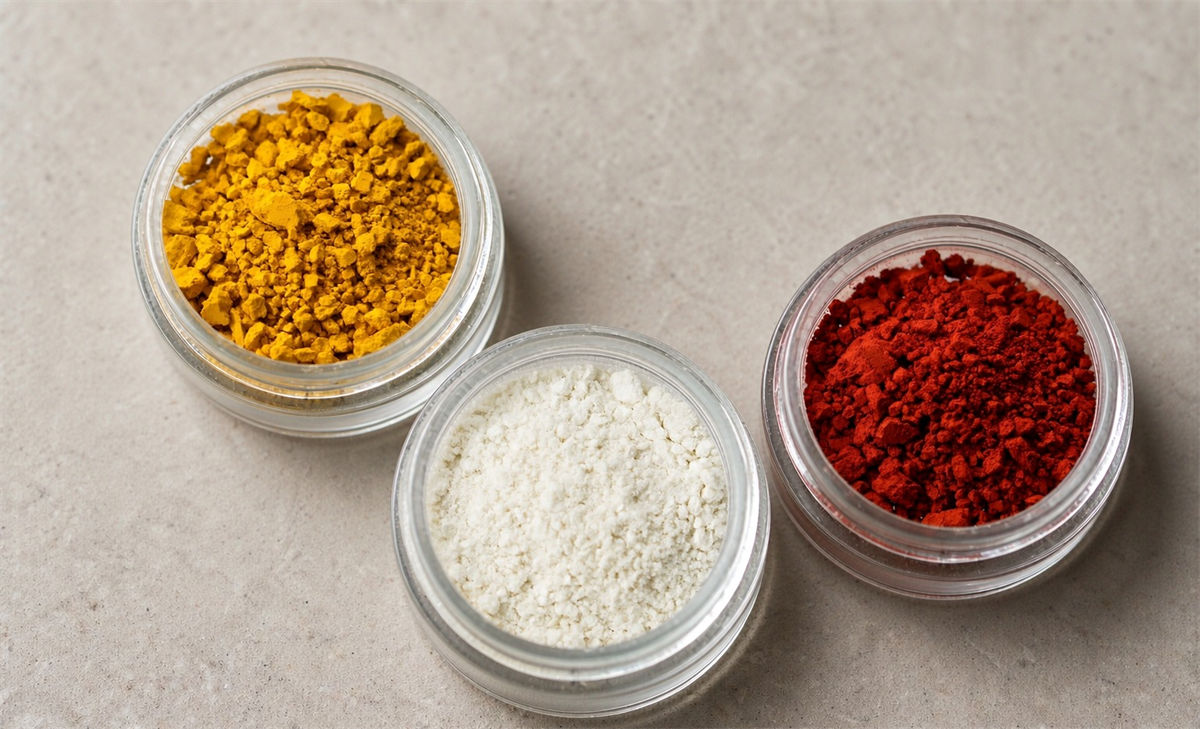
You choose surface treated pigments by matching the treatment to your formulation goals. First, define your system: emulsion, anhydrous, or surface treated pigment powder. Next, set your top priority: dispersibility, stability, skin feel, or cost. These two answers narrow the field before you test a single sample.
Key Takeaways
-
Start by defining your formulation system and top priority. This narrows your treatment options before testing.
-
Match your treatment to your formulation type, desired skin feel, and regulatory limits.
-
Always test small batches with your actual formula to verify dispersion, stability, and wear performance.
What Surface Treatments Do
Why Untreated Pigments Fall Short
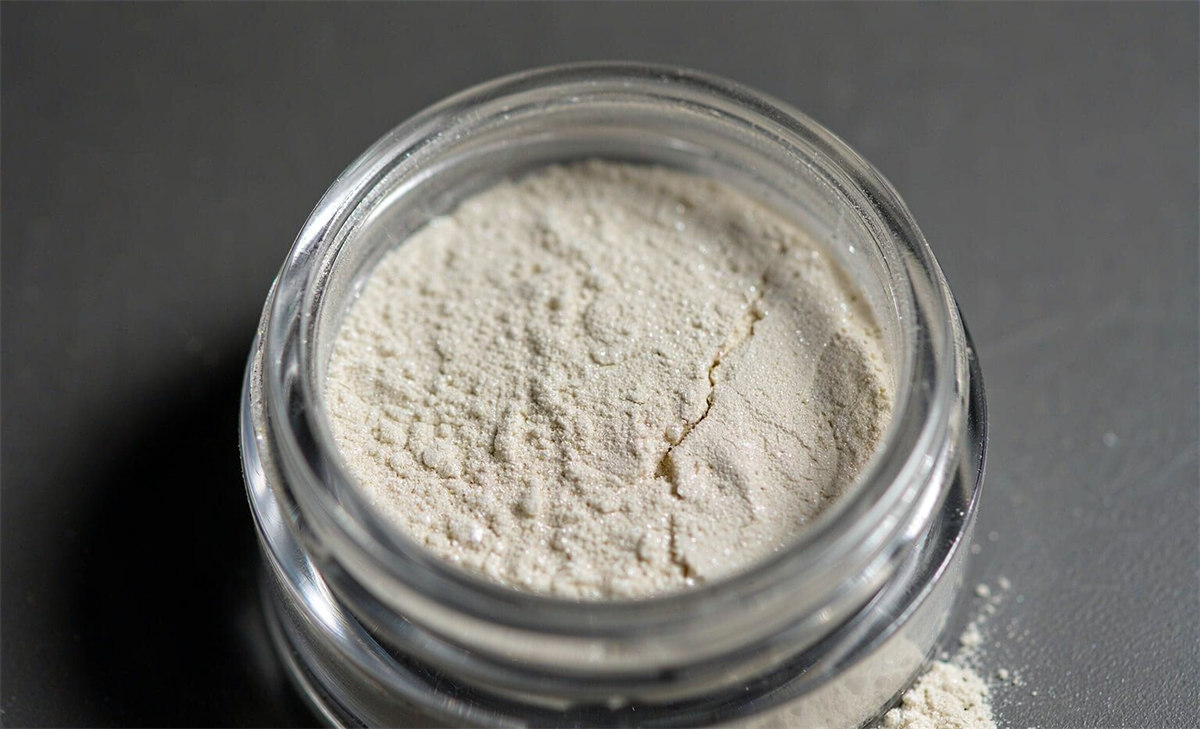
Untreated pigments create real formulation challenges. They lack the surface chemistry needed to integrate smoothly into your base. You often see color fading from UV exposure. pH changes can shift the pigment's shade unexpectedly. You struggle with uneven dispersion and particle settling. In powders, untreated pigments fail to bind well, leaving a chalky finish. Oxidative degradation from air and trace metals further shortens your product's stability. These issues make it difficult to achieve a consistent, high-performing cosmetic without extensive process adjustments.
How Coatings Change Performance
A surface treatment acts as a molecular bridge. It modifies the pigment's surface energy to match your formulation base. A hydrophobic coating, like silica or silicone, makes a pigment wet out perfectly in oils. This matching process, called binder compatibility, keeps particles separated and prevents flocculation. Silicone coatings, like those from Kolortek, transform performance. They boost water resistance, increase the longevity of sun protection products, and minimize the whitening effect often seen with untreated mineral filters. The coating simply improves how the pigment interacts with everything else in your formula.
The Main Benefit Categories
The right treatment delivers a cascade of benefits. You can categorize these improvements to match your top priority. For instance, if your goal is a silky, long-wearing powder, you prioritize sensory and skin adhesion benefits.
|
Category
|
Benefit
|
|
Dispersion & Formulation
|
Improved dispersibility in oil; reduced mixing energy
|
|
Sensory Feel
|
Enhanced slip, smooth and light texture on skin
|
|
Surface Properties
|
Increased hydrophobicity and water resistance
|
|
Performance on Skin
|
Increased skin adhesion; long wear
|
|
Durability & Stability
|
Improved photostability and oxidation resistance
|
|
Hybrid Treatments
|
Combine multiple functionalities in one product
|
Kolortek offers a range of skin-friendly surface treated pigment powder designed to elevate optical properties and texture, giving you the exact benefit profile your project demands.
Key Selection Factors
Your formulation system sets the boundaries for every treatment decision. A treatment that performs brilliantly in a solvent-based system may fail completely in a water-based emulsion. You need to evaluate three core factors before you commit to a sample: formulation type and compatibility, sensory profile and particle size, and regulatory, safety, and cost limits. Each factor interacts with the others. A change in one area often forces a reassessment of the remaining two.
Formulation Type and Compatibility
The chemical environment of your formulation decides which treatments will actually work. A treatment that performs well in an anhydrous lipstick may fail in an oil-in-water emulsion, because the surface has to be wetted by a different continuous phase. Match the treatment to the phase your pigment will sit in, then confirm it in the actual base.
The table below maps common cosmetic formats to the treatments that suit them.
|
Formulation type
|
Recommended treatment
|
Why it works
|
|
Water-in-oil emulsions and creams
|
Methicone or Dimethicone
|
Hydrophobic surface keeps the pigment in the oil phase, reduces migration, improves adhesion
|
|
Oil-in-water emulsions
|
Triethoxycaprylylsilane
|
Silane coupling improves dispersion in oils and esters and adds moderate water repellency
|
|
Anhydrous systems (lipstick, balm)
|
Lauroyl Lysine or Magnesium Myristate
|
Creamy cushiony feel and rub resistance; magnesium myristate adds lubricity and water repellency
|
|
Pressed powders
|
Dimethicone or Lauroyl Lysine
|
Higher compressibility and spreadability, so less binder is needed
|
|
Loose powders
|
Methicone
|
Free flow, anti-caking, stays in suspension
|
|
Nail lacquers
|
Carnauba Wax
|
Improves pressability and suspension stability, reduces colour striations
|
Treatment chemistries fall into two broad families. Inorganic treatments work at the surface as a coupling layer: silane coupling agents bond the pigment surface to the surrounding oil phase, which is why triethoxycaprylylsilane is widely used in foundations and liquid colour.
Organic treatments adjust surface energy and feel. Silicone coatings such as methicone and dimethicone make the pigment wet out in oils and silicones and add slip. Metal soaps such as magnesium myristate improve adhesion and water repellency. Waxes and amino acid derivatives change the tactile result — carnauba wax for a creamy, natural feel, lauroyl lysine for a cushiony, long-wearing one.
For cosmetic emulsions, you need treatments that match the polarity of your oil phase. Silicone coatings, such as methicone or dimethicone, work well in anhydrous and water-in-oil systems. They provide hydrophobicity and improve wear. For oil-in-water emulsions, you may need a more hydrophilic treatment or a hybrid coating that balances both phases. Kolortek supplies surface treated pigment powder grades with treatment profiles designed for these specific system requirements.
Sensory Profile and Particle Size
Particle size drives both optical performance and tactile experience. You cannot separate the two. A pigment that delivers brilliant color but feels gritty will fail in a pressed powder or lipstick. The relationship between particle size and skin feel follows a predictable pattern.
|
Particle size (µm)
|
Luster
|
Skin feel
|
Typical use
|
|
0–10
|
Soft, low luster
|
Very smooth, almost powdery
|
Matte foundations, pressed powders
|
|
0–15
|
Soft luster
|
Smooth, slightly silicony
|
Pressed powders, blushers
|
|
5–25
|
Fine luster
|
Silky smooth
|
Lipstick, pressed powders, loose powder
|
Pressed powders and lipsticks typically use 5–25 µm grades for fine luster without graininess.
Larger particles deliver more sparkle and flash, but they can feel rough on the skin. Smaller particles provide a softer, more cushiony feel, but they may scatter light differently and reduce the intensity of the color payoff. You need to match the particle size distribution to your sensory target. A body shimmer product can tolerate larger particles for dramatic effect. A daily-wear face powder demands a tighter distribution in the 5–25 µm range for a smooth, elegant finish.
The surface treatment itself also modifies skin feel. Silicone treatments add slip and a silky texture. Fatty acid treatments can impart a creamier, more emollient feel. Ester treatments often provide a light, dry touch. You should evaluate the treated pigment in your actual base, not just as a powder. The interaction between the treatment, the particle size, and the surrounding medium determines the final sensory result.
Regulatory, Safety, and Cost Limits
Cosmetic colorants face strict regulatory control across every major market. Purity, heavy metal limits, permitted-use conditions, and batch certification requirements act as major purchasing criteria, especially in the United States and Europe. The U.S. FDA requires approval for every color additive before use in cosmetics, with the exception of coal tar hair dyes. Across the U.S., EU, China, and other markets, pigments must comply with different color additive lists, permitted-use conditions, purity limits, and labeling rules. These differences increase testing, documentation, and registration costs for suppliers.
You must verify several specific regulatory points before you select a treated pigment.
-
The FDA requires each cosmetic color additive to be permitted for its specific intended use. Many colors allowed for general use are not permitted in the eye area.
-
The EU maintains allowed colorants and conditions through Annex IV of its Cosmetics Regulation. Regional use mapping is a core commercial capability for any supplier.
-
Pigment suppliers should map every grade to lip, eye, nail, face, or skin-care tint use by jurisdiction rather than labeling it broadly for cosmetics.
-
Brands need to verify underlying evidence for vegan or cruelty-free claims instead of treating a sales descriptor as complete substantiation.
-
Contract manufacturers can reduce reformulation by approving backup shades with comparable regulatory and surface-treatment profiles.
-
Distributors should preserve batch certificates and change notifications because a minor composition or treatment change can trigger a new product assessment.
Annex IV works as a positive list: a colourant may be used only where it is listed and only under the conditions given for that entry. The same structure applies under the US framework in 21 CFR Parts 73 and 74, where each colour additive is listed together with its permitted uses. For a formulator the practical consequence is that a grade is not simply "cosmetic approved" — it is approved for specific uses in specific markets. Confirm the listing for your intended use category before you build the shade.
Cost considerations extend beyond the pigment's purchase price. A cheaper untreated pigment may require more dispersant, longer milling times, and higher processing energy. A treated pigment that costs more per kilogram can reduce your total formulation cost by simplifying your process and improving batch-to-batch consistency. You should calculate the true cost of use, not just the invoice price. Kolortek offers skin-friendly surface treated pigments that balance regulatory compliance with cost-effective performance across a range of applications.
Treatment Types and Performance Testing
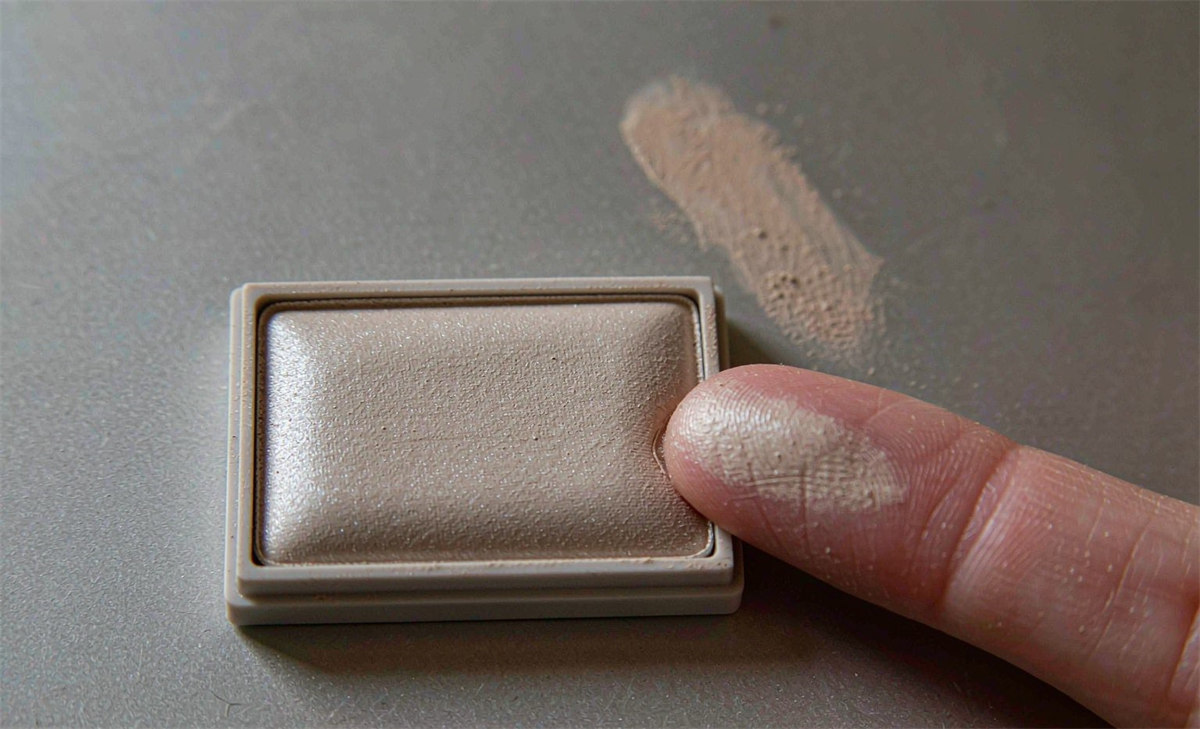
You now understand what surface treatments do and which selection factors matter most. The next step is matching specific treatment chemistries to your formulation. Each treatment family offers distinct performance characteristics. You need to evaluate them against your system type, sensory target, and regulatory requirements. This section walks you through the major treatment categories and shows you how to test them properly.
Silicones and Silanes
Silicone and silane treatments dominate the cosmetic pigment market for good reason. They deliver reliable hydrophobicity, excellent skin feel, and broad compatibility with common cosmetic oils and silicones. You will find these treatments in foundations, pressed powders, BB creams, and hot pour formulas.
Methicone-treated pigments provide hydrophobic properties that improve slip and wetting. They enhance overall pigment performance in oils and silicones. Formulators recommend methicone treatments for foundations, BB creams, pressed powders, and hot pours. Dimethicone-treated pigments offer similar benefits. In pigmented powdered products, dimethicone treatments provide good hydrophobic properties that improve wear, enhance powder flow, help produce smoother powders, and increase color development. These characteristics support durability, application smoothness, and color intensity in foundation formulations.
Silane treatments work through a different mechanism. Triethoxycaprylylsilane coats pigments with a silane coupling layer, forming a surface that disperses readily in natural and synthetic oils and stabilises particles in emulsions. You also get reduced oil absorption and improved wear on skin.
The table below summarizes the key silicone and silane treatments and their primary benefits.
|
Treatment
|
Chemistry
|
Hydrophobicity
|
Main benefit
|
Typical use
|
|
Methicone (MT)
|
Silicone
|
High
|
Free flow, anti-caking, slip, wetting
|
Loose and pressed powders, foundations
|
|
Dimethicone (DMT)
|
Silicone
|
High
|
Compressibility, spreadability, adhesion
|
Pressed powders, hot pours, foundations
|
|
Triethoxycaprylylsilane
|
Silane
|
Moderate
|
Dispersion in oils and esters
|
Emulsions, liquid colour
|
|
Lauroyl Lysine (LL)
|
Amino acid derivative
|
Moderate
|
Cushion, adhesion, rub resistance
|
Lipstick, pressed powders
|
|
Magnesium Myristate (MM)
|
Metal soap
|
High
|
Lubricity, water repellency, wear
|
Lipstick, cream blush, anhydrous
|
|
Carnauba Wax (CW)
|
Natural wax
|
Moderate
|
Creamy feel, adhesion, pressability
|
Powders, nail lacquer
|
Kolortek supplies these treatments across sericite, synthetic mica, talc, titanium dioxide and iron oxides. These grades deliver the slip, wear, and color development your foundation and powder products demand.
Waxes, Metal Soaps and Amino Acids
Wax, metal soap and amino acid treatments offer an alternative to silicone chemistry. They suit formulas where silicone compatibility is not ideal, or where the label has to stay silicone-free.
Lauroyl lysine is an amino acid derivative treatment. It gives a creamy, cushiony feel, improves adhesion and rub resistance, and stays stable under the heat used in hot-pour lipstick and baked powder production. It also acts as a binding aid, so pressed formulas need less binder.
Magnesium myristate is a metal soap treatment. It adds lubricity and slip, gives strong water repellency, prevents caking, and extends wear time in colour cosmetics. It suits lipsticks, cream blushes and anhydrous systems where you want oil compatibility without silicone.
Carnauba wax is a natural wax treatment. It gives a creamy, soft feel and excellent skin adhesion, and it improves pressability and suspension stability — which is why it also works in nail lacquer, where it reduces the colour striations that come from settling.
The sensory result differs by family. Silicones add dry slip. Lauroyl lysine adds cushion and adhesion. Magnesium myristate adds lubrication and water resistance. Carnauba wax adds creaminess. Choose by the feel you are selling, then confirm it in your base.
Natural Treatments and Surface Treated Pigment Powder
Demand for natural and clean beauty keeps growing, and the treatment is usually where a formulator has to compromise first. A wax-based treatment keeps the performance and the story at the same time.
Carnauba wax is a plant-derived wax treatment. It gives a creamy, soft feel and excellent skin adhesion, and it improves pressability and stability — in nail lacquer it also reduces the colour striations that come from settling. It suits pressed and loose powders, cream blushes, lip products and nail lacquer, and it is the plant-derived option for brands moving away from silicone.
For grades that need a documented natural or organic profile, ask which treatment and which certificate apply to the specific grade and market — documentation is provided for the grade you select rather than claimed across a range.
Testing Dispersibility, Stability, and Skin Feel
You have selected a treatment type that matches your formulation goals. Now you must verify that it performs as expected in your actual system. Testing separates promising candidates from production-ready pigments. You need to evaluate dispersibility, stability, and skin feel before you commit to a full-scale production run.
Dispersibility testing reveals how well the pigment integrates into your base. Visual inspection checks for uniformity, streaks, clumps, or separation in every batch. You should examine samples under proper lighting and note any inconsistencies. Particle size analysis measures the particle size distribution. Set your own D50 and D90 window for the grade, then confirm the treated pigment lands inside it after dispersion. Viscosity testing evaluates flow properties and consistency. Stable readings within your specification range indicate good dispersion. Accelerated aging simulates long-term storage conditions. You expose samples to elevated temperature, light, and humidity to predict settling, clumping, or color fading.
Stability testing follows a structured protocol. You store samples at an elevated temperature and humidity agreed with your own stability protocol, and test at intervals that match your shelf-life claim. Microbiological assessments accompany these checks. You also examine packaging for light and oxygen protection. Freeze/thaw cycles provide another stress test. You freeze samples for 24 hours, then thaw them for 24 hours. This cycle tests emulsion durability under real-world shipping and storage conditions.
Wear performance evaluation connects your lab results to consumer expectations. You apply the formulation to skin or models. You monitor color integrity every two hours under heat and humidity. You assess transfer resistance and sebum/sweat resistance. The wear target comes from your product claim, not from an industry figure. Test against the number you intend to print on the pack.
Lab-based pigment evaluation ensures color intensity and batch accuracy. Spectrophotometry verifies that each batch matches your color standard. You also test purity, particle size, and batch consistency. Impurity checks confirm that your pigment meets regulatory limits.
The table below outlines the key tests and their purposes.
|
Test Type
|
Method
|
What It Measures
|
Target Standard
|
|
Visual inspection
|
Lighted examination
|
Uniformity, streaks, clumps
|
No visible defects
|
|
Particle size analysis
|
Laser diffraction
|
Particle size distribution
|
Within your D50/D90 window
|
|
Viscosity testing
|
Rheometer
|
Flow properties
|
Within specification range
|
|
Accelerated aging
|
Elevated temperature and humidity per your protocol
|
Settling, clumping, fading
|
No change at the end of the test period
|
|
Freeze/thaw cycles
|
24h freeze + 24h thaw
|
Emulsion durability
|
Stable at the cycle count set in your protocol
|
|
Wear testing
|
Skin application
|
Color integrity, transfer
|
Meets your on-pack wear claim
|
|
Spectrophotometry
|
Color measurement
|
Batch accuracy
|
Matches standard
|
You should also benchmark against competitors through side-by-side testing. Environmental exposure tests for water, oil, and sweat confirm long-wear or waterproof claims. Consumer feedback on color fading or shifting provides real-world validation. Regulatory compliance review ensures your pigment meets FDA and EU requirements.
The Colour Index can serve as an initial reference, but it should not be the sole basis for final pigment selection. Technical data sheets can help with preliminary screening, but final suitability should be verified in your actual base through dispersion trials, application tests and stability checks.
A Step-by-Step Decision Guide
You now have all the information needed to select the right surface treatment. This step-by-step guide walks you through the decision process from start to finish. Follow these steps in order to narrow your options and validate your choice.
-
Fix the format first. Decide whether the product is an emulsion, an anhydrous system, a pressed or loose powder, or a nail lacquer. The format removes most treatment options before you look at a sample.
-
Name your top priority. Dispersibility, stability, skin feel, or cost — pick one. A treatment that optimises feel rarely optimises dispersion at the same time.
-
Choose the substrate and particle size. Sericite, synthetic mica, talc, titanium dioxide, iron oxides and chromium oxide green behave differently at the same particle size, and the size range sets the luster and the tactile result. Note that chromium oxide green is not permitted for lip products in the US market; confirm the permitted use area for your market before specifying it.
-
Select the treatment chemistry. Match it to the continuous phase from the table in the first section, then check the treatment is available on the substrate you want.
-
Run a small batch in your real base. Not in a generic oil, and not at lab scale only — the treatment interacts with your emulsifier, your oils and your binder.
-
Test dispersion and stability. Check uniformity, viscosity and colour strength after accelerated storage. Compare against the untreated grade so you can see what the treatment actually bought you.
-
Test feel and wear. Apply to skin, assess slip, cushion and coverage, and check wear against your own claim.
-
Write it down. Record the grade, the treatment, the test results and the specification. This is what makes the next batch repeatable.
This systematic approach reduces rework and prevents costly formulation failures. You validate each decision before you commit to large-scale production. The right treatment improves dispersion, stability, and skin feel while reducing your total cost of use.
Match the treatment to your formulation, not the other way round. Fix the format, name your priority, choose the substrate and particle size, then select the chemistry and confirm it in a small batch. Kolortek supplies surface treated cosmetic powders across sericite, synthetic mica, talc, titanium dioxide and iron oxides, with treatments including methicone, dimethicone, triethoxycaprylylsilane, lauroyl lysine, carnauba wax and magnesium myristate. Sourcing and compliance documentation is available on request for the grade and market you need.
FAQ
What is the most common surface treatment for cosmetic pigments?
Silicone treatments, such as methicone and dimethicone, are the most common. They provide reliable hydrophobicity, excellent slip, and broad oil-phase compatibility.
How do I test whether a treated pigment works in my formulation?
You run small-scale dispersion trials in your actual base. Check particle size, viscosity, and stability under accelerated aging. Only scale up after your pilot batch meets all specifications.
Are there natural surface treatment options available?
Yes. Carnauba wax is a plant-derived treatment that gives a creamy feel, good adhesion and water resistance, and it is the usual choice when a formula has to stay silicone-free. Documentation for the specific grade and market is available on request.

 English
 Français
 Deutsch
 Русский
 Español
 Português