
Leave A Message
If you are interested in our products and want to know more details,please leave a message here,we will reply you as soon as we can.
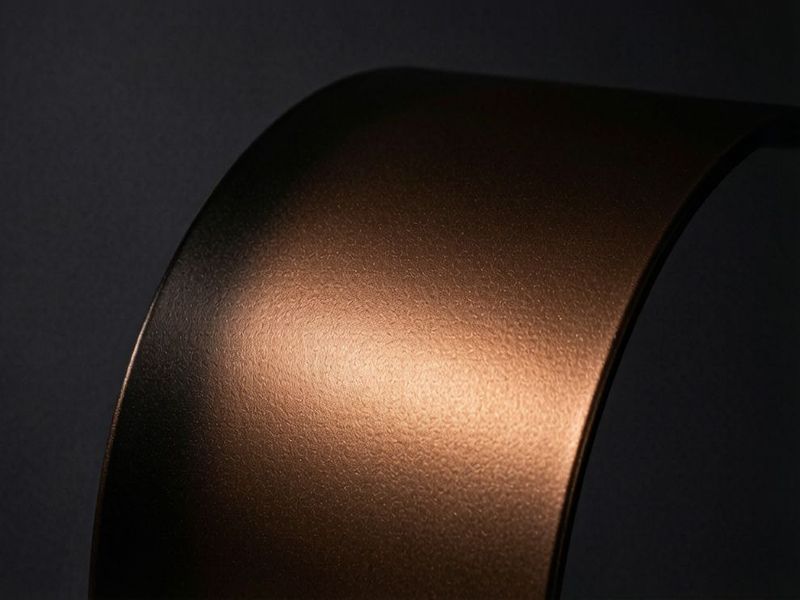
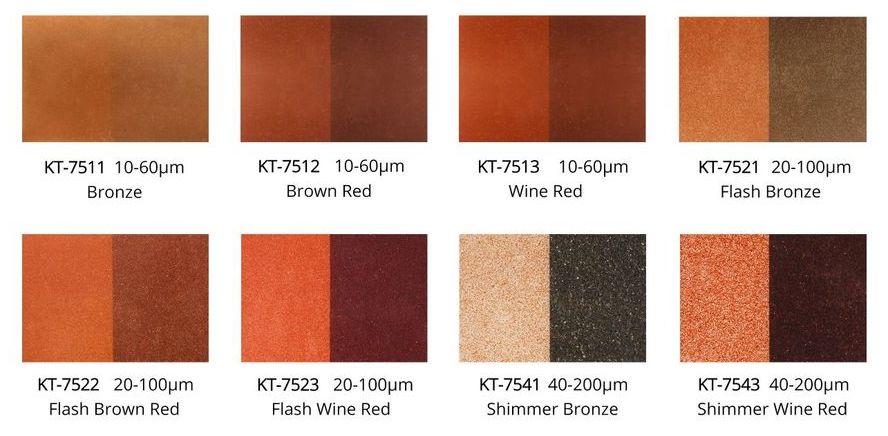
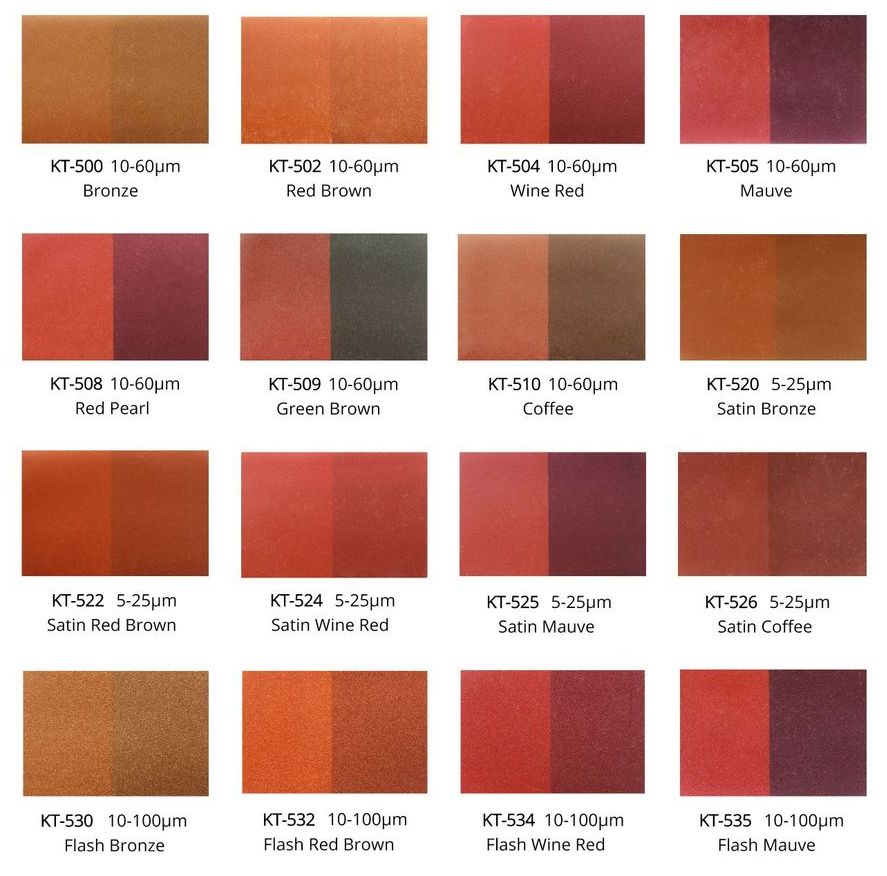
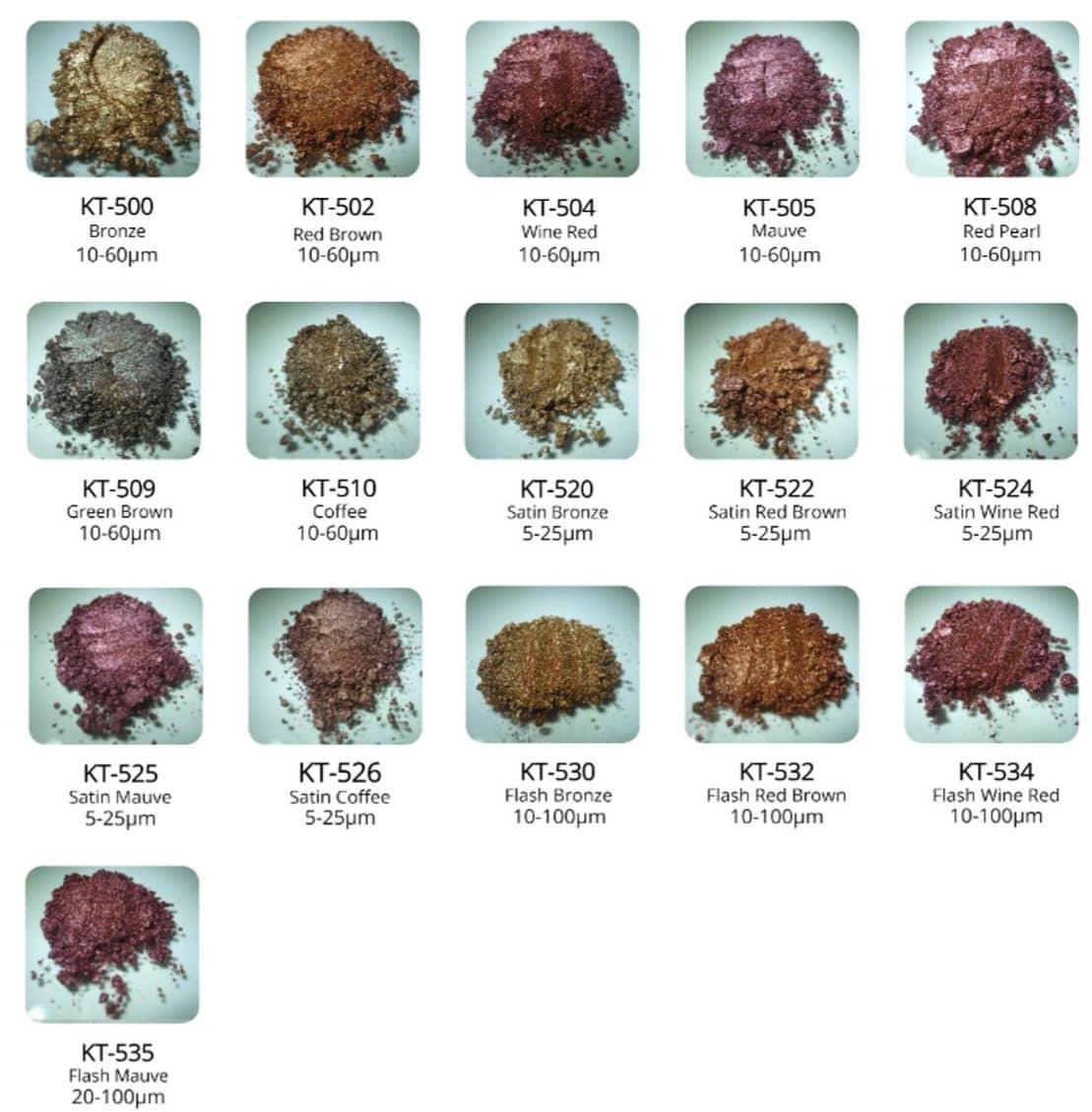
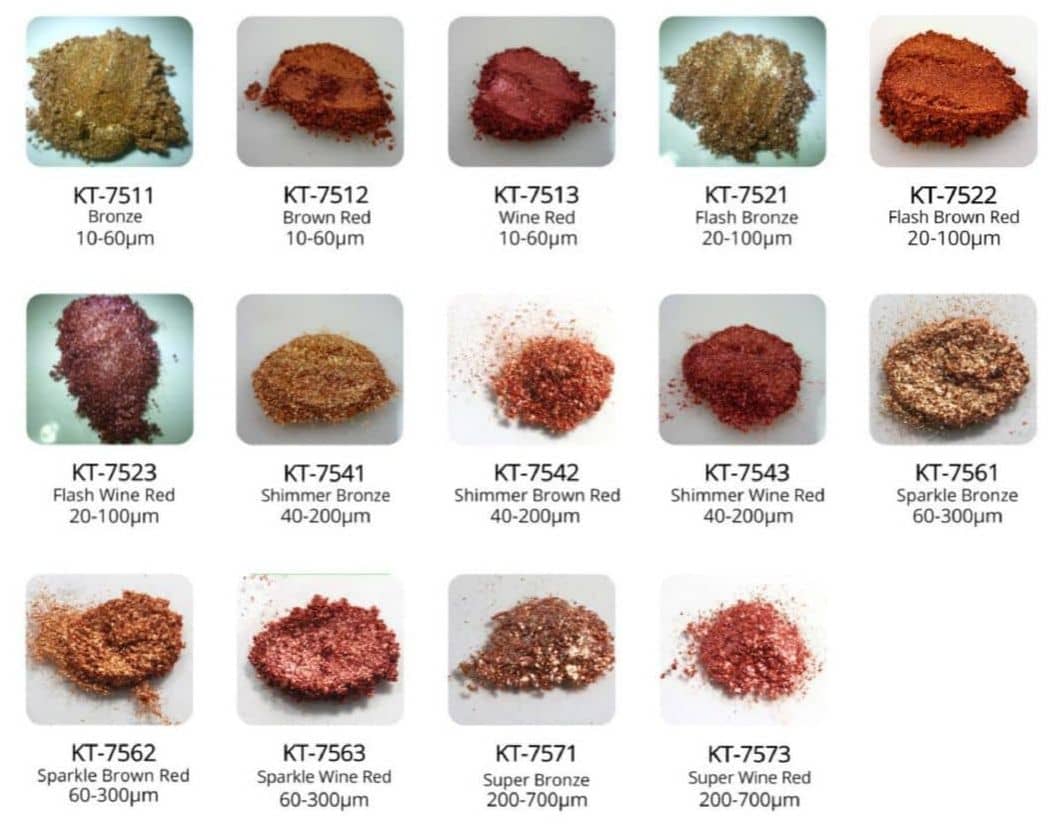
Bronze metallic mica powder delivers a warm, opaque earth-tone metallic finish through an iron oxide (Fe₂O₃) coating on natural muscovite mica — producing consistent color at every viewing angle, not just at specular reflection. Our KT-500 Metal Luster Series covers three particle size grades (5–25 μm through 10–100 μm) to match everything from fine satin coverage to high-sparkle flash effects. Heat stability to 800°C and a fully TiO₂-free composition make these grades relevant across coatings, plastics, inks, and cosmetics alike.
Most effect pigments in our catalog — the KT-100 Silver White series, KT-200 Interference grades — rely on thin-film interference from a TiO₂ coating. The color you see shifts with the viewing angle, which is exactly what formulators want for a chromatic, flip-flop finish. Bronze metallic mica works on a fundamentally different principle. The iron oxide layer absorbs specific wavelengths and reflects the remaining light as a warm bronze tone that reads the same from every angle. That behavior puts it in the absorption-based metallic category alongside copper and gold effect pigments — not the interference category.
For a formulator, this distinction matters in two practical ways. First, hiding power is high — Fe₂O₃ is an opaque pigment, so the bronze color covers the substrate rather than letting it show through. Second, the finish reads as a solid metallic earth tone under any light source or geometry, which is often exactly what's needed for wood coatings, dashboard accents, or bronze-toned cosmetics where angle-dependence would look wrong.
The KT-500 Metal Luster Series uses natural muscovite mica as the substrate across all grades. Three particle size cuts are available for bronze, each producing a visibly different surface effect. Selecting the right grade is primarily a function of the optical effect required and the coating or ink system's ability to orient and protect the flakes.
| Model Code | Grade Name | Particle Size | Mesh | Visual Character | Iriodin® Equivalent |
|---|---|---|---|---|---|
| KT-520 | Satin Bronze | 5–25 μm | 800 | Smooth, fine coverage; satin sheen | Iriodin® 520 Satin Bronze |
| KT-500 | Bronze | 10–60 μm | 400 | Classic metallic luster; balanced sparkle and coverage | Iriodin® 500 Bronze |
| KT-530 | Flash Bronze | 10–100 μm | 200 | High sparkle; dramatic flash effect | Iriodin® 530 Flash Bronze |
The satin grade (KT-520) is the natural choice where surface smoothness matters as much as color — fine cosmetic bronzers, screen printing inks with tight film thickness tolerances, and furniture coatings where a refined finish is expected. KT-500 standard grade gives the broadest coverage with a well-balanced metallic depth, making it the default starting point for most coatings and plastics trials. KT-530 flash grade trades some coverage uniformity for visible sparkle points — useful in decorative coatings or automotive interior trim where dynamic light reflection is part of the design intent.
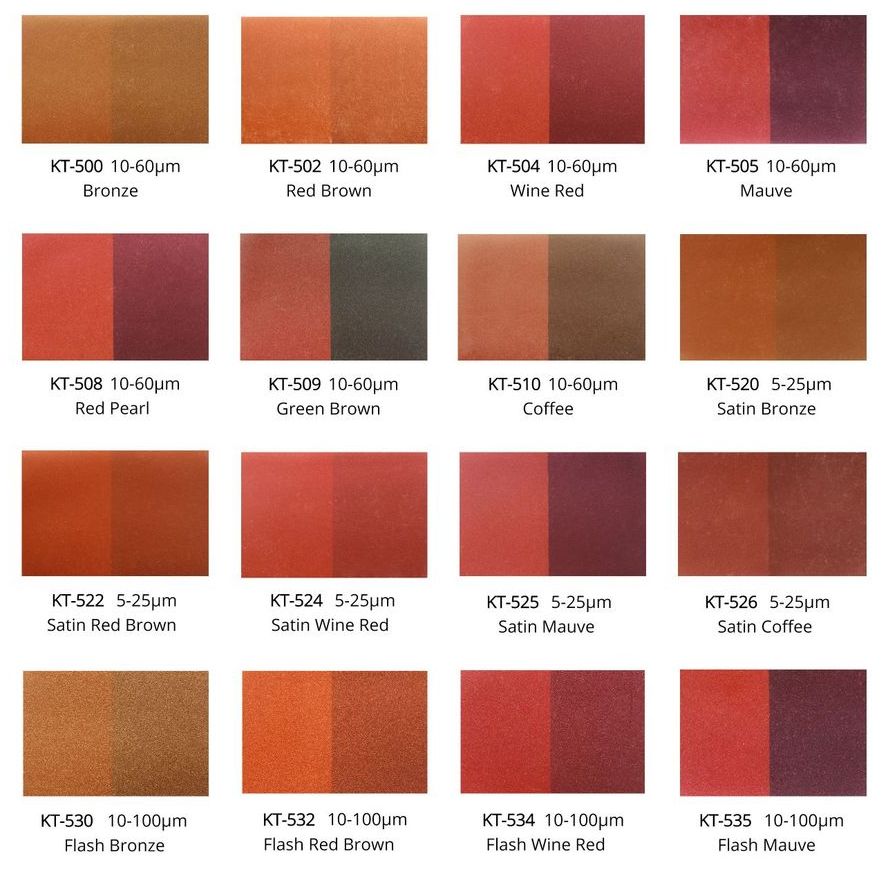
The broader color family in the KT-500 series extends beyond bronze into Red Brown, Wine Red, Mauve, Coffee, Red Pearl, and Green Brown — all sharing the same iron oxide on muscovite mica construction. This lets formulators build a harmonized earth-tone palette from a single supplier source and a common dispersion baseline.
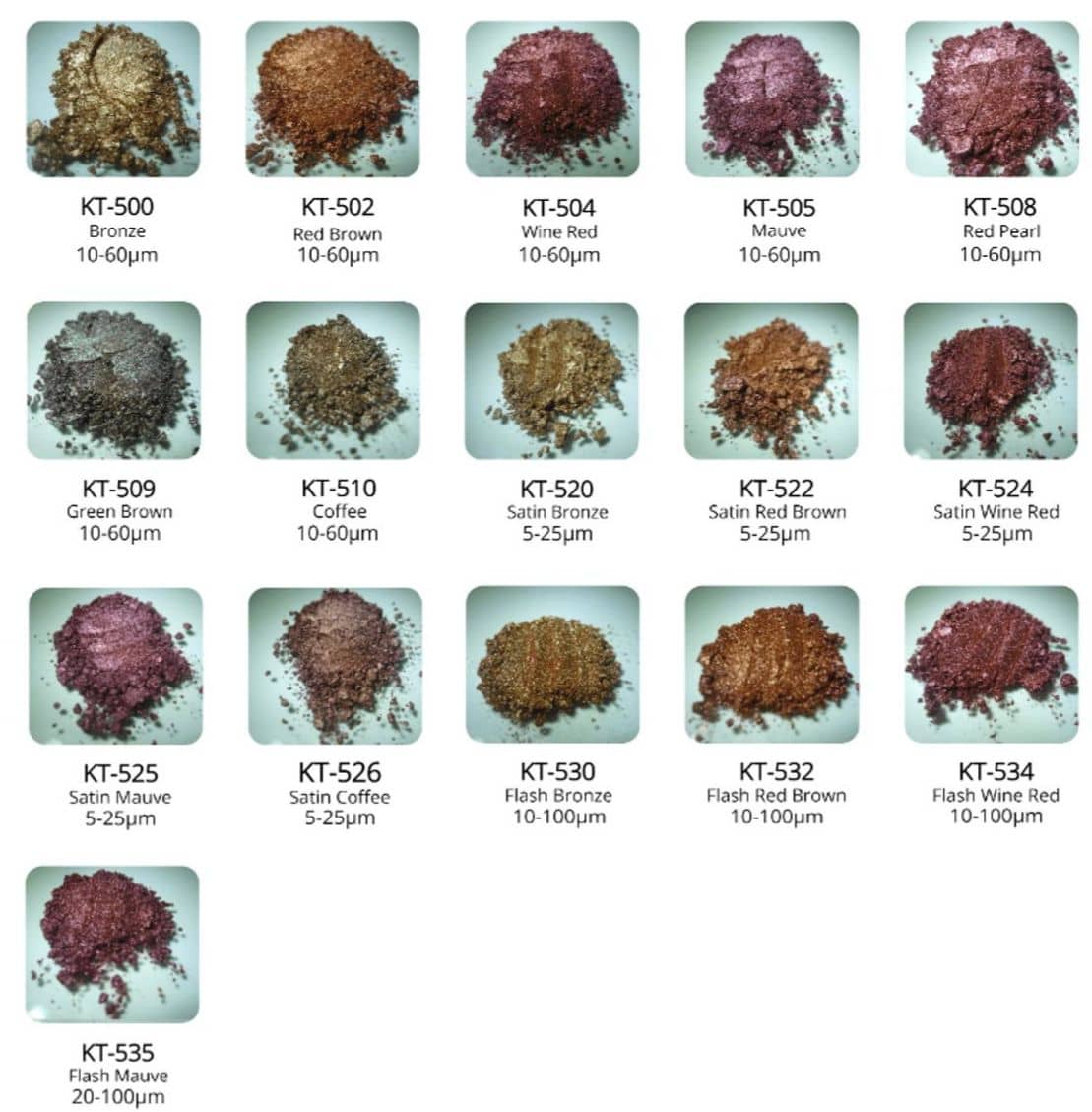
The properties below are specific to the KT-500 series. Parameters not listed here — oil absorption, solvent compatibility, recommended loading rates — are available on request via the product TDS.
The 800°C heat stability figure is worth noting for industrial applications. It makes the KT-500 series compatible with powder coatings and high-bake automotive systems where standard organic colorants would degrade. Iron oxide is also inherently UV-resistant, so the bronze color will not fade through UV-initiated degradation the way organic dyes or some interference pigments can.
The TiO₂-free composition has become increasingly relevant. EU cosmetics regulation considerations and eco-label certification requirements have pushed formulators to identify alternatives to TiO₂-containing effect pigments. The entire KT-500 series was developed without TiO₂, which simplifies compliance review for bronzer and eyeshadow formulations targeting EU markets — though final suitability always depends on the selected grade, intended use, and regional requirements.
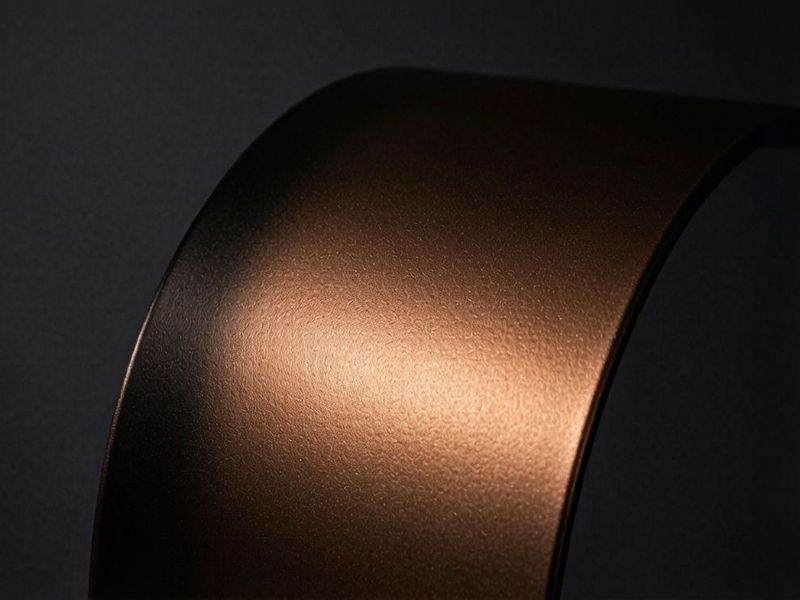
Bronze, copper, and earth-tone metallic finishes in architectural and industrial coatings are a primary use case for the KT-500 series. The angle-independent color behavior means the bronze reads consistently across large flat panels and curved surfaces — no color flip or washed-out face angle typical of interference grades. The heat stability makes it compatible with stoving lacquers and powder coating systems.
In our experience supporting automotive coating customers, dashboard accents and interior trim are among the more demanding applications for bronze-toned effect pigments. The combination of heat stability, good chemical resistance, and consistent warm metallic color makes the KT-500 grade a practical candidate for these substrates. Specific resin system compatibility should be confirmed at the TDS or sample stage.
Earth-tone consumer product housings, packaging, and decorative plastic components are a natural fit. The density of approximately 2.9–3.1 g/cm³ and the particle size range of the standard KT-500 grade suit typical masterbatch processing. For finer surface finish requirements — such as cosmetic packaging injection molding — KT-520 (5–25 μm) is the more appropriate starting point.
Bronze and coffee tones in furniture and flooring coatings are another well-established application. The satin grade (KT-520) integrates cleanly into fine wood finishes where visible sparkle would be distracting. The KT-500 standard grade is more commonly used where a visible metallic warmth is part of the design intent.
Metallic earth-tone printing — packaging, decorative print runs, specialty labels — benefits from the consistent angle-independent color of the KT-500 series. The 5–25 μm satin grade is the practical choice for most flexo or gravure systems given film thickness constraints.
The TiO₂-free construction and the availability of a fine satin grade (KT-520, 5–25 μm) make the KT-500 series a usable candidate for pressed bronzers and earth-tone eyeshadow compacts. Cosmetic-grade options are available, but final suitability depends on the selected grade and the regulatory requirements of the target market. For EU cosmetics, the TiO₂-free nature removes one compliance variable; other regulatory confirmations remain the formulator's responsibility.
Kolortek operates under ISO 9001:2015 quality management, covering production and sales of pigments and related products. SDS documentation ships with all orders; Technical Data Sheets detailing physical and chemical properties are available for the KT-500 series grades.
On REACH: our REACH registration certificate currently covers fluorphlogopite (synthetic mica). For natural muscovite mica grades including the KT-500 series, product-specific confirmation is required — contact our team before specifying for REACH-sensitive supply chains. For cosmetic applications in the EU (EC No 1223/2009) or the US FDA framework, cosmetic-grade options are available; grade selection and intended use need to be confirmed at the application stage.
For teams transitioning from Merck Iriodin® grades, our cross-reference program maps KT-500, KT-520, and KT-530 directly to the Iriodin® 500, 520, and 530 equivalents. That alignment typically reduces qualification time and simplifies side-by-side draw-down comparison during supplier evaluation.
What is the difference between KT-520, KT-500, and KT-530 bronze grades?
The three grades differ only in particle size, which directly controls the visual effect. KT-520 (5–25 μm, 800 mesh) produces a smooth satin finish with fine coverage — suited to cosmetics and thin-film inks. KT-500 (10–60 μm, 400 mesh) gives a classic metallic luster balanced between sparkle and coverage. KT-530 (10–100 μm, 200 mesh) delivers maximum sparkle and a dramatic flash effect, typically used in decorative coatings and interior trim. All three share the same iron oxide on muscovite mica construction.
Is this mica based pigment suitable for cosmetics, and is it TiO₂-free?
Yes, the entire KT-500 Metal Luster Series is TiO₂-free — the color comes from an iron oxide (Fe₂O₃) coating only. Cosmetic-grade options are available, particularly the KT-520 fine satin grade (5–25 μm) for pressed bronzers and eyeshadow formulations. Final suitability depends on the specific grade selected, the intended use, and the target market's regulatory requirements (EU EC No 1223/2009, US FDA color additive framework). Confirm grade and compliance details with our technical team before finalizing a cosmetic formulation.
How does bronze metallic mica powder compare to Iriodin® 500 Bronze?
KT-500 Bronze is a direct equivalent to Iriodin® 500 Bronze, with KT-520 and KT-530 mapping to Iriodin® 520 and 530 respectively. Both are iron oxide–coated natural mica with matching particle size ranges. Kolortek maintains a formal cross-reference program to support supplier transitions — draw-down comparisons on standard substrates are the recommended qualification step. If your specification was written around Iriodin® grades, the KT-500 series is the starting point for evaluation.
What is the heat resistance of bronze metallic mica pigment, and can it be used in powder coatings?
The KT-500 series is heat stable to 800°C. That thermal ceiling comfortably covers typical powder coating cure cycles and high-bake automotive stoving schedules. The iron oxide colorant is inherently stable at these temperatures, unlike organic pigments that can shift color or decompose under sustained heat. Specific processing parameters for your system should still be verified against the TDS.
Contact our technical team to discuss grade selection and formulation requirements for your specific application.
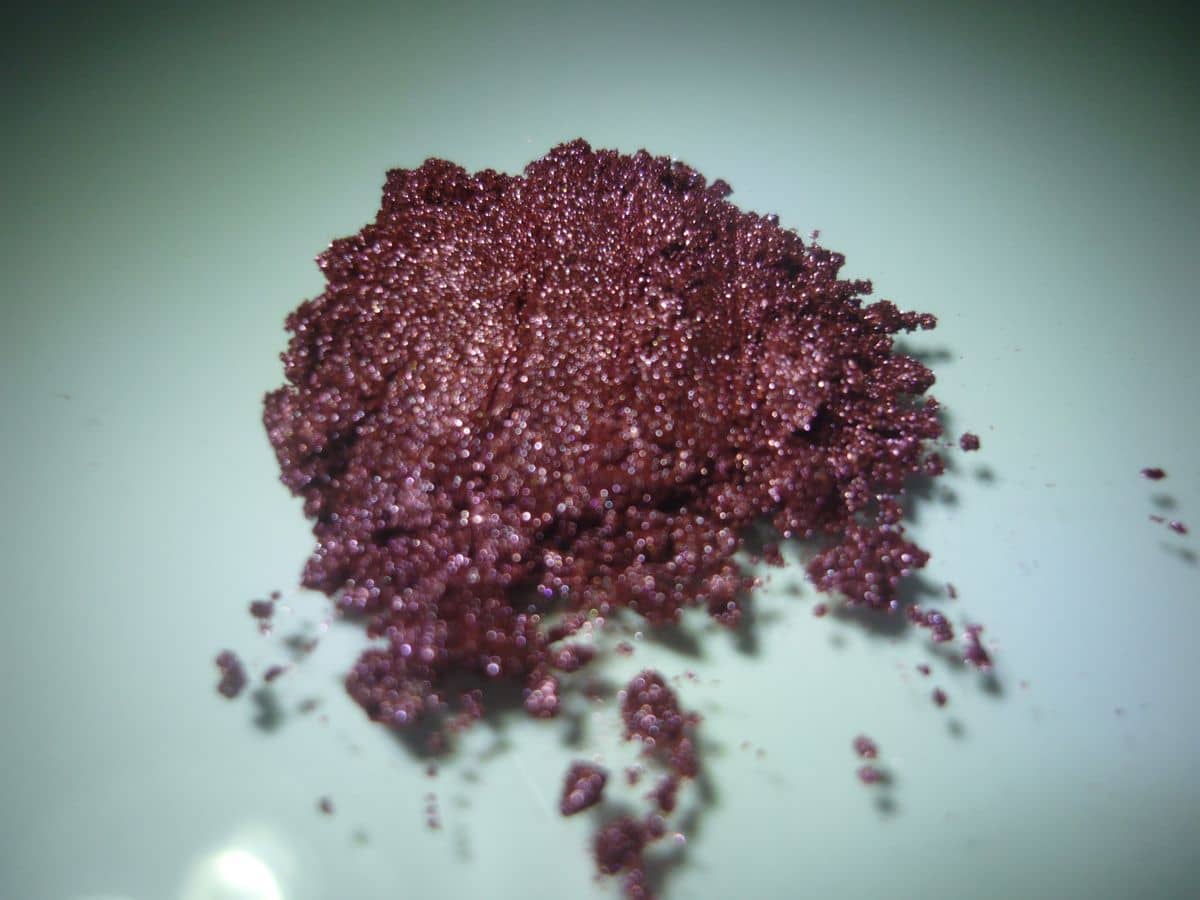
KT-535 is a flash mauve pigment built on mica flakes coated with ferric oxide, delivering a warm, richly toned metallic shimmer with strong opacity. The iron oxide mica construction gives it reliable chemical and physical stability across demanding substrates. It performs consistently in automotive coatings, decorative paints, and cosmetic formulations where a deep mauve metallic effect is required.
Read More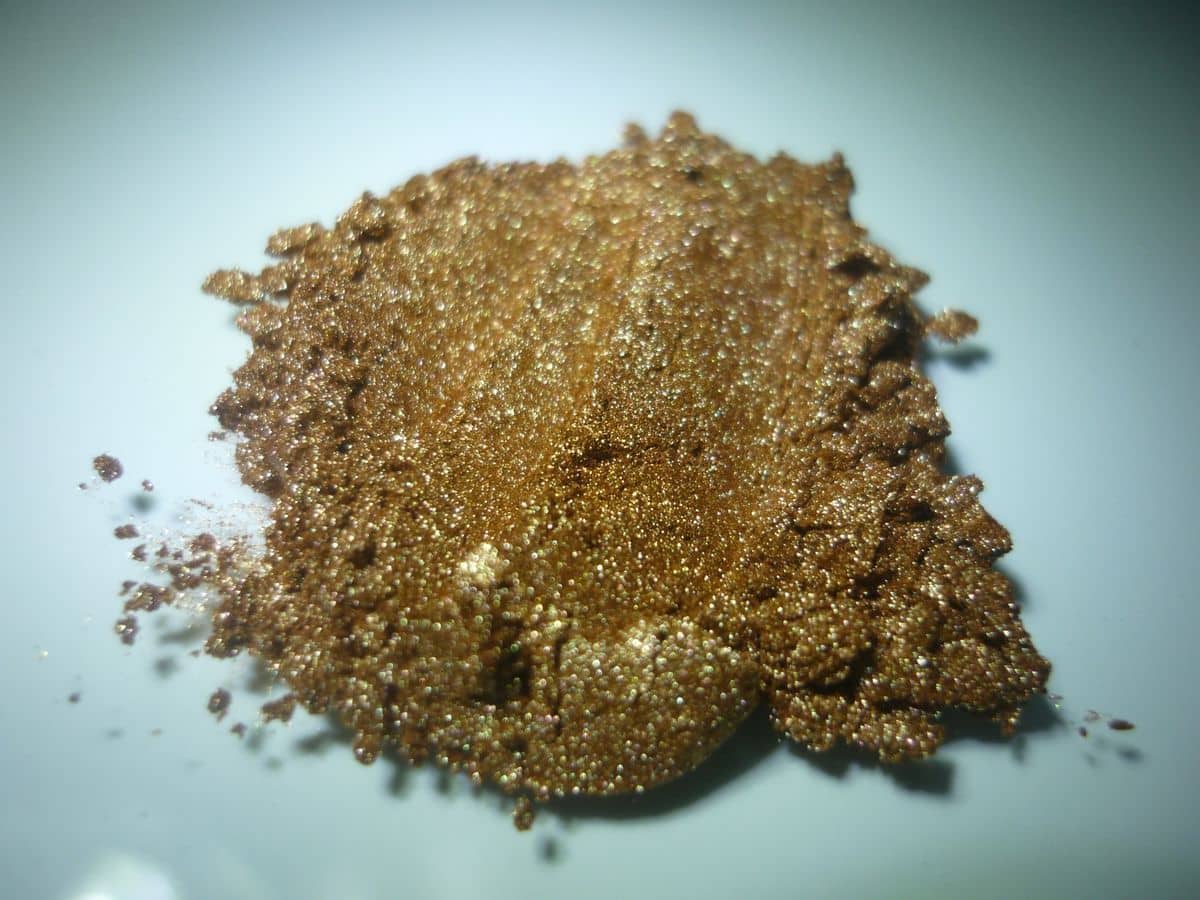
KT-7511 is a bronze synthetic mica pigment built on a fluorphlogopite base coated with iron oxide, delivering a warm, rich metallic luster with strong coverage. Synthesized from high-purity fluorphlogopite, it outperforms natural mica in brightness, color consistency, and thermal stability. Well-suited for cosmetics, decorative coatings, and nail applications where clean metallic effects and reliable batch-to-batch performance matter.
Read More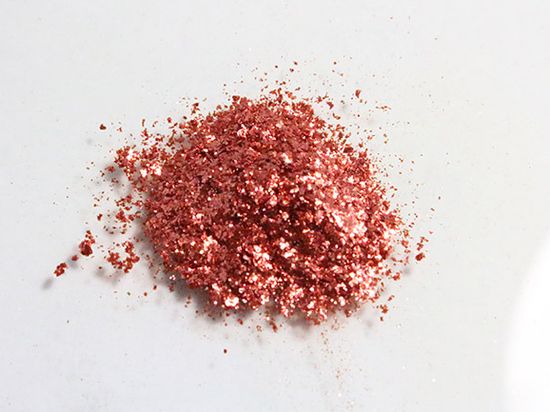
KT-7573 is a coarse mica powder delivering a deep, warm wine red metallic effect built on a fluorphlogopite base — engineered for applications where coverage, sparkle, and color depth all matter. Compared to natural mica equivalents, it offers noticeably cleaner color, fewer surface defects, and stronger luster retention under demanding conditions. Widely used in epoxy floors, decorative coatings, and craft art where coarse particle brilliance is a design requirement.
Read More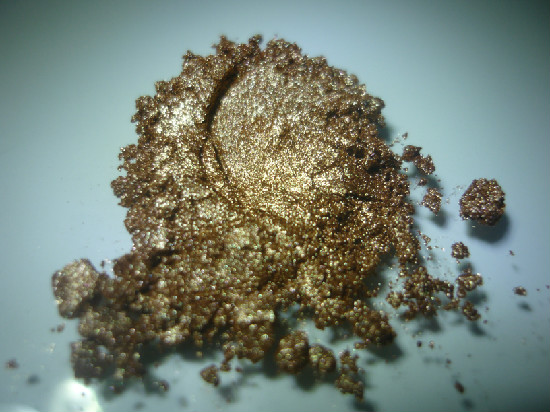
KT-500 is a bronze mica pigment built on natural mica flakes coated with ferric oxide, delivering a warm, rich metallic luster with strong opacity — a direct functional match to the iriodin effect found in Merck's widely specified 500-series. Suited for decorative coatings, epoxy floors, and cosmetic formulations where consistent, high-coverage metallic bronze is required, KT-500 is a well-established iriodin 500 equivalent used by formulators across multiple industries.
Read More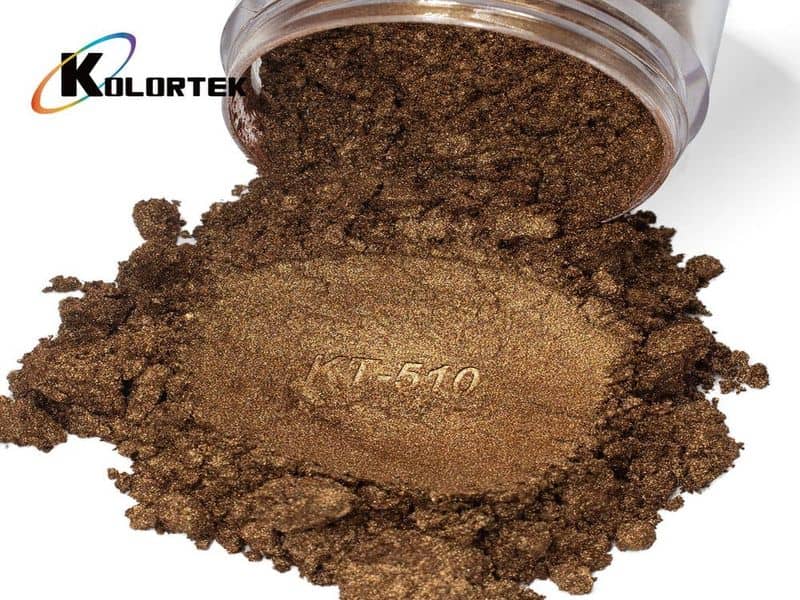
KT-510 is a natural mica-based iron oxide mica pigment delivering a rich coffee-brown metallic lustre with strong opacity — a direct functional equivalent to Merck pearlescent pigments in the Iriodin 510 series. Its warm, deep tone and consistent metallic finish make it a practical choice for decorative coatings, cosmetic formulations, and specialty printing applications.
Read More
KT-532 is a natural mica-based flash red brown pigment coated with ferric oxide, delivering a warm, sparkling metallic luster with strong opacity — well suited for decorative coatings, epoxy floors, and cosmetic applications. Formulated as a cost-effective iriodin 532 alternative, it matches the same mica substrate, iron oxide chemistry, and particle size range as Merck's original, making it a straightforward drop-in for formulators already working with iriodin equivalents in their systems.
Read More
Bronze metallic mica powder delivers a warm, opaque earth-tone metallic finish through an iron oxide (Fe₂O₃) coating on natural muscovite mica — producing consistent color at every viewing angle, not just at specular reflection. Our KT-500 Metal Luster Series covers three particle size grades (5–25 μm through 10–100 μm) to match everything from fine satin coverage to high-sparkle flash effects. Heat stability to 800°C and a fully TiO₂-free composition make these grades relevant across coatings, plastics, inks, and cosmetics alike.
Read More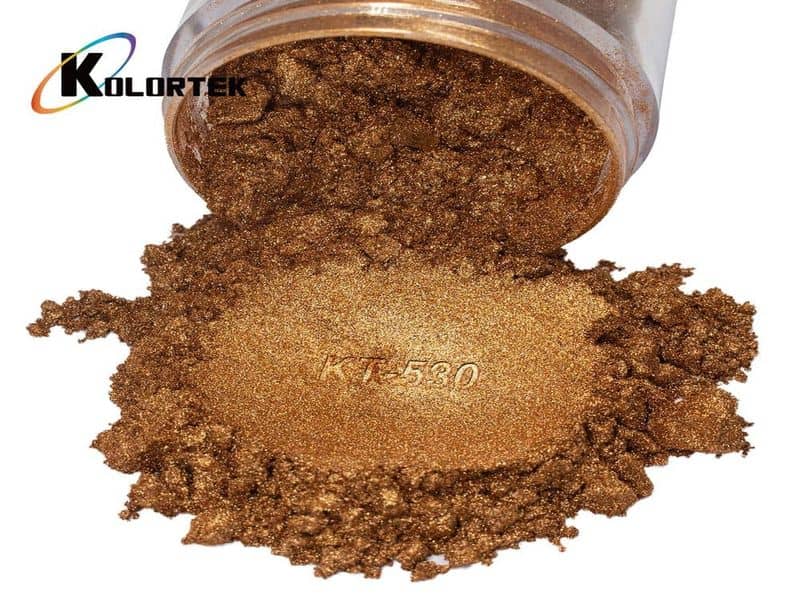
Bulk bronze mica-based pigment delivers rich copper and earth-tone metallic finishes through iron oxide–coated natural mica. Our KT-500 Metal Luster Series spans three particle sizes—5–25 μm for smooth satin coverage, 10–60 μm for classic luster, and 10–100 μm for high-sparkle effects—all heat-stable to 800°C and fully TiO₂-free, making them suitable for coatings, automotive interiors, plastics, and cosmetic bronzers where you need consistent color at every viewing angle.
Read More
 English
 Français
 Deutsch
 Русский
 Español
 Português