
Leave A Message
If you are interested in our products and want to know more details,please leave a message here,we will reply you as soon as we can.
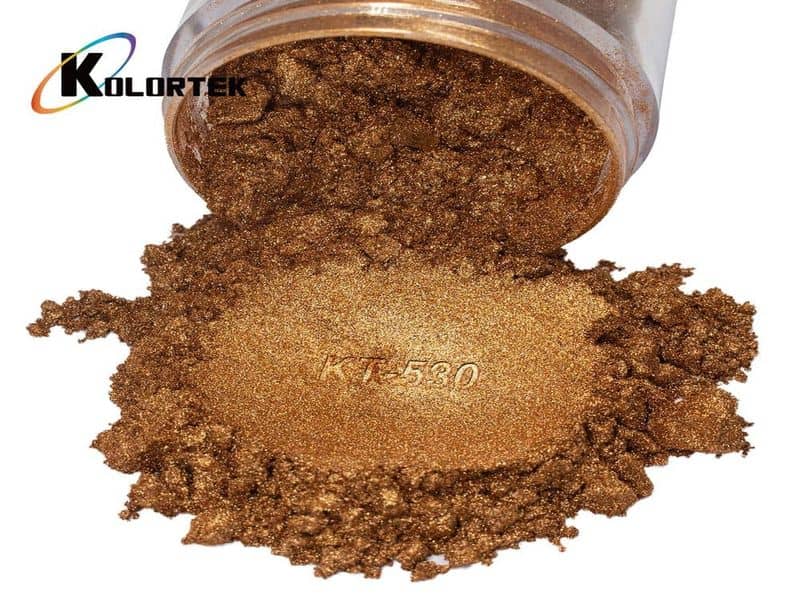
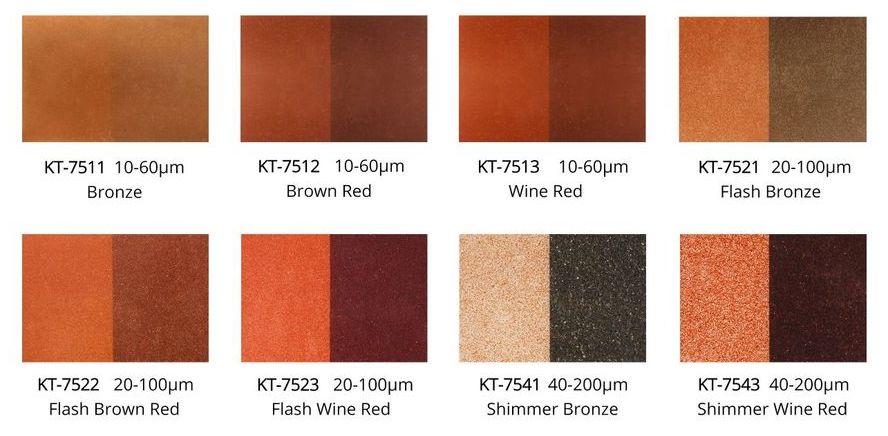
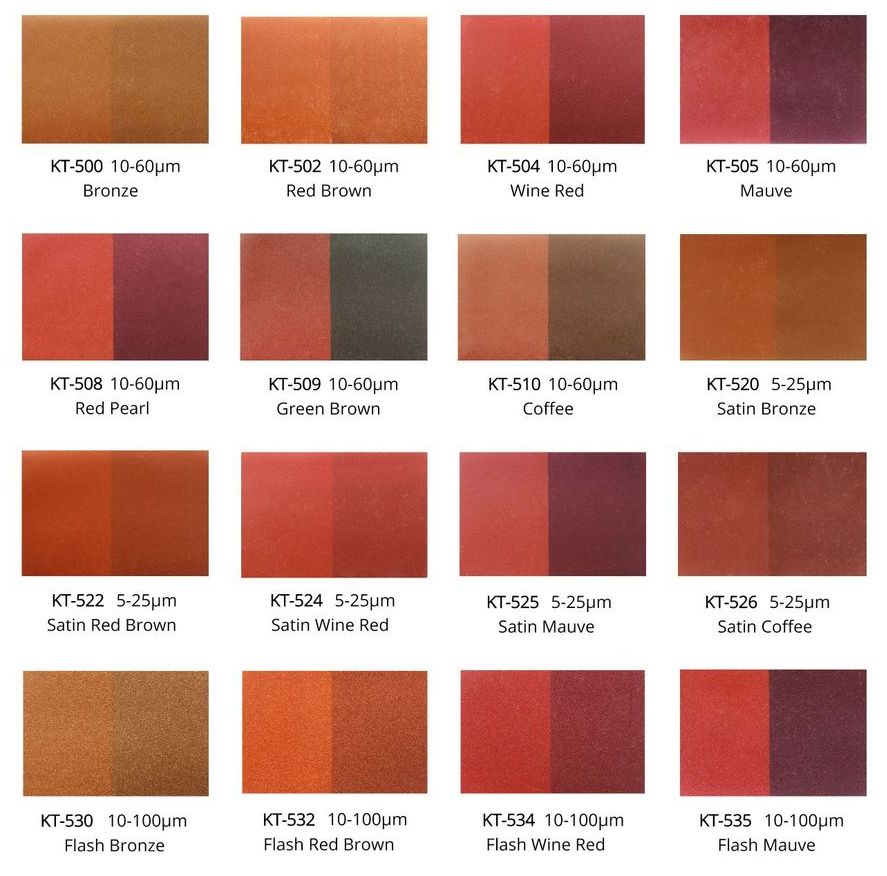
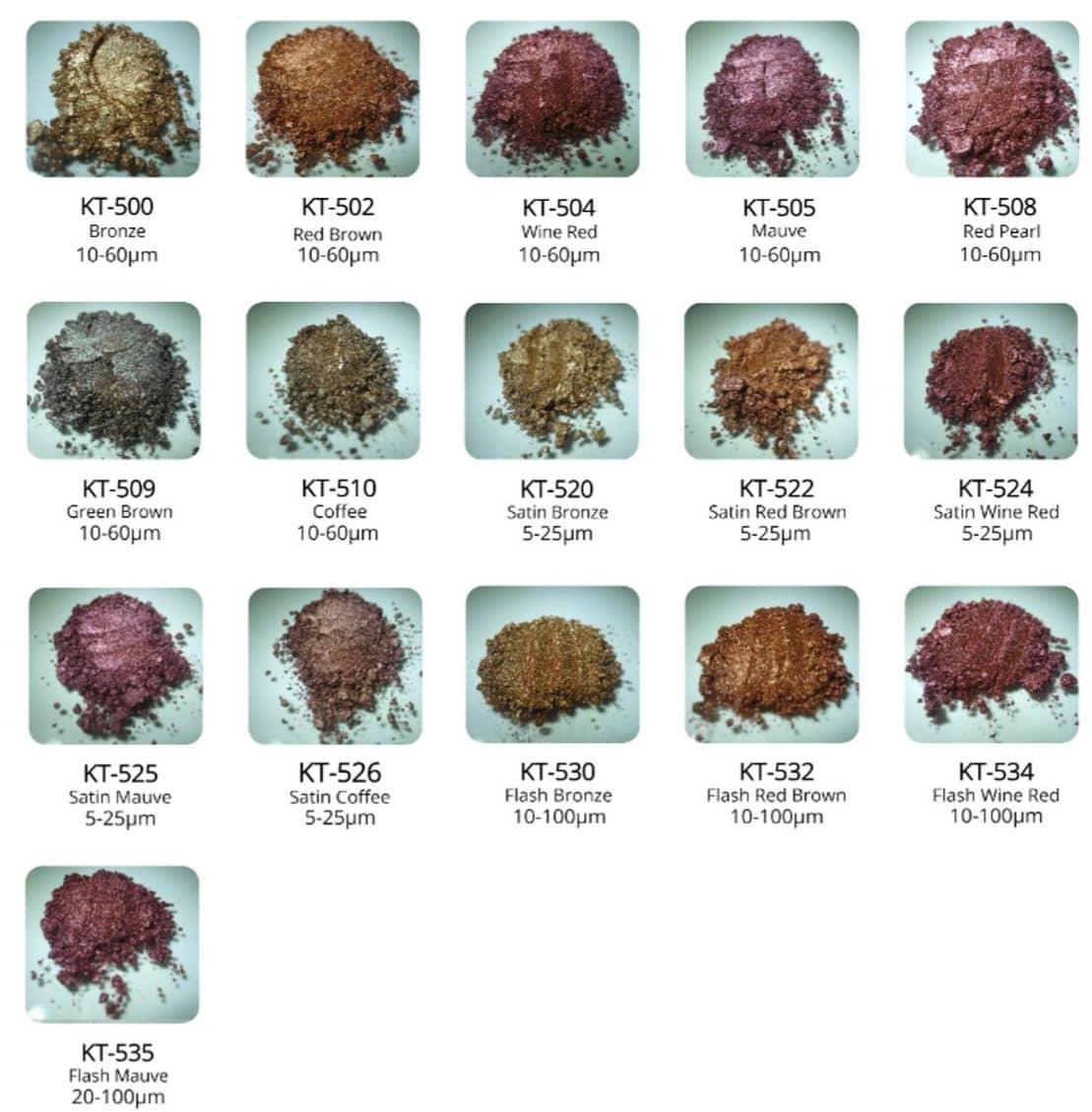
Bulk bronze mica-based pigment delivers rich copper and earth-tone metallic finishes through iron oxide–coated natural mica. Our KT-500 Metal Luster Series spans three particle sizes—5–25 μm for smooth satin coverage, 10–60 μm for classic luster, and 10–100 μm for high-sparkle effects—all heat-stable to 800°C and fully TiO₂-free, making them suitable for coatings, automotive interiors, plastics, and cosmetic bronzers where you need consistent color at every viewing angle.
Unlike interference pigments that shift color with viewing angle, bronze mica pigment relies on iron oxide coating to produce color through light absorption. In our application lab, we see formulators choose the KT-500 series when they need a stable, warm metallic tone—bronze, copper, wine red, coffee—that reads the same from every direction. The iron oxide layer is opaque, so hiding power is excellent, and the natural mica substrate contributes a soft metallic shimmer without the angular color play of TiO₂-based pearls.
Because there's no titanium dioxide in the coating structure, the entire series is TiO₂-free—relevant for EU cosmetics labeling and for coatings projects where you want to avoid TiO₂ declarations. The trade-off is that you lose the bright interference colors, but you gain thermal stability (800°C), UV durability (iron oxide doesn't photodegrade), and a rich earth-tone palette that works across industrial and decorative applications.
We developed the KT-500 Metal Luster Series with three particle-size tiers to give formulators precise control over surface finish and sparkle intensity. The table below shows the bronze variants; the same size structure applies to the full color range (red brown, wine red, mauve, coffee, green brown).
| Model | Color | Particle Size | Mesh | Effect |
|---|---|---|---|---|
| KT-520 | Satin Bronze | 5–25 μm | 800 | Smooth, fine, good coverage |
| KT-500 | Bronze | 10–60 μm | 400 | Classic pearl luster |
| KT-530 | Flash Bronze | 10–100 μm | 200 | High sparkle, dramatic effect |
In practice, finer particles (5–25 μm) give a smooth, even finish with minimal texture—ideal for automotive interior trim and high-coverage coatings. The medium range (10–60 μm) is the workhorse grade for general decorative coatings and cosmetics. Coarser particles (10–100 μm) deliver high sparkle and are popular in nail lacquers, novelty plastics, and accent coatings where you want visible glitter.
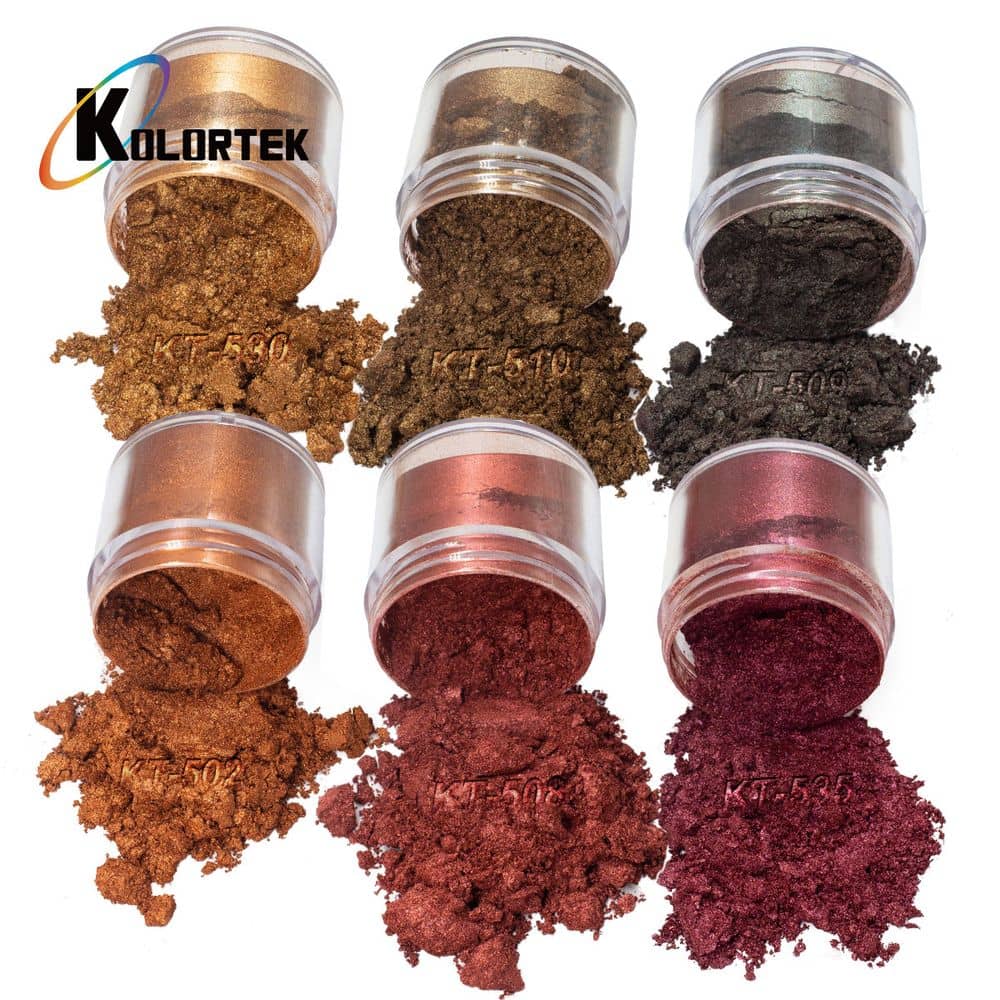
The substrate is natural muscovite mica. We coat it with a controlled thickness of Fe₂O₃ (iron oxide) to achieve the target bronze or earth-tone color. Because the coating is absorption-based rather than interference-based, you don't see the angle-dependent color flip that TiO₂ multilayers produce. Color stays consistent regardless of viewing geometry, which is an advantage in applications where uniform appearance matters—think automotive dashboards or architectural panels viewed from multiple angles.
All KT-500 grades are heat-stable to 800°C, which covers powder coating bake cycles, plastic extrusion at typical processing temperatures, and even some high-temperature industrial coatings. Iron oxide is inherently UV-stable—no photocatalytic activity, no chalking—so outdoor durability is strong. Chemical resistance is good across most common solvents and pH ranges, though we don't have public data on specific acid/base limits for this series.
Iron oxide is an opaque pigment, so hiding power is excellent—you'll typically need less pigment by weight compared to transparent interference grades to achieve full color development. Density runs around 2.9–3.1 g/cm³, slightly higher than pure mica due to the iron oxide layer.
Bronze and earth-tone finishes are popular in wood coatings (furniture, flooring), metal decorative coatings, and architectural accent panels. The stable color and high heat tolerance make bulk bronze mica powder suitable for powder coatings as well as solvent- and water-based liquid systems. From our experience supporting coatings customers, the medium-size KT-500 Bronze is the most versatile starting point; switch to KT-520 Satin if you need a finer, more uniform appearance, or to KT-530 Flash if the design calls for high sparkle.
Dashboard trim, door panels, and center-console accents often use bronze or coffee-tone metallics to complement warm interior color schemes. The TiO₂-free formulation simplifies regulatory documentation for automotive OEMs, and the 800°C heat stability covers the bake schedules used in interior-part coatings and plastic masterbatch processing.
Earth-tone metallics are common in consumer-product housings, packaging, and novelty items. The KT-500 series disperses into PE, PP, ABS, and PVC masterbatch; the iron oxide coating is thermally stable through typical extrusion and injection-molding cycles. One thing to note: coarser grades (KT-530) can create visible sparkle in thin-wall parts, which may or may not be desirable depending on the design brief.
Bronze and copper metallics are staples in packaging and decorative printing. The finer KT-520 Satin grade works well in gravure and flexo systems where you need smooth ink flow and minimal nozzle clogging. Screen-printing and offset can handle the medium KT-500 grade for richer metallic effects.
TiO₂-free bronzers, earth-tone eye shadows, and warm-tone highlighters are the primary cosmetic applications. The EU Cosmetics Regulation has specific TiO₂ labeling and nanoparticle requirements, so formulators targeting that market often prefer the KT-500 series to avoid those complexities. The iron oxide coating is generally recognized as safe in color cosmetics, though formulators should confirm regulatory status for their specific product category and market.
The KT-500 Metal Luster Series was designed as a direct alternative to Merck's Iriodin® iron-oxide mica pigments. The table below shows the one-to-one mappings for the bronze grades; the same pattern holds across the full color range.
| Kolortek Model | Iriodin® Equivalent | Particle Size |
|---|---|---|
| KT-520 | Iriodin 520 Satin Bronze | 5–25 μm |
| KT-500 | Iriodin 500 Bronze | 10–60 μm |
| KT-530 | Iriodin 530 Flash Bronze | 10–100 μm |
Performance characteristics—color, luster, heat stability—are comparable. The key differentiator is supply-chain flexibility: we manufacture in-house with 20+ years of process control, so lead times and minimum-order quantities are often more favorable than European imports. For procurement teams managing cost and continuity, the KT-500 series offers a qualified alternative with the same technical backbone—natural mica substrate, controlled iron oxide coating, TiO₂-free composition.
What is the difference between KT-500 Bronze and KT-530 Flash Bronze?
Particle size: KT-500 is 10–60 μm (400 mesh) for a classic smooth luster, while KT-530 is 10–100 μm (200 mesh) for high sparkle and dramatic glitter effect. Choose KT-500 for even, professional finishes; use KT-530 when you want visible metallic flakes and stronger light reflection.
Is bulk bronze mica pigment suitable for outdoor coatings?
Yes. The iron oxide coating is UV-stable and does not photodegrade, and the pigment is heat-stable to 800°C. We've seen successful outdoor applications in architectural panels and decorative metal coatings. Pair with a UV-stable binder system for best long-term weatherability.
Can I use KT-500 series pigments in cosmetics sold in the EU?
The entire KT-500 series is TiO₂-free, which simplifies EU Cosmetics Regulation compliance related to titanium dioxide labeling and nanoparticle declarations. Iron oxide is widely approved for cosmetic use, but formulators should confirm the specific regulatory status (CI number, purity, permitted applications) for their target market and product category.
What is the recommended loading rate for bronze mica powder in coatings?
We don't have public data on loading rates for the KT-500 series. Typical starting points for iron-oxide mica pigments in coatings are 2–8% by weight, depending on desired color depth and hiding power. Because iron oxide has excellent opacity, you'll often need less pigment than with transparent interference grades to achieve full color development.
Contact our technical team to discuss formulation requirements for your specific application.
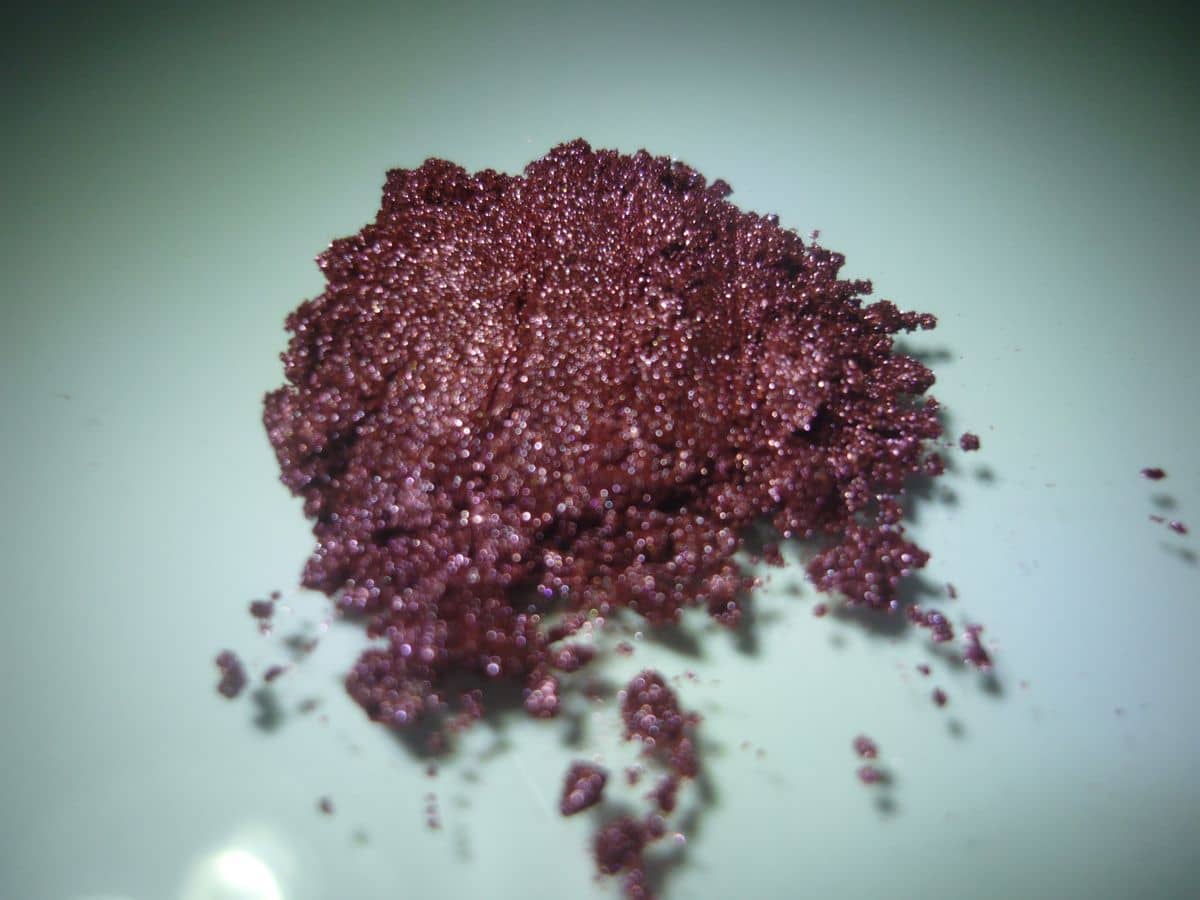
KT-535 is a flash mauve pigment built on mica flakes coated with ferric oxide, delivering a warm, richly toned metallic shimmer with strong opacity. The iron oxide mica construction gives it reliable chemical and physical stability across demanding substrates. It performs consistently in automotive coatings, decorative paints, and cosmetic formulations where a deep mauve metallic effect is required.
Read More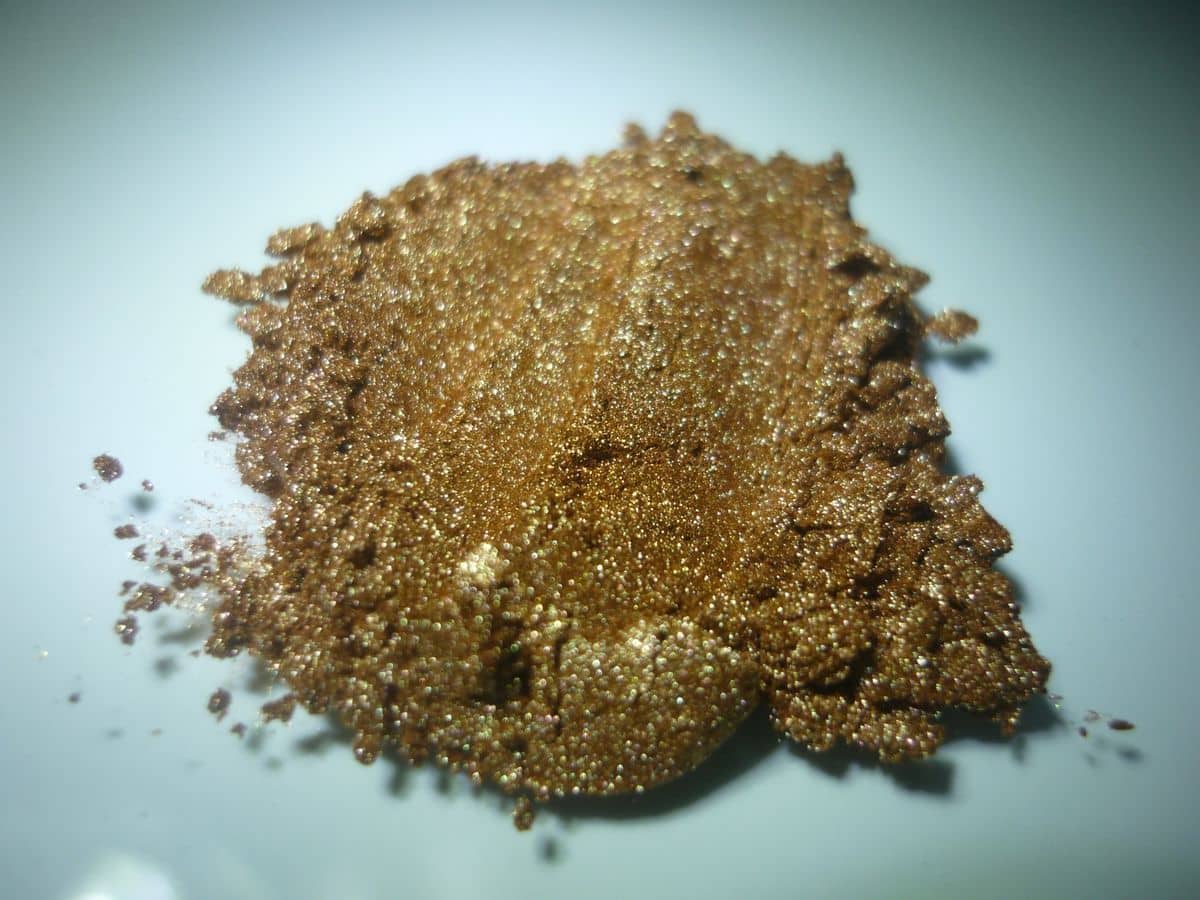
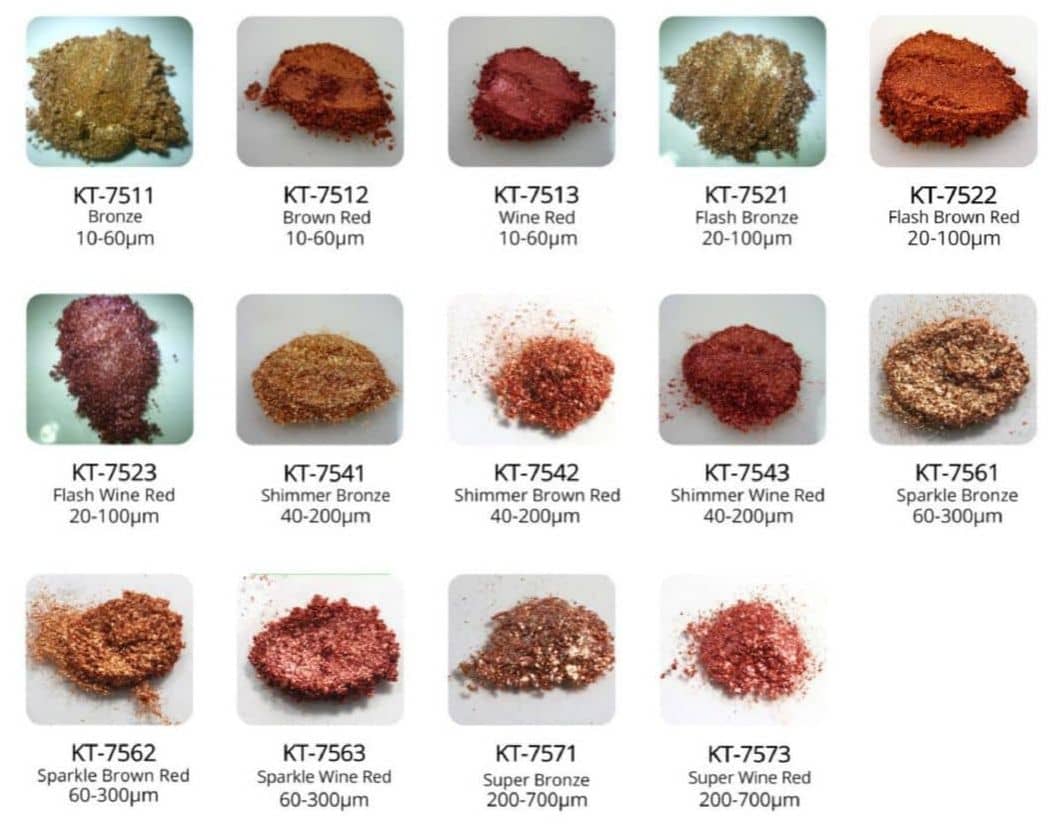
KT-7511 is a bronze synthetic mica pigment built on a fluorphlogopite base coated with iron oxide, delivering a warm, rich metallic luster with strong coverage. Synthesized from high-purity fluorphlogopite, it outperforms natural mica in brightness, color consistency, and thermal stability. Well-suited for cosmetics, decorative coatings, and nail applications where clean metallic effects and reliable batch-to-batch performance matter.
Read More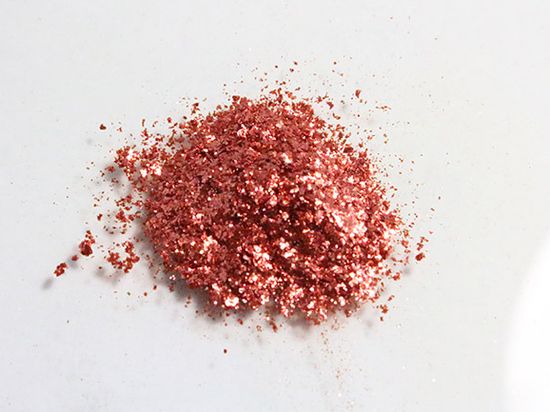
KT-7573 is a coarse mica powder delivering a deep, warm wine red metallic effect built on a fluorphlogopite base — engineered for applications where coverage, sparkle, and color depth all matter. Compared to natural mica equivalents, it offers noticeably cleaner color, fewer surface defects, and stronger luster retention under demanding conditions. Widely used in epoxy floors, decorative coatings, and craft art where coarse particle brilliance is a design requirement.
Read More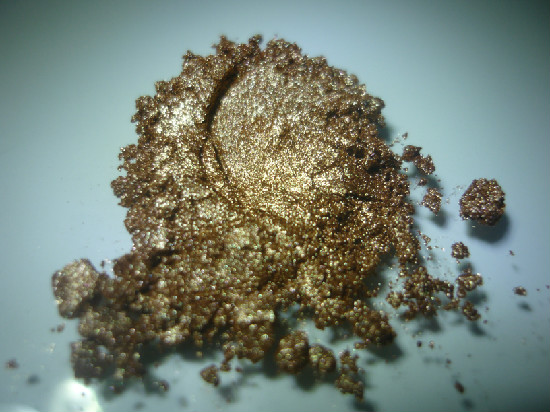
KT-500 is a bronze mica pigment built on natural mica flakes coated with ferric oxide, delivering a warm, rich metallic luster with strong opacity — a direct functional match to the iriodin effect found in Merck's widely specified 500-series. Suited for decorative coatings, epoxy floors, and cosmetic formulations where consistent, high-coverage metallic bronze is required, KT-500 is a well-established iriodin 500 equivalent used by formulators across multiple industries.
Read More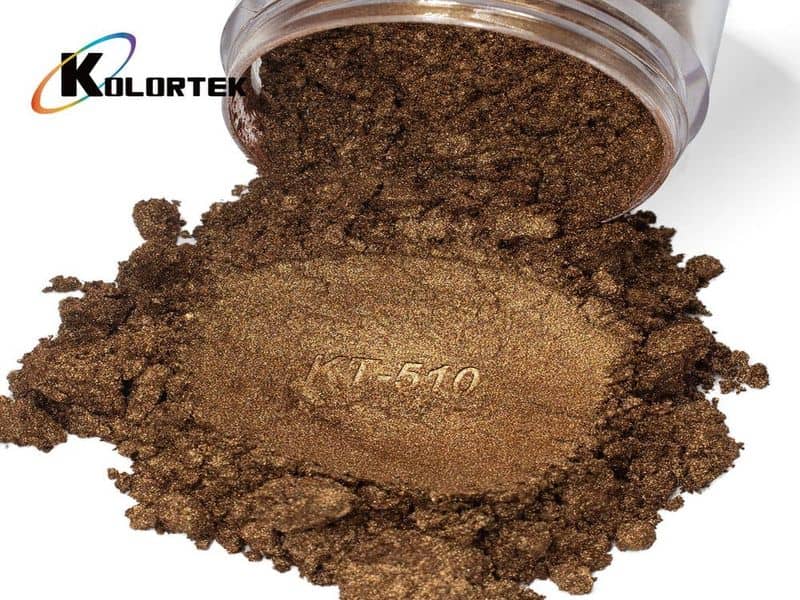
KT-510 is a natural mica-based iron oxide mica pigment delivering a rich coffee-brown metallic lustre with strong opacity — a direct functional equivalent to Merck pearlescent pigments in the Iriodin 510 series. Its warm, deep tone and consistent metallic finish make it a practical choice for decorative coatings, cosmetic formulations, and specialty printing applications.
Read More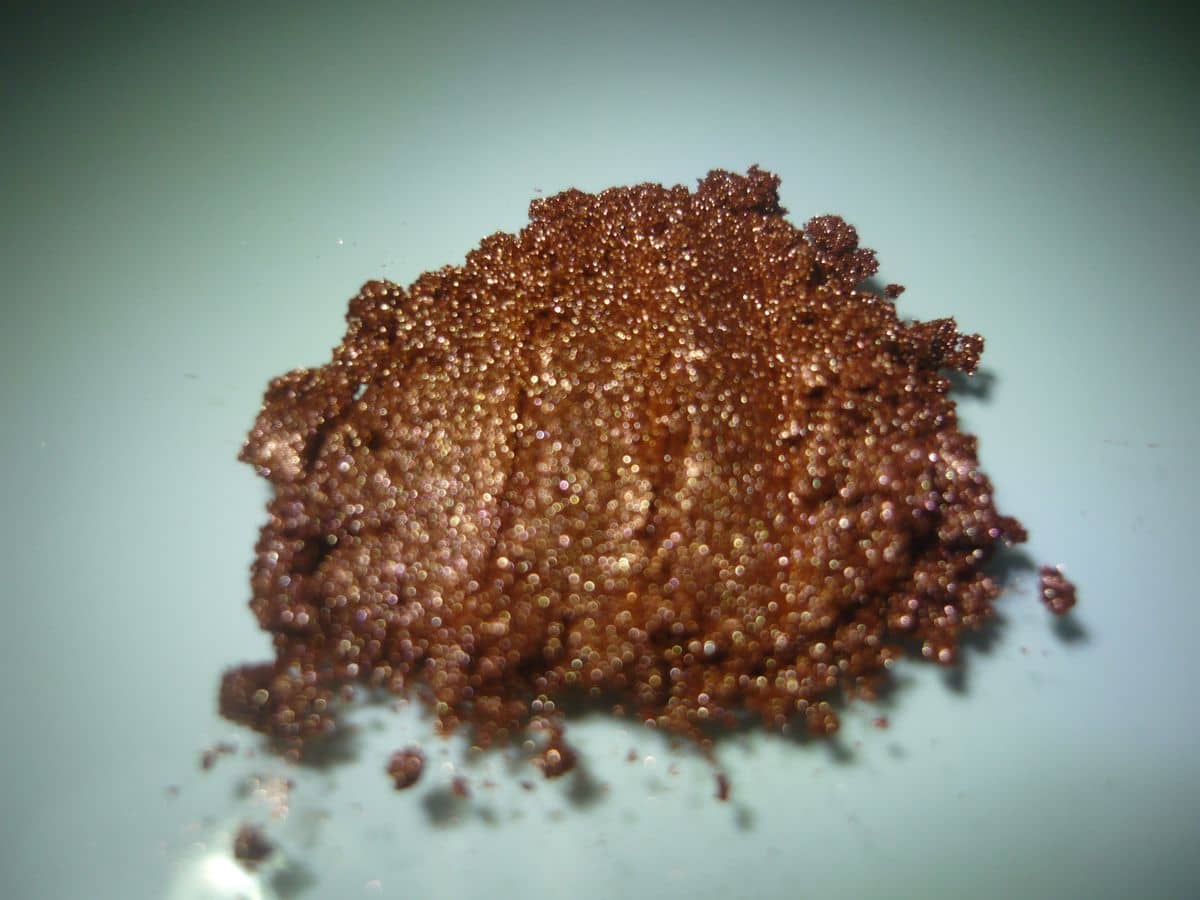
KT-532 is a natural mica-based flash red brown pigment coated with ferric oxide, delivering a warm, sparkling metallic luster with strong opacity — well suited for decorative coatings, epoxy floors, and cosmetic applications. Formulated as a cost-effective iriodin 532 alternative, it matches the same mica substrate, iron oxide chemistry, and particle size range as Merck's original, making it a straightforward drop-in for formulators already working with iriodin equivalents in their systems.
Read More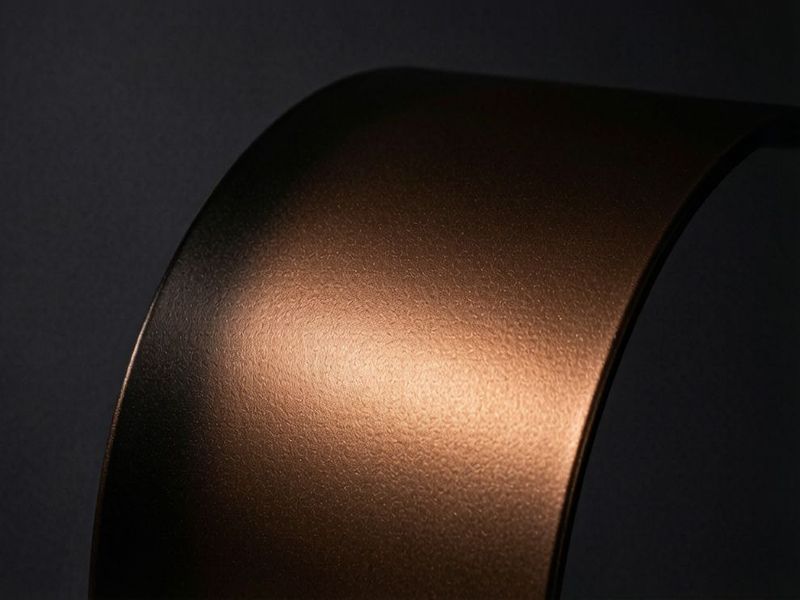
Bronze metallic mica powder delivers a warm, opaque earth-tone metallic finish through an iron oxide (Fe₂O₃) coating on natural muscovite mica — producing consistent color at every viewing angle, not just at specular reflection. Our KT-500 Metal Luster Series covers three particle size grades (5–25 μm through 10–100 μm) to match everything from fine satin coverage to high-sparkle flash effects. Heat stability to 800°C and a fully TiO₂-free composition make these grades relevant across coatings, plastics, inks, and cosmetics alike.
Read More
Bulk bronze mica-based pigment delivers rich copper and earth-tone metallic finishes through iron oxide–coated natural mica. Our KT-500 Metal Luster Series spans three particle sizes—5–25 μm for smooth satin coverage, 10–60 μm for classic luster, and 10–100 μm for high-sparkle effects—all heat-stable to 800°C and fully TiO₂-free, making them suitable for coatings, automotive interiors, plastics, and cosmetic bronzers where you need consistent color at every viewing angle.
Read More
 English
 Français
 Deutsch
 Русский
 Español
 Português