
Leave A Message
If you are interested in our products and want to know more details,please leave a message here,we will reply you as soon as we can.
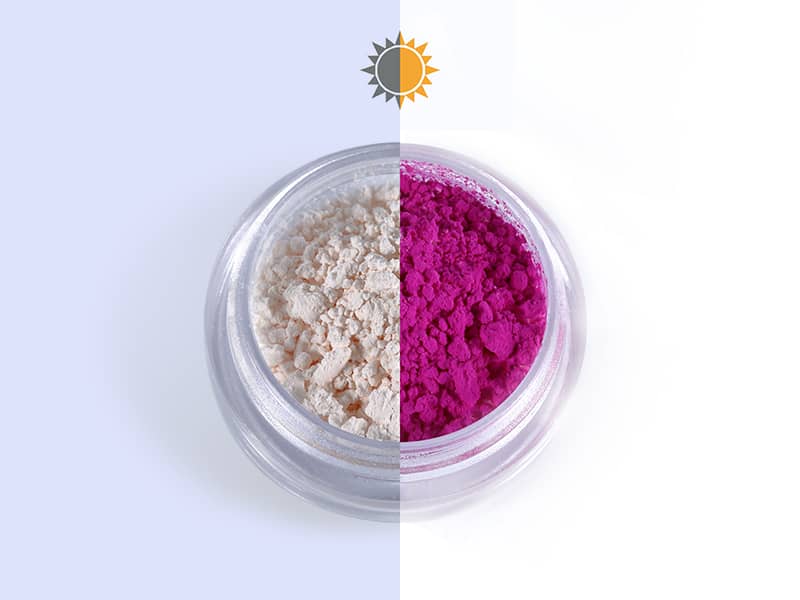
Photochromic Pigments change color in response to UV light exposure, transitioning from a pale or near-colorless state indoors to a saturated color within seconds of UV exposure, then reversing when the UV source is removed. The KPMC series is available in multiple colors with a particle size of 1–10 µm, suitable for inks, coatings, plastics, and cosmetic formulations where a UV-activated color response is required.
Item No. :
KPMC Series (multiple colors available)Color Effect :
Colorless / pale → activated color under UV (purple, blue, red, green, and others available)Particle Size :
1–10 µmComposition :
Potassium Nitrate, Silica, Sodium Nitrate, Avobenzone (varies by grade)Brand :
Kolortek / OEMMOQ :
1KGApplication :
Printing Inks, Textiles, Toys & Novelty, Cosmetics, Packaging, Decorative Coatings, Plastics, Craft
Photochromic pigments operate through a reversible photochemical reaction. The active component — in the KPMC-12 series, Avobenzone (Butyl Methoxydibenzoylmethane) functions within the photochromic system — undergoes a structural change when exposed to UV radiation, shifting its light absorption profile and producing a visible color change. When UV exposure stops, the molecule returns to its ground state and the color fades. The reaction is reversible and repeatable across many cycles, though long-term fatigue of the photochromic response does occur over time — a known characteristic of all organic photochromic systems, not specific to this product.
The pigment is microencapsulated or matrix-dispersed within a silica and inorganic salt carrier system (potassium nitrate, sodium nitrate, silica), which protects the active chemistry and allows dispersion into formulation systems. The fine particle size of 1–10 µm means the pigment integrates smoothly into inks and thin-film coatings without visible texture. The specific gravity of 1.20 ± 0.05 and melting point of 237–238°C are relevant parameters for processing: the melting point indicates the upper thermal limit for processes involving heat, such as masterbatch compounding or hot-melt applications.
The color change speed described — visible within approximately one second of direct sunlight exposure — reflects the general performance of organic photochromic systems under strong UV. Response time and intensity of color development are dependent on UV intensity, ambient temperature, and formulation matrix. Lower temperatures generally enhance photochromic response intensity; higher temperatures reduce it. This temperature dependency is a known characteristic of leuco-type and organic photochromic systems and should be factored into application design, particularly for outdoor coatings in warm climates.
Key Features & Benefits
| Feature | Practical Benefit for Buyers |
|---|---|
| UV-activated reversible color change | No power source or external trigger required — sunlight activates and indoor light deactivates; self-contained functional effect |
| Fine particle size 1–10 µm | Suitable for screen printing inks, gravure inks, and thin-film coatings; no visible particle texture in applied films |
| Inorganic carrier matrix (silica, nitrate salts) | Provides a stable dispersion medium that protects the active photochromic component during formulation mixing |
| Multiple colors available | Buyers can select color by activation state to match design requirements without reformulating the base system |
| Melting point 237–238°C | Defines upper thermal processing limit; relevant for compounders and masterbatch producers evaluating processing compatibility |
| Industry / End Use | Specific Applications | Notes |
|---|---|---|
| Printing Inks | Screen printing on promotional merchandise, apparel, and stationery; security and authentication printing | Fine 1–10 µm particle size compatible with screen, gravure, and flexo ink systems |
| Textiles & Apparel | UV-reactive fabric prints, promotional clothing, outdoor apparel, sportswear | Applied via textile ink or pigment print system; wash fastness depends on binder and encapsulation integrity |
| Toys & Novelty | Color-changing toys, children's stationery, novelty accessories | Confirm grade regulatory status for intended market before use with child-contact products |
| Cosmetics & Nail Products | Nail polish with UV-reactive color shift, color-changing lip products, photochromic eyeshadow | Confirm regulatory compliance for each target market; photochromic cosmetics are a niche but established category |
| Packaging & Labels | UV-indicator labels, brand authentication elements, promotional packaging | Color change provides a visible UV-exposure indicator functional for authentication or consumer engagement |
| Paints & Coatings | Decorative architectural coatings, custom automotive accent effects, exterior murals | Color change intensity affected by ambient temperature; evaluate performance in target climate conditions |
| Plastics | Novelty consumer goods, promotional items, decorative packaging | Processing temperature must remain below the active component's thermal limits; confirm with TDS |
| Craft & DIY | Resin casting, custom craft projects, photochromic paint for art applications | No processing constraints at craft-scale volumes |
| Eyewear | Photochromic lens coatings — note: this is a highly specialized application with its own dedicated chemistry; general KPMC grades are not positioned for ophthalmic use | — |
UV response intensity and activation speed vary with UV intensity, ambient temperature, and the formulation matrix. Evaluate under conditions representative of your end-use environment before finalizing grade selection.
Example product shown. Full series data available upon request.
| Specification | Details |
|---|---|
| Trade Name | Purple KPMC-12-PA |
| Series | KPMC Series — Photochromic Pigments |
| INCI Name | Potassium Nitrate, Silica, Sodium Nitrate, Avobenzone (Butyl Methoxydibenzoylmethane) |
| CAS No. | 7757-79-1 / 7631-86-9 / 7631-99-4 / 70356-09-1 |
| Color Effect | Colorless / pale indoors → Purple under UV / sunlight |
| Particle Size | 1–10 µm |
| Composition | Potassium Nitrate: 50–55% / Silica: 18–23% / Sodium Nitrate: 10–15% / Avobenzone: 7–22% |
| Form | Powder |
| Odor | Odourless |
| Specific Gravity | 1.20 ± 0.05 |
| Melting Point | 237–238°C (458.6–460.4°F) |
| Solubility in Water | Insoluble |
| Brand | Kolortek |
| MOQ | 1KG |
Full TDS and SDS available upon request. Multiple colors available across the KPMC series.Full TDS and SDS available upon request. Additional particle size grades available.
Photochromic pigments introduce two formulation challenges that standard colorants do not have. First, the active photochromic chemistry is sensitive to heat, pH, and certain solvents — the formulation matrix has to be compatible with the active component or the photochromic response degrades before the product reaches the end user. Second, the photochromic response itself — activation speed, color intensity, and fatigue resistance over repeated cycles — varies by grade and needs to match the specific conditions of the end-use environment. A pigment that performs well in a temperate European climate may show reduced response intensity in a high-ambient-temperature application in a warmer region, because photochromic response intensity is inversely related to temperature in most organic systems.
Kolortek Photochromic series uses a silica and inorganic salt carrier matrix that provides a protective medium for the active Avobenzone-based photochromic component, improving compatibility with standard ink and coating formulation systems compared to unencapsulated photochromic dyes. The fine 1–10 µm particle size allows smooth integration into screen printing inks, thin-film coatings, and cosmetic bases without requiring additional milling. Multiple colors are available, and grade selection should be based on the target activation color, the formulation system, and the expected UV and temperature conditions in the end-use environment. With 20 years of effect pigment manufacturing experience, Kolortek provides TDS data and application guidance to support grade selection before formulation trials begin — reducing development time and material waste in the qualification process.
Sample sets by color, grade-specific TDS and SDS, and pricing are available upon inquiry. Contact Kolortek's technical team with your target color, formulation system type, and end-use environment conditions for application-specific recommendations.
Photochromic Pigments change color in response to UV light exposure, transitioning from a pale or near-colorless state indoors to a saturated color within seconds of UV exposure, then reversing when the UV source is removed. The KPMC series is available in multiple colors with a particle size of 1–10 µm, suitable for inks, coatings, plastics, and cosmetic formulations where a UV-activated color response is required.
Read More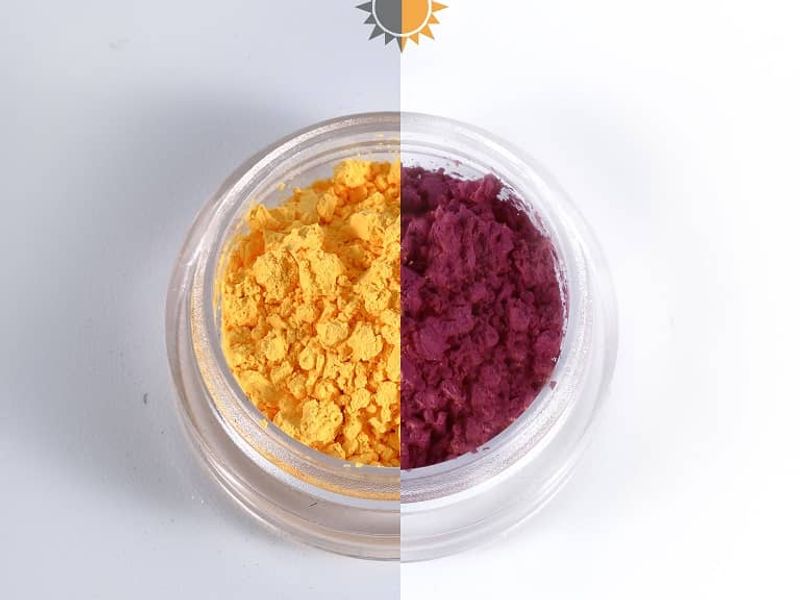
KT-PMC-02-YP is a Yellow/Purple photochromic pigment in the fine 1–10μm particle size range — a UV-reactive organic pigment that appears pale yellow in the absence of UV light and shifts to a deep purple within approximately one second of exposure to direct sunlight or UV illumination.
Read More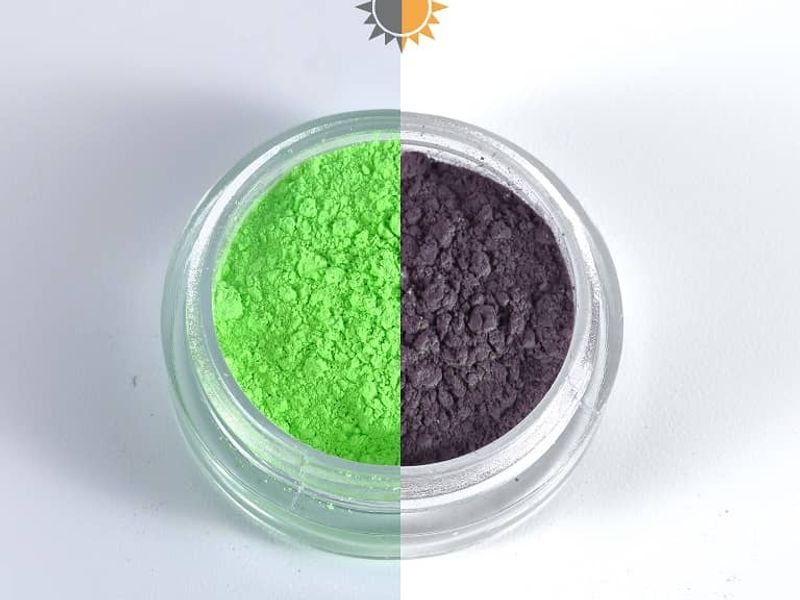
KT-PMC-06-GG is a Green/Grey photochromic pigment in the fine 1–10μm particle size range — a UV-reactive pigment that appears green under standard indoor lighting and shifts to grey when exposed to direct sunlight or UV irradiation.
Read More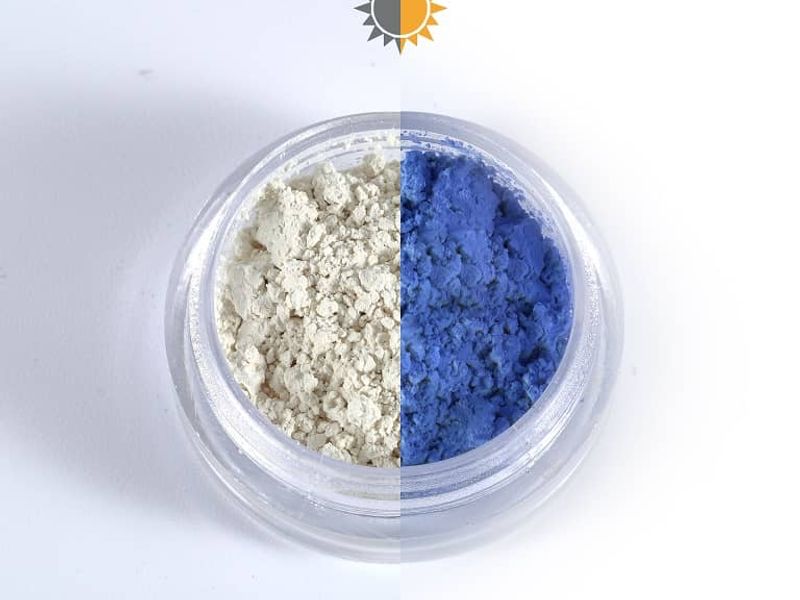
KT-PMC-14-BA is a Blue photochromic pigment in the fine 1–10μm particle size range — a UV-reactive single-color activated grade that appears pale or near-colorless under standard indoor lighting and shifts to a deep blue within approximately one second of exposure to direct sunlight or UV irradiation.
Read More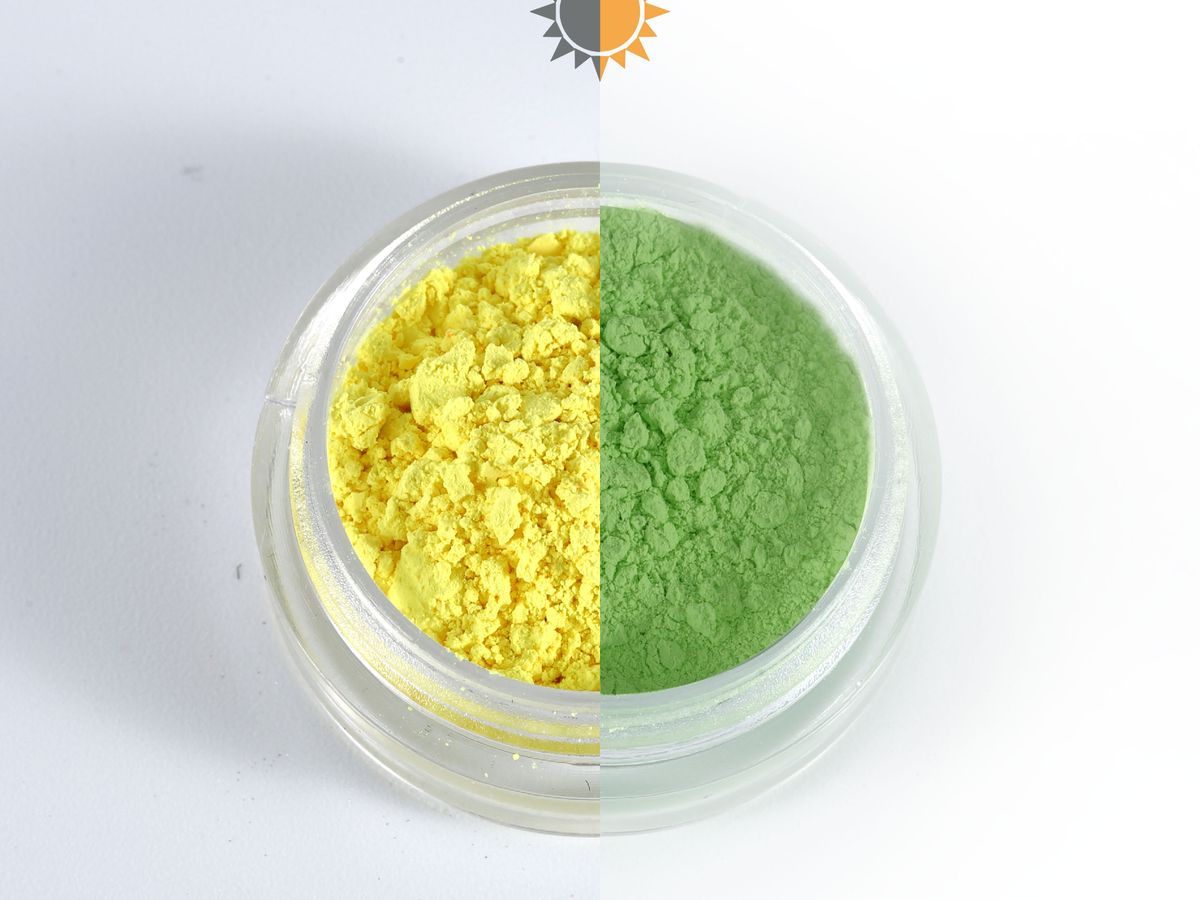
This photochromic pigment shifts from a pale or clear state to a deep, rich color within one second of direct sunlight, then reverses indoors. Fine particle sizing makes it a workable printing pigment for inks, screen printing, and surface effects, with both clear-to-color and color-to-color options across purple, blue, red, green, and more. As a UV activated pigment, it stays dormant until sunlight or UV hits the substrate — no external power, no coating, just light.
Read More
 English
 Français
 Deutsch
 Русский
 Español
 Português