Leave A Message
If you are interested in our products and want to know more details,please leave a message here,we will reply you as soon as we can.
Blue Photochromic Powder, Sunlight Reactive, 1–10μm – KT-PMC-14-BA
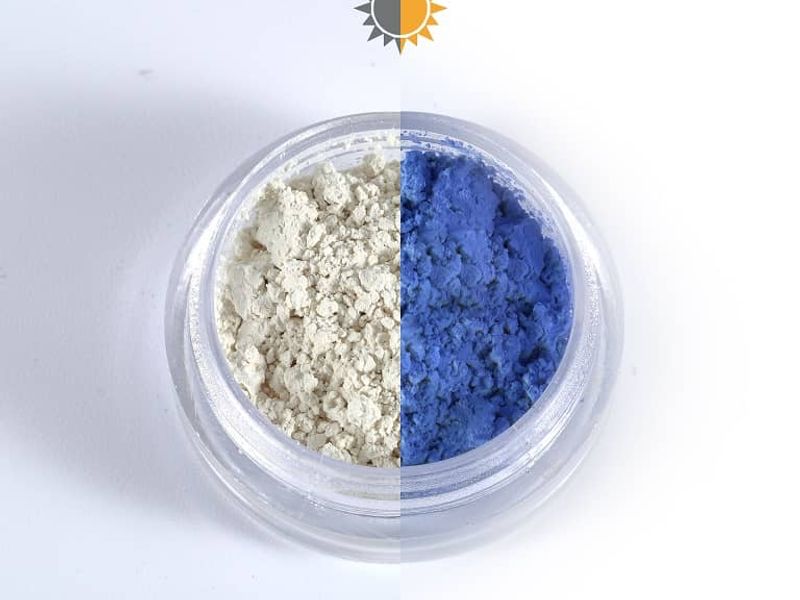
KT-PMC-14-BA is a Blue photochromic pigment in the fine 1–10μm particle size range — a UV-reactive single-color activated grade that appears pale or near-colorless under standard indoor lighting and shifts to a deep blue within approximately one second of exposure to direct sunlight or UV irradiation.
Item No. :
KT-PMC-14-BAColor Effect :
BlueParticle Size :
1–10 µmBrand :
Kolortek / OEMMOQ :
1KGApplication :
Printing Inks, Textiles, Toys & Novelty, Cosmetics, Packaging, Decorative Coatings, Plastics, Craft
Blue Photochromic Powder, Sunlight Reactive, 1–10μm – KT-PMC-14-BA
Special Effect Pigments › Photochromic Pigment Series › Single-Color Activated
KT-PMC-14-BA is a Blue photochromic pigment in the fine 1–10μm particle size range — a UV-reactive single-color activated grade that appears pale or near-colorless under standard indoor lighting and shifts to a deep blue within approximately one second of exposure to direct sunlight or UV irradiation. The colorless-to-blue transition produces a clean visual UV indicator: blue in sunlight, invisible indoors. At 1–10μm, KT-PMC-14-BA disperses in printing inks, coatings, nail lacquer, plastic compounding, and cosmetic systems without visible particle texture in cured films.
KT-PMC-14-BA belongs to the single-color activated group within the Kolortek photochromic range — grades that are essentially colorless or pale in the UV-off state and develop a single distinct color under UV. The design logic is different from two-color shift grades (e.g., KT-PMC-05-BP Blue/Purple): with a single-color activated grade, the product reads as white, transparent, or a very pale tone indoors, and only expresses its blue color character in direct sunlight or UV. This makes KT-PMC-14-BA particularly effective for applications where a "reveal" function is the brief — no color visible inside, full blue visible outside — without managing a separate base coat layer design.
| Item No. | UV-On Color | UV-Off State | Particle Size |
|---|---|---|---|
| KT-PMC-12-PA | Purple | Pale / colorless | 1–10μm |
| KT-PMC-14-BA | Blue | Pale / colorless | 1–10μm |
| KT-PMC-16-YA | Yellow | Pale / colorless | 1–10μm |
| KT-PMC-17-OA | Orange | Pale / colorless | 1–10μm |
| KT-PMC-19-RA | Red | Pale / colorless | 1–10μm |
| KT-PMC-22-GA | Green | Pale / colorless | 1–10μm |
| KT-PMC-29-SB | Sky Blue | Pale / colorless | 1–10μm |
| KT-PMC-18-G | Grey | Pale / colorless | 1–10μm |
| KT-PMC-28-B | Bronze | Pale / colorless | 1–10μm |
Note: KT-PMC-29-SB Sky Blue and KT-PMC-14-BA Blue are both blue-family activated grades. Sky Blue (KT-PMC-29-SB) is a lighter, cooler blue; KT-PMC-14-BA is a deeper standard blue. Request comparative drawdown samples to select the appropriate blue shade before production specification.
| Parameter | Value / Notes |
|---|---|
| Item No. | KT-PMC-14-BA |
| UV-Off Color (indoors) | Pale / near-colorless |
| UV-On Color (sunlight / UV lamp) | Deep Blue |
| Change Type | Single-color activated (colorless → blue) — highest UV-state contrast vs. substrate |
| Activation Trigger | UV / direct sunlight — NOT activated by standard LED, fluorescent, or incandescent indoor lighting |
| Activation Speed | ~1 second under direct sunlight to reach deep blue state |
| Reversion Speed | Seconds to minutes after UV removal — faster at higher ambient temperature |
| Particle Size | 1–10μm |
| Reversibility | Fully reversible — repeatable UV on/off cycling |
| UV Fatigue | Performance decreases with cumulative UV exposure — fatigue rate varies by binder and UV conditions |
| Binder Compatibility | Water-based, solvent-based, UV-curable — confirm for specific systems |
| Substrate Dependency (UV-off) | Substrate-dependent — colorless state reveals base coat; white base = white product indoors; dark base = dark product indoors |
| Similar Blue Grade | KT-PMC-29-SB (Sky Blue — lighter, cooler blue tone); KT-PMC-05-BP (Blue/Purple — two-color shift, always visible) |
| Documentation | TDS, SDS on request |
| Brand | Kolortek |
Colorless-to-blue — maximum UV-state visibility against a white or light substrate: Single-color activated grades produce the highest visible contrast between the UV-off and UV-on states when applied over a white or light substrate. In the UV-off state, the product appears white or light (the substrate shows through the near-colorless pigment layer). In UV, a deep blue develops on top of that light substrate — the blue reads at full intensity against the pale background. This is more visually impactful than applying the same pigment over a colored base, where the base color competes with or is superimposed by the blue UV state.
Designing with a colorless-state pigment — substrate is the UV-off color: Unlike two-color grades where both states are visibly colored, KT-PMC-14-BA requires deliberate substrate design for the UV-off appearance. A white substrate produces a white product indoors; a pearlescent or metallic base coat produces a pearlescent or metallic product indoors with blue UV overlay. The substrate or base coat color is the product's indoor visual; KT-PMC-14-BA adds the blue UV-reactive layer on top. Combined with a pearlescent base from Kolortek's KT-100 or KT-200 series, the indoor state provides pearl shimmer and the UV state adds deep blue — a two-character design from a single product.
Blue vs. Sky Blue — selecting within the blue photochromic range: Kolortek supplies two blue-family photochromic grades: KT-PMC-14-BA (deep standard blue) and KT-PMC-29-SB (sky blue — lighter, cooler tone). For navy and royal blue color directions, KT-PMC-14-BA is the appropriate specification. For lighter cerulean or sky blue effects, KT-PMC-29-SB provides a more appropriate hue. Request physical drawdown samples of both under UV before finalizing the specification.
UV fatigue and service life: Organic photochromic molecules degrade with cumulative UV exposure — switching efficiency decreases and the blue UV-on state becomes shallower over time. The fatigue rate depends on UV intensity, binder type, film thickness, temperature, and oxygen permeability of the binder. For promotional products, nail lacquer, and seasonal applications where cumulative UV load is limited, fatigue is unlikely to limit functional performance within the product lifecycle. For exterior coatings and long-duration outdoor products, fatigue testing under your specific conditions establishes realistic service life. Kolortek has supplied photochromic pigments for over 20 years with consistent photochromic dye encapsulation quality across production batches — TDS and SDS available on request.
| Application | How KT-PMC-14-BA Contributes | Notes |
|---|---|---|
| Nail lacquer | Colorless-to-deep-blue UV-reactive nail color — reveals blue in direct sunlight | Apply over white, pearl, or light base for maximum blue UV-state visibility; verify cosmetic compliance |
| Printing inks | UV-reactive blue in screen, flexo, and specialty inks for outdoor packaging, security, and promotional labels | 1–10μm suits most printing systems; add at final low-shear stage only |
| Coatings & paints | UV-reactive blue in outdoor decorative coatings, promotional paints, children's outdoor products | Fatigue test for cumulative outdoor UV load; UV-protective topcoat extends service life |
| Plastics | UV-activated blue in injection-molded and extruded plastic consumer products | Confirm processing temperature limits; 1–10μm disperses well in masterbatch |
| Textiles & apparel | UV-reactive blue reveal in outdoor sportswear, accessories, promotional apparel | Evaluate fatigue rate for expected UV exposure and wash cycles; apply in protective coating or print binder |
| Security & anti-counterfeit | UV-reveal blue feature in authentication labels and brand protection printing | Colorless indoor state makes UV-only blue reveal a clean covert security feature |
Q: What does KT-PMC-14-BA look like on a white nail indoors?
A: Over a white base coat indoors, a nail formulated with KT-PMC-14-BA appears white or very slightly tinted — the near-colorless UV-off state of the photochromic layer allows the white base to show through. In direct sunlight, deep blue develops across the nail surface. When moving back indoors, the blue fades within seconds to minutes back toward the pale/white state. The more opaque and white the base coat, the cleaner and brighter the white indoor appearance and the higher the visual contrast when the blue UV state develops.
Q: What is the difference between KT-PMC-14-BA (Blue) and KT-PMC-05-BP (Blue/Purple)?
A: KT-PMC-14-BA is a single-color activated grade — it is colorless indoors and blue in UV. KT-PMC-05-BP is a two-color shift grade — it is blue indoors and purple in UV. Choose KT-PMC-14-BA when you want the product to appear white or colorless indoors and reveal blue outdoors. Choose KT-PMC-05-BP when you want a product that is always visibly blue-toned and shifts toward purple in UV — the indoor blue is always present and serves as part of the product's baseline color identity.
Q: Can KT-PMC-14-BA be used as a UV indicator to show sun exposure?
A: Yes — the colorless-to-blue shift of KT-PMC-14-BA is a clean and fast UV indicator. When formulated into a label, coating, or product, the appearance of blue color signals UV exposure. The shift back to colorless when UV is removed means the indicator is real-time — it shows current UV exposure rather than cumulative exposure. For cumulative UV dosage indication (products that record total UV exposure rather than momentary exposure), a different indicator technology is required. Contact Kolortek to discuss the specific photochromic grade and formulation approach most appropriate for your indicator application.
Blue UV-state depth and the indoor near-colorless appearance are best evaluated in your specific formulation and over your actual substrate. Contact Kolortek to request a sample of KT-PMC-14-BA alongside KT-PMC-29-SB Sky Blue for shade comparison, download the TDS, or discuss photochromic formulation options for your application.
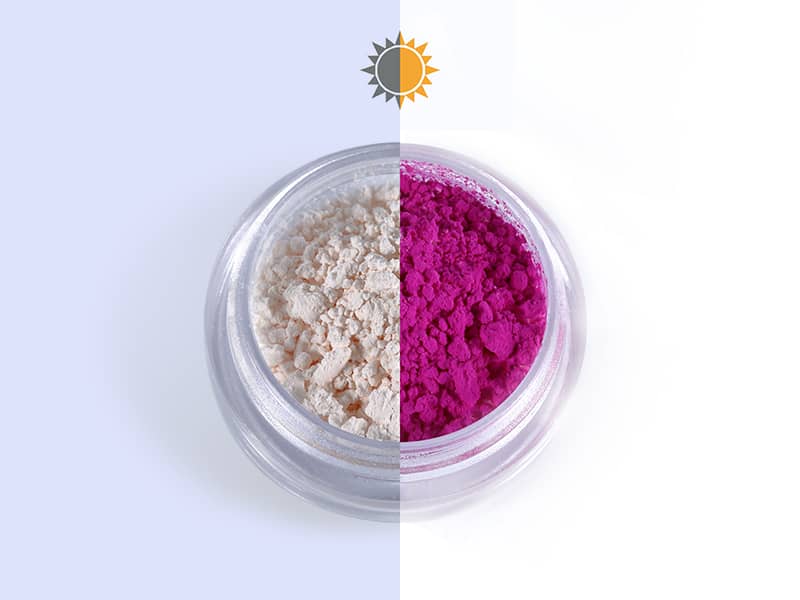
Photochromic Pigments change color in response to UV light exposure, transitioning from a pale or near-colorless state indoors to a saturated color within seconds of UV exposure, then reversing when the UV source is removed. The KPMC series is available in multiple colors with a particle size of 1–10 µm, suitable for inks, coatings, plastics, and cosmetic formulations where a UV-activated color response is required.
Read More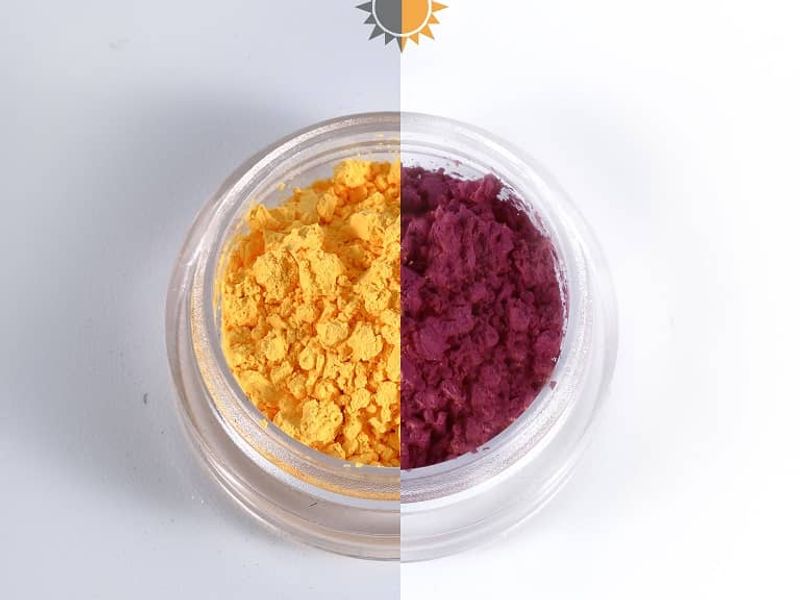
KT-PMC-02-YP is a Yellow/Purple photochromic pigment in the fine 1–10μm particle size range — a UV-reactive organic pigment that appears pale yellow in the absence of UV light and shifts to a deep purple within approximately one second of exposure to direct sunlight or UV illumination.
Read More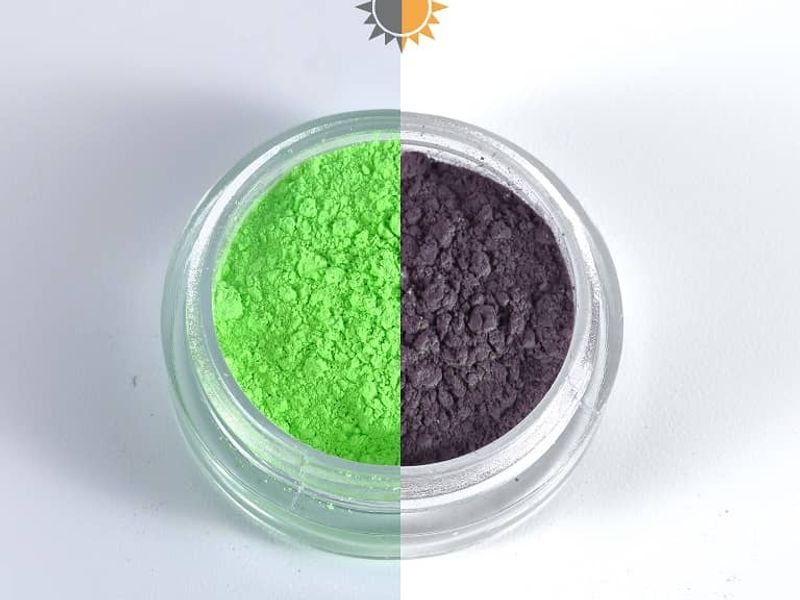
KT-PMC-06-GG is a Green/Grey photochromic pigment in the fine 1–10μm particle size range — a UV-reactive pigment that appears green under standard indoor lighting and shifts to grey when exposed to direct sunlight or UV irradiation.
Read More
KT-PMC-14-BA is a Blue photochromic pigment in the fine 1–10μm particle size range — a UV-reactive single-color activated grade that appears pale or near-colorless under standard indoor lighting and shifts to a deep blue within approximately one second of exposure to direct sunlight or UV irradiation.
Read More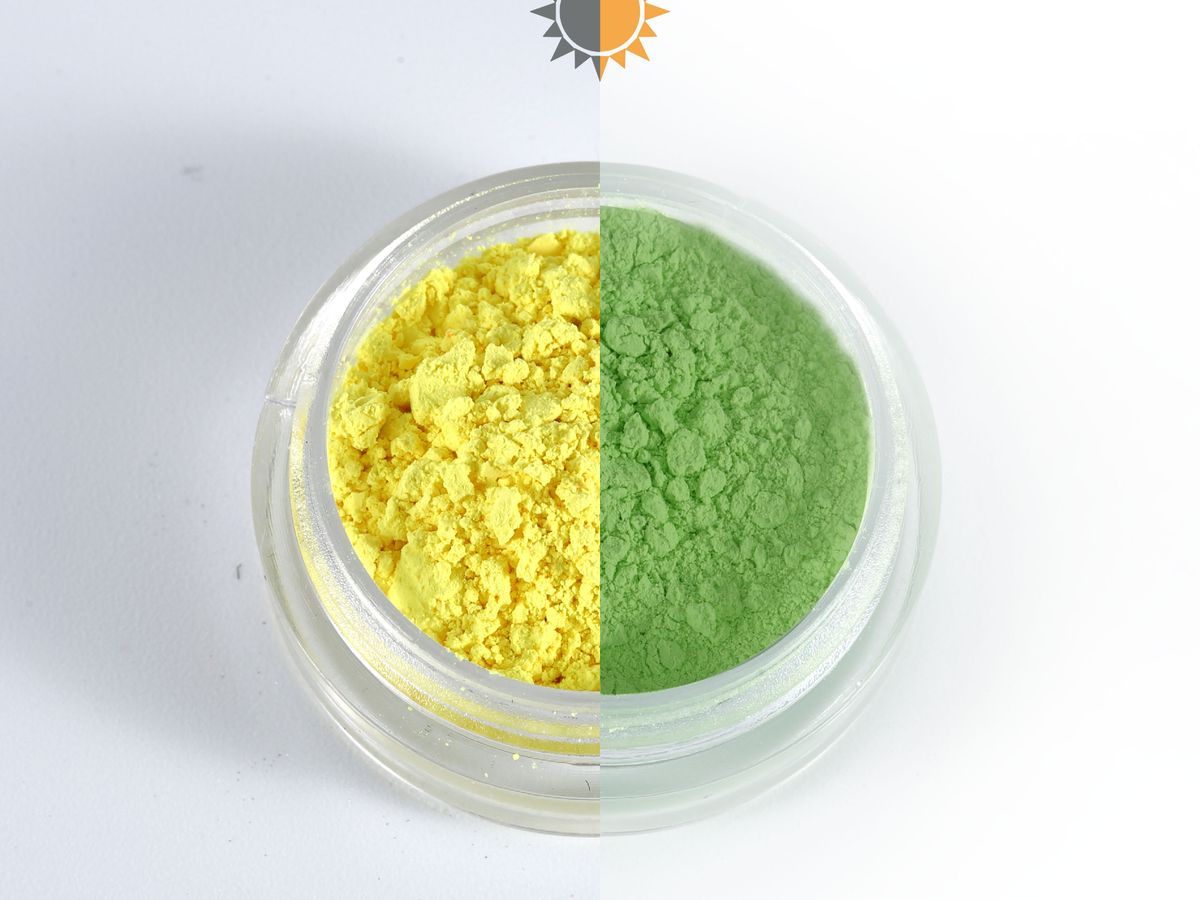
This photochromic pigment shifts from a pale or clear state to a deep, rich color within one second of direct sunlight, then reverses indoors. Fine particle sizing makes it a workable printing pigment for inks, screen printing, and surface effects, with both clear-to-color and color-to-color options across purple, blue, red, green, and more. As a UV activated pigment, it stays dormant until sunlight or UV hits the substrate — no external power, no coating, just light.
Read More
 English
 Français
 Deutsch
 Русский
 Español
 Português