Leave A Message
If you are interested in our products and want to know more details,please leave a message here,we will reply you as soon as we can.
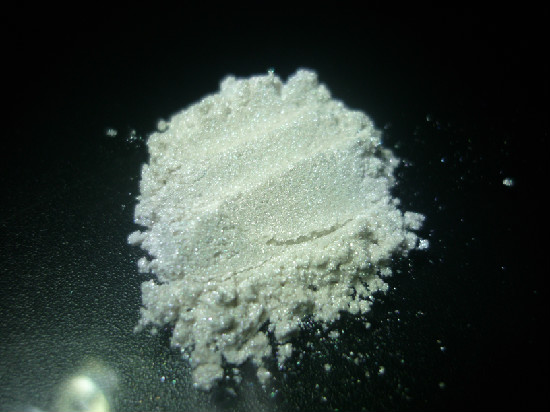
KT-101 is a natural mica pearlescent pigment in the KT-100 Silver White Series — a rutile TiO₂-coated mica grade that produces a bright, irradiant white pearl effect with pronounced light reflectivity. Within the KT-100 range, KT-101 occupies the higher-brightness end of the silver white sub-grades, positioned for applications where a strong luminous shimmer is the visual target rather than a softer satin or muted pearl finish. It disperses across aqueous, solvent-based, and resin systems and covers the full breadth of industrial and decorative applications served by the Silver White Series — from paints and printing inks to cosmetics, nail products, and epoxy flooring.
Item No. :
KT-101Color Effect :
Irradiant WhiteParticle Size :
10-70μmComposition :
Mica, Titanium DioxideBrand :
Kolortek / OEMMOQ :
25KGApplication :
Paints & Coatings, Printing Inks, Cosmetics, Soaps, Nail Polish, Epoxy Flooring, Artificial Marble, Crafts, etc.
KT-101 is a natural mica pearlescent pigment in the KT-100 Silver White Series — a rutile TiO₂-coated mica grade that produces a bright, irradiant white pearl effect with pronounced light reflectivity. Within the KT-100 range, KT-101 occupies the higher-brightness end of the silver white sub-grades, positioned for applications where a strong luminous shimmer is the visual target rather than a softer satin or muted pearl finish. It disperses across aqueous, solvent-based, and resin systems and covers the full breadth of industrial and decorative applications served by the Silver White Series — from paints and printing inks to cosmetics, nail products, and epoxy flooring.
KT-101 is one sub-grade within the broader KT-100 Silver White Series. Particle size is the primary variable controlling visual character and application suitability across the range. The table below shows where KT-101 fits relative to adjacent grades.
| Grade | Visual Character | Particle Size (approx.) | Primary Application Fit |
|---|---|---|---|
| KT-100 (Satin Fine) | Soft satin sheen — minimal sparkle | 5–25μm | Printing inks, fine cosmetic finishes |
| KT-101 (Irradiant White) | Bright, irradiant pearl — pronounced shimmer | Contact us for D50 data | Coatings, cosmetics, nail lacquer, soap |
| KT-100 (Flash Pearl) | Bold sparkle — individual flakes visible | 40–200μm+ | Epoxy countertops, decorative materials |
Note: Specific D50 particle size data for KT-101 is available on the TDS. Contact Kolortek to confirm the exact grade specification before production specification.
| Parameter | Value / Notes |
|---|---|
| Item No. | KT-101 |
| Series | KT-100 Silver White Series (Natural Mica) |
| Sub-grade | Irradiant White — high-brightness silver pearl |
| Substrate | Natural mica (muscovite) platelet |
| Coating | Rutile TiO₂ + Tin Oxide (SnO₂) |
| Composition | Mica, Titanium Dioxide, Tin Oxide |
| Visual Effect | Irradiant silver white pearl — bright, high-reflectivity shimmer |
| Particle Size (D50) | Contact us — TDS available on request |
| Appearance (powder) | White to silver-white pearlescent powder |
| Binder Compatibility | Water-based, solvent-based, UV-curable, wax, epoxy resin systems |
| Synthetic Mica Equivalent | KT-7100 series (Fluorphlogopite — higher purity, better heat stability) |
| Documentation | TDS, SDS available on request |
| Brand | Kolortek |
How the irradiant pearl effect is generated: The rutile TiO₂ coating on the mica platelet creates a thin-film interference layer. Light entering the coating reflects partially at the coating surface and partially at the mica interface — the two reflected beams interfere constructively at specific wavelengths, producing the characteristic pearlescent luster. The "irradiant" character of KT-101 specifically comes from the combination of coating thickness, rutile TiO₂'s high refractive index (~2.70), and the platelet geometry.
Blending behavior with transparent pigments: When combined with transparent colorants or dyestuffs, KT-101 contributes its silver-white pearl luster to the resulting color — both the hue and the pearlescent shimmer are visible simultaneously. Small additions of carbon black shift the effect toward a silver-grey metallic appearance with higher luster contrast. Combined with aluminum paste, the result is a brighter, whiter silver finish than aluminum paste produces alone.
Platelet orientation and effect intensity: The irradiant pearl effect depends on mica platelets aligning parallel to the substrate surface during film formation. Spray application, controlled film thickness, and appropriate formulation viscosity all affect final orientation and therefore effect intensity in the cured film. Poor orientation — from overly thick application or turbulent spray patterns — reduces luster output regardless of pigment loading.
Common selection error — using KT-101 in printing ink without confirming particle size: Fine-particle grades (typically below 25μm) are required for gravure, flexo, and most digital ink applications. If KT-101's D50 exceeds the printability threshold for your press configuration, it will cause nozzle wear or blocked screens. Confirm the TDS particle size specification before specifying for any printing application — or request the fine-grade equivalent within the KT-100 series.
| Industry / Application | How KT-101 Contributes | Grade Fit |
|---|---|---|
| Paints & decorative coatings | Bright irradiant pearl in wall coatings, architectural and decorative finishes | Confirm particle size vs. application method |
| Cosmetics | Silver pearl in eye shadow, highlighter, face powder, body lotion | Confirm cosmetic-grade documentation requirements |
| Nail lacquer | Irradiant white shimmer in standard and gel nail formulations | Compatible with nitrocellulose and waterborne bases |
| Soap making | Silver pearl shimmer in melt-and-pour and cold process soap | Stable in mildly alkaline soap matrices |
| Craft & resin art | Pearlescent silver finish in resin castings, candles, and decorative coatings | Compatible with standard epoxy and polyester resins |
| Epoxy flooring & countertops | Pearl effect in floor coatings and artificial marble / solid surface applications | Medium-to-coarse grades preferred for visible sparkle; confirm KT-101 D50 |
| Printing inks | Silver pearl ink for packaging, labels, security printing | Verify D50 before specifying — fine-grade requirement for most press types |
If your application requires maximum purity, fewer black spots, or processing temperatures above ~500°C → specify KT-7100 series (synthetic mica / Fluorphlogopite substrate) rather than KT-101. Natural mica contains trace mineral inclusions that appear as dark specks in finished applications — visible at high magnification in cosmetics or fine coatings where surface quality is critical.
If you need a softer, more muted satin effect rather than a bright irradiant shimmer → select the Satin Fine or standard silver white sub-grade within KT-100 rather than KT-101. The irradiant designation indicates higher brightness and more pronounced light reflection — not appropriate for formulations targeting understated pearl.
If you are developing a printing ink → confirm KT-101's D50 particle size against your press nozzle specification before ordering. If KT-101 exceeds the printability threshold, request the fine-grade KT-100 equivalent with confirmed sub-25μm D90.
Kolortek has manufactured natural mica pearlescent pigments for over 20 years, with consistent TiO₂ coating thickness and batch-to-batch particle size distribution across the KT-100 series. TDS and SDS are available for each grade; INCI documentation is available for cosmetic applications. Custom particle size distributions within the silver white series are available for volume buyers with specific application requirements.
Q: What makes KT-101 "irradiant" compared to other silver white grades in the KT-100 series?
A: The "irradiant" designation within the KT-100 series refers to a higher brightness and more pronounced reflectivity character compared to satin or standard pearl sub-grades. The visual difference comes from a combination of coating parameters and particle size distribution — irradiant grades reflect light more intensely across a wider viewing angle. For applications where a strong, luminous shimmer is the formulation target rather than a soft or understated pearl, KT-101 is the appropriate selection within the natural mica range.
Q: Can KT-101 be used in cosmetic formulations?
A: Yes. KT-100 series natural mica pearlescent pigments are used in cosmetic applications including eye shadow, highlighter, body lotion, and nail products. Cosmetic applications typically require INCI declaration and may require additional documentation depending on the target market's regulations. Contact Kolortek to confirm which documentation is available for KT-101 for your specific cosmetic application and market.
Q: When should I choose KT-7100 synthetic mica over KT-101 natural mica?
A: Synthetic mica (Fluorphlogopite, KT-7100 series) offers higher purity, fewer visible black spots (caused by mineral inclusions in natural mica), better weatherfastness, and higher thermal stability — relevant for plastics processing above approximately 500°C and for cosmetic applications where surface purity is critical. KT-101 natural mica is appropriate for the majority of industrial coatings, decorative, and general cosmetic applications where these differences are not significant formulation requirements.
Q: Why does my pearlescent effect look weaker after mixing than expected?
A: The most frequent cause is mechanical platelet fracture during mixing. High-shear dispersers and ball mills break the mica platelet structure, reducing the D50 particle size and shifting the visual effect from bright pearl toward a flat, satin-like shimmer with less intensity. Add KT-101 to your formulation after all high-shear dispersion steps are complete and mix using low-shear stirring only. A secondary cause is poor platelet orientation — if the mica platelets do not align parallel to the substrate surface during film formation, the interference-based luster effect is diminished regardless of the pigment loading.
Particle size specification and D50 data are the key variables to confirm before committing KT-101 to a production formulation — particularly for printing ink and fine cosmetic applications. Contact Kolortek to request a grade sample for your specific application, download the TDS with particle size distribution data, or discuss custom grade requirements for volume orders.
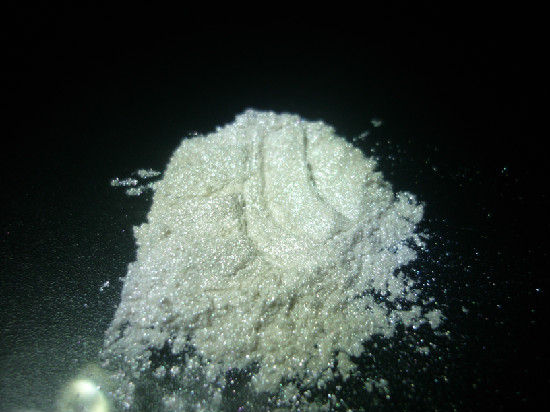
At 10–100μm, KT-152 spans the particle size range where silver mica pigment transitions from a smooth pearl coverage into a flash silver effect — individual platelet reflections become visible to the eye, giving coatings, epoxy floors, and decorative surfaces a pronounced sparkle that finer grades cannot produce. The wider distribution makes it a practical single-grade specification for applications where both coverage continuity and visible flash are required simultaneously, without the surface texture limitations of coarser 40–200μm grades.
Read More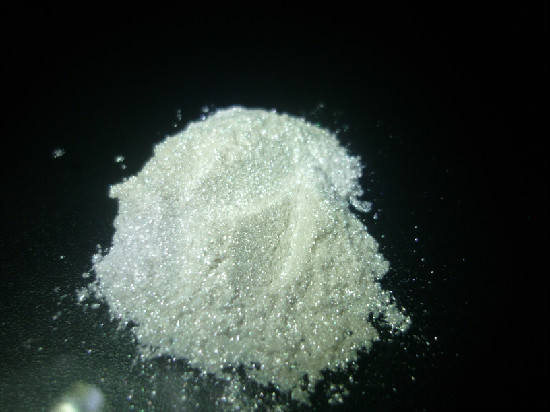
KT-153 is a glitter white pearlescent mica powder in the 20–100μm particle size range — a natural mica grade coated with rutile TiO₂ that produces a bright, glitter-like silver-white sparkle in coatings, epoxy systems, nail products, and decorative applications. At this distribution, the lower size cut removes the very fine fraction that contributes to background pearl coverage, concentrating the visual output toward individual platelet flash reflections — the result is a more glitter-like sparkle character than a standard 10–60μm silver white grade, without the surface texture limitations of purely coarse 40–200μm grades.
Read More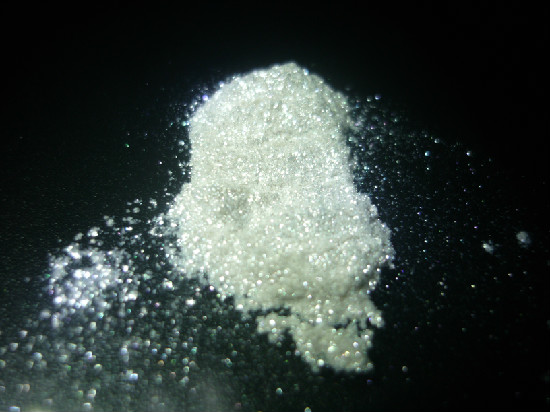
KT-163 is a shimmer pearl natural mica pigment powder in the 40–200μm particle size range — one of the coarser grades in the KT-100 Silver White Series, designed for applications where visible, bold individual-platelet sparkle is the target effect rather than smooth coverage pearl. At this distribution, individual mica platelets coated with rutile TiO₂ are large enough to produce distinct, directional flash reflections visible to the naked eye, giving epoxy floors, countertops, decorative coatings, and craft resin applications a pronounced shimmer that finer pearl grades cannot replicate. For formulators who need a coarse silver white pearl with reliable batch-to-batch sparkle intensity, KT-163 covers the upper-brightness end of the KT-100 natural mica range.
Read More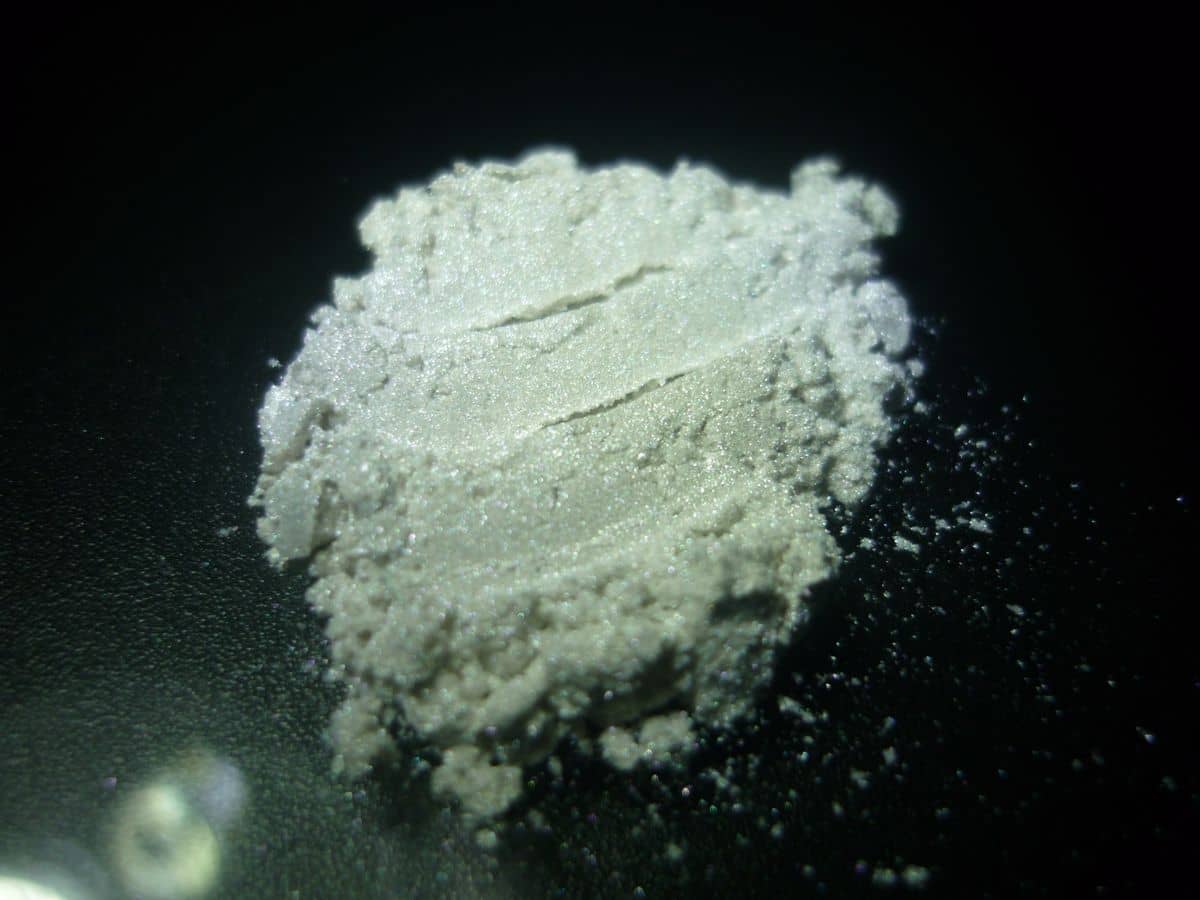
Silver white pearlescent pigments are the baseline of effect pigment formulation — the ones every formulator reaches for first. They're also the ones where small differences in particle size, substrate purity, and TiO₂ coating quality make the biggest practical difference in your final product.
Read More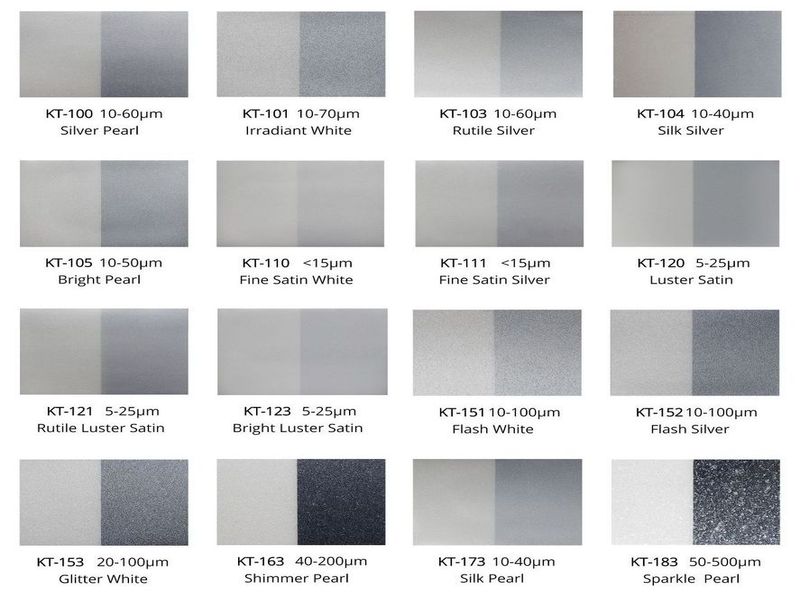
Silver white pearlescent pigments are the workhorse of the effect pigment world. They underpin everything from automotive basecoats to nail polish, and the formulation logic behind them hasn't changed much in decades: mica flakes coated with titanium dioxide, tuned by particle size and TiO₂ crystal form to deliver a specific balance of whiteness, brightness, and sparkle. What has changed is the supply landscape.
Read More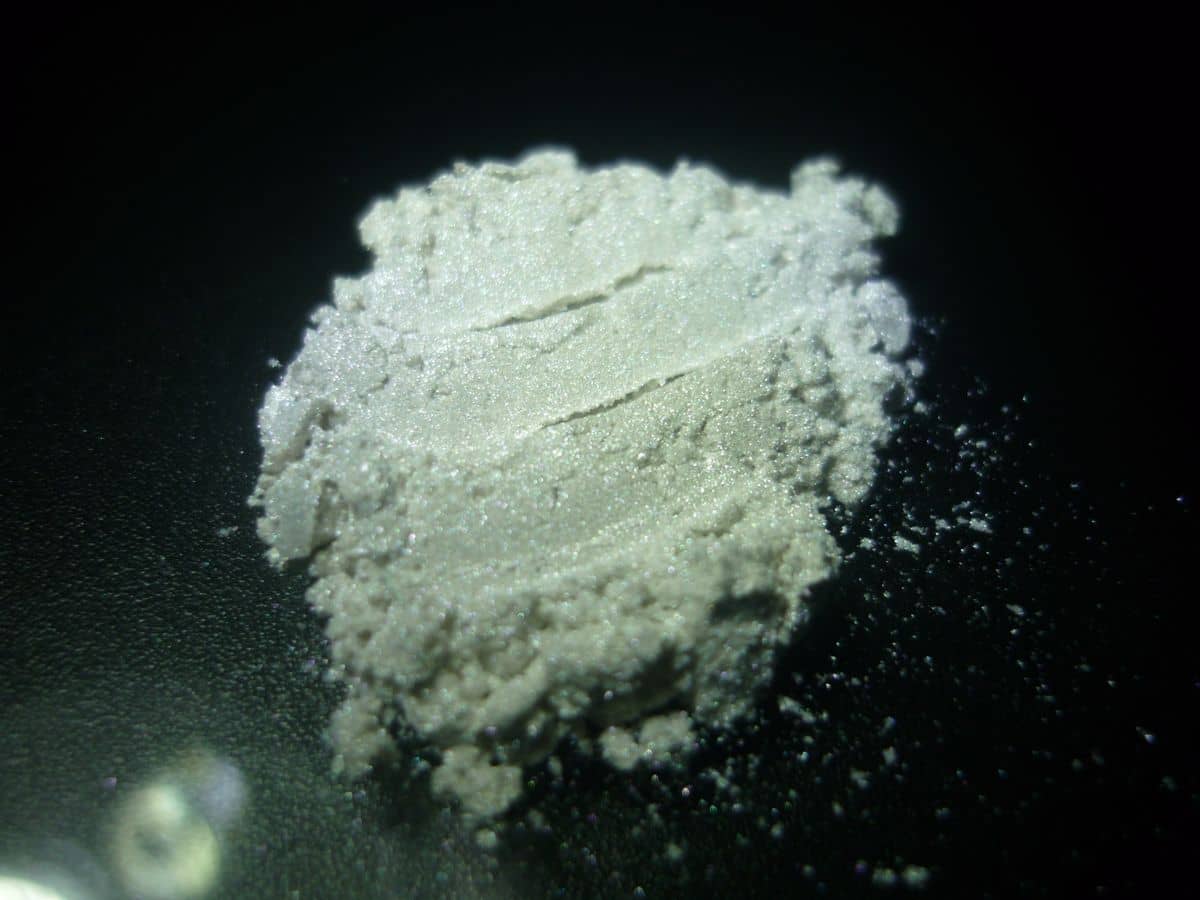
Silver white pearlescent pigments are one of the most specified effect pigments across coatings, plastics, printing, and cosmetics — and KT-100 is Kolortek's direct-working equivalent to Iriodin 100. Same mica-titanium dioxide platform, same particle size range, same optical behavior. If your formulation was built around Iriodin 100, KT-100 slots in without reformulation. That said, "equivalent" doesn't mean identical in every edge case. What it means practically: the substrate, platelet morphology, and refractive index are comparable enough that you won't be redesigning your process to accommodate it.
Read More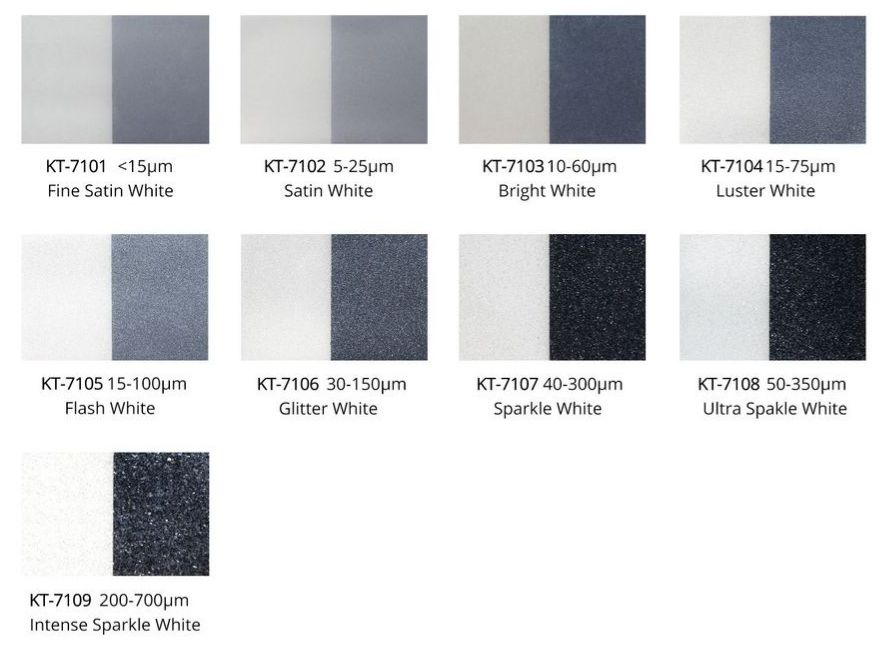
Wholesale silver white pearl pigment from China combines the brilliant metallic luster of TiO₂-coated mica with factory-direct pricing and flexible bulk ordering. Our KT-100 Silver White series spans particle sizes from 5 µm satin finishes to 200 µm coarse sparkle grades, serving automotive basecoats, decorative coatings, plastics, and printing inks where a clean, bright silver-white effect is required at scale.
Read More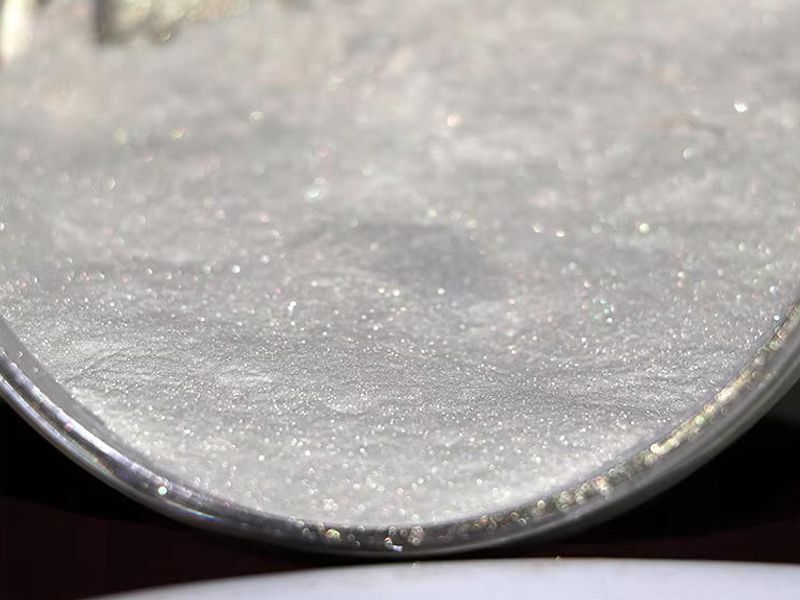
Bright pearl mica pigment delivers a clean, brilliant silver-white luster through a titanium dioxide coating on natural mica substrate. We formulate this across multiple particle size distributions in our KT-100 Silver White Series, giving formulators precise control over coverage density and sparkle intensity—finer grades yield smooth, even pearl coverage in cosmetics and automotive coatings, while coarser fractions produce more pronounced glitter effects in plastics and printing inks.
Read More
 English
 Français
 Deutsch
 Русский
 Español
 Português