Leave A Message
If you are interested in our products and want to know more details,please leave a message here,we will reply you as soon as we can.
Rutile Coated Silver White Mica Pigment, 10–60μm – KT-103
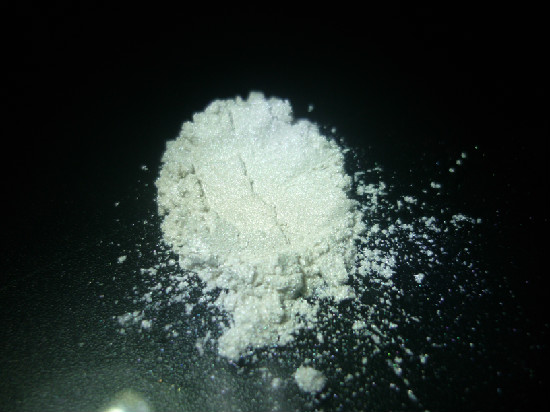
KT-103 is a rutile TiO₂-coated natural mica pearlescent pigment in the 10–60μm particle size range — the most widely used size band in the KT-100 Silver White Series. At this distribution, the pigment produces a balanced silver-white pearl effect with visible shimmer and good coverage uniformity, covering the broadest range of industrial and cosmetic applications within the series. Formulators working across paints, nail lacquer, soap, cosmetics, and epoxy systems who need a reliable, mid-range silver pearl grade with consistent D50 and batch-to-batch color uniformity will find KT-103 the most practical starting specification.
Item No. :
KT-103Color Effect :
Rutile SilverParticle Size :
10-60μmComposition :
Mica, Titanium Dioxide, Tin OxideBrand :
Kolortek / OEMMOQ :
25KGApplication :
Paints & Coatings, Printing Inks, Cosmetics, Soaps, Nail Polish, Epoxy Flooring, Artificial Marble, Crafts, etc.
KT-103 is a rutile TiO₂-coated natural mica pearlescent pigment in the 10–60μm particle size range — the most widely used size band in the KT-100 Silver White Series. At this distribution, the pigment produces a balanced silver-white pearl effect with visible shimmer and good coverage uniformity, covering the broadest range of industrial and cosmetic applications within the series. Formulators working across paints, nail lacquer, soap, cosmetics, and epoxy systems who need a reliable, mid-range silver pearl grade with consistent D50 and batch-to-batch color uniformity will find KT-103 the most practical starting specification.
Within the KT-100 Silver White Series, particle size determines visual character and application fit more than any other variable. KT-103 at 10–60μm sits at the centre of the series range — above the fine printing-ink grades (5–25μm) and below the coarse flash-pearl grades (40–200μm+). It is the general-purpose silver white grade: fine enough for smooth film formation in coatings and cosmetics, coarse enough to deliver a perceptible, bright pearl shimmer rather than a satin or muted finish.
Buyers who need higher purity, fewer black spots, or thermal stability above approximately 500°C should specify the KT-7100 synthetic mica series (Fluorphlogopite substrate) rather than KT-103. For standard industrial coatings, decorative applications, general cosmetics, and nail products, the natural mica substrate of KT-103 delivers adequate performance at a lower cost basis than synthetic mica equivalents.
| Parameter | Value / Notes |
|---|---|
| Item No. | KT-103 |
| Series | KT-100 Silver White Series (Natural Mica) |
| Substrate | Natural mica (muscovite) platelet |
| Coating | Rutile TiO₂ + Tin Oxide (SnO₂) |
| Composition | Mica, Titanium Dioxide, Tin Oxide |
| Particle Size Range | 10–60μm |
| D50 | Contact us — TDS available on request |
| Visual Effect | Bright silver-white pearl — balanced shimmer and coverage |
| Appearance (powder) | White to silver-white pearlescent powder |
| Binder Compatibility | Water-based, solvent-based, UV-curable, wax, epoxy resin systems |
| Synthetic Mica Alternative | KT-7100 series — specify for higher purity, heat stability above ~500°C, or reduced black spot |
| Documentation | TDS, SDS available on request; INCI documentation available for cosmetic applications |
| Brand | Kolortek |
| Particle Size | Visual Character | Primary Application Fit |
|---|---|---|
| 5–25μm | Satin, fine luster — minimal individual sparkle | Printing inks, fine cosmetic powder finishes |
| 10–60μm (KT-103) | Balanced silver-white pearl — shimmer with smooth film | Coatings, cosmetics, nail lacquer, soap, epoxy |
| 20–100μm | Bright pearl — visible individual flake reflection | Decorative coatings, craft, epoxy floors |
| 40–200μm+ | Flash pearl — bold sparkle, prominent flakes | Epoxy countertops, artificial marble, display surfaces |
Rutile TiO₂ coating — opacity and UV stability: The rutile phase titanium dioxide coating on KT-103 provides a higher refractive index (~2.70) and better UV resistance than anatase-coated equivalents. Rutile also has significantly lower photocatalytic activity, which reduces degradation of organic co-ingredients in the formulation under light exposure — relevant for coatings with exterior exposure and cosmetic formulations containing organic oils or dyes.
10–60μm range — smooth film with perceptible shimmer: At this particle size distribution, KT-103 is fine enough to form smooth, consistent films in brush-applied and spray-applied coatings, nail lacquer, and pressed cosmetic powders. The upper end of the distribution contributes visible pearl shimmer that distinguishes it from purely satin-finish fine grades. This balance makes it the most versatile grade in the series for buyers who need a single specification across multiple product lines.
Blending behavior: Mixed with transparent pigments or dyestuffs, KT-103 delivers both the colorant hue and the silver-white pearl luster simultaneously — the combined effect reads as a colored pearl. Adding small amounts of carbon black shifts the visual result toward a silver-grey metallic effect with enhanced luster contrast. Combination with aluminum paste produces a brighter, higher-chroma silver finish than either ingredient achieves alone.
Platelet orientation and dispersion handling: Pearlescent effect intensity depends on mica platelets aligning parallel to the substrate surface during film formation. Adding KT-103 after all high-shear mixing steps are complete and using low-shear stirring for incorporation preserves the platelet aspect ratio and protects the D50 distribution. Shear-damaged platelets produce a flatter, lower-intensity luster regardless of loading level — this is the most common formulation error with mica pearl pigments.
| Application | How KT-103 Contributes | Notes |
|---|---|---|
| Paints & architectural coatings | Silver-white pearl in decorative wall paint, furniture coating, automotive refinish | Compatible with waterborne and solvent alkyd systems; add at letdown stage |
| Nail lacquer | Bright silver pearl in standard and gel nail formulations | Compatible with nitrocellulose and waterborne nail bases; 10–60μm produces smooth film |
| Cosmetics | Silver pearl in eye shadow, highlighter, pressed powder, body lotion | INCI documentation available — confirm cosmetic-grade requirements for target market |
| Soap making | Pearlescent shimmer in melt-and-pour and cold process soap | Stable in mildly alkaline soap matrices at standard processing temperatures |
| Epoxy flooring & craft resin | Silver pearl in floor coatings, resin art, decorative castings | Compatible with standard two-component epoxy systems; stir into resin before adding hardener |
| Countertops / artificial marble | Pearl depth in solid surface and engineered stone formulations | Coarser grades (40–200μm) may give more prominent sparkle for this application — evaluate both |
Printing ink note: The 10–60μm range is above the threshold for most gravure and flexo printing applications, which typically require grades below 25μm. Confirm nozzle and screen specifications before specifying KT-103 for printing use — the KT-100 fine-grade variants are the appropriate choice for ink applications.
Mixing protocol: Add KT-103 during the letdown stage, after high-shear dispersion is complete. Use a low-shear paddle or anchor agitator to wet out and distribute the pigment. Typical incorporation time at low shear is 10–20 minutes depending on viscosity and batch size. Do not recirculate through a pump with tight clearances after KT-103 has been added — pump shear can fracture platelets and reduce the D50.
Typical loading levels: In coatings, 2–8% by weight covers most standard applications; decorative effects at the high end. Cosmetic pressed powder formulations typically use 5–20% depending on coverage requirements. Epoxy flooring and countertop applications tolerate higher loadings for denser pearl coverage. Bench trials in your specific base are necessary to optimize — these ranges are starting references only.
Kolortek has produced the KT-100 Silver White Series for over 20 years with consistent rutile TiO₂ coating thickness and D50 particle size distribution across production batches. TDS and SDS are available for KT-103; INCI documentation is available for cosmetic specifications. Custom particle size ranges within the silver white series are available for volume buyers with specific application requirements.
Q: Why is 10–60μm the most commonly specified particle size range for silver white pearlescent pigments?
A: The 10–60μm range balances two competing requirements: fine enough for smooth film formation in coatings and cosmetics, and coarse enough to produce a perceptible silver-white pearl shimmer rather than a flat satin finish. Grades below 10μm produce a silky, low-sparkle satin character — appropriate for fine cosmetic powder and printing ink, but too subtle for most coating and nail applications. Grades above 60μm produce visible individual flake sparkle — appropriate for epoxy floors and countertops but too coarse for smooth nail lacquer films or pressed cosmetic compacts.
Q: Can KT-103 be used in printing inks?
A: The 10–60μm particle size range is generally above the printability threshold for gravure, flexo, and digital ink applications, which typically require grades with D90 below 25μm. Using KT-103 in printing inks risks blocked screens, nozzle wear, and uneven ink film. For printing applications, specify the fine-grade variants within the KT-100 series with confirmed sub-25μm D90. Contact Kolortek to identify the appropriate printing-grade specification.
Q: What is the difference between KT-103 and the KT-7100 synthetic mica equivalent?
A: KT-103 uses natural mica (muscovite) as the substrate — the cost-effective standard for the majority of industrial and cosmetic applications. The KT-7100 series uses synthetic Fluorphlogopite mica, which offers higher substrate purity (fewer dark mineral inclusion spots visible in the finished product), better luster and chroma, improved weatherfastness, and thermal stability to significantly higher temperatures. For standard decorative coatings, general cosmetics, nail, and craft applications, the natural mica grade delivers adequate performance. Specify KT-7100 where visible black spots in the finished product are unacceptable, heat processing exceeds approximately 500°C, or outdoor weatherfastness is a primary specification requirement.
Q: Why does the pearl effect appear weaker than expected after mixing?
A: Mechanical platelet fracture during mixing is the most common cause. High-shear dispersers, ball mills, and tight-clearance pumps break the mica platelet structure and reduce the effective D50 — shifting the visual effect from bright pearl toward a flat, low-intensity satin. Always add KT-103 after all high-shear steps are complete and use low-shear paddle mixing for incorporation. A secondary cause is poor platelet orientation during film formation — platelets must align parallel to the substrate surface to generate the interference-based pearl effect. Application method, film thickness, and formulation viscosity all affect final orientation.
Q: How does combining KT-103 with carbon black affect the finished effect?
A: Adding a small amount of carbon black (typically 0.1–1% depending on the desired depth) to a KT-103-containing formulation shifts the background tone from white to grey. Against a darker background, the reflective contrast of the mica platelets increases — the pearl effect appears more intense and takes on a silver-grey metallic character. This technique is widely used in automotive and architectural coatings to achieve metallic silver effects without aluminum pigments.
KT-103 is the standard mid-range silver white grade in the KT-100 series — but confirming the D50 distribution against your specific application requirements is the practical first step before production specification. Contact Kolortek to request a sample, download the TDS with full particle size distribution data, or discuss grade selection across the KT-100 range for your formulation.
[ Request Samples ] [ Download TDS / SDS ] [ Contact Technical Team ]
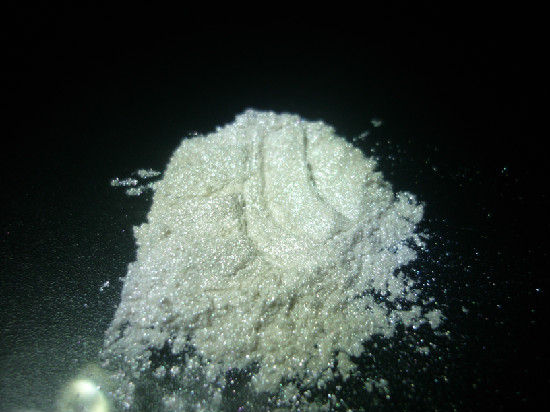
At 10–100μm, KT-152 spans the particle size range where silver mica pigment transitions from a smooth pearl coverage into a flash silver effect — individual platelet reflections become visible to the eye, giving coatings, epoxy floors, and decorative surfaces a pronounced sparkle that finer grades cannot produce. The wider distribution makes it a practical single-grade specification for applications where both coverage continuity and visible flash are required simultaneously, without the surface texture limitations of coarser 40–200μm grades.
Read More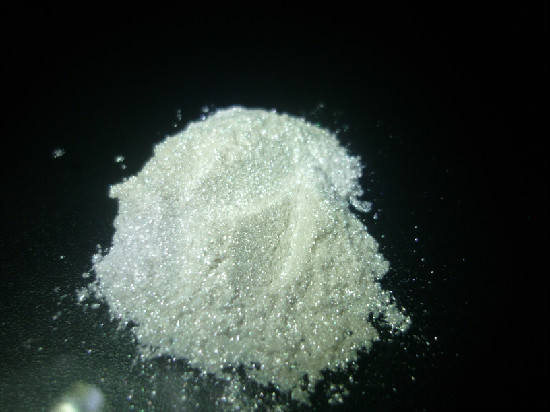
KT-153 is a glitter white pearlescent mica powder in the 20–100μm particle size range — a natural mica grade coated with rutile TiO₂ that produces a bright, glitter-like silver-white sparkle in coatings, epoxy systems, nail products, and decorative applications. At this distribution, the lower size cut removes the very fine fraction that contributes to background pearl coverage, concentrating the visual output toward individual platelet flash reflections — the result is a more glitter-like sparkle character than a standard 10–60μm silver white grade, without the surface texture limitations of purely coarse 40–200μm grades.
Read More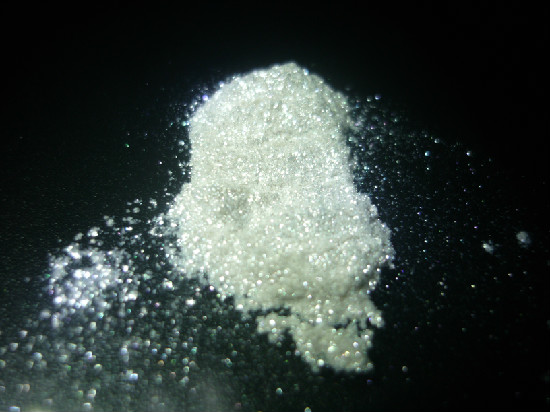
KT-163 is a shimmer pearl natural mica pigment powder in the 40–200μm particle size range — one of the coarser grades in the KT-100 Silver White Series, designed for applications where visible, bold individual-platelet sparkle is the target effect rather than smooth coverage pearl. At this distribution, individual mica platelets coated with rutile TiO₂ are large enough to produce distinct, directional flash reflections visible to the naked eye, giving epoxy floors, countertops, decorative coatings, and craft resin applications a pronounced shimmer that finer pearl grades cannot replicate. For formulators who need a coarse silver white pearl with reliable batch-to-batch sparkle intensity, KT-163 covers the upper-brightness end of the KT-100 natural mica range.
Read More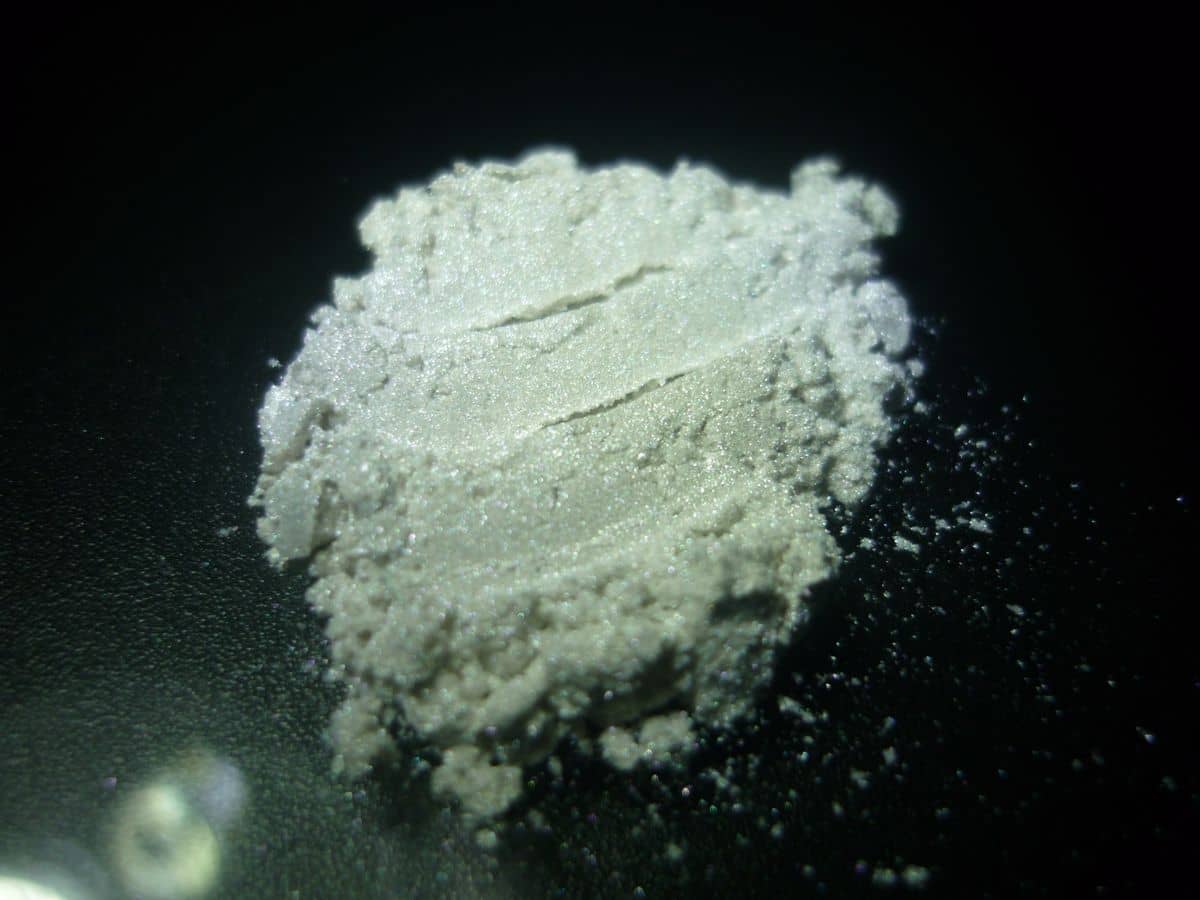
Silver white pearlescent pigments are the baseline of effect pigment formulation — the ones every formulator reaches for first. They're also the ones where small differences in particle size, substrate purity, and TiO₂ coating quality make the biggest practical difference in your final product.
Read More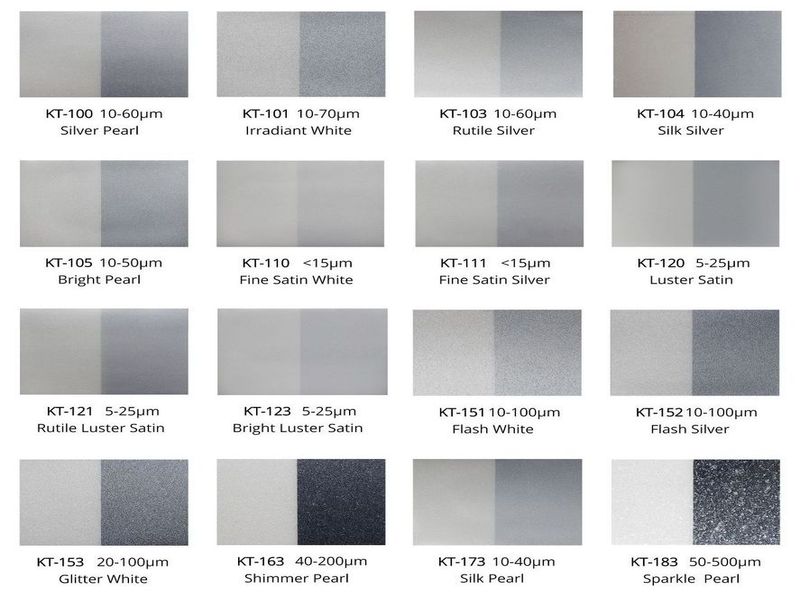
Silver white pearlescent pigments are the workhorse of the effect pigment world. They underpin everything from automotive basecoats to nail polish, and the formulation logic behind them hasn't changed much in decades: mica flakes coated with titanium dioxide, tuned by particle size and TiO₂ crystal form to deliver a specific balance of whiteness, brightness, and sparkle. What has changed is the supply landscape.
Read More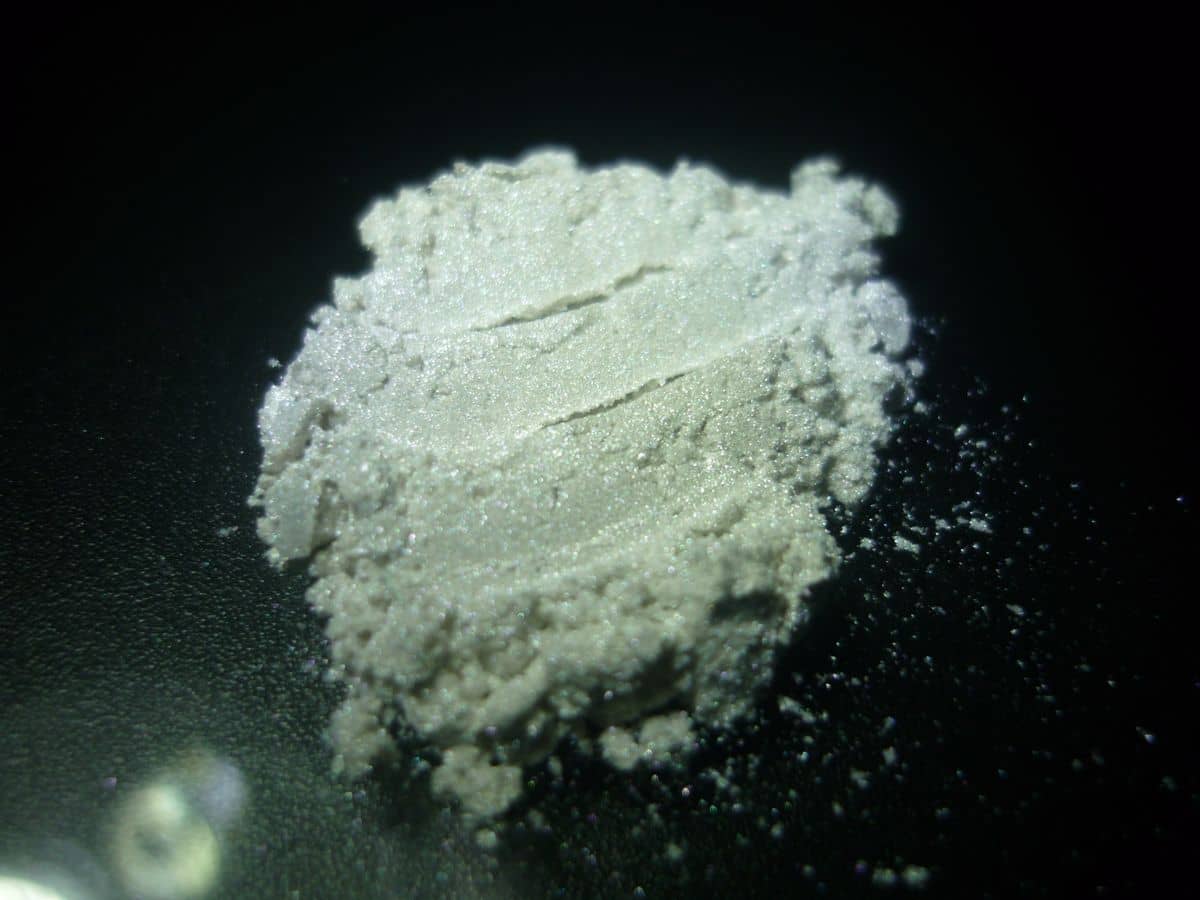
Silver white pearlescent pigments are one of the most specified effect pigments across coatings, plastics, printing, and cosmetics — and KT-100 is Kolortek's direct-working equivalent to Iriodin 100. Same mica-titanium dioxide platform, same particle size range, same optical behavior. If your formulation was built around Iriodin 100, KT-100 slots in without reformulation. That said, "equivalent" doesn't mean identical in every edge case. What it means practically: the substrate, platelet morphology, and refractive index are comparable enough that you won't be redesigning your process to accommodate it.
Read More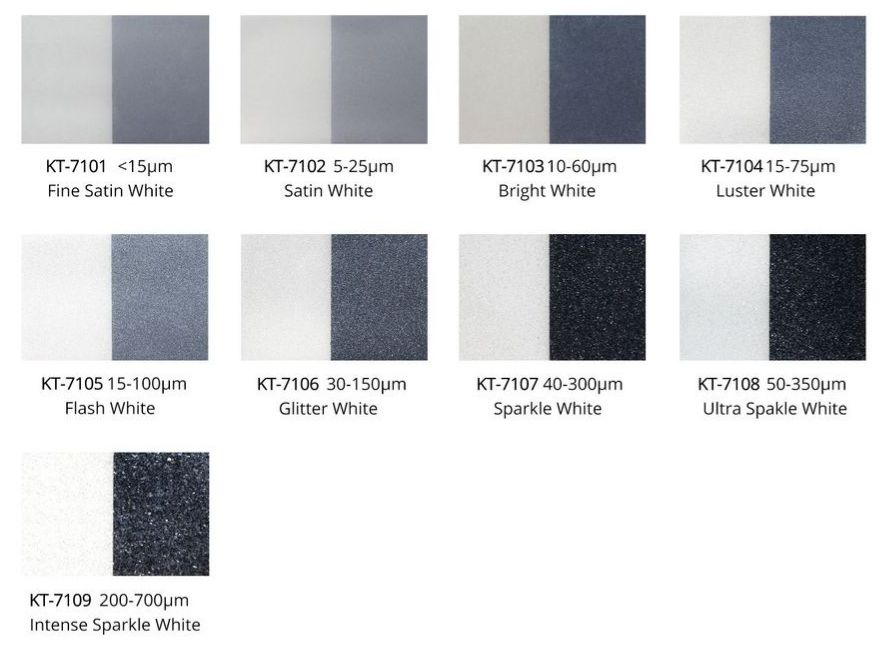
Wholesale silver white pearl pigment from China combines the brilliant metallic luster of TiO₂-coated mica with factory-direct pricing and flexible bulk ordering. Our KT-100 Silver White series spans particle sizes from 5 µm satin finishes to 200 µm coarse sparkle grades, serving automotive basecoats, decorative coatings, plastics, and printing inks where a clean, bright silver-white effect is required at scale.
Read More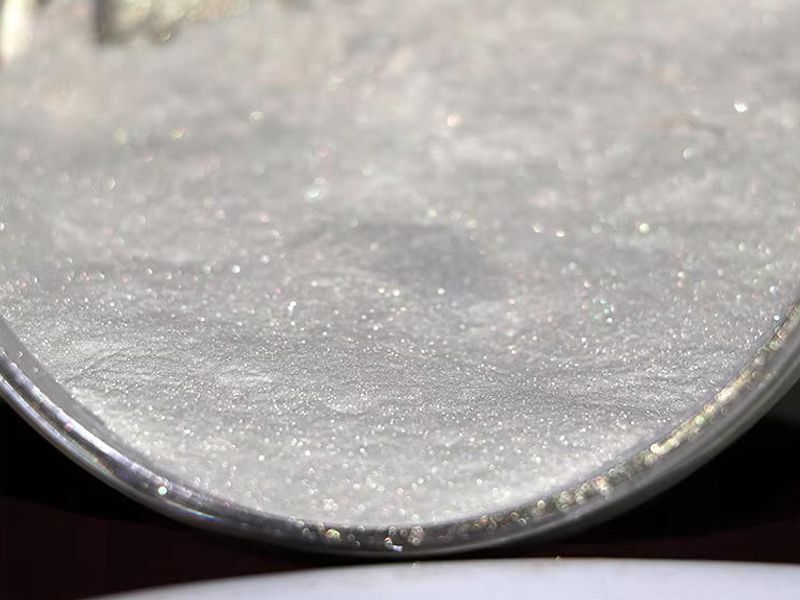
Bright pearl mica pigment delivers a clean, brilliant silver-white luster through a titanium dioxide coating on natural mica substrate. We formulate this across multiple particle size distributions in our KT-100 Silver White Series, giving formulators precise control over coverage density and sparkle intensity—finer grades yield smooth, even pearl coverage in cosmetics and automotive coatings, while coarser fractions produce more pronounced glitter effects in plastics and printing inks.
Read More
 English
 Français
 Deutsch
 Русский
 Español
 Português