Leave A Message
If you are interested in our products and want to know more details,please leave a message here,we will reply you as soon as we can.
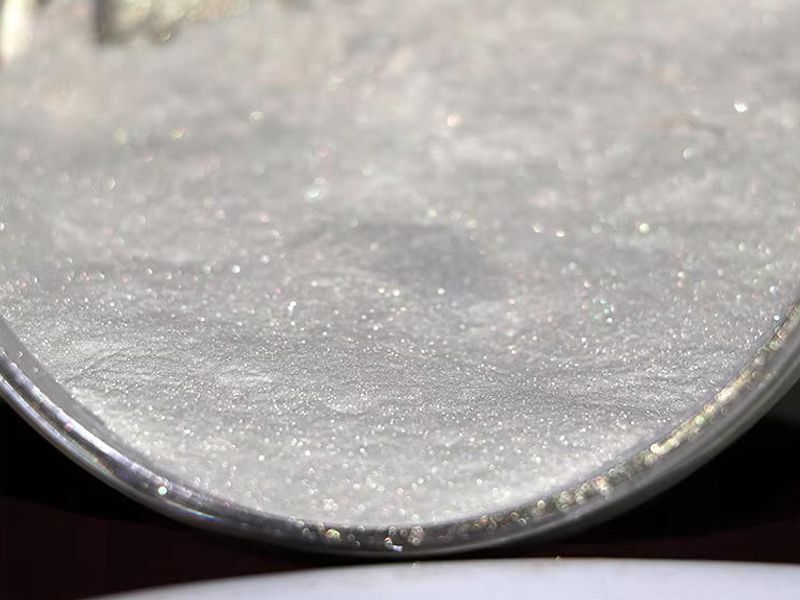
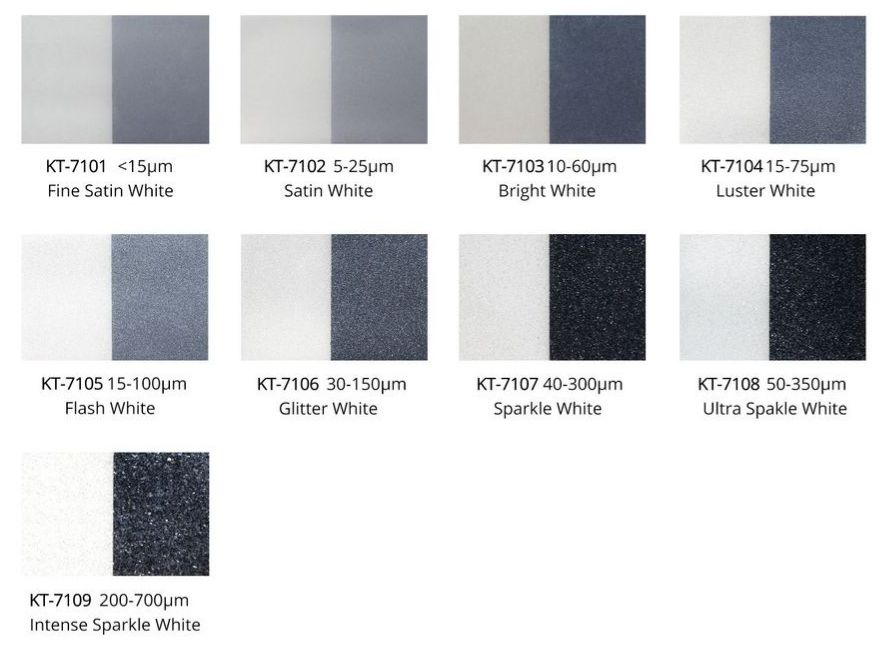
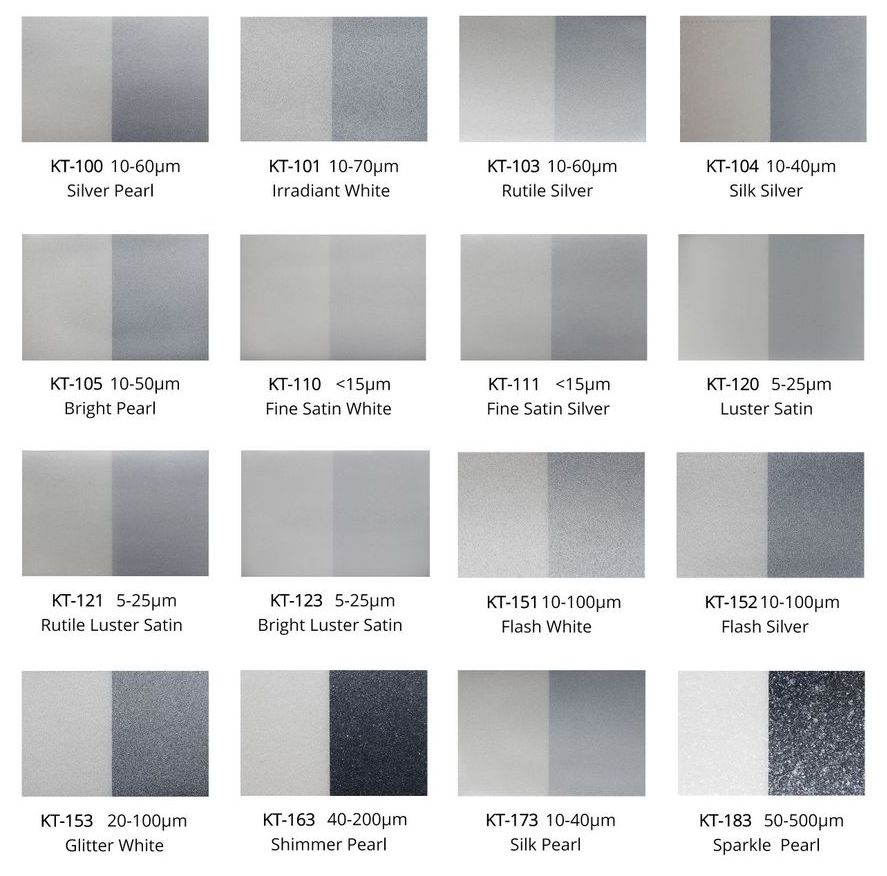
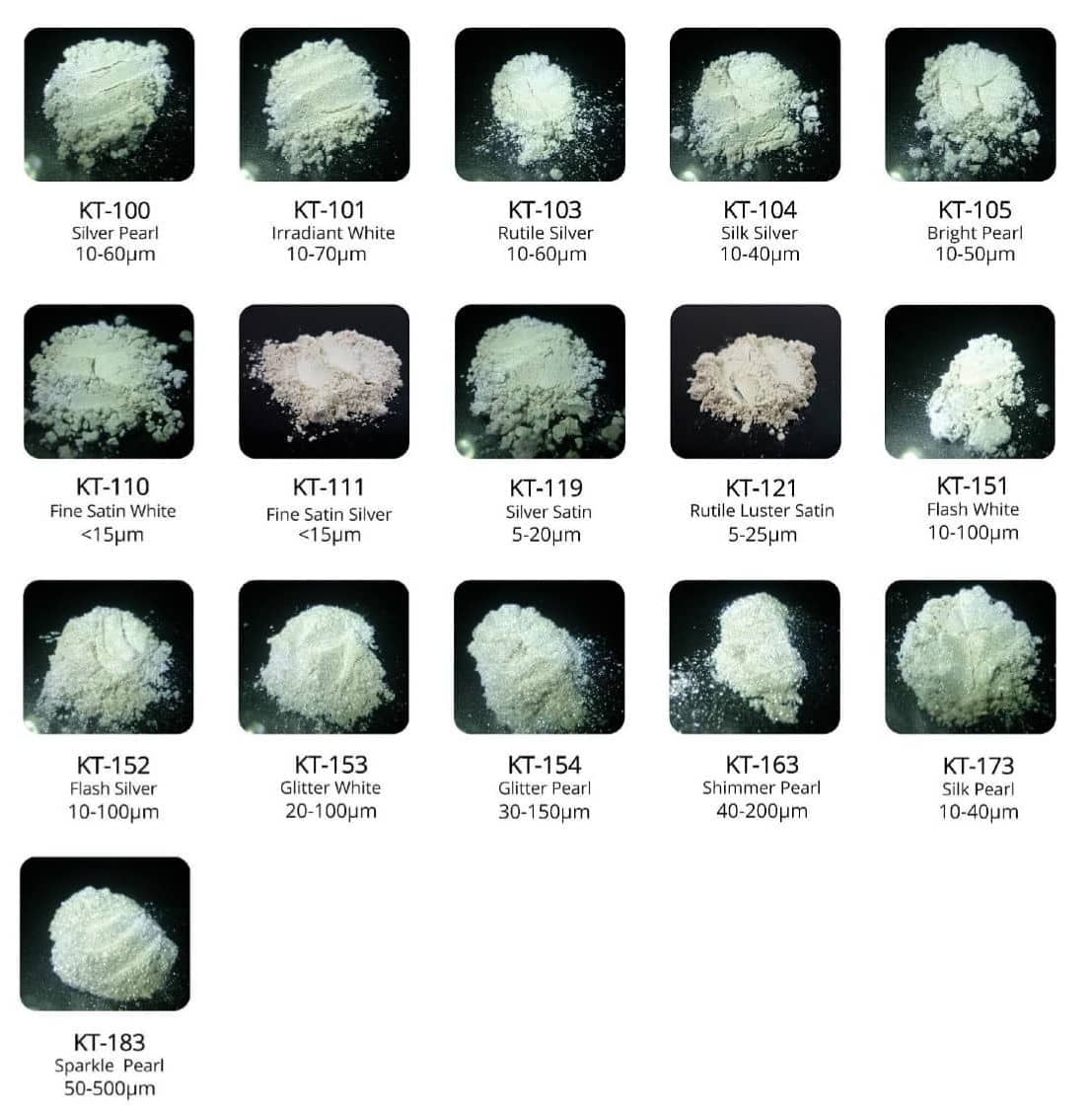
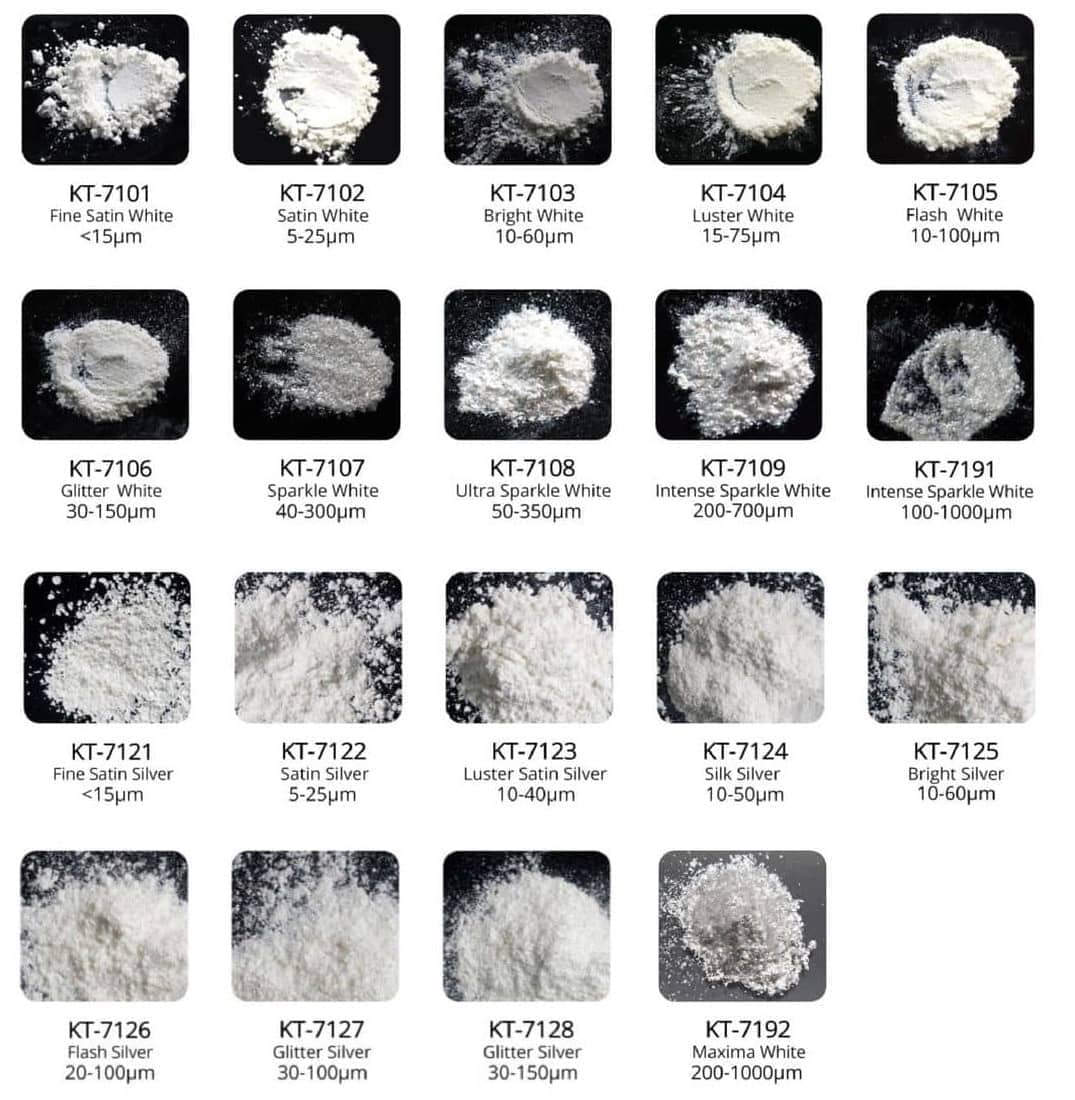
Bright pearl mica pigment delivers a clean, brilliant silver-white luster through a titanium dioxide coating on natural mica substrate. We formulate this across multiple particle size distributions in our KT-100 Silver White Series, giving formulators precise control over coverage density and sparkle intensity—finer grades yield smooth, even pearl coverage in cosmetics and automotive coatings, while coarser fractions produce more pronounced glitter effects in plastics and printing inks.
The KT-100 Silver White Series uses a precise titanium dioxide deposition process on natural mica platelets to generate a high-reflectance pearl luster. In our application lab, we see formulators select this pearlescent mica powder for applications requiring a neutral, brilliant white-pearl effect without interference color shifts—ideal when you need a clean highlight or bright accent rather than a color-travel effect.
Natural mica substrates offer excellent surface smoothness and optical uniformity compared to synthetic alternatives, which translates to more consistent luster across batch runs. We maintain tight particle size distribution control within each grade, ensuring repeatable sparkle intensity and coverage when you scale from lab trials to full production.
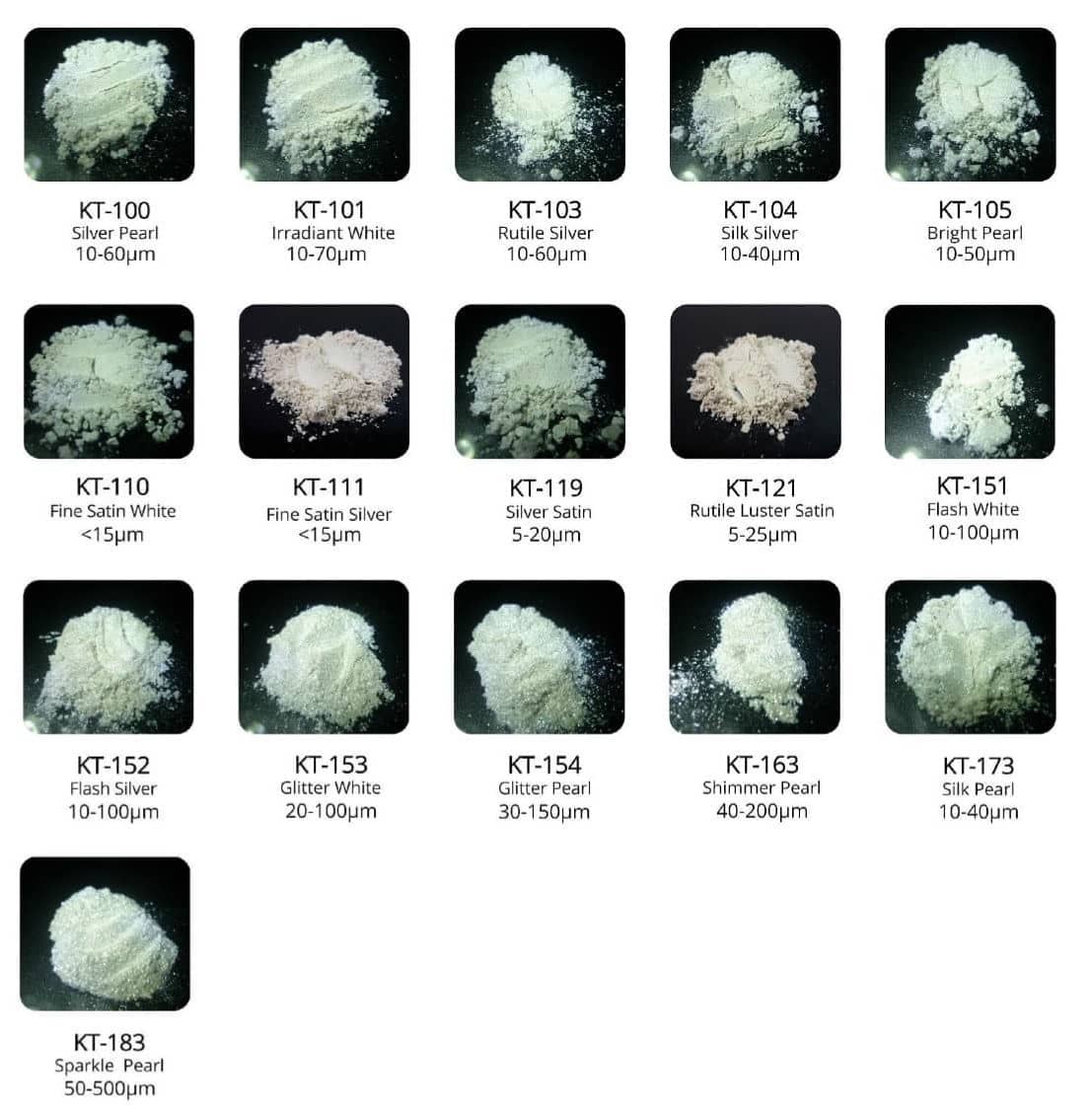
Particle size directly governs the visual character of mica pigment formulations. Finer distributions (typically below 25 μm, though specific ranges vary by grade) produce smooth, satin-like pearl coverage with minimal individual sparkle points—preferred in automotive basecoats, cosmetic pressed powders, and high-end architectural coatings where a refined, uniform appearance is required.
Coarser fractions deliver more discrete sparkle and higher contrast between lit and unlit platelets. These grades work well in plastic masterbatch for consumer electronics housings, screen-printing inks for decorative packaging, and nail lacquers where pronounced glitter is desired. In practice, many formulators blend two adjacent particle size grades to fine-tune the balance between coverage and sparkle.
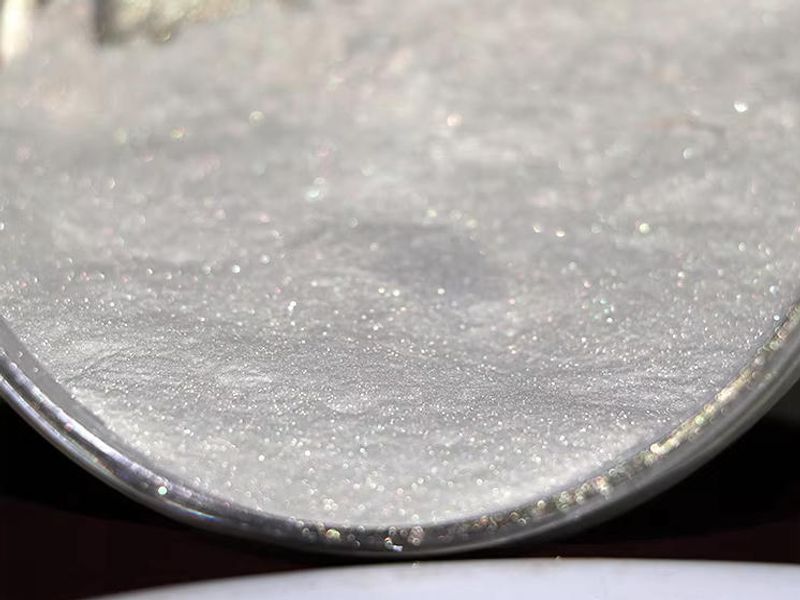
Bright pearl mica pigment integrates readily into solvent-borne, waterborne, and powder coating systems. Automotive refinish formulators use it to create bright metallic effects in basecoat/clearcoat systems, while industrial coating manufacturers incorporate it into metal and wood finishes for appliances, furniture, and architectural panels. Dispersion is typically straightforward with standard high-shear mixing; avoid excessive milling that can fracture mica platelets and reduce luster.
In thermoplastics processing—injection molding, extrusion, blow molding—these pigments maintain structural integrity through typical processing temperatures. We supply grades used in PP, PE, ABS, PC, and nylon compounds. Formulators often introduce the pigment via masterbatch to ensure even distribution and avoid agglomeration. Gate placement and mold design influence platelet orientation, which affects the final luster uniformity on molded parts.
Offset, flexographic, gravure, and screen inks all accommodate mica pigments, though particle size selection must align with the printing method's ink film thickness and mesh or anilox specifications. Screen printing tolerates coarser grades; offset and flexo typically require finer distributions. Digital ink formulations are more restrictive due to printhead nozzle dimensions—confirm compatibility with your specific system.
Cosmetic-grade bright pearl mica powder is formulated to meet regulatory frameworks including EU Cosmetics Regulation EC 1223/2009. Grades are available for pressed powders, liquid emulsions, anhydrous systems, and nail lacquers. All cosmetic grades undergo heavy metal testing per strict control protocols. Final suitability depends on the selected grade and intended use—contact our technical team for product-specific documentation and regulatory support.
Kolortek operates under ISO 9001:2015 certification covering the production and sales of effect pigments. All product lines, including the KT-100 Silver White Series, are manufactured under strict heavy metal control protocols to meet global regulatory requirements. REACH registration covers certain substrates; for product-specific compliance confirmation, request the relevant certification documents. US FDA-compliant grades and Halal/Kosher certified options are available for applications requiring these approvals.
We maintain a cross-reference program aligning our KT-100 grades with Merck Iriodin® equivalents, simplifying supplier qualification for formulators already familiar with that benchmark. Natural mica substrates offer cost advantages over synthetic mica while delivering comparable optical performance in most applications. Batch-to-batch color consistency is maintained through inline quality checkpoints, and competitive pricing supports both pilot-scale trials and high-volume production sourcing.
What is the difference between bright pearl mica pigment and interference mica pigments?
Bright pearl mica pigments (like our KT-100 Silver White Series) produce a neutral silver-white luster without color travel as viewing angle changes. Interference pigments (such as the KT-200 Series) exhibit angle-dependent color shifts due to thicker or multilayer TiO₂ coatings that generate optical interference. Choose pearl pigments for consistent highlight effects and interference pigments when dynamic color change is desired.
Can I use this mica pigment wholesale grade in food-contact applications?
Kolortek manufactures grades formulated to meet US FDA requirements where applicable, but food-contact suitability depends on the specific grade, coating thickness, and intended use scenario. Request the product datasheet and regulatory documentation for the grade you are considering—our technical team can confirm whether it meets FDA or EU food-contact regulations for your application.
How do I select the right particle size for my formulation?
Finer particle sizes (typically below 25 μm) provide smooth, even coverage with subtle luster—ideal for automotive coatings, cosmetic foundations, and premium architectural paints. Coarser grades deliver higher sparkle intensity and discrete glitter effects, suited to plastics, screen-printing inks, and nail art. If you need both coverage and sparkle, consider blending two adjacent size grades or request sample kits from our application lab to trial different distributions in your matrix.
What is the recommended loading rate for bright pearl mica powder in coatings?
Loading rates vary by desired effect intensity, coating system, and application method. While specific dosage data is not published for all KT-100 grades, typical starting ranges in coatings fall between 3-10% by weight of total formulation for moderate pearl effects, with higher loadings producing more intense luster. Run bench trials in your system to optimize the balance between effect strength, cost, and application properties such as viscosity and sag resistance.
Contact our technical team to discuss formulation requirements and request sample materials for your specific application.
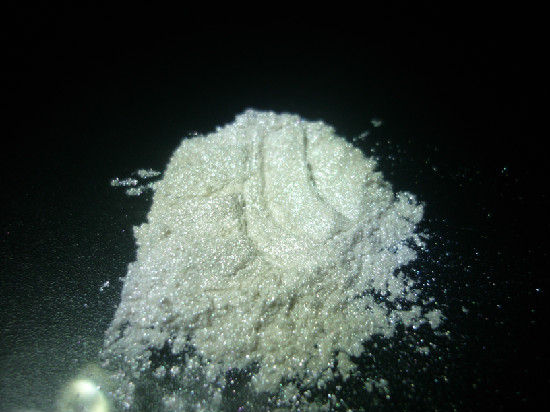
At 10–100μm, KT-152 spans the particle size range where silver mica pigment transitions from a smooth pearl coverage into a flash silver effect — individual platelet reflections become visible to the eye, giving coatings, epoxy floors, and decorative surfaces a pronounced sparkle that finer grades cannot produce. The wider distribution makes it a practical single-grade specification for applications where both coverage continuity and visible flash are required simultaneously, without the surface texture limitations of coarser 40–200μm grades.
Read More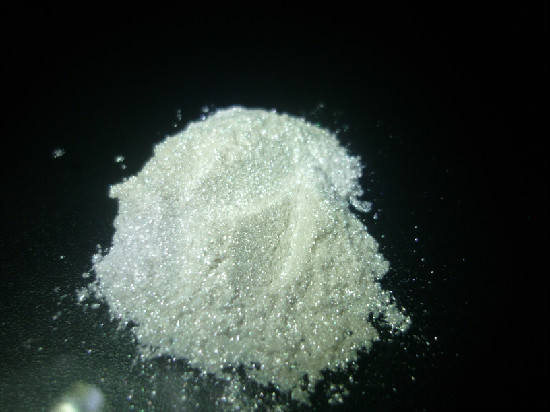
KT-153 is a glitter white pearlescent mica powder in the 20–100μm particle size range — a natural mica grade coated with rutile TiO₂ that produces a bright, glitter-like silver-white sparkle in coatings, epoxy systems, nail products, and decorative applications. At this distribution, the lower size cut removes the very fine fraction that contributes to background pearl coverage, concentrating the visual output toward individual platelet flash reflections — the result is a more glitter-like sparkle character than a standard 10–60μm silver white grade, without the surface texture limitations of purely coarse 40–200μm grades.
Read More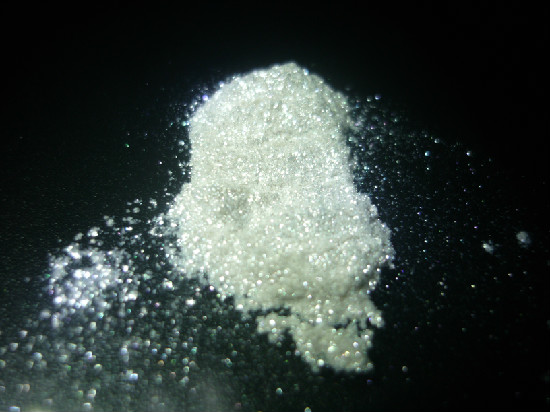
KT-163 is a shimmer pearl natural mica pigment powder in the 40–200μm particle size range — one of the coarser grades in the KT-100 Silver White Series, designed for applications where visible, bold individual-platelet sparkle is the target effect rather than smooth coverage pearl. At this distribution, individual mica platelets coated with rutile TiO₂ are large enough to produce distinct, directional flash reflections visible to the naked eye, giving epoxy floors, countertops, decorative coatings, and craft resin applications a pronounced shimmer that finer pearl grades cannot replicate. For formulators who need a coarse silver white pearl with reliable batch-to-batch sparkle intensity, KT-163 covers the upper-brightness end of the KT-100 natural mica range.
Read More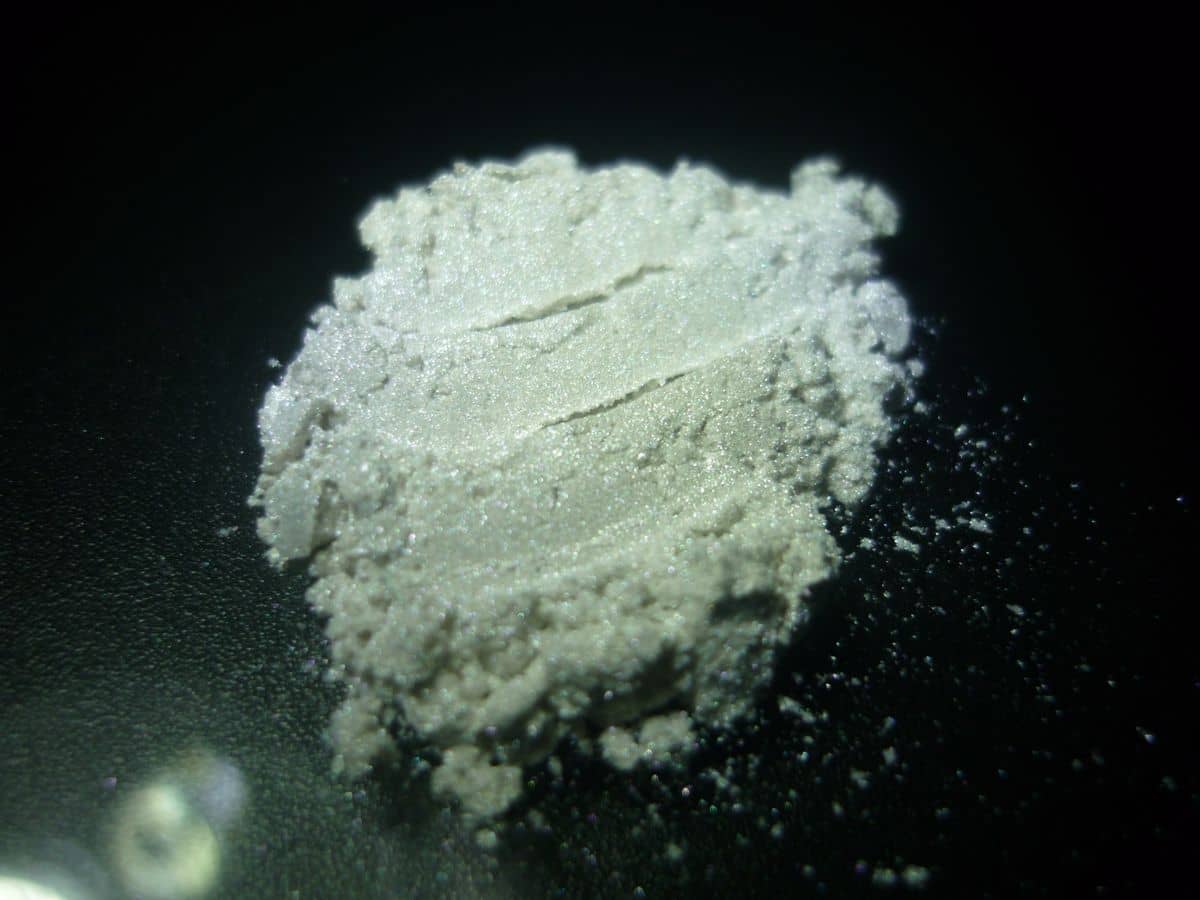
Silver white pearlescent pigments are the baseline of effect pigment formulation — the ones every formulator reaches for first. They're also the ones where small differences in particle size, substrate purity, and TiO₂ coating quality make the biggest practical difference in your final product.
Read More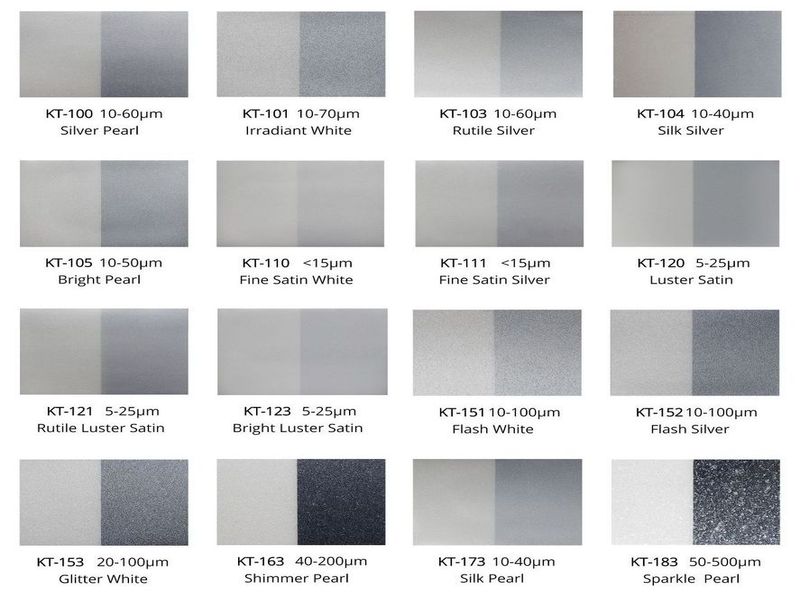
Silver white pearlescent pigments are the workhorse of the effect pigment world. They underpin everything from automotive basecoats to nail polish, and the formulation logic behind them hasn't changed much in decades: mica flakes coated with titanium dioxide, tuned by particle size and TiO₂ crystal form to deliver a specific balance of whiteness, brightness, and sparkle. What has changed is the supply landscape.
Read More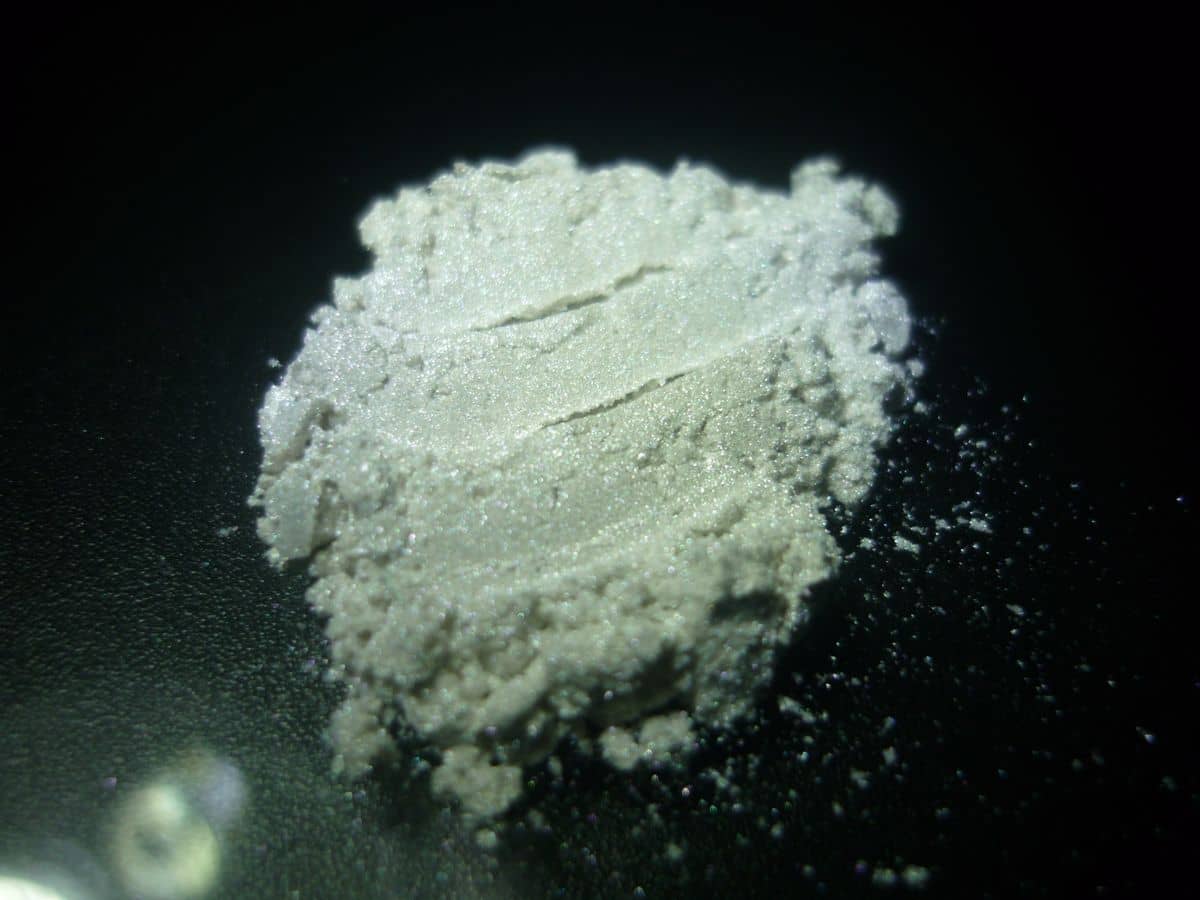
Silver white pearlescent pigments are one of the most specified effect pigments across coatings, plastics, printing, and cosmetics — and KT-100 is Kolortek's direct-working equivalent to Iriodin 100. Same mica-titanium dioxide platform, same particle size range, same optical behavior. If your formulation was built around Iriodin 100, KT-100 slots in without reformulation. That said, "equivalent" doesn't mean identical in every edge case. What it means practically: the substrate, platelet morphology, and refractive index are comparable enough that you won't be redesigning your process to accommodate it.
Read More
Wholesale silver white pearl pigment from China combines the brilliant metallic luster of TiO₂-coated mica with factory-direct pricing and flexible bulk ordering. Our KT-100 Silver White series spans particle sizes from 5 µm satin finishes to 200 µm coarse sparkle grades, serving automotive basecoats, decorative coatings, plastics, and printing inks where a clean, bright silver-white effect is required at scale.
Read More
Bright pearl mica pigment delivers a clean, brilliant silver-white luster through a titanium dioxide coating on natural mica substrate. We formulate this across multiple particle size distributions in our KT-100 Silver White Series, giving formulators precise control over coverage density and sparkle intensity—finer grades yield smooth, even pearl coverage in cosmetics and automotive coatings, while coarser fractions produce more pronounced glitter effects in plastics and printing inks.
Read More
 English
 Français
 Deutsch
 Русский
 Español
 Português