
Leave A Message
If you are interested in our products and want to know more details,please leave a message here,we will reply you as soon as we can.
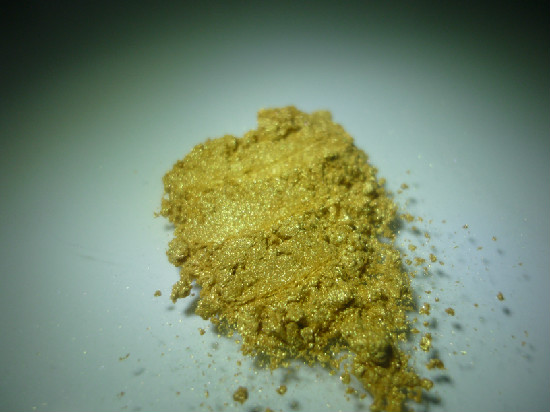
KT-300 is a gold pearl pearlescent pigment built on natural mica coated with titanium dioxide and iron oxide — the iron oxide component is what separates the KT-300 Gold Series from the KT-200 interference grades, producing a warm gold body color that reads on any substrate without requiring a dark background. At 10–60μm, the particle size delivers a balanced gold pearl: warm, glossy, and three-dimensional in appearance, with a transparency and depth that copper-bronze metallic powders cannot produce. For formulators who need a reliable gold pearl across coatings, cosmetics, nail, soap, and epoxy applications, KT-300 is the standard natural mica specification in this color family.
Item No. :
KT-300Color Effect :
Gold PearlParticle Size :
10-60μmComposition :
Mica, Titanium Dioxide, Iron Oxide, Tin OxideBrand :
Kolortek / OEMMOQ :
25 KGApplication :
Coatings, Plastics, Printing Inks, Cosmetics, Epoxy Floors, Crafts, etc.
KT-300 is a gold pearl pearlescent pigment built on natural mica coated with titanium dioxide and iron oxide — the iron oxide component is what separates the KT-300 Gold Series from the KT-200 interference grades, producing a warm gold body color that reads on any substrate without requiring a dark background. At 10–60μm, the particle size delivers a balanced gold pearl: warm, glossy, and three-dimensional in appearance, with a transparency and depth that copper-bronze metallic powders cannot produce. For formulators who need a reliable gold pearl across coatings, cosmetics, nail, soap, and epoxy applications, KT-300 is the standard natural mica specification in this color family.
Copper-bronze metallic powders produce a flat, opaque gold metallic effect — they cover the substrate and reflect light from a single plane. KT-300 produces a translucent, layered gold pearl effect — light passes through the iron oxide-TiO₂ coating layers on each mica platelet, reflects at multiple interfaces, and creates a depth and luminosity that flat metallic powders lack. The effect reads differently at direct and oblique viewing angles, giving finished surfaces a three-dimensional quality.
Unlike KT-200 interference gold (which requires a dark substrate to show color), KT-300's iron oxide coating provides warm gold body color visible on any substrate — dark, light, or white. This makes KT-300 significantly more versatile for formulators who cannot control or guarantee the base color of the substrate.
| Color Name | Tone Description | Iron Oxide Level |
|---|---|---|
| Gold Pearl (KT-300) | Warm yellow-gold — standard gold pearl | Low-medium |
| Aztec Gold Pearl | Deeper, richer gold with orange undertone | Medium |
| Royal Gold Pearl | Deep, saturated gold — warmer and more orange than standard gold | Medium-high |
| Bronze Pearl | Warm bronze with brown undertone | High |
| Wine Red Pearl | Deep red-brown with pearl shimmer | Very high |
| Mauve Pearl | Dusky pink-mauve with pearl luster | Very high |
All KT-300 series grades can be blended with each other to produce intermediate tones and custom golden effects. The iron oxide content increases progressively from gold through to wine red and mauve — blending gold and bronze, for example, produces intermediate warm gold tones not available as a single grade.
| Parameter | Value / Notes |
|---|---|
| Item No. | KT-300 |
| Series | KT-300 Gold Series (Natural Mica) |
| Color | Gold Pearl — warm yellow-gold with pearlescent depth |
| Effect Type | Gold metallic pearl — visible on all substrate colors (no dark base required) |
| Substrate | Natural mica (muscovite) platelet |
| Coating | Titanium Dioxide + Iron Oxide + Tin Oxide (SnO₂) |
| Composition | Mica, Titanium Dioxide, Iron Oxide, Tin Oxide |
| Particle Size Range | 10–60μm |
| Appearance (powder) | Gold to pale gold powder with pearlescent sheen |
| Substrate Dependency | None — gold body color visible on dark, light, and white bases |
| Blending | Compatible with all KT-300 series grades for custom gold tones |
| Binder Compatibility | Water-based, solvent-based, UV-curable, wax, oil, epoxy resin |
| Synthetic Mica Alternative | KT-7300 series (Fluorphlogopite) — higher purity, fewer black spots, heat stability above ~500°C |
| Documentation | TDS, SDS on request; INCI available for cosmetic applications |
| Brand | Kolortek |
Iron oxide coating — gold body color on any substrate: The iron oxide layer on each mica platelet absorbs blue-violet wavelengths and reflects warm yellow-gold wavelengths — producing visible gold color regardless of what color the substrate is underneath. This is the fundamental difference from KT-200 interference gold, which requires a dark substrate to suppress complementary wavelengths and reveal the interference color.
Transparency and three-dimensional depth vs. metallic powders: Unlike copper-bronze metallic powders that produce a flat, opaque metallic layer, KT-300 platelets allow partial light transmission through the coating. Light reflects at multiple interfaces within each platelet — the TiO₂ layer, the iron oxide layer, and the mica substrate — creating layered reflections that produce visual depth. The effect is described as three-dimensional because different light paths through the platelet stack create slightly different reflection angles, giving the surface a luminosity that flat metallics lack.
10–60μm — the general-purpose gold pearl grade: At this particle size, KT-300 produces a smooth, balanced gold pearl suitable for cosmetics, nail lacquer, and coating applications where both coverage continuity and visible shimmer are required. For printing ink applications requiring D90 below 25μm, a fine-grade variant is necessary — confirm the D90 from the TDS against your press nozzle specification. For epoxy floor and resin art applications where bold gold sparkle is the target, coarser grades (40–200μm) within the KT-300 series deliver more prominent individual flake reflections.
| Application | How KT-300 Contributes | Notes |
|---|---|---|
| Cosmetics | Gold pearl in eye shadow, highlighter, bronzer, lip gloss, body shimmer | Visible on all skin tones; INCI documentation available on request |
| Nail lacquer | Warm gold pearl finish in standard, gel, and builder formulations | Compatible with nitrocellulose and waterborne bases; visible over all base coat colors |
| Printing inks | Gold pearl in packaging, labels, luxury print | Fine-grade variant (D90 <25μm) required for gravure/flexo — confirm particle size |
| Decorative coatings | Gold metallic pearl in wall paint, furniture, and architectural finishes | Works over any base color; add at letdown stage post-dispersion |
| Soap making | Gold pearl shimmer in melt-and-pour and cold process soap | Stable in mildly alkaline soap matrices; visible in both opaque and translucent soap bases |
| Epoxy flooring & craft resin | Gold pearl in epoxy floor coatings, resin art, and decorative castings | Coarser grades (40–200μm) give more prominent gold sparkle in thick resin layers |
Blending within the KT-300 series: All KT-300 gold-family grades share the same mica substrate and TiO₂-iron oxide coating chemistry — they blend predictably with each other. Mixing KT-300 gold pearl with KT-300 bronze pearl in a 70:30 ratio produces a deeper, more antique gold tone. Mixing gold with wine red shifts toward a warm red-gold. Test blends at bench scale before production — small additions shift the tone noticeably given the strong iron oxide tinting strength.
Mixing protocol: Add KT-300 at the letdown stage after high-shear dispersion is complete. Use low-shear paddle mixing. High-shear equipment fractures the mica platelets and reduces D50, which shifts the visual effect from a gold pearl toward a flat, dull gold without the characteristic depth and luster. Do not recirculate through tight-clearance pumps after adding.
Kolortek has supplied the KT-300 Gold Series for over 20 years with consistent iron oxide coating level and D50 particle size distribution across production batches. TDS, SDS, and INCI documentation are available on request. Custom gold tones and particle size grades outside the standard range are available for volume buyers.
Q: What is the difference between KT-300 gold pearl and KT-201 interference gold?
A: KT-300 uses iron oxide in its coating to produce a warm gold body color visible on any substrate, dark or light. KT-201 is an interference pigment — it uses a thick TiO₂ coating to reflect gold-wavelength light through interference, but this effect only works over dark or black substrates where the complementary violet wavelengths are absorbed. Over white or light substrates, KT-201 appears colorless while KT-300 maintains its gold color. Choose KT-300 when you cannot guarantee a dark substrate; choose KT-201 interference gold when maximum chroma and depth over a controlled dark base is the priority.
Q: Why does KT-300 look more transparent than copper-bronze metallic powder?
A: Copper-bronze metallic powders are opaque — they cover the substrate completely with a dense metallic layer that reflects light from a single flat plane. KT-300 mica platelets allow partial light transmission through the TiO₂ and iron oxide coating layers, creating reflections at multiple depths. The result reads as layered and three-dimensional rather than flat — you see depth and luminosity in the gold rather than a mirror-like metallic surface. This is why pearlescent gold pigments are preferred over copper powders in cosmetics and luxury coatings where visual richness matters as much as the gold color itself.
Q: Can KT-300 be used in cosmetic formulations?
A: Yes. KT-300 series grades use iron oxide and TiO₂ colorants on a mica substrate — the same material system used across the cosmetic pigment industry for gold-effect products. INCI documentation is available on request. For cosmetic applications requiring eye-area approval or specific regulatory documentation for EU, US, or other target markets, contact Kolortek to confirm which documentation is available for the specific grade.
Gold pearl character — depth, warmth, and luster intensity — is best evaluated in your own formulation and application system. Contact Kolortek to request a sample of KT-300 or any other grade in the Gold Series, download the TDS with particle size distribution data, or discuss blending options across the series for custom gold tones.
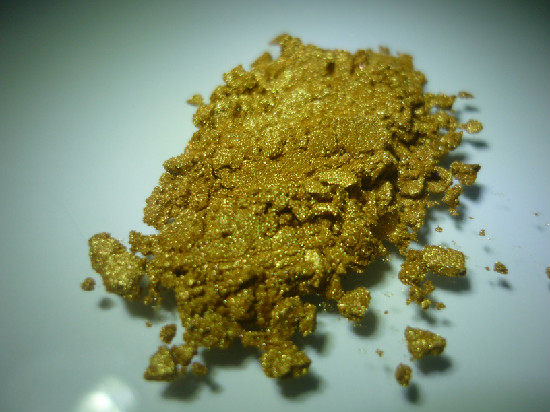
KT-303 is a Royal Gold natural mica pearlescent pigment in the 10–60μm particle size range — a deeper, more saturated gold tone than the standard KT-300 Gold Pearl grade, achieved through a higher iron oxide (Fe₂O₃) loading on the TiO₂-coated mica platelet. The warm, orange-toned gold body color is visible on any substrate without requiring a dark base — a key practical advantage over interference-only gold grades. At 10–60μm, KT-303 covers cosmetics, nail lacquer, decorative coatings, soap, and epoxy resin applications from a single grade specification.
Read More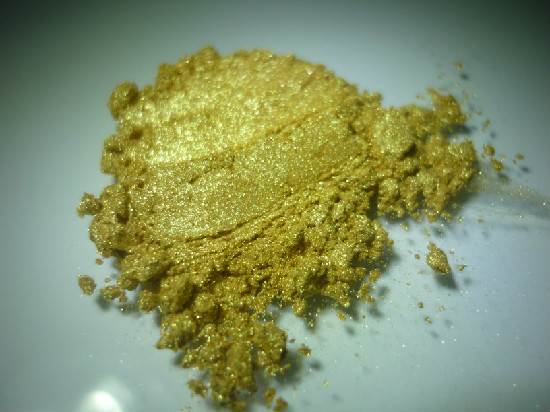
KT-351 is a Flash Gold natural mica pearlescent pigment in the 10–100μm particle size range — the coarser-format gold grade in the KT-300 series, designed for applications where visible individual-platelet gold sparkle is the target effect rather than smooth pearl coverage. The iron oxide and TiO₂ coating on each mica platelet produces a warm gold body color visible on any substrate, while the 10–100μm distribution delivers a flash-sparkle character that distinguishes it from the standard 10–60μm gold pearl grades. For epoxy flooring, decorative resin, craft applications, and nail lacquer where bold gold shimmer intensity matters, KT-351 is the appropriate specification within the KT-300 series.
Read More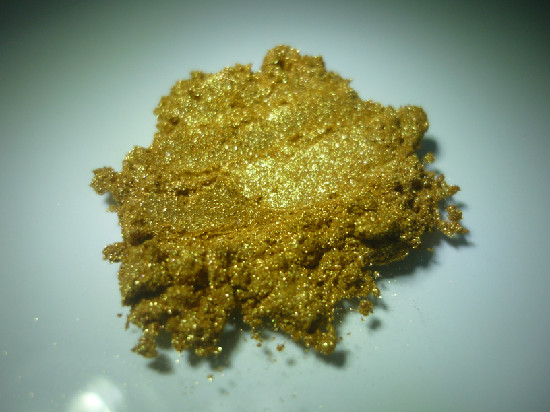
KT-355 is a Glitter Gold natural mica pearlescent pigment in the 20–120μm particle size range — the glitter-dominant gold grade in the KT-300 series, optimized for epoxy flooring, resin art, decorative coatings, craft applications, and nail lacquer where visible individual-platelet gold sparkle is the primary visual requirement. By starting at 20μm rather than 10μm, KT-355 removes the fine background pearl fraction present in KT-351 Flash Gold, concentrating the visual energy toward bold, individual gold flash reflections. The iron oxide and TiO₂ coating produces a warm gold body color visible on any substrate without requiring a dark base — practical for the broad range of base colors encountered in epoxy and decorative applications.
Read More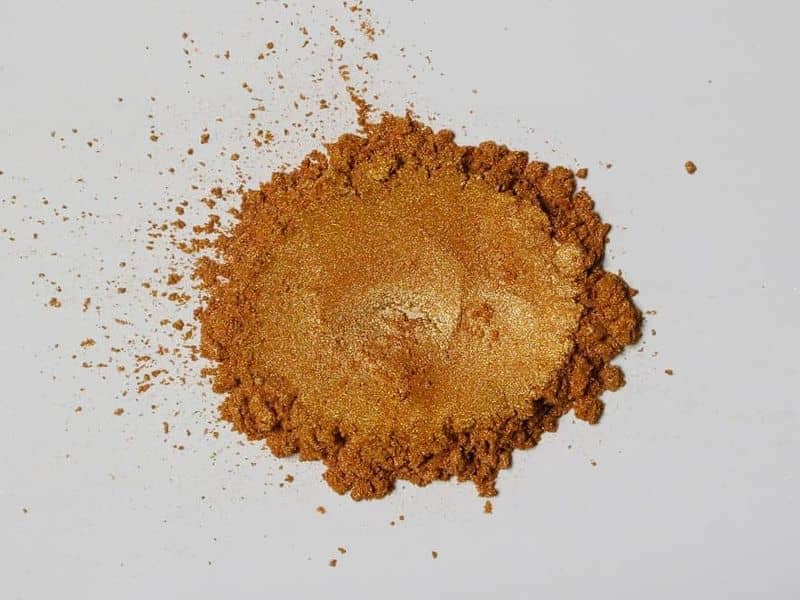
KT-303 is a royal gold pigment built on natural mica flakes, delivering a warm, metallic luster with genuine depth — the kind of three-dimensional gold effect that synthetic alternatives consistently fail to replicate. Coated with titanium dioxide and iron oxide, it offers strong opacity alongside a smooth, fine finish suited for cosmetics, epoxy flooring, and decorative printing. It disperses cleanly, stays stable across most formulation environments, and blends readily with other shades in the KT-300 Gold Series.
Read More
KT-7324 is a flash yellow gold mica powder built on a synthetic fluorphlogopite substrate, delivering a high-intensity flash with a clean, transparent gold tone — well-suited for decorative coatings, epoxy floors, and cosmetic formulations. As a fluorphlogopite pigment, it offers noticeably better color depth and weather resistance than natural mica-based alternatives, making it a reliable choice where long-term appearance retention matters. The coarser 20-100μm particle range pushes the flash effect to its visual maximum, and the pearlescent powder disperses readily across solvent-borne, water-borne, and UV-cure systems.
Read More
KT-300 is a gold pearl pigment built on natural mica coated with titanium dioxide, iron oxide, and tin oxide — producing a warm, semi-transparent metallic luster that closely matches the visual output of Merck's Iriodin 300 Gold Pearl. Designed as a cost-effective iriodin 300 equivalent, it performs consistently across coatings, printing inks, and cosmetic formulations where a rich, dimensional gold effect is required.
Read More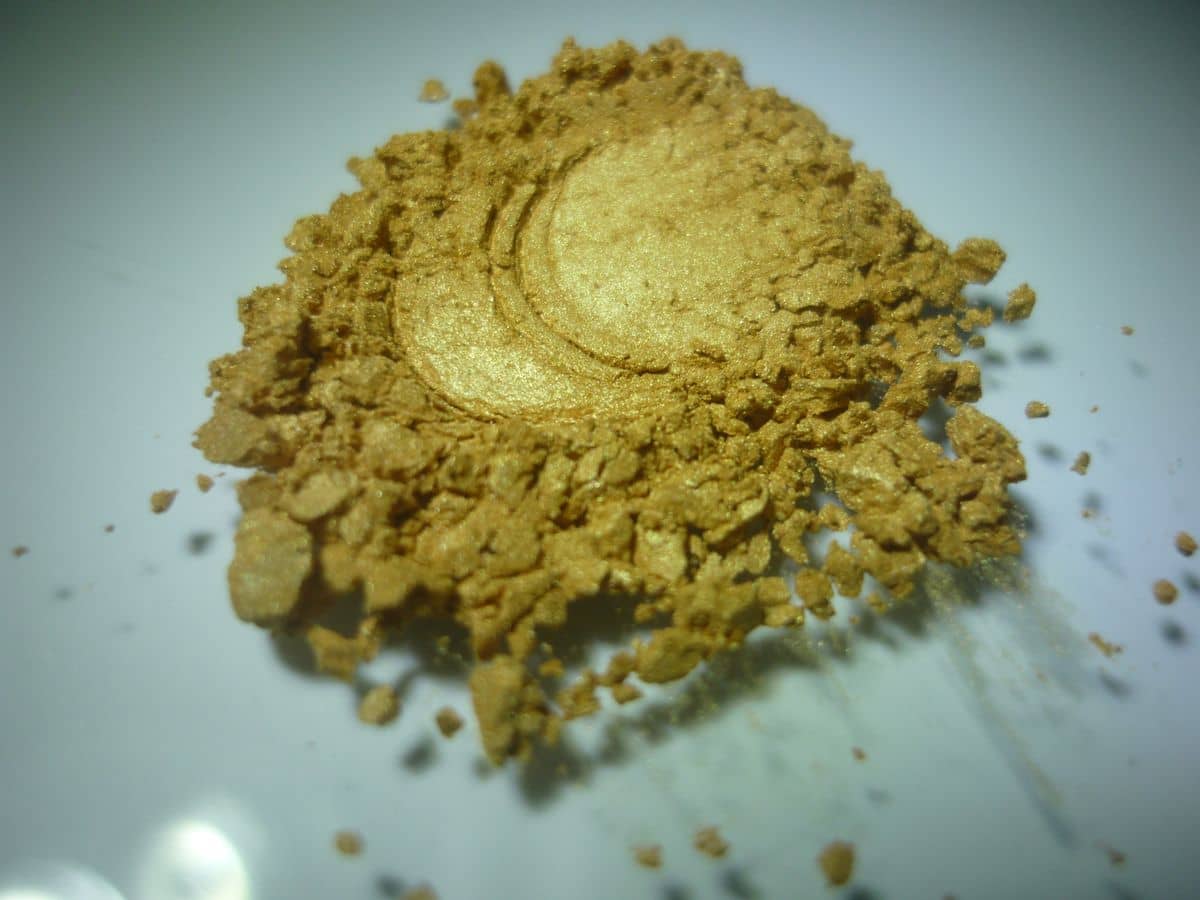
KT-309 is a fine satin gold pigment built on natural mica coated with rutile titanium dioxide, iron oxide, and tin oxide — delivering a warm, silky gold luster with genuine depth and transparency. The sub-15μm particle distribution makes it well-suited for fine printing applications and cosmetic formulations where smooth finish and consistent color response matter. For formulators sourcing an iriodin 309 equivalent, KT-309 is a direct performance match produced under ISO 9001-certified manufacturing conditions.
Read More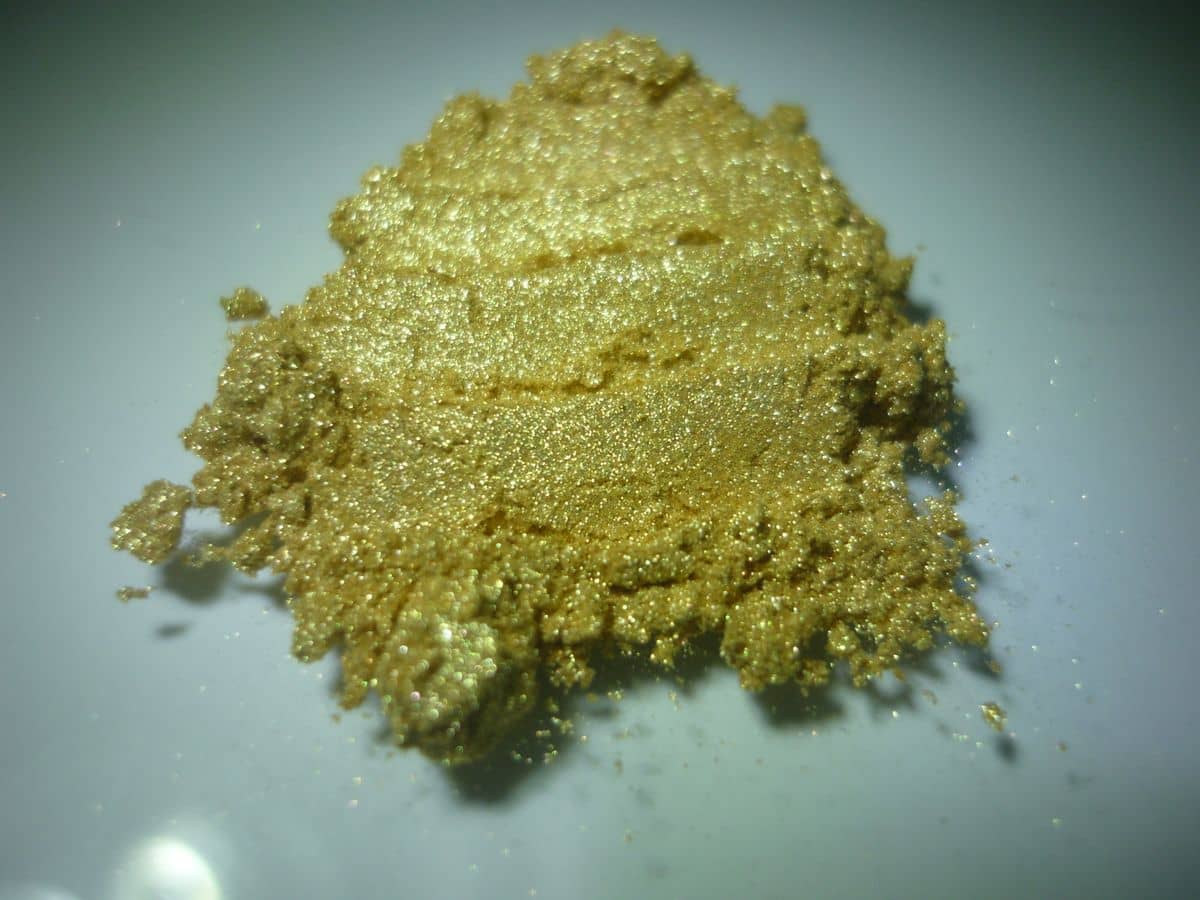
KT-353 is a natural mica-based flash red gold pigment delivering a warm, saturated gold tone with a high-brightness flash effect — a direct iriodin 353 alternative for formulators seeking consistent pearlescent performance without supplier dependency. Its transparent, multi-dimensional luster makes it well-suited for decorative coatings, cosmetic applications, and specialty printing where depth and brilliance matter.
Read More
 English
 Français
 Deutsch
 Русский
 Español
 Português