
Leave A Message
If you are interested in our products and want to know more details,please leave a message here,we will reply you as soon as we can.
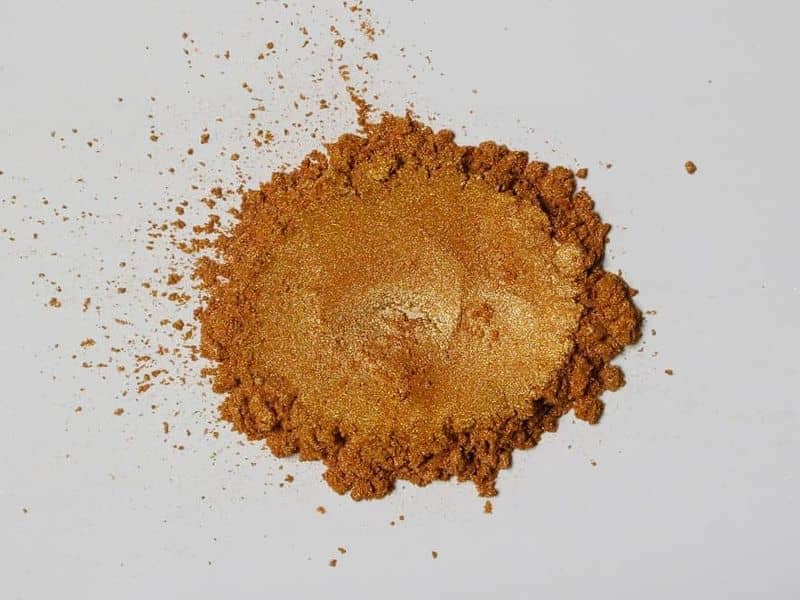
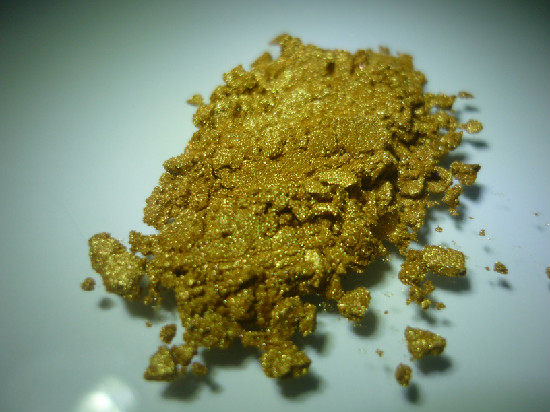

KT-303 is a royal gold pigment built on natural mica flakes, delivering a warm, metallic luster with genuine depth — the kind of three-dimensional gold effect that synthetic alternatives consistently fail to replicate. Coated with titanium dioxide and iron oxide, it offers strong opacity alongside a smooth, fine finish suited for cosmetics, epoxy flooring, and decorative printing. It disperses cleanly, stays stable across most formulation environments, and blends readily with other shades in the KT-300 Gold Series.
Item No. :
KT-303Color Effect :
Royal GoldParticle Size :
10-60μmComposition :
Mica, Titanium Dioxide, Iron Oxide, Tin OxideBrand :
Kolortek / OEMMOQ :
25 KGApplication :
Coatings, Plastics, Printing Inks, Cosmetics, Epoxy Floors, Crafts, etc.KT-303 belongs to Kolortek's KT-300 Series, a line of natural mica-based gold pearlescent pigments covering a range of gold tones. Each shade in the series can be independently specified or blended at controlled ratios to hit custom gold targets.
| Model | Color | Base Material | Particle Size | Series |
|---|---|---|---|---|
| KT-303 | Royal Gold | Natural Mica | 10–60 μm | KT-300 Gold Series |
The 10–60 μm particle range makes KT-303 a versatile cut — fine enough for printing and nail applications, substantial enough to develop the metallic depth expected in epoxy floors and decorative surfaces.
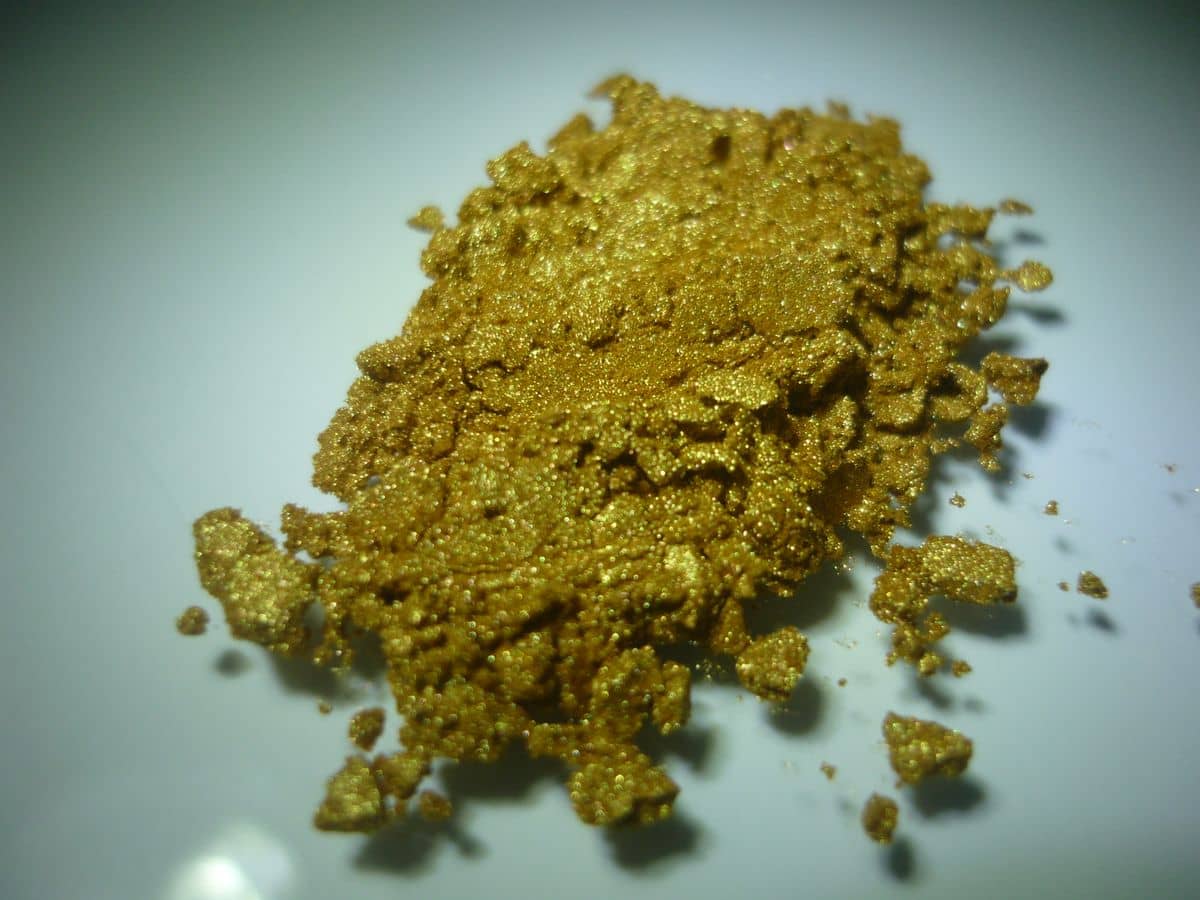
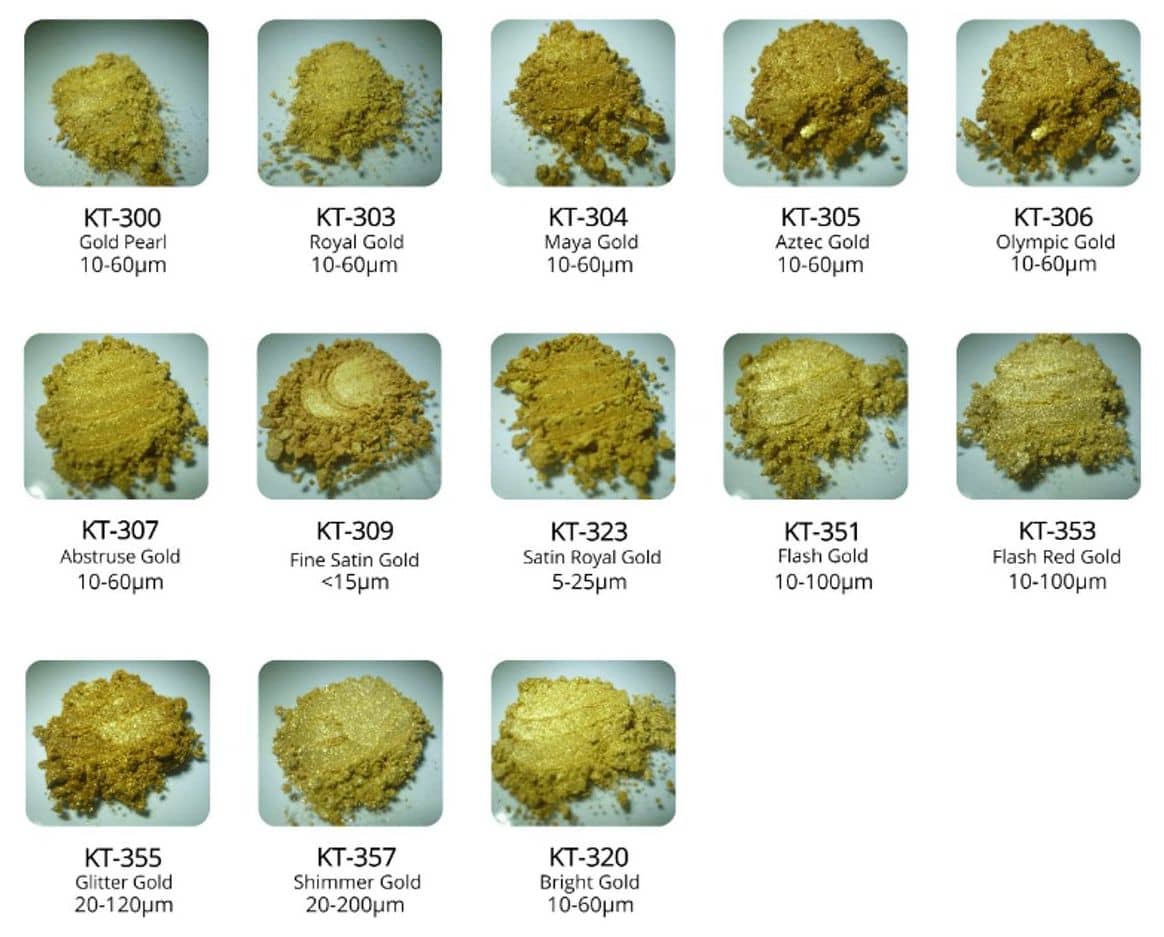
KT-303 is structured around natural mica flakes coated with titanium dioxide, iron oxide, and tin oxide. The iron oxide coating drives the warm gold chromaticity. Tin oxide contributes to luster intensity and surface smoothness. This is a well-established coating architecture for gold-tone mica pearlescent pigments — stable, predictable, and documented in both cosmetic and industrial regulatory frameworks.
KT-303 has a broad application range, driven by its particle size flexibility and substrate compatibility. Below are the primary end-use areas:
| Application | Notes |
|---|---|
| Printing Inks | Fine particle cut supports clean runnability through screen and offset systems |
| Cosmetics | Suitable for eye shadow, highlighter, and face formulations — verify cosmetic-grade compliance per regional regulatory requirements |
| Soap & Nail | Disperses smoothly in melt-and-pour and cold process soap bases; standard loading for nail gels and lacquers |
| Epoxy Floors | High stability under two-component epoxy systems; contributes metallic flow effect in poured applications |
| Craft & DIY | Compatible with acrylic mediums, resin casting, and mixed media |
| Countertops / Artificial Marble | Adds veining and decorative metallic highlights in engineered stone and polymer composites |
In practice, the most common dispersion issue with mica-based gold pigments is mechanical over-grinding. KT-303 should be post-added or gently stirred into the base — high-shear mixing will fracture the flake structure and reduce luster. A Cowles blade at low RPM or hand-stirring works well for most systems.
Loading levels typically range from 1–5% depending on the desired intensity and substrate opacity. Epoxy and gel coat applications often run higher — up to 8–10% — without adhesion or compatibility issues.
That said, the blending capability of the KT-300 series is genuinely useful. If KT-303's specific gold temperature is slightly too warm or too saturated for your target, blending with adjacent series members at 10–15% increments allows fine-tuning without reformulating from scratch.
Worth noting: in water-based systems, a wetting agent is recommended to prevent particle agglomeration — particularly at higher loadings where dry clumping at the surface can occur on first contact with the liquid phase.
Formulators frequently ask how pearl mica powder gold pigments perform against traditional copper-based metallic powders. The differences are meaningful depending on what your application demands.
| Property | KT-303 (Mica-Based) | Copper Gold Powder |
|---|---|---|
| Visual Depth | Three-dimensional pearlescent effect | Flat metallic, two-dimensional |
| Transparency | More transparent, layerable | Opaque |
| Chemical Stability | High — inert in most systems | Can tarnish or react in acidic or alkaline environments |
| Cosmetic Use | Viable (verify grade) | Generally not suitable |
| Concealing Power | Strong | Very high |
Q: Is KT-303 suitable for use in cosmetic formulations?
KT-303 uses a composition — mica, titanium dioxide, iron oxide, and tin oxide — that is widely accepted in cosmetic applications. That said, regulatory compliance varies by region and product type. MSDS and TDS documentation is available to support your internal review process.
Q: Can KT-303 be mixed with other pearlescent pigments to create custom gold shades?
Yes. Shades within the KT-300 Gold Series are designed for controlled blending. Accurate ratio blending allows formulators to shift hue temperature, saturation, or metallic intensity without switching base systems.
Q: What is the recommended dispersion method for epoxy flooring systems?
Add KT-303 post-mix, after the resin and hardener are combined but before the gel point. Gentle stirring is sufficient — avoid high-shear equipment. Loading between 5–10% is typical for decorative epoxy floor applications.
Q: How does KT-303 perform in water-based ink systems?
KT-303 is compatible with water-based systems. Use a suitable wetting agent to ensure even distribution and reduce surface agglomeration. The 10–60 μm particle size covers most printing and coating ink requirements, though finer cuts within the range will give better runnability in gravure or flexo systems.
TDS, MSDS, and COA are available on request. Samples of KT-303 and other KT-300 Gold Series shades can be arranged for formulation evaluation. For technical inquiries or procurement discussions, contact contact@kolortek.com.
KT-303 is a Royal Gold natural mica pearlescent pigment in the 10–60μm particle size range — a deeper, more saturated gold tone than the standard KT-300 Gold Pearl grade, achieved through a higher iron oxide (Fe₂O₃) loading on the TiO₂-coated mica platelet. The warm, orange-toned gold body color is visible on any substrate without requiring a dark base — a key practical advantage over interference-only gold grades. At 10–60μm, KT-303 covers cosmetics, nail lacquer, decorative coatings, soap, and epoxy resin applications from a single grade specification.
Read More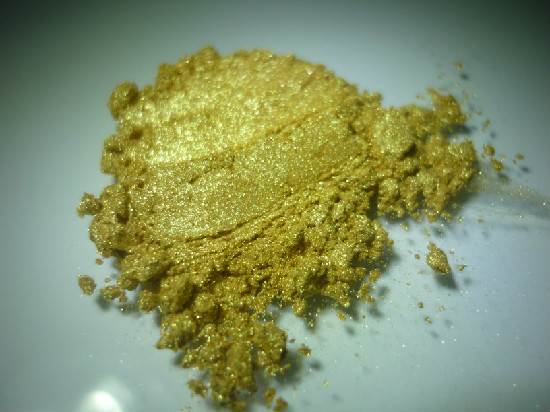
KT-351 is a Flash Gold natural mica pearlescent pigment in the 10–100μm particle size range — the coarser-format gold grade in the KT-300 series, designed for applications where visible individual-platelet gold sparkle is the target effect rather than smooth pearl coverage. The iron oxide and TiO₂ coating on each mica platelet produces a warm gold body color visible on any substrate, while the 10–100μm distribution delivers a flash-sparkle character that distinguishes it from the standard 10–60μm gold pearl grades. For epoxy flooring, decorative resin, craft applications, and nail lacquer where bold gold shimmer intensity matters, KT-351 is the appropriate specification within the KT-300 series.
Read More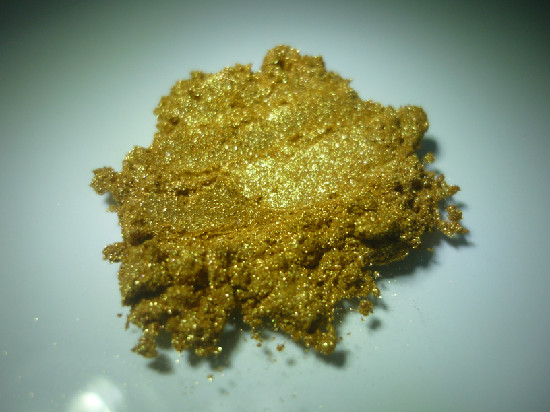
KT-355 is a Glitter Gold natural mica pearlescent pigment in the 20–120μm particle size range — the glitter-dominant gold grade in the KT-300 series, optimized for epoxy flooring, resin art, decorative coatings, craft applications, and nail lacquer where visible individual-platelet gold sparkle is the primary visual requirement. By starting at 20μm rather than 10μm, KT-355 removes the fine background pearl fraction present in KT-351 Flash Gold, concentrating the visual energy toward bold, individual gold flash reflections. The iron oxide and TiO₂ coating produces a warm gold body color visible on any substrate without requiring a dark base — practical for the broad range of base colors encountered in epoxy and decorative applications.
Read More
KT-303 is a royal gold pigment built on natural mica flakes, delivering a warm, metallic luster with genuine depth — the kind of three-dimensional gold effect that synthetic alternatives consistently fail to replicate. Coated with titanium dioxide and iron oxide, it offers strong opacity alongside a smooth, fine finish suited for cosmetics, epoxy flooring, and decorative printing. It disperses cleanly, stays stable across most formulation environments, and blends readily with other shades in the KT-300 Gold Series.
Read More
KT-7324 is a flash yellow gold mica powder built on a synthetic fluorphlogopite substrate, delivering a high-intensity flash with a clean, transparent gold tone — well-suited for decorative coatings, epoxy floors, and cosmetic formulations. As a fluorphlogopite pigment, it offers noticeably better color depth and weather resistance than natural mica-based alternatives, making it a reliable choice where long-term appearance retention matters. The coarser 20-100μm particle range pushes the flash effect to its visual maximum, and the pearlescent powder disperses readily across solvent-borne, water-borne, and UV-cure systems.
Read More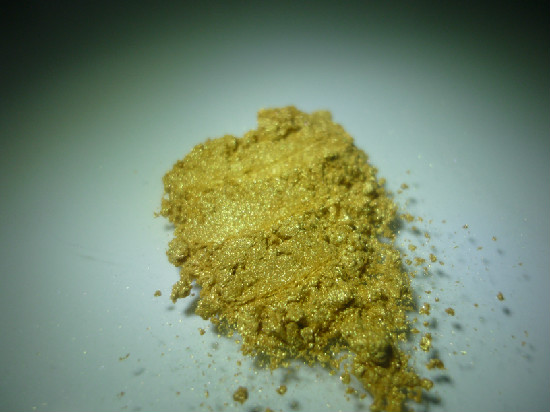
KT-300 is a gold pearl pigment built on natural mica coated with titanium dioxide, iron oxide, and tin oxide — producing a warm, semi-transparent metallic luster that closely matches the visual output of Merck's Iriodin 300 Gold Pearl. Designed as a cost-effective iriodin 300 equivalent, it performs consistently across coatings, printing inks, and cosmetic formulations where a rich, dimensional gold effect is required.
Read More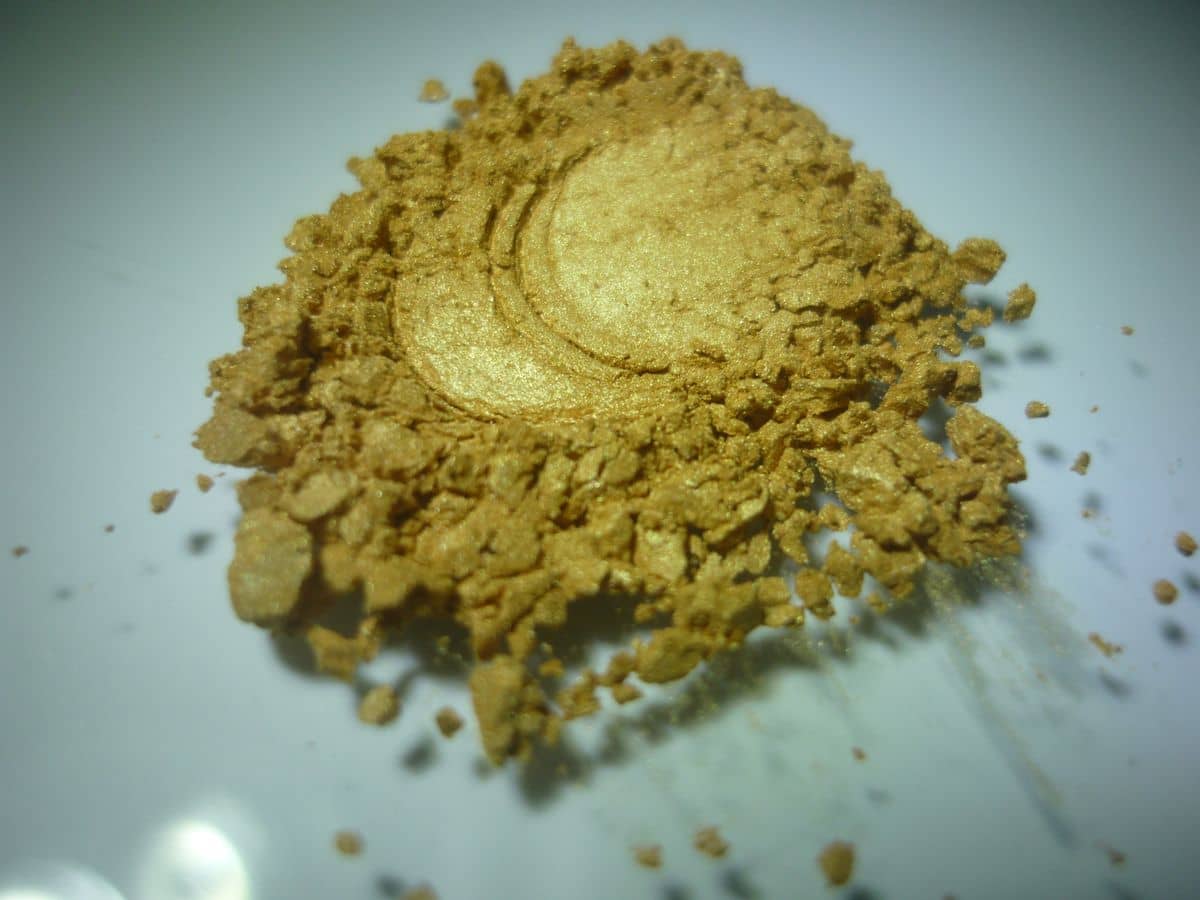
KT-309 is a fine satin gold pigment built on natural mica coated with rutile titanium dioxide, iron oxide, and tin oxide — delivering a warm, silky gold luster with genuine depth and transparency. The sub-15μm particle distribution makes it well-suited for fine printing applications and cosmetic formulations where smooth finish and consistent color response matter. For formulators sourcing an iriodin 309 equivalent, KT-309 is a direct performance match produced under ISO 9001-certified manufacturing conditions.
Read More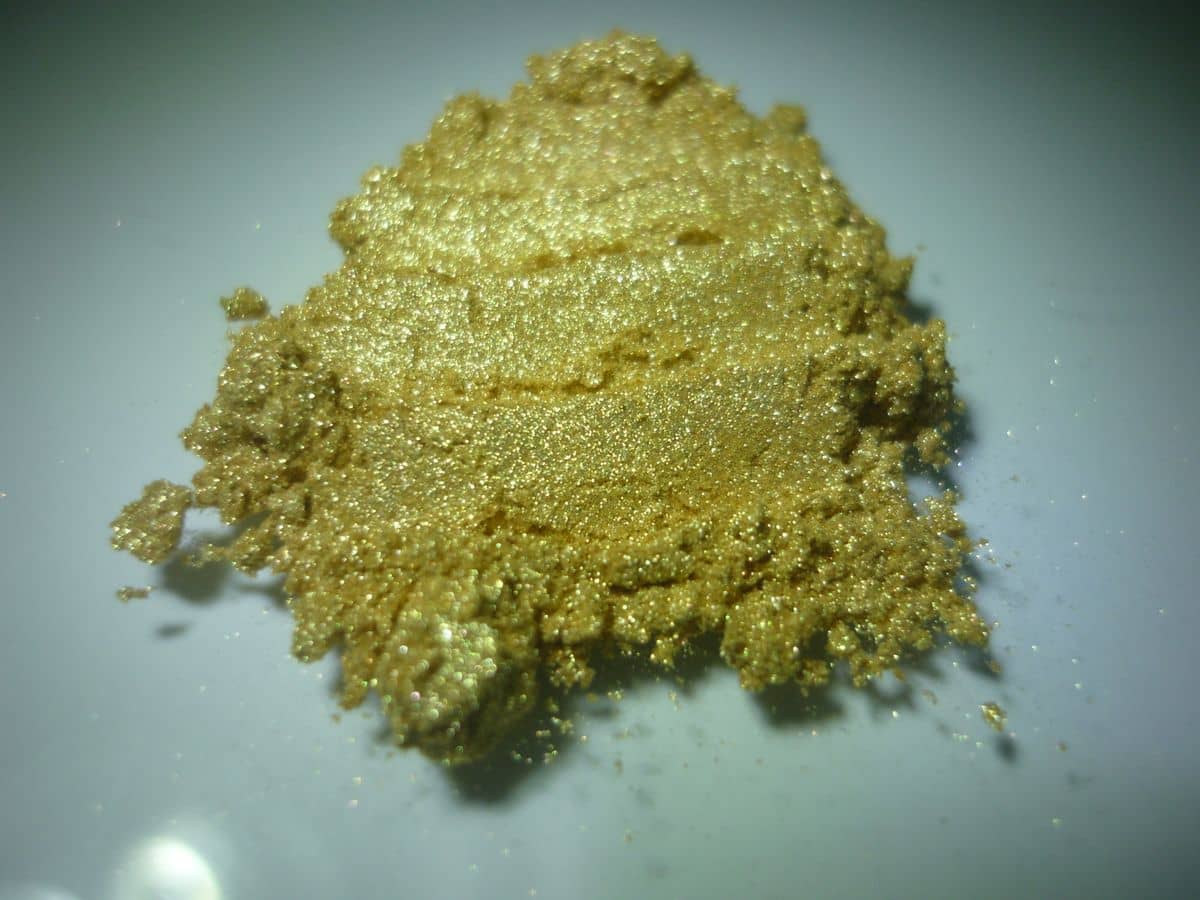
KT-353 is a natural mica-based flash red gold pigment delivering a warm, saturated gold tone with a high-brightness flash effect — a direct iriodin 353 alternative for formulators seeking consistent pearlescent performance without supplier dependency. Its transparent, multi-dimensional luster makes it well-suited for decorative coatings, cosmetic applications, and specialty printing where depth and brilliance matter.
Read More
 English
 Français
 Deutsch
 Русский
 Español
 Português