Leave A Message
If you are interested in our products and want to know more details,please leave a message here,we will reply you as soon as we can.
Bulk Mica Pigment Powder for Resin Art and Craft Projects
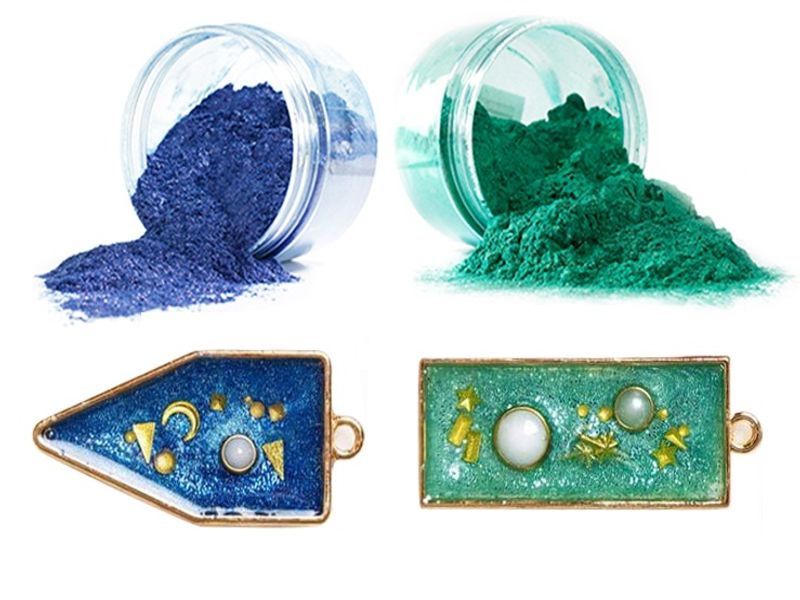
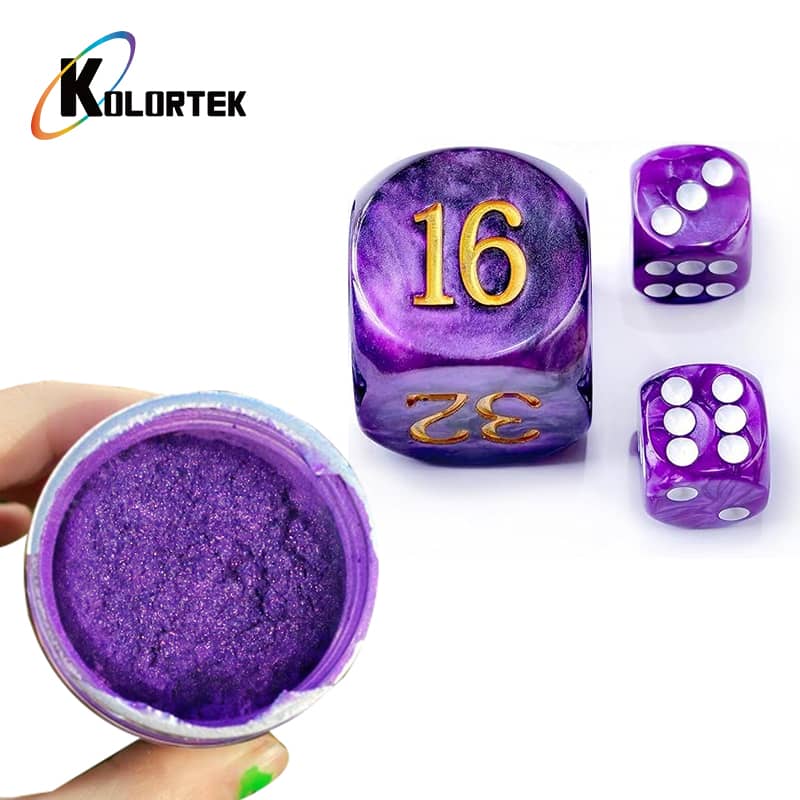
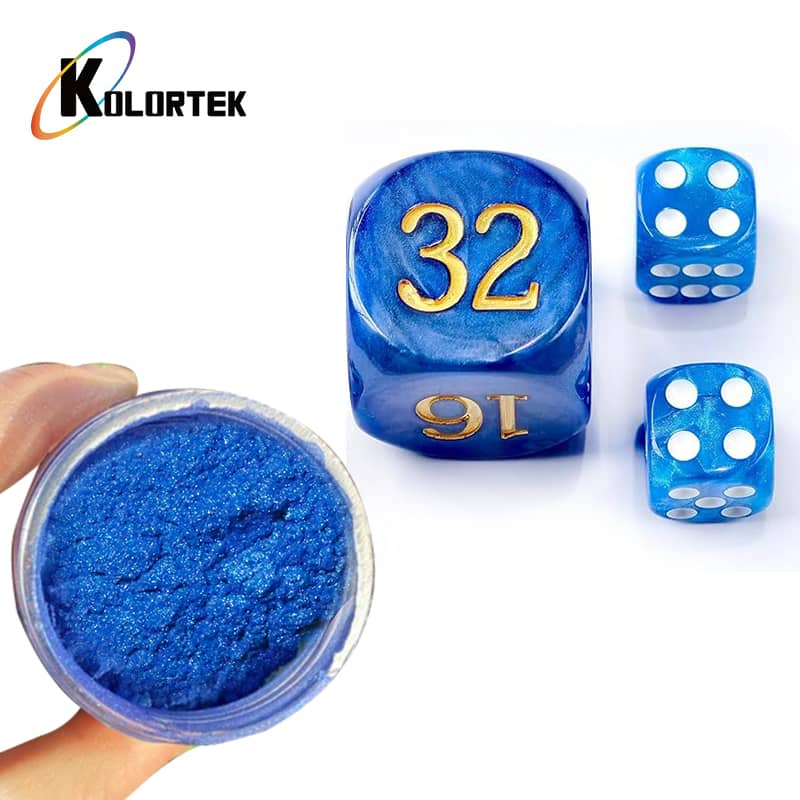
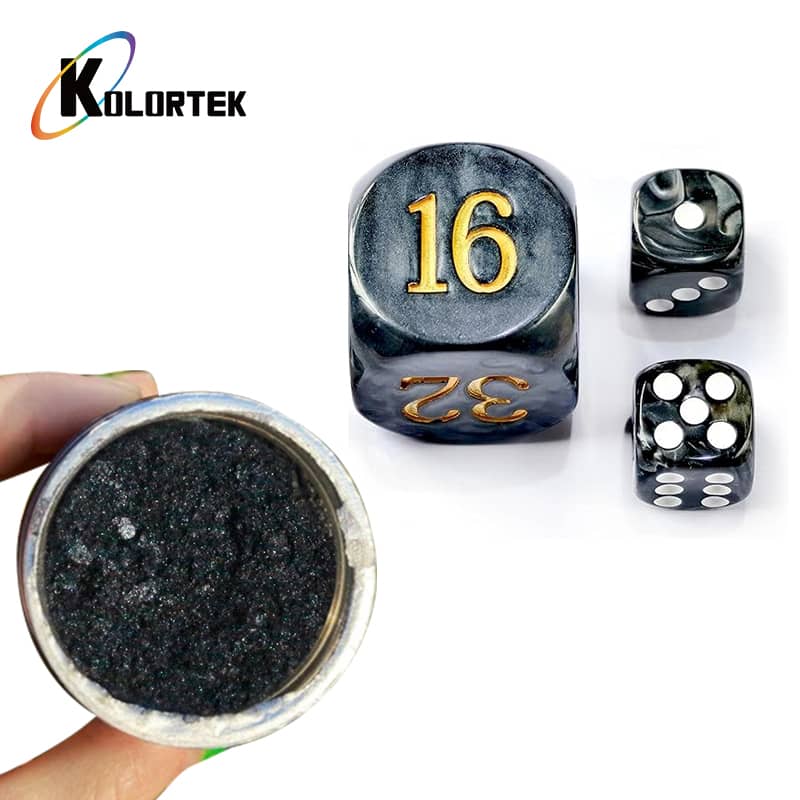
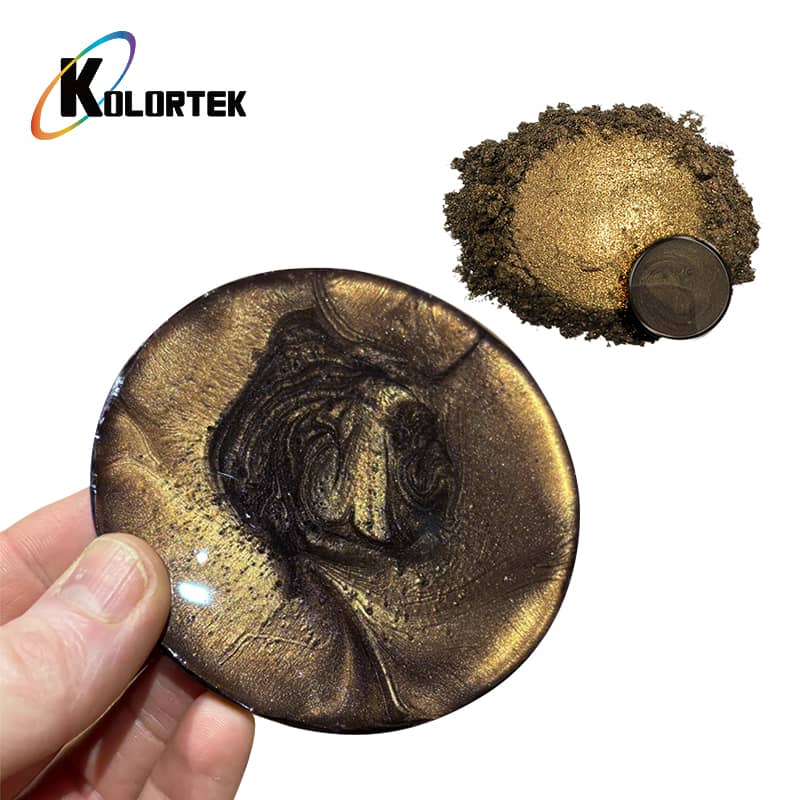
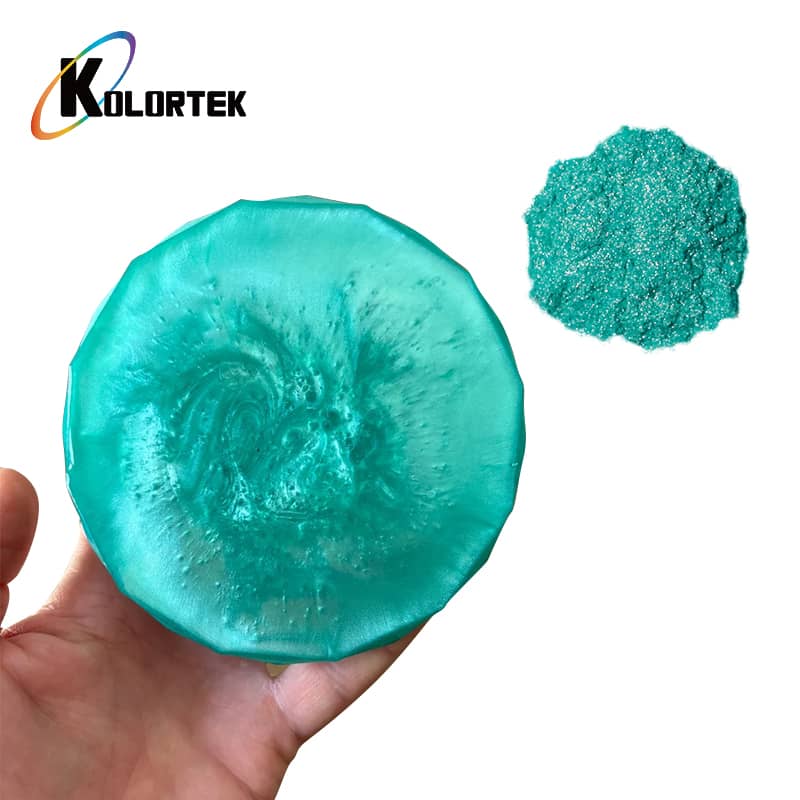
Bulk mica powder for resin art includes pearlescent pigments (KT-100 to KT-500 series), chameleon color-shift effects (KT-9000 series), holographic powders, and biodegradable glitters optimized for epoxy and UV resin systems. At Kolortek, we supply craft grade mica bulk in particle sizes from 5–25 μm for smooth shimmer to 100–250 μm for dramatic sparkle, with dosage recommendations of 1–10% by weight depending on effect intensity. Our resin art pigment wholesale catalog includes over 300 effect options designed for easy hand-mixing without specialized equipment.
The resin art market has exploded over the past five years, fueled by social media platforms showcasing DIY river tables, jewelry, and decorative pieces. This growth created demand for effect pigments that deliver professional results without industrial mixing equipment. Mica-based pearlescent pigments dominate this space because they disperse easily in room-temperature epoxy systems and produce consistent effects across different resin brands.
At Kolortek, we've adapted our industrial pigment lines to meet craft-specific requirements: free-flowing powder grades that blend smoothly with hand stirring, particle size distributions optimized for transparency in thin resin layers, and surface treatments that prevent agglomeration during storage. Our epoxy mica pigment supplier portfolio includes both natural mica substrates (ethical sourcing verified) and synthetic fluorphlogopite options (KT-7000 Synstar Series) that offer superior purity and brighter base whiteness — critical for achieving true interference colors in clear resin.
Resin artists work with layer thicknesses from 2 mm (jewelry bezels) to 50 mm (river table pours). Fine particle grades (5–25 μm) stay suspended longer in low-viscosity UV resin and create smooth, satin-like finishes without visible flake texture. Medium grades (10–60 μm) provide the balanced sparkle seen in coaster and tray projects — enough brilliance to catch light without overpowering transparent areas. Coarse grades (60–200 μm and larger) sink faster but create dramatic three-dimensional depth in thick epoxy pours, especially when combined with slow-cure formulas that allow controlled settlement.
We've observed that most resin artists keep three particle size ranges in their studio: a fine grade for delicate work, a medium grade as the workhorse, and a coarse grade for statement pieces. This mirrors professional coating formulators who select particle size based on film thickness — the same physics applies whether you're spraying automotive basecoat or pouring epoxy into a mold.
Our KT-100 Silver White Series serves as the universal base pearl — available across all particle sizes and compatible with every resin chemistry we've tested (epoxy, polyurethane, polyester, UV-cure acrylics). Use it alone for classic pearl shimmer or as a background layer under interference colors to amplify their shift effect. The KT-200 Interference Series (Gold, Red, Violet, Blue, Green) produces angle-dependent color shifts most visible against white or light-colored resin bases. For metallic gold tones without color shift, the KT-300 Gold Series delivers consistent warm hues popular in jewelry and ornamental work.
The KT-500 Metal Luster Series — Bronze, Copper, Wine Red, Brown — has become our top-selling craft grade mica bulk for nature-themed and bohemian-style projects. These earthy tones pair well with wood inclusions, dried flowers, and natural stone elements commonly embedded in resin art. The KT-6000 Multicolor Series combines interference base coatings with inorganic absorption colorants, producing saturated colors (reds, oranges, yellows, greens, blues, purples) that maintain hue stability under UV exposure better than organic dye-based alternatives.
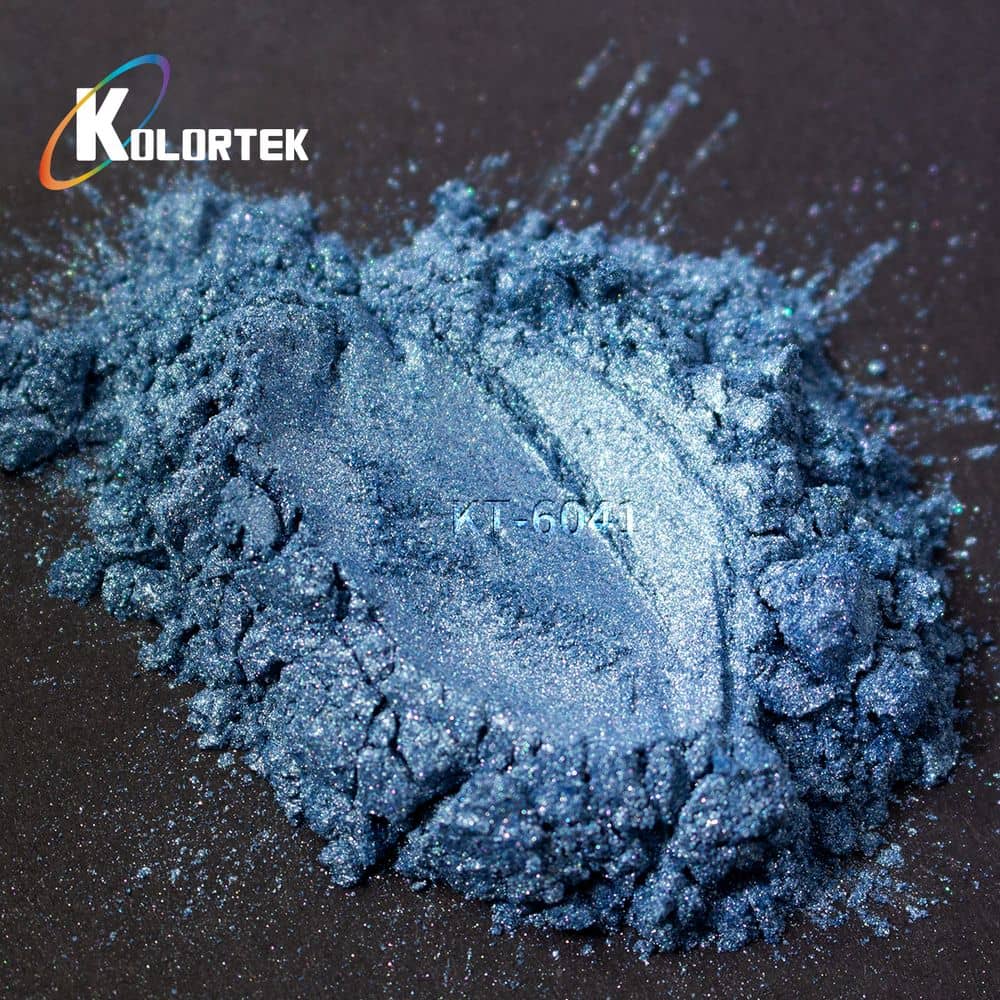
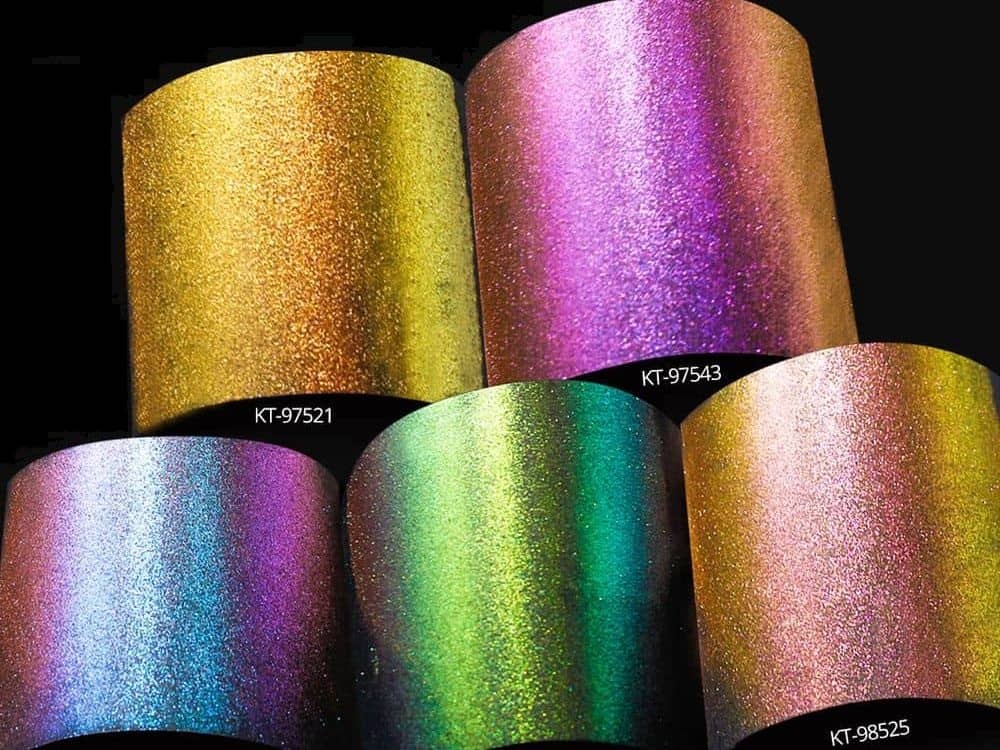
The KT-9000 Magic Chameleon Series generates the most inquiries from resin artists and custom product makers. These pigments shift through four distinct color phases as viewing angle changes — an effect amplified dramatically when applied over black resin. The KT Duochrome Chameleon (95000 series) is available in particle sizes from 5–25 μm (smooth, almost metallic finish) to 100–250 μm (coarse flakes that create pixelated rainbow texture). The KT Clear Magic Chameleon (92000 series) uses a transparent substrate instead of mica, allowing more light transmission through resin layers — ideal for layered pours where you want color shift without opacity.
In our lab testing with standard epoxy resins, we found chameleon effects perform best at 3–8% pigment loading. Below 3%, the color shift becomes too subtle to photograph well (a critical consideration for artists selling on Instagram or Etsy). Above 8%, the resin becomes too opaque and loses the depth that makes chameleon effects striking. Always apply chameleon pigments over a black base coat — the dark background provides the contrast needed for the interference layers to separate visually.
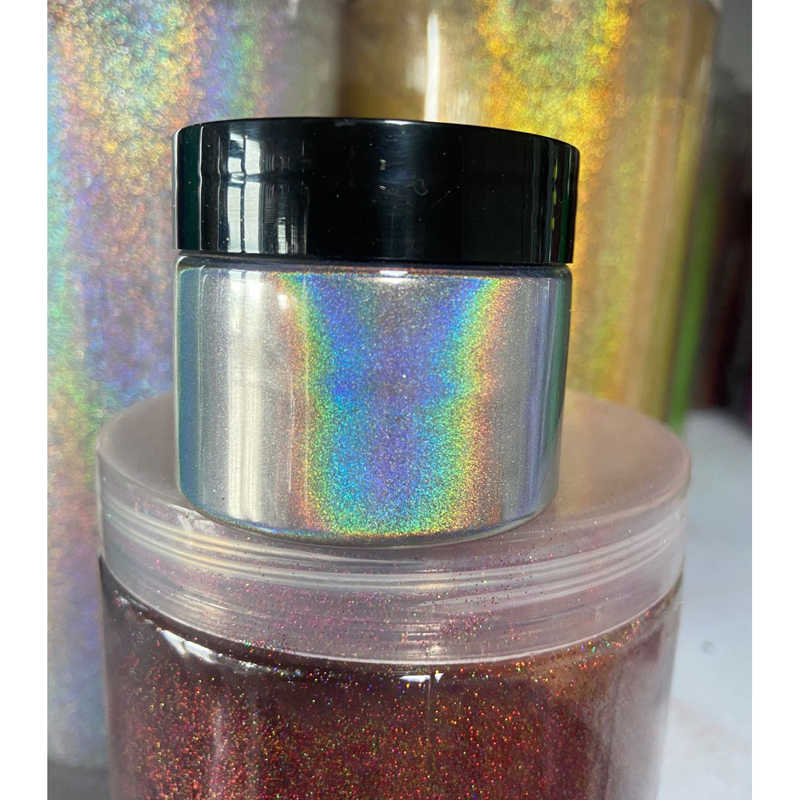
Holographic pigments and Galaxy Flakes produce rainbow-diffraction effects similar to holographic vinyl film but embedded within the resin matrix. These work best as accent elements rather than full-coverage effects — sprinkle them into specific areas of a pour or create holographic "veins" in a predominantly clear piece. Our KT Metasilver mirror flakes (available from 10–100 μm up to 300–3000 μm) deliver true metallic reflectivity. The larger flake sizes (500+ μm) create broken-mirror texture effects popular in abstract resin art, while fine grades (10–60 μm) produce smooth chrome-like finishes when used at high loading (15–25% by weight).
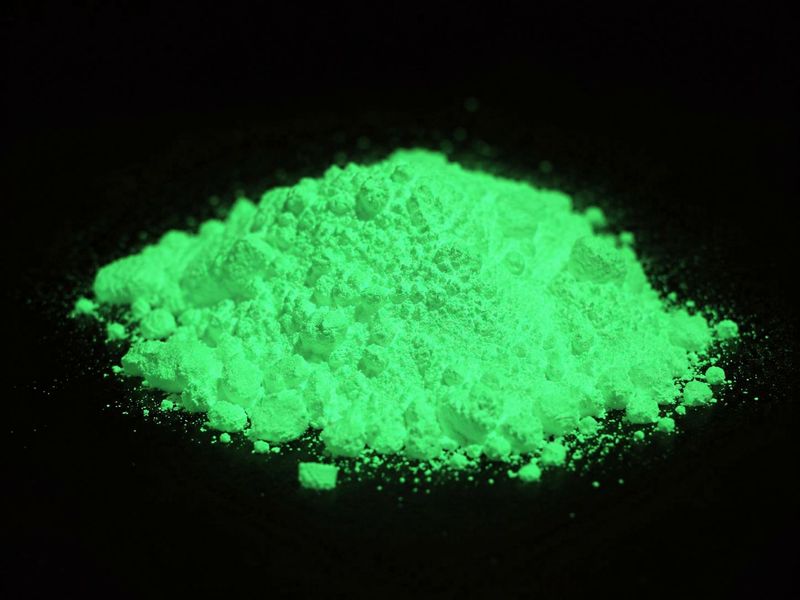
Our KT Glow in the Dark pigments use strontium aluminate phosphorescent technology — significantly brighter and longer-lasting than traditional zinc sulfide glow powders. At 5–10% loading in clear epoxy, these create strong glow effects lasting 8+ hours after light exposure. The KT Multicolor Glow in the Dark series (8 color models) allows artists to create pieces that look one way under ambient light and reveal hidden patterns when lights go off. Thermochromic pigments (standard activation temperature and 31°C low-temperature option; BPA-free formulation available) enable color-changing resin pieces that respond to touch or ambient temperature — popular for interactive art and novelty items. Photochromic pigments shift color under UV light exposure, returning to base color indoors.
Traditional polyester glitters remain popular for their solvent resistance and color vibrancy, but we've seen rapid adoption of biodegradable alternatives. Our cellulose-based biodegradable glitters (1/128" ≈ 150 μm and 1/96" ≈ 250 μm sizes) perform identically to conventional glitters in resin applications while meeting eco-conscious brand requirements and addressing microplastics regulations in the EU and North America. PLA (polylactic acid) biodegradable glitters offer a second eco-friendly option with laser-cut variants for rainbow reflective effects.
Beyond standard hexagonal glitter, we manufacture specialty shapes: 3 mm pentagram stars for celestial themes, strip shapes (0.1–0.3 mm widths) for linear accents, and variety shapes (animals, fruits) for themed projects. The KT Luxury Diamonds series (KT-AS001 through KT-AS025) provides 3 mm faceted diamond shapes for premium embellishments in jewelry and decorative resin work. These larger inclusions require careful pour technique to prevent sinking or floating — embedding them mid-pour as the resin begins to gel provides best results.
After analyzing thousands of customer projects and conducting controlled lab tests, we've established these dosage ranges for epoxy resin systems:
UV resin formulas typically require 20–30% less pigment than epoxy to achieve equivalent visual effect due to their higher refractive index. Start conservative and add incrementally — it's easier to intensify color than to dilute an over-pigmented batch.
The most common mistake we see from new resin artists is adding dry pigment directly to a large resin batch. Mica pigments, even our free-flowing grades, form temporary clumps when they contact liquid resin. Without high-shear mixing equipment, these clumps create streaks and uneven color distribution. The solution is simple: measure your pigment into a small container, add 5–10× the pigment's volume in resin (without hardener if using two-part epoxy), and mix thoroughly until you have a uniform paste. This paste then disperses easily into your full resin batch with gentle stirring.
For large projects requiring multiple batches, prepare a master batch of pigment-resin paste and portion it out. This ensures color consistency across pours. We recommend mixing with a palette knife or disposable plastic spatula rather than stirring sticks — the broader surface works pigment clumps against container walls more effectively.
Professional resin artists often combine multiple pigment types in layered pours. A typical sequence: (1) black or dark-colored base layer cured to gel stage, (2) chameleon or interference pigment layer poured on top while base is still slightly tacky (ensures chemical bond between layers), (3) clear resin top coat with holographic flakes or fine pearl pigment for depth. Each layer must cure to the point where it won't remix with the next pour but remains chemically reactive enough to bond — usually 4–6 hours for epoxy at room temperature, 60–90 seconds for UV resin under lamp.
We've also seen artists create gradient effects by mixing different pigment concentrations in separate cups, pouring sequentially, and using a heat gun to blend the boundaries. This technique works best with pearl and interference pigments; metallic and mirror pigments tend to create sharp lines rather than gradients.
Bubbles are always an issue in resin work, but they become more visible near pearl pigments because the pigment particles reflect light and highlight trapped air. Mix slowly and deliberately — fast stirring introduces air. After mixing pigmented resin, let it rest 2–3 minutes for large bubbles to rise, then use a heat gun or torch to pop surface bubbles just before pouring. Fine particle pigments (5–25 μm) trap fewer bubbles than coarse grades because there's less turbulence during mixing. If working with coarse flakes (100+ μm), consider a two-stage degas: mix pigment into resin, degas in vacuum chamber if available, add hardener, degas again.
| Pigment Type | Visual Effect | Best For | Key Advantage | Considerations |
|---|---|---|---|---|
| KT-100 Silver White Pearl | Classic pearl shimmer, neutral tone | Universal base, jewelry, coasters, beginner projects | Compatible with all resin types; works on any background color | Subtle effect — use 5–10% for visible shimmer |
| KT-200 Interference Series | Angle-dependent color shift (gold/red/blue/green) | River tables, accent layers, translucent effects | Creates depth without opacity; pairs well with clear resin | Best on white or light backgrounds; less dramatic than chameleon |
| KT-9000 Duochrome Chameleon | Four-color shift (e.g., purple→blue→green→gold) | Phone cases, custom tumblers, statement jewelry, art pieces | Maximum visual impact; highly photogenic for online sales | Requires black base coat; more expensive than standard pearls |
| KT Holographic Pigments | Rainbow diffraction, sparkle texture | Accent elements, mixed-media art, festival accessories | Unique optical effect; stands out in clear resin | Works best as accent rather than full coverage |
| KT Metasilver Mirror Flakes | Metallic chrome, broken-mirror texture (large flakes) | Abstract art, automotive-inspired pieces, high-gloss finishes | True metallic reflectivity; available in very large particle sizes | Requires 15–25% loading for chrome effect; heavy particles sink |
| KT Glow in the Dark | Phosphorescent glow (8+ hours after charging) | Night-lights, safety markers, hidden-pattern art | Strontium aluminate technology; much brighter than traditional glow powders | Appears off-white in daylight; requires 5–10% loading for strong glow |
| Biodegradable Cellulose Glitter | Traditional glitter sparkle, eco-friendly | Sustainable product lines, children's crafts, eco-conscious brands | Meets microplastics regulations; identical performance to conventional glitter | Currently available in 1/128" and 1/96" sizes only |
For more products, please see our product catalog ---> Catalogs.
Samples are also available for your evaluation ---> Sample Request.
If your products involve skin contact (soap, lotion bars, slime, bath bombs, nail art), you must use cosmetic-grade pigments meeting applicable safety standards. At Kolortek, all our product lines are manufactured under strict heavy metal control protocols, typically well below international regulatory thresholds for cosmetics, toys, and consumer goods. Request ASTM D-4236 or EN-71 documentation when ordering for children's products. Our biodegradable glitters specifically address microplastics regulations in the EU and several US states, making them a future-proof choice for consumer-facing craft supply brands.
For resin art without skin contact (decorative pieces, coasters, wall art), industrial-grade pigments are appropriate. These offer the same visual effects at lower cost since they don't require cosmetic certification testing. Always review material safety data sheets (MSDS/SDS) before use — while our pigments are non-toxic and non-reactive, basic workshop safety applies: avoid generating dust clouds, don't eat or drink while working, wash hands after handling.
Store bulk mica powder in sealed containers away from moisture and direct sunlight. Our pigments are chemically stable and do not have a formal expiration date, but prolonged exposure to humidity can cause clumping (though this doesn't affect performance once re-dispersed). If you purchase craft mica powder large quantity (5 kg or more), consider portioning into smaller jars for daily use to minimize repeated opening of the bulk container. Keep different pigment types separated — cross-contamination of chameleon and pearl pigments will muddy the chameleon effect.
If switching to a new pigment type or source, run test pours before committing to large batches. We provide complimentary evaluation samples for qualified inquiries — use these to verify compatibility with your specific resin brand, cure conditions, and color expectations. Document your test results: pigment type, particle size, dosage percentage, resin brand, cure time, and visual outcome. This becomes your formulation reference library. Many professional resin artists maintain a sample board showing each pigment at 2%, 5%, and 10% loading over black and white backgrounds — an instant visual reference when planning new projects.
Streaking or uneven color: Insufficient pre-mixing. Always create pigment paste first. Pigment sinking to bottom: Resin viscosity too low or cure time too long. Use thicker resin formula or pour in multiple thin layers. Alternatively, wait until resin begins to gel (thickens) before adding pigment. Dull chameleon effect: Missing black background layer or insufficient pigment loading. Try 5–8% instead of 2–3%. Cloudy resin around particles: Moisture contamination. Store pigments in dry conditions; if clumping occurs, dry pigment in oven at 100°C for 30 minutes before use.
The craft market often sources mica powders through multiple distribution layers, each adding margin without adding value. At Kolortek, we manufacture these pigments in our own facility using the same coating technologies and quality control systems that serve automotive OEMs, cosmetic brands, and industrial coating companies. When you order craft grade mica bulk directly from us, you're accessing industrial-quality materials at factory-direct pricing — the same pigment that goes into premium automotive paint or luxury cosmetics, just packaged for craft use.
We accommodate small batch orders (starting at 100 g for specialty effects) alongside large-volume commercial orders (25 kg bags, bulk drums). Our technical team includes application specialists with backgrounds in coatings, cosmetics, and plastics who can provide formulation guidance specific to resin systems — not generic craft advice, but chemistry-based troubleshooting. If you're developing a product line and need custom color matching, we offer spectrophotometric analysis and can formulate proprietary blends. For established brands, we provide private label packaging from sample sachets to retail-ready jars.
Our global distribution network serves customers in over 100 countries with regional inventory in Asia, Europe, and North America. Most orders ship within 48 hours, with full technical documentation (TDS, MSDS/SDS, regulatory support packages) included. We maintain unified manufacturing standards across all product lines, ensuring batch-to-batch color consistency — critical when you're building a business around repeatable product quality.
For jewelry with thin sections (bezels, pendants, earrings), use 5–25 μm fine grades. These create smooth, satin finishes without visible texture and stay suspended in low-viscosity resin. If you want more sparkle in thicker pieces like bangles or statement rings, 10–60 μm medium grades provide balanced brilliance without overwhelming small surface areas.
Yes, blending different pigment types creates custom effects. Common combinations: silver pearl + interference color for amplified color shift, chameleon + holographic flakes for layered sparkle, metallic + glow-in-the-dark for day/night contrast. Mix dry powders together before adding to resin, or create separate pigment pastes and blend those. Keep notes on ratios so you can reproduce successful combinations.
Always pre-mix pigment with a small amount of resin to create a smooth paste before adding to your full batch. Use a palette knife to work any clumps against the container wall. If you're working with very fine pigments (under 10 μm) or high humidity conditions, dry the powder in an oven at 100°C for 30 minutes before use to remove absorbed moisture.
Biodegradable glitters (cellulose or PLA-based) will break down in industrial composting facilities, but only after separation from the resin matrix. A finished resin piece containing biodegradable glitter is not compostable because the epoxy itself is not biodegradable. The advantage is that biodegradable glitters meet regulatory requirements and consumer preferences during manufacturing and address microplastics concerns if glitter escapes into the environment during production.
Natural mica (muscovite) is mined and processed; synthetic mica (fluorphlogopite) is manufactured in controlled conditions. Synthetic mica offers superior purity, brighter base whiteness, and more consistent particle size distribution — resulting in more vibrant interference colors and better sparkle. It's also free from natural mica supply chain concerns. Our KT-7000 Synstar Series uses synthetic mica substrates. Performance in resin is identical; choice often comes down to cost and ethical sourcing preferences.
No — UV resin typically requires 20–30% less pigment than epoxy to achieve the same visual effect due to its higher refractive index. If a formula calls for 5% pigment in epoxy, start with 3.5–4% in UV resin. Always test first, as different UV resin brands have varying clarity and viscosity that affect pigment appearance.
Bulk mica powder for resin art includes pearlescent pigments (KT-100 to KT-500 series), chameleon color-shift effects (KT-9000 series), holographic powders, and biodegradable glitters optimized for epoxy and UV resin systems. At Kolortek, we supply craft grade mica bulk in particle sizes from 5–25 μm for smooth shimmer to 100–250 μm for dramatic sparkle, with dosage recommendations of 1–10% by weight depending on effect intensity. Our resin art pigment wholesale catalog includes over 300 effect options designed for easy hand-mixing without specialized equipment.
Read More
 English
 Français
 Deutsch
 Русский
 Español
 Português