Leave A Message
If you are interested in our products and want to know more details,please leave a message here,we will reply you as soon as we can.
Automotive Grade Chameleon Pigment Powder for Car Paint Finishes
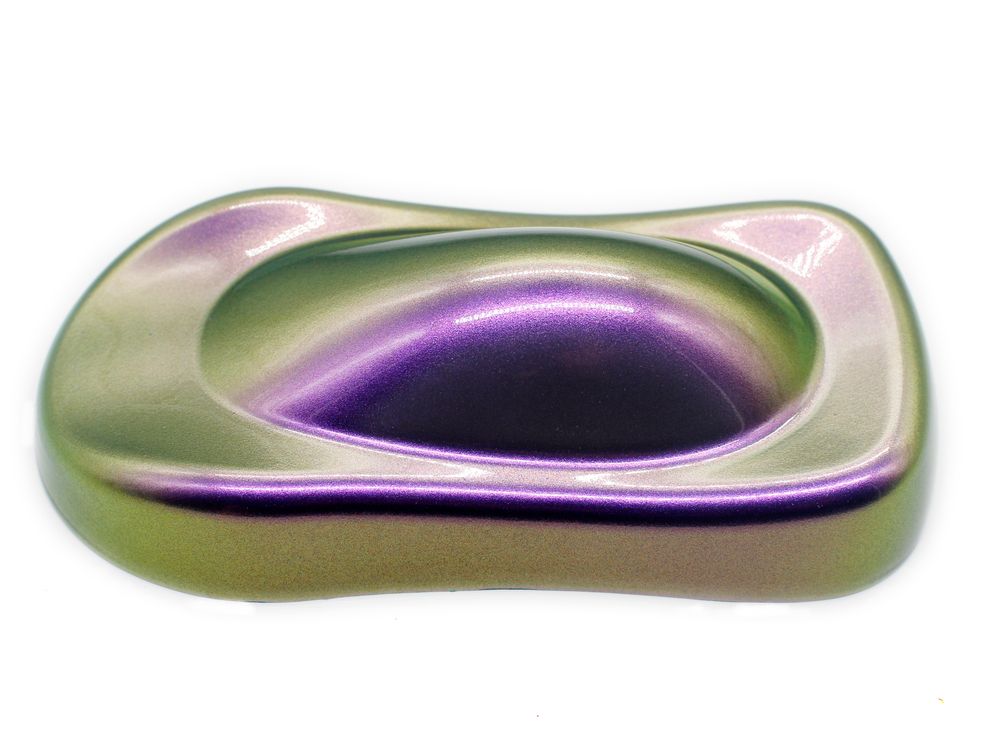
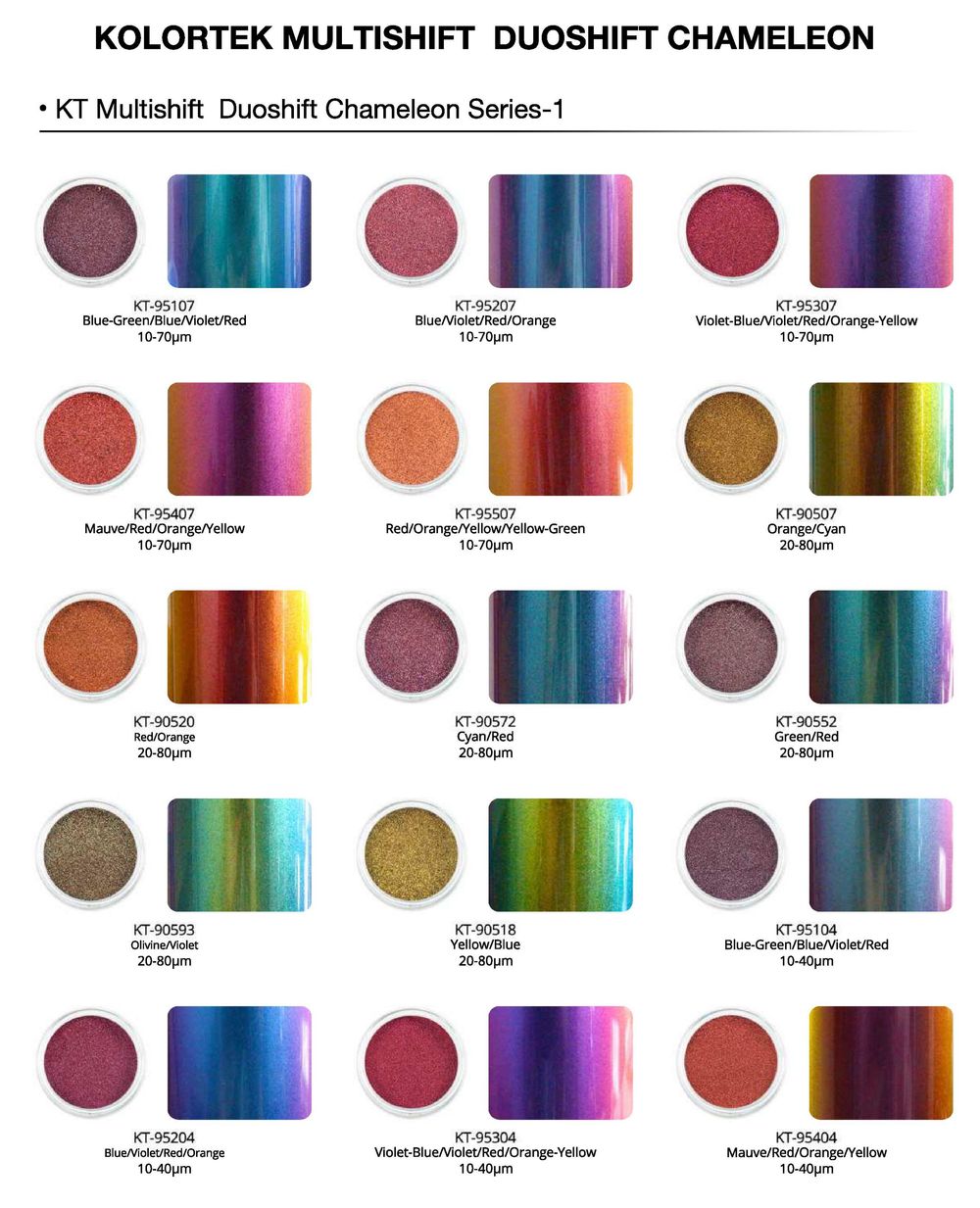
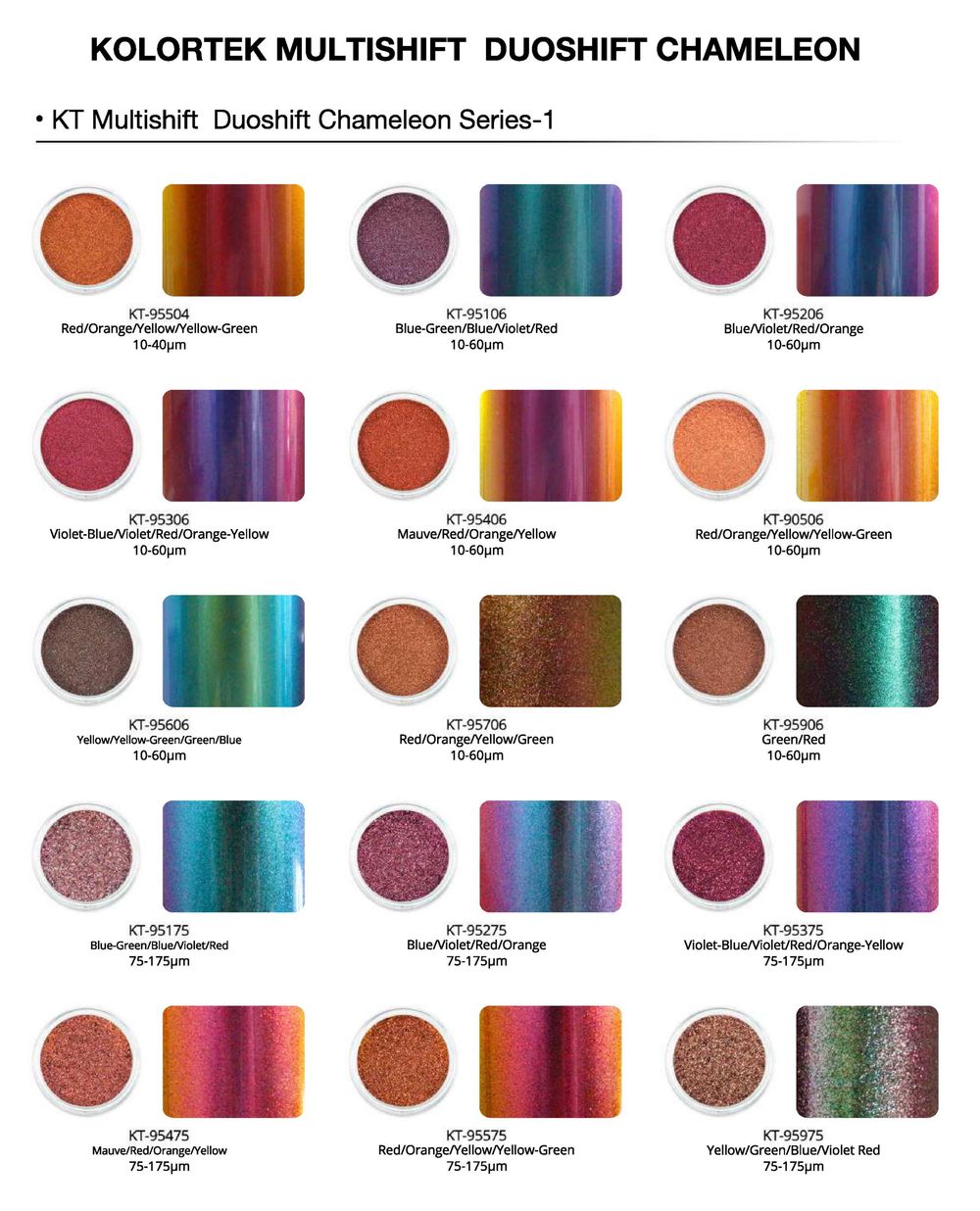
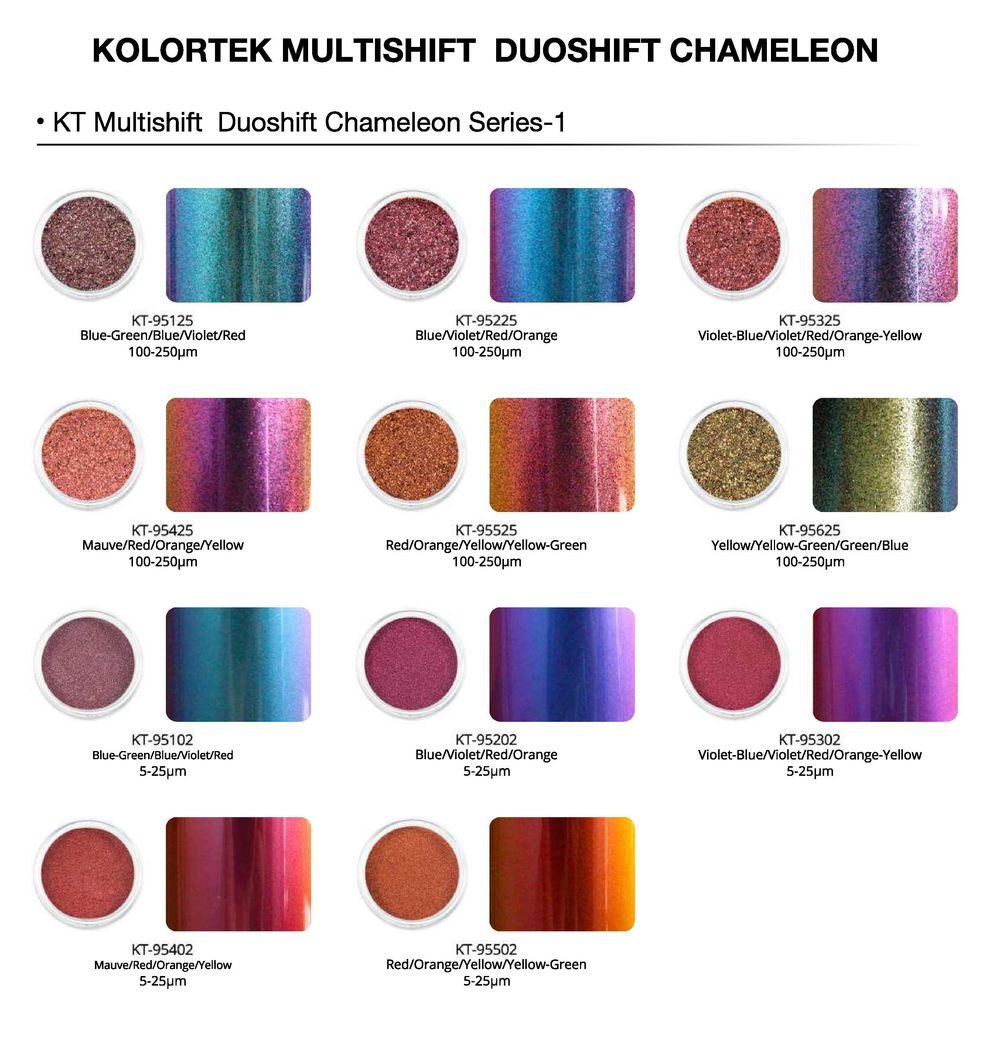
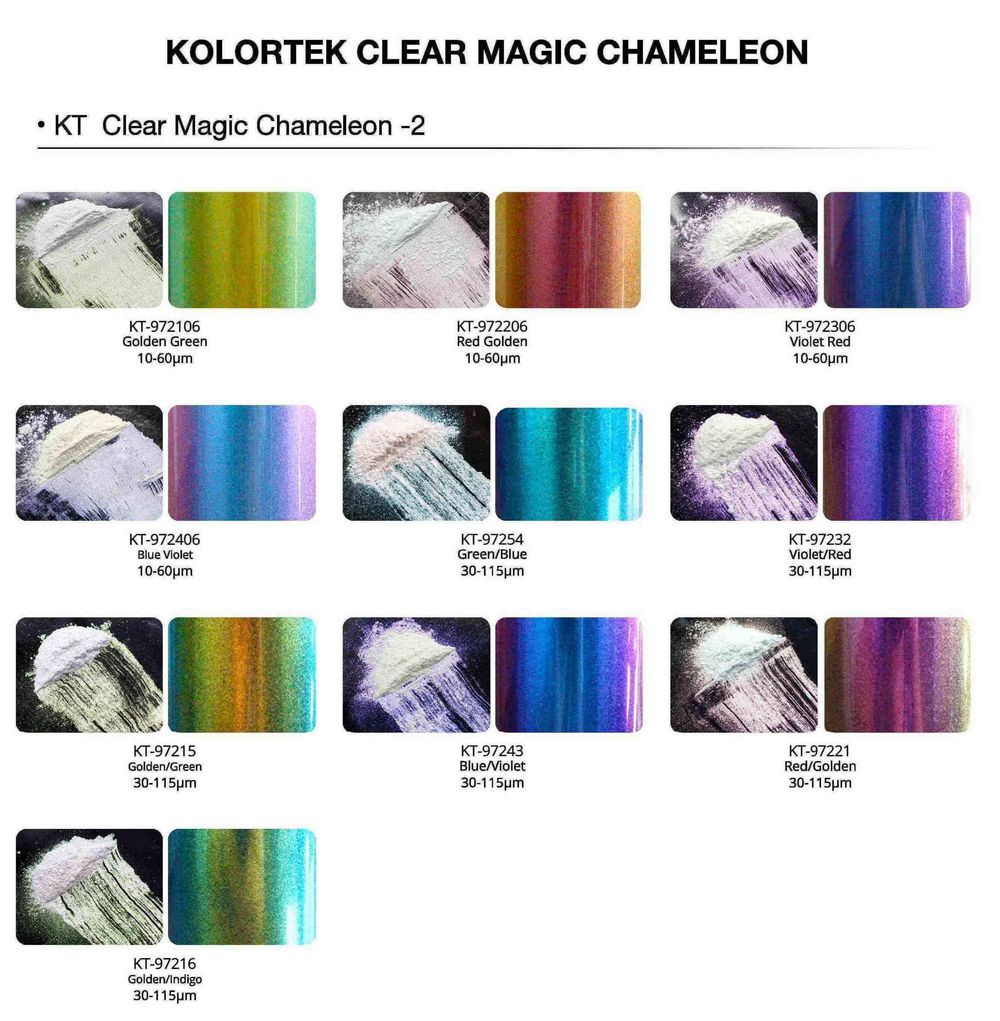
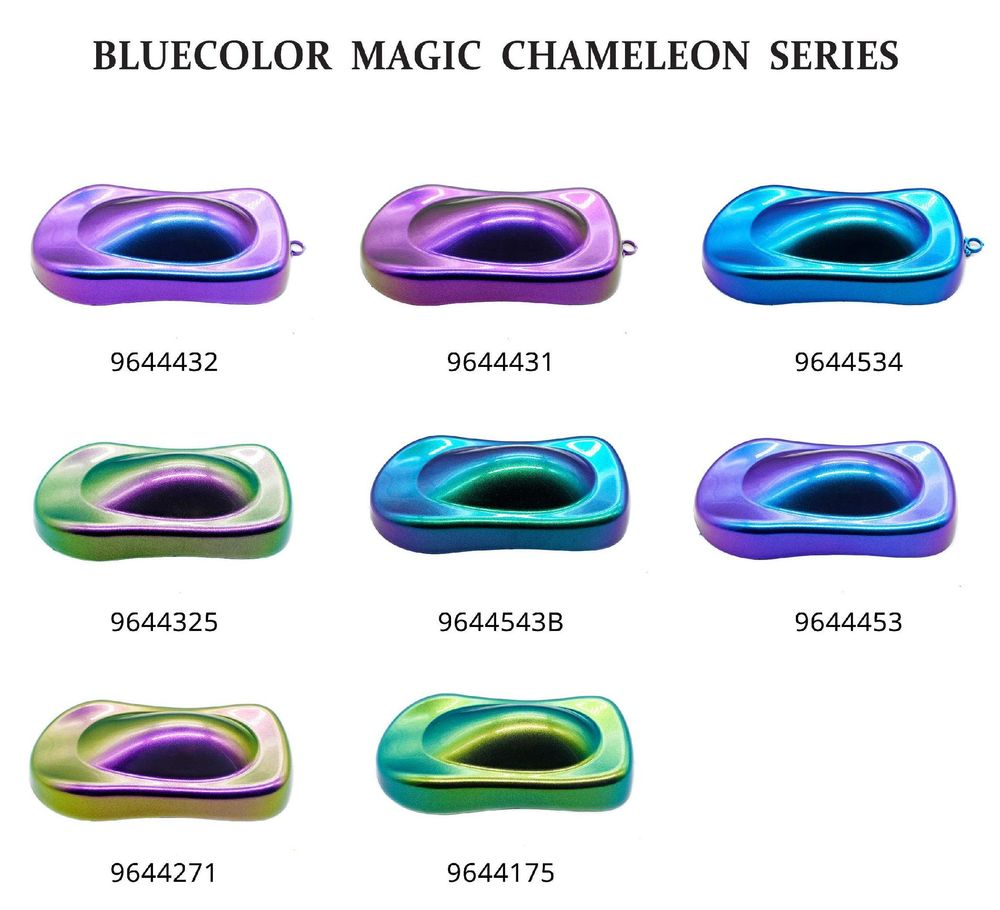
Chameleon car paint achieves its dramatic angle-dependent color travel by incorporating multilayer-coated mica platelets — like those in our KT-9000 Magic Chameleon Series — into a basecoat/clearcoat system over a dark substrate. As a specialized color shift pigment supplier, we formulate these inorganic pigments to pass QUV 1000+ hour weatherability requirements while delivering duochrome or multicolor goniochromatic effects. Particle size selection — from 10–60 μm standard grades up to 100–250 μm large flakes — directly determines whether the finish reads as a deep satin shift or an explosive multi-angle sparkle.
Custom and modified car culture has turned chameleon pigment for car paint into one of the fastest-growing segments in decorative coatings. Unlike conventional metallic or pearlescent finishes that shift between light and dark, a true goniochromatic system shifts between distinct hues — cyan to red, gold to blue, violet to orange — as the viewing angle changes. The optical mechanism is thin-film interference: multiple dielectric layers of TiO₂, Fe₂O₃, and silica deposited on natural mica substrates produce constructive and destructive interference at different wavelengths depending on the angle of incidence.
At Kolortek, the custom and modified car segment represents the single largest end market for our KT-9000 Magic Chameleon Series, spanning everything from OEM-style bespoke finishes to full-vehicle color-shift wraps. The performance bar is high: automotive coatings must survive QUV 1000+ hours without loss of color travel, resist acid rain and fuel splash, and endure baking cycles up to 140–180 °C during primer and topcoat cure cycles. Our pigments are inorganic, heavy-metal-free, and light-fast — engineered from the outset for these conditions.
The Clear Chameleon Duochrome range (KT-921xx through KT-926xx) covers the full visible spectrum in six distinct shift sequences. KT-921xx delivers Cyan→Blue→Purple→Red — the classic "galaxy" shift most associated with chameleon car paint. KT-926xx covers Golden→Kelly Green→Blue, popular for nature-inspired custom builds. For more complex multi-angle drama, the multicolor 97000 and 98000 series produce three or more distinct hues: KT-974206, for instance, cycles through Blue and Violet in a 10–60 μm grade that disperses cleanly in solvent-borne basecoats.
Particle size is the single most controllable variable in finish design. The suffix on each KT-9000 code directly encodes the particle range:
Where formulation briefs exclude TiO₂ — increasingly relevant in EU coating regulations — our KT-951xx through KT-957xx series provides the same goniochromatic effect via an Fe₂O₃ + Silica coating stack. The Blue-Green through Yellow/Violet-Red shift range is fully covered, and particle sizes run from 5–25 μm fine grades up to 75–175 μm large-flake options.
In a conventional 2-stage solvent-borne system, the chameleon pigment is introduced into the basecoat at 3–8% by weight over a black or very dark ground coat. We target 15–25 μm dry film thickness for the pigmented layer — thin enough for platelet alignment but sufficient for full interference color development. A pneumatic gravity-cup gun (SATA-type) at 25–30 PSI delivers consistent atomization without the shear that destroys platelet geometry. Flash-off time between basecoat passes is critical: rushing the clearcoat application over a still-wet basecoat disrupts platelet orientation and creates mottle.
Bake cycle compatibility is validated across our range at up to 180 °C — standard for OEM 2-coat bake schedules. Batch-to-batch ΔE < 1.0 is maintained in production lots, meeting the consistency threshold typically required for OEM supply approval.
Wrap film manufacturers incorporate KT-9000 pigments into polyurethane or PVC casting systems. The 5–25 μm fine grade (suffix 02) is preferred here because the thin cast film — typically under 100 μm total — cannot accommodate larger platelets without surface texture. The result is a conformable wrap that delivers measurable color travel across body panels, a format that has democratized chameleon car paint for the aftermarket without spray booth infrastructure.
At Kolortek, one of our most-requested formulation techniques is combining a chameleon pigment with a transparent absorption pigment — a deep transparent red, for example — to anchor the warm end of the shift and suppress the cool end. KT-925xx (Red→Orange→Yellow→Green) blended with a small percentage of transparent red produces a finish that "reads" predominantly warm at face angle but flashes green at steep viewing angles. This approach lets formulators customize shift character without developing a new pigment grade.
| Pigment Type / Series | Visual Effect | Best For | Key Advantage | Considerations |
|---|---|---|---|---|
| KT-921xx–KT-926xx Duochrome (10–60 μm) | 2-color angle-dependent shift (e.g., Cyan→Purple, Gold→Blue) | Standard automotive basecoats, custom refinish, wraps | Widest color shift range; consistent spray performance; most popular grade | Requires dark substrate for full effect |
| KT-97xx06 Multicolor (10–60 μm) | 3+ distinct hues across viewing angle (e.g., Blue→Violet→Gold) | Show cars, bespoke builds, high-visual-impact OEM concepts | Maximum color complexity from a single pigment addition | Shift subtlety increases in thinner film builds |
| KT-9000 Large Flake (75–175 μm / 100–250 μm) | Dramatic sparkle with high-contrast color travel flash | Show vehicles, motorcycle tanks, decorative one-off finishes | Maximum sparkle intensity; visually striking at distance | Requires heavier clearcoat build; not ideal for production-run consistency |
| KT-951xx–KT-957xx TiO₂-Free (5–70 μm) | Blue-Green through Yellow/Violet-Red goniochromatic shift | EU regulatory-compliant formulations; waterborne systems | TiO₂-free coating stack; meets evolving chemical restrictions | Slightly narrower color range than TiO₂-coated grades |
| KT-9000 Fine Grade (5–25 μm) | Satin color travel, smooth surface texture | Wrap films, cast PU/PVC films, thin-film coating systems | Smooth lay-flat in thin cast films; no surface texture from large platelets | Lower sparkle intensity than medium/large grades |
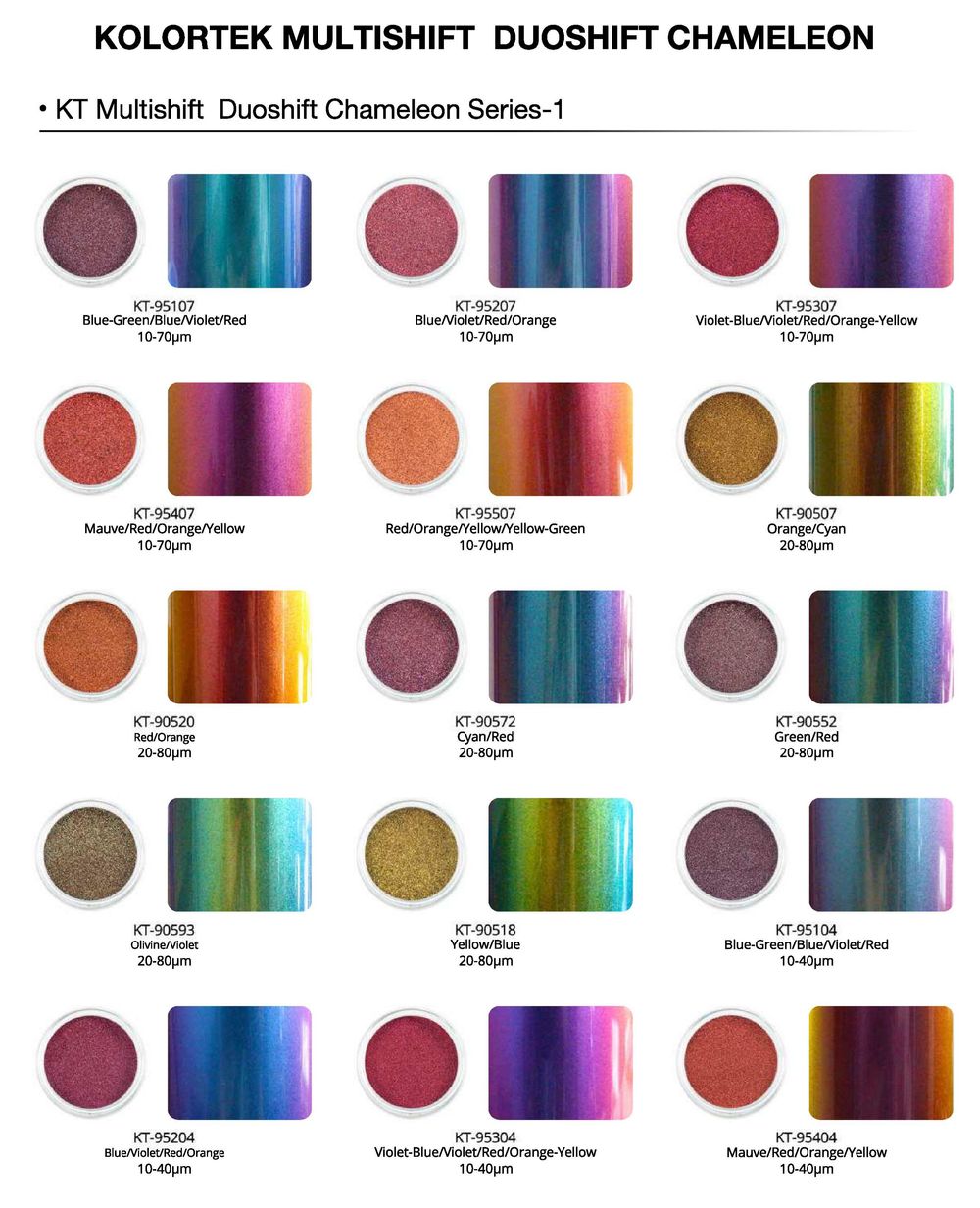
We recommend starting at 3–5% by weight in the basecoat and evaluating the color travel before increasing. The practical ceiling is around 10% — beyond that, platelet crowding begins to reduce rather than enhance the effect, and the risk of mottle increases. Target a dry film thickness of 15–25 μm for the pigmented layer to ensure proper platelet overlap.
For most spray-applied automotive basecoats, the 10–60 μm grade (KT-9000 suffix 06) is the standard starting point — it passes cleanly through standard spray equipment, aligns well in the wet film, and delivers strong color travel. If maximum sparkle is the brief, step up to the 20–100 μm grade. For wrap films or fine-finish applications, the 5–25 μm fine grade is preferred.
Yes. Our KT-9000 series is heat-stable through bake cycles up to 140–180 °C, which covers standard OEM 2-coat bake schedules. The inorganic, multilayer-coated platelet structure does not degrade or discolor at these temperatures. For higher-temperature industrial coating processes beyond 180 °C, contact our lab to confirm the specific grade's upper thermal limit.
The most common cause is substrate color — chameleon pigments require a dark, ideally black, base to produce full color travel. A mid-grey or white ground coat floods the interference colors with reflected white light and kills the shift. The second most common cause is over-thinning the basecoat, which disrupts platelet horizontal orientation in the film. Check substrate darkness first, then basecoat viscosity.
The pigments themselves are inorganic and light-fast. In a properly constructed basecoat/clearcoat system — with a 2–3 coat clearcoat build over the pigmented layer — the system targets QUV 1000+ hours without significant color shift loss or degradation. The clearcoat is the weathering shield; the pigment's optical structure remains stable beneath it.
For cast wrap films, the KT-9000 fine grade (5–25 μm, suffix 02) is the natural choice because the thin casting layer — typically under 100 μm — cannot accommodate larger platelets without creating surface texture. Color shift codes from the KT-921xx through KT-926xx duochrome range cover the most popular shift sequences for the wrap market, with Cyan→Purple and Gold→Blue being perennially high-demand options.
Chameleon car paint achieves its dramatic angle-dependent color travel by incorporating multilayer-coated mica platelets — like those in our KT-9000 Magic Chameleon Series — into a basecoat/clearcoat system over a dark substrate. As a specialized color shift pigment supplier, we formulate these inorganic pigments to pass QUV 1000+ hour weatherability requirements while delivering duochrome or multicolor goniochromatic effects. Particle size selection — from 10–60 μm standard grades up to 100–250 μm large flakes — directly determines whether the finish reads as a deep satin shift or an explosive multi-angle sparkle.
Read More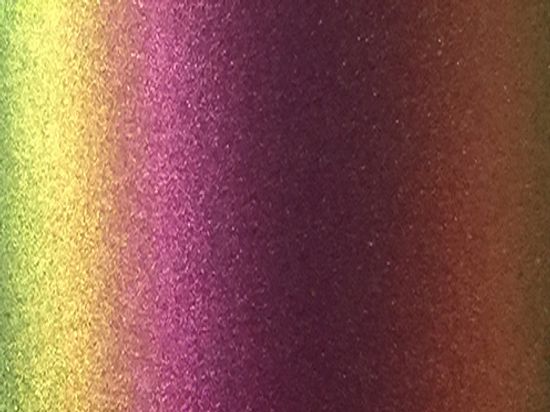
Kolortek's Chromashift series is an optically variable pigment engineered for dramatic, high-contrast color shift auto paint effects — shifting between two or more vivid colors as the viewing angle changes. Built on all-inorganic multi-layer interference technology, these pigments deliver the strongest color travel pigment auto paint performance in our portfolio, combining exceptional weatherability with compatibility across solvent-based, water-based, and UV-curable clearcoat systems.
Read More
 English
 Français
 Deutsch
 Русский
 Español
 Português