Leave A Message
If you are interested in our products and want to know more details,please leave a message here,we will reply you as soon as we can.
Green Edible Glitter, Food Grade Mica Powder 10–60μm – F1105A
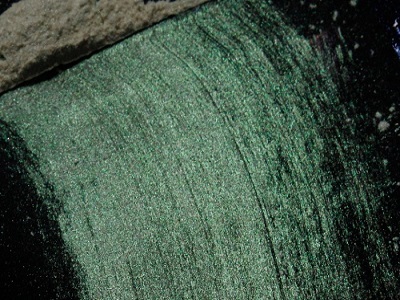
Green edible glitter in the 10–60μm range gives formulators and decorators a particle size that suspends cleanly in beverages, passes through standard airbrush nozzles, and covers fondant or chocolate surfaces without visible texture. F1105A uses a food-grade mica substrate with green colorant coating — the same pearlescent interference mechanism found in Kolortek's industrial series, applied within food safety parameters. For buyers evaluating green luster options, the key variables are particle size against application method and colorant compliance for the target market.
Item No. :
F1105AColor Effect :
GreenParticle Size :
10-60μmBrand :
Kolortek/OEMMOQ :
25KGApplication :
Food Decoration
| Parameter | Value / Range |
|---|---|
| Item No. | F1105A |
| Color | Green |
| Optical Effect | Pearlescent shimmer — colored interference on mica substrate |
| Substrate | Food-grade natural mica |
| Particle Size — this grade | 10–60μm |
| Additional grades available | 20–80 / 20–100 / 20–150 / 30–200 / 40–200 / 50–500μm |
| Form | Dry powder |
| Food Safety Compliance | Meets international food safety standards — contact us for market-specific documentation |
| TiO₂-Free Option | Available on request |
| Ingredient Composition Data | Available on request (TDS / SDS) |
| MOQ | Contact us for details |
Note: Compliance documentation varies by destination market (EU, FDA, etc.). Buyers should request documentation specific to their regulatory context before specifying for production.
Particle size is the most consequential variable when specifying edible luster dust. The right grade depends on how it will be applied and what the finished surface needs to look like — not on shimmer intensity alone.
| Grade | Best Suited For | Effect Character |
|---|---|---|
| 10–60μm (F1105A) | Beverages, airbrush, fine surface coating | Diffuse, even shimmer glow — particles not individually visible |
| 20–80 / 20–100μm | Fondant brushing, chocolate dusting, macarons | Slightly more pronounced shimmer; still smooth to the touch |
| 30–200 / 40–200μm | Cake tiers, cookies, cake pops, display work | Visible sparkle; individual flakes discernible on the surface |
| 50–500μm | Showpiece decoration, large format display cakes | Bold glitter effect — prominent individual flakes |
Common selection error: specifying a coarse grade for airbrush application. Grades above 100μm will block standard 0.3–0.5mm airbrush nozzles. For any spray application, stay within the 10–60μm or 20–80μm range.
Pearlescent mechanism on a mica platelet: The green shimmer is produced by thin-film interference on a layered mica substrate — the same optical mechanism as industrial pearlescent pigments. The effect depends on viewing angle, which gives decorated surfaces a dimensional quality that flat food colorings cannot replicate.
Green on varied base colors: Green luster dust performs differently depending on the surface it is applied to. On white fondant or cream, the green shimmer reads clearly. On dark chocolate or black mirror glaze, the pearlescent light reflection becomes more prominent relative to the hue — the effect shifts toward a luminous, metallic green. Testing on your specific substrate before production is recommended.
Stability in food media: Mica-based pearlescent pigments are chemically inert and stable across the pH range typical of sugar syrups, chocolate, and standard beverage formulations. Color and shimmer are not meaningfully affected by the acid levels found in citrus drinks or fruit-based preparations under normal decorative use conditions.
Blending behavior: F1105A is compatible with other luster dusts in the Edible Glitter Series and with standard water-based and alcohol-based edible color systems. Blending green with gold luster dust shifts toward a bronze-green; blending with blue shifts toward teal. Small-batch testing is advisable before scaling any blend.
| Segment | Specific Application | Recommended Grade |
|---|---|---|
| Beverage / Cocktail | Shimmer cocktails, botanical gin, matcha drinks, mocktails | 10–60μm |
| Bakery / Patisserie | Fondant cakes, macarons, cookies, cake pops | 10–60 / 20–100μm |
| Chocolate / Confectionery | Molded bonbons, chocolate shells, pralines, sprinkles | 10–60 / 20–80μm |
| Frozen Desserts | Gelato, soft-serve finishing, dipped ice cream bars | 10–60μm |
| Sugar Art / Display | Isomalt panels, sugar sculptures, showpiece cakes | 30–200 / 50–500μm |
| Commercial Food Production | Decorated eggs, fruit garnishes, retail confectionery lines | Application-dependent — contact us |
Beverage suspension: Pre-disperse F1105A in a small volume of neutral spirit or sugar syrup before adding to the final drink. Direct addition to carbonated liquid causes uneven clumping. The 10–60μm grade suspends more uniformly and holds longer in still liquid than coarser grades.
Edible paint formulation: Mix with food-grade isopropyl alcohol or lemon extract to achieve a brushable consistency. A starting ratio of approximately 1 part powder to 4 parts liquid works for most brush applications; adjust for airbrush use — finer dilution and a 0.3–0.5mm nozzle. Allow each layer to dry before adding a second coat to build intensity.
Kolortek has supplied food-grade mica-based pigments for over 20 years, and the Edible Glitter Series is produced using the same substrate manufacturing controls applied across the broader pearlescent range. TDS, SDS, and ingredient composition documentation are available on request — useful for buyers who need to complete regulatory submissions or supplier qualification documentation before adding a new ingredient to a commercial product.
Q: Why does my green edible glitter look different on dark chocolate vs. white fondant?
A: The visual output of a pearlescent pigment is partly a function of the base it sits on. On a white or light surface, the green hue dominates. On a dark surface, light reflection from the mica platelets becomes more prominent relative to the color — the shimmer reads more intensely and the hue can appear cooler or more metallic. This is inherent to the interference mechanism, not a batch variation. Test on your specific substrate before finalizing your decoration specification.
Q: Can I use the 10–60μm grade in a commercial beverage with a listed ingredient?
A: Whether mica-based pearlescent color can appear on a product label as a recognized food additive depends on the specific colorant coating chemistry and your target market's regulatory framework (EU, FDA, etc.). Contact us for ingredient composition data and we can advise on documentation options for your market.
Q: Is a TiO₂-free green edible glitter available?
A: Yes. A titanium dioxide-free formulation is available within the Edible Glitter Series. Specify this requirement when requesting samples or a quotation. Note that the hue and effect character of a TiO₂-free grade may differ slightly from the standard formulation due to the role TiO₂ plays in base reflectance — sample evaluation before production specification is recommended.
Q: What is the shelf life of edible luster dust in powder form?
A: When stored in sealed packaging in a cool, dry environment away from direct light and humidity, mica-based edible luster dust is typically stable for 2–3 years. Humidity exposure affects powder flowability but not the pigment's optical properties — if clumping occurs, break up the powder before use. Contact us for product-specific stability data.
Q: Can I blend F1105A green with other colors in the same series?
A: Yes — products within the Edible Glitter Series share the same
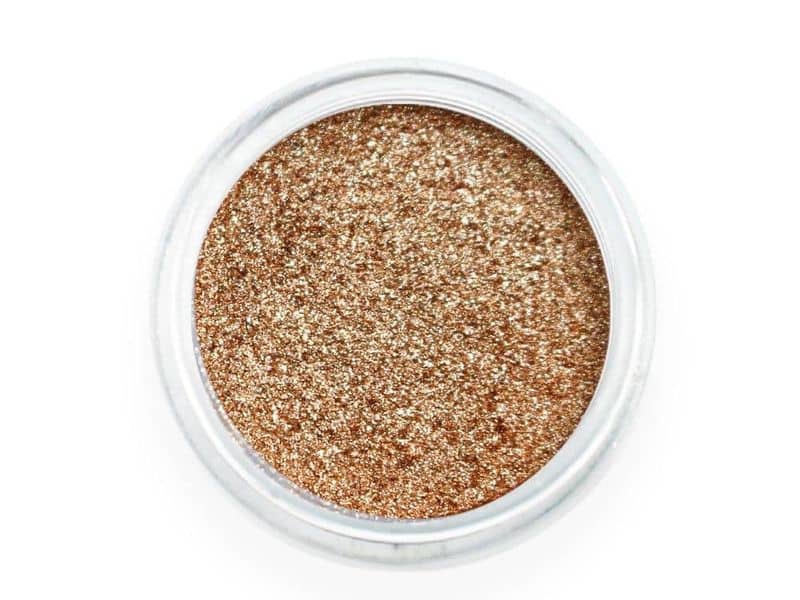
Kolortek F7521 is a flash bronze metallic luster dust built on a fluorphlogopite and iron oxide base, delivering a rich warm metallic shimmer that reads clearly on both matte and glossy food surfaces. Titanium dioxide free and compliant with international food safety standards, it qualifies as a genuine edible luster dust for professional confectionery applications. Formulators and decorators reach for it most often on chocolate coatings, sculpted cake tiers, and beverage garnishes where a dense bronze metallic finish is the target effect.
Read More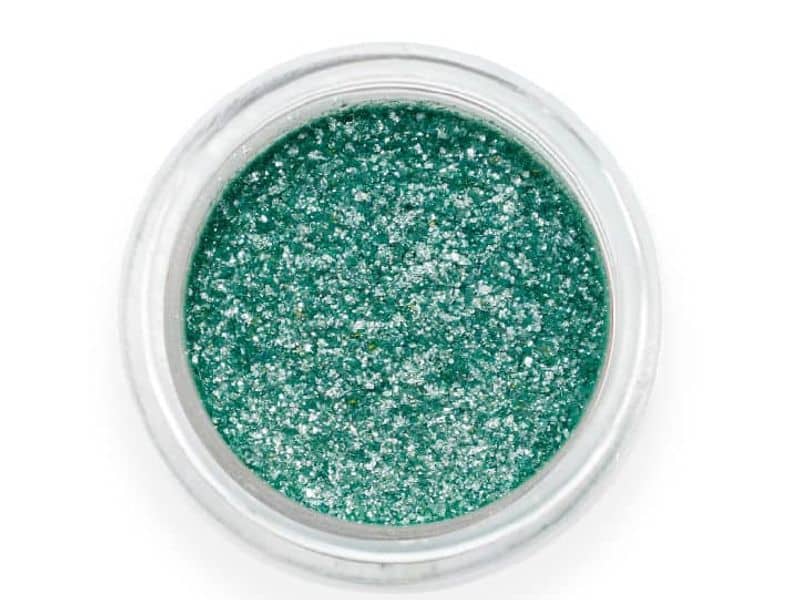
F6660502 is a pearlescent mica-based edible luster dust delivering a vivid sparkle green shimmer across cakes, chocolates, and cocktails. It qualifies as food safe glitter, fully compliant with international food safety standards, and blends seamlessly with other colorings. A practical choice for decorating applications where visual impact and formulation safety both matter.
Read More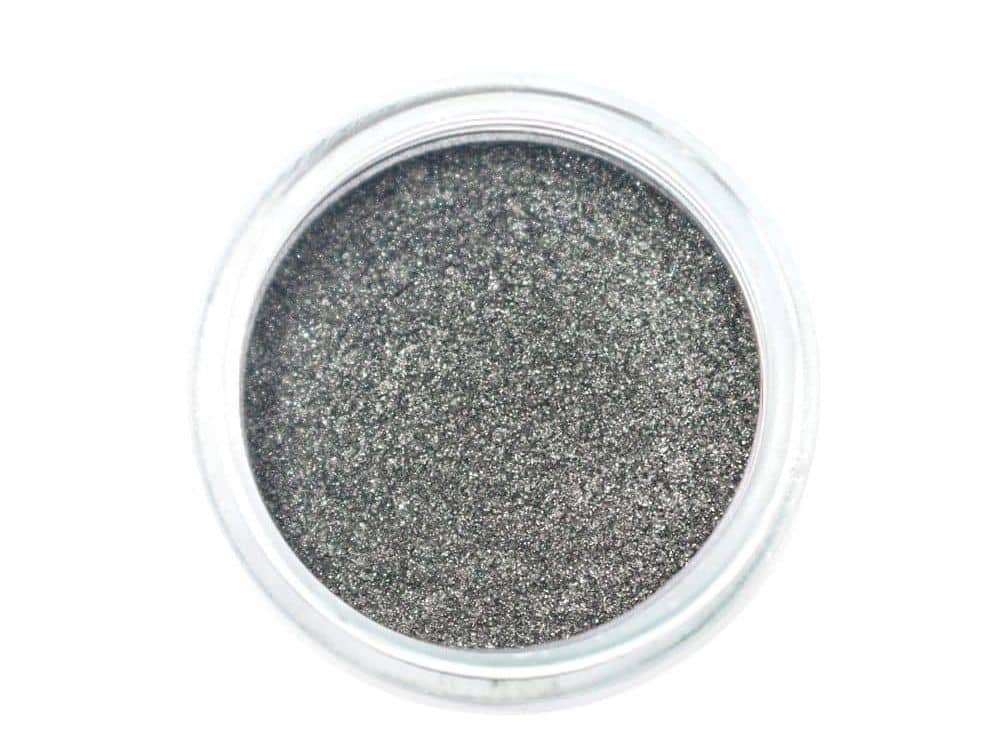
F6663901 is a silver grey edible glitter dust built on a natural mica base, delivering a clean, soft shimmer without titanium dioxide — making it a reliable choice for clean-label food decoration. It disperses smoothly across surfaces and works equally well on cakes, chocolates, and beverages where a pearlescent finish is needed.
Read More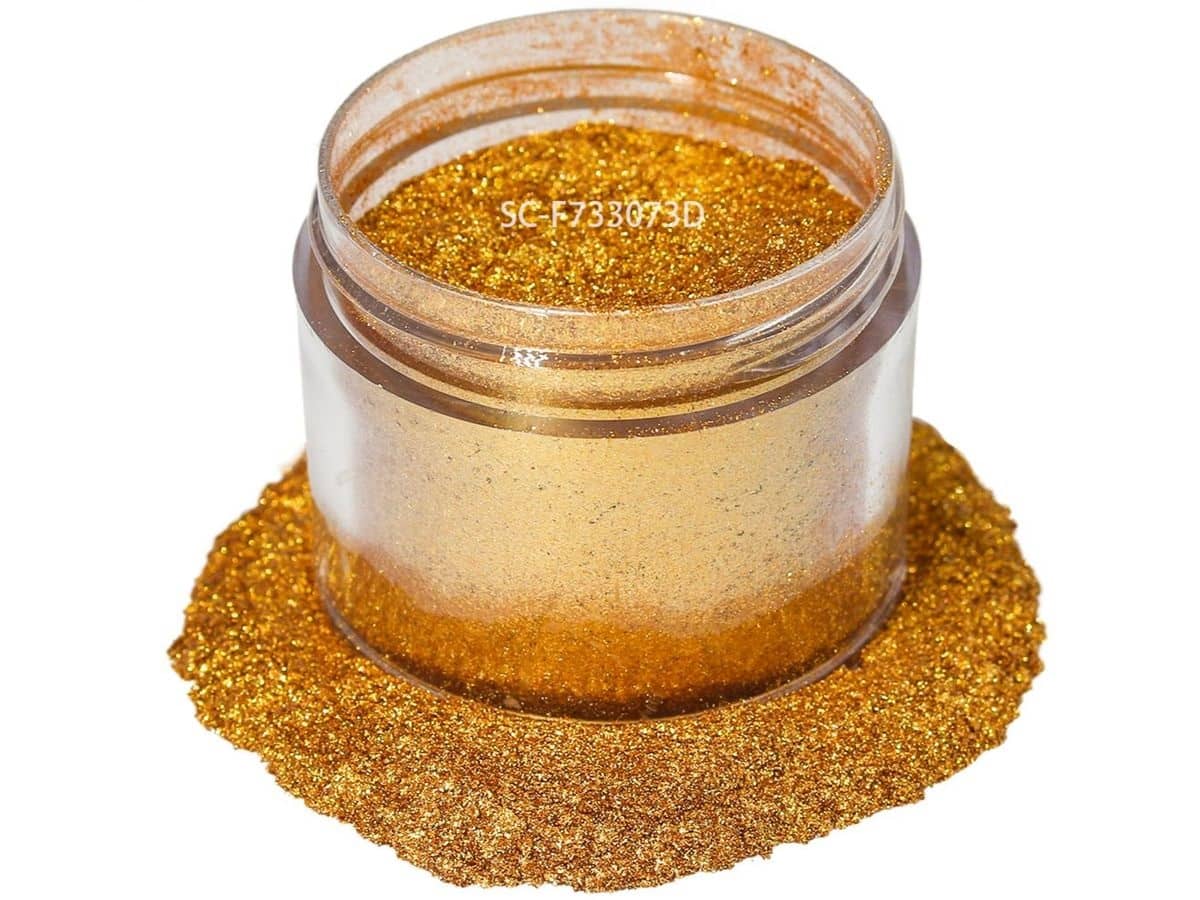
F733073D is a coarse-particle synthetic edible luster dust delivering a rich gold shimmer across a broad range of food decoration applications. Formulated without titanium dioxide, this titanium free edible dust meets the growing demand for cleaner-label decorative ingredients — making it a practical choice for chocolates, cake surfaces, and cocktail finishes. As a synthetic edible glitter, it offers consistent particle distribution and color stability batch to batch.
Read More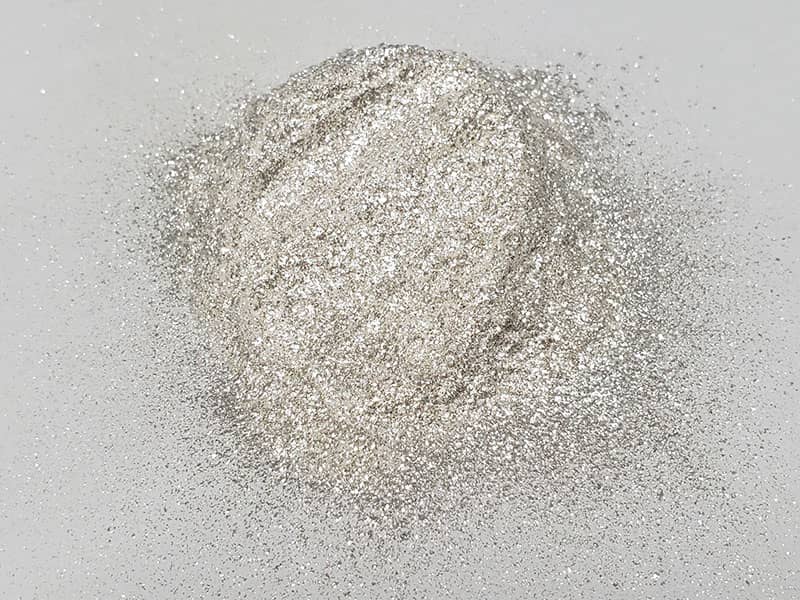
F7107 is a large-particle edible luster dust built on a fluorphlogopite base, delivering a bright, chunky sparkle effect that reads clearly on finished food surfaces. As a sparkle white dust, it performs well on cakes, chocolates, and cocktails where high visual impact matters. Fully compliant with international food safety standards, it integrates cleanly with other colorings without compatibility issues.
Read More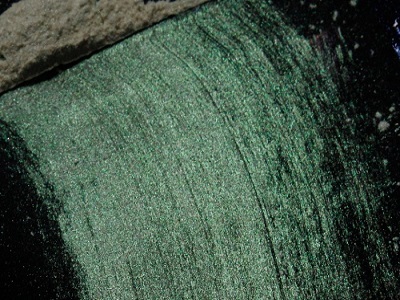
F1105A is a pearlescent mica-based green edible dust that delivers a fine, shimmery sparkle across a broad range of food decoration applications. As an edible glitter built from natural ingredients and compliant with international food safety standards, it performs reliably on cakes, chocolates, cocktails, and confections alike. Formulators and pastry professionals working with colored finishes will find it blends cleanly with existing colorings without affecting the base formulation.
Read More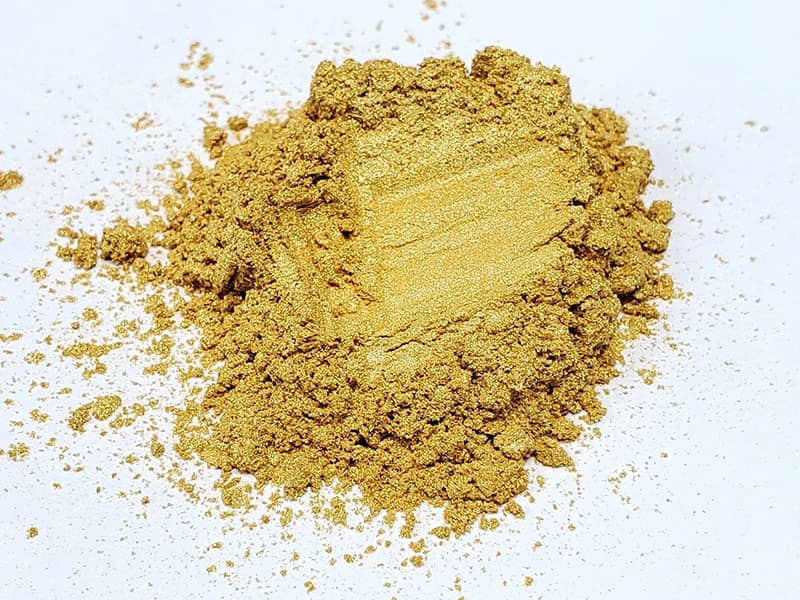
F308 is a pearlescent mica-based turquoise edible dust with a warm gold interference — delivering a dual-tone shimmer that reads differently depending on angle and light. Purpose-built as an edible glitter for cakes, cake pops, chocolates, and cocktails, it disperses evenly across surfaces without clumping or bleeding. Fully compliant with international food safety standards, it's a reliable choice for decorators and food manufacturers who need consistent, visually striking results.
Read More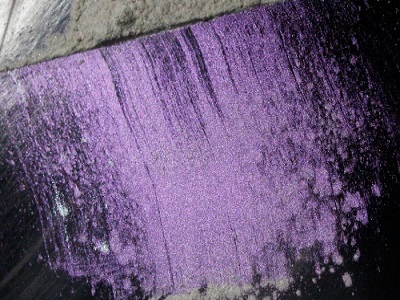
F1103A is a pearlescent mica-based violet edible dust engineered to deliver a rich, shimmery shimmer across food surfaces — from fondant-covered tiers to hand-piped chocolate work. Fully compliant with international food safety standards, it functions as both a standalone decorative finish and as a blend component in custom color systems. Formulators working with confectionery coatings and dessert studios alike rely on it as a dependable luster dust where consistent violet hue and batch-to-batch stability are non-negotiable. It also serves well as an edible dusting powder for cakes when applied dry-brush or suspended in a carrier medium.
Read More
 English
 Français
 Deutsch
 Русский
 Español
 Português